Given the importance of mental health, Medi-Cal seeks to expand services and address the needs of residents as a comprehensive form of health care.
Listen to this note:
California's Medi-Cal program provides coverage to 1 in 3 Californians, approximately 15 million people, and is currently seeking to expand services and address the mental health needs of residents as a comprehensive form of health care.
As the Department of Health Care Services (DHCS) continues to transform Medi-Cal, the state is addressing behavioral health needs such as mental health care and substance use disorder services through health care, experts said during a reality briefing by Ethnic Media Services.
Paula Wilhelm, acting deputy director of Behavioral Health Services for the California Department of Health Care Services, said mental health is just as important as physical health, which is why support is being sought for that area, as well as for substance use.
Whether someone is experiencing postpartum depression, dealing with anxiety and stress due to school or work issues, or needs help dealing with drug or alcohol addiction, they are provided with health education and access to services including mental health screening and assessment with outpatient and community-based treatments, as well as individual, group, or family therapy.
"We want to improve the quality of care we provide in the United States and create a more equitable, people-centered delivery system for all services. This includes the recently updated Behavioral Health Services Act that was approved by California voters as Proposition 1.”, Wilhelm commented.
Autumn Boylan, deputy director of DHCS’s Office of Strategic Partnerships, discussed Governor Gavin Newsom’s master plan for children’s mental health, announced in August 2022.
It seeks to ensure that children use mental health services and support for emerging and existing behavioral health conditions, as unfortunately for more than a decade, children and young people of all ethnic backgrounds have been getting worse.
In California, specifically, nearly 300,000 clients are dealing with major depression, and 66 percent of those young people are not getting access to treatment and care in the way they should; young people are stressed, and the pandemic has contributed to and exacerbated some of these feelings.
And young people are bombarded with information about the world around them, including climate change, school shootings and other circumstances that contribute to the stressors they face today, and as their developing brains face all of these different challenges in the world, we're working very closely with county offices of education, school districts and schools across the state to strengthen the support network available in school settings, she said.
Within the program, he explained, a digital health strategy is being focused on, taking into account that children and young people spend a lot of time on screens, so the aim is to reach more children through this medium.
She also explained that two Mental Health Centres have been launched regardless of the health insurance status, therefore, it is not necessary to have one to access these services.
Boylan said there is a Bright Life Kids app available for young children and parents, as well as another app that provides free mental health counseling support and a wealth of resources for teens and young adults ages 13 to 25.
Jennifer Oliphant, director of the Hope for Tomorrow Program at Two Feathers Native American Family Services, said she works with eight federally recognized tribes and a few more that are not, caring for a large Native American population.
She highlighted that they have a special plan for adolescents and young people that seeks to involve and support young people to be part of the labor market and the community, a project that began two years ago to involve and develop socio-emotional skills among young people.
Tricia Nguyen, CEO of Southland Integrated Services (formerly Vietnamese Community of Orange County), explained that they were established in 1979 as a support agency for the Vietnamese people, with 300,000 people belonging to this agency.
Over time, she stressed, work has been done to provide more and better support, integrating medical, dental and behavioral health. In 2008, they did not have any mental health programs, but with the pandemic, addressing mental health became a necessity.
Currently, she stressed, parents have to deal with social networks constantly, so it is necessary to get parents to communicate with their children, because they feel that they do not have real communication; for this, there are Family Centers where emotional support and advice is provided to the community so that they seek specialized medical attention for their needs.
With music, dance, colors and lots of celebration, the San Francisco Carnival celebrates its 46th anniversary and this 2024 under the motto “Honoring indigenous roots” seeks to recognize and exalt cultures united in the same spirit to share their creative expressions. Photo: Daniel Beck carnavalsanfrancisco.org
Listen to this note:
With music, dance, colors and lots of celebration, the San Francisco Carnival celebrates its 46th anniversary and this 2024 under the motto “Honoring indigenous roots” seeks to recognize and exalt cultures united in the same spirit to share their creative expressions.
Throughout the 46 years of Carnival celebrations, many of the participating groups have chosen to represent themselves with themes imbued with the indigenous communities of Mexico, Central America, South America, the United States, the Caribbean and Brazil.
Proudly wearing folkloric outfits and clothing handmade using the same techniques as their ancestors, Carnival groups showcase the beauty of their native cultures with traditional songs and dances.
Their performances tell stories about preserving the rainforest, waterways, crops, and keeping Pachamama (Mother Earth) in balance. Some of the dances depict the oppression of native peoples and the suffering they have endured through slavery and colonization.
Thus, the San Francisco Carnival has become the largest multicultural celebration on the West Coast.
The free, two-day festival, taking place May 25-26, covers 17 blocks in the Mission District, with five main stages, 50 local artists and 400 vendors. There will also be international food, dancing, tastings and entertainment for families, couples and friends of all ethnic, social and economic backgrounds.
The free, two-day festival, taking place May 25-26, covers 17 blocks in the Mission District, with five main stages, 50 local artists and 400 vendors. There will also be international food, dancing, tastings and entertainment for families, couples and friends of all ethnic, social and economic backgrounds.
This year, Dr. Rigoberta Menchú Tum, 1992 Nobel Peace Prize winner, will be the Grand Marshall of the Grand Parade, which will take place on Sunday, May 26.
The Grand Parade features a lineup of 60 contingents and more than 3,000 artists representing the cultural heritages of Brazil, Mexico, Panama, Bolivia, Cuba, Peru, Puerto Rico, Nicaragua, Colombia, Trinidad and Tobago, Guatemala, El Salvador and more.
Festival time: 11:00 am – 6:00 pm (both days); Parade time: 9:30 am – 2:00 pm (Sunday).
Although the event is free, you can do donations. Get your tickets for the parade stands to get a place.
The parade begins at 24th and Bryant Street and travels west to Mission Street, then along Mission Street travels north to 15th Street.
The Grand Stand seating area will be located outside in front of the Gray Area Theatre (2665 Mission St, SF) and in front of La Corneta Taqueria (2731 Mission St, SF). Tickets are general admission; reserved seating is not available. Wheelchair accessibility is available.
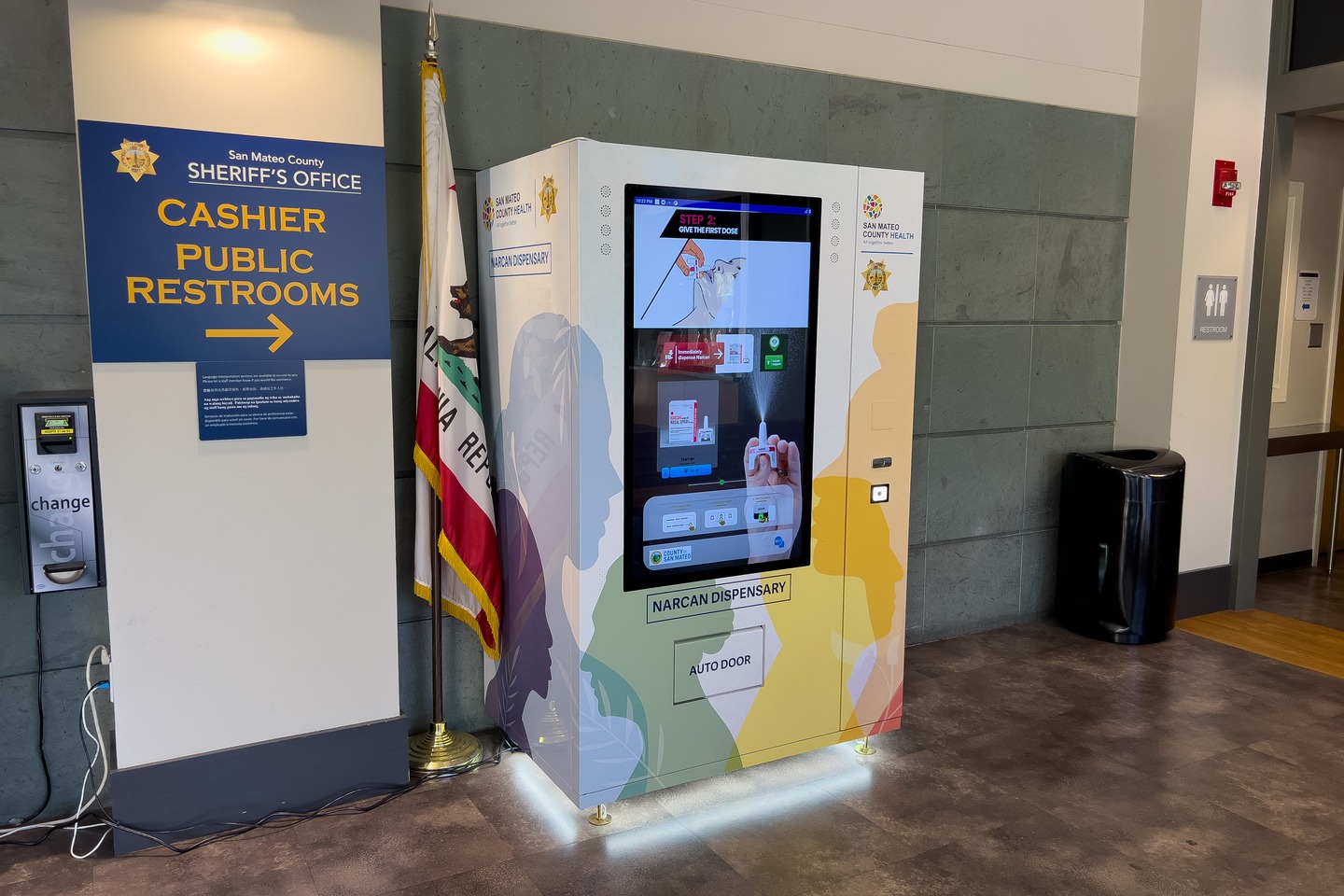
Correctional Health Services and the San Mateo County Sheriff's Office have installed a Narcan dispensing machine, a medication that reverses the effects of an opioid overdose. Narcan dispenser located in the public lobby of the Maguire Correctional Center in Redwood City. Credit: San Mateo County Executive's Office.
Listen to this note:
Correctional Health Services and San Mateo County Sheriff's Office, have installed a machine to dispense free doses of Narcan, the medication that reverses the effects of an opioid overdose, in the public lobby of the Maguire Correctional Center in Redwood City.
The goal is to reduce harm to the community and potentially save lives, as the machine delivers a box of Narcan containing two doses to anyone who needs it, including inmates being released, their families and friends, and the general public.
A nasal spray, Narcan (the brand name for the drug naloxone) is safe to use and easy to deploy, making it possible for anyone (friends, bystanders) to provide life-saving help.
While first responders carry naloxone, the drug can be administered even before calling 911, since seconds count if someone is experiencing an overdose.
The California Department of Public Health recommends that friends and family members who know someone at higher risk for an opioid overdose, especially those with opioid use disorder, carry naloxone and keep it at home.
Additionally, she said, people who take high doses of opioid medications prescribed by a doctor, as well as those who use opioids and benzodiazepines together and/or who use drugs, should carry naloxone with them and inform others that they have it in case they experience an opioid overdose.
It is worth noting that California's Good Samaritan law protects those who provide emergency medical care at the scene of a medical emergency, including the administration of naloxone.
The vending machine also offers a touch screen to provide information about other available services, such as food, housing, substance abuse treatment, mental health, probation and parole.
“This effort took over a year and is the result of a great partnership with the Sheriff’s Office,” said Correctional Health Services Director Michael del Rosario. “As we strive to improve the services we provide to our incarcerated individuals and the community, we hope we can help save some lives with this project.”
In May 2023, following a public study session on the growing public health threat posed by cheap opioids and fentanyl, the Board of Supervisors recommended providing access to naloxone; increasing cooperation between the County Health Department, public safety officials, and other stakeholders; promoting public education; and collecting data to identify at-risk areas or populations.
The novel Contradeseo by Gloria Susana Esquivel is this Saturday's recommendation. Camilasbooks brings us a recommendation that, in the words of the reviewer herself, has deeply affected her.
This Saturday, she brings us a recommendation that, in the words of the reviewer herself, has deeply affected her. The novel Contradeseo by Gloria Susana Esquivel, she said, presents the darkest side of friendship, where the characters face their own desires and miseries in a very small and quite intense environment.
The Colombian-born author, who is not only a writer but also a journalist, professor and poet, said Camilasbooks that she will not disappoint them, because through the story she presents, she is “very engaging” in a not-too-long reading that carries the text in a dynamic and fun way.
The book talks about migration in search of a rather vague future, Camilasbook explained.
Through this story, we learn the story of Silvia, a woman who breaks up with her partner and is left with an existential crisis, she has nowhere to stay and is in a country that is not hers because she is Latina and is living in the United States.
Faced with this problem, she contacts her friend Teresa, who is newly married, and offers to let her stay at her house for a day while she tries to sort out her situation; this stay begins to get longer, so they make an agreement and Silvia stays in the house in exchange for domestic service, which becomes an intricate game of desires and intense discovery.
“As the days go by, the protagonists find themselves involved in a dynamic that totally challenges the boundaries of what is work and what is sensual, and through this narrative, they somehow immerse us in an analysis of the identity of the power of sexuality, immersing us in the darkest corners of our minds,” says Camilasbooks.
To learn more about this recommendation, listen to Camilasbooks in her review this week.
Israel y la mera neta: Genocidio, muchos decimos, y cuestionamos ¿por qué cuando Israel usa a Palestina como un campo de experimentación de espionaje no se dieron cuenta que llegaba el ataque del 7 de octubre?
Por Marcos Eusebio Gutiérrez.
Listen to this note:
Hola, prójimo, primo, “compa” y hermano.
50 workers Google fueron despedidos por ocupar oficinas de la compañía en Nueva York y Silicon Valley. Protestaban porque su trabajo digno está siendo utilizado por Google para hacer fechorías sobre los palestinos.
Genocidio, muchos decimos, y cuestionamos ¿por qué cuando Israel usa a Palestina como un campo de experimentación de espionaje no se dieron cuenta que llegaba el ataque del 7 de octubre?
Algunos decimos que sí lo sabían; lo que querían, es hacer lo que están haciendo.
Google and Amazon con su proyecto Cloud Nimbus, le otorga a Israel poder de espiar sobre los palestinos y saben quién es quién, y deciden quién es el enemigo y los despedazan a la par de sus familias.
¿Ya los asusté? Pues ahora viene lo bueno.
En UCLA, al sur de California, manifestantes pacíficamente protestaban para frenar la ocupación de Israel en la Franja de Gaza. Luego, llegó un grupo de 250 hombres blancos, maduros, con palos, quienes repartieron violencia contra los manifestantes.
La policía estaba presente, pero no hizo nada por dos horas y 33 minutos para detener los madrazos. Al siguiente día, la ley llegó y destruyó el campamento, llevándose a los más resistentes.
First of all, we we scale, because they told us that those with the clubs were Proud Boys and other racist right-wing groups.
It gets better.
Ahora resulta que en la bola había miembros de un grupo secreto -pero ni tanto- que se llama Canary Mission (la misión del canario), grupo israelita que tiene el mismo modus operandi que los espías mencionados anteriormente.
Ahora llega la pregunta: ¿Qué pasaría si el gobierno de los Estados Unidos, que es autor y cómplice de Israel, utilizara los métodos mencionados para controlar a manifestantes que estemos protestando porque nos quieren sacar de este país?
Hombre de Riverside que disparó contra dos judíos afuera de sinagogas se declara culpable, Jaime Tran, de 29 años, aceptó todos los cargos en su contra: dos cargos de crímenes de odio con intención de matar y dos cargos de uso, porte y disparo de un arma de fuego durante y en relación con un crimen de violencia.
Listen to this note:
Un ex residente de Riverside que el año pasado disparó e hirió a dos hombres judíos cuando salían de servicios religiosos en el área de Pico-Robertson de Los Ángeles se declaró culpable de crímenes de odio y delitos con armas de fuego, informó el California Department of Justice.
Jaime Tran, de 29 años, aceptó declararse culpable de todos los cargos en su contra: dos cargos de crímenes de odio con intención de matar y dos cargos de uso, porte y disparo de un arma de fuego durante y en relación con un crimen de violencia.
Se espera que Tran se declare culpable de los cargos de delitos graves ante el juez de distrito de los Estados Unidos, George H. Wu, en las próximas semanas.
Al declararse culpable, Tran enfrentará una sentencia máxima legal de cadena perpetua en una prisión federal por cada cargo de crimen de odio, y una sentencia máxima de cadena perpetua y una sentencia mínima obligatoria de 10 años por cada cargo de arma de fuego.
Según el acuerdo de culpabilidad, que los fiscales presentaron el pasado martes 14 de mayo, Tran recibiría una sentencia de prisión de entre 35 y 40 años.
“Este acusado intentó asesinar a dos hombres simplemente porque eran judíos”, dijo el fiscal federal Martín Estrada. “Sin embargo, en lugar de permitir que estos horribles crímenes nos dividan, nuestra comunidad se unió y rápidamente llevó al perpetrador ante la justicia. El odio y la intolerancia no tienen cabida en Estados Unidos. Nos mantendremos firmes en nuestro enfoque de utilizar todas las herramientas a nuestra disposición para procesar agresivamente los actos de odio”.
Por su parte, la subdirectora interina de la oficina local del FBI en Los Ángeles, Krysti Hawkins, refirió que “el odio del acusado lo llevó a planear el asesinato de dos víctimas inocentes simplemente porque creía que practicaban su fe judía”.
Hawkins dijo sentirse aliviada de que el arduo trabajo de los investigadores y fiscales llevara a que Tran admitiera los crímenes y espera que los miembros de la comunidad judía se consuelen al saber que él no estará en condiciones de atacar a sus compañeros.
“Estoy agradecido por el arduo trabajo que nuestros investigadores y fiscales han realizado en este caso”, subrayó el jefe de policía de Los Ángeles, Dominic Choi. “Los crímenes de odio desgarran la estructura de nuestras comunidades y nuestra seguridad. El Departamento de Policía de Los Ángeles es más fuerte a través de nuestras asociaciones federales y sirve mejor a la gente de Los Ángeles”.
Según su acuerdo de declaración de culpabilidad, Tran desarrolló y abrazó creencias antisemitas e hizo amenazas violentas contra el pueblo judío.
En 2018, Tran dejó la escuela de odontología después de hacer declaraciones llenas de odio sobre otros estudiantes a quienes percibía como judíos.
Desde agosto hasta diciembre de 2022, las declaraciones antisemitas de Tran aumentaron e incluyeron un lenguaje cada vez más violento, incluso contra un excompañero de clase a quien llamó y envió mensajes de texto repetidamente con mensajes como “Te quiero muerto, judío”, “Alguien te va a matar, judío” y “Quemar en la cámara del horno”, informó el Departamento de Justicia de California en un comunicado.
Agregó que, en noviembre de 2022, Tran envió por correo electrónico a dos docenas de excompañeros de clase un folleto que contenía propaganda antisemita, incluida la declaración: “CADA ASPECTO DE LA AGENDA COVID ES JUDÍO”. El mes siguiente, Tran envió por correo electrónico a sus antiguos compañeros de clase extractos de un sitio web que describía a los judíos como “primitivos” y con “cráneos gruesos”.
Como resultado de detenciones de salud mental anteriores, a partir de 2023, a Tran se le prohibió comprar armas de fuego.
En enero de 2023, en Phoenix, Tran le pidió a un tercero que le comprara dos armas de fuego. Tran seleccionó las armas de fuego que quería y pagó aproximadamente de mil 500 dólares en efectivo al tercero, quien luego las compró.
En la mañana del 15 de febrero de 2023, Tran utilizó Internet para buscar lugares con un “mercado kosher” y planeó dispararle a alguien cerca de un mercado kosher porque creía que habría judíos en el área.
Tran condujo hasta Pico-Robertson y disparó a una víctima judía que llevaba una kipá cuando salía de los servicios religiosos en una sinagoga. Tran, creyendo que la víctima era judía, le disparó a quemarropa en la espalda, con la intención de matarlo. Luego, Tran huyó de la escena en su automóvil.
A la mañana siguiente, el 16 de febrero de 2023, Tran regresó al área de Pico-Robertson con la intención de dispararle a otra persona judía, y lo hizo. La víctima también vestía una kipá y salía de una sinagoga después de asistir a servicios religiosos. El perpetrador le disparó a quemarropa con la intención de matarlo mientras la víctima cruzaba la calle. Tran nuevamente huyó de la escena.
Ambas víctimas sobrevivieron a los ataques. Las autoridades arrestaron a Tran el 17 de febrero y permanece bajo custodia desde entonces.
El FBI y el Departamento de Policía de Los Ángeles siguen investigando el asunto.
This publication was supported in whole or part by funding provided by the State of California, administered by the CaliFornia State
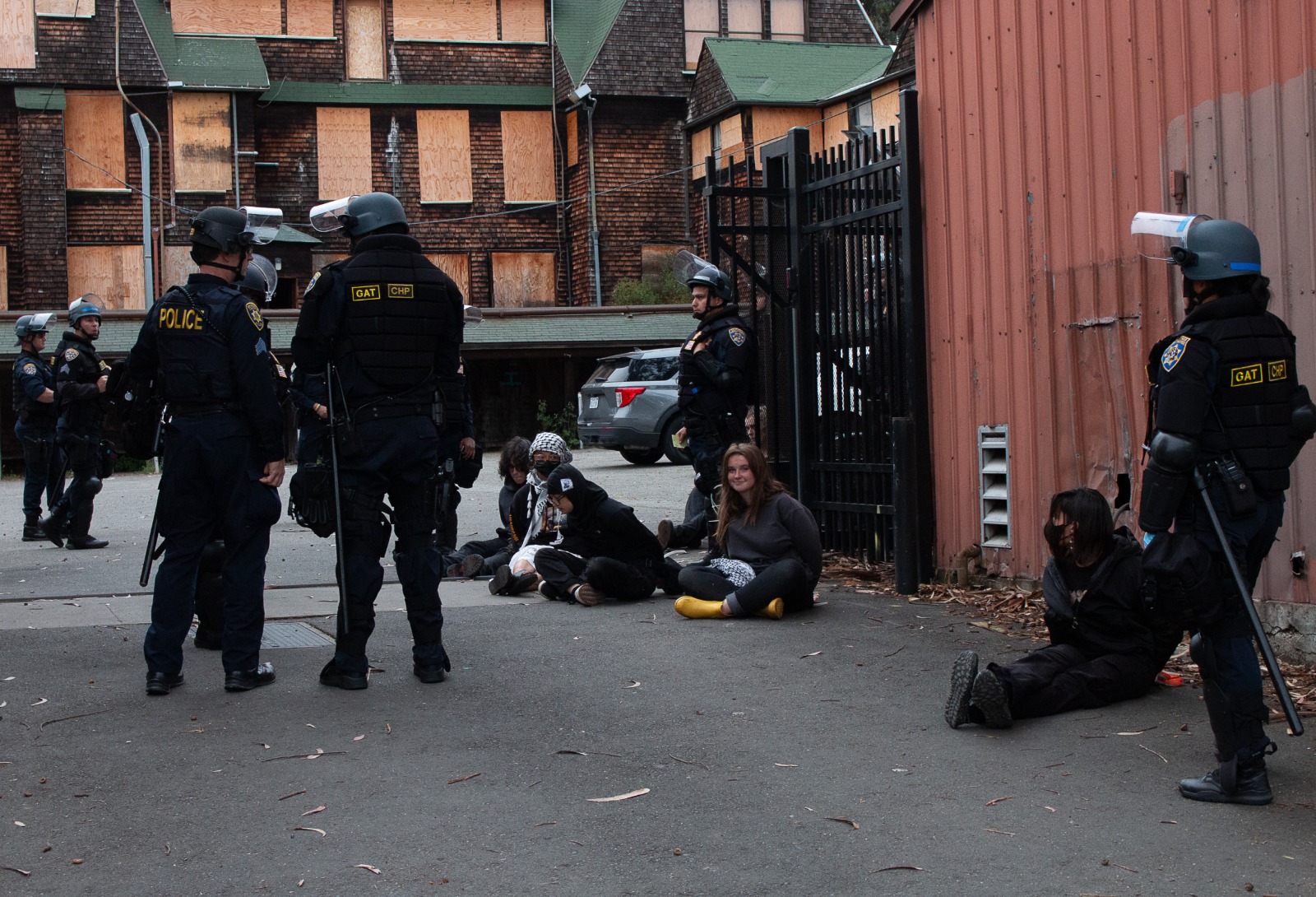
Policía arresta a manifestantes pro palestinos: Agentes del orden observan a manifestantes pro-palestinos tras levantar barricadas en Berkeley, California, el 16 de mayo de 2024. Un grupo de manifestantes ocupaba el complejo abandonado Anna Head, cerca de People’s Park. (Grace Marion/Bay City News)
Por Península 360 Press con información de Bay City News.
Listen to this note:
El jueves por la noche, la policía arrestó a 12 manifestantes pro palestinos bajo sospecha de robo, vandalismo y conspiración, que habían ocupado un edificio abandonado cerca de la Universidad de California en Berkeley este miércoles.
Docenas de agentes del orden instalaron barreras alrededor del complejo Anna Head, cerca de People’s Park, y alrededor de las 18:50 horas, después de emitir una orden de dispersión, la policía derribó la puerta del edificio.
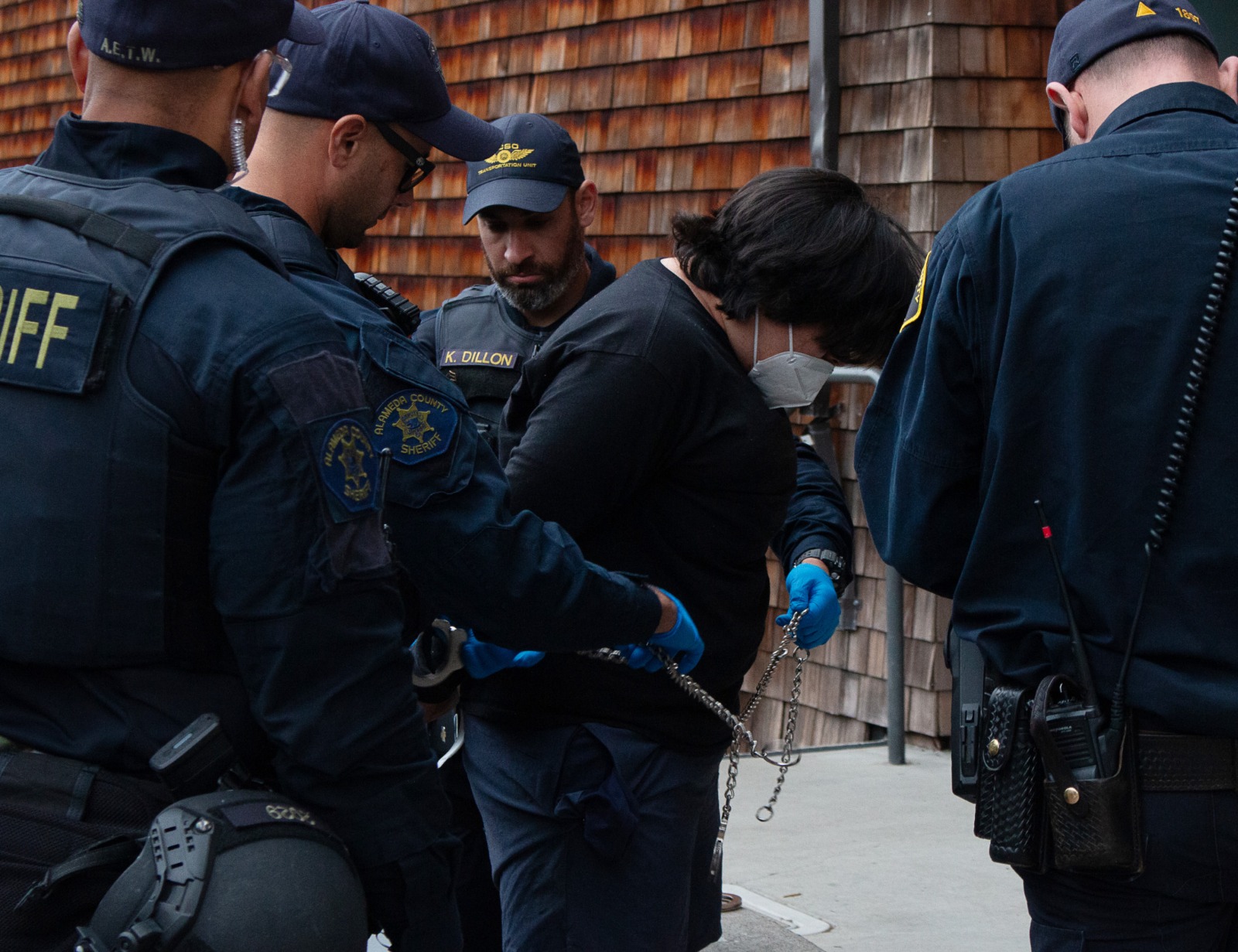
Poco después, la policía comenzó a realizar arrestos y expulsó a los manifestantes del edificio.
“Estamos tratando esto como lo que es, y es la escena de un crimen”, señaló el vicerrector adjunto de la UC, Dan Mogulof.
Agentes de la ley vigilan a los manifestantes propalestinos detenidos que ocupaban el complejo abandonado Anna Head cerca de People’s Park en Berkeley, California, el 16 de mayo de 2024. (Grace Marion/Bay City News)Agentes del orden detienen a un manifestante tras emitir una orden de dispersión contra los manifestantes propalestinos que ocupaban el complejo abandonado Anna Head, cerca de People’s Park, en Berkeley, California, el 16 de mayo de 2024. (Grace Marion/Bay City News)
Funcionarios del campus alegan que algunos de los manifestantes usaron palancas para agredir a los oficiales y muchos se resistieron al arresto, por lo que es posible que se presenten cargos adicionales en el futuro, según Mogulof.
Las agencias policiales presentes en el lugar el jueves incluyeron a agentes de más de 20 agencias diferentes, incluidos los condados de UC Berkeley, Oakland, Alameda y San Mateo, Pacifica y San Francisco.
Algunos manifestantes detrás de las barreras corearon y se burlaron de los agentes de policía que se encontraban en la fila, mientras que muchos otros simplemente filmaron la escena con sus teléfonos celulares. Vecinos del lugar permanecieron detrás de los manifestantes que observaban, mientras que otros pidieron a la policía indicaciones para llegar a casa pasando las barricadas.
Agentes del orden sacan a un manifestante tras emitir una orden de dispersión contra los manifestantes propalestinos que ocupaban el complejo abandonado Anna Head, cerca de People’s Park, en Berkeley, California, el 16 de mayo de 2024. (Grace Marion/Bay City News)
Cantos de “Palestina libre, libre” llenaban el aire periódicamente mientras el sonido de un ariete sonaba desde la entrada del edificio.
El miércoles, algunos manifestantes entraron al edificio en Haste Street entre Telegraph Avenue y Bowditch Street para protestar por la actual invasión israelí de la Franja de Gaza, que se lanzó en respuesta a un ataque terrorista a gran escala en octubre de 2023.
Los ocupantes accedieron al edificio a través de agujeros cuadrados en la cerca circundante para ocuparlo, mientras que la mayoría de los manifestantes ocuparon el área de césped fuera de la cerca. Los manifestantes dentro de la valla erigieron pancartas y pintaron lemas en el edificio con pintura roja
“Los sospechosos bloquearon la entrada norte de Anna Head con madera contrachapada y escudos; se resistieron violentamente al arresto, usaron palancas para golpear a los agentes y usaron sus manos para resistirse al arresto”, señaló Mogulof en un correo electrónico.
Agentes de la ley en el complejo Anna Head, cerca de People’s Park, tras desalojar a los manifestantes propalestinos que ocupaban el edificio abandonado en Berkeley, California, el 16 de mayo de 2024. (Grace Marion/Bay City News)Agentes del orden observan a manifestantes propalestinos tras levantar barricadas en Berkeley, California, el 16 de mayo de 2024. Un grupo de manifestantes ocupaba el complejo abandonado Anna Head, cerca de People’s Park. (Grace Marion/Bay City News)
“Este es Hind Hall [sic]”, decía un graffiti, haciendo referencia a la ocupación de Hind’s Hall en la Universidad de Columbia. Hind’s Hall pasó a llamarse extraoficialmente Hamilton Hall durante las protestas de abril en la ciudad de Nueva York por parte de manifestantes pro palestinos en honor a una niña de 6 años, Hind Rajab, que murió en el conflicto de Gaza.
La ocupación del edificio el miércoles provocó una respuesta tanto de la policía como de UC Berkeley, quienes publicaron una notificación WarnMe a las 19:06 horas indicando que varias docenas de personas con palos, palancas y cortadores de pernos irrumpieron en el edificio y rompieron ventanas, cortaron cercas y paredes pintadas con spray.
The Anna Head building has remained unused and boarded up since a fire in 2022.
Agentes del orden permanecen en el lugar después de que los manifestantes pro-palestinos que ocupaban el complejo Anna Head fueran desalojados del edificio abandonado cerca de People’s Park Berkeley, California, el 16 de mayo de 2024. (Grace Marion/Bay City News)
Gov. Gavin Newsom on Tuesday praised officials for a San Mateo County mental health project.
Listen to this note:
El gobernador Gavin Newsom elogió el martes a los funcionarios del condado de San Mateo por un proyecto ambicioso que refleja sus dos prioridades: mejorar el tratamiento de salud mental y combatir la crisis de las personas sin hogar.
“San Mateo (condado) ha dado un paso adelante”, dijo Newsom después de recorrer el Cordilleras Health and Healing Campus, que reemplazará un hospital de concreto para tratamiento de salud mental de la era Eisenhower. “Ahora es el momento de que otros condados hagan lo mismo”.
Newsom seleccionó Cordilleras como telón de fondo para anunciar que el estado está acelerando la primera ronda de financiamiento, disponible mediante la Proposición 1, para impulsar la transformación de California del sistema estatal de salud conductual.
Esa transformación se está desarrollando entre San Carlos y Redwood City, donde el nuevo campus de Cordilleras se está construyendo, y el cual tendrá como finalidad proporciona áreas de tratamiento cerradas para los pacientes más vulnerables en entornos pequeños y hogareños, junto con atención residencial para adultos centrada en la rehabilitación y recuperación de la salud conductual.
“Nunca hemos sido y nunca seremos del ladrillo y el cemento. Se trata de las personas, de nuestros clientes y de servirles de forma digna y respetuosa. Y esto es lo que haremos en estos edificios”, dijo Mike Callagy, director ejecutivo del condado, durante una conferencia de prensa con Newsom.
El campus, clave para el sistema de centros de tratamiento para pacientes hospitalizados y ambulatorios del condado que abordan las necesidades de salud mental y mantiene a los residentes más vulnerables fuera de las calles, reemplaza una instalación abierta por primera vez como un hospital de tuberculosis en la década de 1950.
En 1978, el edificio se volvió a dedicar al tratamiento de salud mental gracias a los esfuerzos de los familiares locales de personas con enfermedades mentales, quienes fueron los fundadores de la organización que eventualmente se convirtió en NAMI, la Alianza Nacional sobre Enfermedades Mentales.
Cuando abra, a finales de este año, el campus incluirá un total de 121 camas dispuestas en unidades de vivienda más pequeñas con ventanas que brindan vistas del paisaje y áreas al aire libre que ofrecen aire fresco y luz solar.
Los edificios actuales serán derribados para dar paso a espacios abiertos.
Newsom también anunció el lanzamiento de MentalHealth.CA.gov, un sitio web integral para personas que buscan recursos de salud mental disponibles para los californianos, el cual permitirá saber cómo el gobierno de su propio condado está utilizando las herramientas y recursos que ya tienen a su disposición.
“…[Racism] is most often unconscious, it is born from a hidden self that is blind to reason, it is absorbed with mother's milk and begins to take shape from the first cries and babbles of the Peruvian.” ‒ Mario Vargas Llosa, Peruvian Nobel Prize winner.
This time I prefer to approach this topic in a different way, narrating a real episode that occurred on one of my trips to Peru.
Racism, because it is such a vast and complex issue and at the same time so deeply rooted in our culture and “being Peruvian”, has been normalized and is part of our collective “unconsciousness”. Ending racism is a challenge that should start with assuming our condition (as racists).
melting pot
“Listen boss, it’s not like the United States here, there is no racism here, we are a melting pot of races; look, here there are cholos (native/Spanish mestizo), Indians, Chinese, blacks and whites living in total harmony,” the taxi driver who picked me up from the airport on my first trip to Peru after a long eighteen years told me out of the blue.
He expressed it to me like that, abruptly and defensively, without us even having addressed the subject, as if he had repressed those phrases for a long time and finally thought it was the best time to get rid of them. I preferred to change the subject, I was well aware that this was one of the greatest forms of denialism and, what's more, it was a source of pride almost on the same level as ceviche and pisco.
But those forceful statements from the taxi driver continued to echo in my head throughout the weekend in which an old friend rich man, heir to some - apparently important - mines, invited me to spend the weekend at his house, which was on one of the most exclusive beaches south of Lima. It was a splendid house, with large windows and a magnificent view of the Pacific Ocean, perfectly decorated with authentic funeral shrouds from the pre-Inca era, with geometric figures and ochre colours that embellish the walls of its rooms instead of being on display in the National Museum.
There my friend and I arrived in a very elegant Mercedes Benz and of course, we were also accompanied by the driver who drove soberly dressed in a dark suit and a perfectly ironed white shirt; and I think that if they didn't make him wear white gloves and a hat it was because, surely, they didn't want to cross the line of bad taste (huachafería, as the people of Lima would say).
To get there we had to cross some sandbanks where the remains of a pre-Incan city and garbage dumps once coexisted and which were now crammed with precarious housing that a high wall of bricks and cement separated from the "well-off" part of Lima society that, trying to escape from the peripheral districts, had built their "Beverly Hills-type" mansions there.
I watched everything through the car window while my friend turned up the volume on his playlist and tried his best to sing along at the top of his voice to “One of these nights” by the Eagles.
At home, the wife was waiting for us, wearing a linen tunic – probably designer – that covered a fuchsia and tiny bikini. There were also their three children, aged eight, six and three, and I would be lying if I said they were all girls or boys, but that is not relevant to this case. What I do remember is that each of the children (girls?) had a nanny who took special care of each one.
The three nannies were dressed entirely in white, including their shoes and socks, and looked like they had taken their clothes from one of those classic horror movies with killer nurses; each one scrupulously took care of the child assigned to her, meticulously following the schedule of each child's activities.
Apparently, when we arrived it was time to go to the sea and, always dressed in their white uniforms, you could see them going down the steps that led to the beach shore and then you could see them trying not to get their white shoes wet (that included their white socks), building sand castles and at the same time covering the kids' entire bodies with excessive amounts of sunscreen, but always with a stern, almost anxious expression.
This was being watched askance by the host couple and I as we sipped an aromatic Pisco Sour, abandoned on the armchairs of the large terrace decorated with giant glass bottles with pirate galleons inside. At that moment, surely motivated by the effects of the Pisco Sour, I said hesitantly: “poor girls, it’s so hot in those uniforms, they’ll surely take a dip”; the couple, with extreme naturalness, almost suspicious, looked at me out of the corner of their eyes and surely understanding that my question came from my condition as a practically progressive-almost subversive “foreigner”, they clarified: “they and all the service personnel can use the beach after six in the afternoon”, it’s because they themselves wouldn’t feel comfortable, right? Besides, it’s a rule of the board of owners and nobody wants to break rules, right?
The next morning, I got up early and, taking advantage of the fact that the couple was jogging along the seashore, I went in to make myself a coffee in the kitchen, a space in the house apparently off-limits to anyone who wasn't part of the service staff.
The nannies, the cook and the driver were sitting around a small table having breakfast and chatting animatedly, but when they saw me come in they immediately fell silent, made a gesture to stand up - something I emphatically stopped - and none of them, except the cook, were wearing their uniforms. While I was filling my cup with coffee I tried to start a simple conversation and all I managed to do was turn them into silent rocks, mute stones, like those giant stones with which Machu Picchu was built, witness to the greatness of an empire that was subjected to blood and fire.
I saw them there, distrustful and fearful, very similar and at the same time different from the faces in the “portrait huacos” where the pre-Hispanic natives used to capture, on ceramic utensils, the faces of their clan. Right there I could feel the resignation of a people who had been robbed of their former splendor and who today felt like foreigners in their own land.
I left a note for my friend justifying my surprise farewell and asked Paco, the driver -until that moment anonymous-, to take me to the Pan-American Highway so I could take a minibus back to Lima.
All along the long way back, now from the windows of a rickety bus, I saw the same sandbanks I had passed the day before, sandbanks from which emerged individuals with languid copper-colored faces, people with faces that expressed nothing but submissive exhaustion, human beings trying only to survive one more day, brothers laden with bundles and carrying their babies on their backs, Peruvians stunned by their own setbacks, for whom the matter of the melting pot had no meaning.
Farmworkers in a remote corner of Northern California say they have never heard of the state's efforts to expand health insurance to undocumented residents.
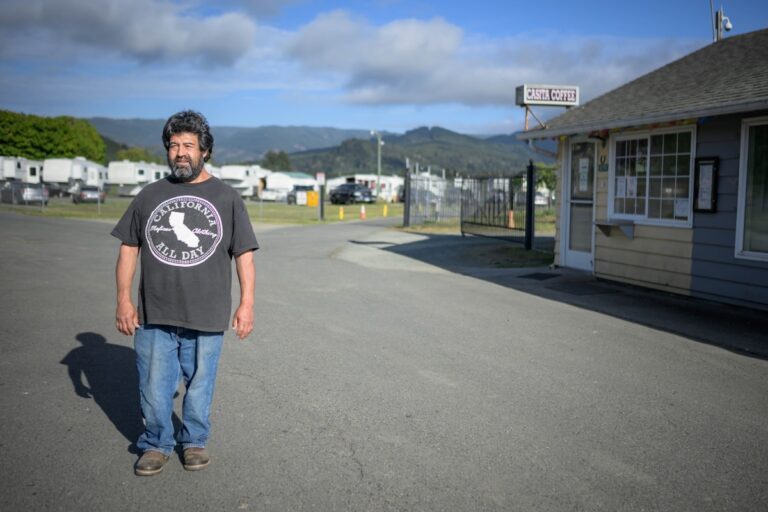
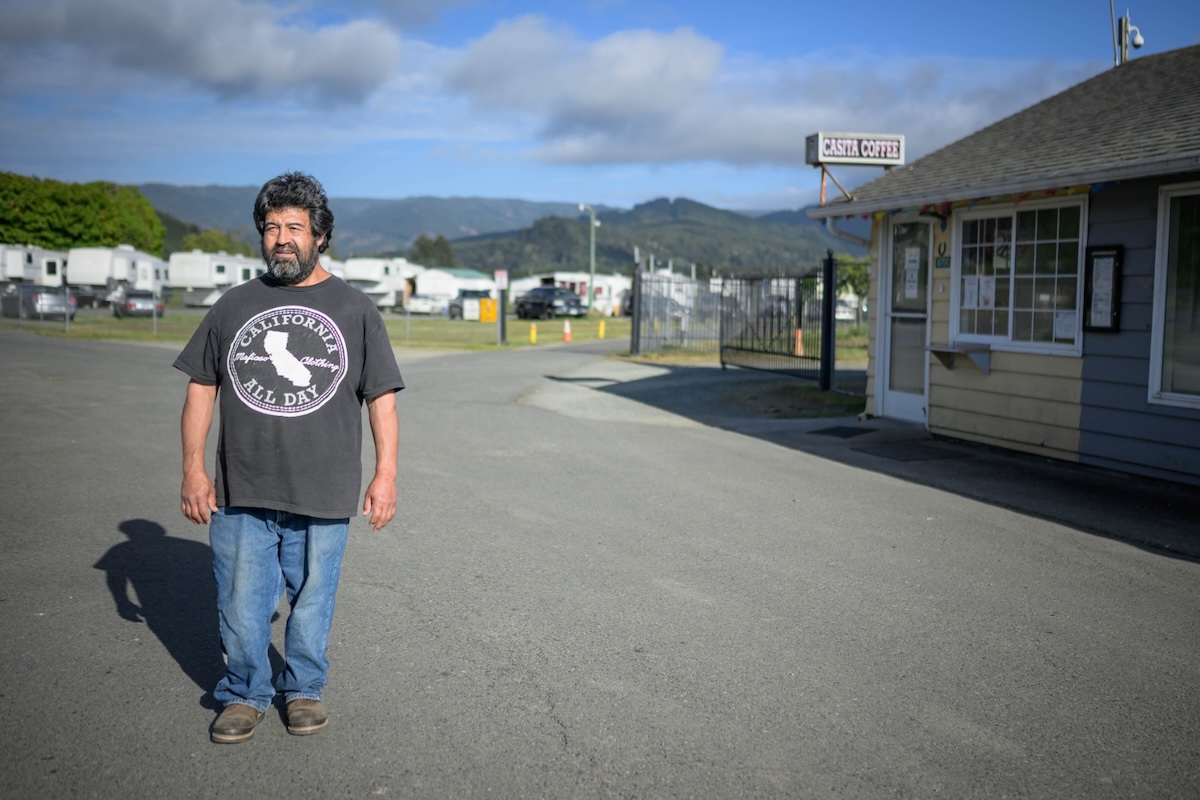
Above: Alvaro Urrea Olivares at the entrance to the mobile home park where he and about 50 migrant farmworkers live in Smith River, Del Norte County. (Credit: Manuel Ortiz)
SMITH RIVER, California – Álvaro Urrea Olivares has a soft, pleasant voice. At 45, his weathered hands reveal decades of work in the lily fields that drive the local economy in this small community in the far north of California.
Smith River is not just rural, residents say, it's remote, rural, California's last frontier, and it's here that the state's plan to expand access to health care to all residents is being tested.
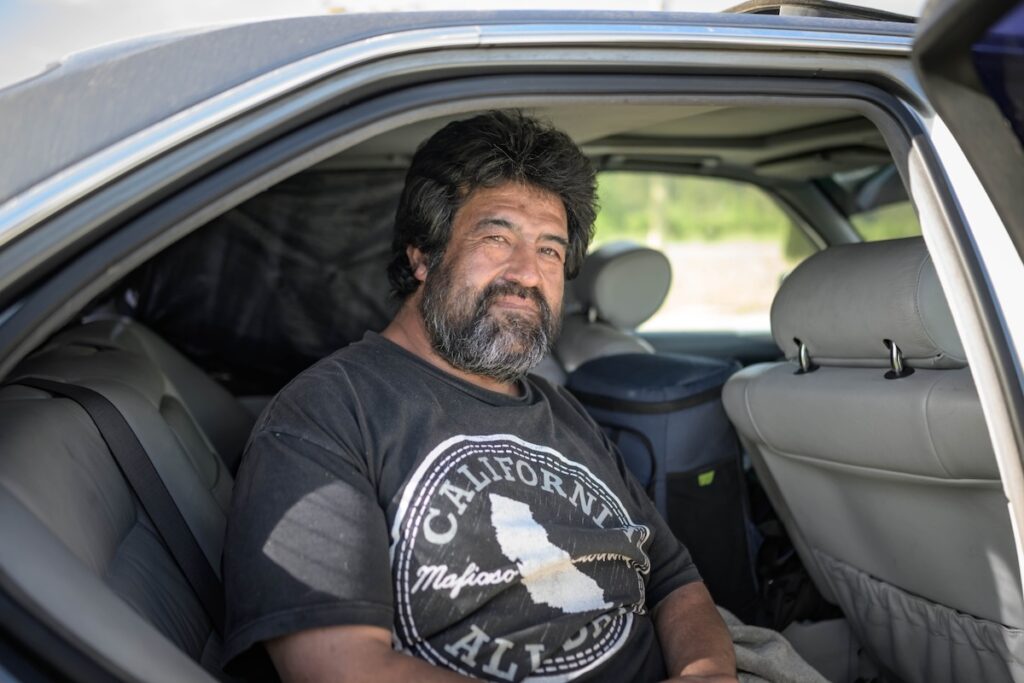
“I don’t have a house. Other people help me here. They help me find work; they give me food and I sleep in my car. It’s not as bad as those who sleep outdoors,” explains Urrea, nicknamed Caballo, pointing to an abandoned BMW.
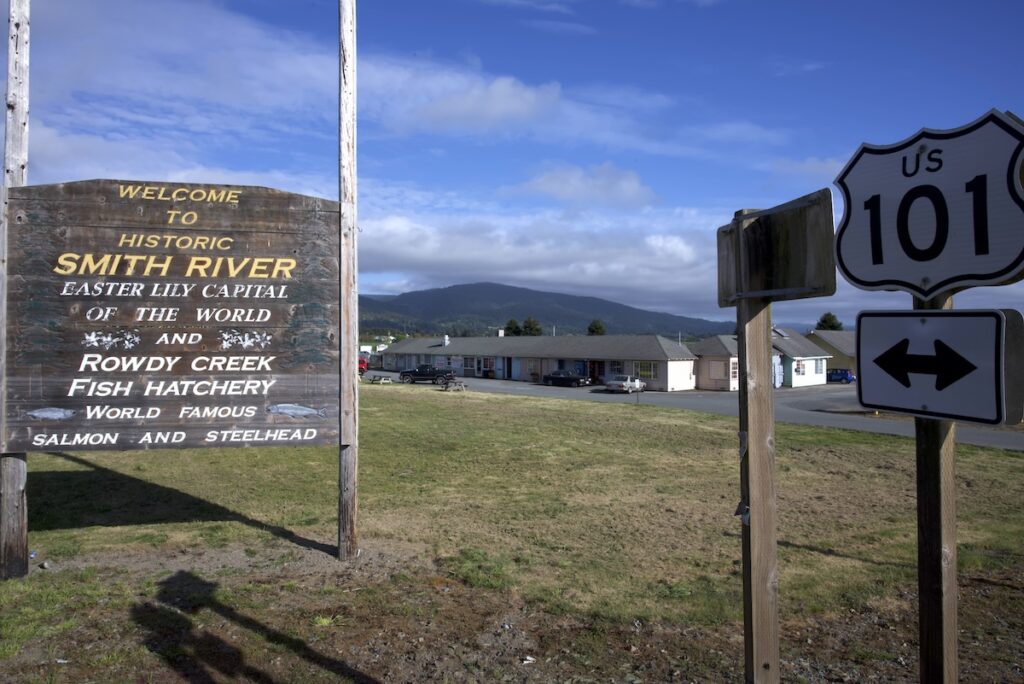
Packed with blankets and personal belongings, the car is parked amid a row of trailers housing about 50 farmworkers and their families. The vast majority are from Veracruz, Jalisco or, in Urrea’s case, Guanajuato. At the park entrance is a yellow sign that reads: “Welcome to Smith River. Easter Lily Capital of the World.”
A sign welcomes visitors to this small mobile home park located on Smith River in rural Del Norte County. The park is home to migrant farmworkers and their families, many of whom work in the Easter lily fields surrounding the area. (Credit: Peter Schurmann)
In years past, migrants — many of them undocumented — would come and go with the lily harvest, returning to Mexico in the fall and then returning to Smith River in the spring to plant. But as border restrictions tightened, many remained in what has become a permanent community. Between planting and harvesting, residents turn to day jobs to survive.
“It’s expensive here,” Urrea continues in Spanish. “When people don’t have work, they can’t pay the rent. I’ve been sleeping in this car for three years.”
Manuel Ortiz reports on the lack of information about Medi-Cal eligibility available to farmworkers in Smith River, Del Norte County, for the radio show Por la Libre. (Spanish only. Click here.) Click here to read an English transcript).
Starting January 1, California made Medi-Cal, the state’s version of Medicaid, available to all residents regardless of immigration status. At the same time, it has also dramatically expanded Medi-Cal services to include help with things like nutrition, mental health and housing support, among other needs.
But news of the expansion has yet to reach farmworkers here, many of whom are uninsured and would potentially qualify.
“Don’t get sick here”
“I got pretty sick a few years ago. They wouldn’t cover my medications,” Urrea says, referring to the clinic she went to for treatment in Crescent City, 15 miles south. “Nowadays I don’t have much work and I don’t have money to pay. So I buy pills at the store when I get sick.”
Pills in the store. It's a phrase you hear from other trailer park residents when asked about their health.
“I don’t know how to get insurance,” says Tino (who did not want to give his last name). Tino, who is in his 30s, has lived here in one of the trailers for two years. “I got sick three months ago and I just took some pills.” He adds: “We are Latinos, immigrants… It’s not easy for us to get insurance.”
Álvaro Urrea Olivares in the car where he has been sleeping for three years. “It is expensive here. When people don’t have work, they can’t pay the rent,” he says. (Credit: Manuel Ortiz)
Smith River is located in the northwestern corner of Del Norte County, a sparsely populated corner of Northern California sandwiched between Humboldt County to the south, the Oregon border to the north, vast forests to the east, and the Pacific to the west. Latinos here make up only 20 percent of the overall population (which is mostly white, with a significant Native American presence), though they make up the vast majority of the region’s agricultural workforce.
And as in many communities here, there is (at least among the farmworkers interviewed for this article) an instinctive distrust of government. Don’t depend on the state. If you get sick, it’s up to you. Or, as one resident commented, “You better not get sick here.”
Spreading the word
Kathleen Moreno directs outreach and enrollment for Open Door Community Health Center, which operates 12 clinics in Del Norte and neighboring Humboldt counties.
“There are people who have not had access to medical care since they have been here,” she says, “and so some of their health conditions are terrifying and out of control.”
As a federally qualified health center (FQHC), Open Door is one of nearly three dozen organizations in 48 of California’s 58 counties that are part of the Navigators Health Enrollment Project, launched by the California Department of Health Care Services (DHCS) to help bring information about Medi-Cal eligibility to local communities. The initiative will run through mid-2026.
Doing so in places like Del Norte, where distances are long and resources are few, is not without its challenges.
The car Urrea sleeps in was provided by a resident of the trailer park, home to about 50 farmworkers and their families, many of them uninsured and unaware of California's efforts to extend health care to all residents regardless of immigration status. (Credit: Manuel Ortiz)
“There is no easy channel of communication up here,” said Moreno, who lives in Crescent City. There are no local Spanish-language radio stations, no newspapers, and Internet access is limited in some areas, he said. “It’s been like this since I’ve lived here for 18 years.”
Open Door relies on informational posts on platforms like Facebook, presentations at local health fairs and community events, and community health workers, also known as Latino Health Coordinators, of which two cover Del Norte and three for all of Humboldt.
Moreno oversees their work. “Their success has been largely based on trust and word-of-mouth referrals… once a family realizes they can trust our coordinators, they tell their family.”
But going directly to the farms has been a challenge, Moreno says. “Obviously, we can’t stop work and the farm owners weren’t thrilled about having people on the farms. So, we posted in the break rooms and brought a healthy snack so everyone could come in and chat. But lunch breaks are short — half an hour — and then it’s back to work.”
Open Door also scanned patient records from 2022 and 2023 to see who had previously accessed care but was uninsured. These individuals were enrolled in emergency Medi-Cal and are now eligible for full-scope Medi-Cal under the current expansion, though many may not be aware of this fact, Moreno acknowledges.
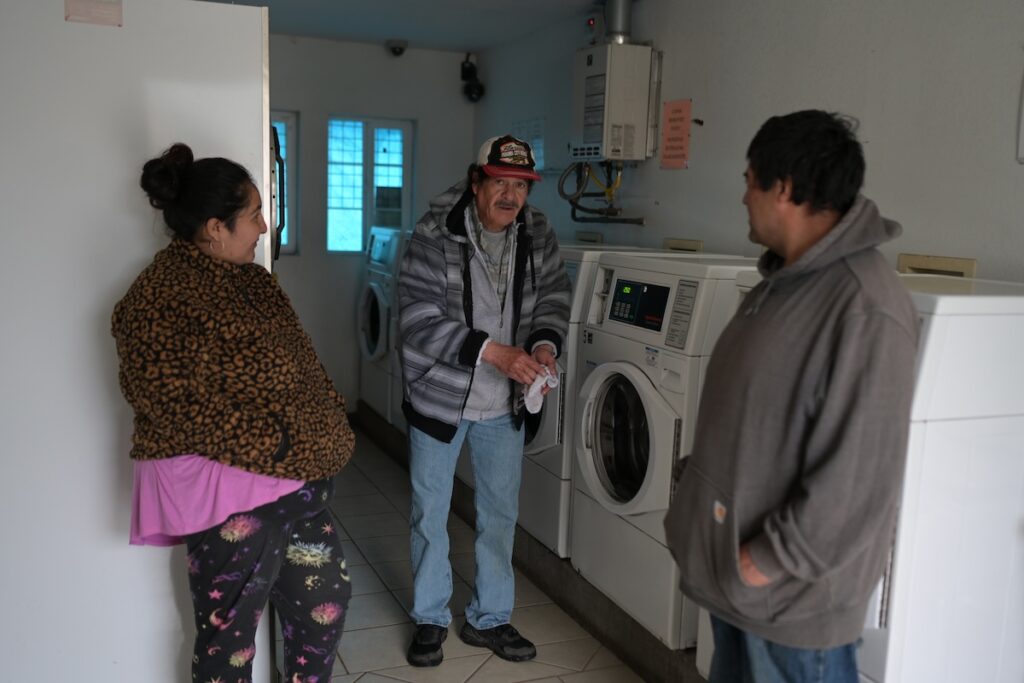
Residents gather at the local laundry, where Urrea goes to escape the cold. People here say the laundry is one of the only communal gathering places for the farmworkers who live here. (Credit: Manuel Ortiz)
Another key barrier is the lack of public transportation. The closest clinic to Smith River is in Crescent City. For serious medical needs, patients must travel to Redding, a four-hour drive south, or San Francisco, a six-hour drive.
There’s also a shortage of providers. “It’s really hard to find providers who want to live and work in Crescent City. Sometimes we find a great provider and they stay. Most of the time, they leave,” Moreno says, noting that there’s only one ophthalmologist in Crescent City who sees Medi-Cal patients, and his waiting list is at capacity.
The policy increases mistrust as undocumented residents have to weigh their health care needs against fears of stirring up anti-immigrant sentiment and jeopardizing their path to citizenship or legal residency by accessing public benefits, which under the previous administration could be grounds for deportation.
“That’s a real concern for people,” Moreno says. “We heard from one person who said, ‘If my information gets out and I get deported, at least I’ll have access to health care.’”
“You have to take care of yourself”
Urrea has lived in Smith River since he first arrived from Mexico more than 30 years ago. (Credit: Manuel Ortiz)
Back in Smith River, trailer park residents were sometimes unaware and uncertain about the current Medi-Cal expansion.
“I had never heard of Medi-Cal,” says Alberto Hernandez, a native of Chiapas who has lived here for the past 11 months. When asked what he does when he gets sick, he shrugs. “I don’t know… it’s very expensive here. Maybe go back to Mexico.”
Anancio Hernandez works as a local chef. “A month or two ago I had some pain. But I kept working, even though I was sick,” he says. “I don’t have insurance, so I didn’t go to the hospital.” Asked if he would sign up for Medi-Cal if given the chance, he nodded. “I’ll go look into it to see if this opportunity exists.”
For his part, Urrea shares that his mother, who also lives in Del Norte, was recently hospitalized after suffering a stroke. She lost sight in her left eye, he says. Like him, she does not have insurance.
And while his affection for the community and the region is clear (he's eager to show visitors the local beaches, where he says he sometimes goes to clear his head), he is clear-eyed about the challenges.
“When you're dying, you have to take care of yourself. That's the bad thing about it.”
Additional information by Manuel Ortiz.
This is the second in a series looking at Medi-Cal expansion in rural Northern California. You can read the first part here here. This project is a collaboration between EMS and Peninsula 360 Press and was funded by the California Health Equity Impact Fund 2024 from the USC Annenberg Health Center.












 This publication was supported in whole or part by funding provided by the State of California, administered by the