The end of October is approaching and with it the celebration of the Day of the Dead. For now, here is the local news from October 15 to 21 that you should know to stay up to date.
‒ 0 ‒
This Thursday, October 20, the mega seismic drill “Shakeout” was held, which seeks to unite and help people around the world to raise awareness and practice earthquake safety, an event that several cities in California have joined.
Great ShakeOut earthquake drills serve as a community practice for getting to safety during an earthquake, and organize the community, school or organization to update emergency plans and supplies to prevent damage and injuries.
– 0 –
The San FranDISCO pop-up skating rink made its debut at the San Francisco Civic Center last Saturday.
It will be open Wednesday through Sunday from noon to 8 p.m. Admission fees are $5 for those under 18 and $15 for those 18 and older.
The pilot program will be evaluated after 3 months and there is a possibility of time extension after the results of such evaluation.
– 0 –
A house fire in San Francisco's Inner Sunset neighborhood Friday morning left two people injured.
The fire, according to Jonathan Baxter, lieutenant of the San Francisco Fire Department, started in the garage and spread throughout the house and was recorded at 1600 Eighth Avenue.
The resident was rescued and treated at the scene, but is in critical condition, while a second person suffered minor injuries. The cause of the fire is currently under investigation.
– 0 –
San Mateo County leaders launched the “San Mateo County Gun Violence Prevention Program.”
The program seeks to remove firearms from the hands of people charged with serious crimes, domestic violence restraining orders, hate crime convictions and other charges that pose a risk and to expedite requests for gun restrictions.
San Mateo County District Attorney Stephen Wagstaffe said in a statement that the program "will save lives."
– 0 –
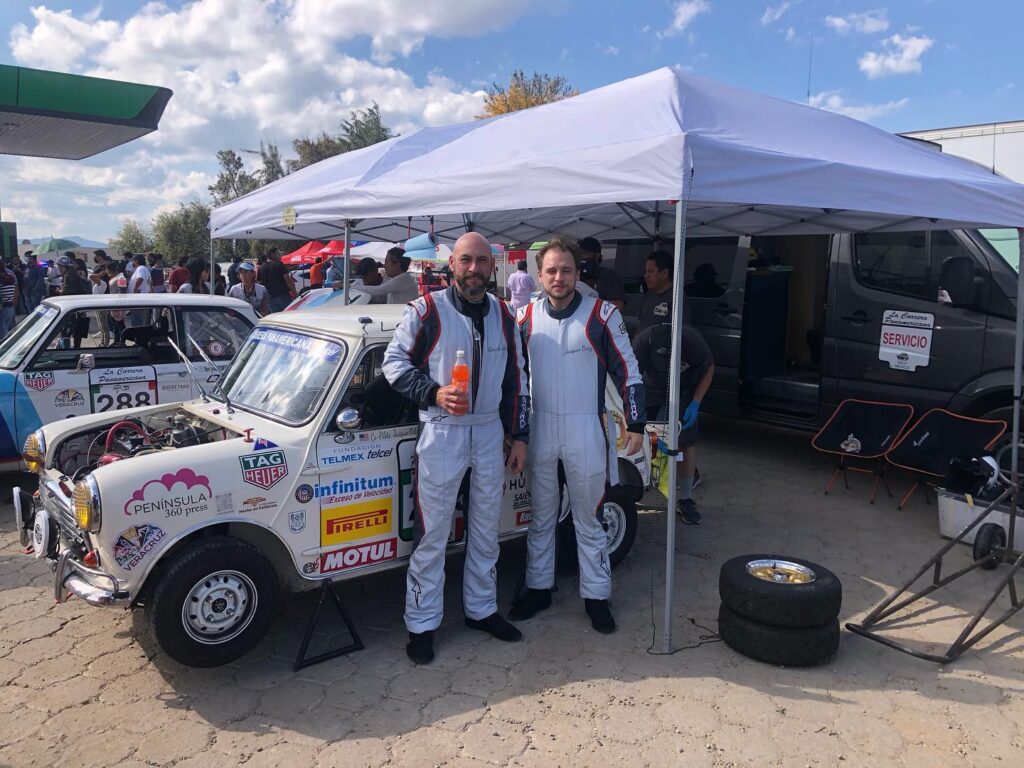
Redwood City residents Gerardo Ortiz and his son Joaquin Ortiz participated in the 35th edition of the Carrera Panamericana with the Ortiz team.
The Pan-American Race takes place in Mexico and began last Friday, October 14 in Veracruz and ended on Thursday, October 20 in Durango.
The Ortiz team won first place in the Historic A category of the race.
The midterm elections in the US will be held on November 8, followed by the general election in California, and once voters have started receiving their ballots, this time, voters will be able to decide whether to allow online betting in addition to roulette, dice games and sports betting.
Measures 26 and 27 are part of the 7 state propositions in which Californians will have to make a decision to vote for or against, here we explain what they are both about.
And knowing and staying informed about electoral decisions that may affect the lives of residents in the state is of utmost importance. Recently, the session "Pros and cons electoral initiatives presented by the League of Women Voters of San Mateo County" was held through the organization Thrive.
But what are electoral measures?
League members Linda Atkinson and Kathy Wheeler, who led the briefing, noted that ballot measures, or propositions, are proposed laws that are presented to the public for a vote.
Propositions can change existing laws and sometimes amend the California Constitution. Propositions can be placed on the ballot either by individuals who gather enough signatures on a petition or by state legislators.
The League of Women Voters of San Mateo County suggests asking yourself some important questions about each proposition when casting your vote: Does the ballot measure address a real problem? Is it the best solution to the problem or is it too complex? Who are the stakeholders and what do they gain? and What are the tax implications?
Measure 26 seeks to allow roulette, dice games and sports betting on tribal lands.
The ballot question is: Should California legalize sports betting roulette and craps games at tribal casinos?
Currently, California allows the Lottery, horse racing betting parlors, gambling, and Native American-owned casinos in California. However, craps, casino-style gambling, and betting on sporting events are illegal in the state.
If Proposition 26 passes, it would allow tribal casinos to run roulette and craps games on-site for sports betting for people 21 and older.
The ballot measure would define sports betting as wagering on the outcomes of professional, collegiate or amateur sporting and athletic events, with the exception of high school sports and events involving a California varsity team. Individuals would have to be 21 years of age to participate in legal sports betting.
The ballot measure would enact a 10 percent tax on profits derived from sports betting at racetracks. The state government would be required to distribute the revenue as follows: 15 percent to the California Department of Health to research, develop, and implement programs for problem gambling and mental health prevention and to provide grants to local governments to address problem gambling and mental health; 15 percent to the Bureau of Gaming Control to enforce and implement sports betting and other forms of gambling within the state; and 70 percent to the General Fund.
The ballot measure would also legalize roulette and craps games at tribal casinos; however, compacts between tribes and states would need to be amended before these games could be offered.
Supporters of Prop 26 say it would continue the 20-year legacy of allowing closely regulated profiteering to support Native American economies. They also believe it is the most responsible approach to authorizing sports betting and would promote self-sufficiency for Native American tribes.
Opponents say the proposition would massively expand gambling in California to benefit large tribal casinos, leave casino workers unprotected from wage and hour security, harassment and anti-discrimination laws. They say gambling is addictive and that legalizing more gambling is bad for public health.
Measure 27, meanwhile, seeks to legalize sports betting and raise money for the homeless prevention fund initiative.
The question is: Should California allow online and mobile sports betting for people 21 and older?
Proposition 27 seeks a constitutional amendment and statute to authorize a gaming tribe, an online sports betting platform with an operating agreement with a gaming tribe, or a qualified gaming business with a market access agreement with a gaming tribe to operate online sports betting for individuals 21 years of age or older in the state, but off of tribal lands.
The amendment would ban online sports betting on youth sports. The proposed law would create the Online Sports Betting Enforcement Division within the Department of Justice. The bill would give the division authority to regulate the online sports betting industry and investigate illegal sports betting activities. The amendment would take effect on January 1, 2023.
In turn, the proposed law would establish the California Online Sports Betting Trust Fund. Revenue from licensing fees, renewals, and the sports betting tax would be deposited into the fund. After deducting regulatory costs, 85 percent of the fund’s revenue would be allocated to the California Mental Health Support and Homeless Solutions Account for permanent and interim housing and 15 percent of the revenue to the Tribal Economic Development Account, which would be established by the initiative to provide funding to Indian tribes to expand tribal government, public health, education, infrastructure, and economic development.
Currently, mobile and in-person sports betting are illegal in California.
Supporters of Prop 27 say the measure will provide hundreds of millions of dollars to support programs that help people with mental health issues, homelessness and addiction in California. They also say it will benefit all tribes in the state, especially rural and economically disadvantaged tribes that do not own large casinos.
Opponents say it is a deceptive measure promoted by out-of-state companies to legalize online and mobile sports betting. They also point out that online gambling is not a solution to homelessness or other social ills and will open more people up to gambling addictions.
Students from communities of color who are victims of discrimination, through the association Students for Fair Admissions (SFFA), are suing Harvard and the University of North Carolina.
SFFA represents students who have been rejected by universities and who say they have been victims of discrimination due to admissions policies.
SSFA has sued Harvard and the University of North Carolina over their race-based admissions applications, alleging that Harvard is violating the Civil Rights Act of 1964 by discriminating against Asian Americans, but none of the victims have testified.
The association has also asked the Supreme Court to overturn Grutter v. Bollinger, which allowed the University of Michigan Law School to take race into account in admissions in an effort to achieve greater diversity.
And it is that both Harvard and the University of North Carolina have argued that racial criteria are used to increase diversity on their campuses.
"Affirmative action cases have remained on the books and there is strong precedent on the books for the continued use of race in admissions policies," said John C. Yang, executive director of Asian Americans Advancing Justice (AAJC), at a press conference organized by Ethnic Media Services where experts gathered to discuss what is at stake for students of color in maintaining racial criteria in university admissions policies.
Yang also noted that at Harvard, admissions of Asian-American students have increased significantly, saying, “They make up nearly 28 percent of the most recent admitted class, even though they represent about 7 percent of the U.S. population.”
District and appellate courts have concluded that there is no evidence of discrimination against the Asian-American community.
Additionally, Yang noted that if Harvard were to stop considering race in admissions, the number of African-American students would drop from 14 percent to 6 percent, while the number of Latino students would drop from 14 percent to 9 percent.
"They're betting against fairness and opportunity. But history is on our side, the Constitution is on our side, the law is on our side, and the facts are on our side," said David Hinojosa of the Lawyers' Committee for Civil Rights Under Law.
Hinojosa also noted that “the stakes could not be higher” and denounced that many people are betting against affirmative action, which will affect admission opportunities for communities of color.
Admission policies provide opportunities
"I went to public schools all my life, and from a very young age, I often translated and advocated for my parents," Harvard graduate Sally Chen told the press conference, noting that Harvard's admissions policies allowed her the benefits of an education as the daughter of immigrant workers.
She also noted that building interracial coalitions has allowed her to advocate for policies that provide greater educational opportunities for all.
Michaele Turnage-Young of the Legal Defense Fund noted that students from minority communities have fewer opportunities to be admitted to universities and are three to six times more likely than white students to attend a high-poverty school.
“All students deserve a fair chance at college,” Turnage-Young said, warning that erasing racial criteria from admissions policies could make it impossible for communities of color to represent themselves on their applications.
This publication was supported in whole or in part by funding provided by the State of California, administered by the California State Library.
This Thursday, October 20, the mega seismic drill “Shakeout” will take place, which seeks to unite and help people around the world to raise awareness and practice earthquake safety, an event that several cities in California have joined.
While ShakeOut started in California, this event has also been organized in many other states and countries. International ShakeOut Day is every third Thursday in October.
ShakeOut is a one-minute earthquake drill: you decide when, how, where and with whom you want to do it.
Many areas of the world are prone to earthquakes, and California, especially the Bay Area, is very prone to earthquakes. People can be anywhere when an earthquake occurs: at home, at work, at school, or even on vacation, so it is important to take the necessary steps and know what to do in the event of such an event.
Great ShakeOut earthquake drills are an opportunity to practice being safer during earthquakes, while also calling on you to organize your community, school, or organization to update emergency plans and supplies and secure your space to prevent damage and injury.
The main purpose of the drill is to prepare the world for earthquakes and everyone and everywhere can participate. Those interested in participating can register for free at www.shakeout.org/register to be counted and included in your community, receive email updates, and have the peace of mind of knowing you can handle any future earthquakes.
Duck, Cover, and Hold On
Why is it important to do a drop, cover, and hold drill? To react quickly, you must practice often. You may only have a few seconds to protect yourself in an earthquake before a strong jolt knocks you off your feet or drops something on you. Practicing helps you be ready to respond.
If you are inside a building, do not move more than a few steps, then Drop, Cover, and Hold On: DROP to the ground – before the earthquake knocks you down! – TAKE COVER under a sturdy desk or table, and HOLD ON until the shaking stops.
Stay inside until the shaking stops and you are sure it is safe to leave. In most buildings, you will be safer if you stay where you are until the shaking stops.
If you are outdoors when the shaking begins, you should find a clear spot away from buildings, trees, streetlights and power lines, then drop, cover and hold on. Stay there until the shaking stops.
If you are driving, pull over to a clear spot, stop, and stay there with your seat belt fastened until the shaking stops. Once the shaking stops, proceed with caution and avoid bridges or ramps that may have been damaged.
Ground shaking during an earthquake is rarely the cause of an injury. Most earthquake-related injuries and deaths are caused by collapsing walls and ceilings, flying glass, and falling objects. It is extremely important for a person to move as little as possible to get to the safe place they have identified because most injuries occur when people try to move more than a short distance during the shaking.
Look around now and identify safe places such as under a sturdy piece of furniture or against an interior wall in your home, office or school so that when shaking starts you can respond quickly. An immediate response to get to a safe place can save lives. And that safe place should be just a few steps away to avoid injury from flying debris.
A new pop-up skating rink, called San FranDISCO, made its grand debut at the San Francisco Civic Center this past Saturday.
Mayor London Breed announced the opening of the new 5,000-square-foot skating rink at Fulton Plaza.
The pop-up rink will showcase the best of roller skating culture, with live DJ music, disco balls and coloured lights.
The new skating rink is a three-month pilot program with the possibility of extension following evaluation by the city with partners and the community.
San FranDISCO will be open to the public Wednesday through Sunday from noon to 8 p.m. Youth under 18 can skate for $5 and those 18 and older can skate for $15—admission fees cover entry and skate rental.
With something for everyone, the track is a welcome new outdoor entertainment for residents and visitors alike to enjoy.
“I’m happy that our families, kids and residents can come skate right in front of City Hall in Fulton Plaza,” Breed said. “Reclaiming our city will require everyone in our community to work together on ideas like this rink that get people excited about San Francisco. I want to thank the Civic Center Community Benefits District for their support of this project and we are proud to partner with 8 Wheel Church, a San Francisco institution.”
Kate Sofis, executive director of the Office of Economic and Workforce Development, said transforming the city's public spaces for unique activities, such as a roller skating rink, speaks to the fun and spirit of San Francisco, so more events that bring people together and support local businesses are expected in the coming months.
“Bringing families, workers, residents and visitors here to San FranDISCO is the goal of the events and activities the city is organizing as part of our economic recovery,” he said.
In addition to the high-quality rink floor protected from the weather with a roof canopy, the rink facilities feature restrooms, a skate rental kiosk, and spacious public seating areas where anyone can enjoy watching the skaters in action.
Instructors will offer 90-minute skating sessions at 12:00, 14:00, and 16:00, and a two-hour session from 18:00 to 20:00 on Wednesday through Sunday evenings. Interested parties can find out more on the website www.skatesanfrandisco.com.
The short answer is because the phrase emerged as “a racist slur” that has been adopted and promoted by white supremacists.
And because it minimizes the Black Lives Matter movement, which was born to dismantle a system that was designed to criminalize people of African descent. It's a phrase frequently used by supporters of former President Donald Trump.
But the worst thing is not that Kanye does not measure the impact of his words. The worst thing is that he insists on running for president and is terrified that, in one attempt, he might get it. And it is that the extreme right spreads dangerously.
We saw this in Brazil, where the elections had to go to a second round because the current president, Jair Bolsonaro, obtained 43.21% of the votes, despite previous polls giving him a maximum of 371% of the votes.
There is also the victory of the far right in the Italian legislative elections, where the conservative coalition led by Giorgia Meloni won so overwhelmingly that it also achieved an absolute majority in Parliament.
According to official data, never before have extremists governed one of the bloc's major economic powers, and never before has the head of government of a founding country of the EU been a far-right extremist.
And the problem is that the European far right today has disturbing characteristics. For example, everyone agrees that societies should be unequal: that white Europeans should be above Europeans who are Arab, black, Asian or simply darker than usual.
They are also extremely nationalistic.
Does a familiar speech sound familiar to you?
In 2018, Kanye West met several times with then-President Donald Trump while proudly wearing the classic red cap with the slogan: "Make America Great Again."
But the rapper's speeches have been deeply offensive, violent and dangerous. Once, during a 2018 interview with TMZ, West said that slavery wasn't real.
On another occasion, when he was "campaigning," his stance on abortion was questioned and he broke down in tears as he told a story of "how he almost killed his daughter," but God stopped him.
The rapper said he believes abortion should be legal, but proposed something called a "maximum increase," which would involve giving "a million dollars or something" to women who have a baby to discourage them from terminating their pregnancies.
His stance on gun control was also controversial, to say the least.
West also spoke out against increased gun control, saying that "shooting guns is fun" and that if people stopped owning guns, other countries could invade the United States and "enslave" its population.
Now with the rapper's new scandal, his t-shirt and his stance that the Black Lives Matter movement was all a lie and his closeness to the conservative US politician, Candace Owens, the question is whether he is seriously thinking of making that his campaign slogan and, even worse, there will be those who buy into his idea and jump on that train.
Carolina Hernandez SolisFor more than 20 years I have worked as a journalist in Mexico. I started as a sports reporter at Grupo Reforma.
Afterwards, I covered local, political and community news in Sinaloa and Tamaulipas, states with high levels of drug trafficking activity.
I saw colleagues die just for exercising their profession.
I later worked as Editor-in-Chief at Reporte Indigo and as Editorial Manager at Código Magenta, in Nuevo León.
Just two years ago I left the traditional work structure to start my own business as an independent journalist. I produced the video column Yo qué voy a saber (What am I going to know) with which I always sought to open a dialogue on topics that we generally don't like to talk about and to bring them down to earth without so much fuss.
I currently have a podcast called Sin Esdrújulas and I participate with a video column in Latinus and another in Ruido en la Red.
I teach journalism classes at the University of the Gulf of California.
I actively participate in social networks because I am convinced that it is necessary to put important issues on the table, without filters, accessible to all, without subtleties, and from a simple perspective that manages to move consciences.
All, or almost all, of us have a reference to our first days of life. These generally bear the name and shape of a traditional hospital where our parents decided that they would give birth to us.
However, physician and gynecologist Brenda Garcia comments for "Bay Area Portraits" on a little-known concept: the golden hour of humanized childbirth.
As with most traditional births, says Dr. Garcia, the focus of the birth of a baby is on the surgical procedure, which leaves the family aside.
Generally, the mother is placed on a bed, accompanied only by other women who are going through the same process, giving birth.
Humanized childbirth, while still taking place in a hospital, does operate from another perspective, with a new perspective and way of carrying out a process that does not have to be overwhelming and traumatic.
The attention of humanized birth is placed on the woman from before conception until the cutting of the baby's umbilical cord, carried out in the arms of its mother, with both feeling the beating of their hearts.
This is because the first hour after birth is one of the most important for creating healthy skin-to-skin bonds between mother and newborn.
"The process is dictated by the woman," says García when referring to the moments before delivery. The woman, she says, is the one who sets the guidelines for moving forward in the process, she is the one who indicates in what position and what movements she prefers in order to advance the birth of the baby, all with the highest medical care that the mother and the baby can have.
One of the differences between humanized childbirth and deliveries carried out at home or with midwives, lies mainly in the fact that humanized childbirth is carried out in a hospital, where all the necessary care and resources are available to safeguard the integrity of the mother. and the son.
It is worth noting that gynecologist Brenda García is a Medical Surgeon from the Justo Sierra University in Mexico City and has a Postgraduate degree in Ultrasonography from the Mexican Association of Ultrasound in Medicine of AMUSEM, a Master's degree in menopause and climacteric from the Menéndez Pelayo International University and a specialist in Gynecology and Obstetrics from the Mexican Council of Gynecology and Obstetrics AC
For more details about Brenda Garcia and information about humanized childbirth and the golden hour visit the interview on Brenda Garcia's Instagram account. @peninsula360press.
Por primera vez, la escudería Ortiz, conformada por Gerardo Ortiz y su hijo Joaquín Ortiz, residentes de Redwood City, participan en la 35° edición de la Carrera Panamericana, la cual se realiza en México y que busca premiar a los mejores pilotos en 9 categorías.
Así, el «Master» Ortiz, como lo llaman sus alumnos de Taekwondo en Casa Círculo Cultural a Gerardo, se lanzó a México, su tierra natal, para hacer uno de sus sueños realidad en compañía de su hijo y a poner en carreteras el nombre de migrantes mexicanos en Redwood City.
La carrera tipo rally inició este viernes 14 de octubre en Veracruz, México; y culminará el próximo jueves 20 de octubre en el estado de Durango.
Gerardo Ortiz llevaba mucho tiempo deseando esta carrera, pero por temas migratorios no había podido realizarla. Sin embargo, hoy junto con Joaquín, quien es su mano derecha y copiloto en el evento, están colocándose a la cabeza en su categoría, la Histórica A, donde conduce un Morris Mini Cooper 1964, el cual fue restaurado por él mismo.
«El ausente», nombre del auto que conducen los Ortiz, ya recorre las carreteras de México pues inició la mañana de ayer su recorrido desde Boca del Río, Veracruz, hasta el centro de Oaxaca, para hoy dar inicio a la segunda etapa con dirección a la Ciudad de México, donde ya se encuentran para relajarse, antes de partir con rumbo a la ciudad de Querétaro este domingo 16 de octubre.
Si bien el Mini Cooper fue ensamblado en Nueva Zelanda en 1964 e importado a California, Gerardo lo adquirió en 2004 para restaurarlo, una labor a la cual invirtió cientos de horas de trabajo y dedicación, además de unos buenos ahorros.
El auto debe cumplir ciertos requisitos para competir como auto de carreras, pues debe cumplir con la normativa internacional de la Federación Internacional del Automóvil ‒FIA‒, tal es el caso de una jaula de protección antivuelco, un depósito de gasolina sellado ‒para que no se derrame en caso de volcadura‒ extintores especiales, así como frenos y suspensión especiales, entre muchas otras características.
Cabe destacar que participar en la 35° edición de la Carrera Panamericana no lo es todo, pues Gerardo junto con el piloto Pedro Vidal de Miami, llevaron material escolar y otras necesidades a niños del orfanato Casa Hogar Santa Julia Don Bosco, A.C.
Gerardo y Joaquín aún tienen un largo camino por recorrer, pues después de llegar a Querétaro este domingo, se dirigirán rumbo a Morelia, Michoacán, para luego llegar a Guanajuato, de ahí partir a San Luis Potosí, y finalmente culminar en Durango.
A little history
old stage
La carrera tipo rally inició en el año de 1950, la cual fue ideada como un medio de atracción hacia los turistas e inversionistas y se utilizó como ruta de la misma la entonces recientemente creada carretera panamericana.
En ese año, solo registró la inscripción de automóviles fabricados por alguna de las grandes marcas estadounidenses, en los años subsecuentes despertó el interés de las marcas europeas que fabricaban automóviles deportivos y de gran turismo, convirtiendo pronto la carrera en un escaparate en el que las marcas como Ferrari, Porsche, Mercedes Benz y Lancia, sin embargo, y debido a tragedias en el automovilismo, la carrera paró en 1954.
Fue en 1988, cuando un grupo de promotores decidieron revivir la celebración de la Carrera Panamericana, y se convocó a diversas agrupaciones automovilísticas del mundo para su participación, reservando la competencia para automóviles fabricados entre los años de 1940 y 1965, dependiendo de la categoría, pero permitiendo la modernización de las unidades en los aspectos de suspensiones y seguridad.
Desde sus inicios, la prueba ha transcurrido sobre carreteras federales, estatales y secundarias de México a lo largo de siete días, con un recorrido total aproximado de 3 mil kilómetros.
Actualmente, los modelos de automóviles permitidos se dividen en cuatro grupos y nueve categorías:
Grupo A, de automóviles panamericanos, con las categorías Turismo de producción, Turismo mayor, Sport menor y Sport mayor;
Grupo B, de automóviles históricos, con las categorías Histórica A, A Plus, B y C;
Grupo C, de automóviles panamericanos originales, y
Grupo D, de automóviles de exhibición. En este grupo entran todos los vehículos que no puedan ser agrupados en los anteriores. Es un grupo no puntuable y sin derecho a premiación.
Fall is in full swing and one of the most anticipated dates for kids and adults is approaching, where costumes, pumpkins and candy will be the stars of an unparalleled Halloween in San Mateo County. In the meantime, here is the local news from October 8 to 14 that you should know to stay up to date.
The document released last week, titled “Substance Use Trends in San Francisco Through 2021,” showed that 625 people died from overdoses involving opioids, cocaine or methamphetamine in the city.
That figure marked an 11 percent decrease from 2020 numbers. However, overdose deaths in 2021 were still 41 percent higher than reported in 2019. The health department said in a news release that last year’s numbers continue to reflect the city’s substance abuse crisis.
‒ 0 ‒
Santa Clara County's health care system could face a mass exodus of doctors due to poor working conditions and lack of respect from management.
More than 200 of the county’s 288 employed physicians do not plan to stay at Santa Clara Valley Medical Care — VMC — nearly 69 percent of whom plan to leave the system in the next three years, according to a survey by Valley Physician Group. The group is a union representing more than 450 county-employed physicians.
Among those planning to leave, three in five physicians cited disrespect from county administration as the reason. More than 70 percent of physicians said they feel worse about their jobs compared to last year.
‒ 0 ‒
The East Palo Alto City Council has placed Measure L on the November 8, 2022 ballot for voter consideration, which is intended to help fund general government uses and community priorities such as housing.
Measure L provides for programs that help pay rent for needy tenants; affordable and accessible housing programs; protect local tenants and landlords from displacement and homelessness.
Residential rents in the East Palo Alto area have increased substantially, transferring income from tenants to landlords, most of whom live outside of East Palo Alto.
‒ 0 ‒
The City of East Palo Alto has approved the 2022 Water System Master Plan (WSMP) and allocated nearly $8.4 million to design and construct several key City water infrastructure projects over the next two years.
The WSMP aims to provide the city with a comprehensive plan for improving drinking water infrastructure over the next twenty years to maintain the reliability of the water system and support planned development in the city.
‒ 0 ‒
Stanford Medicine, in conjunction with Santa Clara Family Health Plan, has made workshops available for community health workers focused on mental health, which seek to provide the necessary tools to cope and help others.
The series will consist of 3 workshops in total and will focus on mental health with workshops dedicated to children and young people, adults and community health workers or promoters.
Those interested can choose which workshops to attend, and must register to receive additional information, as well as a link to join the workshops via Zoom and an invitation to the calendar.
‒ 0 ‒
Public health officials plan to go door-to-door in East Palo Alto neighborhoods next week to hear details about residents' climate challenges and how they are coping.
Survey teams are prepared to ask residents how they are threatened by extreme heat, rising sea levels, wildfires, air quality and mosquitoes.
The survey results will be used to inform officials about what resources East Palo Alto residents need and will also shape an emergency preparedness plan for the community.
‒ 0 ‒
Over the past two years, San Mateo County residents, like others across the country, have had to deal with loss, whether in health, employment, economic or even loved ones, situations that have worsened in communities such as the Latino community, so mental health care has become a critical point to address in order to move forward in daily life through the Power of Healing.
About one in eight people worldwide live with at least one mental disorder, with depression and anxiety accounting for 25 percent of these cases. In the United States, approximately 40 percent of Hispanic adults say they are experiencing symptoms of depression, said Diana A. Otero, senior director of Special Projects at the Latino Community Foundation.
To bring the topic to the table, the foundation held an information session called “The Power Of Healing: Latinos & Mental Health,” where, together with community leaders and non-profit organizations that support the Latino community in the Bay Area, it sought to provide mental health assistance to those who are going through a crisis due to the losses generated during the pandemic.
‒ 0 ‒
Redwood City Police Department officers arrested a juvenile suspect after he was detained with a firearm that was allegedly fired on the night of August 2.
And it was during the night of August 2 that around 8:43 p.m., officers responded to a call to the 700 block of Cedar Street due to a report that shots had been fired with a firearm.
When officers arrived, one subject attempted to flee the scene, but officers quickly caught him. Following an investigation, on October 5, Redwood City detectives served an arrest warrant and search warrant at the residence of 19-year-old Jesus Jahir Sosa Ortega, located in the 700 block of Cedar, where he was arrested on charges of negligent discharge of a firearm, among others.
Voters in Redwood City and San Bruno will consider changes this fall to the term limits for each city's council.
La Medida BB de San Bruno implementaría límites de mandato para el Concejo Municipal y el alcalde por primera vez en más de 30 años. La ciudad no ha tenido límites de mandato para cargos locales desde 1988, cuando un tribunal estatal anuló una medida de límite de mandato aprobada por los votantes que se aprobó originalmente en 1977.
A su vez, la medida limitaría a los miembros del Concejo Municipal a cumplir tres mandatos de cuatro años y al alcalde a cumplir seis mandatos de dos años. Todos los funcionarios estarían limitados a 12 años consecutivos en todo el consejo y la alcaldía.
La ciudad encargó una encuesta a principios de este año sobre el restablecimiento de los límites de mandato y encontró el apoyo del 65.6 por ciento de los votantes probables. Requeriría una mayoría simple para ser adoptado.
La Medida P de Redwood City se enfoca principalmente en el límite existente de mandato de dos años para el alcalde de la ciudad.
Actualmente, el concejo de la ciudad de siete miembros elige a uno de ellos para que sea el alcalde de la ciudad, con el título rotando entre el concejo.
La Medida P cambiaría el mandato del alcalde a un año en un esfuerzo por permitir que más concejales, que sirven un solo mandato de cuatro años, se desempeñen como alcaldes de la ciudad.
Ambas medidas están en la boleta electoral de las elecciones generales del 8 de noviembre. La Medida P requerirá una mayoría simple para ser adoptada por los votantes de Redwood City.