
Autoridades han llamado a los residentes del condado de San Mateo a participar en el 18º Día de Preparación para Desastres el próximo 30 de julio, con la finalidad de conocer y aprender sobre la respuesta oportuna ante emergencias.
El evento gratuito y familiar que tendrá lugar de 10:00 a 14:00 horas en el Centro de Eventos del Condado de San Mateo, brindará la oportunidad de explorar vehículos de respuesta a emergencias, conocer robots de escuadrones antibombas y asistir a clases de primeros auxilios y RCP.
Además, los participantes podrán aprender sobre recursos comunitarios y más.
El evento es organizado por la Supervisora del Condado de San Mateo, Carole Groom, con el apoyo del Departamento de Manejo de Emergencias.
Durante el evento, los asistentes elegibles también podrán participar en la campaña de donación de sangre que pondrá a disposición el Centro de Sangre Stanford, para la cual es necesario hacer una cita. Los interesados pueden consultar la disponibilidad de horario y hacer su registro dando click here.
Entre los recursos que los visitantes podrán visitar, estarán mesas de diversas organizaciones donde se podrá obtener más información sobre lo que necesita para prepararse, qué recursos locales están disponibles en caso de un desastre y conocer a los socorristas locales, desde voluntarios hasta profesionales.
Para aquellos que necesitan adquirir equipo de prevención, habrá mesas de vendedores que facilitarán la compra de sistemas de filtración de agua, suministros de primeros auxilios, paquetes de supervivencia e incluso generadores.
A su vez, se ofrecerán soluciones solares, extintores de incendios y posiblemente tiendas de campaña.
Si usted es una organización que desea una mesa de recursos o es un minorista que desea espacio en el evento, contacte con Susie Castoria a través de su correo: SCastoria@smcgov.org.
El evento es para todas las edades, contará con estacionamiento y perros calientes gratuitos. Los suministros de emergencia también estarán disponibles para los asistentes.
Las primeras aceras nuevas ya están abiertas en una importante Middlefield Road redevelopment a través de North Fair Oaks.
Las aceras abiertas y la instalación de nuevos postes de alumbrado público marcan un hito en un proyecto para crear una calle más segura y llevar a los vecinos y visitantes a disfrutar de esta área comercial.
«Con las nuevas aceras abiertas, esta es la primera oportunidad para que todos tengan una idea de cómo se verá el proyecto terminado», dijo el supervisor del condado de San Mateo, Warren Slocum, cuyo Distrito 4 incluye North Fair Oaks. «Ahora hemos cruzado del concepto a la realidad».
Middlefield Road es una de las principales arterias de la península y comienza en el centro de Redwood City en su extremo norte. Pasa por el área no incorporada de North Fair Oaks en su camino a través de Atherton y Menlo Park y hacia el condado de Santa Clara.
La reconstrucción a través de North Fair Oaks está dirigida por el Departamento de Obras Públicas del Condado de San Mateo. El proyecto de 25 millones de dólares contempla la reconfiguración de Middlefield entre las avenidas Pacific y Fifth de cuatro a tres carriles: uno de circulación en cada dirección y uno central para girar a la izquierda.
El trabajo adicional incluye líneas para bicicletas, aceras más anchas, estacionamiento en paralelo, elementos de la calle recomendados por el Consejo Comunitario de North Fair Oaks, como bancos, árboles y jardinería, farolas, recipientes de basura, arte callejero y espacios públicos.
Además, habrá integración de tecnología «inteligente» en características como alumbrado público conectado, señalización digital, monitoreo de tráfico y análisis de peatones
«Se verá hermoso», dijo María Bucio, una empleada de mucho tiempo en Mueblería Uruapan en Middlefield Road.
Bucio dijo que la tienda de muebles, con artículos que van desde mesas auxiliares hasta comedores finos, colchones y más, enfrenta una intensa presión de los minoristas en línea y de descuento. Compiten con horarios flexibles y servicio al cliente, dijo, y ahora el recientemente rediseñado Middlefield Road creará un ambiente más acogedor para los compradores y alentará a las empresas a invertir en nuevas señales y otras mejoras.
Las empresas permanecen abiertas durante el horario laboral, mientras que, para mantener seguros a los compradores y trabajadores, las áreas peatonales están bien marcadas y separadas por barreras de la construcción activa.
Se prevé que la mayor parte del trabajo esté terminado para diciembre de 2022. Los postes de servicios públicos conjuntos se retirarán después de que todas las empresas de servicios como Pacific Gas and Electric ‒PG&E‒, Comcast, AT&T, Verizon y Open 5G, hayan reubicado sus cables aéreos, e instalado y energizado sus líneas subterráneas.
Se anticipa que esta fase se completará luego del proyecto de construcción.
Los fondos para el proyecto provienen del impuesto sobre las ventas de medio centavo de la Medida K del Condado ‒12.5 millones de dólares‒, las empresas de servicios públicos ‒8.3 millones de dólares y otras fuentes.
Since the U.S. Supreme Court overturned Roe v. Wade, women across the Union have begun to wonder whether they should delete apps that track their periods.
Fearing that state governments may use the information downloaded from these apps, women are making calls on social media to stop using these apps, or even to use them randomly to feed false information into the databases of these programs.
The short answer to the core question is yes. If you are in a state where abortion is illegal and you plan or contemplate having one in an emergency, it is best to delete any records that could be used against you.
The long answer is: these apps are the least of your problems.
Our life online
The scary truth is that we have been feeding the Big Data monster for years. Our lives, memories, photos, thoughts, sleep patterns, movements, etc. are already online. It's not just a problem with the apps we feed information about our periods - everything we type and consume on our devices can be used against us.
Online shopping is also a concern. From pregnancy tests to health items, these digital records can be used to pursue suspicion of a crime.
We must also mention messaging applications and various social networks.
The companies themselves have assured users that they are working to protect their customers' information, but let's not beat around the bush, these companies are required to share your information if the government requests it.
Unfortunately, if the government asks Google or a social network for information relevant to the investigation of a crime, they have to give in.
For Anna Lee Mraz, CEO of this media outlet, “The app is a powerful technological tool that – I deduce from its operation – uses algorithms and probability to determine cycles or the possibility of pregnancy in menstruating people. I used it to get pregnant. With the information about your symptoms that you yourself provide to the app, it determines your hormonal cycles. I find it grotesque that it is used to persecute people seeking abortion.”
Discretion and awareness
It is unfortunate that women's reproductive rights are being set back in the US. This decision will have repercussions at every level of the social, legal, political and reproductive life of women across the country. It also forces us to rethink our relationship with apps that collect and request sensitive information about our lives.
And it is not only affecting women, as humans without a uterus we must also be aware of what we share, talk about and publish, because it can be used as evidence. We have the obligation to be discreet in decisions about the health of those around us and to be aware of our role in case one of our loved ones is in danger.
Hans Leguizamo.Audio and video coordinator for Peninsula 360 Press. Sociologist and researcher specializing in electronic entertainment, video games and consumer rights.
Gastronomic diversity is growing in the United States thanks to the multiplicity of immigrant communities within the country, but not only that, their traditional food has been modified and "Americanized" due to their needs.
“A lot of foods come from different kinds of immigrant communities and they’re not just part of it, they’re adapting and changing,” said Quincy Surashmith, editor-in-chief of Feet in 2 Worlds and producer of the second season of the podcast A Better Life?.
During a panel organized by Ethnic Media Services To discuss the influence of ethnic communities on the country's diet, as well as the importance of preserving and recognizing authentic food, the expert explained that there are many foods that do not exist in "their countries of origin" but were created by immigrants living in the country.
Such is the case of foods such as chop suey, fortune cookies, California rolls, among other dishes, which change due to the immersion and cultural influence of those who prepare them day by day and who also try to match the recipes using substitutes for the original ingredients of the dishes.
"Fortune cookies, I think, are a classic American food because you don't find them in China. I mean, they're a Japanese invention and they're not even something that's baked every day," Surashmith said, but she said that doesn't make them any more or less authentic.
The United States has become one of the most diverse countries due to the number of immigrants living there, which not only implies differences in language, music and lifestyle, but also in the way of eating and cooking the dishes of each of the communities that exist.
Surashmith also commented on the importance of taking into account that there are immigrant families who are raising their families and supporting their communities, which is why they sometimes cannot preserve the original recipes of the food because "they make what sells."
Award-winning food and travel writer Kayla Stewart once noted that “a lot of people assume that African-American food is macaroni and cheese, collard greens, and fried chicken — foods that are absolutely a part of the way we eat, but they are by no means the only ones we eat. And oftentimes, those particular dishes are used as ways to insult us for a stereotype that has existed for centuries.”
He also noted that many of the dishes consumed in the U.S. today have their origins in African-American cuisine.
Foods such as macaroni and cheese, okra, sweet potato pie and black-eyed peas have their roots in Africa and are frequently consumed in various parts of the country, including New Orleans, where jambalaya and gumbo are especially popular.
"I think New Orleans is the best food city in the U.S.," Stewart said, because it is the birthplace of Creole cuisine, which would not exist without African Americans, as many of the dishes cooked today come from African and African-American slaves.
Finally, she pointed out that “black culinary figures have been left out of the American narrative. It is blatantly unfair, but it also affects the economy because in many ways they have been oppressed in the food industry.”
Silvana Salcido pointed out that there are also political issues in food, since since she was little she realized that her uncle's bakery became a small center for the immigrant community that lived in the area.
He added that the Mexican food consumed in the U.S. is not authentic, but rather is food "out of necessity," since during his childhood he observed how in the bakery where he grew up, immigrants exchanged boxes of tomatoes and peaches for bread.
"There is a white supremacy that has taken over that food, there is an appropriation because that food was developed from the Mexican culture of the Chichimecas," said Salcido. He also commented that the best innovations in barbacoa come from the creativity of cooks who were enslaved, however the US has appropriated this.
Salcido also said that since he opened his restaurant, he has had a hard time changing the perception that Americans have about Mexican food, as they expect "tortilla chips and salsa" or "crunchy tacos."
It is certainly essential that recipes from immigrant communities, as well as those who prepare them, be recognized not only for the economic contribution but also for the cultural contribution they represent for the United States.
Four days are the ones that will dress the streets of the city with courage with the Film Festival «BraveMaker» in Redwood City, which seeks to champion courageous stories, elevating new or overlooked voices.
Thus, from July 7 to 10, Redwood City will host the fourth edition of the BraveMaker Film Festival, which returns to its in-person edition after having made its debut only in 2019 with the start of the COVID-19 pandemic that forced its organizers to implement two annual versions entirely digital.
This pause gave rise to the arrival of the Festival version «BraveMaker» made into a podcast under the names «BraveMaker Podcast" and "WheelQueens Podcast».
However, this 2022 the face-to-face edition has been relaunched, which will feature filmmakers, actors, dancers, defenders of justice and creators of all kinds of content who will participate in the delivery of different events ranging from guided debates to breakfasts, discussion panels, screenings of films and documentaries as well as concerts, parties and VIP events, all of them indicated in the programming festival official.
Actor and director Tony Gapastione, who has lived in the Bay Area since 1998, is the founder of the project and has emphasized that the festival is intended to mentor, support and elevate brave voices through film and transform the community.
He is also convinced that artists and storytellers are “prophets and creative forces” who speak about justice, beauty, diversity, equality and spirituality.
"BraveMaker" will feature guest appearances by actors and actresses including Jesse Garcia from "Flamin' Hot"; Alley Mills from "The Wonder Years Bold and the Beautiful" as well as Angela Harvey from "MTV's Teen Wolf Wiki" and Jeffrey Lieber from "Lost," "NCIS" and "Charmed."
The festival organisers have called on the public to take photos and tag the foundation ‒@bravemakerorg‒ through their social networks and use the hashtag #BraveMaker to help inspire and impact culture with their creative work.
The festival has 22 monthly donors and invites people to join as tax-deductible donors by texting the word “BraveMaker” to 44-321.
The brave stories that make the festival possible are sponsored by Nikon, Chan Zuckerberg Initiative, Republic Metropolitan, Caltrain, Prince Street Partners, Redwood City parks and arts foundation, KQED, MDT, Guerrilla Wanderers, Actors Lounge, Cyclismo Cafe and Hella Mediterranean.
The Governor Gavin Newsom California will make its own insulin, the agency said Thursday, meaning many residents will no longer have to spend hundreds of dollars a month to live in decent health.
"On my first day in office, I signed an executive order to put California on a path to creating our own prescription drugs. And now it's happening. California is going to make its own insulin," the governor said in a tweet.
He stressed that "nothing epitomises market failures more than the cost of insulin."
"Many Americans have to pay between $300 and $500 a month out of pocket for this life-saving drug. Now, California is taking matters into its own hands," he added.
He recalled that he had just signed a budget for one hundred million dollars, so that California could, by contract, manufacture its own insulin at a cheaper price, close to its real cost, and make it available to everyone.
He said $50 million will go toward developing low-cost insulin products and another $50 million will go toward creating an insulin manufacturing plant based in California, which will provide new, well-paid jobs in a more robust supply chain for the drug.
According to the American Diabetes Association, 10.5 percent of California's adult population has some form of diabetes, which means more than 3.2 million older men and women.
In addition, almost 900,000 people in the state have diabetes, but have not been diagnosed, which increases health risks.
However, 33.4 percent of the total adult population in California has pre-diabetes, with blood glucose levels above the recommended level, but not high enough to be diagnosed with the disease.
Each year, it is estimated that more than 270,000 people are diagnosed in the "Golden State."
The organization notes that people with diabetes have medical expenses approximately 2.3 times higher than those without diabetes, while total direct medical expenses for the diagnosed condition in California were estimated at $27 billion in 2017.
Another $12.5 billion was spent on indirect costs due to lost productivity caused by diabetes.
According to the U.S. Centers for Disease Control and Prevention (CDC), Hispanics or Latinos in the country are more likely to develop type 2 diabetes (17 percent) than non-Hispanic whites (8 percent).
This risk is due, he explains, to genetics, diet, weight and physical activity.
In some Hispanic or Latino cultures, meals may be high in fat and calories, and family celebrations may involve social pressure to overeat, and refusing to eat something may be interpreted as being rude.
Regarding weight and physical activity, the CDC details that the Latino community has higher rates of obesity and tends to do less physical activity than non-Hispanic white people.
Se dice que es de origen mesoamericano, pero actualmente se encuentra en todo el mundo. El cacao: alimento de los dioses, crece más cómodo en climas tropicales, mide tan sólo de seis metros de alto, es lento en su crecimiento y produce una poco atractiva baya color café de apenas unos 30 cm de largo, sin embargo, es el elemento vital para el tan famoso chocolate.
Cada siete de julio, desde el 2010, se celebra el Día Internacional del Cacao, gracias a una iniciativa realizada por la Organización Internacional de Productores del Cacao ‒ICCO, por sus siglas en inglés‒, una organización intergubernamental establecida en 1973 por parte de las Naciones Unidas y la Academia Francesa de los Maestros Chocolateros y Confiteros.
La existencia del chocolate no se logra sin el cacao, el cual es uno de los principales productos consumidos a nivel mundial, tan solo superado por el café.
El nombre cacao, tiene su origen en la lengua de los olmecas, civilización desarrollada durante el periodo preclásico de Mesoamérica principalmente en Veracruz, México, y que denominaba al árbol como kakawa hasta llegar al cacaoatl y de ahí, al cacao.
Además, los mayas llamaron a este tipo de árbol «kabkaj», que quiere decir «jugo amargo».
Sin embargo, el nombre científico de tan preciada baya es «Theobroma», que significa en griego «alimento de los dioses».
Se estima que el cacao llegó a Europa a principios del siglo XVI, tras la conquista y colonización de América. Sin embargo, hay que recalcar que existe una gran diferencia al momento de hablar de cacao y del chocolate, que radica en dos factores fundamentales: los nutrientes y la producción.
Si bien se presume que México es el origen de este valioso fruto, es por el contrario uno de los países que, según la Fundación Cacao México, menos lo produce, ocupando el onceavo lugar, al participar con menos del dos por ciento de la producción mundial, es decir, a penas unas 22 mil toneladas entre 2011 y 2012.
Por su parte, el Centro de Estudios para el Desarrollo Rural Sustentable y la Soberanía Alimentaria de México ‒CEDRSSA‒, destaca que México se encuentra en el décimo tercer lugar productor de cacao a nivel mundial hasta 2016.
Por el contrario, África Occidental y Asia son las regiones que actualmente tienen más producción de tan importante alimento.
Por otro lado, se estima que la producción total de cacao en el mundo, en 2020, ascendió a 8 mil 500 millones de dólares, lo que representa 0.051 por ciento del total de comercio mundial, según datos del Observatorio de Complejidad Económica (OEC).
Cuando hablamos de cacao pensamos también en chocolate y es que, en términos de consumo del cacao en su versión procesada, es decir, a la que se añade azúcar y leche, y que conocemos popularmente como chocolate, presenta grandes índices de producción y de consumo en países como Alemania, que según Statista es el más grande exportador de dicho producto con cerca de 916 millones de kilos exportados en 2020.
Estados Unidos se cuece aparte, pues de acuerdo con cifras del Observatorio de Complejidad Económica ‒OEC, por sus siglas en inglés‒, en abril de este año, el chocolate y demás preparaciones alimenticias que contenían cacao en Estados Unidos contabilizaron exportaciones de hasta 142 millones de dólares, mientras que las importaciones representaron hasta 265 millones de dólares.
Ello, resultando en un negativo balance comercial de 123 millones de dólares.
Hasta el cuarto mes de este año, el destino del chocolate y demás preparaciones alimenticias que contengan cacao fueron los países principalmente a Canadá, México, Corea del Sur, Filipinas, y Australia.
Mientras que se importó principalmente de Canadá, México, Bélgica, Alemania y Suiza.
Weight differences
Otro factor que diferencia al cacao del chocolate es su sabor amargo, el cual, si bien no es muy atractivo, está lo suficientemente lleno de nutrientes como para mantener de pie a un pelotón.
Por sus altos índices nutrimentales como la fibra, las proteínas y los hidratos de carbono, el cacao tiene propiedades que según el Cocoa Observatory, ayudan a reducir el colesterol, la presión arterial, reducir el riesgo de padecer diabetes e incluso reducir la pérdida leve de memoria, así como estimular las defensas del organismo.
Según CEDRSSA, el cacao procesado como chocolate es la desnaturalización del producto, lo que marca un bajo o nulo procentaje nutricional.
Además, el chocolate tiene su propio día, pues a nivel internacional se celebra cada 13 de septiembre.
Assemblyman Phil Ting, D-San Francisco, and others active in addressing anti-Asian and Pacific Islander hate celebrated a victory Wednesday after the California Department of Social Services approved distributing $30.3 million to local nonprofits fighting AAPI hate.
The money, which will be distributed in grants to organizations that provide victim services and strengthen violence prevention programs, is part of the $166.5 million budget for Asians and Pacific Islanders that was approved in California last year.
Assembly Budget Chairman Ting announced the legislation as one of the largest appropriations bills to address the rise in hate crimes against the AAPI community seen during the pandemic in California and across the United States.
She further noted that during the pandemic there has been a rise in hate and bias crimes in many communities, with anti-AAPI bias incidents increasing by more than 177 percent from 2020 to 2021, according to a report by the California Attorney General's Office.
“We are so excited to see grants going to many of our largest community organizations,” Ting said. “We are also so proud of the coalitions that have come together and are working to fight AAPI hate.”
For community organizations, the grants represent a major step toward addressing issues the AAPI community has faced for decades.
“These are long-standing issues in our community, not just in terms of hate incidents, but also in terms of the lack of care,” said Karthick Ramakrishnan, chairman of the state’s Commission on Asian and Pacific Islander American Affairs.
The money is expected to not only help hate crime survivors and the AAPI community at large, but also inform the government on how to better address issues facing the community, Ramakrishnan said.
Organizations receiving grants are also expected to use the funds for mental health and wellness resources, legal assistance, help navigating government agencies and language accessibility, she said.
“Ultimately, what we’re all seeking is to create California as a place of belonging and not a state of hate,” Ramakrishnan said.
Cynthia Choi, co-executive director of the group Chinese for Affirmative Action, part of the Coalition for Community Safety and Justice in San Francisco, noted that the grants will go a long way toward addressing much more than hate crimes.
In that regard, she said that equity issues ranging from language barriers to affordable housing are linked, and these grants help address many problems at once.
"I cannot overstate that this is an example of good governance," Choi said.
Nikki Dominguez, policy director for Asian Americans Advancing Justice in Los Angeles, said she was grateful for the grants going to existing organizations that have already earned trust within AAPI communities.
Dominguez clarified that the work that will be facilitated with the $30.3 million will be community-driven and victim-centered, given the emphasis placed on organizations that are already integrated into communities.
“Our work is not over and we need to continue to raise awareness about these issues, but also engage partners and community members, moving them to be active members in creating safer communities across our state,” he said.
For some organizations, this money will allow more resources to be directed and focused on mental health services for those in the AAPI community.
Mary Ann Foo, founder and executive director of the Asian and Pacific Islander Community Alliance of Orange County, said requests for mental health assistance within the AAPI community have nearly tripled during the pandemic.
He further explained that the pandemic caused a surge in AAPI hate, which reminded him of the one he faced growing up in the 1980s.
“As a child, I was afraid to walk to school,” Foo said, an experience she called common in the AAPI community.
Foo said her organization will use the funds to provide vital mental health services to those who need the resources.
"They have a trauma that has been there for many, many years," he said.
Image captured from the video posted on social networks.
*Attacks on Mexican food vendors are on the rise
Police arrested a woman on robbery charges after attacking a taco vendor south of Los Angeles. She was booked and held on $60,000 bail.
It is very common to see street food stalls in South Los Angeles, especially serving Mexican food or one of its fusions, places that are often run by and owned by men and women who are looking to earn an honest income but who are undocumented.
However, in the last year, it has also been common for people who run these types of places to be attacked for no apparent reason, but with racist connotations underneath.
Recently, customers of the South Tacos Stand on the corner of Slauson and Normandie avenues witnessed the assault of a woman who, after investigation by the police, was identified as India Duerson, 30, to the vendor Bertha Zuniga, who was working at the stand.
The video shows the attacker throwing sauces, vegetables and containers full of food, as well as barrels of horchata, onto the floor, in addition to spitting on all the other food that she was unable to throw away.
After that, he went after one of the workers - Bertha - whom he pushed and pulled, which is why people called the emergency services to request police support, who, according to workers at the site, arrived almost an hour after the incident.
According to an interview conducted by CBS Los Angeles, although she was nervous to speak out, Zuniga said the woman began destroying her place after ordering a burrito and being asked by workers to wait until they were fully set up.
"It's just that you don't know, sometimes I get nervous because you don't know what they're going to do or what's going to happen," Bertha said.
For his part, chef and street vendor advocate Jimmy Saucez said that because many of these workers are undocumented, "they are afraid to speak out. That's why they are being attacked, because they feel like they won't say anything."
He said police may be overwhelmed with everything going on in the area, "but I wish they would respond a little quicker. At the end of the day, if it's a robbery, it's a robbery. If it's a mugging, it's a mugging. They should be there as soon as possible."
Attacks on such establishments have increased over the past year, said employees of the taco and burrito stand that has been in the same location for more than 12 years.
This incident follows the case of a man who attacked a Long Beach tamale vendor and was recorded yelling anti-Mexican slurs at him earlier this month.
The vendor, Juan Aguilar, said the man yelling at him, who neighbors later identified, walked aggressively toward him with his fists clenched. That's when Aguilar began recording and later had his wife, Luz, upload the video to social media where it went viral.
Aguilar said he presented an official report of hate incident to the Los Angeles Police Department, and said that what happened has not discouraged him. He stressed that he will continue selling tamales and will work hard so that one day he can open a traditional restaurant or a distribution company.
In both cases, the community has been overwhelmingly supportive, with the taco stand seeing many more people since the incident, while Aguilar has seen massive tamale sales, selling up to two thousand tamales in one day.
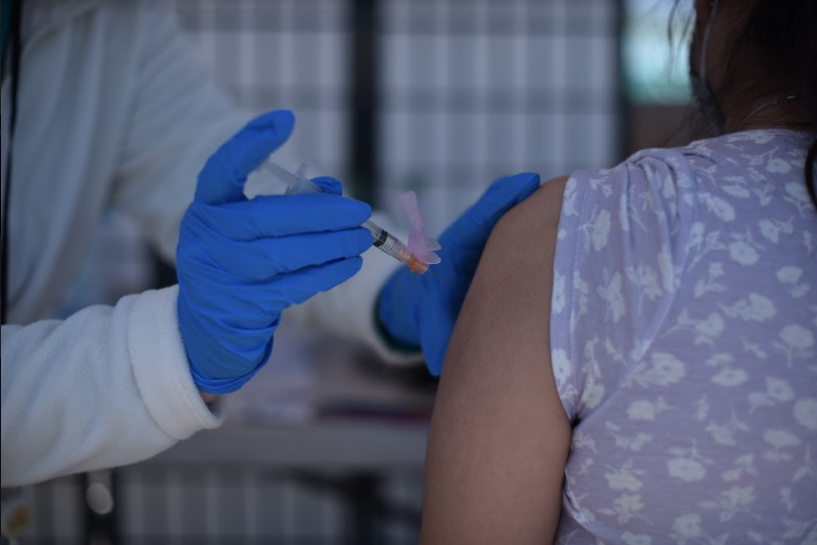
This Wednesday, the U.S. Food and Drug Administration The FDA has authorized state-licensed pharmacists to prescribe Pfizer's COVID-19 drug Paxlovid to eligible patients.
“The FDA recognizes the important role that pharmacists have and continue to play in the fight against this pandemic,” said Patrizia Cavazzoni, director of the FDA’s Center for Drug Evaluation and Research.
She added that since Paxlovid must be taken within five days of the onset of symptoms, “authorizing state-licensed pharmacists to prescribe Paxlovid could expand access to timely treatment for some patients who are eligible to receive this medication for the treatment of COVID-19.”
Paxlovid, made by pharmaceutical giant Pfizer, is intended to treat mild or moderate cases of COVID-19 in people at high risk of severe illness, including hospitalization or death.
The drug, which has emergency use authorization, is approved for adults and children 12 years of age and older who weigh at least 40 kilograms or 88 pounds with positive results from direct SARS-CoV-2 viral tests.
Upon testing positive for COVID-19, patients should first consider seeking care from their regular healthcare provider or locating a drive-through testing site in their area.
While this action allows state-licensed pharmacists to prescribe Paxlovid with certain limitations, community pharmacies that do not already participate as a trial-to-try site can decide whether and how to offer this service to patients.
Patients who have tested positive for COVID-19 and are seeking to determine their eligibility to receive Paxlovid where prescription is available from state-licensed pharmacists will be required to bring their electronic or paper health record that is less than 12 months old, including the most recent laboratory blood test reports, for the state-licensed pharmacist to review for kidney or liver problems.
Also, a list of all medications they are taking, including over-the-counter medications, so the state-licensed pharmacist can screen for medications with potentially serious interactions with Paxlovid.
It is important to note that individuals will be referred by the pharmacist for a clinical evaluation with a physician, advanced practice registered nurse, or physician assistant licensed or authorized under state law to prescribe medications, if any of the following conditions apply:
There is insufficient information to assess renal and hepatic function.
There is insufficient information available to assess a possible drug interaction.
Other medications may need to be modified due to potential drug interactions.
Patients in the eligible population who report a positive result from a rapid antigen home diagnostic test or a positive PCR test to their provider are eligible for Paxlovid.
What is Paxlovid?
Paxlovid is the brand name of the oral antiviral treatment developed by the pharmaceutical company Pfizer to treat COVID-19.
This consists of two sets of pills that must be taken together. The standard treatment includes two nirmatrelvir pills and one ritonavir pill twice a day for five days.
Paxlovid should be taken as soon as possible after a person becomes ill, and is not recommended for people who have been hospitalized for COVID-19.
The FDA approved Paxlovid in December 2021 for the treatment of mild to moderate COVID-19 in adults and pediatric patients ‒12 years of age and older who weigh at least 40 kg‒ who test positive for SARS-CoV-2.