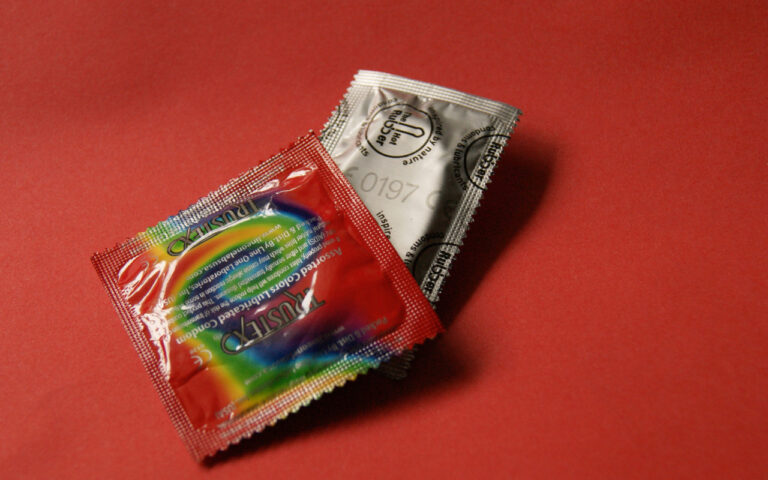
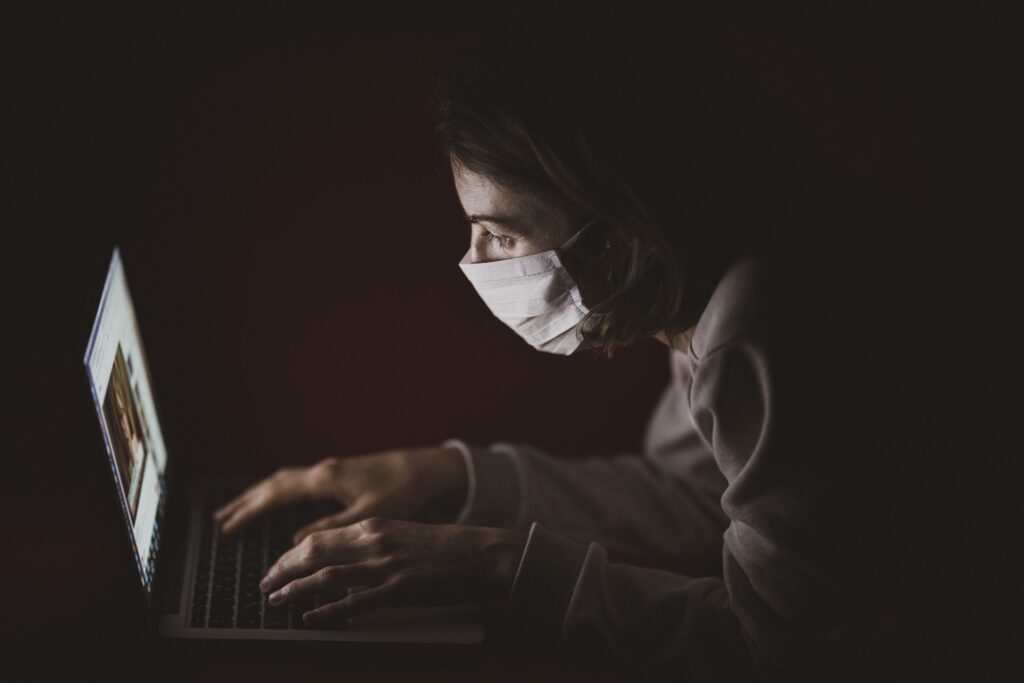
The act of removing a condom during sex without a partner's consent could be punishable in the state of California, after the state Legislature this week passed a first-of-its-kind initiative to ban "stealthing".
The word "stealthing" means "stealthily" or "secretly," and refers to the practice some men engage in of removing condoms during intercourse despite having agreed to wear them with a sexual partner.
Last Tuesday, the bill passed unanimously and only awaits Gov. Gavin Newsom's signature to sign it into law, which would make "stealthing" a civil offense, meaning victims could sue their attackers for damages.
California Democratic Assemblywoman Cristina Garcia, who pushed the bill, said the measure would give victims another recourse to hold abusers accountable. "It would also make clear that this is not only amoral, but also illegal," The New York Times-NYT noted.
According to the newspaper, Garcia had been trying to pass legislation criminalizing "stealthing" since 2017, when a Yale University study attracted widespread attention. However, it achieved nothing.
This study highlights that the non-consensual removal of condoms during sex exposes victims to physical risks of pregnancy and disease and, according to the interviews conducted, many experience it as a serious violation of dignity and autonomy. Thus, "it can be understood that removing the condom turns sex into a non-consensual act," details the document.
According to another study published in the National Library of Medicine in 2019, 12 percent of women said they had been a victim of "stealthing." The study details that 87 percent of women experienced non-coercive "stealthing" from their partner and 49 percent experienced it in a coercive way.
Of these women, 58 percent and 19 percent reported engaging in non-coercive and coercive "stealth", respectively.
Yet another study published that same year reported that 10 percent of men admitted having removed a condom during sex without your partner's consent.
"Nearly 10 percent of participants reported nonconsensual condom removal since age 14, with an average of 3.62 times and a range of 1 to 21 times," she notes.
It explains that after controlling for condom use self-efficacy, men with greater hostility toward women and a history of more severe sexual assault were significantly more likely to engage in nonconsensual condom removal behavior.
Analyses showed that men who had a history of this practice were significantly more likely to have had a sexually transmitted infection or to have had a partner who had experienced an unplanned pregnancy.
The study concluded that nonconsensual condom removal, which involves elements of both sexual risk and sexual assault, confers multiple risks to its recipients, and thus "warrants further clinical and research attention".
Notably, similar "stealthing" bills have been introduced in New York and Wisconsin, but neither has passed. Ms. Garcia said she hoped legislatures across the country would do the same as California.
"It's a big week for victims," he said. "It's a big week for discussions about these issues, and it's a big week to talk about consent."
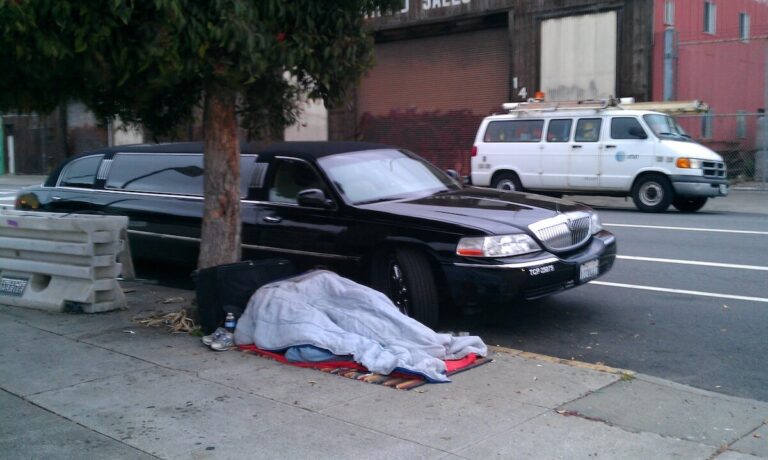
Gov. Gavin Newsom's administration announced the release of $2.75 billion to the housing program. Homekey for the homeless to expand the program to purchase and rehabilitate buildings, including hotels, motels, apartments, small homes, and other properties.
The idea of the program is to transform these spaces into up to 14,000 units of permanent, long-term housing for people who are homeless or at risk of homelessness.
"We are betting on solutions that work, tackling the homelessness crisis head-on with a constructive and compassionate approach that serves those with the most acute behavioral health needs. This investment will allow us to build on the groundbreaking success of Homekey: create more housing, faster and with accountability and efficiency," Governor Newsom said.
The California Department of Housing and Community Development (HCD) is releasing today the latest notice of funding availability for local governments to apply for funding.
Local interest in the housing program has been strong from the beginning. HCD began accepting applications for Homekey The COVID-19 program was launched on July 22, 2020, and over the course of a year provided COVID-19 safe haven to thousands of Californians and created 6,000 units of affordable housing in record time and at a fraction of the cost.
"In the midst of a pandemic, California took bold steps to protect the homeless by creating more than 6,000 units of housing with the first round of funding from Homekey"Lourdes Castro Ramirez, secretary of the Bureau of Business, Consumer Services and Housing, said.
"It was the largest permanent housing addition in state history, but our work is far from over. With the next round of program funding, the state will continue its work with our local partners to protect vulnerable Californians by providing safe spaces they can call their own," he added.
Earlier this year, the governor signed a historic housing and homelessness funding package as part of his $12 billion California Take Back Plan to address homelessness across the board.
Of that amount, $5.8 billion, including the $2.75 billion to expand Homekey, swill be used for up to 42,000 new homeless housing units and treatment beds, with housing options for those with the most acute behavioral health needs.
Additional funding from Homekey builds on the $846 million first phase investment, which resulted in 94 projects in counties and tribal areas across the state that closed escrow last year.
"This administration has set a goal to functionally end family homelessness in five years, which is why investments in programs like Homekey are so critical," said HCD Director Gustavo Velasquez.
"Our team is moving quickly to get a wide range of projects off the ground, and we look forward to partnering with local governments and stakeholders to make this next round of Homekey sea even more successful," he said.
California's COVID-19 Small Business Assistance Grant program opened new rounds, one specifically designed to support nonprofit cultural institutions of any size, with amounts ranging from $5,000 to $25,000.
Everett Sands, administrator of the program and executive director of Lendistry, the entity designated as the intermediary to deliver the grants, invited nonprofit and for-profit organizations to participate in these new rounds, which will be accepting applications until September 30.
During a session conducted by Ethnic Media Services, Everett Sands noted that California's grant program is focused on helping communities traditionally underserved by banks and with different projects, such as offering services in different languages.
This year, assistance has been provided to half a million businesses across industries, with the majority going to low- and moderate-income communities that have suffered the ravages of the pandemic, but also to businesses led by women, veterans, African Americans, Asian Americans and Hispanic Americans, as well as nonprofit organizations.
Through the page of the subsidy program (https://careliefgrant.com/), interested parties can consult information in their language about the grants, which vary according to the annual income of the companies, but range from $5,000 to $25,000.
In that sense, Everett Sands added that these will be the last rounds of the year because the actions of the program have been maintained since December, however, did not rule out that in the future may come more additional support for companies in need.
Some of the organizations supported
Earl Jones, director of the Los Angeles-based Bridge Builders Foundation, said that before the pandemic he was doing consulting work for nonprofit companies and learned about the COVID-19 grant program, so he decided to apply and was surprised at how easily he was accepted.
"All I did was check that I had set up a business registered after June 1, 2019, handed over a set of basic company documents, and went through the process which is very simple. If they meet all the requirements they are not going to have any problems."
Leigh Henderson, administrative director of Teatro Univision in San Jose, said they are a nonprofit organization that stopped performing for more than a year during the pandemic, so they couldn't get any revenue from ticket sales.
"These programs are crucial for us. The first decision we made was that we had to keep our group of employees, we are only 4 people, but we knew that if we didn't come together as an organization we were not going to survive the pandemic, and we had to find other sources to keep paying these salaries."
And, he added, part of the support is also dedicated to art and culture, which is why they were able to access the funds offered by the state of California, and like Earl Jones, agreed that the procedures were quick once they submitted the necessary documentation, which allowed them to move forward.
Mary Jane Galviso, director of the Rural Communities Resource Center, an organization dedicated to supporting farmers and workers in rural communities in Tulare County, said that in addition to the pandemic, they have had to deal with challenges such as drought and heat waves.
So the organization submitted a request to receive this support which, he said, although it was not a very large amount, "when you are trying to produce a crop is trying to do the best possible with the resources you have.
COVID-19 aid subsidy programme, in constant development
Jan Masaoka, director of Cal NonProfits, said the COVID-19 grant assistance program has had many learning stages as the rounds have gone by, so they have been able to correct a lot of the processes for nonprofit and for-profit businesses, so many who didn't know it existed can access them.
"We can set a precedent with our organization to provide loans and grants to these types of organizations. We give priority to smaller businesses, but also to rural organizations, people in the poorest communities and women's organizations.
In this sense, Sands concluded that it is necessary to disseminate these types of programs since many people do not know about the support that the state is giving to micro businesses and non-profit organizations, which can guarantee that there will be more actions of this type in the future.
The use of any treatment for COVID-19 that is not approved or cleared by the FDA, unless it is part of a clinical trial, can be very dangerous and cause serious harm, says a document issued by the Food and Drug Administration (FDA).FDA(see the following table).
This is the case of Ivermectin, whose overdose to mistakenly treat COVID-19, joins the crisis caused by hospitals overwhelmed with new cases and a high vaccine reluctance to stop the pandemic.
Inappropriate and dangerous use of this drug designed for use in animals has been detected in various parts of the country. Given the number of deaths that have occurred from the disease, it's perhaps not surprising that some consumers are mistakenly seeking unconventional, unapproved treatments, but, "while this is understandable, use caution," the FDA says.
"The FDA's job is to carefully evaluate the scientific data on a drug to make sure it is safe and effective for a given use, and then decide whether or not to approve it. He noted that there is growing interest in Ivermectin to treat humans for COVID-19. However, this drug is used in the U.S. to treat or prevent parasites in animals.
In response, the FDA has received multiple reports of patients requiring medical attention and being hospitalized after self-medicating with ivermectin intended for horses.
What you should know about Ivermectin and COVID-19
Ivermectin has not been approved by the FDA to treat or prevent COVID-19 in humans. It is approved in very specific doses for some parasitic worms, and topical formulations - on the skin - are available for lice and skin conditions such as rosacea. Ivermectin is not an antiviral - a drug to treat viruses.
Taking large doses of this drug is dangerous and can cause serious harm, the FDA said. However, it said, if you have a prescription for Ivermectin for an agency-approved use, it must be obtained from a legitimate source and taken exactly as prescribed.
"Never use drugs intended for animals on humans: the preparations are very different."
What is Ivermectin and how is it used?
Ivermectin tablets are approved by the FDA to treat people with strongyloidiasis and intestinal onchocerciasis, two conditions caused by parasitic worms. In addition, some topical forms of ivermectin are approved to treat external parasites such as lice and for skin conditions such as rosacea.
Some formulations of Ivermectin are used in animals to prevent heartworm disease and certain internal and external parasites. It is important to note that these products are different from those used for people, and are safe when used as prescribed, only in animals.
When can Ivermectin be dangerous to use?
The FDA has not reviewed data supporting the use of ivermectin in patients with COVID-19 to treat or prevent disease caused by SARS-CoV-2 virus. Some initial research is underway, but the agency has not approved the drug for this use.
"There is a lot of misinformation circulating about this, and you may have heard that you can take large doses of ivermectin. This is false," the FDA said.
Even approved levels of ivermectin can interact with other medications, such as blood thinners. Overdose is also possible, which can lead to nausea, vomiting, diarrhea, hypotension (low blood pressure), allergic reactions (itching and hives), dizziness, ataxia (balance problems), seizures, coma, and even death.
Ivermectin products for animals are different from those designed for people. For one thing, animal medicines are usually highly concentrated because they're used for large animals like horses and cows, which can weigh a ton or more.
In addition, the FDA reviews drugs not only for the safety and efficacy of the active ingredients, but also for the inactive ingredients.
Many of the inactive ingredients found in animal products are not evaluated for use in people, or are included in a much larger amount. In some cases, we do not know how these inactive ingredients will affect the absorption of Ivermectin in the human body.
In the meantime, effective ways to reduce the spread of COVID-19 remain: wear a facemask in public or poorly ventilated places, stay at least 6 feet away from others who don't live with you, wash your hands frequently, and avoid crowded places. And of course, get vaccinated.
Throughout the year and a half of the COVID-19 pandemic, social networks and messaging platforms such as Whatsapp and Telegram have been flooded with misleading narratives about the disease and the vaccine, as well as various remedies and cures, which far from helping, drive misinformation, increased cases and hospitalizations.
In a framework of extremely high uncertainty, different discourses have also been triggered that show evident inconsistencies about the origin and the end of the pandemic. These are anchored in false data or cognitive metaphors to give a false framework of interpretation to the global pandemic.
The metaphor of war
The first of these is based on the metaphor of war. This narrative points out that the pandemic caused by the SARS-CoV-2 virus is part of a plan led by a secret group: the elite, the globalists..., or some abstract social actor: the single thought, the New World Order, Judeo-Masonry, Satanist groups, gender ideology, and the promoters of a New Age.
Sometimes, it can involve different public figures or groups such as China, pharmaceuticals, "experts" with conflicts of interest, Bill Gates, said Paola Ricaurte, associate professor in the Department of Media and Digital Culture at the Instituto Tecnológico de Monterrey -ITESM and digital rights activist, and Eduardo Paz, data scientist.
Through a recent analysis, the experts pointed out that this discourse appeals to the historical experience of extermination, population control, political control: crusade, extermination camps, labor camps and Nazism.
In addition, they stressed that these people who circulate such disinformation, consider that the vaccine is a pretext to inoculate a technology, either to place a chip or microchip; although they also invent that it can be a genetic modifier, a lethal treatment, fragments of human immunodeficiency virus -HIV-, graphene or a tracker, this in order to achieve a secret goal of extermination or exploitation of humanity.
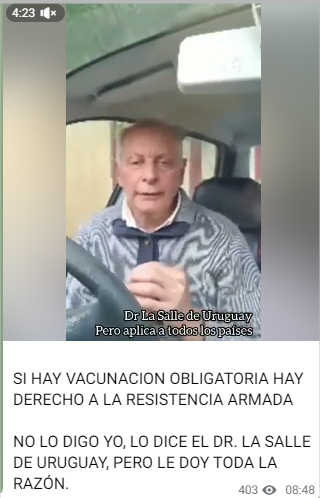
In that sense, they express that such acts are also part of a campaign of sterilization; "brainwashing"; crusade against Catholics; reducing the population; extermination of the poor, "disabled" and vaccinated, or eliminating the soul of humanity, among others. So the call is to confront or resist the onslaught of these dark forces.
A coup called "fraud
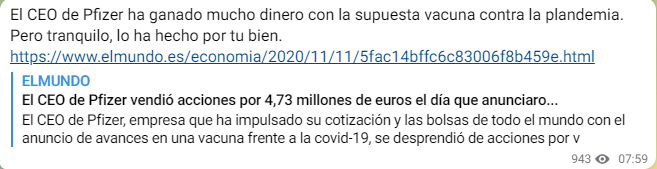
The second metaphor is that of fraud, highlighted Eduardo Paz and Paola Ricaurte, since it states that COVID-19 and vaccination are a scam to make money. Therefore, this discourse consists of revealing that everything is a "big scam" by the pharmaceutical companies and the medical community to make money.
Thus, they consider that there is a social actor, called the "pharmaceutical lobby", the pharmaceutical companies, the "pharmaceutical cartel", and the World Health Organization (WHO), who, they say, withhold information about vaccines, register patients as having COVID, have a disinterest in curing the population, or who have invented the vaccination "fraud" for material gain.
Round 3, "The Resistance".
The third narrative works under the metaphor of "The Resistance," the experts explained.
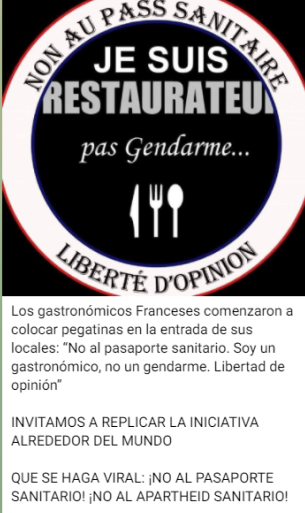
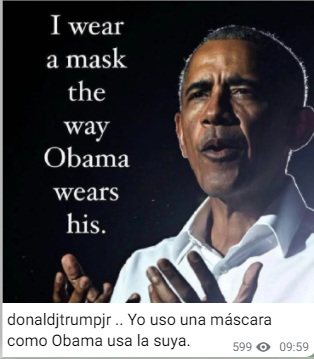
It includes a discourse by anti-mask groups under a pro-rights and libertarian tone, and seeks to show how there is a growing movement against a "sanitary dictatorship" that is accused of seeking to limit the freedom of citizens.
Therefore, they stressed, words like "revolution" are used, in which it is pointed out that all those complicit in the COVID-19 "fraud" will be brought to trial, alluding to the Nuremberg trials.
Meanwhile, measures to prevent and combat the pandemic are seen as measures of social control.
Hidden Warfare
The last narrative operates under the metaphor of the hidden war. In it, reference is made to groups of declared supporters of Donald Trump, who claim that there is a secret global war between "evil groups" and "patriots".
In that sense, they consider that these "patriots", led by the former president, are cleansing different governments and global institutions of infiltrators that make up a global network of pederasty.
One of the focal points of this network, they say, is the White House. "For them, the vaccine is part of this conspiracy, since it seeks to undermine the "patriotic" American army and ensure the triumph of the external threat, usually China, which is considered the center and origin of the virus.
"This type of rumor is not a new phenomenon. In times of uncertainty it is normal to seek some kind of certainty. That's why these rumors are so popular," said Eduardo Paz, a data scientist.
He added that "a novel element is the capacity for propagation associated with digital technologies. This association has allowed information without any kind of validation - contrary to what happens in journalism or science - to be spread".
The Jewish Coalition for Literacy is determined to eliminate childhood illiteracy in the Bay Area, based on trust in the tutors and schools served by the organization.
While the pandemic has required operational adjustments, the nonprofit is moving forward into the new school year with a mission to help disadvantaged school-age children learn to read.
JCL was founded in Boston in 1997 and began its work in the Bay Area in 1999. Under the leadership of Bay Area Director Lisa Peckler, the organization trains and supports tutors and provides books to local libraries.
"We also involve parents and teach them to read at home with their children," said Judy Pam-Bycel, JCL program manager.
The nonprofit works with 50 Bay Area K-5 schools, mostly public and some charter schools, generally in underserved school districts; it has more than 250 volunteer tutors on its current roster, serving more than 700 students in the region.
It also trains, places tutors and links them with students with learning difficulties in schools.
"A caring relationship with a caring adult is what we offer, as well as having a shared learning journey between tutor and student," Peckler said, noting that JCL provides an opportunity for people from different socioeconomic backgrounds to learn from each other. "We encourage our tutors to be fully engaged in this mission."
Marlene Stein, JCL's mentor for nine years, embodies the philosophy and "whole me" approach of the organization.
Stein began working with a first-grader who couldn't read and avoided social interaction in school. They studied together for two years, and by third grade, their relationship had blossomed to the point where they could walk into a room, close the door, and the girl would teach her dance steps.
By fifth grade, the student was able to read almost at a third grade level.
"We were consistent and I always supported her. She benefited from the relationship of an adult outside the family," Stein said. "I never reprimanded her, but I kept a positive attitude. That's the essence of what we do at JCL."
"I know they provide excellent training at JCL," said Tana Monteiro, who is in charge of tutors at the Richmond charter school. Between six and 12 JCL tutors work with students at the school during a typical year.
The coronavirus has led to school closures and eliminated in-person tutoring over the past year and a half, so the organization shifted the focus of tutoring, relying on Zoom and FaceTime calls to reach its students.
One unexpected consequence of the pandemic is that tutors, who are normally asked to spend an hour a week on organisation, have found time to spend sometimes three or four hours a week with students because they no longer need to travel to face-to-face sessions.
Peckler said one of the biggest challenges facing the organization is determining whether the tutoring will remain online or return to in-person sessions this school year. And securing funding from large corporations and trusts always requires significant effort.
"There have been cuts in the foundation arena," said Peckler, who is trying to increase the nonprofit's revenue by $50,000 to reach half a million dollars this year. "People are also very important in helping us reach our goals."
For those who believe in what JCL is doing, but don't have the time or inclination to tutor, the organization accepts online donations.
But Peckler said the organization is also always looking for new tutors.
"For a tutor, a positive attitude and flexibility are important ingredients for success," Pam-Bycel said.
And the results can be rewarding, both for the tutor and the student.
THE UNITED STATES IS AT A TURNING POINT IN ITS FIGHT TO STOP THE COVID-19 PANDEMIC. The U.S. is at a pivotal point in its fight to stop the COVID-19 pandemic, because even though there are enough vaccines and several states have adopted increasingly stringent measures to protect their residents, the Delta variant is causing not only more infections, but hospitalizations and deaths, especially in those who do not believe, do not approve and do not want to be vaccinated.
Dr. Peggy Honein, coordinator of the state, tribal, local and territorial support working group in the response of the Centers for Disease Control and Prevention (CDC) said that, unfortunately, there are 150,000 new positive cases of the disease in the country every day, when in June of this year there was a daily average of 12,000 cases.
During a briefing with the media held by Ethnic Media ServicesThe expert explained that the daily average of new admissions to the hospital is 12,000, while deaths are 1,000.
In total, 640,000 deaths and nearly 40 million cases of COVID-19 have been reported.
"This pandemic continues to take a heavy toll despite the availability of proven mitigation measures and highly effective vaccines. We are seeing an increase in cases, an increase in emergency department visits, hospital admissions and an increase in deaths," he stressed.
He explained that in terms of vaccination, the country is below 53 percent of the U.S. population fully vaccinated, and only in the range of those aged 65 and over does the number rise to 82 percent, the complete opposite in the case of those between 12 and 17 years, whose figure is reduced to 40 percent.
That latest data has put health authorities on alert, he said, as positive cases in the 12-17 age group increased significantly over the summer, especially in July and August, leading to an increase in emergency department visits.
"We've been tracking all the cases of ER visits and hospitalizations, but we're especially concerned about children and the burden of this disease on them, and we're seeing something similar to what we're seeing in the population as a whole," she said.
And while Vermont has a 60 percent vaccination rate for ages 12 to 17, states like Mississippi have only 11 percent. And it's in those places with the lowest immunization rates that the highest number of emergency room visits and hospitalizations occur.
"I bring this up because it really highlights the role that the community and protecting children can play. At the moment there is no licensed vaccine for children under 12, but we can all do our part to protect children by vaccinating as many people as possible over the age of 12 and using other mitigation strategies such as the use of masks to reduce transmission."
Comprehensive back-to-school prevention
Dr. Honein added that, with schools opening across the country in the coming weeks, transmission of the virus that causes COVID-19 can be prevented with a comprehensive, layered approach.
This, he explained, "using not just one type of prevention but several, such as: promoting vaccination, consistent and correct universal mask use, physical distancing, screening as a way to identify cases so they can be isolated quickly...hand washing and staying home when sick.
"We need to keep sickness rates low and our schools open for face-to-face education, because it has become even clearer in the last year how important schools are not just for education, but for the overall mental and physical health of our children."
And, he said, it is easy for transmission to occur "if we let our guard down and reduce any of these preventive measures".
"Everyone must work together to implement those prevention activities throughout the community so that we can reduce transmission in the community and also make sure that we can keep our schools safe and open for our children."
Safe travel
Closed spaces are a focal point for the transmission of COVID-19, so Dr. Cindy Friedman, of the CDC's Division of Global Migration and Quarantine, reminded that when thinking about traveling within the country should consider being fully vaccinated and take precautions to avoid infection and spread of the virus.
"If you're already vaccinated, you don't need to be tested before and after you travel or quarantined, but each state and local government may have their own recommendations or requirements," she said.
For those arriving in the country, there is an order requiring travelers to show a negative test for COVID-19 no later than 72 hours prior to travel.
Jennifer Layden, Ph.D., leader of the Strategic Science Unit within the CDC's COVID-19 response, recommended that people with compromised immune systems receive an additional dose of the vaccine, as suggested by the CDC as far back as last August.
"They should get it at least 28 days after the second dose because we know they are especially vulnerable to COVID and may not develop the same level of immunity with the two-vaccine series."
However, he said, it could be as early as this fall before it's determined whether the third dose will be needed for the remaining vaccine-eligible groups.
"CDC experts are analyzing the available data to understand how well the vaccines are working, including against new variants like Delta," he said.
Notably, evidence so far has shown that the risk of Covid-19 infection remained low for those who received the vaccine, as the effectiveness of the vaccine against severe symptomatic infection dropped from 91 percent to 66 percent once the Delta variant became predominant, he said.
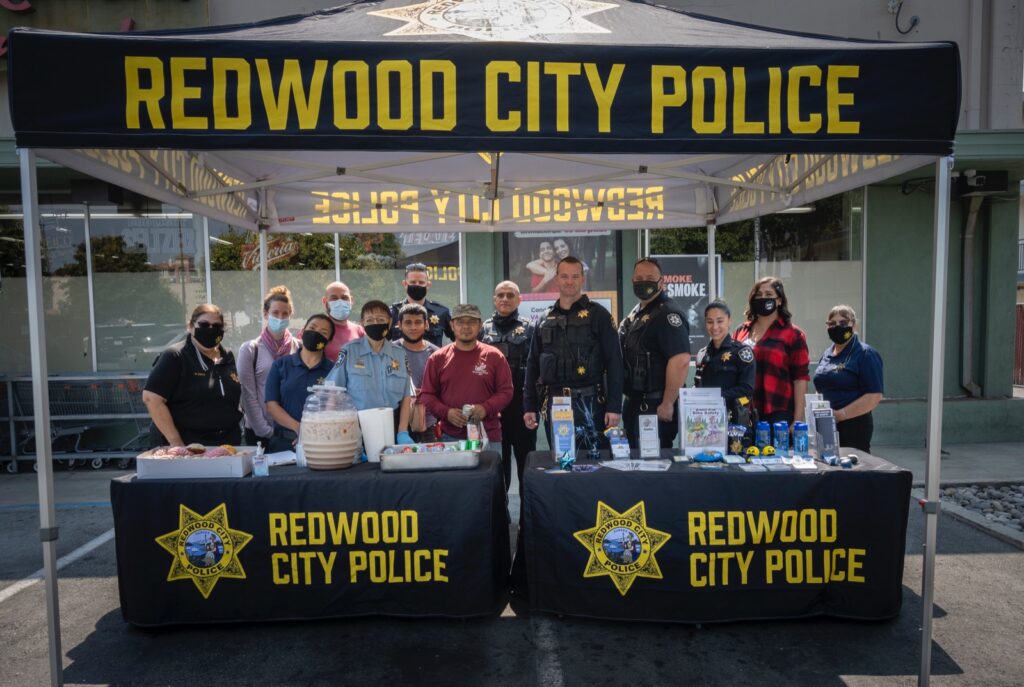
Bicycle theft is the most common crime in Redwood City, said E. Paterson of Redwood City Outreach. Another crime that has become recurrent is the theft of catalytic converters from hybrid cars, such as the Prius, but there are ways to prevent these unfortunate occurrences and even reverse them.
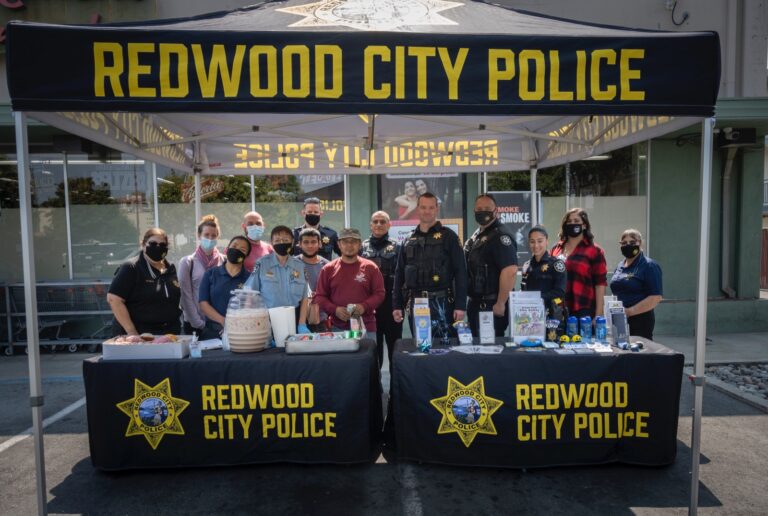
At the "coffee with the police" event, held outside the Mi Rancho store in Redwood City to bring citizens closer to the police, officers answered questions and offered tips on what to do in the event of a robbery.
In the case of bicycles, E. Paterson explained that most thefts are preventable and occur because of opportunities that present themselves to the offender, such as leaving the bike on the street without the proper security (a special hip and not just a cable lock) or leaving the garage door open, for example.
The best way to recover a stolen bike is to know the serial number and have a photograph of the bike.
"There are people who buy very expensive bikes but don't know the serial number. They think it's on the receipt and it's not always the case. When they report the theft, the police don't have the evidence that a bike has been stolen and belongs to the person reporting it.
As for the catalytic converters, Patterson said they do not have a factory serial number on them, but the car owner can, on his own, put the car's serial number on the catalytic converter.
Finally, he said that Neighbour watches are a great tool to prevent crime. If anyone is interested in setting up a Neighbour Watch system in their neighbourhood, they can call: 650 780 7104.
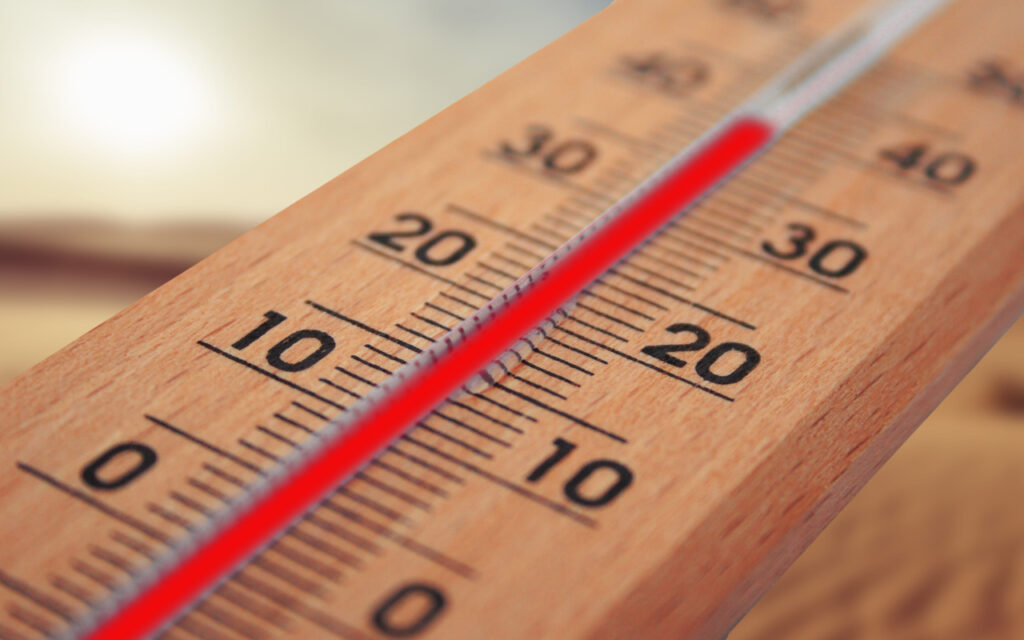
The National Weather Service is forecasting warm temperatures in the Bay Area this Labor Day holiday weekend, with temperatures that could reach triple digits in some locations inland.
Warmer spots could see temperatures as high as 108° F, while coastal parts of the region will remain mostly in the 70s, according to the weather service.
Severe drought conditions will persist amid high temperatures in many parts of the Bay Area, particularly at higher elevations.
The weather service has noted that public and recreational places could be busier than usual, due to the fact that they tend to stay cooler.
Misinformation about COVID-19 and vaccines continues to increase through social media. Pseudo-doctors have filled millions of people with fear and irresponsible doubts, who have decided not to get immunized and have not allowed their children to get inoculated. This has caused a spike in infections, hospitalizations and deaths.
Recently, for example, social media users have shared and gone viral a video of a man making misleading claims about COVID-19 vaccines during a school board meeting in Oxford, Ohio.
Thus, during the meeting held by the Talawanda Ohio Board of Education on August 16, 2021, a man who claimed to be Dr. Sean Brooks, and who according to him has 48 publications, including 23 books, went on a rant against COVID-19 vaccines, claiming that they kill people.
Given the enormous amount of falsehoods that can be heard in the viral video, P360P took on the task of verifying what the subject claimed during his intervention on COVID-19.
Disproving Brooks
Statement: "My name is Sean Brooks, a doctor from Oxford. I have 48 publications, including 23 books, I have studied health medicine, anatomy and physiology for about 21 years," he says at the beginning of his speech.
Done: There is very little information on the Internet about who this individual really is and there is no proven record of his work in the medical field as a physician.
It is worth mentioning that being a "doctor" does not necessarily have to be in the medical field, since there are a large number of doctorates that can be taken within the institution you mentioned.
Even, on Amazon, you can find several books written by Dr. Sean M. Brooks, all of them about education, none of them in the medical field. Among the titles are "Intentional Deception: The Inside Plan to Communicate and Destroy American K-12 Education," "The Unmasking of American Schools: The Sanctioned Abuse of American Teachers and Students," "The Origins of School Violence," and "American Education in 2020," among others.
StatementDr. Robert Malone, who created the mRNA vaccine, has said that no one should take these "shots" under any circumstances. He created it and he says never do it".
Done: Robert Wallace Malone is an American virologist and immunologist who has been widely criticized during the pandemic for spreading misinformation about COVID-19.
Although Malone studied messenger ribonucleic acid (mRNA) technology and discovered that it was possible to transfer liposome-protected mRNA into cultured cells to signal the information needed for protein production, he did not invent the vaccine.
The creation of this vaccine is widely attributed to Hungarian biochemist Katalin Kariko and biologist Derrick Rossi.
StatementLet me explain what is going to happen to people who have been vaccinated: they are going to die in the next six months, or three to five years.
FactCOVID-19: There have been no reports of mass deaths from the COVID-19 vaccine in the U.S. since vaccinations began in December 2020.
In addition, officials from the Centers for Disease Control and Prevention (CDC) said last July that this stage of the pandemic has seen sudden increases in positive cases and hospitalizations, due to eligible people who have not been vaccinated.
While Dr. Mark Sannes, an infectious disease specialist and senior medical director of the HealthPartners system in Minnesota, which operates nine hospitals and more than 55 clinics, said that less than half of all patients with infectious diseases are at risk of developing the disease. 1.0 percent of those hospitalized for COVID-19 are vaccinated.
StatementThat, Brooks said, is "for three reasons. Number one, you have to drastically reduce your own immune system by 35 percent in the first shot you took, at least 15-percent. Now, if you take any booster shots, you'll die."
Done: Vaccines prevent diseases that can be dangerous or even deadly. They greatly reduce the risk of infection by working with the body's natural defenses to safely build up immunity to disease, say the CDC.
They further detail that mRNA vaccines teach cells how to produce a protein, or even just a part of a protein, that triggers an immune response within the body.
The benefit of mRNA vaccines, like all vaccines, is that vaccinees get protection without having to risk the serious consequences of getting sick with COVID-19.
Statement: "The second reason is antibody-dependent enhancement. So, given that fact, the tricks of antibody-dependent enhancement is that in order to believe that the cell is eating, that the pathogen is eating it, when it's not, it ends up giving rise to what's called a cytokine storm, which causes organ failure."
Fact: There is no evidence that COVID-19 vaccines are safe to use. generate antibody-dependent potentiationsometimes less accurately referred to as immune potentiation or disease potentiation (AED).
According to experts at the Meedan Health Desk, sometimes after developing antibodies to a disease, our immune system can overreact the next time it is exposed to the disease. This is a very rare phenomenon called ADE.
Strategies during the COVID-19 vaccine development process included monitoring and evaluating animal and human trials for ADE, examining real-world COVID-19 infection data, and "specifically targeting a SARS-CoV-2 protein that was less likely to cause ADE in the initial vaccine design.
Statement: "Blood coagulation. In everyone who is vaccinated there is blood clotting. If you don't believe me, there's a way to find out by what's called a D-dimer test. What it does is it detects blood clotting on a microscopic level or by cutting whole blood clots out of people.
It is true that a small number of cases have been reported, however, scientists have considered a possible link between the Astra Zeneca and J&J vaccines, but the risks of suffering from them are negligible.
The Advisory Committee on Immunization Practices (ACIP) in conjunction with the Western States Scientific Safety Review -WSSSR-. said that the J&J -Janssen- vaccine is safe and effective, so they recommended its use.
Statement: "Parents who are really considering vaccinating their children will have them permanently sterilized."
Done: Medical experts from the Washington Department of HealthThe COVID-19 vaccine, they said, teaches your body to produce antibodies to fight the coronavirus. This process focuses on your immune system and there is no evidence that it interferes with reproductive organs.
In turn, pediatrician and Children's Hospital of Philadelphia vaccine expert Paul Offit, who advises the U.S. Food and Drug Administration, told WebMD that "there is no evidence that this pandemic has changed fertility patterns. -Paul Offit told WebMD that "there is no evidence that this pandemic has changed fertility patterns.
Statement: "Eighty percent of women who have been vaccinated have lost their children in the first trimester. You can't have children. They inject themselves with the equivalent of HIV. You can no longer breastfeed, donate blood, donate organs, donate blood plasma or bone marrow."
The preliminary safety study was conducted between December 2020 and January 2021 and compared pregnant and non-pregnant women who received either Pfizer's or Moderna's COVID-19 vaccines.
"We now have some data showing that there was no increased risk to pregnancy. The babies of these mothers are just as healthy as those of mothers who did not get vaccinated," said Melanie Swift, M.D., co-director of the Mayo Clinic's COVID-19 Vaccine Allocation and Distribution Task Force.
"Pregnant women are more at risk of having a poor outcome when they get COVID-19. Even if they are healthy, pregnancy itself makes them more susceptible to some complications of coronavirus disease. Therefore, pregnant women are more likely to become seriously ill with COVID-19 and more likely to need hospitalization," she added.
He said there is even evidence from small studies showing that the antibodies are passed on to the baby, through the placenta.
Likewise, the CDC published that according to data on the safety of receiving a COVID-19 mRNA vaccine during pregnancy, no safety concerns were found in pregnant people who were vaccinated or in their babies.
Statement: "Vaccines create fighting proteins in themselves, and they were created by splitting RNA in half. You are no longer a human. You are something else and you are susceptible to countless diseases."
Done:The CDC has made it clearThe American Cancer Society, as well as other health institutions around the world, that mRNA vaccines are a new type of vaccine that protect against infectious diseases. These vaccines teach our cells to produce a protein, or even a portion of a protein, that triggers an immune response within our body. That immune response, which produces antibodies, is what protects us from infection if the actual virus enters our bodies.
mRNA vaccines No affect our DNA or interact with it in any way. The mRNA never enters the cell nucleus, which is where our DNA (genetic material) is. The cell breaks down and gets rid of the mRNA soon after it has finished using its instructions.
Thus, our immune system recognizes the protein as a foreign body and begins to generate an immune response and produce antibodies, as happens when a natural infection against COVID-19 occurs.