

Tuesday, December 16, 2025
Home Blog Page 99

The adulteration of facts is a political instrument: UNAM

The adulteration of facts is a political instrument: UNAM
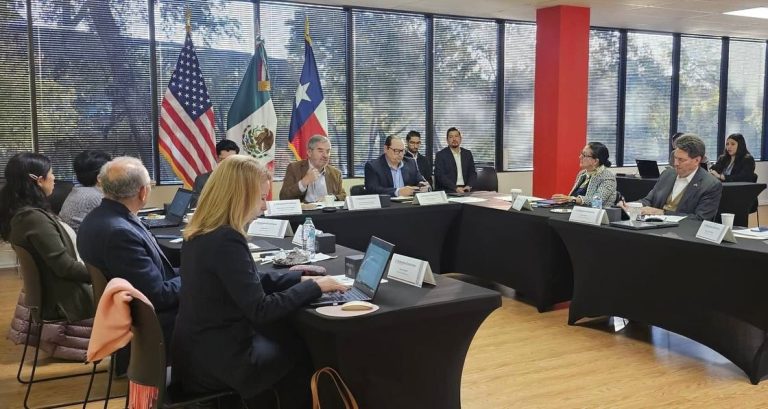
The adulteration of facts is a political instrument: UNAM. In image: Raúl Trejo Delarbre, researcher at the UNAM Institute for Social Research, Geysha González, director of operations at the Center for European Policy Analysis (CEPA), based in Washington, DC Screenshot from the video of the conference “Does disinformation demand media literacy?was born." 

[We are on WhatsApp. Start following us now]

Listen to this note:


Education is a powerful tool to counteract disinformation, a phenomenon that has become a “cancer” for societies. In the face of the manipulation of information, a digital citizenship is needed that is well-versed in the ability to discern between contents, experts said.

At the press conference “Does disinformation demand media literacy?, organized by the National Autonomous University of Mexico (UNAM) and the United States Embassy in Mexico, Raúl Trejo Delarbre, researcher at the Institute for Social Research of this university, stated that the distortion of facts has been a deliberate practice throughout world history.

Along the same lines, Geysha González, director of operations at the Center for European Policy Analysis (CEPA), based in Washington, DC, explained that disinformation is the manipulation of information with the intention of blurring the line between what is reality and what is fiction. 

Today, “aggressor actors are trying to push false narratives” that attempt to suppress that line, he said.

Adulteration is a political instrument, but the characteristic of today is that with the rise and global and multitudinous use of social-digital networks “we are more exposed to the fabrication of falsehoods.” Unlike what we see in the media, the information that appears in them is de-hierarchized, jumbled, confusing and brief, Trejo Delarbre said.

The specialist in media and social-digital media, and member of the Institute for the Democratic Transition, the Mexican Association for the Right to Information and the Mexican Association of Communication Researchers, added that there are people who only learn about political and electoral issues through the networks; they do not read newspapers and their prejudices are reinforced.

In this regard, he said that, additionally, we are currently faced with the possibility that these digital tools, in addition to the lies told by political actors, contain false content created with generative artificial intelligence resources, which create videos, audios or texts. 

“This way of deceiving people is just one way of distorting the public debate that is necessary in any democracy,” he warned.

In light of this, he proposed that companies label their content in an indelible manner so that it is known whether each material is artificial or not. In addition, the role of the media is fundamental because “no one can assess or examine the content better than information professionals,” he explained.

Raúl Trejo suggested that society at least try to discriminate between false and true content, and that each person ask themselves whether it is true or not before forwarding it.

Freedom of expression is sacred and must be inviolable, he said, but it does not exist if there are no guarantees from the State; and this requires plurality. 

"There are governments that set themselves up as truth-tellers, and want to tell society what is false and what is true. And here we face the risk that the biases that each one has will prevail and, instead of verifiers, we will have 'pontiffs' of truth," he said.

For this reason, he insisted, we must encourage digital citizenship, without forgetting that there is no freedom that is absolute and does not require laws. The same applies to freedom of expression to protect the privacy and honorability of people against defamation, he concluded.

Returning to the use of the word, Geysha González explained that this phenomenon is a “cancer in our societies,” which affects communication with each other, health (as occurred with the issue of vaccines during the pandemic), the way in which important issues are discussed, and “it separates us.” Moreover, it does so effectively.

Social media, he recalled, is a business that is not based on true or false facts, but on how much time the public spends on them. Therefore, he considered, the most appropriate way to counter misinformation “is the individual.”

In this regard, he mentioned that misinformation is like smoking: addictive; the world loves to know, “click,” follow; “but cigarettes cause cancer, and despite this, people decide to smoke.” 

As citizens concerned about democracy and the future, the most important thing should be individuals, who must verify the information, and seek the truth and the facts. “The citizen has the responsibility, and the power, to know the truth.”

The most valuable thing about democratic societies is that no one can restrict freedom of expression; “you can say your opinion and express yourself.” In that sense, the solution is not to restrict it. Civil society and journalists, for example, can participate in verifying what is true, he stressed.

One in three people in the United States get their news information on TikTok. Each individual has a responsibility and needs the tools to identify it on social media, Gonzalez added.

Democracy is failing and losing in the global competition as to what is real and what is false; “we are not countering the falsehoods that are spread in society.” To achieve this, he reiterated, education is the most powerful tool.

You may be interested in: “Donald Trump has lost strength because of his polarizing comments”: Anna Lee Mraz, sociologist

Mexico pauses relations with US and Canadian embassies following statements on judicial reform

Mexico pauses relations with US and Canadian embassies following statements on judicial reform
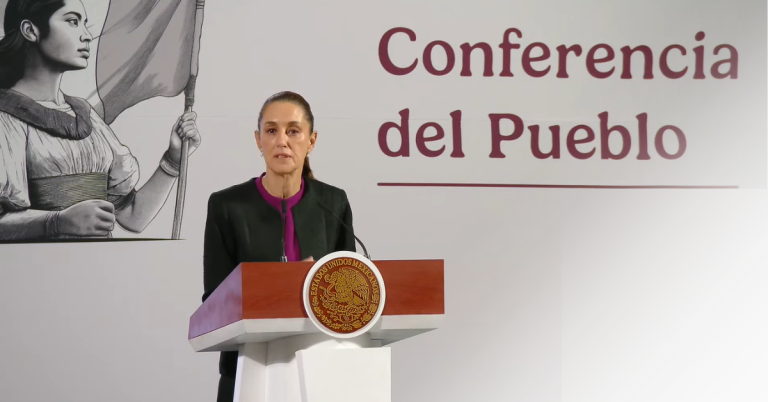
President Andrés Manuel López Obrador reported during his morning press conference that Mexico is putting relations with the embassies of the United States and Canada on hold, after speaking out regarding Judicial Reform, which seeks to have federal judges elected by direct vote.  Photo: X @lopezobrador_

[We are on WhatsApp. Start following us now]

Listen to this note:


During his morning press conference, Mexican President Andrés Manuel López Obrador announced that relations with the embassies of the United States and Canada are on hold, after speaking out regarding the Judicial Reform, which seeks to have federal judges elected by direct vote.

“With all due respect, this is not a matter of dispute or enmity, but how can we allow him to give his opinion on what we are doing? We are not going to tell him to leave the country, no, but we do have to read him the Constitution, which is like reading him the riot act,” said the Mexican president.

The relationship with Ken Salazar, the United States ambassador to Mexico, he said, “is good, but it is on hold,” which he specified since he issued a letter on the proposal for Judicial Reform in Mexico on August 22.

“Pausing means that we are going to take our time, because hopefully the State Department… because it is not the State Department either, what a coincidence that at the same time that they are speaking out in Mexico, through the Embassy, the Canadians are doing so, which is also 'embarrassing', with all due respect to the Canadian government. It seems like an associated State,” he stressed.

In his remarks, Ken Salazar, while saying he respects the country's sovereignty, said that as leaders in Mexico consider judicial reform, he hopes the ultimate outcome will lead to a strong and independent judiciary.

“Based on my lifelong experience supporting the rule of law, I believe that the direct election of judges represents a major risk to the functioning of Mexico’s democracy. Any judicial reform must have safeguards that ensure that the judiciary is strengthened and not subject to the corruption of politics,” the U.S. ambassador said.

He also said that the debate over the direct election of judges in these times, as well as the “fierce politics” if the elections of judges in 2025 and 2027 were approved, threaten the historic commercial relationship between Mexico and the United States, which, he said, depends on the confidence of investors in Mexico's legal framework. 

In that regard, Salazar explained that direct elections could also make it easier for cartels and other malicious actors to take advantage of inexperienced judges with political motivations.

“We understand the importance of Mexico’s fight against judicial corruption. However, direct and political election of judges, in my view, will not solve judicial corruption nor strengthen the judiciary. It would also undermine efforts to realize North American economic integration and create turbulence, as the debate over direct election will continue for years to come,” the diplomat added.

He also stressed that a strengthened judiciary in Mexico must have judges capable of handling complex litigation for extraditions, commercial disputes and other issues. 

“However, the proposal, as it stands, eliminates the necessary requirements for having the most qualified judges, including reducing the years of experience required to serve at all levels of the judiciary.”

You may be interested in: Mexican migrants generate $338 billion annually in the U.S.: Andrés Manuel López Obrador

Prosecuting hate crimes: a constant challenge without legal clarity

hate crime
A hate crime can take years to be prosecuted without providing justice to the victim. In 2023 alone, California law enforcement reported a total of 1,970 hate crimes, but only five went to trial, according to data from the California Attorney General's Office.

[We are on WhatsApp. Start following us now]

Listen to this note:


A hate crime can take years to prosecute without bringing justice to the victim; in 2023 alone, California law enforcement reported a total of 1,970 hate crimes, but only five went to trial, according to data from the California Attorney General's Office. 

In 2021, as the state experienced an alarming uptick in hate violence, only one case went to trial. People of African descent are overwhelmingly the targets of such crimes, while Jewish, Muslim and LGBTQ+ people are also experiencing a rise in bias-motivated attacks.

Hate crimes are notoriously difficult to prove, California Attorney General Rob Bonta said, echoing comments from his counterparts across the country. Despite the discouraging data, experts said during a briefing by the California Attorney General, Ethnic Media Services, that it is important to report hate crimes, even if conviction rates are low.

Monthanus Ratanapakdee, whose father was killed in what appeared to be a hate crime, said it is very difficult to classify this case as one, because there is not enough evidence to qualify it and even if it is obvious, prosecutors are asking for more clear evidence.

The family is demanding justice for what happened and hopes it will be judged as a hate crime. Ratanapakdee said it is important to fight for justice and provide security to vulnerable communities so that this act does not happen again.

Kunni, a waitress who was pepper-sprayed while her attackers shouted “go back to your country,” spoke about her case and how difficult it has been to move on with her life after what happened. 

She explained that when the police arrived, a report was filed, witnesses were asked for and the video they had was provided, however, nothing was sufficient and the police said it was not a hate crime. It was concluded that the attack was due to not providing them with attention at the pool table and that the person who attacked her with pepper spray was not charged with any crime.

“I have had to go to the psychologist every Wednesday to deal with my anxiety and I still feel it every time I walk down the street. I don’t feel safe and I’m scared. I have post-traumatic stress disorder,” said Kunni, who said that “after this attack, nothing is the same.”

Santa Clara County Deputy District Attorney Erin West said that in hate crime cases, there are always at least two people on the case who are looking out for the matter and these issues are handled very delicately.

He also deeply regretted the feelings of the victims, as they are inflicted with damage that is impossible to repair.

West spoke of the challenges faced when working on suspected hate cases, as it must be determined that these were acts of hate rather than circumstances; to be certain, one must try to prove how the person who attacked was thinking in order to confirm their true intentions.

“Santa Clara County reported that last year it had 32 cases of hate crimes and of those 20 were considered as such, but none have reached trial, so the statistics leave a large bias between the numbers,” he stressed.

Manjusha Kulkarni, co-founder of Stop AAPI Hate, said there are some challenges facing hate crime cases that prevent resolution, such as police not considering certain acts as hate.

Many cases are not considered hate crimes because it is not clear whether the intention was to harm the community in a circumstantial manner or whether it was an opportunity to gain some benefit, so in order to have more clarity, the legal statutes must be expanded.

In this regard, Kulkarni called on the population to put an end to hatred. There are 173 thousand associations that work to protect various vulnerable communities, because it is important to fight to resolve cases of hatred, but it is more important to prevent them and heal communities to avoid more acts of this kind.

“We are one of the most diverse countries, we are the fifth largest economy in the world and we must stop the hate that hurts marginalized communities and that is why we need all the comprehensive approaches and support available,” she concluded.

You may be interested in: “Donald Trump has lost strength because of his polarizing comments”: Anna Lee Mraz, sociologist

Cal State and University of California ban camping, impose rules on protests

Cal State and University of California ban camping, impose rules for protests
La Universidad Estatal de California y la Universidad de California están dando la bienvenida a los activistas estudiantiles nuevamente al campus este otoño con reglas para protestas renovadas. Foto: Manuel Ortiz P360P

[We are on WhatsApp. Start following us now]

Listen to this note:

By Amy Dipierro and Michael Burke. EdSource

La Universidad Estatal de California y la Universidad de California están dando la bienvenida a los activistas estudiantiles nuevamente al campus este otoño con reglas de protesta renovadas que señalan una línea más dura sobre los campamentos, las barreras y, bajo ciertas circunstancias, el uso de máscaras faciales.

Cal State, el sistema universitario público más grande del país, fue el primero en emitir su política el jueves, un conjunto de restricciones que rigen las reuniones públicas en los campus universitarios. El presidente de la UC, Michael Drake, siguió el lunes con una carta en la que describía sus expectativas de que los rectores del campus impongan restricciones sobre cómo los estudiantes podrían participar en las protestas este otoño.

Los dos sistemas se suman a una ola de universidades que han revisado las normas sobre cómo y dónde se puede manifestar en sus campus tras las protestas pro palestinas de la primavera pasada. Los críticos dicen que algunas restricciones más estrictas podrían limitar el derecho a la libertad de expresión.

La política de Cal State prohíbe los campamentos de tiendas de campaña y las manifestaciones nocturnas, un rasgo característico de los movimientos de protesta de la primavera tanto dentro de la CSU como en las instituciones de educación superior. También está prohibido erigir barricadas, vallas y mobiliario no autorizados.

“La política prohíbe los campamentos y quienes intenten iniciar uno pueden ser sancionados o disciplinados”, dijo la portavoz de la CSU, Hazel Kelly, en una declaración escrita a EdSource. “Los presidentes de los campus y sus funcionarios designados harán cumplir esta prohibición y tomarán las medidas adecuadas para detener los campamentos, lo que incluye dar un aviso claro a quienes infrinjan la normativa de que deben interrumpir sus actividades de campamento de inmediato”.

Kelly dijo que los campamentos “son disruptivos y pueden generar un ambiente hostil para algunos miembros de la comunidad. Tenemos la obligación de garantizar que todos los miembros de la comunidad puedan acceder a la propiedad y los programas de la Universidad”.

Los campus de la UC también prohibirán los campamentos u otras “estructuras no autorizadas”, dijo Drake en una carta a los rectores del campus el lunes por la mañana, en la que les ordena que hagan cumplir esas reglas. También dijo que deben prohibir cualquier cosa que restrinja el movimiento en el campus, lo que podría incluir protestas que bloqueen las aceras y las carreteras o nieguen el acceso a las instalaciones de la UC a cualquier persona en el campus.

“Espero que la dirección proporcionada en esta carta los ayude a lograr un ambiente inclusivo y acogedor en nuestros campus que proteja y permita la libre expresión al mismo tiempo que garantice la seguridad de todos los miembros de la comunidad al brindar mayor claridad y consistencia en nuestras políticas y su aplicación”, agregó Drake.

La UC se enfrenta a la fecha límite del 1 de octubre

Como parte del acuerdo sobre el presupuesto estatal de este año, los legisladores ordenaron a la oficina de Drake que creara un “marco sistémico” para aplicar de manera sistemática las normas sobre protestas en todos los campus de la UC. Los legisladores están reteniendo 25 millones de dólares de la UC hasta que Drake presente un informe a la Legislatura antes del 1 de octubre en el que se detallen esos planes.  

Una variedad de instituciones de educación superior ha reforzado políticas que restringen las manifestaciones y reuniones similares en reacción a las protestas por la guerra entre Israel y Hamás el año escolar pasado.

Las “directrices temporales” de la Universidad de Pensilvania incluyen la prohibición de megáfonos y altavoces después de las 5 de la tarde en días lectivos, así como un límite de dos semanas para la exhibición de carteles y pancartas, según The Associated Press. 

La política de la Universidad de Indiana permite “actividades expresivas” como protestas solo de 6 de la mañana a 11 de la noche y requiere aprobación previa para colgar o colocar carteles en la propiedad de la universidad. Las reglas de la Universidad del Sur de Florida estipulan que no se permiten protestas en las últimas dos semanas de un semestre, informó AP, entre otras restricciones.

Tyler Valeska, profesor adjunto de derecho en la Universidad Loyola de Chicago, dijo que si bien en el pasado una universidad no parecía muy dispuesta a aplicar estrictamente las normas de protesta, muchas ahora están anunciando un enfoque más enérgico en el futuro.  

“Durante años, tal vez incluso décadas, parecía que los funcionarios universitarios tenían una política escrita y luego otra política en su enfoque real de aplicación”, dijo. “Y vimos un cambio importante con respecto a ese status quo en la primavera, cuando las universidades de todo el país comenzaron de repente a aplicar políticas que habían estado en los libros durante años o décadas, pero que nunca se habían aplicado realmente contra el discurso estudiantil relativamente no disruptivo”.

“Puede ser que las universidades estén promocionando sus políticas sin ninguna intención real de aplicarlas estrictamente, pero en base a lo que vimos en la primavera, eso me sorprendería”, añadió.

Applies to all Cal State campuses

La política provisional de Cal State se aplica a los 23 campus del sistema y reemplaza las normas de cada escuela. Los directivos de la universidad siguen teniendo discreción en cuestiones específicas, como determinar qué edificios y espacios del campus se consideran áreas públicas y en qué horas del día se puede acceder a esos espacios, lo que explicarán además de la política para todo el sistema.

La carta de Drake a los rectores del campus no es una política para todo el sistema. En cambio, su carta ordena a cada campus que elabore sus propias políticas. Esas políticas deben cumplir ciertos requisitos, incluida la prohibición de los campamentos.

Es probable que algunos campus ya cuenten con las políticas necesarias, dijo Drake en su carta. Si no las tienen, deberían desarrollar o modificar las políticas existentes lo antes posible, agregó. En cualquier caso, cada campus debe proporcionar un documento o una página web que describa esas políticas.

Los dos sistemas universitarios de cuatro años de California han sido objeto de críticas por la forma en que respondieron a las protestas en solidaridad con Palestina esta primavera. Algunos líderes del campus abordaron a los activistas estudiantiles con suavidad, permitiendo que los estudiantes acamparan durante la noche en los patios de manera pacífica y negociando con los representantes hasta que desmantelaran voluntariamente los campamentos. Pero cuando estallaron conflictos entre manifestantes, contra manifestantes y administradores en algunos campus, los líderes universitarios llamaron a las fuerzas del orden para que desmantelaran los campamentos y arrestaran a los estudiantes que no acataron las órdenes de dispersarse.

Highlights of both systems

Las nuevas pautas de protesta sugieren que Cal State y UC ahora se dirigen aproximadamente en la misma dirección, adoptando una postura más firme contra prácticas que aparecieron con frecuencia en las protestas de primavera.

Los aspectos más destacados de las políticas incluyen:

Acampada: La política de Cal State prohíbe “los campamentos de cualquier tipo, las manifestaciones nocturnas… y el merodeo nocturno”. Prohíbe el uso de parafernalia para acampar, incluidos vehículos recreativos y tiendas de campaña. Llevar “grandes cantidades de pertenencias personales” al campus sin permiso también está prohibido, excepto en los casos permitidos en las residencias de estudiantes y los espacios de trabajo universitarios. La carta de Drake ordena a los rectores de la UC que aclaren sus políticas para dejar en claro que no se permite montar un campamento, una tienda de campaña o una estructura de alojamiento temporal sin autorización previa.

Barricadas y otras estructuras: Drake solicita a los campus que se aseguren de que sus políticas prohíban la construcción de estructuras no autorizadas en el campus. La política provisional de Cal State también incluye una serie de estructuras temporales y permanentes (carpas, plataformas, puestos, bancos, edificios, materiales de construcción (como ladrillos, palés, etc.), paredes, barreras, barricadas, vallas, estructuras, esculturas, portabicicletas o muebles) que no están permitidas sin permiso.

Uso de mascarillas y negativa a identificarse: la carta de Cal State y Drake invoca la misma política sobre el uso de mascarillas casi al pie de la letra. Ambos advierten que no se permiten las mascarillas ni otros intentos de ocultar la identidad “con la intención de intimidar y acosar a ninguna persona o grupo, o con el propósito de evadir o escapar del descubrimiento, reconocimiento o identificación en la comisión de violaciones” de leyes o políticas relevantes. Además, el lenguaje de Cal State señala que las mascarillas están “permitidas para todas las personas que cumplan con las políticas de la Universidad y las leyes aplicables”. De manera similar, ambos sistemas prohíben que las personas se nieguen a identificarse ante un funcionario de la Universidad que actúe en su carácter oficial en el campus.

Restricción de la libre circulación: La carta de Drake enfatiza que las políticas del campus deben prohibir restringir la libre circulación de otra persona, por ejemplo, bloqueando pasillos, ventanas o puertas de manera que se niegue el acceso a las instalaciones de la universidad. La orientación llega días después de que un juez federal emitiera una orden preliminar que prohibía a la UCLA “permitir o facilitar deliberadamente la exclusión de estudiantes judíos” en su campus. La política provisional de Cal State incluye advertencias generales contra acciones que “impidan o restrinjan la libre circulación de cualquier persona” y bloqueen calles, pasillos, estacionamientos u otros caminos para peatones y vehículos.

Kelly, portavoz de la CSU, dijo que las secciones de la política sobre campamentos, el uso de barricadas y cubiertas faciales “no son nuevas y ya están vigentes en su mayor parte en cada universidad y en la Oficina del Rector”.

En la primavera, los estudiantes construyeron campamentos en los campus de la UC, incluidos UCLA y UC San Diego, así como en los campus de Cal State, incluidos Sacramento State y San Francisco State. Bobby King, portavoz de San Francisco State, dijo que la escuela concedió a los estudiantes la primavera pasada una excepción a la política de horario, lugar y modales del campus.

“La nueva política de la CSU creará una mayor urgencia para resolver una situación como la que tuvimos la primavera pasada”, dijo. “Obviamente, con la nueva política en vigor, los líderes del campus que interactúan con los estudiantes tendrán que transmitir esa urgencia”.

La política provisional de Cal State adopta un enfoque integral para definir lo que está permitido y lo que no durante las manifestaciones, prohibiendo artículos como armas de fuego, explosivos y chalecos antibalas, así como acciones como disparar flechas, trepar postes de luz y orinar en público. La política prohíbe las manifestaciones en las residencias universitarias, incluidas las casas de los empleados que viven en las instalaciones de la universidad cuando “no se celebren eventos públicos”.

La directiva de Drake describe un sistema escalonado que establece cómo los campus deben vigilar a las personas que violan alguna regla. Primero se les informaría de la infracción y se les pediría que dejen de hacerlo. Si no lo hacen, el siguiente paso sería advertirles de las posibles consecuencias.

Después de eso, la policía de la UC o el jefe de bomberos del campus local podrían emitir órdenes que podrían incluir un anuncio de reunión ilegal, una orden de dispersarse o una orden de identificarse. Si la conducta no cambia en ese momento, las personas involucradas podrían ser citadas por violación de la política de la universidad y, si están infringiendo una ley, también podrían ser detenidas y arrestadas. La policía podría ordenarles que se mantengan alejados de los campus por reincidencia o lo que consideren infracciones más graves.

Ese sistema de respuesta, sin embargo, “no es una prescripción rígida que abarque todas las situaciones”, afirma la guía.

La política provisional de Cal State entra en vigencia de inmediato para los estudiantes y empleados no sindicalizados, dijo Kelly. Los empleados sindicalizados trabajarán bajo las políticas del campus negociadas previamente hasta que se complete un proceso de reunión y consulta para la nueva política.

Se pidió a cada campus de Cal State que explicara más detalles

Cal State Dominguez Hills y Stanislaus State fueron los primeros dos campus en publicar adendas para sus escuelas al momento de la publicación.

El anexo de Dominguez Hills, por ejemplo, enumera las zonas en las que se permiten protestas sin cita previa, incluido el césped norte frente a la Unión de Estudiantes de Loker y un jardín de esculturas adyacente al Teatro Universitario. Pero el documento limita los eventos en esos lugares al horario comprendido entre las 7:00 a. m. y las 11:00 p. m. y solo permite “discursos y expresiones sin amplificación”.

La política específica del campus también describirá las restricciones sobre carteles, pancartas y tiza. El anexo de Dominguez Hills prohíbe el uso de palos o postes para sostener carteles portátiles, no permite que los carteles “se fijen con cinta adhesiva a ningún edificio del campus, letreros de directorio, cercas, barandillas o postes de luz exteriores” y, por defecto, limita el período de colocación de los carteles a dos semanas. También incluye una lista de “lugares designados para colocarlos” en el campus.

Margaret Russell, profesora adjunta de la Facultad de Derecho de la Universidad de Santa Clara, dijo que la política de Cal State está claramente motivada por el deseo de minimizar las interrupciones causadas por las protestas. Russell dijo que, aunque muchas de las restricciones apuntan a la conducta de los estudiantes en lugar de a su expresión, le preocupa el lenguaje general que parece exigir permiso por escrito para colocar carteles, letreros, pancartas y tizas.

Russell dijo que ese lenguaje podría crear “un efecto paralizante” porque “es potencialmente tan amplio y de largo alcance que la gente no sabe de antemano qué está permitido y qué no”.

“El mensaje general es: ‘Ten cuidado. Ten cuidado cuando expresas tu opinión en voz alta’. Por eso, para mí, parece que suprime la libertad de expresión, que es probablemente lo que quieren”, dijo.

Kelly, portavoz de Cal State, dijo que la política en general pretende describir cómo se puede utilizar la propiedad de las universidades sin inhibir la libertad de expresión.

“En general, no se requiere una autorización escrita individual para colocar carteles, a menos que la persona intente hacerlo en un lugar donde no está permitido”, explicó. “Esta regla no se aplica a los carteles y letreros que la gente lleva consigo o utiliza personalmente”.

Una declaración del 14 de agosto de la Asociación Americana de Profesores Universitarios (AAUP) no mencionó ninguna universidad, pero criticó ampliamente a las administraciones escolares por políticas que, según dijo, “socavan gravemente la libertad académica y la libertad de expresión y de palabra que son fundamentales para la educación superior”.

“Muchas de las últimas políticas sobre actividades expresivas limitan estrictamente los lugares donde pueden realizarse manifestaciones, si se puede utilizar sonido amplificado y los tipos de publicaciones permitidas”, afirma el comunicado. “Con duras sanciones por infracciones, las políticas en general disuaden a los estudiantes y profesores de participar en protestas y manifestaciones”.

La declaración de la AAUP señala que algunas instituciones han llegado al extremo de exigir a los grupos de protesta que se registren con antelación. La AAUP sostiene que esas disposiciones bloquean de manera efectiva las protestas espontáneas y pueden desalentar a los manifestantes que desean evitar la vigilancia.

La declaración de la AAUP se produjo un día después de que el Consejo Estadounidense de Síndicos y Antiguos Alumnos (ACTA) publicara una “guía para prevenir campamentos y ocupaciones en el campus”. La guía alienta a las universidades a prohibir los campamentos y a actuar con decisión para castigar a los estudiantes que violen esas políticas.

“Una vez que un campamento ha ocupado el campus, la institución tiene muy pocas opciones para evitar un espectáculo desagradable que, en el mejor de los casos, hará que la administración parezca ineficaz e incluso que la junta parezca negligente”, dice la guía. “Negociar y hacer concesiones son invitaciones a más y mayores demandas. Envalentonan a otros a emplear tácticas coercitivas similares en el futuro y socavan aún más la misión de la universidad”.

La política provisional de Cal State dice que la universidad asume su obligación de apoyar el libre intercambio de información e ideas, pero que dicha libertad de expresión “está permitida y apoyada siempre que no viole otras leyes o políticas y procedimientos de la Universidad”.

Kelly, portavoz de Cal State, dijo que el sistema universitario “da el máximo valor a fomentar el discurso saludable y el intercambio de ideas de una manera segura y pacífica, manteniendo un ambiente de aprendizaje y trabajo que respalde el intercambio libre y ordenado de ideas, valores y opiniones, reconociendo que los individuos crecen y aprenden cuando se enfrentan a diferentes puntos de vista, formas alternativas de pensar y valores conflictivos”.

Read the original note giving Click here.

You may be interested in: Students are called to apply for the Civics Education Academy for Future Leaders of Half Moon Bay

San Jose among cities to receive state funding for affordable housing

San Jose among cities to receive state funding for affordable housing
Governor Gavin Newsom announced state funding for affordable housing, with San Jose among the cities set to receive aid.

[We are on WhatsApp. Start following us now]

Listen to this note:


The Governor Gavin Newsom announced that the state is awarding nearly $789.8 million in cap-and-trade funds for 24 projects across California to create thousands of affordable housing units and infrastructure improvement projects such as bike lanes, zero-emission public transit and pedestrian walkways; cities to receive the aid include San Jose.

“We can’t solve the homeless crisis without creating new affordable housing. Today we are reinvesting more than three-quarters of a billion dollars generated through cap-and-trade funding to build thriving, affordable communities for California families,” said Gavin Newsom.

In that regard, he noted that by creating livable communities with sustainable transportation options, we can also meet both the state's climate goals and those of providing affordable housing for all Californians.”

The funds will build 2,483 new rent-restricted homes as part of 24 different affordable housing projects, with more than two-thirds of the homes dedicated to low-income communities.

The award-winning projects are located in 20 communities across the state, including the cities of Berkeley, El Cerrito, Healdsburg, Hemet, Inglewood, King City, Livingston, Long Beach, Los Angeles, Oakland, Oceanside, Oxnard, Red Bluff, Sacramento, San Bernardino, San Diego, San Francisco, San Jose, Walnut Creek and Los Angeles County.

This is the third largest round of grants awarded for the Affordable Housing and Sustainable Communities (AHSC) program, which funds housing and transportation projects near workplaces, schools, and other everyday destinations to help reduce greenhouse gas (GHG) emissions in the state. 

Across eight rounds, AHSC investments will total $3.8 billion.

“These investments not only address the urgent need for affordable housing that is integrated with critical infrastructure in a holistic approach to development, but they also significantly contribute to our fight against climate change by reducing greenhouse gas emissions in our most vulnerable communities,” said Sam Assefa, director of the Governor’s Office of Land Use and Climate Innovation.  

“By integrating sustainable transportation with affordable housing, we are creating healthier, more resilient neighborhoods where all Californians can thrive,” he added.

In addition to creating housing, these 24 projects will also support the purchase of 52 new zero-emission transit vehicles, the installation of approximately 100 new bus stops, the construction of approximately 60 miles of bike lanes, as well as the repair and construction of more than 60 miles of sidewalks to create safe and accessible pathways.

This funding follows Governor Newsom’s recent executive order, which, among other things, calls on local governments to use state funding to address unhealthy and dangerous encampments within their communities and provide homeless individuals with the care and support services they need.

You may be interested in: Nearly $14 million awarded for permanent supportive housing in South San Francisco

Poemarios de Sara Buho, an opportunity to delve into poetry and the lyrical genre

0
Poetry collections by Sara Buho
Poemarios by Sara Buho is Camilasbooks' recommendation of the week, two poetry books, “La inercia del silencio” and “Perdón a la lluvia”, which, according to the reviewer, are a perfect opportunity to get into poetry and the lyrical genre.


I'm sorry.

I needed your love to not look inside myself.

I needed a laugh to imitate, a life that was not my own,

a bridge to another path, a space to invent.

Love is my drug, warm ground for those who don't know where they're going.

Something simple that takes me away from my emptiness, breadcrumbs for my birds.

Giants, windmill blades that I never wanted to face.

I'm sorry. I didn't know that. I'm sorry.

I looked for you only to find myself in the wrong place.

I found you to look for myself and I could only be someone

that only exists by your side.

This Saturday, Camilasbooks reviews two books by the Spanish poet Sara Búho, “La inercia del silencio” and “Perdón a la lluvia”, which, according to the reviewer, are a perfect opportunity to enter poetry and the lyrical genre.

The first book, he said, introduced him to the world of poetry and encouraged him, in a way, to get into it and investigate a little more about the world of everything that has to do with poems and the lyrical genre. “It was an excellent entry, really, and it left me very curious to discover new poems and new writers.”

“Perdonar la lluvia” (Forgive the Rain) became one of her favorite poetry books, as it has a great sentimental value for her, “and this was the first poetry book that made me cry. I feel that Sara Búho always has in her words, in her verses, those things that I have always wanted to say, but I have never known how to say them.”

Camilasbooks says that they provoke sensations and feelings that have to do with the search for identity, with anguish, with being lost, with love, and also with an endless number of things that all people have experienced at some point.

“I think that this collection of poems marked a before and after for me in everything that has to do with poetry and I can only recommend it to you.”

Camilasbooks points out that Sara Búho is a modern and light poem that plays with verses in a quite entertaining way.

To learn more about this and other reviews, don't miss Camialsbooks' recommendations every Saturday


View this post on Instagram


A post shared by Peninsula 360 (@peninsula360press)


You may be interested in: The Murder of Roger Ackroy: A classic novel with a detective mystery to unravel

Walk for justice for undocumented migrants

En el corazón del Área de la Bahía se está desarrollando un enérgico movimiento liderado por un grupo diverso de activistas decididos a asegurar un futuro mejor para los inmigrantes indocumentados. Han caminado colectivamente 48 millas desde San José hasta San Francisco para exigir justicia, reconocimiento y el derecho a vivir sin miedo.

Esta marcha, que comenzó el sábado 17 de agosto por la mañana, no se centra sólo en los kilómetros recorridos, sino en las historias que se cuentan a lo largo del camino.

Los manifestantes, como Idilia Méndez, están presionando para que se aprueben dos proyectos de ley fundamentales que proporcionarían una vía hacia la ciudadanía a los inmigrantes indocumentados que lleven viviendo en Estados Unidos al menos siete años, hayan pagado impuestos y no tengan antecedentes penales. 

[embedyt] https://www.youtube.com/watch?v=0NcAzYkMYpc[/embedyt]

La marcha es una demanda por la oportunidad de vivir sin miedo a la deportación y de reunirse con sus seres queridos. Idilia afirma: «Llevamos años esperando los papeles de mi familia. Y este proyecto de ley podría ser algo bueno para que consigan pronto sus papeles para visitar a su familia en México.»  

Margarita lleva 27 años trabajando, limpiando la misma casa, sin descanso para mantener a su familia. Hace de todo, desde cocinar, limpiar y lavar la ropa hasta cambiar focos. Su patrona le dijo que no se cayera en el trabajo y se lesionara, o se vería sin trabajo. 

Este es el primer año que le dan vacaciones, y las utiliza como voluntaria en Almas Libres. Su dedicación a su familia se refleja en su compromiso con esta causa. 

La historia de Margarita es sólo una entre muchas. Cada paso de la marcha hace eco de las experiencias colectivas de innumerables inmigrantes indocumentados que se han visto obligados a abandonar sus hogares, sus familias y todo cuanto conocen.

Muchos migrantes se ven obligados a abandonar sus lugares de origen debido a la violencia y la inestabilidad económica. Se ven en la necesidad de recorrer largas distancias en tren y a pie para llegar a destinos desconocidos.

A pesar de enfrentarse a numerosos obstáculos, muchos migrantes encuentran trabajo en entornos que no conocen y empiezan a construir una nueva vida. Para ellos, esta vida se piensa como algo temporal, como un medio para alcanzar un fin. Envían dinero a sus familias, con la esperanza de ahorrar lo suficiente para volver a casa algún día. A diario compaginan largas horas de trabajo, alquiler, gastos de manutención y remesas para mantener a sus seres queridos.

La historia de innumerables emigrantes se define por la resistencia, el sacrificio y la esperanza inquebrantable de un futuro mejor. Como dice un manifestante: «Cuando vienes aquí, sólo te juzgan por tu aspecto: eres mexicano, eres negro, eres latino, eres pobre. Eso es todo lo que ven».

Eladio Cortés Morales pasó 17 años en la cárcel, incluidos seis meses detenido por el ICE, antes de unirse al Movimiento por la Integridad Humana y la Dignidad, no a la Detención. La misión de Eladio es poner de relieve las injusticias a las que se enfrentan las personas injustamente etiquetadas y castigadas por el sistema. El año pasado participó en una peregrinación a los centros de detención del ICE en California. El 25 de septiembre de 2024 se unirá de nuevo a la peregrinación, apoyando al movimiento migrante y abogando por un trato humano.

La marcha que caminó hasta San Francisco, insta a la vicepresidenta Kamala Harris para que apoye dos proyectos de ley que ampliarían la elegibilidad para el Programa de Registro de Inmigrantes. Esperan que ella defienda su causa y logre una reforma migratoria largamente esperada.

No tienen expectativas en Trump y no apoyan su liderazgo. Idilia expresó su frustración, diciendo: «No entiendo las cosas que dice Trump, especialmente cuando habla públicamente. Como ciudadana nacida en este país, me siento avergonzada porque Donald Trump no me representa».

En la marcha del Área de la Bahía por un camino a la ciudadanía colaboran organizaciones como Almas Libres, Amigos de Guadalupe, SIREN y De-Bug, entre otras. Estos grupos se dedican a los derechos de los inmigrantes y a la justicia. Muestran la fuerza y la unidad de la comunidad inmigrante y sus aliados para impulsar un cambio legislativo. 

Eladio, Margarita, Idilia y muchos otros caminan por los innumerables inmigrantes indocumentados que siguen viviendo en la sombra. Marchan, algunos con los pies lastimados por las ampollas, con la esperanza de que, por fin, se escuchen sus voces y de que pronto esté a su alcance un camino claro hacia la ciudadanía. Su viaje es un testimonio de la fuerza de la comunidad y del poder de la acción colectiva en la lucha por la justicia y la igualdad.

You may be interested in: “We have not come to do harm”: migrant workers respond to hate speech


Campesinas in Tulelake, between natural beauty, community unity and abandonment

[We are on WhatsApp. Start following us now]

The sun has just risen. Juana Chavoya, a farmworker from Jalisco, Mexico, makes her way through the painful ground and moist, aromatic plants in a mint field in Tulelake, California. 

Tulelake is a small, rural, remote town with less than a thousand inhabitants, located in the northeast corner of the state of California, in Siskiyou County, just two miles from Oregon. 

Tulelake's economy is based on agriculture, with vast fields of onions, potatoes, mint, lettuce, alfalfa, garlic, strawberries and other fruits and vegetables grown by the hands of Mexican immigrants, who represent 49.81 TP3T of the population; 61.51 TP3T are white. 

Paradoxically, despite the fact that tons of fresh food come from the village, it is very difficult to eat fruit and vegetables; what is grown here is sold far away, in urban centers. 

I follow Juana with camera in hand and the mosquitoes, with their voracious appetite, follow me in droves. They are relentless, the peasants warn me, who have to spray themselves with repellent every morning; “and yet they keep biting us,” says Juan Chavoya, Juana’s husband, smiling.

Tulelake is a town of contrasts. Juana describes it as a “place where people work very hard and earn little money, but at the same time it is very beautiful because of its nature, quiet, ideal for raising children, and where people [the farmers] are united.” 

At noon, during their break, I chat with a group of peasant women in an onion field. They agree with Juana that they like Tulelake “for its nature and for how much the peasant women support each other.”

The farmworkers agree that they like Tulelake “because of its nature and because of how much the farmworkers support each other.” Photo: Manuel Ortiz P360P

But the women in the group also stress that life in Tulelake is hard: “You work a lot and earn little.” “Sometimes we feel like we are in a forgotten village, without basic services, without a bank, without pharmacies, without services for people with special needs, without dentists, we are far away from everything.” 

The peasant women usually earn 16 dollars an hour. They say that this is barely enough to cover all their expenses. In addition, they have to save to survive in the winter season, when there is no work. 

But Juana is not discouraged, “and we are going to keep going, because that is what we have come here for, to fight to get ahead, to be a blessing to others and to raise our children,” she says. 

The working season in Tulelake runs from early April to late October. In winter, it snows heavily and most of the rural population is unemployed. Some, like Juana, are lucky enough to work in the few potato packing plants that remain in the area. 

The women in a group also emphasize that life in Tulelake is hard: “You work a lot and earn little.” “Sometimes we feel like we are in a forgotten town, without basic services, without a bank, without pharmacies, without services for people with special needs, without dentists, we are far away from everything.” Photo: Manuel Ortiz P360P

“What are the main problems facing rural women in Tulelake?” I ask a group of women during lunch in an onion field. 

Ema Hernández, who has lived in the town for over forty years, responds quickly and the others nod in agreement: “the heat, the lack of transportation, health services and the fact that the work is temporary.” 

Summer temperatures in Tulelake can be stifling, ranging from 70 to 110 degrees Fahrenheit at midday. “You have to cover yourself well from the sun and drink water constantly,” says Ema. 

“Sometimes all your bones and hands hurt. Sometimes you come home with your feet swollen from the heat. Sometimes you come home thirsty, you sit down in a chair and fall asleep with your mouth open, from exhaustion, and the whole week is the same,” Juana explains. 

Other women, with whom I conducted a focus group, say that recently some workers have fainted while working in the fields, but companies hide the cases and employees are afraid to talk about the issue for fear of workplace reprisals such as dismissal. 

Rural women in Tulelake
Farmers in Tulelake work hard every day to harvest and sow with love and dedication, contributing to the economy of a country that allows them to have a "better life. Photo: Manuel Ortiz P360P

I noticed that rural people in Tulelaka are afraid to talk about some issues, such as labour injustices, which some describe as “conditions of new slavery”. 

Another issue is racism. Kelly Harris, from the organization TEACH- Training, Employment, and Community Help, says that “the Hispanic population has never been respected in this community; they are considered workers, not people.” 

On the other hand, there are still farmers who do not have health services because, despite the expansion of the Medi-Cal program (the state version of Medicaid) In 2024, it already includes undocumented people. There is a fear that requesting this service will count them as a public burden and they will not be able to regularize their immigration status. It should be noted that Media-Cal is not considered a public burden.

Added to this is the lack of medical infrastructure and health personnel. Laura Pérez, director of Early Head Start in Tulelake notes that they only have one clinic and that scheduling appointments can take time. months. "Those needing immediate care must travel 50 miles across the state line to Klamath Falls, Oregon, where doctors may or may not accept Medi-Cal depending on who is on call on a given day.”

Perez adds: “We don’t have a pharmacy. We don’t have transportation. There are no suppliers.”

The upcoming general elections in the United States, particularly the anti-immigrant rhetoric of former president and now presidential candidate Donald Trump, are also a topic of conversation among campesinos. 

“We feel attacked and discriminated against by Donald Trump, because of the way he addresses us, it is very hurtful,” says Juana. 

And contrary to Trump's statements, Juana clarifies: "We pay our taxes, respect the law and support our community. In fact, there are very good American people here and we have a good relationship with them. We feel that we are part of this place, because we are people who come with a clean mind and heart to progress and make this nation grow."

During the day, the streets of Tulekake are empty, giving the impression of a ghost town, especially because of the buildings with broken windows and dusty shops that have already closed, such as a bank and a cinema. 

But at three in the afternoon, farmers arrive on foot and by car to Vallarta Grocery Store Taquería, a Mexican products store that functions as the town's most important community meeting point. 

It opens at six in the morning and at that time some people stop by for a coffee and a Mexican bread before going to the fields. At three, when they finish work, they come to do their shopping and/or send money to Mexico, says Irma Alonso, owner of the place. 

Grocery Store Taqueria does not sell alcohol and is the only store where I found vegetables. The two non-Mexican stores are primarily liquor stores, from what I could tell. 

With the light, warm breeze of the evening coming to an end, the sounds of laughter, shouts of joy and Mexican band music come to me, blending together and fading into the distance. I approach guided by the tubas, trumpets and the party atmosphere. The person being celebrated is Dulce Ibarra, who is turning 15 and celebrating in style. 

With the light warm wind of the evening coming to an end, the sounds of laughter, shouts of joy and Mexican band music come to me, blending together and fading into the distance. I approach guided by the tubas, trumpets and the party atmosphere. The person being celebrated is Dulce Ibarra, who is turning 15 and celebrating in style. Photo: Manuel Ortiz P360P
On the dance floor, with live music, everyone gives their all, dancing just like they do in Mexico: with passion, love, sweat, joy and, sometimes, nostalgia. Photo: Manuel Ortiz
Tonight, they are wearing their best outfits: cowboy boots, brightly colored shirts, elegant hats and leather belts with flashy buckles. Photo: Manuel Ortiz P360P

I see familiar faces of people who hours before were working in the fields. Tonight, they are wearing their best clothes: cowboy boots, brightly colored shirts, elegant hats and leather belts with flashy buckles.

On the dance floor, with live music, everyone gives their all, dancing just like they do in Mexico: with passion, love, sweat, joy and, sometimes, nostalgia.  


You may be interested in: “We have not come to do harm”: migrant workers respond to hate speech

Preparing for the inevitable: Resilience against natural and man-made disasters in California

0
Natural and man-made disasters in California
Desastres naturales y humanos en California, actualmente es necesario contar con las herramientas precisas para pronosticar y saber cuándo, por situación climática o de incendio es necesario desalojar nuestros hogares y buscar refugio. Sin embargo, es necesario estar preparado. Foto: Raul Ayrala P360P

Listen to this note:


Muchos de los que tenemos más de 30 años y que tuvimos la suerte de convivir con nuestros abuelos, seguramente recordamos esas platicas donde nos cuentan de cómo era el lugar que habitaban, cómo podrían predecir exactamente el tiempo de lluvias, cuándo se sembraba o cosechaba. Rara vez, o como tema ocasional, recordaban alguno que otro diluvio o inundación, ya ni decir de grandes incendios forestales. Hoy, es el pan de cada día.

Atrás quedaron los pronósticos exactos sin recurrir a la tecnología; actualmente es necesario contar con las herramientas precisas para pronosticar y saber cuándo, por situación climática o de incendio es necesario desalojar nuestros hogares y buscar refugio. Sin embargo, es necesario estar preparado.

No hace mucho, el director de manejo de emergencias del condado de San Mateo, Shruti Dhapodkar, dijo a un medio local el área “es una Disneylandia de los desastres”, un término, creo, errado para lo que se vive, pues lejos está de las sonrisas y la diversión que busca dar el famoso parque de diversiones a sus visitantes.

California suffers from (almost) everything: earthquakes, massive wildfires, floods, winter storms, hurricanes. So you have to count on each of the 58 counties that make up California. 

According to the Centro Nacional de Información Ambiental (NCEI, por sus siglas en inglés), entre 1980 y 2024 (hasta el 8 de agosto de 2024), se han confirmado 46 desastres meteorológicos y climáticos con pérdidas superiores a los mil millones de dólares cada uno que afectaron a California. 

Estos eventos incluyeron 14 sequías, 6 inundaciones, 3 heladas, 4 tormentas severas y 19 incendios forestales. 

Sin embargo y pese a las cuantiosas sumas de dinero destinado a la recuperación del estado cuando hay desastres, no es suficiente; muchas veces esa ayuda no llega a los más necesitados, a aquellos que no hablan inglés o que por su estatus migratorio no levantan la voz para solicitar la ayuda. 

San Mateo County

El pasado 3 de agosto, por primera vez, en la vigésima edición del Día de Preparación Contra Desastres del condado de San Mateo, se impartieron talleres en español y en mandarín. El evento que estuvo vestido con el rojo intenso, amarillo y blanco de los camiones de bomberos, las luces azules de las patrullas de policía y la Patrulla de Caminos de California (CHP), el celeste de las grúas de PG&E, y los colores de camuflaje o negro de vehículos de rescate y paramédicos.

Through this annual event, approximately sixty county agencies sought to prepare the community to cope with, survive and recover from emergencies caused by, among other things, fires, earthquakes and floods.

En él, también se educa a la gente acerca de cómo hacer resucitación cardiopulmonar (CPR, por sus siglas en inglés), cómo parar una hemorragia o preparar a las mascotas en caso de desastres. 

Hubo talleres para niños en tres idiomas: español, mandarín e inglés, algunos de ellos fueron “Cuentos con un bombero” o “Prepárate con Pedro”, un pingüino creado por la Cruz Roja estadounidense cuya misión es informar a los más chicos sobre preparación para emergencias. 

“Soy un huracán”, “Refugiarse vs Evacuar”, “Vigilar vs Advertencia” y “Prepara un kit”, son los videos que con ayuda de música y Pedro, se Explain in video a los más pequeños de la casa qué sucede y cómo se debe actuar.

Sin embargo, el sitio cuenta con libros de actividades descargables, que también apoyan en la educación sobre desastres como inundación, terremoto, huracán, corte de energía, tornado, incendio forestal e incluso tsunami.

Other exhibitors, such as the Sheriff's Office Explorers, were present to inform the public about the services they offer, including a program that allows young people as young as 14 years old the opportunity to work temporarily in various roles supporting search and rescue units or other police divisions.

El condado de San Mateo cuenta con el Departamento de Gestión de Emergencias (DEM, por sus siglas en inglés), quien coordina los servicios y actividades de preparación, respuesta y protección en todo el condado para incidentes y desastres a gran escala. 

El DEM es responsable de alertar, notificar y coordinar con las agencias correspondientes dentro de las 20 ciudades del condado y las áreas no incorporadas cuando ocurre un desastre; coordinar a todas las agencias que responden; garantizar que haya recursos disponibles y movilizados en tiempos de desastre; desarrollar planes y procedimientos en respuesta y recuperación ante desastres; y desarrollar y proporcionar materiales de preparación para nuestros residentes.


You may be interested in: California under fire: Nearly 430,000 acres burned by wildfires so far in 2024

California under fire: Nearly 430,000 acres burned by wildfires so far in 2024

California fires
Incendios en California preocupan, deacuerdo con CalFire, California experimentó un mes de junio más caluroso de lo normal, combinado con un exceso de combustibles finos debido a temporadas de invierno y primavera inusualmente húmedas, lo que ha provocado que la vegetación sea más susceptible a la ignición y propagación del fuego de lo que se ha observado en años anteriores. Foto: Manuel Ortiz

[We are on WhatsApp. Start following us now]

Listen to this note:


Hasta el 16 de agosto de 2024, California ha registrado 5 mil 210 incendios forestales que han destruido 821 mil 877 acres; apenas en julio se registró el cuarto más grande en la historia del estado, “Park Fire”, el cual se sabe fue provocado, destruyendo 429 mil 188 acres y 637 estructuras hasta el momento, sigue activo.

Actualmente, hay 12 incendios activos; el más grande afecta los condados de Butte, Tehama, Shasta y Plumas.

Lleva más de un mes activo y las autoridades solo han podido contenerlo al 49 por ciento, ha generado 32 advertencias de evacuación en Tehama y 6 en Shasta; mientras que las órdenes de evacuación son de 10 en Tehama.

Está ubicado junto a Upper Park Road en Upper Bidwell Park, al este de Chico, donde mil tres estructuras están bajo amenaza. El incendio del parque ha quemado 113 mil 744 acres en el Bosque Nacional Lassen.

According to CalFire, California experimentó un mes de junio más caluroso de lo normal, combinado con un exceso de combustibles finos debido a temporadas de invierno y primavera inusualmente húmedas, lo que ha provocado que la vegetación sea más susceptible a la ignición y propagación del fuego de lo que se ha observado en años anteriores. 

Además, la vegetación es mucho más densa por debajo de los 3 mil pies, lo que puede provocar un rápido crecimiento del fuego durante el ataque inicial, especialmente en áreas donde el viento y la topografía se alinean. Estas condiciones se consideran ampliamente como indicativas de un año de incendios más largo e intenso, especialmente en comparación con los últimos 3 años de incendios.

De acuerdo con la agencia, los meses de julio a septiembre están más influenciados por la hierba y los combustibles finos que por la madera de gran tamaño, que son menos propensos a incendiarse debido a la temporada de lluvias de primavera. Sin embargo, la propagación del fuego a través del sotobosque y los combustibles de la madera, según la actividad de incidentes en la primera mitad del año de incendios, indica que es probable que el fuego se propague vigorosamente y rápidamente, incluso en el modelo de combustible de madera. 

Si bien la cantidad de incendios en el estado se mantiene al ritmo del promedio de cinco años, la cantidad de acres quemados es mucho mayor que la media en ese lapso. Las predicciones climáticas indican temperaturas superiores a lo normal para toda California, lo que resulta en un riesgo de incendio anormalmente alto para el resto del año.

As of May 31, 2024, 38 people have been arrested for arson.

De 1980 a 2024, los incendios forestales son el desastre que más cuesta a California, con 64.7 por ciento de los costos totales, los cuales van de los 50 mil millones a los 100 mil millones de dólares.

Números clave 2024

  • 99 incendios forestales con 300 o más acres quemados, lo que significa 628 por ciento más en comparación con el promedio de cinco años de grandes incendios forestales.
  • 826 mil 398 acres quemados por incendios forestales locales, estatales y federales; 125 por ciento en comparación con el promedio de cinco años de acres quemados hasta la fecha.
  • 1 muerte relacionada con incendios forestales este año.


Cabe destacar que la mayoría de los incendios se producen entre los meses de abril y octubre, cuando el clima se torna más cálido y seco. En el sur de California en particular, los vientos cálidos y secos de Santa Ana aumentan el riesgo de incendios forestales en octubre y noviembre.

Algunos de los peores incendios forestales en la historia de California ocurrieron fuera de esa ventana. El incendio de Camp en 2018, que mató a 85 personas y destruyó la ciudad de Paradise, en las afueras de Redding, en el norte de California, fue un incendio de noviembre.

You may be interested in: “Listas” campaign recruits women in emergencies in California