


Friday, April 10, 2026
Home Blog Page 136

San José residents want the city to review community center expenses

San Jose residents want city to review Gardner community center spending
As San Jose works to distribute a Google grant, residents want to make sure the city reviews spending at the Gardner Community Center. Photo: City of San Jose.

By B. Sakura Cannestra. San Jose Spotlight.

Listen to this note:


As San Jose works to distribute a sizable donation from Google, residents want to make sure the money goes to support their communities.

Part of Google’s $200 million donation to San Jose was $1 million to support the Gardner Community Center, with the goal of reopening the center with more programs for residents. However, after going back and forth for about four months, the city and residents still don’t agree on how that money should be spent.

The city has budgeted about $364,000 of that million to hire three full-time and two part-time employees for the community center over the next year. The city is also spending about $74,000 on one-time costs for equipment at the community center, including computers.

A budget proposal sent by the city to members of the Gardner Neighborhood Association planned to keep the new community center's programs open for two years and allocate about $454,000 per year for staffing. That will consume about $908,000 of the $1 million over the two years.

Chuck Cantrell, San Jose's planning commissioner and president of the Gardner Neighborhood Association, said the association had previously met with city parks director Jon Cicirelli about keeping the center open for more than two years. But the talks went nowhere, and it's unclear what might happen to the community center after those two years are up.

“We want the funds from Google’s very generous donation to benefit the community now. It’s an abstraction to say that if you let us hire all these people, then it will benefit the community,” Cantrell told San José Spotlight. “Well, how? And why at that level?”

Parks spokesman Ed Bautista said the department conducted community outreach in multiple forms, including sending mailers to approximately 1,400 neighborhood addresses and holding in-person community meetings, to develop budget plans.

He said some neighborhood association leaders disagree with the proposal. He added that having the center open for two years will help justify the city's continued funding.

“We received substantial input on exactly what programs they want to see in a fully managed community center and we believe the plan meets the needs and desires of the community feedback,” Bautista explained to San José Spotlight.

Cantrell said he wanted to see less money spent on staffing and more on scholarships. 

Without scholarships, residents have to pay fees for the senior lunch program and an after-school program for children attending Gardner Elementary School. Cantrell said the after-school program costs about $2,000 per child per year.

Mahan’s office held a community meeting Monday on the city budget, in coordination with District 6 Councilman Dev Davis and the Willow Glen Neighborhood Association. More than a dozen Gardner residents and their supporters came to ask about the community center.

After the event, residents cornered the mayor to remove funding for the Gardner Community Center from this year’s budget. The community wanted more time to work out the details with the city. To save money, members of the Gardner Neighborhood Association suggested that area residents might be interested in helping run the community center.

“This community has been neglected for many years now. Not just one or two years, but more than 10 years,” said Claudia Gonzalez, secretary of the Gardner Neighborhood Association. “To make matters worse, we are a predominantly brown community. And now they are cutting our funding.”

Mahan told the group he is not familiar with the Gardner Community Center issue, but would try to learn more about it. He also recommended the group circulate a neighborhood petition to assess the community's agreement on removing the money from the budget and make a presentation to the City Council.

“Our team is working with the city parks department to understand what our options are ahead of the budget vote in June,” Tasha Dean, a spokesperson for the mayor, told San José Spotlight.

Fred Buzo, policy director for Davis' office, said the budget is only a proposal, so there is still time to amend it. Buzo said his office hopes to continue discussions with the Gardner Neighborhood Association and the community about how to best use the funds.

Cantrell said the need for a petition delegitimizes the neighborhood association, which is the organizing body for the Gardner community. She added that the Gardner Neighborhood Association is comprised primarily of people of color, while other neighborhood associations that are predominantly white, such as the Willow Glen Neighborhood Association, would not be treated this way.

“At a town hall for District 6, when Gardner is a District 6 community, we were not allowed to just ask and answer a question,” she told San Jose Spotlight. “This is part of the treatment we receive across the board. That’s why it’s so hard for us to survive here.”

Read the original note by clicking here.

You may be interested in: San José begins construction of new temporary housing for homeless people


Contract awarded for almost $11.5 million to prepare land for housing for Half Moon Bay agricultural workers

Contract awarded for almost $11.5 million to prepare land for housing for Half Moon Bay agricultural workers
The Board of Supervisors voted to award a nearly $11.5 million contract to prepare land for farmworker housing in Half Moon Bay. Photo: Manuel Ortiz P360P

Listen to this note:


The Board of Supervisors voted 5-0 Tuesday to award a nearly $11.5 million contract for grading and other site preparation work at the Half Moon Bay site where dozens of manufactured homes are planned for low-income farmworkers and their families.

The agreement with Interstate Grading & Paving, Inc would allow work on the Stone Pine Cove Farmworker Housing Project to begin this week.

The proposed project will be located on five acres at 880 Stone Pine Road, approximately one mile from downtown Half Moon Bay, just south of Highway 1.

“Typically, jurisdictions celebrate, holding groundbreaking ceremonies with special shovels and numerous officials to commemorate the beginning of work at the site. And perhaps one day we will hold such an event. But not today. Not this week. Right now we are answering the prayers of those waiting for a safe and healthy place to live with the urgency of this Board action,” said District Three Supervisor Ray Mueller.

The action follows the Board’s May 7 vote to allocate $5,999,360 to purchase and install 47 manufactured homes from Santa Cruz-based Bigfoot Homes for farmworkers and their families, including 19 households displaced by a Jan. 23, 2023, mass shooting at two farms. 

With $5 million in assistance from California’s Joe Serna Jr. Farmworker Housing Subsidy Program, at least 28 units will be reserved for farmworker households seeking homeownership.

The Stone Pine Cove property is owned by the city and the project is a collaboration between San Mateo County and the City of Half Moon Bay, who have long recognized the urgent need to create safer, more affordable housing for farmworkers and their families.

“This project will help address the critical housing needs of some of our most vulnerable residents,” said Half Moon Bay Mayor Joaquin Jimenez. 

“Through this partnership with the County we are pleased to be able to move forward. Our hope and intention is to continue to seek out other projects and partners that can provide additional affordable housing to those in need in the Half Moon Bay community,” he added.

Initial site work includes grading, paving roads and driveways, adding utility infrastructure, and creating building pads on which the manufactured housing units will be located. 

The City has provided updates and requested feedback through community outreach meetings and will continue to share information as they enter the next phase of the project.

Stone Pine Cove is tentatively scheduled to be ready for occupancy in March 2025.

You may be interested in: Housing complex for agricultural workers approved in Half Moon Bay

Donald Trump attacks immigrants (again) and accuses them of bringing “highly contagious diseases”

Donald Trump attacks immigrants
Donald Trump attacks immigrants, this time in the midst of his search for votes in New York, during an interview with New York radio station WABC, where he pointed out that those who cross the border from Mexico to the United States bring with them contagious diseases, in addition to calling them terrorists.

Listen to this note:


It's nothing new for former President Donald Trump to attack immigrants. Throughout his political career, he has made a series of statements that directly allude to those who enter the country in search of a better quality of life. However, on this occasion, he did so in the midst of seeking votes in New York.

The Republican tycoon, who is seeking a second term in office, railed against the immigrant community during an interview with New York radio station WABC on Wednesday, saying that those who cross the border from Mexico to the United States bring with them contagious diseases, and calling them terrorists.

"They come as terrorists. There are a lot of terrorists and people with highly contagious diseases arriving," he stressed.

“You know, all of a sudden you see there's a race against tuberculosis. There's a trend toward things that we haven't talked about for years in this country,” Trump added.

In addition, he added that these immigrants who enter the United States speak unknown languages. 

“We have no idea who they are or where they come from,” Trump said. “We have no idea. They speak languages we don’t even know. We have people with languages we don’t know anything about. It’s crazy.”

Attacking immigration is one of Trump's favorite points to attract his followers. In December 2023, he said that "they are poisoning the blood of our country. They are coming into our country from Africa, from Asia, and from all over the world."

“It is a very sad thing for our country. It is poisoning the blood of our country. It is very bad and people are coming with illnesses. People are coming with everything they can possibly have,” he added at a rally in New Hampshire.

Time and again, the Republican has made xenophobic speeches against migrants, claiming that they have caused the worst invasion the United States has ever suffered.

Despite all this, Trump is the favorite in 5 of the 6 key states to win the November elections (Michigan, Arizona, Nevada, Georgia and Pennsylvania), according to polls by The New York Times, which also noted that Democratic representative Joseph Biden has lost the support of young African-Americans and Hispanics, a large part of his electorate base, due to discontent over the economy and the war in Gaza.

Yesterday afternoon, Trump appeared in Crotona Park, in the South Bronx in New York, where he sought the support of Latinos and the African-American community, assuring them of security, prosperity and success in schools.

“The biggest negative impact is on our black population and our Hispanic population who are losing their jobs, losing their homes, losing everything they can lose,” Trump said.

At the rally, in a district where more than half the population is Hispanic and more than a quarter African-American, Trump argued that “millions” of immigrants are emptying their countries’ prisons, entering the United States illegally and committing “immigrant crimes.”

Amid chants of “Send them back” and “Build the wall,” Trump promised “the largest criminal deportation in history,” while suggesting that immigrants “are creating an army from within” because “they tend to be physically fit, between 19-25 years old, almost all of them are men, and they are of fighting age.”

With information from La Opinion.


This resource is supported in whole or in part by funding provided by the State of California, administered by the California State Library in partnership with the California Department of Social Services and the California Commission on Asian and Pacific Islander American Affairs as part of the Stop the Hate program To report a hate incident or hate crime and get support, go to AC vs Hate.


You may be interested in: Mexico confirms the death of 6 agricultural workers in a vehicle accident in Idaho Falls, Idaho

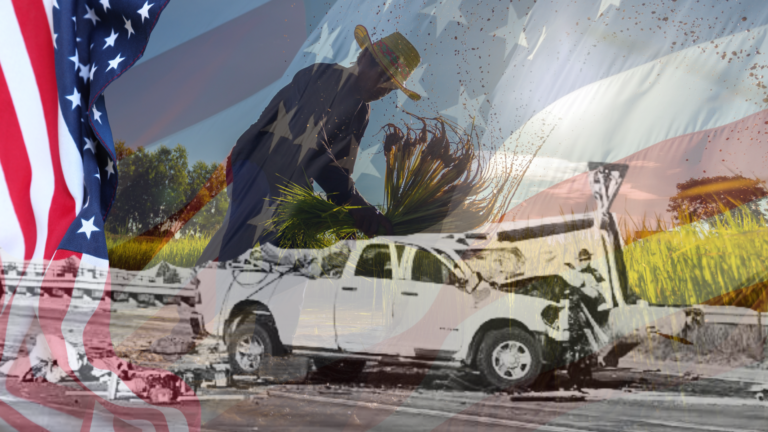
Mexico confirms the death of 6 agricultural workers in a vehicle accident in Idaho Falls, Idaho

Idaho Falls Vehicle Accident
Accidente vehicular en Idaho Falls, donde un automóvil impactó una camioneta en la que viajaban trabajadores agrícolas que iban hacia su lugar de trabajo y seis personas fallecieron, nueve más resultaron heridas la madrugada del sábado 18 de mayo.

Listen to this note:


El gobierno de México, a través de su cancillería, informó que seis personas fallecieron y nueve más resultaron heridas en un accidente vehicular la madrugada del sábado 18 de mayo, donde un automóvil impactó una camioneta en la que viajaban trabajadores agrícolas hacia su lugar de trabajo. 

Del lamentablemente accidente, siete personas permanecen hospitalizadas, pero estables, y dos han sido dadas de alta, precisó la Ministry of Foreign Affairs of Mexico (SRE) in a statement.

De acuerdo con información brindada por las autoridades mexicanas, ante la noticia, el Consulado de México en Boise se puso en contacto con las autoridades del estado de Idaho para determinar la nacionalidad e identidad de las personas. 

Y fue hasta este martes que la Oficina de la Policía Estatal de Idaho compartió la información, donde se confirmó que todos los afectados son de nacionalidad mexicana, portadoras de visas H2A.

El Consulado contactó a la empresa Sigmet Farms Services, responsable de la contratación de los trabajadores, así como a abogados, para otorgar la asesoría y el acompañamiento correspondientes, subrayó.

En ese sentido, apuntó que las autoridades de los gobiernos estatales han sido notificadas de lo acontecido y se estará en coordinación para las gestiones que se pudieran requerir. 

“La representación consular dará seguimiento puntual al traslado de las personas fallecidas a sus lugares de origen de México, y a la investigación por parte de la Policía Estatal de Idaho y de autoridades laborales”, subrayó la cancillería.

“El Gobierno de México reitera que la protección de las personas mexicanas en el exterior es prioritaria en su política exterior, especialmente aquéllas que enfrentan situaciones de vulnerabilidad como los y las trabajadoras agrícolas H2A en Estados Unidos de América”, agregó.

De igual manera, expresó que se estará analizando las herramientas legales y diplomáticas para garantizar el pleno respeto y defensa de sus derechos humanos y laborales, buscando reforzar el marco jurídico que regula sus condiciones de vida y trabajo, para que incidentes de esta naturaleza sean investigados a cabalidad, y que se asignen las responsabilidades y penalidades correspondientes.

“La Secretaría de Relaciones Exteriores lamenta profundamente el fallecimiento de los seis connacionales y transmite sus condolencias a las familias afectadas, brindándoles la asistencia y protección consular que sean necesarias. Se reforzarán las acciones de asistencia consular y protección preventiva para salvaguardar la integridad de las personas que trabajan en ese país bajo este esquema de movilidad laboral”, finalizó.

Cabe destacar que, tan solo 4 días de este terrible accidente, 8 trabajadores agrícolas tambien perdieron la vida en un accidente vehicular, en el condado de Marion, Florida. 

La cancillería informó que el miércoles 15 de mayo, el Departamento de Protección del Consulado de México en Orlando, estableció contacto con los familiares de las ocho víctimas para confirmar la lamentable noticia de los decesos. 

En ese momento, dijo, se les informó que el consulado les brindaría todo el apoyo necesario para la repatriación de los restos de sus familiares, la posible obtención de un permiso humanitario para viajar a Estados Unidos y, en su momento, la orientación en materia legal para una posible indemnización.


Para el 16 de mayo, el equipo del Departamento de Protección visitó el HCA Florida Ocala Hospital, donde se entrevistó a seis connacionales que se encontraban aún internados debido a sus lesiones; se confirmó que ninguno está en estado crítico, pero uno permanece en terapia intensiva. 

Asimismo, se visitó nuevamente el hotel en la ciudad de Gainsville para entrevistar a las personas que habían sido dadas de alta por el hospital.

De igual manera, las autoridades mexicanas dijeron que se había establecido contacto con el ajustador del seguro de la compañía en la que laboraban los y las trabajadoras, Prescint National, quien confirmó que se encargarán de cubrir todos los gastos funerarios para el traslado de los restos de los fallecidos. 

La Patrulla de Carreteras de Florida (FHP, por sus siglas en inglés) entregó una actualización de la lista oficial de las personas que viajaban en el autobús, confirmando que iban a bordo 43 hombres y dos mujeres, lo que da un total de 45.

You may be interested in: Providing health care to immigrants on California’s “last frontier”

Norway, Ireland and Spain will recognize Palestinian State

Norway, Ireland and Spain will recognize Palestinian State
La mañana de este miércoles, Noruega, Irlanda y España informaron, por separado, que reconocerán un Estado palestino, una medida histórica a medida que avanzan los conflictos en la Franja de Gaza, luego de que Israel iniciara un ataque sin precedentes contra la población del enclave en una guerra contra el grupo extremista Hamás.

Listen to this note:


La mañana de este miércoles, Noruega, Irlanda y España informaron, por separado, que reconocerán un Estado palestino, una medida histórica a medida que avanzan los conflictos en la Franja de Gaza, luego de que Israel iniciara un ataque sin precedentes contra la población del enclave en una guerra contra el grupo extremista Hamás.

Given this, the Consejo de Relaciones Islámicas-Estadounidenses (CAIR), organización de defensa y derechos civiles musulmanes más grande del país, acogió con satisfacción la noticia del reconocimiento del Estado de Palestina por parte de estos tres países, y pidió a la administración Biden que deje de bloquear la plena adhesión de esa nación como miembro de las Naciones Unidas.

En una declaración, el director ejecutivo nacional de CAIR, Nihad Awad, quien es de ascendencia palestina, dijo que “la entrada total del Estado de Palestina en la comunidad de naciones está muy retrasada y no debería estar sujeta al veto de nuestro gobierno o del gobierno israelí de extrema derecha, abiertamente racista y genocida”.

Dijo, además, que todos los principales líderes israelíes han dejado muy claro que nunca aceptarán voluntariamente el Estado de Palestina y tampoco reconocerían a su población. 

“Ahora es el momento de que todas las naciones, incluida la nuestra, reconozcan el Estado de Palestina”, subrayó Awad.

CAIR también subrayó que las leyes federales que penalizarían a los organismos internacionales por reconocer a Palestina deben ser rechazadas y derogadas.

El mes pasado, CAIR condenó el veto de la administración Biden a una resolución de la ONU que podría haber resultado en que Palestina fuera miembro pleno de las Naciones Unidas.

Por su parte, el ministro de Asuntos Exteriores de Israel, Israel Katz, aseguró que ha emitido una severa gestión para los embajadores de España, Irlanda y Noruega en Israel, tras la decisión de sus gobiernos de otorgar “una medalla de oro a los terroristas de Hamás que secuestraron a nuestras hijas y quemaron a niños”.

Durante la marcha, apuntó a través de su cuenta de X, “los embajadores verán un vídeo del brutal y cruel secuestro de nuestras hijas por parte de los terroristas de Hamás, para enfatizar la decisión distorsionada que han tomado sus gobiernos”. 

A su vez, pidió al presidente de España, Pedro Sánchez; al primer ministro de Irlanda, Simon Harris; y al primer ministro de Noruega, Jonas Gahr Støre, “¡Mira a los ojos de nuestras hijas!”, ello tras compartir imágenes de jóvenes secuestrados por Hamás.

En su oportunidad, el presidente de España, Pedro Sánchez, escribió en su cuenta de X: “Haciéndonos eco del sentir mayoritario del pueblo español, el próximo martes 28 de mayo, España aprobará en Consejo de Ministros el reconocimiento del Estado de Palestina. Ha llegado la hora de pasar de las palabras a la acción. Por la paz, la justicia y la coherencia”.

En el caso del premier de Irlanda: “Hoy Irlanda reconoce el Estado de Palestina. Creemos que el reconocimiento contribuirá a la paz y la reconciliación en el Medio Oriente. Es una declaración de apoyo inequívoco a una solución biestatal, el único camino creíble hacia la paz y la seguridad para Israel, Palestina y sus pueblos. Una paz que honre las aspiraciones legítimas de todos los pueblos de la región de vivir con respeto, justicia, seguridad y dignidad”.

You may be interested in: International Criminal Court will request arrest of Benjamin Netanyahu for war crimes in Gaza

San Mateo County Supervisors Allocate More Than $1 Million to Nonprofits

They allocate more than $1 million to non-profit organizations
More than $1 million allocated to nonprofit organizations, the San Mateo County Board of Supervisors approved funding packages from the county's Measure K fund on Tuesday.

By Ruth Dusseault. Bay City News.

Listen to this note:


The San Mateo County Board of Supervisors on Tuesday approved more than $1 million in funding packages from the county's Measure K fund.

Measure K is a half-cent sales tax approved by voters in 2016 that provides local funding for local needs.

Planned Parenthood Mar Monte will receive nearly $400,000 to ensure access to local reproductive health care. The PP initiative, approved 5-0, will purchase a new inventory system and pay for staff training.

The organization, which serves about 13,000 residents annually, operates three clinics in San Mateo County that provide comprehensive sexual and reproductive health care, gender-affirming care, behavioral health and family medicine services.

Supervisors also allocated $190,000 to Smiles Dental Health, a nonprofit dental center serving low-income residents. 

The funds will go toward the purchase of a van with supplies, equipment and a dental chair that will allow Sonrisas to bring dental care directly to patients. 

Sonrisas also operates a weekly pop-up clinic for farmworkers in La Honda in partnership with Puente de la Costa Sur, an organization that promotes equitable access to education, health, and economic security for residents of San Mateo County’s south coast communities.

Supervisors also approved a $350,000 contribution to the Baby Bonus program, administered through First 5 San Mateo County. The guaranteed income pilot program will make unconditional payments of $300 a month for three years to 400 eligible parents currently receiving Medi-Cal benefits. The project aims to measure the impact of increased financial security on the health and well-being of newborns and mothers.

Ombudsman Services will receive a $100,000 grant that provides on-site monitoring, complaint investigation and resolution services for seniors in the county’s long-term care and skilled nursing facilities. The funds will go toward training and placement of ombudsmen, staff and volunteers in the field.

Finally, in response to San Mateo’s coastal risk from wildfires, storms and sea level rise, supervisors allocated $150,000 to support the Coastal Resilient Infrastructure Strategic Plan. 

The goal of the plan is to analyze and assess coastal infrastructure (roads, evacuation routes, power supplies, water services and more) and identify areas that need to be improved. They will also hire a grant writer to look for ways to make changes to the infrastructure through federal, state and other sources.


You may be interested in: Children from Casa Círculo Cultural use art to counteract hate

Javier Milei, president of Argentina, will visit Silicon Valley at the end of May

Javier Milei will visit Silicon Valley
Javier Milei visitará Silicon Valley, así lo informó Guillermo Francos, ministro de Interior de Argentina, quien, a través de su cuenta de X, precisó que directivos de Google han manifestado su entusiasmo por la próxima visita del presidente. En la foto: Guillermo Francos (centro), Ministro del Interios de Argentina, y representantes de Google y Google Argentina. Foto: X @GAFrancosOk

Listen to this note:


En medio de grandes polémicas por parte del presidente de Argentina, Javier Milei, se ha anunciado la visita del mandatario al centro de las grandes tecnológicas de Estados Unidos, ello con la intención de fortalecer lazos en la materia.

Así lo informó Guillermo Francos, ministro de Interior de Argentina, quien, a través de su cuenta de X, precisó que directivos de Google han manifestado su entusiasmo por la próxima visita del presidente Milei a Silicon Valley, “con el objetivo de trabajar juntos para desarrollar la digitalización de la Argentina”.

Ello tras informar que mantuvo una charla con ejecutivos de Google en sobre el proceso de modernización de Argentina, que incluye la llegada del Cable Submarino Firmina a la localidad bonaerense de Las Toninas.

De igual manera, destacó que se conversó sobre proyectos de Google en su división de Argentina, vinculados a Inteligencia Artificial, TICs, y herramientas para fortalecer procesos de aprendizaje.

De acuerdo con el funcionario argentino, está previsto que Milei visite Estados Unidos a finales de mayo para reunirse con empresarios del sector tecnológico, entre ellos, el CEO de Meta, Mark Zuckerberg.

“El 27 de mayo salimos para San Francisco y vamos a tener reuniones con todos los popes de temas tecnológicos, entre ellos Mar Zuckerberg”, dijo Milei el sábado.

Desde que Milei tomó el cargo como presidente de la República Argentina el pasado 10 de diciembre, ha tenido 3 viajes a la unión americana, siendo el primero de ellos a Washington el pasado 23 de febrero, donde participó en la Conferencia Política de Acción Conservadora (CPAC) y se reunió con el expresidente estadounidense y candidato electoral republicano, Donald Trump.

El 10 de abril viajó a Texas, donde Milei sostuvo un encuentro con el director ejecutivo de Tesla, Elon Musk, y en el cual hablaron sobre la necesidad de mercados libres y espíritu empresarial.

Milei, un economista de derecha y de carácter libertario, visitó la planta industrial de Tesla en Austin, donde también defendió los principios bajo los que se rige.

A inicios de este mes, el mandatario argentino también visito California, y en Los Ángeles se volvió a reunir con Musk, además de hablar en la conferencia global de inversores del Instituto Milken.


With information from Forbes.

You may be interested in: Israel and the mere neta

Should California doctors report domestic abuse to police? This is how medical lawyers voted

Should California doctors report domestic abuse to police? This is how medical lawyers voted
¿Debería la ley exigir a los médicos de California informar el abuso doméstico a la policía? Esa pregunta dividió a tres médicos que ocupaban escaños en la Asamblea de California cuando se sometió a votación esta semana. Según la ley actual, los proveedores de atención médica enfrentan cargos por delitos menores si no denuncian sospechas de abuso a la policía, incluso si los pacientes no quieren que la policía se involucre.

By Ryan Sabalow. Bay City News.

Listen to this note:


¿Debería la ley exigir a los médicos que notifiquen a la policía inmediatamente si sospechan que un paciente es víctima de violencia doméstica?

Esa pregunta dividió a tres médicos que ocupaban escaños en la Asamblea de California cuando se sometió a votación esta semana.

Según la ley actual, los proveedores de atención médica enfrentan cargos por delitos menores si no denuncian sospechas de abuso a la policía, incluso si los pacientes no quieren que la policía se involucre.

En los últimos años, algunos defensores de los sobrevivientes de violencia doméstica dicen que los requisitos obligatorios de presentación de informes han impedido que las víctimas busquen tratamiento. 

Los defensores dicen que las víctimas temen que, si llaman a la policía, las acusarán, les quitarán a sus hijos o, en el caso de inmigrantes indocumentados, sus familias correrán el riesgo de ser deportadas.

“Hemos visto las formas en que los requisitos médicos obligatorios de presentación de informes para todas las lesiones violentas han impedido a los sobrevivientes buscar la atención médica necesaria en primer lugar, han hecho que los sobrevivientes sientan que nunca podrían volver a recibir atención médica después de enterarse de los requisitos, o han hecho sienten que no pueden compartir el motivo o el alcance de ciertas lesiones o problemas de salud con su proveedor”, dijo el mes pasado la autora del proyecto de ley, la asambleísta demócrata Tina McKinnor de Inglewood, al Comité de Seguridad Pública de la Asamblea.

El proyecto de ley de McKinnor requeriría que los médicos y otros proveedores de atención médica denuncien a la policía sólo los actos de violencia que requieran tratamiento para salvar la vida del paciente. 

En otros casos sospechosos de abuso, si el paciente no quiere denunciar el delito, el proveedor de atención médica deberá derivarlo a servicios de defensa de víctimas. El proyecto de ley todavía requiere que los médicos informen sobre sospechas de abuso de niños y ancianos.

McKinnor presentó un proyecto de ley similar el año pasado. Murió en el Senado estatal tras pasar por la Asamblea. El lunes, el proyecto de ley de este año apenas logró aprobarse en el pleno de la Asamblea. Un proyecto de ley necesita 41 votos para ser aprobado en el pleno. Éste tenía 42.

El asambleísta demócrata Joaquín Arámbula, ex médico de urgencias de Fresno, fue uno de los 42 legisladores, todos demócratas, que votaron a favor del proyecto de ley.

Le dijo a CalMatters el jueves que votó a favor del último proyecto de ley porque requeriría que los médicos informen sobre lesiones potencialmente mortales. El proyecto de ley anterior, por el que no votó, no incluía ese requisito.

“No quería perder eso, ya que deberíamos centrarnos en aquellos que corren mayor riesgo para la vida”, dijo. “Y creo que este es un enfoque bueno y mesurado”.

El otro médico de la Asamblea que votó a favor del proyecto de ley fue el asambleísta Akilah Weber de La Mesa, obstetra y ginecólogo. Ella no respondió a las solicitudes de entrevista de CalMatters.

La asambleísta Jasmeet Bains, médica de familia de Bakersfield, estuvo entre los tres asambleístas demócratas que votaron “no”, junto con 12 republicanos.

Ella le dijo a CalMatters el jueves que cree que sus compañeros médicos regularmente impiden que continúe el abuso cuando presentan informes policiales. Le preocupa que las familias sufran si los médicos ya no están obligados a informar.

“Me preocupan las estructuras familiares”, dijo. “Me preocupa el entorno en el que crecen los niños si los perpetradores no rinden cuentas, porque a veces es esa pieza la que rompe el círculo de violencia en los hogares”.

Veintitrés miembros bipartidistas de la Asamblea no votaron sobre el proyecto de ley de McKinnor. No votar cuenta lo mismo que votar “no”.

Como informó CalMatters, los legisladores regularmente se niegan a votar para evitar declararse en contra de un proyecto de ley controvertido.

El proyecto de ley pasa ahora al Senado. El proyecto de ley del año pasado murió después de ser aprobado por el Comité de Seguridad Pública del Senado.

Read the original note by clicking here.

You may be interested in: Medi-Cal: The importance of mental health

Communities excluded in the national census will be represented and included

Communities excluded in the national census
Communities excluded from the national census will be represented and included; the Office of Management and Budget has expanded its rules on race and ethnicity, seeking to make everyone visible and represented.

Listen to this note:


Communities excluded from the national census will be represented and included; for the first time since 1997, the Office of Management and Budget (OMB) expanded its rules on race and ethnicity, seeking to make all people visible and represented in federal data collection.

During a briefing held by Ethnic Media Services, Experts discussed how new standards regarding race and ethnicity have been included by OMB to ensure clarity in data collection and to ensure that needs are heard and communities are represented. 

Juan Rosa, National Director of Civic Engagement for the National Educational Fund (NALEO), commented that these changes in data collection can benefit communities in the long term, while considering that generations have changed and are more capable of recognizing their identity, feeling proud of their origins and looking for a way to truly identify themselves as they are and where they come from.

Thirty-five percent of Latinos indicated they were of another race on the 2020 census because they did not identify themselves, while 8 percent did not respond; an estimated 27 million of the 63 million counted in the census did not see themselves reflected in the questions regarding race, creating a need for change, he said.

Tina J. Kauh, Senior Program Officer in the Robert Wood Johnson Foundation's Research, Evaluation and Learning Unit, explained that the organization works with communities, physicians and institutions to create a future where medicine is accessible to all. 

She said systemic racism is still present, not only for the Asian American community, but also for other minority communities, so getting enough resources for various studies or programs is really complicated, and without hard data it becomes almost impossible. 

In this regard, he said that support is currently being given to the collection of data that will greatly benefit the communities, allowing them to understand their shortcomings and needs, generating relevant information to implement new and better support programs.

Gail C. Christopher, executive director of the National Collaborative for Health Equity and director of the Robert Wood Johnson Foundation's National Commission on Transforming Public Health Data Systems, explained that the data system must be expanded to include the most vulnerable communities in California.

Christopher stressed that it is very important to address the structural racism that limits communities of color, and that there are currently different categories for people to identify themselves and feel truly heard, showing that they are not invisible.

“The data system still needs to be transformed so that communities, health agencies and associations can understand that this is done with the best intentions, since there are different narratives. However, the goal is to ensure that the resources and results help those communities that do not feel represented prosper,” she stressed.

"The challenge we face is that the lack of data fits into the framework of discrimination and racial stereotypes that have been part of our nation and right now we are at that moment of accepting our history to create strength, reconciliation and healing processes.”, he added Gail C. Christopher.

Meeta Anand, senior director of census and data equity programs at The Leadership Conference Education Fund, explained that when you put dots on numbers, you're not telling the stories of racial equity and you're only really showing one part.

And, she said, when we talk about collecting data, we only seek to have a better version of the people we want to represent, because the data can never pigeonhole a person, since there are many origins and cultures, but having more options in a survey allows them to show themselves as they are or as close to what they are, and that is what we seek.

With this new format, people can identify themselves and tell their story through surveys. To achieve this, there will be enough time to codify the data collected. Organizations will be monitoring the process to achieve results closer to reality. 


You may be interested in: Medi-Cal: The importance of mental health

International Criminal Court will request arrest of Benjamin Netanyahu for war crimes in Gaza

International Criminal Court will request arrest of Benjamin Netanyahu for war crimes in Gaza
The International Criminal Court (ICC) has announced that it will request the arrest of Benjamin Netanyahu as well as his Defense Minister, Yoav Gallant, and leaders of the extremist group Hamas.

Listen to this note:


Amid a wave of demonstrations in Israel on Monday, demanding the resignation of Prime Minister Benjamin Netanyahu, as well as early elections; International Criminal Court (ICC) has said it will seek arrest warrants for him, as well as for his defense minister, Yoav Gallant, and leaders of the extremist group Hamas.

Seven months after the start of the war in the Gaza Strip, tensions are rising, both in the military sphere and in the various demonstrations around the world calling for an immediate ceasefire against the Palestinian population, which as of Tuesday, May 21, has counted 35,647 dead, the majority of them women and children.

“The Israeli occupation has left 85 martyrs and 200 wounded in the past 24 hours,” the enclave’s health ministry said in a statement. “Many people remain trapped under the rubble and on the roads because rescuers cannot reach them.”

In response, Karim AA Khan KC, chief prosecutor of the ICC, said at a conference that, based on the evidence collected and examined by the office he heads, “there are reasonable grounds to believe that Benjamin Netanyahu, Prime Minister of Israel, and Yoav Gallant, Minister of Defense of Israel, bear criminal responsibility for war crimes and crimes against humanity committed in the territory of the State of Palestine (in the Gaza Strip) since at least October 8, 2023.”

The charges they could be found guilty of include starving civilians as a method of warfare as a war crime; intentionally causing great suffering or serious harm to body or health, or cruel treatment as a war crime; and wilful homicide or murder as a war crime.

Likewise, he noted, the intentional directing of attacks against a civilian population is a war crime; extermination and/or murder, even in the context of deaths caused by starvation, is a crime against humanity; persecution is a crime against humanity; and other inhumane acts are crimes against humanity.

“We maintain that the alleged crimes against humanity were committed as part of a widespread and systematic attack against the Palestinian civilian population in accordance with State policy. These crimes, in our view, continue to this day,” Khan said.

The UN maintains that the evidence collected, including interviews with survivors and eyewitnesses, authenticated video, photographs and audio material, satellite images and statements from the alleged perpetrator group, shows that Israel has intentionally and systematically deprived the civilian population in all parts of Gaza of objects indispensable for human survival.

He added that these acts were committed as part of a common plan to use starvation as a method of warfare and other acts of violence against the civilian population of Gaza as a means to eliminate Hamas; to secure the return of the hostages that Hamas has kidnapped; and to collectively punish the civilian population of Gaza, whom they perceived as a threat to Israel.

He explained that the effects of using starvation as a method of warfare, along with other attacks and collective punishments against the civilian population of Gaza, are acute, visible and widely known, and have been confirmed by multiple witnesses interviewed, including local and international doctors. They include malnutrition, dehydration, profound suffering and an increasing number of deaths among the Palestinian population, including infants, other children and women.

“Israel, like all states, has the right to take measures to defend its population. However, that right does not absolve Israel or any state from its obligation to comply with international humanitarian law. Whatever military objectives they may have, the means Israel chose to achieve them in Gaza – namely, intentionally causing death, starvation, great suffering and serious harm to the body or health of the civilian population – are criminal,” the chief prosecutor said.

“Today we underline once again that international law and the laws of armed conflict apply to everyone. No foot soldier, no commander, no civilian leader – no one – can act with impunity. Nothing can justify intentionally depriving human beings, including so many women and children, of the basic necessities of life. Nothing can justify hostage-taking or attacks on civilians,” he added.

In this regard, he said that the independent judges of the International Criminal Court are the sole arbiters who determine whether the necessary standard for issuing arrest warrants has been met.

“If my requests are accepted and the requested orders issued, I will work closely with the Registrar in all efforts to detain the named individuals. I count on all States Parties to the Rome Statute to take these requests and the subsequent judicial decision with the same seriousness as they have shown in other situations, fulfilling their obligations under the Statute. I am also ready to work with non-States Parties in our common quest for accountability,” Karim AA Khan KC made clear.

These possible arrests would be added to those of Yahya Sinwar (head of the Islamic Resistance Movement “Hamas” in the Gaza Strip); Mohammed Diab Ibrahim Al-Masri, better known as DEIF (commander-in-chief of the military wing of Hamas, known as Al-Qassam Brigades) and Ismail Haniyeh (head of the Hamas Political Bureau), for, among other things, extermination as a crime against humanity; murder as a crime against humanity and as a war crime; and taking hostages as a war crime.

In addition to rape and other acts of sexual violence as crimes against humanity, and also as war crimes in the context of captivity; torture and other inhuman acts; cruel treatment and outrages upon personal dignity.

In this regard, the prosecutor reiterated, once again, his call for the immediate release of all hostages taken from Israel and their safe return to their families. “This is a fundamental requirement of international humanitarian law.”

Finally, he said that if the law is not shown to be applied equally, if it is seen to be applied selectively, “we will be creating the conditions for its collapse. In doing so, we will be loosening the remaining bonds that hold us together, the stabilizing connections between all communities and individuals, the safety net to which all victims turn in times of suffering. This is the real risk we face at this moment.”

You may be interested in: “The conflict in Gaza is neither religious nor racial, it is a position based on values”: Camilo Pérez Bustillo, executive director of the National Guild of Lawyers