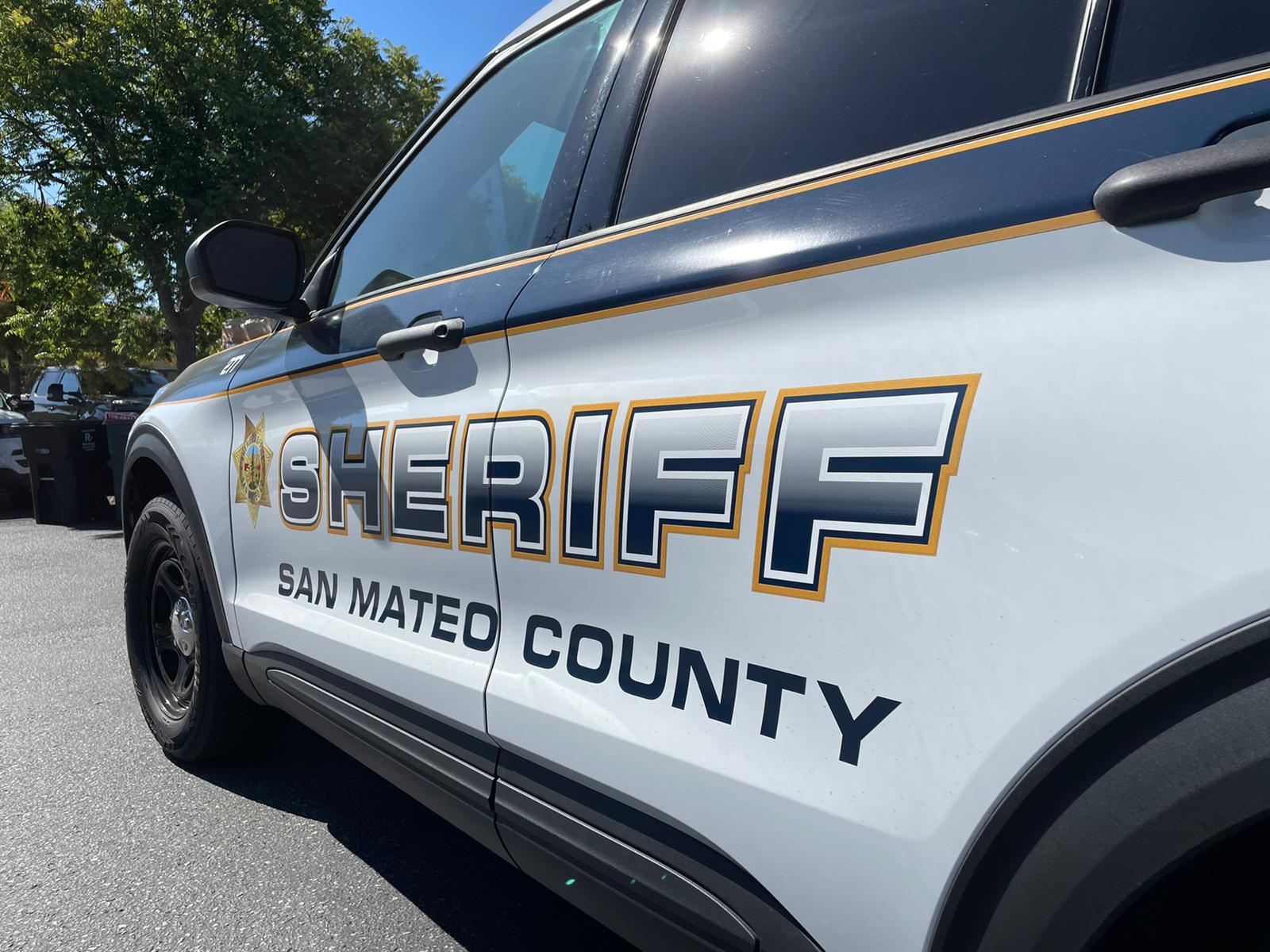
A Lodi man suspected of shooting was arrested Tuesday by San Mateo County police.
San Mateo County sheriff's deputies arrested Peter Sim Jr., 20, on a warrant after a license plate reader notification alerted them to the location of the wanted vehicle around 6:30 p.m. Deputies stopped Sim and arrested him with the assistance of Burlingame police.
Sim is suspected of a shooting on Oro Way in Lodi around 11:15 p.m. Monday, Lodi police said.
Police said a man was found with multiple gunshot wounds. The victim was hospitalized and has survived.
County supervisors unanimously approved a $7.7 billion two-year budget for San Mateo over the next fiscal years, spanning 2023 through 2025, that will prioritize ending homelessness in the area, among other things.
"This budget delivers on the promise of addressing some of the most important issues facing our region today," he said. Dave Pine, Chairman of the Board of Supervisors.
The local official stressed that “taxpayer dollars are being invested in programs and services that help homeless people find permanent housing, support children and families, and continue the transformation of mental health care.”
After three days of public hearings, supervisors approved the recommended budget, however, the Board will hold hearings in September on a revised final budget based on emerging needs and changing economic conditions.
Guided by priorities set by the Board of Supervisors, the plan emphasizes investments in maintaining existing initiatives rather than launching new programs.
Highlights of the plan include supporting operations at the County’s first Navigation Center, which opened last May as a state-of-the-art, short-term, low-barrier interim housing program for adults experiencing homelessness with medical, dental, substance use counseling and housing-focused case management to help clients move into a permanent home.
Additionally, it will allow for increased outreach and engagement services to many more unsheltered individuals residing in the county with the goal of connecting them to services and ultimately more permanent housing.
It will also help build the County's Affordable Housing Fund to finance the development and preserve affordable housing for low-income families and individuals, seniors on fixed incomes, and the homeless.
This is in addition to investing in housing for low-income farmworkers, including 18 households displaced by the January mass shooting in Half Moon Bay; and expanding equity training across the organization to improve decision-making and customer services.
It will also make County parks more accessible to children and families with low incomes or other barriers by providing new opportunities for field trips, camping and other activities; and it will continue to modernize park facilities, including replacing old playground slides and other equipment, and improving restrooms and picnic areas.
Mitigating the threat of wildfires to communities near county parks and identifying, classifying and removing hazardous trees, as well as adding an equity manager to the Probation Department to lead Diversity, Equity and Inclusion efforts, will be other priorities.
As well as implementing an electronic health record for patients and clients across County Health, including San Mateo Medical Center’s many clinical sites and services through Behavioral Health and Recovery Services and Correctional Health; and expanding access to housing for clients with mental illness and addictions, along with services and care navigation to support them.
It will also help combat climate change and build resilience with investments to reduce stormwater runoff and greenhouse gas emissions and help communities meet the challenges of excessive heat, poor air quality and power outages.
It will expand treatment options and services for San Mateo County residents with opioid or fentanyl addictions; bolster emergency management staffing to focus on earthquake preparedness; and commit funds to support the County’s Housing Voucher Program to subsidize rents for 200 homeless households in the County.
Finally, it will increase adult literacy and outreach services and support the expansion of makerspaces; allow for the purchase of a new bookmobile to provide essential library programs and services to residents across the county; and implement improvements to Tunitas Creek Beach and Flood County Park, among other county parks.
This budget recommends the net addition of 120 general fund positions, primarily in County Health, in FY 2023-24 for a total of 5,768 positions for All County Funds. Two additional positions are added in FY 2024-25. Approximately 40 percent of the added positions were the result of converting limited-term and additional-help positions to permanent positions.
In presenting the Recommended Budget to the Board, County Executive Mike Callagy emphasized the importance of taking a measured approach.
“This is the longest anticipated recession in history,” said County Executive Mike Callagy, who presented the recommended budget to the Board. “That’s why I propose we take this measured approach that allows us more time to understand both the need for services and the fiscal outlook. We remain dedicated to providing the services our residents rely on.”
$1.86 billion in funding will be provided to boost high-speed internet access in California through the Broadband Equity, Access, and Deployment (BEAD) program as part of the Bipartisan Infrastructure Act of 2021. president biden.
The funding will help provide all families in California with reliable, affordable, high-speed Internet access, building on the $6 billion the state has allocated to build out its broadband infrastructure network.
“Billions of dollars are headed our way, fueling our efforts to provide all Californians, regardless of zip code, with internet access,” said California Governor Gavin Newsom.
He added that this injection of funds will help build on the work done in recent years with the Legislature to cut red tape around broadband infrastructure projects and provide high-speed Internet access to more Californians, “which will help make the digital divide a thing of the past.”
This allocation nearly doubles the amount of funding available for “last mile” broadband infrastructure in California. In 2021, the Governor signed landmark legislation allocating $6 billion to achieve broadband for all, including $2 billion for similar projects and $3.25 billion for the middle-mile network, while last year’s budget allocated an additional $550 million to the project as it progresses through construction.
Last year, California began construction on the nearly $4 billion statewide broadband “middle mile” initiative, which will be the largest broadband infrastructure backbone in the country.
Approximately one in five Californians does not have access to reliable, affordable high-speed Internet. However, once completed, funding for “last mile” efforts will support Internet connections from “middle mile” lines to homes and businesses, as well as efforts to ensure people can afford broadband service where it already exists.
The organization The For TransLatinas con sede en San Francisco, lleva desde 1993 abogando por los derechos humanos de las diversas comunidades que representa. Su subdirectora, Sofía S. Ríos Dorantes, relató a Península 360 Press cómo mediante su experiencia, espera que gente transgénero, intersex, y de género diversa, adquieran los servicios que necesitan y sobresalgan en lo que se propongan.
Los programas de TransLatinas están enfocados a la comunidad transgénero, intersex y género diversa, latinx de San francisco y el área de la Bahía. Cuentan con manejo de caso individual, acompañamientos, vinculación y referencias para recursos médicos y legales. Asimismo, promueven la salud, el uso de PrEP y programas de desarrollo profesional y liderazgo.
Ríos empezó en TransLatinas como participante, luego voluntaria, y actualmente es la subdirectora.
Sofía S. Ríos Dorantes, subdirectora de la organización El/La Para TransLatinas
«Me dijeron en estos días: “Sofía tu eres la semilla y la visión que Translatinas siembra en cada participante”», recordó.
Sofía nació en 1979 el pueblito de San Gabriel, Chillax, Puebla en México. Cursó hasta la preparatoria y un poco de la universidad ahí mismo. A los 22 años emigró a Estados Unidos para apoyar a sus papás y darles una mejor calidad de vida.
Vivió en Carolina del Norte por 15 años, hasta el 2016, para luego mudarse a San Francisco y unirse como participante en TransLatinas.
«Vine ‒a San Francisco‒ buscando mi seguridad y el de poder cambiar mi nombre y genero legalmente, ya que sabía que en California lo podía hacer porque en Carolina del Norte no era posible», comentó.
En el 2018 fue seleccionada al puesto como primera administradora de datos de TransLatinas. También se le dio la oportunidad y entrenamiento para usar el programa de administración de datos Salesforce, del que se certificó en 2020.
«Fui aprovechando los programas de desarrollo profesional, clases de inglés, y cursos de GED que se les brindan a todes les participantes», compartió Ríos.
Antes, los participantes podían llegar a la oficina y esperar a que una manejadora de casos estuviese disponible para ser atendidos. Sin embargo, con la pandemia y porque se mudaron a un espacio más pequeño, tuvieron que cambiar la modalidad de sus servicios.
Ahora, sólo tienen que llamar al teléfono de la oficina para que se les asigne una cita en la cual las manejadoras de caso procederán haciendo un formulario para saber cuáles son las necesidades por el momento. Después, elles les harán las referencias correspondientes para los servicios que les participantes requieren o busquen.
«Ahora estamos recibiendo a más chicas que están emigrando por la violencia que está pasando en sus países y también porque muchas internamente se están mudando a California por leyes anti LGBTQ+ que están surgiendo en otros estados», dijo.
En los últimos años, estados como Texas, Florida, y Tennessee, han pasado por sus Congresos leyes que criminalizan el adquirir servicios de salud especializados para comunidades transgénero, intersexuales y género diversas.
TransLatinas recibe múltiples mensajes por su Facebook e Instagram de personas alrededor del mundo, pidiendo ayuda. Si están en otros estados de EE. UU., Translatinas hace referencias a organizaciones con las que tengan contacto o conozcan de otros estados que trabajen por las mismas causas. De no ser así, no les es posible brindar ningún servicio.
«Nos encontramos en un clima político que nos está atacando doblemente a la comunidad trans, intersex, y género diversa latinx migrante», recalcó Ríos. «Digo doblemente, porque no solamente se nos están atacando nuestras identidades de género diversas, sino que también se nos atacan nuestros estatus migratorios, y estos ataques toman la forma de políticas anti-derechos que se quieren implementar a nivel nacional».
Las políticas que se refiere Ríos no han llegado a California. Sin embargo, señala que, si siente que en comparación a otros lugares, hay más libertad en San Francisco. Por ejemplo, dijo, existe más libertad para vivir acorde a sus identidades, hay servicios que no existen en Latinoamérica y en otras ciudades de EE. UU., como acceso a cirugías y a médicos en cuidado de comunidades transgénero.
Sin embargo, no todo es color de rosa, y a pesar de que San Francisco es un lugar donde es más común que se les respeten sus identidades, sigue habiendo obstáculos que TransLatinas confrontan en su día a día.
«Los obstáculos más grandes han sido y siguen siendo la xenofobia y transfobia combinadas. Hemos podido sentir ambos de primera mano en todos los espacios de servicios públicos, teniendo dificultades para acceder a fondos; hemos navegado y servido, y a su vez cuidando a nuestra comunidad con muy bajo presupuesto, en comparación a otras organizaciones de comunidades que no son migrantes».
También Ríos comenta que, aunque San Francisco es abiertamente una ciudad diversa, hay entidades federativas sin educación hacia las comunidades trans, intersexuales y género diversas, como consulados de Latinoamérica en la ciudad.
Pero, aunque se les presenten dichos obstáculos, los objetivos de TransLatinas van a seguir en pie, tal es el caso de garantizar un espacio seguro que proporcione los servicios necesarios a la comunidad trans, intersexual y género diversa latina/e/x migrante.
Cuando el COVID-19 empezó a afectar el área de la Bahía de San Francisco, TransLatinas entregó en ayuda económica directa a sus participantes más de 450 mil dólares durante dos años y nueve meses.
«Nunca abandonamos a nuestra comunidad cuando nadie más velo por las trans latinas», enfatizó Ríos.
Ahora que está por terminar el mes del orgullo LGBTQ+, Ríos comenta que fue vital este mes para celebrar, mantenerse firmes y apoyarse entre estas comunidades y sus aliades ante las políticas que atentan contra la vida de estas comunidades.
Igualmente, refirió que la educación hacia el público no debe detenerse para seguir construyendo una sociedad más inclusiva.
«La educación es parte fundamental para erradicar ideas falsas de nuestras identidades», sugirió Ríos. «Pueden buscar una amistad que sea parte de la diversidad para aprender de nuestra experiencia de vida y de esa manera poder abrir caminos de educación y entendimiento».
Aunque junio termine, Ríos espera que se siga celebrando la vida, respetando los derechos humanos y promoviendo políticas públicas que protejan a estas comunidades.
«Debemos de recordar la historia para no repetir una llena de violencia que nuestres ancenstres vivieron, para abrir caminos que en esta época se nos quieren cerrar».
This publication was supported in whole or part by funding provided by the State of California, administered by the California State Library.
In an effort to crack down, officials from the the San Mateo County Board of Supervisors announced a new list of fireworks fines this July 4 for anyone who sells, buys and sets off fireworks on U.S. Independence Day.
Such actions include, for the first time, penalties for spectators, owners, and parents or guardians.
"When you set off those fireworks, you get a momentary burst, but the damage can last a lifetime," said Mike Callagy, the county's executive director.
"Every year, dogs and cats run away and never return home, children are burned, and houses and entire forests burn down. We ask everyone to stop and think about the consequences of their actions," she added.
Please note that all fireworks are illegal in unincorporated areas of San Mateo County, as well as all county and state parks and the Crystal Springs Basin, where wildfire risks are high despite heavy rains this year.
Violations of the county's fireworks ordinance carry fines of up to $2,000, including for discharging fireworks within 500 feet of humane societies or pet rescue shelters or consuming alcohol when cited for fireworks violations, among other situations.
Coming into 2023, first-time violators may be responsible for county costs to respond to violations of the fireworks ordinance.
The above includes “the cost of any medical treatment for any public safety personnel injured in response to the violation, and the cost of repairing any public safety equipment or property damage incurred in response to the violation.”
"Our safety advice is to go to professional shows to see them -- fireworks shows," said Cecile Juliette, public information officer for the San Mateo County Fire Department.
An estimated 11,500 fireworks-related injuries were caused across the United States in 2021, with nearly three in four occurring around the Fourth of July. Children under the age of 15 accounted for nearly three in 10 of all fireworks-related injuries that same year, according to the most recent statistics available.
“Members of our community have shared countless stories with me about how illegal fireworks activity around the Fourth of July impacts them by threatening their sense of safety and diminishing their quality of life,” said San Mateo County Sheriff Christina Corpus.
"I want to assure those we serve that the Sheriff's Office hears their concerns and is taking action," he added.
The loud noise from unauthorized fireworks can cause particular distress to household pets, small children and people suffering from post-traumatic stress disorder.
Additionally, Fourth of July fireworks are one of the leading causes of pets running away each year.
To report illegal fireworks, complainants may call the Sheriff's Office's non-emergency number at 650-363-4911, extension 1, and may remain anonymous. If you need to report an emergency or a crime in progress, please call 911.
The COVID-19 pandemic caused many countries to close or restrict their borders, the US was no exception. In 2021 alone, the tourism sector had losses of two trillion dollars, according to UN estimates. Currently, people have a need to travel, which is why tourism in the country is experiencing a rebound, however, there are various global factors that are limiting the trend from continuing.
Although tourism is expected to increase by 30 percent this summer, the sector will not fully recover until 2027, so it is necessary to ensure the conditions for the sector to continue to grow and reach the estimates.
This was stated by specialists in the field during a press conference organized by Ethnic Media Services, where they pointed out that it is difficult to guarantee constant growth in tourism due to factors such as inflation, climate change, internal or external conflicts in countries, among others. However, all possibilities must be considered.
Dr. Frederic Dimanche, director of the Ted Rogers School of Hospitality and Tourism Management, explained that people are looking for new experiences and visiting their relatives after the pandemic, a fact that currently drives tourists, but external factors will be the limiting factors.
«With inflation, the cost of travel has increased dramatically, particularly air travel and the cost of hotels. It seems like everyone wants to make up for the funds they lost during the pandemic, and all those businesses are now trying to recoup some of what they lost.", he pointed out.
Traveling has become very expensive, however, necessity allows us to cover the cost, although it must be considered that we will not always have the financial solvency to do so and this will end up limiting many who are traveling today.
For her part, Cassandra Costello, executive vice president of the San Francisco Travel Association, mentioned that tourism is essential to the economy, which is why investments have been made in new programs to invite tourists.
He said there are also new places to discover new experiences, and work has been done to renovate parks, museums, open spaces and places that are attractive to those who want to get to know San Francisco.
"Like other cities in the United States, San Francisco is still struggling with some pandemic-related challenges, but it remains one of the safest cities, with crime down 7 percent," he said.
For Costello, the good news is that there is an increase in tourism in San Francisco, and tourists, for the most part, want to return to visit the city and its surroundings. However, work is still being done with great enthusiasm to achieve the expected increase.
James Altucher, podcaster and author of «New York is dead forever», He explained that the recovery of tourism is by no means guaranteed, since high travel costs are becoming a determining factor.
In the case of New York, he pointed out, it is affected by crime and population decline.
«Tourism has increased from 2020 to 2021, New York had 60 million tourists last year and it will surely increase more, but tourism has decreased since 2019, and if you do the math, it will recover in 2026-2027, it is not yet known. What we do know is that tourism is affected by crime rates, crimes, taxes, inflation and others.».
Finally, Iuliana Popa, PhD student at Conrad Hilton College of Global Hospitality, stressed that employees in the tourism sector were also affected by the pandemic, as most of them lost their jobs, forcing them to permanently change their workplace.
And now that tourism is to be reactivated, he said, it is difficult to hire personnel for this sector, since fear and anger are among the emotional effects that have caused job losses.
It is understood that the hotel and tourism industry is not responsible for external factors in the world, but it can improve working conditions that generate an environment of stability and security in the workplace, he explained.
«For companies in the hotel industry, it is impossible to control external factors such as the virus, but there are other immediate actions that they can take, for example, offering more competitive salaries, especially with inflation making everything more difficult for employees in the hotel industry.».
For experts, the increase in tourism after the pandemic is a current trend but not a permanent one, due to external factors such as the economic situation with inflation, climate change with extreme temperatures in various places, or internal and external conflicts in each country such as the war in Ukraine.
In light of this, they agreed that it is necessary for companies and governments to seek measures to boost tourism, support it with programs or campaigns that are attractive to tourists, while taking care of the employees in this sector, since they will be the ones who will provide the necessary impetus to continue with favorable numbers for world tourism.
This Sunday, June 25, San Francisco celebrated its 53rd annual Pride parade, one of the most important events in the country's celebrations, which raises awareness and fights for the rights of the LGBTIQ+ community, which was attended by an estimated 250,000 people.
Thus, residents and national and foreign visitors of all ages joined in the colorful celebration, in which flags, floats, necklaces, and fun costumes were the perfect addition.
The massive event was attended by San Francisco Mayor London Breed and former U.S. House Speaker Nancy Pelosi.
Unlike other places, attendees assured that they felt safe and supported to be able to demonstrate and be able to be what in other places can cost them attacks and attempts on their lives.
This was stated by some attendees to various media outlets.
After the parade, people stayed in the city centre to attend concerts, enjoy food and the various activities that took place around the celebration.
Organizers of the event said the celebration cost $3.3 million to keep free, so the work of volunteers to obtain donations was crucial. However, events like this one that celebrate diversity are necessary for the community.
"We're out, folks, far and wide to really not just celebrate Pride, but celebrate all the great things. The San Francisco things. People have tried again and again and again to tear our city down, but for us who are here, we know what we stand for, we know what our values are," Mayor London Breed said in a brief speech during the parade on Market Street.
Dressed in a colorful outfit and carrying a rainbow flag, she recalled that while in states like Texas, Florida or Tennessee members of any age in the LGBTQ+ community are attacked, San Francisco has achieved milestones in protecting their rights.
“Here in San Francisco, we show love, joy and pride… We know, this is an incredible city of inclusion, acceptance and hope for all the things that people look to around the world and wish they had,” he added.
San Mateo police have arrested a so-called "serial thief" after multiple robberies in the past week.
Police arrested Victor Bell, 29, of Daly City, on Saturday after two early-morning raids, the last of which was interrupted by residents.
At 7:30 a.m. on June 21, someone attempted to break into a residence in the 3000 block of Los Prados St. The suspect used a brick to break a window while attempting to gain entry.
The homeowner confronted the suspect, who subsequently fled the scene. The suspect was captured on surveillance footage.
At 6:10 a.m. Saturday, police responded to a similar incident in the 2700 block of S Norfolk St. The suspect threw a rock through the sliding glass window of an apartment, but fled when he realized the resident was home.
Police discovered that another apartment nearby had been accessed minutes earlier, and the suspect had entered through a slider, stealing some items from inside the apartment. The stolen items were later found discarded near the scene.
A photo of the suspect was obtained, which matched the description of the first suspect.
At 8:22 a.m., officers responded to another report of a residential burglary at an apartment located in the 1000 block of Park Pl.
The suspect was interrupted by residents as he was rummaging through the apartment and fled the scene. Officers arrived and obtained a description of the suspect, which matched the previous incidents. Surveillance footage was also obtained which confirmed the suspect's identity. Officers conducting a check of the area received information from a resident of a person matching the suspect's description running towards the Hillsdale Mall.
The suspect was later observed on a train platform between 31st and 28th Avenues. A perimeter was established and he was detained by multiple officers as he attempted to flee.
The man was identified as Victor Bell, who had two warrants for his arrest and was on probation for a previous robbery offense. A search of his person revealed possession of an unsheathed knife.
Bell was booked into the San Mateo County Jail on suspicion of first-degree robbery, attempted robbery, carrying a concealed knife or dagger and warrants.
San Mateo police say Bell is likely connected to similar incidents in Foster City and could be connected to others in San Mateo. Anyone with information is asked to contact the San Mateo Police Department at (650) 522-7700.
The city government plans to build five new affordable housing projects in San Francisco, creating 550 new homes for seniors, families and low-income people transitioning out of homelessness, Mayor London Breed's office announced Friday.
Construction could begin as early as 2026 and residents would move in by late 2028, depending on the availability of deficit funding.
Projects were announced in five neighborhoods: Bernal Heights, Sunset District, Potrero Hill, Alamo Square and Forest Hill. Each project will be developed by different groups in partnership with the Mayor’s Office of Housing and Community Development (MOHCD), other city agencies and community partners.
MOHCD will fund the acquisition and pre-development of new projects. It will also support applications for future funding sources, including state and federal low-income housing tax credits, financing programs through the California Department of Housing and Community Development, and local pre-development loans.
These projects are a step toward the mayor's state-mandated plan to build 82,000 new homes in the city over the next eight years, according to Breed's office.
The San Mateo County Sheriff's Office reported collecting nearly 400 pounds of illegal fireworks during the county's first fireworks buyback event.
Held in the parking lot of 2500 Middlefield Road in Redwood City, the drive was a no-questions-asked opportunity for people to drop off fireworks of any kind for safe disposal.
The five-hour event was hosted by the sheriff's office and County Supervisor Warren Slocum's office. Depending on the weight, up to $75 in cash was paid out to people who turned in their fireworks.
The goal was to reduce the illegal use of fireworks throughout San Mateo County.
“The Fourth of July holiday is a great day to spend time with friends and family. It is also one of the busiest nights of the year for our patrol officers,” said San Mateo County Sheriff Christina Corpus.
“Illegal fireworks pose serious risks to our community and have negative impacts on everyone’s quality of life. This buyback was intended to give people the opportunity to turn in their fireworks and help make everyone’s holiday safer. I want to thank Supervisor Slocum for his support in making this such a successful event,” he added.
The collected material included military-grade smoke grenades, M-80s, Ariel rockets and mortar-style fireworks. Sheriff's Office explosive ordnance disposal technicians were on scene in case of any unsafe circumstances.