La fortuna llegó para un comprador en una tienda 7-Eleven en San José, luego de que esta le vendió un boleto de la Lotería de California para el sorteo Mega Millions del viernes, el cual salió premiado con 247 millones de dólares después de acertar los cinco números más el número Mega.
El boleto se compró en la tienda en 1413 Kooser Road en San José y tenía los números ganadores 9, 22, 26, 41, 44 y Mega número 19.
El premio mayor de 494 millones de dólares, que se dividirá entre el boleto ganador de San José y otro boleto comprado en Florida, es el undécimo premio mayor más grande en la historia del juego.
Según los funcionarios, se compraron 142 mil 500 boletos ganadores adicionales en California en diferentes niveles de premios.
Los boletos ganadores del premio mayor de Mega Millions deben tener matasellos o recibirse en las oficinas de la Lotería de California dentro de un año a partir de la fecha del sorteo. No hubo información disponible de inmediato sobre el ganador del boleto de los 247 millones de dólares.
As the midterm elections in the United States approach, the struggles for visibility of communities of color and Native Americans continue.
Communities of color and Native Americans in the United States have been seeking better representation on district maps for years, fighting alongside organizations in the redistricting process.
Jacqueline De Leon, an attorney at the Native American Rights Fund, said at a press conference organized by Ethnic Media Services where experts met to discuss the problems of representation in the United States midterm elections, the difficulties that Native Americans experience in exercising their vote, and the importance of this community's participation.
"The Native American vote has the power to swing the election this year," he said.
He also noted that restrictive laws are affecting the participation of this community, as the refusal of Native Americans to cast their vote is due to unfounded fear caused by the speeches and misinformation circulating.
“There is continued hostility toward Native Americans when they vote,” he stressed. “Across the country we have seen discrimination, with intent and purpose, toward Native American communities.”
De Leon called on these communities to fight for their rights and participate in the country's midterm elections.
Derick Beetso, director of Indian Gaming and Tribal Self-Governance at Arizona State College of Law, said “the purpose of redistricting is to make sure every district counts” and noted the need to push back on barriers to Native American participation.
He also stressed the importance of making the process more accessible for Native Americans to vote.
Nicole Donaghy, executive director of North Dakota Native Vote, said that "unfortunately we have a lot of difficulties in being represented in the districts" because the requirement to have a residence affects the participation and registration of Native Americans living on reservations.
"Our biggest challenges are making contact with voters in remote communities," he said.
According to Donaghy, there were 21 proposed laws to change voting dynamics, however only two were approved.
She also said that intimidation towards Native American communities has been present. "We want to make sure that there is no intimidation at the polling stations," she said.
Finally, Nicole Borromeo, executive vice president and general counsel of the Alaska Federation of Natives, noted the complications that existed in the redistricting process in Alaska, however, she celebrated the achievement of a fair representation map and commented on the need to call on people to participate despite these complications.
Police officers arrested a young suspect in Redwood City after he was detained with a firearm that was allegedly fired on the night of August 2.
And it was during the night of August 2 that around 8:43 p.m., officers responded to a call to the 700 block of Cedar Street due to a report that shots had been fired with a firearm.
When officers arrived, one subject attempted to flee the scene, but officers quickly caught him, authorities said in a statement.
At that time, 19-year-old Jesus Jahir Sosa Ortega of Redwood City was found to be in possession of a stolen firearm and ammunition.
Further investigation revealed that Sosa Ortega had fired the stolen firearm several times that night. So far there is no evidence that anyone was hit by those bullets.
On October 5, Redwood City detectives served an arrest warrant and a search warrant at his residence in the 700 block of Cedar. Sosa Ortega was arrested on a charge of negligent discharge of a firearm.
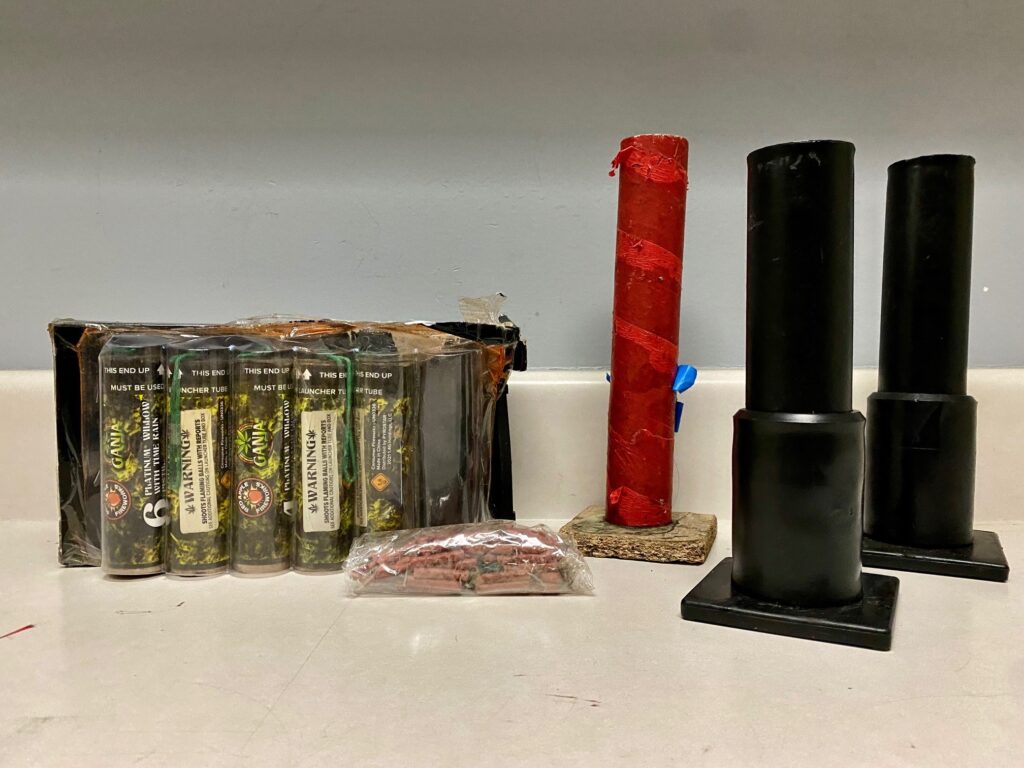
It is worth noting that during the search of his residence, illegal high-explosive fireworks were revealed.
Sosa Ortega was booked into the San Mateo County Jail on a warrant and unlawful possession of a destructive device.
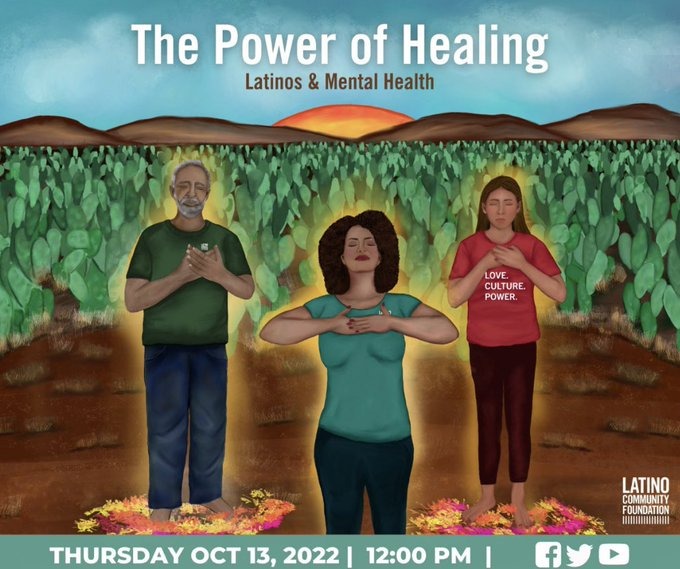
Over the past two years, San Mateo County residents, like others across the country, have had to deal with loss, whether in health, employment, economic or even loved ones, situations that have worsened in communities such as the Latino community, so mental health care has become a critical point to address in order to move forward in daily life through the Power of Healing.
Alrededor de una de cada ocho personas en el mundo viven con al menos un trastorno mental, entre los cuales destacan la depresión y la ansiedad, teniendo un 25 por ciento de estos casos. En los Estados Unidos, aproximadamente el 40 por ciento de los hispanos adultos dicen estar experimentando síntomas de depresión, señalo Diana A. Otero, directora senior de Proyectos Especiales del Latino Community Foundation.
Agregó que, durante una investigación nacional llevada a cabo por los Centros para el Control y la Prevención de Enfermedades ‒CDC, por sus siglas en inglés‒, a medida que el mundo va conviviendo y aprendiendo de los efectos de largo alcance de la pandemia por COVID-19., «todos debemos reflexionar sobre el enorme peaje que ha tenido en nuestra salud mental y, al mismo tiempo, reconocer el increíble trabajo de nuestras organizaciones comunitarias, ya que han dado todo lo que tienen para ayudar a nuestra comunidad».
Y es que, dijo, estas organizaciones de base han protegido, la salud mental de los trabajadores y las familias inmigrantes, proporcionando servicios críticos, el intercambio de información de confianza, y la difusión de la esperanza.
La fundadora y directora ejecutiva de la organización sin fines de lucro ALAS ‒Ayudando a Latinos a Sanar‒, Belinda Arriaga, destacó durante la sesión «The Power Of Healing: Latinos & Mental Health», «la cultura es nuestra medicina», al tiempo que destacó la importancia de nuestras ricas tradiciones latinas y como estas pueden conectarnos con nuestros antepasados y hacernos más fuertes.
Rosario Puga Depmsey, directora de Servicios Hispanos de la organización sin fines de lucro KARA, la cual brinda apoyo durante el duelo a niños, adolescentes, familias y adultos, destacó que la comunidad latina necesita apoyo para lidiar con todas las pérdidas que está afrontando durante esta pandemia.
«Nuestra comunidad necesita recursos, necesita apoyo», refirió al tiempo que reflexionó sobre la necesidad de que la comunidad latina obtenga más y mejor información y educación sobre el proceso de duelo y cómo apoyar o proporcionar esa mano de ayuda a otra persona.
«El dolor y nuestra pena pueden ser transformados y pueden ser sanados. Podemos continuar con nuestras vidas sin importar lo grande que sea la pena, el sufrimiento y el dolor», resaltó mientras señaló la importancia de buscar ayuda cuando se atraviesa por una situación de pérdida.
Y es que, las familias y amigos de los 40 mil latinos que murieron a causa del COVID en California y muchos más en todo el mundo nunca serán los mismos.
Las líderes comunitarias coincidieron en que el sufrimiento por cualquier tipo de pérdida, especialmente la de un ser querido, no desaparece y no hay una curación mágica, sin embargo, con la ayuda adecuada puede transformarse en fortaleza.
«Hay ayuda y apoyo. Y aunque tengamos amigos y familia que puedan estar ahí para nosotros, a veces necesitamos a alguien más, a veces necesitamos esa mano extra, ese oído extra que nos escuche y de alguien que entienda que hay algo en el dolor que compartimos», destacó Belinda Arriaga.
«El duelo es un proceso único y es un proceso individual. La mejor manera de honrar y recordar a un ser querido es aquella que se siente especial para cada uno de nosotros, lo que sea. Ya sea poniendo un altar o teniendo una vela, una foto, cocinando su comida favorita, asistiendo a los funerales o celebrando a través de los días festivos», puntualizó.
Sin embargo, ambas destacaron que la salud mental sigue siendo estigmatizada pese a que todos, en algún momento de nuestras vidas va a necesitar un apoyo especializado para enfrentar una o varias problemáticas.
«La salud mental es como un acto de cuidado y de amor a uno mismo, a su corazón, a su espíritu, a su mente, a su cuerpo, para poder conseguir ese apoyo, para hablar con alguien. También ser capaz de tender la mano cuando tal vez las cosas no van tan bien», subrayó Arriaga.
Cabe destacar que el primer paso para avanzar hacia el cuidado de la salud mental, señalaron, es reconocer que se atraviesa por un momento difícil y que está bien obtener apoyo.
Latino Community Foundation recordó que algunos de las organizaciones que apoyan a la comunidad latina en materia de salud mental son: ALAS, KARA, KLBRI, CARECE SF, La Familia Counseling Center, Clínica Tepati, La Familia Counselin Services, Immigrants Rising, La Familia Sana, Instituto Familiar de La Raza, One Life Counseling Center y Star Vista.
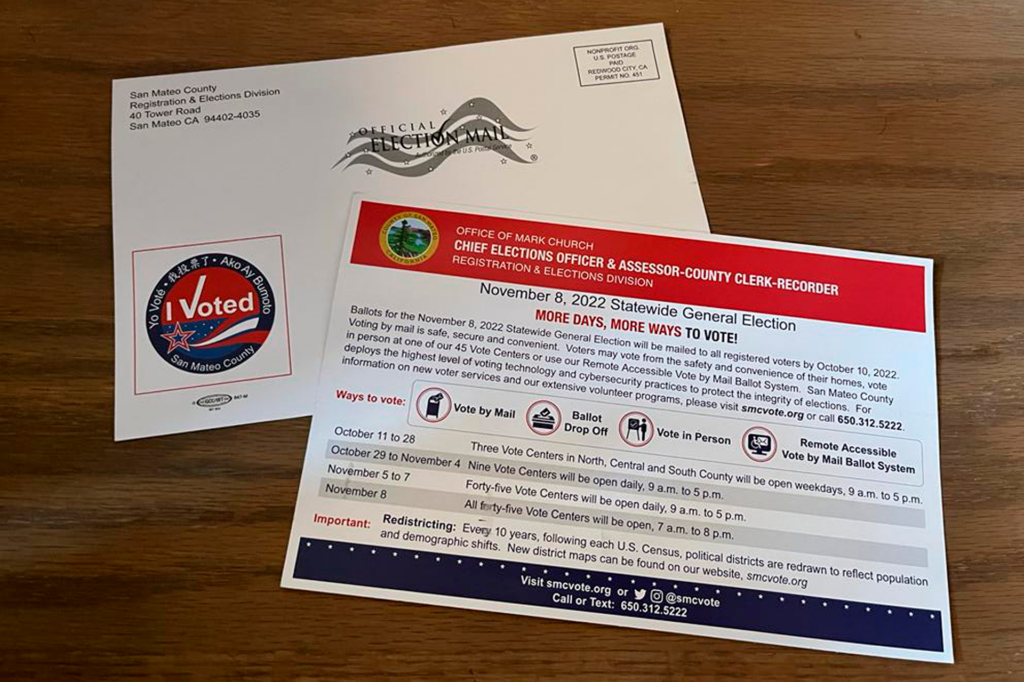
El próximo 8 de noviembre se llevarán a cabo las elecciones intermedias en EE.UU., a las cuales se suma la elección general en California, y una vez que los votantes han empezado a recibir sus boletas electorales podrán tomar la decisión de si el derecho a la libertad reproductiva va a la Constitución del estado.
Y es que, conocer y mantenerse informado sobre las decisiones electorales que podrán afectar la vida de los residentes en el estado es de suma importancia, por lo que la tarde de este jueves se llevó a cabo la sesión «Iniciativas electorales pros y contras presentadas por la Liga de Mujeres Votantes del Condado de San Mateo» a través de la organización Thrive, dónde se habló de la medida electoral o proposición 1, la cual toca el tema de salud sexual.
¿Qué son las medidas electorales?
League members Linda Atkinson and Kathy Wheeler, who led the briefing, noted that ballot measures, or propositions, are proposed laws that are presented to the public for a vote.
Propositions can change existing laws and sometimes amend the California Constitution. Propositions can be placed on the ballot either by individuals who gather enough signatures on a petition or by state legislators.
Para un estatuto de iniciativa electoral, el número de firmas debe ser igual al cinco por ciento de los votos emitidos para gobernador en los estados. Actualmente ese número es más de 600 mil, pero para un cambio constitucional se requiere una «guerra» de firmas y eso es más de 900 mil.
Una proposición se convierte en ley si recibe en la votación más del 50 por ciento de los sufragios. Si la gente vota mayoritariamente que no, la ley asociada se deroga.
The League of Women Voters of San Mateo County suggests asking yourself some important questions about each proposition when casting your vote: Does the ballot measure address a real problem? Is it the best solution to the problem or is it too complex? Who are the stakeholders and what do they gain? and What are the tax implications?
Medida electoral o proposición 1: La Constitución de California para incluir el derecho a la libertad reproductiva.
La pregunta que hace es, ¿Debe la Constitución de California ser modificada para expresar la garantía del derecho a la salud reproductiva, la Libertad, incluyendo el derecho a elegir un aborto y para elegir un rechazo de la anticoncepción?
Actualmente la Constitución de California establece que todas las personas tienen el derecho a la privacidad.
Un caso de la Corte Suprema del estado decidió que el derecho a la privacidad incluye la decisión de una persona acerca de si o no tener un aborto. La Ley de Privacidad Reproductiva en California, actualmente establece que toda persona tiene un derecho fundamental de privacidad con respecto a las decisiones reproductivas personales.
Por lo tanto, la ley del estado establece que toda persona tiene derecho a elegir un método anticonceptivo y el derecho fundamental de elegir si quiere tener hijos u obtener un aborto.
La ley también dice que los abortos sólo pueden realizarse en un feto viable, si el embarazo pone en peligro la salud o la vida de la persona embarazada. La reciente decisión del Tribunal Supremo de EE.UU. sostuvo que no hay derecho al aborto según la Constitución de EE.UU, lo que suscitó la preocupación de si en un futuro el Tribunal de California podría revocar la ley actual del estado para eliminar el derecho a elegir el aborto y a rechazar la anticoncepción.
Así, se propuso la medida uno para cambiar la Constitución de California y decidir que el estado no pueda negar o interferir con la libertad reproductiva de una persona, y que las personas tienen el derecho fundamental de elegir si quieren o no abortar y si quieren o no usar anticonceptivos.
En cuanto a su precio, la proposición uno no tendría ningún impacto en el presupuesto del estado, aparte de los costes necesarios para colocar la medida en la boleta electoral.
Los que están a favor de la medida uno, dicen que consagrará el derecho fundamental al aborto y el derecho fundamental a la anticoncepción en la constitución del estado de California. También señalan que los médicos, enfermeras y los proveedores de salud están de acuerdo en que la proposición uno es necesaria para mantener las decisiones médicas reproductivas donde pertenecen, a los individuos y a sus proveedores de atención médica basadas en hechos científicos, no en argumentos políticos.
Quienes se oponen a ella precisan que es una propuesta extrema y costosa que permite abortos tardíos sin restricciones y que afecta también a los contribuyentes, al tiempo que California se «inundará» de personas que busquen tener un aborto debido a que en sus estados no es permitido.
Los opositores también señalan que las mujeres ya tienen el derecho a elegir bajo la ley actual de California y que el reciente fallo de la Corte Suprema de Estados Unidos no cambió ni cambiará esto, por lo que la medida no es necesaria para proteger la salud de las mujeres o sus derechos reproductivos.
The Governor Gavin Newsom, together with the California Department of Social Services (CDSS), announced that 12 organizations funding 14 projects have received a total of $53 million in grants to create more housing options for older adults and adults with disabilities, including people at risk of or experiencing homelessness.
The funds will create a total of 402 beds or units, the Governor's Office said in a statement.
“California is making significant investments in housing to help some of our most vulnerable residents – low-income seniors and adults with disabilities – live safely and with dignity in their communities,” Newsom said.
“We are supporting local communities to acquire, renovate and improve properties across the state, providing not only a place to call home, but helping people stay out of homelessness,” he added.
The grants were awarded through the new Community Care Expansion (CCE) Program, which, through Governor Newsom’s budget, will provide a total of $570 million for the acquisition, rehabilitation, and construction of adult and senior care facilities serving Supplemental Security Income/State Supplemental Payment (SSI/SSP) and Cash Assistance for Immigrants (CAPI) applicants and recipients.
Similarly, these funds also went to other community-based residential care settings, such as permanent supportive housing and recovery care sites.
“These significant and timely investments will provide new housing options that will support older adults and adults with disabilities in California,” said CDSS Director Kim Johnson.
“We must continue to combat our homeless crisis. Through this effort, we are breathing new life into aging facilities and acquiring and building new facilities that will support some of our most vulnerable residents, including people at risk of becoming homeless or experiencing homelessness,” she stressed.
Multi-million dollar investments in homeless housing will provide more than 55,000 new housing units and treatment spaces in the coming years.
Public health officials plan to go door-to-door in East Palo Alto neighborhoods next week to hear details about residents' climate challenges and how they are coping.
Survey teams are prepared to ask residents how they are threatened by extreme heat, rising sea levels, wildfires, air quality and mosquitoes.
The survey results will be used to inform officials about what resources East Palo Alto residents need and will also shape an emergency preparedness plan for the community.
“These types of surveys are critical to understanding the needs of our community and providing actionable change,” said Karen Pfister, epidemiology program manager for San Mateo County Health. “We look forward to working with East Palo Alto residents to better understand the community’s emergency preparedness and climate change needs.”
San Mateo County Health staff and the San Mateo County Mosquito and Vector Control District, along with local volunteers, plan to visit randomly selected addresses October 17-19.
Inspection teams will wear identification badges and will not ask residents for personal information such as their name, date of birth or proof of identification.
“The results of this survey will allow us to improve the way we provide vector control services to the East Palo Alto community,” said Brian Weber, district manager for the Mosquito and Vector Control District. “Our district is continually looking for ways to more efficiently detect and address vector-related issues and needs in the county.”
In its latest survey of California Unified School Districts, an LGBTQ+ civil rights nonprofit honored 19 districts across the state, including seven Bay Area school districts, for their inclusive policies supporting LGBTQ+ students and identified others that need to do more to ensure students feel safe on campus.
Equality California, one of the largest LGBTQ+ rights organizations in the country, highlighted that San Francisco Unified, as well as Oakland, Palm Springs, Elk Grove, Pittsburg, Monterey Peninsula, Vista, Moreno Valley and 11 others, have taken additional steps such as training staff, preventing suicide, expanding curriculum to include LGBTQ+ topics, supporting transgender students and maintaining an overall positive campus climate.
Other districts in the Greater Bay Area among the 19 honored include Stockton Unified, Cabrillo Unified in Half Moon Bay and Winters Joint Unified in Yolo County.
“Our goal was to elevate examples of excellence so that other districts have a model to follow,” said Chris Negri, director of the Equality California program. “This year we saw a lot of success with anti-bullying policies, teacher training and suicide prevention, but there is a lot of room for growth.”
The organization sent surveys to all 343 unified school districts across the state, and 118 responded. The results were slightly lower than the 2019 survey, but that’s likely due to COVID-related disruptions and increased outreach efforts, Negri said. The organization plans to do another survey in two years.
In the 2022 survey, 52 districts were identified as needing to do more work to create a safe environment for LGBTQ+ students. Those included West Contra Costa Unified, Needles Unified, Santa Ana Unified, Sanger Unified, and others.
Tehachapi Unified, where a gay student committed suicide in 2010 due in part to bullying on campus, did not respond to the survey. The death of 13-year-old Seth Walsh sparked a national anti-bullying movement and a California law requiring school districts to track and respond to bullying incidents.
“All students deserve to learn and grow in a welcoming, supportive, and safe school environment,” Negri said. “We hope that policymakers and community members will use this report as a resource to identify both the bright spots and the challenges as we build a community of districts across the state that are committed to implementing common-sense policies and approaches to improve school climate for LGBTQ+ and all students.”To read the original story you can click here click here.
A medida que las elecciones intermedias en Estados Unidos se acercan, expertos advierten que la desinformación puede ponerlas en peligro.
Debido a las numerosas noticias falsas que circulan al tiempo que la fecha de las elecciones intermedias se aproximan, la desconfianza de los votantes ha aumentado en las últimas semanas y ha afectado en mayor manera a las comunidades de color.
«Desafortunadamente siempre han existido malos actores que intentar confundir a las personas para que no voten, al reproducir información inapropiada sobre cómo votar, cuándo votar y dónde votar», señaló Mekela Panditharatne, asesora del Programa de Democracia del Centro Brennan, en una rueda de prensa ofrecida por Ethnic Media Services en la que expertos se reunieron para discutir acerca de cómo la desinformación puede afectar las elecciones intermedias en Estados Unidos.
Señaló además que «la información falsa ha sido un problema desde hace mucho tiempo» y advirtió que las leyes de votación restrictivas afectarán en gran manera a miles de personas, pues los requisitos de identificación y la disminución del número de buzones, obstaculizan el registro de los votantes.
Y es que las leyes de votación restrictivas se han hecho presentes, pues al menos 21 estados han promulgado 42, de las cuales 33 ya están en vigor en 20 estados del país.
«Algunas leyes han reducido drásticamente el número de buzones, o han hecho que sea más difícil registrarse para votar», puntualizó.
Asimismo, Panditharatne comentó que los votantes latinos y afroamericanos están en riesgo de sufrir mayor desinformación para las elecciones debido a las leyes restrictivas y las barreras de idioma.
Fortunately, there are platforms such as Factchequeado.com, en las que según Tamoa Calzadilla, se busca luchar contra los mitos y la desinformación, especialmente en las comunidades latinas, pues las barreras del idioma han impactado en gran manera incluso en la toma de decisiones de estas comunidades.
«Estamos construyendo una comunidad de alrededor de 30 medios grandes y pequeños para ampliar nuestra voz en la audiencia en español de bajos recursos», señaló.
Además, denunció que los candidatos republicanos repiten el discurso de que «las elecciones de 2020 fueron un fraude».
Calzadilla también denunció que el Servicio de Recaudación de Impuestos –IRS, por sus siglas en inglés– ha sido utilizado por distintas estaciones de radio en las que los comentaristas –que son conservadores– siembran miedo en la población, afirmando que el IRS les quitará dinero.
Por su parte, Rong Xiaoqing, reportera de Sing Tao Daily, señaló que el idioma también ha sido una barrera para evitar la desinformación entre la comunidad china.
«La desinformación que vemos en el mundo del idioma chino, algunas veces es la misma que se ve en el mundo inglés», apuntó Xiaoqing.
Finalmente, Vanessa Cardenas, subdirectora de American’s Voice, indicó que la rapidez de las redes sociales y el internet, impiden que las plataformas y la información que existe en ellas no se pueda controlar y que «la forma en que consumimos información ha cambiado».
Denunció también que medios como Fox News se han encargado de replicar información falsa acerca de temas como la migración y la economía, lo que ha provocado que los candidatos republicanos repitan y legitimen esa información. Estas acciones han afectado a las comunidades inmigrantes, pues los discursos no hacen más que dar fuerza a los estereotipos que se tienen acerca de estas.
Además, cuestionó las acciones que las plataformas están haciendo para luchar contra la desinformación e hizo un llamado a los medios de comunicación y plataformas para monitorear la información y evitar distribuir noticias falsas.
«Necesitamos más personas para monitorear la desinformación en español y en los idiomas asiáticos», finalizó.
Stanford Medicine, in conjunction with Santa Clara Family Health Plan, has made workshops available for community health workers focused on mental health, which seek to provide the necessary tools to cope and help others.
The series will consist of 3 workshops in total and will focus on mental health with workshops dedicated to children and young people, adults and community health workers or promoters.
Those interested can choose which workshops to attend, and must register to receive additional information, as well as a link to join the workshops via Zoom and an invitation to the calendar.
An evaluation form will also be sent after each workshop, and each participant will be eligible for a certificate of completion if they complete all evaluation forms and attend 3 workshops via zoom or attend 2 workshops via zoom and watch 1 recorded session.
It is worth noting that the workshops will be in Spanish, and there will be simultaneous interpretation in English.
The first workshop will take place on October 13 from 6:00 to 7:30 p.m. and is titled “Child and Youth Mental Health: Resources and Support”; the second will take place on November 10 from 6:00 to 7:30 p.m. and is titled “Adult Mental Health: Resources and Support”; while the third and final workshop will take place on December 8 from 6:00 to 7:30 p.m. under the name “Community Health Workers/Promotoras(es) Mental Health: Burnout and Coping”.
To register, simply click Click here and complete the form.
If you have any questions or concerns, you can call or write to (650)-308-4243, or send an email to yessicam@stanford.edu.