


Thursday, April 9, 2026
Home Blog Page 345

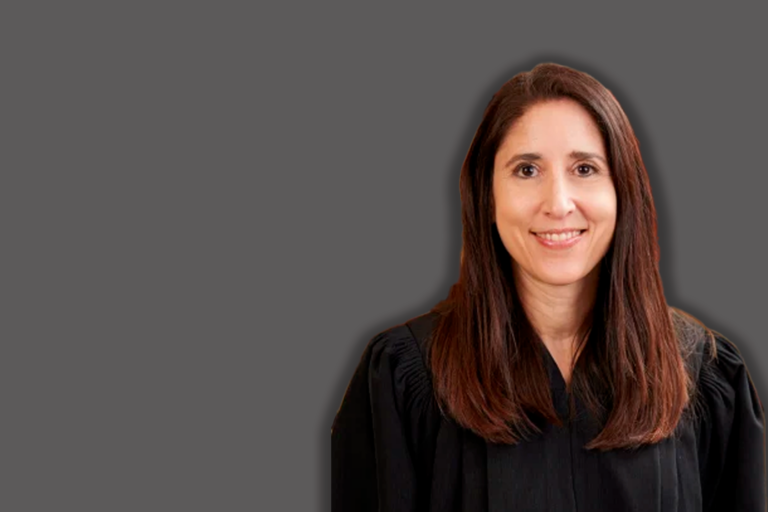
Newsom nominates Judge Patricia Guerrero to California Supreme Court

Judge Patricia Guerrero

The Governor Gavin Newsom nominó a la jueza Patricia Guerrero para servir en la Corte Suprema de California, por lo que podría ser la primera mujer latina en servir dentro del mayor tribunal del estado dorado.

De obtener el puesto como jueza asociada, Patricia Guerrero, respetable jurista y con amplia experiencia como juez de apelaciones y de primera instancia, y socia de un importante bufete de abogados y fiscal federal adjunta, llevaría en hombros el legado de su familia méxico-estadounidense.

«Una mente legal entusiasta y una jurista bien considerada por su amplia experiencia, integridad, y profundo respeto por el estado de derecho y el compromiso de por vida con el servicio público convierten a la jueza Guerrero en una candidata extraordinaria para servir como nuestra próxima jueza de la Corte Suprema de California», dijo Newsom. 

El funcionario detalló que la nacida y criada en el Valle Imperial por padres inmigrantes de México, ha forjado un extraordinario viaje para llegar a su nominación para servir como la primera jueza latina en el tribunal más alto del estado, convirtiéndose en «una inspiración para todos nosotros y un testimonio de la promesa del “California Dream” de oportunidad para que todos prosperen, independientemente de su origen o código postal».

El gobernador destacó que a medida que se avanza en la construcción de una judicatura más representativa de la diversidad en California, la jueza Guerrero aportará sus antecedentes y experiencias a las decisiones importantes que impactan la vida diaria de todos los californianos. 

«Como miembro de la Corte Suprema de nuestro estado confío en que continuará con su trabajo incansable para garantizar que nuestros preciados derechos y libertades estén protegidos para todos los californianos», subrayó.

Cabe destacar que la jueza Patricia Guerrero para servir en la Corte Suprema de California, reemplazaría al juez asociado Mariano-Florentino Cuéllar, quien dejó el cargo a partir del 31 de octubre de 2021.

She said she was deeply honored for the opportunity to uphold the rule of law and make a positive impact on the lives of Californians throughout the state.

«Si se confirma, espero ayudar a infundir confianza en la igualdad y la integridad de nuestro sistema judicial mientras honro los sacrificios de mis padres inmigrantes y les demuestro a los jóvenes que todo es posible en nuestro maravilloso y diverso país», expresó.

La abogada Guerrero, de 50 años, originaria de San Diego, se ha desempeñado como jueza asociada en el Tribunal de Apelaciones del Cuarto Distrito, División Uno desde 2017. 

En ese cargo, ha escrito numerosas opiniones para proteger los derechos de los consumidores y las personas, al tiempo que garantiza que los derechos constitucionales de los acusados ​​estén protegidos y que todas las partes, incluido el gobierno, reciban un trato justo y coherente con el estado de derecho.

Originaria del Valle Imperial y criada por padres inmigrantes de México, la jueza Patricia Guerrero para servir en la Corte Suprema de California, comenzó a trabajar en una tienda de comestibles a la edad de 16 años y se graduó como co-valedictorian (alumno que pronuncia el discurso final en la graduación) en la escuela secundaria. 

Continuó trabajando para ayudar a pagar su educación mientras asistía a la Facultad de Derecho de la Universidad de California, Berkeley y Stanford, donde obtuvo el título de doctor en Jurisprudencia.

Ahí, la jueza Patricia Guerrero participó activamente en la Asociación de Estudiantes Latinos de Derecho y ayudó a sus compañeros en el centro de reclutamiento y retención.

Antes de su nombramiento en el Tribunal de Apelaciones del Cuarto Distrito, Guerrero se desempeñó como jueza en el Tribunal Superior del Condado de San Diego de 2013 a 2017 y fue jueza supervisora ​​de la División de Derecho Familiar en el tribunal en 2017. 

La nominación hecha por  el gobernador Newsom debe presentarse a la Comisión de Evaluación de Candidatos Judiciales del Colegio de Abogados del Estado, y debe ser confirmada por la Comisión de Designaciones Judiciales. 

You may be interested in: ¿Cuáles son las necesidades de los inmigrantes en San Mateo?

1.3 million dollars allocated to convert a hotel into housing

converting a hotel into housing

The Redwood City Council has allocated about $1.3 million to convert a hotel into housing, which will use federal funding to transform the Comfort Inn & Suites into housing for people experiencing homelessness.

The council voted Monday night to allocate the funds and enter into a financing agreement with San Mateo County, which has also dedicated county funds to help renovate the 51-room hotel at 1818 El Camino Real.

The city's money would come from the HOME Investment Partnerships program, or HOME, a special fund within the U.S. Department of Housing and Urban Development to help people who are homeless or at risk of becoming homeless. 

Such funds may be used to provide affordable housing, rental assistance or other types of support.

To receive HOME funds, the city must first have its plan approved by the Department of Housing and Urban Development.

Council members were in full support of the proposal, with every member voting in favor of the $1.3 million funding plan to convert a hotel into affordable housing.

During the session, some councilors pointed out that this project comes at an opportune time, after last Sunday, it was registered a camp fire at Woodside Road and El Camino Real, where there were no injuries, but damage was reported to residential property, cars and other personal property.

In that regard, Redwood City Mayor Giselle Hale said the hotel's renovation was an incredible opportunity to keep people housed.

"This is something our council has expressed a long-term commitment to for two years and it is becoming increasingly urgent," she said.

He also assured the council that the city would not lose too much money from the lack of transient occupancy tax revenue the hotel would have generated.

“I actually looked into what these individual hotels were producing in terms of revenue and what we’re paying to provide programming and services. And it’s really a negligible difference. We need to continue to prevent homelessness. It’s expensive and we need to keep people housed,” she stressed.

San Mateo County is in the process of purchasing the Comfort Inn & Suites with funds from the state's Project Homekey initiative. Some of the money will help convert the hotel's rooms into 51 studios.

The renovations, with the $1.3 million to convert a hotel into affordable housing, would include adding kitchens to each of the studio units, filling in the pool and making the building more suitable for housing.

The county hopes to acquire the hotel this spring and complete construction in the fall, so the units should be ready in early 2023.

Once completed, the Comfort Inn project would become the third hotel the county has acquired for conversion into transitional or permanent housing for homeless people.

Currently, there are not enough housing units to house those in need, according to Raymond Hodges, director of the San Mateo County Housing Department.

"The goal would always be to move those people (living on the streets) directly into housing if we have the opportunity," Hodges said. "Sometimes there just aren't enough units and right now that's the situation we're in."

In addition to the $1.3 million to convert a hotel into affordable housing, the City Council allocated about $179,000 to help administer the funds, which will cover the cost of preparing the financing plan and conducting an environmental review. The review is required before the city and county can enter into a financing agreement.

Notably, the county is partnering with nonprofit housing developer Alta Housing, which will operate the project, and the Mental Health Association of San Mateo County, which will help provide services.

With information from Bay City News.

You may be interested in: Hotel in downtown San Francisco will be a shelter for homeless people.

Gasoline prices increase in the Bay Area

Gasoline prices increase

Debido al aumento del petróleo en el país, aumenta el precio de la gasolina en el Área de la Bahía. Los condados que la componen han padecido la escalada de los costos por galón del combustible, que ha afectado directamente los bolsillos de los residentes.

El promedio estatal, el más alto de la nación, fue de 4.680 dólares por galón hace una semana; hace un mes era 4.652 dólares y 3.475 hace un año.

En tanto, San Francisco se coloca actualmente como el condado en el área de la Bahía que más ha sufrido el encarecimiento de la gasolina, al registrar un costo de 4.892 dólares por galón.

Los conductores han visto cómo aumenta el precio de la gasolina en el Área de la Bahía, sobre todo en Napa, Sonoma y San Mateo, quienes siguen a San Francisco en costos.

Aumenta el precio de la gasolina en el Área de la Bahía, sin embargo, solo el condado de Solano tuvo un precio promedio más bajo que el promedio estatal, y la diferencia fue tan solo por un centavo, según las cifras del lunes del sitio web de la Asociación de Automóviles de América en gasprices.aaa.com.

Precios promedio de gasolina regular en dólares por galón en condados de la región es de 4.892 para San Francisco; 4.885 en Napa; 4.862 en Sonoma; 4.832 en San Mateo; 4.809 en Marín; 4.794 para San Benito; 4.781 en Monterrey; 4.759 en Santa Clara; 4.757 para Alameda; 4.748 en Contra Costa; 4.718 en Santa Cruz; y 4.693 en Solano.

Las cosas no pintan bien en todo el estado, pues los automovilistas de California están pagando dos centavos más por un galón de gasolina regular que hace un mes, ya que el promedio estatal subió a 4.702 dólares por galón.

Cabe resaltar que el promedio nacional es de 3.488 dólares por galón, casi cinco centavos más que hace una semana y 18 centavos más que hace un mes. El promedio nacional hace un año era de 2.505 dólares por galón, lo que representa un aumento de 98 centavos.

Y es que, el crudo ha marcado una fuerte alza empujado, principalmente, por una posible invasión de Ucrania por parte de Rusia, en la cual, EE. UU. busca jugar un papel protagónico.

With information from Bay City News.

You may be interested in: California car sales fraud.

Why the abortion conversation matters: black women and the abortion debate.

The conversation about abortion is important. It's important to talk about it because it affects many lives, not just the mother of the unborn child. Democrats and Republicans are very divided on how to approach this broader conversation.

Dado que las mujeres negras representan un tercio de todas las mujeres que abortan, es importante que tengamos voz en este debate. Debemos participar activamente en la configuración del futuro de las leyes sobre el aborto para todas las personas gestantes y nuestras familias. Por ello, Ethnic Media Services ofreció una sesión informativa sobre algunas formas en las que las mujeres están hablando por sí mismas en el debate sobre el aborto.

Se mencionó que el Senado dirigido por Mitch McConnell confirmó que los jueces federales son abrumadoramente blancos y masculinos. «Creo que eso creará un ambiente en el que los derechos reproductivos de las mujeres van a estar en tremendo riesgo», puntualizó Matsubara, asesora general en Planned Parenthood Affiliates of California.

Jessica Pinkney, directora Ejecutiva de Justicia Reproductiva de Acceso, dijo que existen fondos para el aborto que ayudan a pagarlos. Hizo referencia a la Enmienda Hyde, que prohíbe la financiación federal para pagar abortos, ha llevado a la creación de fondos para el aborto.

La «Red Nacional de Fondos para el Aborto» ofrece apoyo a grupos de diferentes estados que proporcionan ayuda financiera para los abortos. También ofrecen formación sobre cómo desarrollar campañas de recaudación de fondos y poner en contacto a las mujeres con los centros de salud de la comunidad.

Pinkney dijo que le gustaría ver a más mujeres negras dirigiendo este tipo de organizaciones porque son las más afectadas por el debate sobre el aborto. Los blancos no pueden entender del todo lo que supone ser negro en Estados Unidos.

«Hay muchas razones por las que la conversación sobre el aborto es importante», finalizó

Jodi Hicks, directora ejecutiva de Planned Parenthood Affiliates of California dijo que si las mujeres que necesitan abortar pero viven en un país donde es ilegal, ya sea por leyes restrictivas o por falta de financiación, a menudo tienen que recurrir a formas inseguras de interrumpir su embarazo.

Cabe recordar que, en Estados Unidos, 800 mujeres son hospitalizadas por abortos incompletos cada año. En los países pobres, el aborto inseguro es una de las principales causas de mortalidad y morbilidad materna.

La conversación sobre el aborto es importante porque es una conversación integral para los derechos de las mujeres, la justicia racial, los derechos reproductivos y la justicia económica. Tenemos que mantener esta conversación con nosotros mismos, con nuestros amigos y con nuestras familias.

Check out the Peninsula 360 Press podcast and stay informed.

Peninsula 360 Press podcast

¿Te gusta mantenerte informado sobre lo último de las noticias locales? Entonces conéctate al podcast de Península 360 Press, en donde cada martes encontrarás un resumen de lo que debes saber del Área de la Bahía.

En punto de las 6:00 (hora del Pacífico) y de nuestro colaborador, Hans Leguízamo, escucha las notas de los colaboradores de Península 360 Press para iniciar el día como se debe.

Acompáñate con un café y conoce el podcast de Península 360 Press, pensado en lo que los residentes del Área de la Bahía quieren conocer.

Accede a este podcast a través de Spotify, RadioPublic, Google, Appleand, of course, on our website www.peninsula360press.com

You may be interested in: Investment in arts and culture for AAPI and Latino communities in San Francisco

🔺US demands extradition of former Honduran president, now in custody

Former Honduran President Juan Orlando Hernández is wanted for extradition by the US, it was announced yesterday.

Update: It was reported this afternoon that former Honduran President Juan Orlando Hernandez was arrested at his home in Tegucigalpa in handcuffs by the Honduran National Police. He will then be presented to a judge to determine his extradition status to the U.S.

The Honduran Supreme Court will have to analyze the request made by the North American country in which it must decide on a temporary arrest and lead to extradition.

Extradition is the formal process by which a State surrenders an individual to another State to be tried or punished for crimes committed in the jurisdiction of the requesting country. It is usually made possible by a bilateral or multilateral treaty. Some States extradite without a treaty, but such cases are rare.

The US justice system is seeking former Honduran president Juan Orlando Hernández "for drug trafficking and firearms offenses."

Earlier, the Secretary of State announced that it had revoked his visa to enter the US through his secretary, Antony Blinken.

The president of the Supreme Court of Justice, Rolando Argueta, urgently summoned the magistrates for a session at 9:30 a.m. on Tuesday, February 15, in which the natural judge who will hear the extradition request sent by the United States Embassy will be designated.

Juan Orlando Hernández is the second former Honduran president to be requested for extradition by the United States government. The first was Rafael Leonardo Callejas, 1990-1994, of the National Party.

No injuries at Redwood City Camp Fire

After a fire broke out at a Redwood City campground on the Hazel and Linden sides of Woodside Road and El Camino Cloverleaf on the evening of Feb. 13, authorities said there were no injuries.

The city said the fire occurred at 1:35 p.m. and the fire investigator cleared the scene at 5:06 p.m. 

Fortunately, there were no injuries in the fire at a Redwood City campground, but there was property damage to a fence on a residential property adjacent to four complexes, and two cars also sustained minor damage due to heat exposure. 

Five propane tanks were recovered at the scene; however, they were not involved in the fire that damaged tents, mattresses and personal property. 

While the investigation into the fire at a Redwood City campground was complete, the exact cause was considered undetermined.

In a statement, the city noted that it has been actively coordinating with the state Department of Transportation (CalTrans) for months, as many encampments in Redwood City are located on its property, as was the case in the most recent incident.

“We are calling on CalTrans to come to the table this week with our city and our legislative representatives to develop an immediate plan to protect our community from the health and safety issues created by encampments on their lands,” said Redwood City Mayor Giselle Hale.

"Fortunately, there were no injuries as a result of this fire, but we need immediate action to prevent future incidents," he added.

In addition, he said, the city has arranged for civilian homeless outreach workers to regularly visit the encampment and provide resources to the homeless. 

Representatives from LifeMoves, the Downtown Streets Team and the city's mental health clinic, Patricia Baker, have been conducting outreach activities at this location, as well as at the other encampments in the cloverleaf. 

Housing affordability and scarcity were the top community concerns identified in a recent community survey. 

You may be interested in: Hotel in downtown San Francisco will be a shelter for homeless people

Man Arrested for Shooting at Car in San Mateo

Photo: SMPD

After securing the perimeter and deploying the SWAT team, police officers arrested a man for shooting at a car in San Mateo County on Monday and safely took him into custody without incident.

This was reported by the San Mateo County Police Department (SMPD), who detailed that on Monday, February 14 at 11:21 a.m., officers were sent to the area of S. Norfolk St. and Kehoe Av. because a subject on foot randomly shot at a passing vehicle and fled south on Norfolk Street.

Photo: SMPD

Officers immediately responded to the area where they encountered the victim and confirmed that the vehicle had been shot at multiple times, and shell casings were also found nearby.

The SMPD statement said that after learning of the incident, the search for the suspect immediately began, as officers were informed of a subject who matched his description and was seen in the Parkside Plaza area. 

Officers responded to the area and established a perimeter around the mall, S. Norfolk St. and Fashion Island Blvd., as well as the dirt slope adjacent to Highway 101, however, the subject was not located.

Following these actions, detectives quickly joined their fellow officers in canvassing the area for video evidence along S. Norfolk St., and while interviewing potential witnesses, the identity of the shooter was determined. 

Photo: SMPD

With that information, detectives issued a search warrant for his residence and called in the SWAT team, because the suspect was believed to be armed.

While waiting for the search warrant to be authorized, the subject returned to the home and was contacted by waiting patrol officers. 

A man was arrested for shooting at a car in San Mateo County safely and without incident. Identified as William “Billy” Boulier, 38, he was arrested for assault with a firearm and transported and booked into the local jail.

“SMPD reminds our citizens that you are our ‘eyes and ears’ in the community. The security footage provided us with a wealth of information in this case,” the statement said.

In response, they called on residents to invest in a surveillance camera system, as it is beneficial in stopping criminals.

They also called on those who already have a home security system to register it with the SMPD on the SMPD website. https://www.cityofsanmateo.org/2726/Security-Camera-Registration

They also suggested that those who want to join the “Neighborhood Watch” program visit the website https://www.cityofsanmateo.org/675/Neighborhood-Watch-Program or send an email to Neighborhoodwatch@cityofsanmateo.org

You may be interested in: SF psychiatrist sentenced to prison and fined $1.4 million dollars for fraud

Investment in arts and culture for AAPI and Latino communities in San Francisco

London Breed, Mayor of San Francisco

La alcaldesa de San Francisco, London Breed, anunció hace unos días que San Francisco invertirá más de 4.7 millones de dólares en subsidios al arte y cultura para las comunidades AAPI y latina.

Así lo señaló la oficina de la alcaldesa en un comunicado, en donde se precisa que el financiamiento incluirá museos, exhibiciones y eventos culturales importantes de las comunidades asiático-americana/isleña del Pacífico (AAPI) y latina.

Habrá una muestra en el Barrio Chino sobre la carrera del artista de las artes marciales,  Bruce Lee, al igual que el Festival de Artes y Luz, así como el Día de Muertos y otros eventos del distrito de la Misión.

El documento destaca que la inversión pretende atraer a residentes y turistas a los corredores comerciales históricos para celebrar así la cultura y apoyar a las pequeñas empresas locales y a las industrias de las artes, el entretenimiento y el turismo, las cuales se han visto afectadas por la pandemia y el reciente aumento de casos por la variante Ómicron. 

Además, precisa que el financiamiento incluye subvenciones de 5 mil dólares a 230 pequeñas empresas del Barrio Chino que no habían recibido anteriormente ningún apoyo debido al COVID-19. De esta manera, San Francisco invertirá en subsidios al arte y cultura para las comunidades AAPI y latina.

«Estas inversiones son una celebración de esa diversidad que mostrará quiénes somos, lo que representamos y lo que hace que nuestra ciudad sea un gran lugar para vivir y visitar», dijo la alcaldesa.

Agregó que el arte, el entretenimiento y el turismo son motores clave del empleo, el comercio y la vitalidad económica de los barrios de San Francisco. 

La alcaldesa Breed asignó 4.7 millones de dólares para apoyar a las organizaciones sin fines de lucro que sirven a la comunidad, seleccionadas mediante un proceso de solicitud de propuestas de convocatoria abierta con la Oficina de Desarrollo Económico y Laboral (OEWD, por sus siglas en inglés) y la Comisión de las Artes de San Francisco. 

Así, San Francisco invertirá en subsidios al arte y cultura para las comunidades AAPI y latina durante los próximos meses, que residentes y visitantes de esta ciudad podrán disfrutar en Chinatown, Japantown y la Misión. 

«Lo hemos dicho durante los dos últimos años: si ayudamos a la recuperación de las Artes, apoyaremos la recuperación de San Francisco, y eso es especialmente cierto para las comunidades BIPOC ‒aquellos grupos que sufren discriminación racial en EE. UU.‒ que han sido las más afectados por el COVID-19. 

Estos fondos son una inversión en nuestro sector cultural, económicamente vital, y también en la equidad racial», dijo Ralph Remington, director de Asuntos Culturales de la Comisión de las Artes de San Francisco.

La inversión de 4.7 millones de dólares también incluye la ampliación y apoyo a los museos e instituciones artísticas y culturales de Chinatown a través de una serie de programas y exposiciones de arte, historia y cultura dentro del barrio y la promoción de la cultura AAPI; el desarrollo de un espacio o centro de arte comunitario que funcione en una tienda de Chinatown; y la producción y promoción de eventos, incluyendo el Carnaval y los festivales que celebran la cultura latina en asociación con pequeñas empresas, organizaciones comunitarias y artistas en la Misión.

Se celebrarán festividades como el Día de Muertos, el Festival de los Altares y las actividades comunitarias; un festival de cine y medios de comunicación durante todo el año que presente y destaque una diversa gama de experiencias AAPI a través de la narración de historias, entre otras muchas acciones.

La Oficina de la Alcaldesa precisó que la OEWD continuará concediendo y distribuyendo subvenciones para la recuperación de pequeños negocios a través de varios programas, como un programa piloto de alivio de alquileres comerciales COVID-19 que se lanzará en febrero. 

Para obtener más información, pueden visitar el sitio www.oewd.org.

You may be interested in: Learning Mandarin, a valuable tool for the future

Educational equity at risk in Redwood City

Mothers call on Redwood City Board of Education to make fairer proposals

educational equity in Redwood City

Opinion: Concerned parents in Redwood City.
The Redwood City Board of Trustees' recently proposed policy preventing students in specialized School of Choice (SOC) programs from transferring to other choice programs is another blow to educational equity in Redwood City.

At the heart of the outlined policy here, is attempting to address declining enrollment in the choice program due to third-grade transfers to North Star Academy, the top-rated public school in California, which begins in the third grade. 

In fact, Redwood City’s other programs of choice (SOC) have been decimated by the third-grade mark due to transfers to North Star, and both programs and students have suffered the consequences—especially dire for Redwood City’s award-winning immersion programs—Spanish immersion at Adelante Selby and Mandarin immersion at Orion—because upper-grade students cannot fill the empty spots if they are not fluent in the language.

If the new policy is approved, North Star Academy attendance priority would be given to students from neighborhood schools, followed by students enrolled in private schools. Students from other Redwood City public schools of choice (SOC) would not be able to transfer to North Star.

While this policy would serve to reduce the choice program's cut in third-grade classes, the policy as currently stated would reward parents with enough resources to send their children to private schools over parents who cannot afford the Bay Area's expensive tuition, since those children would be given seats at North Star while public choice students would not. 

The policy could inadvertently lead to lower enrollment in Redwood City public schools, as wealthy parents who would choose programs of choice would decide to send their children to private schools to keep the door open for potential seats at North Star Academy.

Parents interested in language immersion who cannot afford private schools may be penalized if their students do not thrive in language immersion, as they would not be able to transfer to North Star with their peers from the neighborhood school and the private school.

This is especially concerning given that the demographics of Spanish and Mandarin immersion schools have a higher percentage of Latino and Asian students. While California Education Code Section 35351 prohibits the assignment of students to a particular school (or the exclusion of students from a particular school) based on actual or perceived race or ethnicity, this new policy crosses the line by barring students from majority Latino and Asian campuses from attending North Star Academy.

While we commend the School Board for realizing the burden that transfers to North Star Academy place on Redwood City’s SOC programs, this solution moves the needle even further away from equity. There are several other options that could address declining third-grade choice program enrollment while also supporting educational equity.

For example: 

North Star Academy could begin in 6th grade, rather than 3rd, and resources currently supporting those lower three grades could be reallocated to neighborhood schools to improve their chances of passing North Star tests in middle school.

Another option is for North Star Academy to start in kindergarten, with universal screening for all Redwood City students.

Choice programs (SOC) could prioritize weighted enrollment, starting with students in neighborhood schools, followed by students enrolled in other choice programs, and finally students attending private schools.

The Redwood City School Board says this new policy is an attempt to “formalize what has always been an unwritten rule in RCSD: families who choose a specialized School of Choice (SOC) program are agreeing to commit to the remainder of the program.” However, Redwood City parents disagree that they should prioritize loyalty to their school program over doing what is right for their son or daughter. This policy would have dire consequences for equity in the Redwood City School District, which already struggles with bimodal test scores and unequal distribution of resources across schools. 

Bring this back to the table, RCSD Board, and reimagine a solution to this problem that does not sacrifice equity.

You may be interested in: Learning Mandarin, a valuable tool for the future