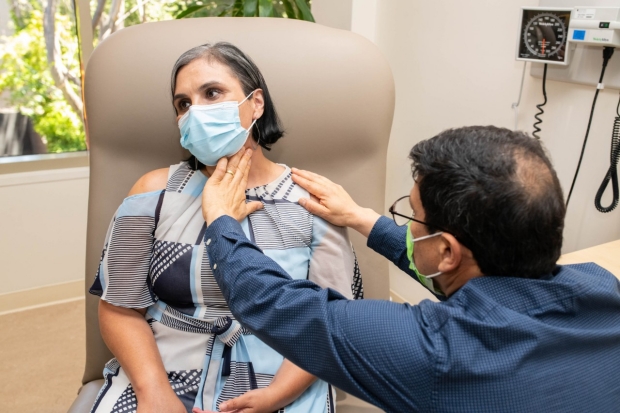
With research showing that up to 30 percent of COVID-19 patients experience persistent symptoms, Stanford Health Care has been operating a Post Acute COVID-19 Syndrome (PACS) Clinic since May.
For about five months after contracting COVID-19, Rosie Flores lay on the couch in her Mountain View, California, home, feeling so fatigued that standing up was a struggle.
"I remember walking from the couch to my bed to grab a comforter and I was breathless," said Flores, 47, who tested positive for coronavirus in July 2020. "My arms felt like noodles. A phone conversation exhausted me. My life was just living on the couch."
Nearly a year later, that fatigue has finally improved somewhat. She returned to work part-time in December as a project coordinator at Stanford Health Care, and returned full-time in March, but the day-to-day work remains exhausting and she continues to struggle with other symptoms, such as memory impairment, hair loss and balance problems.
In the fall, Flores was diagnosed at the Stanford Health Care clinic with symptoms of post-viral COVID-19 or better known as prolonged COVID.
Unfortunately, so are many people like her. As coronavirus cases have declined across the country since last winter's peak, this newly described illness is estimated to affect up to 30 percent of recovering coronavirus patients.
That situation has drawn the attention of the media, the federal government and the medical community, raising concerns that the long-term public health impact of the disease could be overwhelming.
At Stanford, some doctors who have been treating patients with COVID-19 and researching COVID for a long time realized they needed a clinic specifically for patients like Flores.
"As the pandemic progressed, we began to see patients with all kinds of persistent symptoms after the initial COVID infection, such as fatigue, dizziness, cognitive dysfunction, mood symptoms, chest pain, shortness of breath, insomnia, loss of taste and smell, hair loss and sleep disturbances," said Linda Geng, M.D., clinical assistant professor of medicine, who co-directs the clinic at Stanford.
Persistent symptoms of COVID-19
Media stories about a large number of patients who recovered from COVID-19, but developed new and persistent symptoms, first appeared last summer.
The cause of prolonged COVID-19 remains unclear and the number of people who have it is unknown. It can persist for months and range from mild to disabling. There is no definitive laboratory test to diagnose it, and there are no standardized treatments. In many cases, patients wonder if they will ever get better, Stanford Medicine said.
In any case, he said, enough scientific evidence has accumulated to confirm that the problem is not only real but worrisome, according to the federal government. In December, Congress provided the National Institutes of Health (NIH) with $1.15 billion to study the long-term symptoms of COVID-19.
The NIH named the disease as a post-acute sequela of SARS-CoV-2 infection and launched an initiative to find treatments.
"We don't yet know the magnitude of the problem, but given the number of people of all ages who have been or will be infected with SARS-CoV-2, the coronavirus that causes COVID-19, the public health impact could be profound," Francis Collins, director of the NIH, said in an press release announcing the initiative.
In May, a study by Stanford Medicine epidemiologists found that 70 percent of hospitalized patients with COVID-19 had at least one symptom months later; another analysis found that even those with less severe cases of the virus, and who were never hospitalized, were experiencing prolonged COVID.
Stanford doctors and scientists continue to track symptoms and perform imaging as they search for causes and treatments.
The PACS Clinic is designed as a portal that connects patients with prolonged COVID to a multidisciplinary team of post-COVID experts, including pulmonologists, cardiologists and neurologists, based on symptoms.
The San Mateo County Board of Supervisors on Tuesday appointed 14 county residents to the District Line Oversight Advisory Commission, which will be responsible for redistricting the county based on 2020 Census data and public input.
The county is divided into five districts, each represented by a supervisor. Every 10 years, state law requires counties to redraw their district maps based on census data to ensure that each district has the same population and that each board member has the same number of constituents.
While counties usually have their own staff and consultants redraw the district maps, San Mateo County supervisors decided to form a commission of resident volunteers to oversee the redistricting process.
After receiving 65 applications for the commission, county supervisors selected the fourteen members based on recommendations from the League of Women Voters of Southern San Mateo County, a nonpartisan education and advocacy group that encourages participation in government.
Members were selected based on associations with "good government, civil rights, civic engagement and community groups or organizations that are active in the county, including those active in language minority communities," according to a staff report.
The fourteen members selected to oversee the redistricting process in San Mateo are: Nirmala Bandrapalli, Nathan Chan and Hermes Monzon Ruiz for District One; Marcus Barber, James Lawrence and Kailen Sallander for District Two; Benj Azose, Nadia Bledsoe Popyack and Marian Lee for District Three; Mark Dinan and Rudy Espinoza for District Four; and Rita Chow, Miguel Louis -Rudy- Guerrero and Priscilla Romero for District Five.
The board also appointed two alternates: David Chu and Mark Olbert.
To ensure that each district has three members, the county will accept applications for District Four Seat 15. Applicants must live in District Four, which includes Redwood City, East Palo Alto, Menlo Park - east of El Camino Real - and the unincorporated North Fair Oaks area.
Applications will be accepted until noon on August 16. Residents can apply online or find instructions for applying by mail at https://cmo.smcgov.org/districtlines.
During Tuesday's meeting, several callers expressed support for the board's decision and requested that there be enough public workshops to help people understand the process and provide information.
Julia Marks, voting rights attorney for Asian Americans Advancing Justice - Asian Law Caucus, said the commission should hold more than two meetings before the census data is released.
"We've found that initial engagement can be really challenging because it's a complicated issue," Marks said based on caucus involvement in redistricting efforts in other California communities. "People often need multiple opportunities to listen and participate before they are ready to provide the very detailed information that the drafters will need to do their job."
After a series of public workshops, the San Mateo County Commission will recommend changes to the current district map and create a new map or draft maps. A professional demographer and county staff will assist with the process.
Board of Supervisors to approve final redistricting in San Mateo.
Current laws require the new district map to be fully approved by December 15 and the county is asking the commissioners to complete the map by November 15. a compact timeline and did not know if the legislation would extend the timeline.
Board Chairman David Canepa, who oversaw the recruitment efforts along with Supervisor Don Horsley, said his goal was to create a commission that reflects the county's diversity.
The commission is made up of a group of 8 men and 6 women, ages 23-73, who are ethnically diverse and from communities throughout the county.
"The next step is to invite all residents, regardless of age or immigration status, to participate in the process and contribute to our future," Canepa said in a statement. "The destination of those lines helps ensure that everyone has an equal voice."
The current district map is available online at https://bos.smcgov.org/.
For more information or to receive email updates about the District Lines Advisory Commission, visit https://cmo.smcgov.org/districtlines.
Pleasanton Police held a press conference where Pleasanton Police Lt. Erik Silacci made it known that A volunteer found, around 2:30 p.m., a body matching the characteristics of mountaineer Philip Kreycik, who had been missing in Pleasanton Ridge Regional Park since July 10 and whose wife reported him missing to authorities when he did not return home.
"We are unable to confirm the identity of the person located at this time," a news release states. "At this preliminary stage of the investigation, the cause of death of the individual is unknown and the Alameda County Coroner's Office will work to identify the decedent."
Today, authorities announced that after nearly a month of searching, a body matching the mountaineer's physical description was located. The family does not lose hope of finding Philip after his disappearance on July 10 and his car was found near the regional park with his belongings, including his phone and wallet.
Allison Rogers indicated on the Facebook page Find Philip Kreycik that, despite not having any more information indicating that Kreycik has been found, he extends his thanks to the people involved in the search for him and asked the community to wait for updates from the authorities.
The search was officially suspended after five days, so the search for Kreycik had to be resumed by volunteers. Although the climber was reported to be in good health, conditions for the hike into the hills were adverse as California faced a heat wave and Pleasanton was more than 100 degrees Fahrenheit - 38 degrees Celsius - complicating the ground search.
Over the past few days, helicopters were deployed to scour the area for the 37-year-old analyst who worked for PG&E, as well as ground elements, drones and specialized rescue hounds. The doctor Gustavo Bernal, of Mexican origin with experience in emergency and rescue, joined the search efforts in its probable route and indicated that the area of Pleasanton presented an arid environment and with practice of mountaineering "high risk" not only by the weather, but by the fauna that can put at risk the lives of people.
The Pleasanton Police Department clarified that Philip Kreycik's disappearance "is an ongoing investigation and anyone who may have seen Philip Kreycik on the day of his disappearance is asked to contact the Pleasanton Police Department at (925) 931-5107."
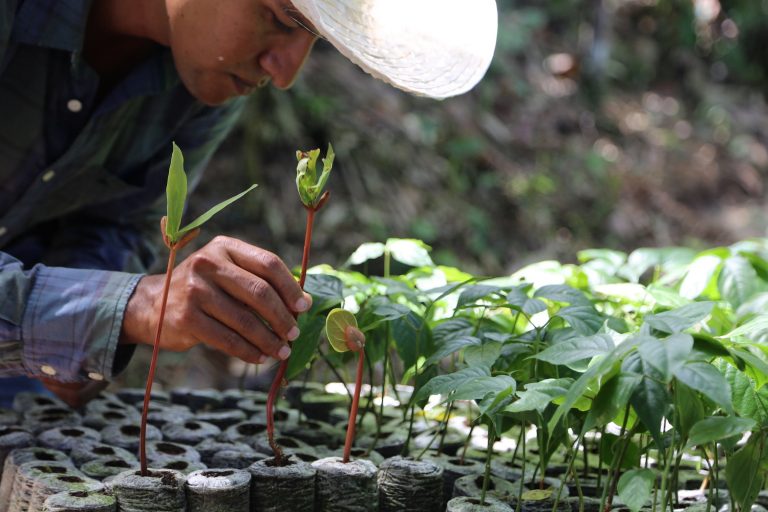
With the care of a mother attending her child, Felipe Garcia gently places a baby tamarind into a small clump of soil, where the sapling will be nurtured and slowly take root before being returned to the forest. At the edge of the Amazon, this one life-giving act stands out amid the backdrop of a nation wracked by decades of war and violence.
If the rivers and waterways of Colombia are its arteries, the forest is its beating heart, its fate intertwined with the future of a country grappling with the legacy of its tormented past.
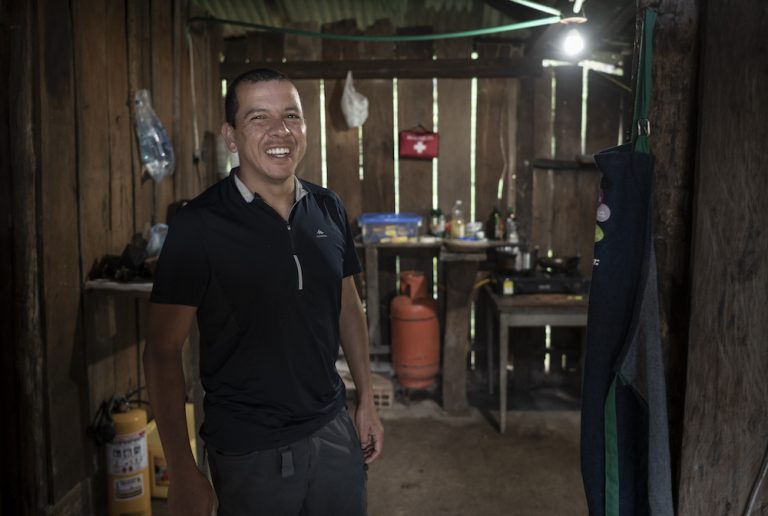
“This is a form of resistance,” says Garcia, 30, gently patting down the soil as he reaches for another sapling, part of a small but growing nursery intended to help restore the surrounding forest.
Felipe Garica, 30, gently adds a sapling to a small but growing nursery of native Amazon trees at Escuela Bosque in Caquetá, Colombia. (Photo by author)
Colombia’s forests are among the world’s most biodiverse, home to more bird, amphibian, and plant species than almost anywhere else on the planet. The Amazon, which blankets much of the country’s southern region, plays a key role in regulating global weather patterns. Its survival — uncertain amid ongoing threats caused by deforestation and a warming planet — is key to avoiding the worst outcomes of climate change.
Rising rates of poverty and social inequality, which triggered nationwide protests in April, complicate efforts to protect these vital resources. But here, under the canopy of the world’s largest rainforest, where the shadows of Colombia’s half-century long armed conflict continue to loom, Garcia is part of a small team helping to sow the seeds of a more prosperous and equitable future, one tree at a time.
n 2019, Rozo, who is 40, embarked on a 400 km trek across Caquetá, earning him the moniker “Forest Gump of the Amazon.” The journey was an opportunity to immerse himself in a region known today more for its sprawling cattle ranches, a backbone of the local economy and also a
In 2019, Rozo, 40, embarked on a 400km trek through Caquetá, earning him the nickname the "Amazon Forest Gump." The trip was an opportunity to immerse himself in a region known for its sprawling cattle ranches, the backbone of the local economy, and key driver of forest loss. But it was also a publicity stunt of sorts, an effort to draw attention to the plight of Colombia’s Amazon and to the opportunity it presents for Caquetá and the country.
Julio Andres Rozo founded Escuela Bosque after a 400km trek through Caquetá, earning him the nickname “Forest Gump of the Amazon.”(Photo: Manuel Ortiz)
“We Colombians have not been able to apprise ourselves of the treasure that we have in the Amazon,” insists Rozo. “It has not been a priority for us.”
Deforestation in Colombia rose sharply following the signing of the peace accord with leftist FARC guerillas in 2016 as areas once off limits due to the conflict became open to rampant land grabbing. Caquetá and neighboring departments have seen some of the highest rates of deforestationin the country. While a slowing trend appears to be emerging , significant challenges remain, including illegal mining, narcotics, and an expanding agricultural frontier.
Turning that around requires education, a key component of Escuela Bosque’s mission, says Rozo, pointing to various structures across the property which in time will serve as classrooms, workshops, and lodging. Rozo envisions similar projects in other regions of the Colombian Amazon where visitors and local farmers alike can come to experience and learn about the forest’s role as a source of both life and livelihood.
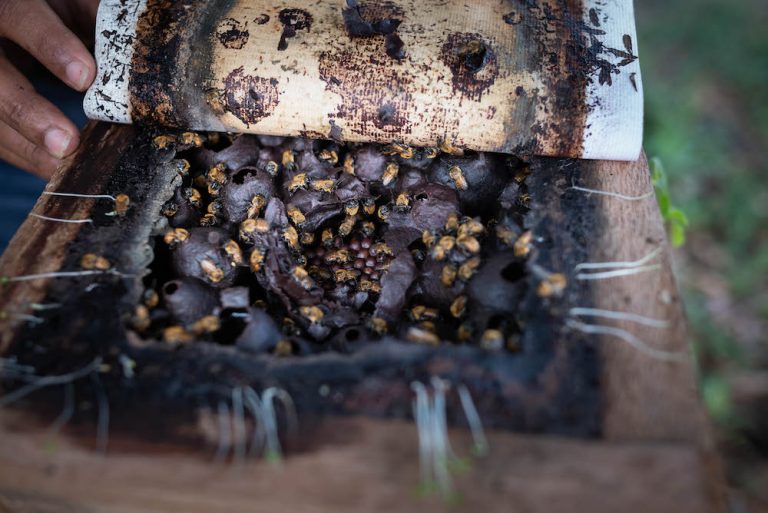
Garcia peels back the cover on a beehive, one of close to a dozen that serve as educational tools for visitors to Escuela Bosque. (Photo: Manuel Ortiz)
“Education helps to raise awareness. But the kind of education we are aiming for inspires action. If I want to teach sustainability, I can’t be a normal teacher. I have to be a sustainable entrepreneur.”
Pointing to a row of beehives that line a nearby hillside, Rozo says the honey they produce is, like all aspects of Escuela Bosque, an educational tool demonstrating the vital role bees play in the local ecosystem and, critically, their potential to generate a sustainable income for families.
“That is the other half of the battle,” Rozo says. To bring projects like Escuela Bosque to scale, sustainability needs to be economically feasible for local families. “My biggest challenge is not so much engaging with my neighbors here but getting consumers in Bogotá and beyond to recognize their role in preserving these forests.”
EII Colombia Coordinator María Adelaida Fernández has spent the past several years working with local stakeholders and the regional government in Caquetá on the design and implementation of a low-emission, forest-friendly development strategy .
“Sustainable development is a long process. It doesn’t happen overnight,” says Fernández. “We are building a foundation, but to strengthen it we need greater access to national and global markets.”
Large swaths of cleared forest are part of the landscape in Caquetá, where an expanding agricultural frontier threatens the long-term health of Colombia’s Amazon. (Photo: Manuel Ortiz)
Fernández and her team are currently involved in several projects in Caquetá, all designed to bring more resources to the region by increasing the value of standing forests. These include efforts to improve access to credit for local cattle ranchers who are transitioning to more sustainable business models, as well as gaining deforestation-free certification for sustainable cacao producers. The latter would ensure access to key markets that are now considering policies to limit their exposure to commodities linked to forest loss.
Fernández is also coordinating a project that aims to help the regional government in Caquetá become eligible to sell carbon credits on the rapidly expanding global carbon market, potentially generating valuable incentives to keep forest standing.
“Right now, the forest does not provide economic opportunity. This is all people can count on to feed their families,” says Fernández, pointing to Caquetá’s seemingly endless expanse of cattle pasture. “They are doing what they know they can to put money in their pockets every day.”
Cattle ranching is the backbone of the economy in Caquetá and a major driver of forest loss. (Photo by author.)
Ascending a long flight of stairs Garcia disappears into the wall of trees that surrounds Escuela Bosque. Minutes later, sweat falling from his brow, he is crouched over a small sapling, which he carefully removes from the soil and places in a nearby container for transplant to the nursery below.
Under normal conditions saplings must wait for larger trees to fall, creating an opening in the canopy for much-needed sunlight to reach the forest floor, before they can grow. Garcia is accelerating this process, nurturing the saplings before replanting them in previously degraded or cleared forests, bringing life where once death prevailed.
With the right support, Garcia and Rozo maintain Escuela Bosque’s model offers as an alternative model to the business-as-usual approach of trading in natural resources for quick injections of cash, a tempting and perilous option as Colombia confronts an array of social and economic challenges.
“There used to be just one house there,” Garcia says, pointing to a small cluster of homes at the foot of the hill below Escuela Bosque. “Now there are 10.”
In Colombia and across much of Latin America, COVID-19 drove thousands to flee their homes in the city, arriving in rural areas like Caquetá where the weight of pandemic restrictions was lessened by greater access to fresh food, open space, and clean air. Patches of cleared forest surround the newly built homes while in the distance a narrow column of smoke rises toward the sky as felled trees are burned to create new pasture.
Standing over the nursery, Garcia tends to what will in time replenish what has been lost. “I feel tranquility here, and for me tranquility is happiness.”
By Pamela Cruz. With information from Eduardo Paz and Paola Ricaurte.Peninsula 360 Press [P360P]
Nearly a year and a half after the COVID-19 pandemic spread around the world, misinformation about the virus and the vaccines that have been developed to stop it is growing.
Flooding and spreading through instant messaging apps like Telegram and Whatsapp, groups like "Doctors for Truth" encourage conspiracy theories and influence the most vulnerable, to instill their misconceptions about COVID-19 and vaccines.
According to a P360P investigation by the Doctors for Truth network, carried out with the support of the Silicon Valley Community FoundationThe study, in which journalists and data scientists Eduardo Paz -Mexico- and Paola Ricaurte -Ecuadorian with studies at Harvard- have collaborated, identified five messages that during the month of June 2021 obtained more views and were more disseminated through Telegram.
The first is related to the denunciation of the circulation of materials that disseminate information associated with the group "Doctors aligned with the "plan-demic", using the name and logo of the group Doctors for the truth, where they mention that the battle against the SARS-CoV-2 virus is "a spiritual war".
The second message reports an experiment by Andreas Kalcker, presenting the results of an analysis of three vaccines, without mentioning exactly which ones, in which he apparently obtains magnetite residues, indicating that it can be manipulated by electromagnetic fields.
Andreas Kalcker, who presents himself as a scientist, so far unproven, is one of the main promoters of the consumption of chlorine dioxide to "eliminate" COVID-19 from the human body.
The analyses indicate that the image and videos of "Doctors for the truth" have been promoted by an evangelical network in Mexico.
However, social networks like Facebook and streaming platforms like YouTube have put a stop to this type of misinformation by closing the accounts -considering only the main one- of said group, for violating the rules of both channels.
The third message is associated with a series of images that apparently show a microscopic analysis of a person's blood before and after being vaccinated.
This message reports that the blood has been altered and nanoparticles can be observed. The text asserts that the life expectancy of people who have been vaccinated is two years and denounces the vaccine as genocide and a war on human blood.
The fourth message is a video in which "evidence" is apparently presented against virology, for not being scientific. Thus, based on a false reasoning, it is argued that a pandemic cannot be thought to exist just because multiple people present symptoms simultaneously.
The fifth message alludes to a fake news story about a Lisbon Court ruling that there are fewer coronavirus deaths than officially verified, however, the story on the Trikooba portal appears retracted according to data analysts.
The narratives that have spread through Telegram during the month of June reach as far as Patagonia, as the data verified by the two important analysts reveal that in terms of the SARS-CoV-2 virus, the main points that this type of group spreads are:
- In Argentina and in the world they are now admitting that the famous virus was designed in a laboratory".
- "The vaccine is not the end. The virus will mutate and this vaccine will be useless in the middle of 2021".
- Health situation caused by an alleged virus to make people believe that this "preparation" manages to immunize. That it does not immunize is evident".
- "Deaths and hospitalizations from infection by Covid-19, also known as PCCH virus, have tripled in the United States among those fully vaccinated."
On vaccine-related issues, the main narratives are:
- "There is definitely research to be done on this. The peak protein in the COVID vaccine 'travels' from the injection site and can cause organ damage."
- Professor 54 years old, healthy, without pathologies. He was vaccinated on the 28th with the second dose of AstraZeneca. He laughs at the injection. Suddenly dies".
- "Eric Clapton. The famous guitarist tells how the experimental vaccine has affected his immune system".
- "They have already reported several thousand deaths from the vaccine and more than 200,000 serious adverse effects."
COVID-19 disease is also mentioned with reasoning such as:
- Graphene is the magnetic material inoculated in Covid vaccines".
- Nanoparticles in COVID vaccines".
- "Covid. It's not pandemic, it's plandemic."
- "WHO does not recommend that vaccines be given to children."
- I HAVE BEEN VACCINATED AGAINST COVID. 7th June: his sister dies "unexpectedly", he announces that her funeral will be on 18th June".
Disinformation such as this has had the same speed as the virus to spread, and is also capable of producing death, as many are those who believe and encourage such theories, which are far from reality and science.
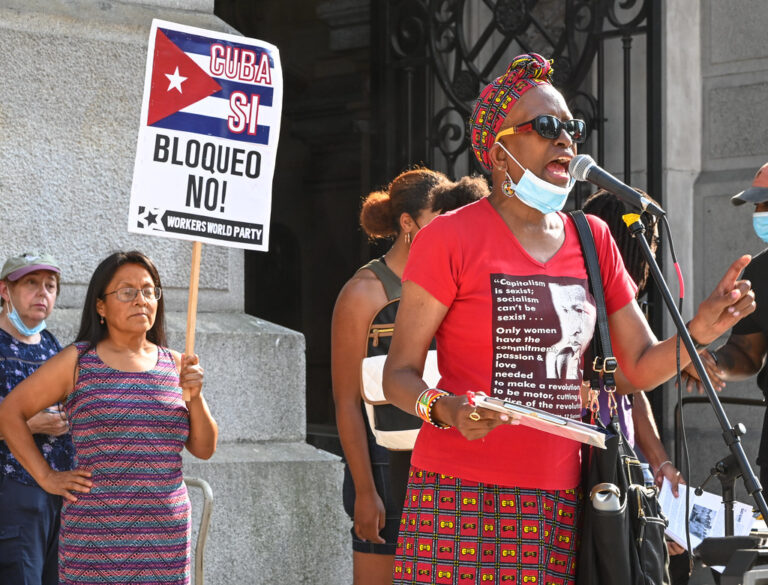
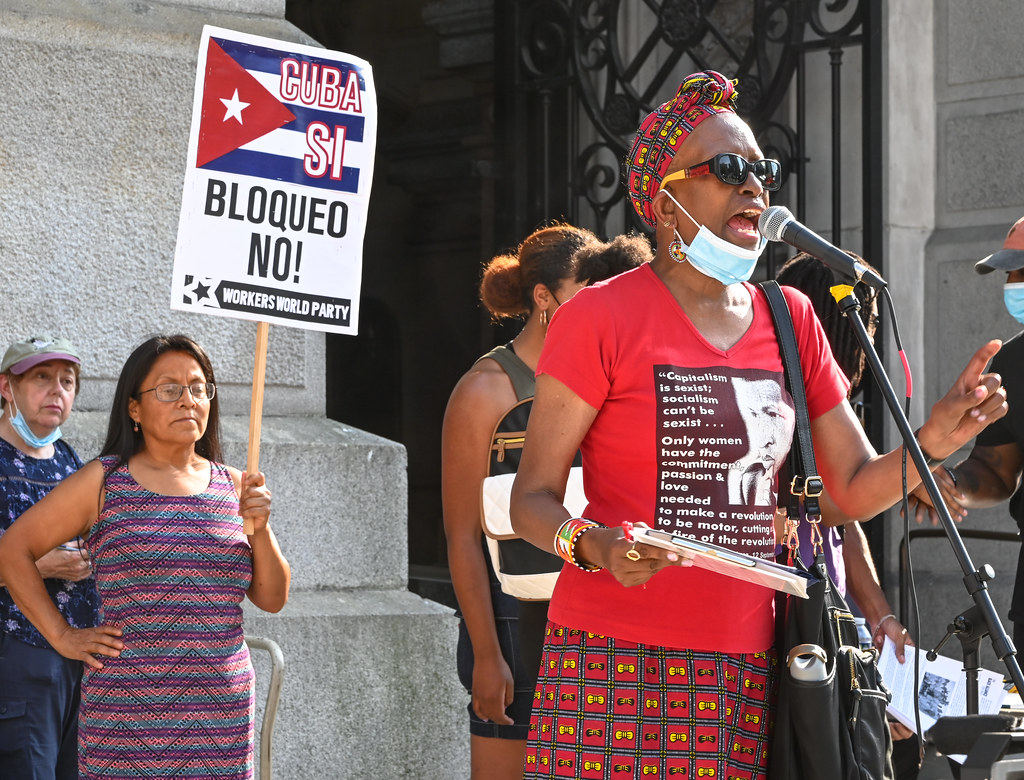
The international human rights organization dedicated to promoting social, economic and environmental justice around the world, Global Exchange is calling for participation in a petition calling on U.S. President Joseph Biden to end the "misguided" trade embargo on Cuba.
According to Global Exchange, Cuba has been at the center of global debate following recent protests over "widespread food and medicine shortages"; however, they point out that the U.S. government, led by Joe Biden, "turns a blind eye to the brutal 60-year economic war."
"The U.S. blockade against Cuba is designed precisely to create the shortages Cubans are experiencing and to foment social unrest on the island," Global Exchange declares while pointing out that such an economic strategy is akin to that of former President Donald Trump.
Biden has shown his concern for the crisis situation in Cuba, but this only reaches the level of social networks, so Global Exchange said that "if Biden really cares about the Cuban people, ending the severe shortage of food and medicine should be his top priority.
The crisis situation in Cuba has worsened with the arrival of COVID-19 that also affected the island, which brought protests in early July 2021 over the embargo that sustains the U.S. the Cuban government.
Faced with such a scenario, Global Exchange opened a form to ask U.S. President Joe Biden to normalize diplomatic relations with Cuba and end the embargo.
According to Global Exchange data, the Donald Trump administration included more than 200 new sanctions toward Cuba and the new Biden administration has "added some of its own" including travel restrictions to Cuba and inclusion on its list of terrorist countries. "These sanctions are making life more difficult for Cubans, especially now that the coronavirus pandemic threatens the health of Cubans and the Cuban economy," Global Exchange says.
In March 2020, Santiago's life, like that of millions of children around the world, changed dramatically. At 12 years old, he went from attending school to taking online classes, from playing football to exercising at home, and from seeing family and friends in meetings to talking to them via video conference.
Her life was turned upside down and she didn't know why. "I don't watch the news much, but I heard my parents talking about a virus. I got really scared. Everything changed. I stopped doing everything I loved: going to school, seeing my friends, going out to a lot of places. It was like a nightmare," she told P360P in an interview.
Santi, as his family calls him, gradually began to understand what was happening through information from his parents, teachers and the media. And although he thought it would be a matter of weeks, the news of new infections continued for months. Bored by the confinement, he hoped it would soon be over.
However, the number of new cases and deaths continued to rise. Santi is also one of the millions of children who have lost a loved one to COVID-19, as earlier this year, his great-grandmother passed away from the disease.
"That's why I want to tell my story, because I know there are many children who are afraid to get vaccinated. But nothing happens. Even though I'm scared of needles, I wanted to be brave so that nothing bad would happen to people, like my great-grandmother.
First those in front
It was in December 2020 when the story about the pandemic took an unexpected turn. "My mom yelled at me and I came out of my room. "'There's already a vaccine,' she said. I asked if we could get it, but she explained that we had to wait. Again we had to wait. I was already bored of hearing that, but I was also scared that my parents or more people would die."
"My parents told me that the first to be vaccinated would be the people who needed it most and those who were most at risk. First the grandparents and the doctors, then the adults, until finally, one day they also said children over 12 years old.
Santi was a few months away from his 12th birthday when the news came out. So at his young age he had to prepare himself mentally to fight a battle against all the fears that were going through his head, because he didn't like neither injections nor needles.
"I put everything on a scale, that's what my mom told me to do when I had doubts about making an important decision. And that's what I did, I wrote down on a sheet of paper why I should and shouldn't get vaccinated. I thought about my fear, but also about my great-grandmother. In the end, yes won out.
Take that, COVID-19: I'm not afraid anymore!
This August 1st Santi was able to receive the second dose of the Pfizer vaccine. With his left arm uncovered he closes his eyes and receives a prick that lasts only a short time. When he is told that it is over, he opens his eyes again and a smile appears on his face.
"It didn't feel like anything, just a little pinch, like being pinched, but it didn't really hurt. I thought it was going to be worse. Last time it didn't hurt either. I'm very happy because I've already been vaccinated and so have my parents.
Santi says that when he grows up he wants to be a doctor so he can help other people, he adjusts the sleeve of his shirt while he gets up from his chair and hits the air quickly shouting: "Take that, COVID".
"By getting the COVID vaccine, I showed my family that I love them and that I want to get back to training, to tell my friends that I want to see them at school again, and to tell the world that if I can fight my fears, everyone can.
"We'll still be wearing masks for a while, but if we all do our part we'll soon be smiling again."
After the Delta variant has become the leading strain in the United States, accounting for more than 85 percent of sequenced COVID-19 cases, "the only way to overcome this terrible virus is to increase vaccination rates," said Dr. Monica Gandhi.
Professor of Medicine and Associate Chair of the Division of HIV, Infectious Diseases and Global Medicine at the University of California, San Francisco (UCSF) detailed in a news briefing by Ethnic Media Services that while there are European countries where vaccination rates are high, there are also nations such as India, which is very slow.
In that sense, he explained that the U.S. is in the middle, as areas such as Vermont, Virginia or the Bay Area show the highest vaccination rates, in Arkansas, Mississippi, Louisiana, Texas and Nevada, it has been observed that the number of hospitalizations for the disease has risen.
The only way to overcome COVID-19 is to increase vaccination rates.
She said there are six strategies to increase vaccination rates:
Community-based messaging. This type of messaging, she said, has been the success of immunization campaigns in towns like San Francisco. Having an African-American mayor talk about the importance of immunization is extremely important.
2.- Bring vaccines closer to the population through pharmacies, consultations with their trusted doctors, in their workplaces and giving workers free time to do so.
3.- Free transportation to vaccination sites.
4.- Helping mothers and fathers to access free childcare while they go for immunization.
5.- Vaccination "Passports". According to Dr. Gandhi, these would serve as an incentive to encourage vaccination, where people who are not immunized would not be able to access certain enclosed spaces.
6. Mandates. This last point, he said, is particularly controversial, because although each person is responsible for his or her health, "this is a public health issue.
In that regard, he recalled that in 1905 the U.S. suffered a smallpox epidemic where 30 percent of people eligible for the smallpox vaccine did not get it. So there was a case called Jacobson v. Massachusetts that was brought before the Supreme Court.
The ruling put the common good above personal interests, mandating that all state residents be required to be vaccinated or pay fines if they did not want to be immunized.
He noted that cities such as San Francisco and New York have required public employees to be vaccinated against COVID-19 or to repeatedly test negative for the virus.
Every mandate, he stressed, has its exceptions, which possibly go in terms of immunity in the past, for religious reasons, or for medical reasons where the vaccine is contraindicated.
However, he pointed out that not having high vaccination rates in the country will only lead to the prolongation of the pandemic.
Vaccines, from segregation to inclusion
"Vaccines are effective, and it looks like our best chance to stop the pandemic, said pediatrician Tiffany Johnson of the University of California, Davis (UC Davis), noting that COVID-19 has had a disproportionate impact on low-income communities and communities of color.
"There are many barriers that exist in accessing health care, and those same barriers exist in accessing the vaccine," she said.
A couple of examples of this, he said, are problems with Internet access, as some populations cannot access reliable and credible information about the vaccine, or even schedule appointments to get vaccinated.
Also, he said, there are transportation problems, because even if you have a vaccination clinic five miles away, if you don't have a bus card, that distance is a long way to walk, especially if the temperature and weather are extreme.
In addition, he explained that workers are often not allowed to miss vaccinations or are docked time off, a situation that many of them cannot afford, let alone given days to recover in case they have reactions.
He added that there is mistrust on the part of communities of color toward the country's health care system.
"Whenever we talk about vaccines and underserved communities, it's always important to talk about mistrust, because health care in America was built on a foundation of racism and beyond the history of experimentation on black and brown bodies, we also have to be accountable for the ways in which we cause harm to communities of color to this day with health care disparities."
In light of this, he said that governments must work on trust with all communities, especially those of color.
"We need to earn that trust and build that trust, and it's not going to happen overnight. So we have to recognize the ways in which we fall short and we have to actively work on building trust in these communities."
While he said he is not in favor of "COVID-19 passports," he explained that he is in favor of the FDA fully approving the vaccine, and once it is approved, then discussing mandates for inoculation.
"We need to create a two-tiered system where there are groups in certain communities that don't have access to the benefits, and then there is society at large. I think we have to work on education and community empowerment, taking into account all the barriers that exist to getting vaccines," she said.
Vaccines for overcoming COVID-19, from the individual to the collective
"The fundamental problem is that vaccines are given at the individual level and individuals tend to see an individual benefit as the main driver. Vaccines work through immunity at the individual level, but on a large scale they essentially work through mathematics at the population level. So all vaccines will help anyone who gets them," Dr. Ben Neuman, chief of Virology at the Texas A&M University Global Health Research Complex, said at the time.
He explained that while there are several studies on vaccines and their effectiveness against the virus and its different variants, all agree that they are safe and work.
In addition, he said, the studies showed that the COVID-19 vaccines show a "huge 78 percent to 95 percent reduction in the likelihood of death after being administered.
Vaccinated people are 80 to 90 percent less likely to transmit the virus, and 80 to 90 percent less likely to become infected with the virus.
"Overall, it seems like the vaccines work pretty well and are protective in a number of ways ... at the population level, 80 to 90 percent vaccine effectiveness is an absolute godsend," he said.
Are we experiencing a new wave of COVID? The answer is yes
Dr. Dali Fan, a clinical professor of health sciences at the University of California, Davis (UC Davis), said the reason for that statement is multifactorial -- the Delta variant "definitely played a role, but the changes are social behavior, social policies and lack of vaccination in the underage group.
"The major vaccines are quite effective against COVID. The mRNA vaccines are 80 percent effective against infection and 95 percent effective against hospitalization. DNA vaccines are 60 percent effective against infection and 90 percent effective against hospitalization."
In the case of the Delta variant, recent data from the New England Journal of Medicine showed that the mRNA vaccine is about 80 percent effective, while in DNAs it is about 67 percent effective against coronavirus hospitalization.
So is a booster vaccine the first-line solution for the Delta variant? The answer is no, he said. "Vaccinating everyone is the right answer. So what are booster doses? Booster vaccines are given after the primary series and are necessary to boost immunity after the initial immune response."
"Remember that vaccines don't kill. The virus does it directly. Vaccines trigger your immune system to kill viruses," he reminded.
Dr. Fan noted that a booster is not yet necessary, but some populations may be the exceptions, such as residents of long-term care facilities, adults over 65 years of age, health care professionals, and the immunocompromised.
He added that the Food and Drug Administration (FDA) announced that fully vaccinated Americans do not need a booster shot at this time. "There is simply not enough evidence that the Delta variant is progressing in fully vaccinated people," he said.
After an outbreak of coronavirus was reported this week among vaccinated people in Provincetown, Massachusetts, the CDC recommended that vaccinated people resume wearing facemasks indoors, especially in high-contagion settings, because, it said, new evidence shows that new COVID-19 infections are also transmissible among the unvaccinated, albeit with mild symptoms.
The big difference among all the vaccinated people, almost all of the symptoms are mild. That means only one thing -- the COVID-19 vaccines work!" said Monica Gandhi, M.D., professor of medicine and associate chief of the Division of HIV, Infectious Diseases and Global Medicine at the University of California, San Francisco (UCSF).
"There are three lessons we can learn from this," Dr. Gandhi said during a briefing held by Ethnic Media Services. First, he said, "it's important to say that the COVID-19 vaccines work. Of the more than 800 people vaccinated who were exposed to SARS-CoV-2 - in Provincetown - there were only three hospitalizations and no deaths. This is an amazingly effective vaccine in preventing hospitalizations and deaths from severe disease.
"That was really the promise of vaccines," she said. "It was always the reason we designed vaccines. Otherwise, you wouldn't have designed a vaccine against something that didn't cause death."
He also explained that the second point learned from the outbreak is that the Delta variant is highly transmissible and has high viral loads, which is why a person already vaccinated can become infected because there is no time for the B cells or memory cells, which produce antibodies to prevent the infection from entering through the nose, to act properly and therefore only produce mild symptoms.
"And because of that, the recommendation from the CDC - the Centers for Disease Control and Prevention - in areas of high school children, or where the virus is latent, is to wear facemasks indoors, even among vaccinated people. It's very reasonable because all this prevents vaccinated people from getting mild infections," he said.
A third important aspect that was learned was that it cannot be concluded that vaccinated people have the same probability of transmission as unvaccinated people.
This, he said, since the results of the outbreak were based on what is called Cycle Threshold (CT), which indicates the amount of virus an infected person harbors, or a PCR test, although no culture tests have been done yet.
And "presumably, what's going to happen is that a vaccinated person is going to fight off the virus and therefore is not as contagious."
"These vaccines still work. They work. But for now, because the Delta variant is highly transmissible, it is very prudent for those vaccinated to wear masks indoors," he said.
The COVID-19 pandemic is leaving severe economic devastation in its wake. For many, it is unfeasible to afford housing, especially for those who have lost their jobs and are immigrants. For this reason, experts and partners in Los Angeles County held an information session to answer questions about how to access assistance and prevent evictions.
On June 28th of this year, California Governor Gavin Newsom signed into law Assembly Bill (AB) 832, which extends protections for residential and mobile home tenants facing eviction due to financial hardship by COVID-19 through September 30, 2021.
The same is true locally, as the Los Angeles County Eviction Moratorium, effective March 4, 2020, will also continue until September 30 of this year, unless the local Board of Supervisors repeals or, if necessary, extends it.
This moratorium prohibits countywide evictions of residential and commercial tenants, including those who rent mobile homes. During the County Moratorium, tenants cannot be evicted for nonpayment of rent due to COVID-19 hardship.
In light of this, Manuel Ruiz, senior policy analyst at the Los Angeles County Department of Consumer and Business Affairs (DCBA), calls on residents to exercise their rights and obtain rental assistance, without fear of applying for support.
In that regard, he explained that the Los Angeles County Board of Supervisors recently launched Stay Housed LA County, a program that offers free legal services to tenants facing eviction.
In addition, the program offers workshops to learn more about your rights as a tenant and to connect with an attorney or advocate, she said at a press conference held by Ethnic Media Services.
The workshops will cover topics such as: tenant protections under the new state Assembly Bill 3088; the Los Angeles County emergency ordinance; and local city laws. The idea is to give them a better understanding of what to do if they are being harassed by their landlord or if an eviction lawsuit is filed against them.
To learn more about the program, interested parties can call to register for a workshop at 1-888-694-0040 or through the website at https://www.stayhousedla.org/workshops/.
Jessica Hayes, chief of Disaster Recovery with the California Department of Housing and Community Development, said that in addition to the moratorium on evictions, Los Angeles County residents can access California's COVID-19 Rental Relief Program.
"The goal of the program is to help families stay at home to help prevent evictions and make sure that people who live there can stay together."
California's COVID-19 Rental Assistance program offers financial assistance for past-due and/or future rent and utilities to income-eligible tenants in the state, as well as to landlords affected by the pandemic, so both tenants and landlords can apply.
Applicants may qualify regardless of immigration status and will not be asked to show proof of citizenship, and all applicant information will be kept private.
"Immigration status is not an issue in this program. It's not a question we ask," Hayes said.
The program is open until funds are exhausted, and assists with 100 percent of the period's unpaid rent and utilities.
Program Requirements rental housing relief in Los Angeles
Tenants: Have been impacted by COVID-19, income eligible (state will calculate when applicable), have defaulted rent or utilities, or need assistance with future rent or utilities. Money must be turned over to the landlord within 15 days of receipt of funds.
Landlords: Have tenants who are behind on their rent and need help with that loss of income; the tenant's household is income-eligible - the state will calculate this when you apply; and finally that all payments you receive must be used to satisfy the tenant's unpaid rent, which must go back to March 1, 2020 at the latest.
Hayes said the program is primarily looking to prioritize and help cases where households are below 80 percent of the area median income. "So we're really looking to make sure that this program is available to as many people as possible."
But what are the ways to submit an application? Or get assistance with submitting an application?
So there are three ways that people can apply to the program. The first is directly through the https://housing.ca.gov/ with self-service option, where interested parties will be able to go in, log in, use their email, their contact information, and upload their documents. "And if you don't have any questions about the application, it's the easiest way to go.
"If you have any questions, we encourage people to reach out to our COVID-19 Rental Relief call center, which is phone number 833 430 2122," Hayes reported.
If people need a little more help, or perhaps have a disability or need language assistance, or are just not sure what documents to upload or have technological barriers such as no internet access or no device to help them upload documents, they can make an appointment at 833 6870 967.
Hayes said Los Angeles County has more than 30,000 active applications for rental housing relief and 10,000 more pending.
If a tenant cannot pay rent, how can he or she take advantage of assistance to protect him or herself from eviction?
Cindy Shin, a staff attorney with the Legal Aid Foundation of Los Angeles, which is part of Stay Housed Los Angeles, noted that a landlord can file an eviction, but tenants still have rights.
"In the event that your landlord takes an unlawful detainer action against the tenant, until the rental application is denied or the funds are released, any foreclosure action brought for nonpayment may be stayed," he said.
In that sense, he recalled that both tenants and lessees are notified with three, 15, 30 and 60 day notices to prevent evictions from taking place without full notice and thus claims can be filed in court.
If the lawsuit is filed by a tenant, "the court sends a notice saying that a lawsuit has been filed, but the tenant is not required to respond to that lawsuit. Until they are personally served with the summons and complaint, and if they can't find a way to be personally served, then they get the court's permission to mail it.
But once you receive any type of notice - written or verbal - from the court or your landlord, it is important to contact a legal services provider immediately.
They can determine your rights based on where you live and help you better respond to the court's notice to remain in your home.
"We know that immigrants, in particular, have been the most impacted by the pandemic, and trying to get through the devastation and recover is a challenge. So we want to remember that these support services are available in every county, regardless of immigration status."