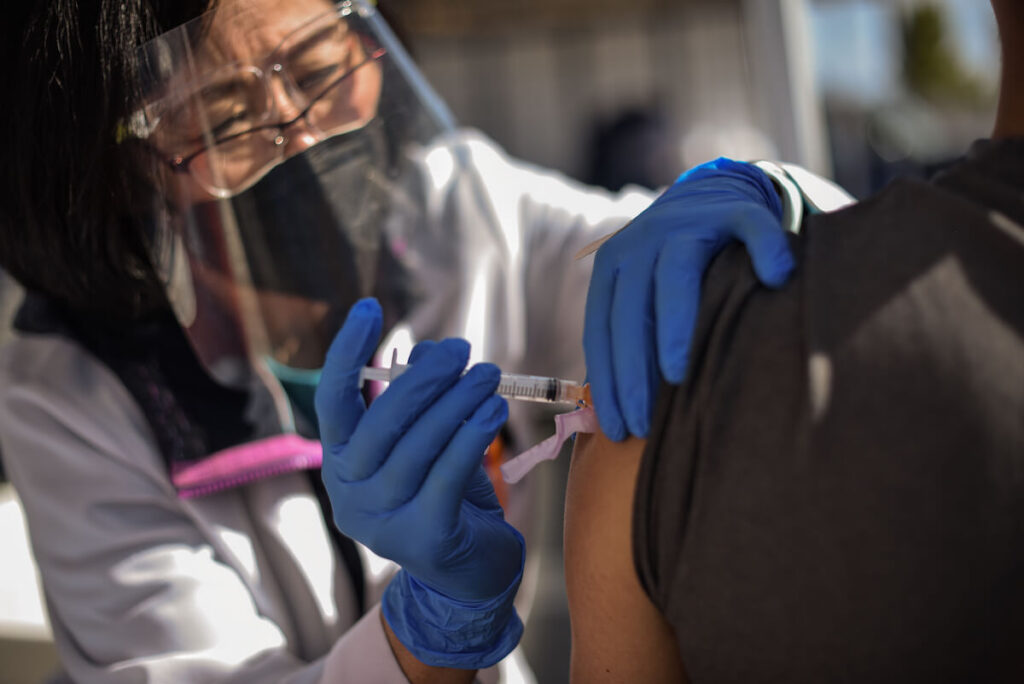
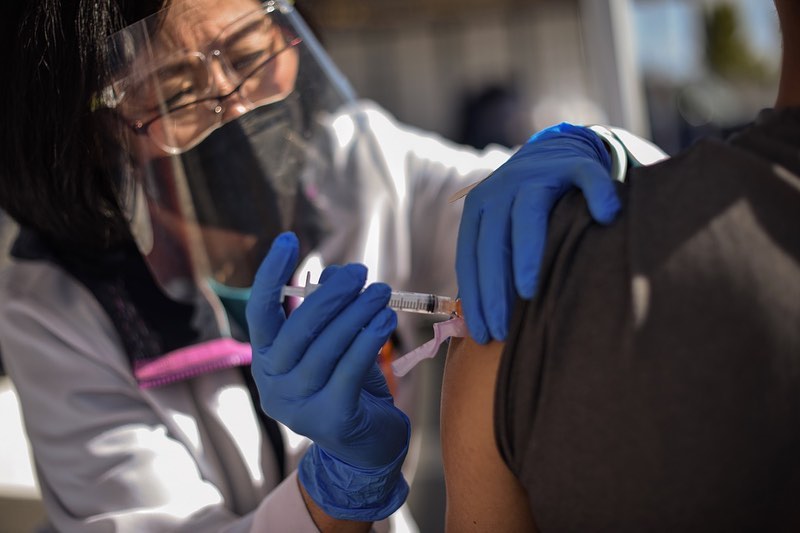
San Mateo County announced that it has partnered with Dignity Health, Sequoia Healthcare District and the City of Redwood City to continue operating a weekly COVID-19 vaccination clinic in North Fair Oaks.
That partnership, the county said, helps ensure that local residents have access to a community-oriented clinic in one of the neighborhoods most affected by the COVID-19 virus.
In addition, he said, it also allows for a more predictable schedule, as well as drive-up and walk-in registration.
"From the beginning, we said our return is up to all of us, and that also means it's up to all of us working together to meet residents where they are," said County Supervisor Warren Slocum, whose fourth district includes North Fair Oaks.
"This pandemic has highlighted that we are responsible not only for our own health, but also for those around us, and our vaccination efforts are no different. Every shot in the arm is a success for our county," he added.
In a statement, the county said Dignity Health and the city of Redwood City will assume most of the operational functions of the site, with Sequoia Healthcare District providing the funding.
North Fair Oaks is an unincorporated neighborhood of approximately 15,000 residents located between Redwood City, Menlo Park and Atherton.
"We are thrilled to partner with Redwood City, San Mateo County and Sequoia Healthcare District to help vaccinate some of our community's most vulnerable residents, many of whom have difficulty accessing high-volume vaccination sites due to work schedules and access to transportation, or lack the technology to book appointments online," said Bill Graham, president of Dignity Health Sequoia Hospital.
The county established the NFO vaccine site along with other community locations identified as significantly affected by COVID-19 and with populations considered more difficult to reach or challenged to use mass vaccination sites.
"Supporting the health and well-being of district residents in times of calm and crisis is truly the value we bring to our community," said Pamela Kurtzman, executive director of the Sequoia Healthcare District.
Redwood City Mayor Diane Howard also praised the collaboration.
"The partnership between the county, Dignity Health, Sequoia Healthcare District and Redwood City exemplifies how, collectively, we are working hard to make receiving a vaccine easier, more accessible and convenient for our Redwood City and North Fair Oaks residents," said Howard.
The NFO clinic will be held on Sundays between 11:00 a.m. and 5:00 p.m. at Fair Oaks Health Center, located at 2710 Middlefield Road, Redwood City.
Redwood City police are looking for four Hispanic men in connection with a burglary and home invasion a week ago.
According to the local police department, officers were dispatched to the 1700 block of Oak Avenue at 10:27 p.m. on Thursday, April 22, where they found two injured victims.
Officials said an investigation revealed the male victim responded to a knock on his front door and one of the suspects shot him with a Taser.
The other suspects entered the man's home and assaulted him and a woman in the home who was restrained with cable ties.
The suspects ransacked the house before fleeing with a large safe and other valuables.
Police said the male victim was treated at the scene for his injuries, but the female victim was transported to the hospital for treatment of an open wound to her forehead.
Redwood City Police called for anyone with information regarding this case to contact Detective Sergeant Nick Perna at (650) 780-7672.
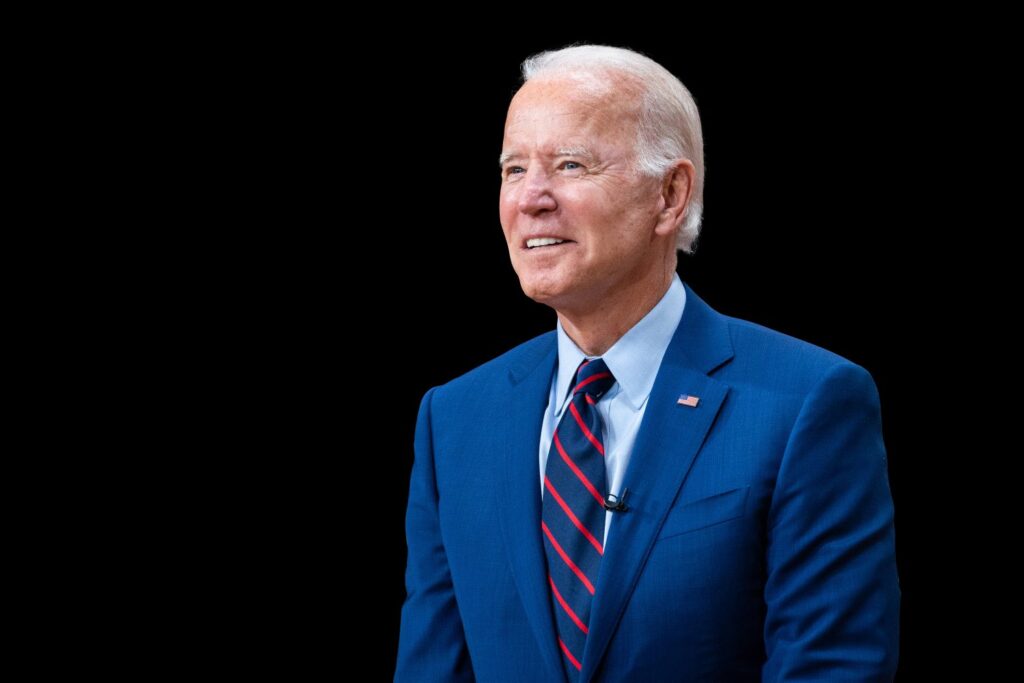
It has been 100 days since Joseph Biden was sworn in as president of the United States, all in the midst of a pandemic that plunged the country into a seemingly endless series of problems, from unemployment to famine, from insurrection to thousands of deaths from COVID-19, a tunnel to which, it seems, there is no end in sight.
Of that gray figure during a campaign that many labeled as parsimonious, there is nothing left. As if it were a train, the administration headed by Joe Biden and Vice President Kamala Harris, has taken course with firm actions; however, with the speed it is taking, it is hoped that it will not derail.
On Wednesday night, Joe Biden gave a speech in Congress, one with few guests, because the pandemic is not over yet. He gave a concise report of the actions that have been taken in these first 100 days of his administration at the head of one of the most important economies in the world.
COVID-19
During his speech, the U.S. president said 220 million COVID-19 vaccines have been administered in the country, and he said vaccination centers and units are being set up to accelerate vaccination.
In this regard, he called on all residents in the country, over 16 years of age, to be vaccinated against the SARS-CoV-2 virus.
"When I was sworn in, less than one percent of seniors were vaccinated against COVID-19, 100 days later, 70 percent of U.S. seniors over 75 are fully protected, senior deaths are down 80 percent since January, a drop thanks to all of you," he said.
He added that, so far, more than half of all adults in the United States have received at least one dose of the vaccine that protects them from serious COVID-19 symptoms.
On the other hand, Biden pointed out that 160 million pandemic relief checks have been sent out, and he said that, thanks to those checks, with help from Democrats and Republicans, millions of families were able to be protected from falling into famine because they were left jobless.
"We've fulfilled our Democratic and Republican commitments to send $1,400 checks to 85 percent of American households, we've already sent more than 160 million checks, that's making a difference, for a lot of people it's a fundamental difference," he said.
Employment
In his speech, he explained that the U.S. must create jobs, so it will seek to invest in a plan to improve infrastructure to compete with China, as he said, "are different times".
"We have the capacity and the trained people to drive employment," he said.
The president also called on all Americans to buy domestic products in order to strengthen and promote the economy, which will generate jobs.
In this regard, he promised the population that his program will generate millions of dollars and jobs in a period of 8 years, jobs that will be essentially for workers and to rebuild the country.
"While everything is happening, the economy has created more than 1.3 million new jobs in 100 days, more jobs in the first 100 days than any other president in history," he said.
Before Democratic and Republican members of Congress, he made it clear that the middle class built America, and called for raising the minimum wage to $15 an hour for all workers, as well as allowing unionization rights and equal pay for men and women.
"The International Monetary Fund estimates that our economy will have a growth of more than 7.0 percent this year, it is the highest rate of economic recovery that this nation has had in almost four decades, the country is moving forward, moving forward, but we can not stop now," he said.
Gender-based violence
Joe Biden, said his administration will seek to resume from Congress legislation to combat the levels of gender violence against women, which, among other measures, will include a ban on the use of weapons for those men who have a record of abuse.
In the presence of Vice President Kamala Harris and House Speaker Nancy Pelosi, Biden said his administration will deepen its work on violence against women.
"We're going to resume the legislation to combat violence against women that has been in this country for 27 years since I wrote it. This is going to close that loophole, so that there are no guns in the hands of abusers. If someone abuses, they can't have a gun, we have to close that gap that exists," she said.
She explained that about fifty women are shot or killed by an intimate partner every month in the United States. "Fifty! Let's pass this and save lives."
To this, he added the importance of human rights.
"No American president can stand aside when human rights are being violated. The president of the United States must represent the essence of our country. America is an idea, and the most important ideal in our history is that we are all created equal. We cannot depart from that principle," he said.
Health
In addition to the achievements noted in the fight against the pandemic by COVID-19, Biden promised to promote medical research to combat diseases such as Alzheimer's and cancer, the latter of which would irreparably affect his family by taking the life of his son, Beau Biden.
"We must do research to stop cancer from advancing, I can't think of a more worthy investment, we can work together to defeat these diseases," Biden said. "I can't think of a more worthy investment. And I don't know of anything more bipartisan."
"I want you to know that once we defeat COVID-19, we are going to do everything we can to end cancer as we know it," the president said, a statement that was applauded and standing ovations from those present.
In addition, he said he asked Dr. Eric Landes, a renowned scientist at Harvard University and the Massachusetts Institute of Technology (MIT), to co-direct the President's Council of Advisors on Science and Technology and the Office of Science and Technology Policy.
While he called on the National Institutes of Health to create an Advanced Health Research Projects Agency, which will be focused on finding cures and more effective treatments for different types of cancer.
To this, he added that he will seek to lower the price of medicines for all Americans, arguing that, for the same treatment, citizens pay up to three times as much as in other countries.
A situation that must change, he said, because "health care should be a right and not a privilege".
Education and family
Joe Biden said he will seek to further ensure access to quality education for American families, especially for low-income and African-American families, in addition to providing greater support for education funding and facilitating access to child care.
In that sense, he announced the "American Families" plan, a large-scale social project for recovery after the health crisis, which includes a broad proposal for universal preschool education and help for family reconciliation.
"The American Families plan will finally provide up to 12 weeks of paid leave and family medical leave ... No one should have to choose between a job and a paycheck or taking care of their loved ones, their partner or their child," she said.
To that end, an additional $1.8 billion federal investment in education, child care, and paid family leave was announced.
The president intends to finance this package by raising taxes on the wealthiest so that they "pay what they should pay," however, he said he will not increase taxes on anyone earning less than $400,000 a year.
"We will defend American interests across the board, the United States will stand up to unfair trade practices that undercut American workers and industries that subsidize businesses," he said.
Security
President Joseph Biden emphasized the challenges in terms of national security, where he assured that he will not turn his back on his allies, but neither will he remain silent in the face of human rights violations.
In the case of China, President Xi Jinping said in a telephone call that the US will maintain a "strong military presence" in the Indo-Pacific region "not to create a conflict, but to avoid one".
He also explained that with the Asian country is looking for a fair competition in economic matters, not an escalation of conflicts between the two countries.
He explained that terrorist threats have advanced to other nations beyond Afghanistan, so it was time I to bring the troops "home"; however, he determined that the U.S. must be vigilant and avoid future threats, which may come from other latitudes, as groups such as "Al Qaeda and ISIS are in Yemen, Syria, Somalia, other places in Africa, the Middle East and beyond."
On the other hand, the nuclear programs of Iran and North Korea "represent a serious threat to the national security of the United States and the world," so he stressed that it will work with other countries to address the threats posed by these nations "through diplomacy and a strong deterrence.
Russia continues to be key in national security speeches, and this was no exception, as he recalled that in his call with Russian President Vladimir Putin, it was made clear "that we are not looking for an escalation, but their actions will have consequences".
However, there are bilateral areas of cooperation, such as nuclear weapons and climate change.
Racism
But security starts from within, and to that end, he pointed out that "the worst threat facing our country is white supremacists. We're not going to ignore that. As citizens we have to come together to save the soul of our nation. Reason why Biden called for rebuilding trust between the public and the police to combat "systemic racism".
"We have a huge opportunity to bring that arc of the moral universe into real justice, eradicating systemic racism from the justice system."
"We've all seen the knee of injustice on the necks of African-American Americans," he said.
In this regard, although he recalled that most of the men and women in the police force "serve the country honorably," it is necessary to approve a police reform, which will prevent the use of improper force that ends up taking lives.
He added that the country must offer "real opportunities for white Americans, African-Americans, Latinos, Asian-Americans, Native Americans," in addition to looking to Congress to pass legislation to ensure equality for all, including the LGBTTTIQ+ community.
Finally, the president thanked the Senate for passing the COVID-19 Asian American Hate Crimes Protection Act.
Migration
The president called on Congress to finally resolve immigration reform and grant 11 million undocumented immigrants legal residency, because many of those workers put food on tables across the country during this HIV/AIDS pandemic, often risking their lives and the lives of their families.
However, he said that while they may not agree with his proposal, or while it is being discussed, it is important to move forward on what both parties do agree on: protecting dreamers.
"Migrants have done so much for America during the pandemic and throughout history...Let's help these young people who were brought here when they were just children and who know America as their home."
Climate change
The fight against climate change has been an issue that Joe Biden has touched on since his campaign, and after fulfilling his commitment to reinstate the U.S. to the Paris agreement, he recalled that the problem cannot be fought alone.
"The climate crisis is not just our fight, it's a global fight. The United States generates less than 15 percent of carbon emissions, the rest, 85 percent, comes from the rest of the world; that's why I fulfilled my commitment to rejoin the Paris agreement because even if we do everything perfectly, that won't be enough."
And it is that, he said, acting in favor of the planet, not only will help health and the environment, because the commitment to renewable energy will create millions of new jobs.
If we "save the planet, we will create millions of jobs, economic growth, opportunity, and raise living standards around the world".
Finally, Joe Biden called to defend the country's democracy.
The video game industry has problems: sexual harassment and sexual violence are constant within the world's largest game development companies. They are governed by the bro-culture -men overlapping men, working meetings in strip clubs and the constant fear of denouncing such acts.
In 2018, a group of former female employees of Riot Games began a lawsuit against the company in which they denounced the gender pay gap and the discrimination they suffered from having to prove that they are real gamers to get the job, doing more of their duties with the promise of a promotion that doesn't come, living with men who rate them on their physical appearance, and misogynistic jokes at their expense.
In addition, in January of this year, its CEO, Nicolo Laurent, was accused of sexual harassment towards his former assistant; about which Riot Games stated that no evidence of what Laurent is accused of was found and no action should be taken against him.
Companies like Rockstar and Ubisoft have also been singled out for similar behavior, which seems to be a pattern of behavior that responds to the belief that the world of video games is by and for men.
Following the statements made against Ubisoft, CEO Yves Guillemot issued a video apologizing to victims of harassment and also stated that the company would focus on increasing diversity and inclusion, and announced the appointment of Anika Grant as the company's new head of human resources.
Putting a woman in an important position within the logistics of a company seems to be just the first step in the search for gender equality, and does not guarantee that the sexist environment that prevails in this industry will change, but at least it shows Ubisoft's concern to take action and transform the company, unlike other companies that only deny any accusations.
But what happens when an employee decides to confront the magnates of this industry? First of all, they are confronted with human resources processes that, far from seeking the truth, want to mitigate the scandal by pretending that it simply did not happen and that there is insufficient evidence to punish the offender.
As happened with the former Rockstar employee, Colin Bundschu, who shows that not only women face situations of vulnerability in these companies. Bundschu reported being harassed in 2014 by one of those who, at that time, was in a high position in the company and, despite, to communicate it to its human resources area, the response he got was that there was insufficient evidence, in addition to the accused denied such facts.
After his time at Rockstar, and despite the fact that working in video games was Bundschu's dream, he decided to leave the industry altogether, while his assailant continued his career, currently as vice president of Nimble Giant Entertainment.
It is common that, within this very closed industry, employees prefer to remain silent about the abuses of power to which they are subjected for fear of losing their jobs, being branded as undesirable and not being able to continue their vocation.
But losing their careers is just one of the hellish levels that whistleblowers face, as these video game titans have all the purchasing power to buy the law, so lawyers and judges can rule in their favor.
To exemplify this, let's take the collective complaint against Riot Games, which at first seemed to have a quick solution by compensating with 10 million dollars distributed to the thousand complainants, but in 2020 this figure reached 400 million dollars.
This came after the Department of Fair Employment and Housing (DFEH) intervened and also pointed out irregularities in the conduct of the plaintiffs' legal representation, Rosen Saba, which they said failed to seek fair compensation from the outset.
So, it can be understood that Riot Games always had full control over the amount of money they were willing to give in exchange for finishing this chapter.
In this regard, both Rosen Saba and Riot Games stated that there was no such plot.
All these complaints seem to go unnoticed because of the little coverage given to them, their consumer market does not seem so interested in the means used by developers as long as the final product meets their expectations.
These are just a few instances in which abuse against workers has been demonstrated, but it is clear that the problem is deeply rooted in companies. Abusers believe themselves immune - and in many cases are - to retaliation, backed by the power that companies give them. This forms an environment conducive to sexual harassment and abuse of workers' rights of all kinds.
It is clear that the entire industry is interested in avoiding at all costs the unionization and organization of the people who make video games happen because, if so, they would not be able to use fear to silence the voices of women and men who have been abused.
Like every year, the highest level of American football, the NFLwill celebrate its Draft, an event that positions each of the 32 teams with the opportunity to reinforce the lines they consider most vulnerable in their roster, based on the youth talent that was demonstrated in the last season of the NCAAthat is to say, the collegiate category of the sport.
The order of selection is established according to each team's record in the previous season, i.e., to maintain a balance of teams, the league gives preference of select first who, in theory, would be the most desirable player to the team that posted the worst record in the finished campaign. On this occasion it is the Jacksonville Jaguarswhile the last one will be the champion Tampa Bay Buccaneers.
Clemson quarterback Trevor Lawrence is expected to be the sensation of this generation, a player that is hard for Florida to pass up, making him the first overall selection.
On the other hand, one of the most attention-grabbing moves in the hours leading up to this draft was the trade of picks made by the San Francisco 49ers and the Miami Dolphins, situation that allows the Bay Area team to climb to be the third in selecting talent in this 2021. After 3 years with Jimmy Garoppolo in charge of the throws, in the legendary team realized that this is not the passer that will lead them to get a SuperBowl, so is expected to take a gamble on Alabama quarterback Mac Jones or, if available, talented Ohio State graduate Justin Fields.
The NFL Draft will take place this Thursday at 5:00 p.m. San Francisco time, 7:00 p.m. Central Mexico time, and can be seen on ESPN.
In the U.S., one in four women and one in 10 men suffer domestic violence, a problem that COVID-19 aggravated and brought to light; however, combating this other pandemic requires a perspective that, of course, helps and supports the victim, but also helps heal the abuser.
According to Dr. Aleese Moore-Orbih, incoming director of the California Partnership to End Domestic Violence, combating domestic violence requires a healing approach that doesn't always remove the abuser from the home or criminalize him.
In an interview with Ethnic Media ServicesThe expert said that throughout her career she has not encountered women victims of abuse, who did not think about helping their partners, who exercised violence on them.
"I have never met a woman who didn't want to help her abusive partner. Leaving an abusive relationship is an old paradigm. Women of color want to stay with their partners and they want agencies to help the abusive partner get out of their cycle of violence," said Moore-Orbih.
During a subsequent briefing by the same organization, the United Church of Christ pastor noted that domestic violence is seen as a result of personal experience, but in reality it is a social and cultural problem.
"It speaks to the health of our society, the brokenness of our society. The trauma you experience in domestic violence, sexual assault, trafficking, child abuse, any of those have a lifelong impact," she added.
Moore-Orbih explained that post-traumatic stress disorder is transferred from generation to generation, a situation that does not allow victims, "to live to the fullest extent of their capacities as human beings".
"Women, girls and those who identify with feminine energy are always the most vulnerable, but if we're talking about healthy masculinity, how about healthy femininity? We all need to be healthy individuals," she said.
Changing the paradigm
In order to finally see a change in violent relationships in the home, it is necessary "to stop worshipping control and power as a glorified way of being, when we stop encouraging our children to seek power and control," she said.
The road to restorative justice
Tina Rodriguez, manager of Crime Survivors for Safety and Justice in California, knows all about domestic violence. She was just a child when she experienced her father's abuse firsthand.
The attacks, which included sexual abuse, left after-effects, and throughout her adolescence caused severe eating disorders and trauma that after years of therapy she was able to overcome.
However, Rodriguez achieved what few others do, as in her recovery she was able to forgive the man who destroyed her childhood.
"There is a gap in cultural responsibility both for those who have been affected by anger issues or violent impulses and the inability to control them, and for those who have been victims of domestic violence," she said.
In that sense, Tina said that education is key to prevention and intervention of criminal systems, which, she said, "have helped to create pain".
"We need to take cultural responsibility for educating our youth about domestic violence and prevention," she added.
After paying his sentence for the harm done to his family, Rodriguez's father participated in a restorative justice.
That process, described by Tina herself as "brutal," allowed her and her father to heal, and ultimately inspired her to start a domestic violence prevention program at Valley State Prison.
"Society has gender assignments and assumes that men are expected to be the breadwinners. No one talks about the kind of pressure for a man of color who, whether he's college educated and highly qualified, is excluded from about five interviews because of the color of his skin...the anger comes from the trauma of being oppressed and excluded from opportunities," she stressed.
In the case of men in the Latino community, the pressure on them to be the providers for their families is great, to such a degree that it can lead to violent impulses due to fear of failure.
Violence and racism
Talking about domestic violence is impossible without considering oppression, racism, white supremacy, and generational trauma, according to Jerry Tello, Founder and Director of Training and Capacity Building for Compadres Network.
The activist could not mourn the death of his father, which he suffered when he was very young, because of the machismo that is exercised on Latino communities.
"I kept the pain inside me. I learned that to survive I couldn't feel. Feeling would make me vulnerable," she said.
Tello became a psychologist, and with another colleague founded the Compadres Network to develop healing circles and a curriculum for rites of passage for orphaned youth, teen parents, and to unite families.
"We made the decision that the first step of healing is to heal ourselves, we have to reclaim the sacredness of ourselves as men. We have the medicine within us and within our neighborhoods," he said.
Domestic Violence Scourges Immigrants
It is true that domestic violence does not distinguish between race, gender, age, sex and economic status, however, for immigrants the situation is not the same, since, in many cases, access to help is not easy, said Monica Khant, executive director of the Asia-Pacific Institute of Gender Violence.
"It's hard to take the time to run to the bathroom to make a secret phone call ... even accessing information on computers has been difficult when many immigrant families don't have the same technological access we need to survive the pandemic," he added.
She noted that the way the criminal justice system works in domestic violence cases, especially for ethnic and immigrant communities, begins with a 911 call.
After that, she said, a complaint is filed with the police and a court intervenes, issuing a restraining order or anger management treatment, measures that, while they drive the abuser away, do not resolve the causes of the violence.
And, he said, the solution that is often offered against this type of problem is to separate the aggressor from the family, not a way to heal the situation.
Thus, the immigrant and undocumented community suffers twice as much from domestic violence, as they face language barriers, technological barriers, fears of possible deportation, and now financial dependence on their abusers due to the COVID-19 pandemic, which has increased the loss of jobs because they cannot receive unemployment benefits, so it is necessary to change the perspective and help to this sector in the face of a problem that has become another major pandemic in the United States.
Single-family homes in the floodplains - nearly 4 million homes in the U.S. - are overvalued by nearly $44 billion overall, and $11,526 per home on average, according to a new study led by Stanford University.
According to the analysis, published in the Proceedings of the National Academies of Sciences, as the climate changes, more frequent and intense flooding is a threat facing many Americans, while unwitting buyers and inadequate disclosure laws increase financial risks that could destabilize the housing market.
"The overestimation we found is actually worrisome, especially given the increases in climate risk that are looming," said the study's lead author, Miyuki Hino, PhD in Environment and Resources from the Stanford Earth School.
And, according to the analysis, in some states, such as Florida, up to one in six homes is located in floodplains.
As more people have built more homes in areas exposed to cyclones, sea level rise and other flood hazards, flood damage costs have skyrocketed, with total flood damage quadrupling in the country since 2000.
More frequent extreme weather could magnify the trend
Over the next 30 years, flood damage to U.S. homes is expected to increase more than 60 percent, from $20 billion to nearly $32.2 billion a year, according to the nonprofit research group First Street Foundation.
While some states, such as Louisiana, require detailed flood risk disclosures, others do not require risk disclosures of any kind.
Only two states require sellers to disclose the cost of their insurance policy, while most only require disclosures by the time the contract is signed, making it unlikely that buyers will make informed decisions.
Unlike many previous studies, which focused on individual counties or cities in just a few states, the new analysis casts a nationwide net to paint a clearer picture of whether markets are effectively accounting for publicly available flood risk information.
The study also found that single-family homes zoned in a floodplain lose approximately 2.0 percent of their value, which equates to $10,500 for a $500,000 home, or $21,000 for a $1 million home.
In contrast, if buyers had factored in the cost of fully insuring the floodplain home against damage, they should have lowered prices by 4.7 percent to 10.6 percent, as much as 53,000 for a 500,000 home, or 106,000 for a million-dollar home, according to the researchers.
"We like to think that markets work efficiently and incorporate all known information about risk, but here we find clear evidence that the market is underestimating flood risk," Burke said.
Policymakers can help by passing legislation that promotes access to information about the extent of past flooding and strengthens real estate disclosure requirements, according to the researchers.
"We spend a lot of time and energy trying to map climate hazards and how they're changing, and we need to make sure people can access and understand that information when they need it," Hino said.
After more than a year after millions of people stopped attending concerts and festivals due to the COVID-19 pandemic, there's finally a light at the end of the tunnel thanks to millions of people in the U.S. getting vaccinated, and Outside Lands Festival announced Tuesday the lineup of artists who will perform at its 2021 edition.
The festival that has been held since 2008 in Golden Gate Park in San Francisco, California, had to cancel its 2020 version, however, now returns with a lineup worthy of savoring a new normal.
So, from October 29th to 31st of this year, and under strict health and safety rules, thousands of people are expected to turn out to enjoy an up-and-coming lineup headlined by bands like The Strokes, Tame Impala and Lizzo.
The lineup also includes Nelly; Vampire Weekend; Tyler, the Creator; Glass Animals; Zhu; Young Thug; J Balvin; Rufus Du Soul; and Kehlani.
The event that was normally held in September has been moved a couple of months to ensure that there are better health conditions in the country and the rules for outdoor gatherings are in place so that everyone can enjoy a great Halloween weekend.
While general and VIP passes for all three days of the festival are already sold out, single day passes will go on sale this April 29th starting at 9:00 a.m. on the following website www.sfoutsidelands.com/tickets/.
For more information about health measures, as well as logistics of the event, attendees can consult the official website of the festival www.sfoutsidelands.com.
With the increase in the federal supply of COVID-19 vaccine, San Mateo County will be adding weekly mass vaccination clinics for anyone who lives or works in the area starting this Thursday, April 29.
The first of the mass vaccination sites will be located at the San Mateo County Event Center, which, along with ongoing smaller-scale, community-focused clinics in targeted neighborhoods, will help increase inoculation rates in the county.
"We believe we will have enough vaccine for everyone who wants it, and we hope that's everyone in this county. The reopening of our mass vaccination site this week and continuing to provide doses to our community clinics in our most vulnerable neighborhoods means we can get more vaccine into more arms," said County Administrator Mike Callagy.
He said the more vaccines that can be obtained, "the safer this county becomes and the sooner we can move on to our new life after COVID-19.
In a statement, the county said it plans to operate two to three weekly mass vaccination events in the future, depending on supply, with the Event Center site capable of administering approximately 4,000 doses per day.
Appointments for first dose clinics are open to anyone aged 16 and over - for Pfizer - or 18 and over - for Moderna or J&J -.
Participants must live or work in San Mateo County and must schedule appointments up to three days in advance, while residents under the age of 18 must be accompanied by a parent or guardian.
Clinics for the Event Centre will be by car only and you can sign up for appointments through the myturn.ca.gov website.
Through the San Mateo Medical Center, the Health Department has begun receiving approximately 10,000 doses per week through a federal program of the Health Resources and Services Administration.
Those doses, the county said, will be used by the Medical Center in mass vaccination efforts and to continue to target homeless populations, farm workers and residents in communities where vaccination rates have been lower than average.
Community first- and second-dose clinics will continue in North Fair Oaks, East Palo Alto, San Mateo, Daly City, El Granada and Half Moon Bay, officials said.
It should be noted that, this week, the San Mateo Health Department will also resume use of the Johnson & Johnson vaccine following instructions from federal and state agencies over concerns about potential clotting problems.
That's after the Centers for Disease Control and Prevention (CDC) gave the green light last Friday to use Janssen's vaccine, an action that was also backed by Bay Area health officials.
In response, officials said that when clinics are scheduled and appointments are offered, it will be made clear which vaccine is available - Pfizer, Moderna or Johnson & Johnson - and during an immunization clinic, participants will be informed which immunization is being administered.
In the event that the Johnson & Johnson vaccine is offered, residents will be informed that it is their choice to receive it and that they may choose other vaccines at other clinics and times, including by other vaccinators.
As of April 26, 444,776 residents, or about 69.4 percent of the county's total eligible adult population, have been vaccinated, according to the California Immunization Registry.
After the U.S. government announced that it has begun sending aid in medical supplies, as well as vaccines against COVID-19 to India in order for the Asian country to better cope with the second wave of the disease that has caused millions of infections and thousands of deaths, the state of California joins the efforts.
On Monday afternoon, Governor Gavin Newsom announced that California will send oxygen equipment to India to help save lives.
"When communities around the world need help, California steps up. As we surpass 28 million vaccinations and continue to have the lowest positivity rates in the country, we must face this moment with compassion by helping those most affected by this pandemic," said Newsom.
He added, "Everyone deserves quality medical treatment for this terrible disease, and California will answer the call and provide help to the people of India who so desperately need it.
Thus, California will send 275 oxygen concentrators, whose units are capable of producing 10 liters per minute of oxygen delivered directly to patients through a mask; 440 oxygen cylinders; 240 high-flow oxygen regulators for H-tanks; and 210 pulse oximeters.
In addition, a deployable oxygen concentrator system, capable of producing 120 liters per minute of oxygen and generally used to fill large cylinders.
The state government said the distribution of these life-saving supplies is being coordinated through the U.S. Agency for International Development and will be provided directly to health care providers and front-line workers.
India reported nearly 350,000 new cases on Sunday, the highest total ever recorded in a single day in a single country.
"California's contributions are part of a broader U.S. effort to combat the spread of COVID-19 in India," the government said in a statement.
It should be noted that on Sunday, President Joseph Biden's administration pledged to provide more medical aid to the country, including raw materials for the production of vaccines, test kits, ventilators and personal protective equipment.
"California is able to distribute these life-saving supplies because of Governor Newsom's early and aggressive actions to combat COVID-19, which has resulted in the lowest positivity rates nationwide and more than 28 million vaccines already administered in California," officials explained.
They added that even as it provides these needed supplies to India, California still maintains a robust statewide stockpile to respond quickly to any additional outbreaks that may occur within the state.