Today, Apple held a virtual event to showcase innovative products that meet the lifestyle needs of the new normal. One of the major announcements was made by Apple CEO Tim Cook, who opened the event from Apple Park in a real-time broadcast - a virtual event.streaming- where there is still no human presence due to the COVID-19 pandemic.
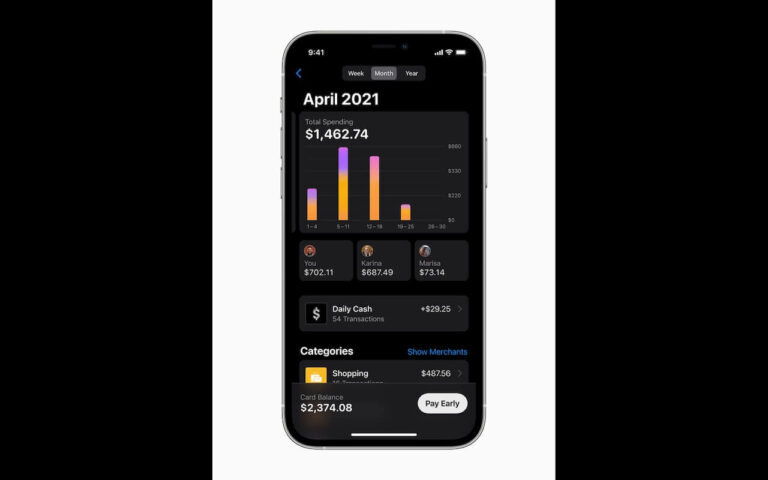
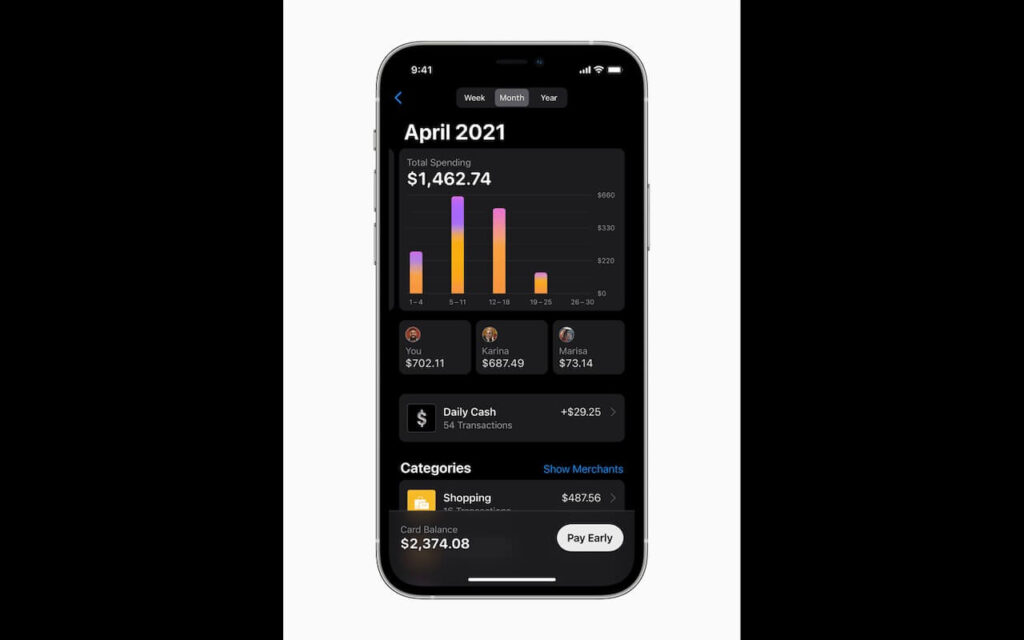
The service, which began as Apple Pay, will expand to offer a credit service in the United States in the second half of May.
Apple Card Family - similar to the Family Sharing feature - Apple says, "allows two people to co-own an Apple Card," which is expected to allow two people to pool their credit lines "while building their credit history together.
However, the new features of the credit grants Goldman Sachs allow the integration of other family members over the age of 13 to establish "smart and safe financial habits".
"We designed Apple Card Family because we saw an opportunity to reinvent the way spouses, partners and the people you trust most share credit cards and build credit history together. There has been a lack of transparency and consumer understanding of how credit scores are calculated when there are two users of the same credit card, with the primary account holder receiving the benefit of building a strong credit history while the other does not," said Jennifer Bailey, vice president of Apple Pay. "Apple Card Family allows people to build their credit history together equally."
Just this Sunday, the Oakland Police Department responded to a call at 10:16 a.m. for a shooting inside a residence in the 3300 block of Adeline Street, where officers found a man with gunshot wounds who, despite first responders' attention, died of his gunshot wounds.
Police are already investigating the incident and are in the process of notifying the victim's next of kin.
The fateful incident adds to a series of events that seem to give no respite. Given its pace and lethality, it seems that gun violence is becoming a pandemic for which there is no cure in sight.
Yesterday, Antioch police were reporting that a woman was in stable condition after a passenger accidentally shot her in her car.
The victim, who was in the driver's seat of a car parked at Antioch High School, was able to get the attention of an officer and explain that, minutes earlier, an unknown person had robbed him and shot him; however, the officer determined that the person who had pulled the gun was an acquaintance of the victim, who had accidentally detonated a handgun.
Police said the woman was shot while driving north on L Street near William Reed Drive by one of two men in the car, an 18-year-old and a 22-year-old, who got out of the vehicle and ran.
Another Antioch officer found both men at the intersection of L and W. 10th streets. One had a handgun, and a police dog found a second handgun nearby that is believed to have been fired in the shooting. Both men were arrested on suspicion of unlawful possession of firearms.
In the same area, police are searching for suspects after a 16-year-old boy was shot and killed Saturday night, April 17, at a home in Antioch.
The shooting occurred shortly after 6 p.m. at a home in the 4500 block of Shannondale Drive, a neighborhood near Antioch Water Park.
According to the local police department, when officers arrived at the scene, they were assaulted by several people who were at the scene as they attempted to reach the victim.
When the officers arrived at the garage, where the victim was found with multiple gunshot wounds, it was too late, as the young man had already died.
Officers said two suspects entered the garage and at least one of them began shooting at the victim. According to reports, the pair, whose identities are still unknown, left the scene on foot.
In San Jose the same Saturday morning, police responded to a shooting that left one person wounded.
The victim, who suffered injuries that were not considered life-threatening, was located in the area of Cottle Road and State Highway 85, according to the San Jose Police Department.
Just one day earlier, on Friday night, April 16, in the same city, San Jose police responded to two incidents involving gunfire.
The first shooting occurred at 11:14 p.m. in the 100 block of North 6th Street. At the scene, two adult males were wounded, one of them with life-threatening gunshot wounds.
The second incident was reported at 11:50 p.m. in the 3100 block of Silver Creek.
Add to that a shooting that sent two people to the hospital on Thursday, April 15, this time in Vallejo.
Vallejo Police Department officers responded that day at 5:30 p.m. to a shooting call in the area of Kentucky and Napa streets, authorities said.
At the scene, agents located two men alive with gunshot wounds, so they were taken to the hospital, where although they were in serious condition, they were reported stable.
That same day, but in San Francisco, officers from the local Police Department responded to a shooting call, which occurred around 6:40 p.m. in the Crocker-Amazon neighborhood.
The authority detailed that the victim was a 36-year-old man, who was sitting in his vehicle when a bullet grazed him. The victim was taken to a hospital with injuries that are not considered life-threatening, according to police.
Police were unable to arrest the shooter, who was described as a man in his 20s who was on foot.
The phone number for the San Francisco Police Department is (415) 837-7395. The phone number for the San Jose Police Department is (408) 277-5339.
These shootings occurred on just one weekend. It is now "normal" for residents to open a newspaper and learn of a gun incident almost daily. The same is true in cities across the country, where the pandemic of gun violence continues unabated.
As of Monday, April 19, 12,784 deaths by firearms were recorded in the country, according to the Armed Violence Archive.
The organization detailed that of that number of victims, 5,590 were for murder or without the intention of doing so, while 7,194 were due to suicide.
According to the figures detailed on their website, the number of mass shootings has been 153, while 11 mass murders have been recorded.
In just the first four months of the year, armed violence in the country has resulted in the deaths of 91 children and left another 193 injured, aged 0 to 11 years old.
Meanwhile, in the case of those aged 12 to 17, the figures reveal that 326 died from gunshot wounds, and 788 more were wounded by a firearm.
Notably, in the face of a rising tide of gun incidents in the country, President Joseph Biden will announce his first limited actions on gun control Thursday, according to a senior administration official.
According to previous statements by the U.S. president, he will order his administration to tighten restrictions on so-called ghost weapons and stabilizer mounts that allow weapons to be used more accurately.
These actions are in line with Biden's pledges to take immediate "common sense" steps to seek to curb the rising shootings.
In addition, a gun control advocate has been proposed to head the Bureau of Alcohol, Tobacco, Firearms and Explosives (ATF).
It has been more than a year since the World Health Organization declared a pandemic for COVID-19, a disease that has taken millions of people from a loved one. In the face of so much pain, fear and worry, it is almost instinctive to ask those around us or those we see again, "How do you feel?" because after so much, mental health will be the priority to move forward to a "new normal".
Concentrating on negative thoughts and emotions can make coping even more difficult, because COVID-19 is changing everyone's daily life.
For many, it means adjusting to unexpected changes in their daily routines, such as school, work, social or family life, and for others, it can be even more challenging when it involves having to put aside an important event, dealing with financial issues, pressures or coping with the loss of a loved one.
"Adjusting to these new realities and the uncertainties of the future can generate strong emotions in both adults and children that can sometimes be overwhelming. Nearly half of today's adults in the U.S. are experiencing increased distress," San Mateo County said through the Health Department's website.
Therefore, taking care of mental health, as well as physical health, is an important aspect of maintaining the overall well-being of all residents, he says.
But what can you do?
In the face of feelings like anxiety, stress, worry, and sadness, fortunately, there are things you can do to maintain your mental health and avoid harmful coping behaviors, such as substance use.
Healthy ways include practicing self-care, staying in touch, and asking for help when needed.
In that vein, San Mateo County is helping young residents stay well during this time through its "Crushing the Curve" program, a campaign designed to educate teens - and their parents or guardians - about how to stay healthy, mentally and physically, through the website crushingthecurve.me.
Talk to someone
The first thing you should know is that you are not alone. So, if you or someone you know would like immediate emotional support, you can call one of the following confidential, toll-free crisis hotlines 24 hours a day, 7 days a week.
National Suicide Prevention Lifeline: English (800) 273-8255. Spanish-speaking: (888) 628-9454. Deaf and hard of hearing: (800) 799-4889.
Chat with Lifeline at suicidepreventionlifeline.org
San Mateo County Crisis Hotline -and Drug and Alcohol Hotline-: StarVista (650) 579-0350. Crisis Text Line Send BAY to 741741
Veterans Crisis Line: Call (800) 273-8255 or text 838-255, or chat at www.veteranscrisisline.net.
Also, call the disaster hotline at (800) 985-5990, text TALKSWITHUS to 66746 or log on to www.samhsa.gov/find-help/disaster-distress-helpline.
For LGBTTTIQ+ youth, dial TrevorLifeline at (866) 488-7386 or text START to 678-678, or chat at www.thetrevorproject.org.
National Domestic Violence Hotline, (800) 799-7233 (SAFE), in Spanish at 1-800-787-3224; chat (Accessible in over 200 languages) at www.thehotline.org.
If you are experiencing a psychiatric emergency, you can call or text 9-1-1, or go to the nearest hospital emergency room if you can get there safely.
Find a mental health and substance use treatment service
If you are a San Mateo County resident with Medi-Cal or are uninsured, you can call the San Mateo County Behavioral Health and Recovery Services Access Call Center at (800) 686-0101, for people who are deaf or hard of hearing, dial 711 or visit www.smchealth.org/bhrsservices.
And if you have a health plan through your employer or have private health insurance, call the number on your health plan membership card to find a provider.
Remember that by being well yourself, you will be able to help others to get through these times when we need each other. You are not alone.
Cases of COVID-19 are declining for the first time since the World Health Organization declared a pandemic on March 11 of last year, when the first wave of cases of SARS-CoV-2, the new coronavirus that originated in a market in the central Chinese city of Wuhan, China, was reported.
Since last year, federal and local health officials have been calling for people to stay home to avoid catching or transmitting the coronavirus.
Suddenly, people began to move their daily lives to the comfort of their homes, taking online courses and classes, watching movies without leaving the house and minimizing meetings with people outside the home; additionally, companies did what we were always told could not be done: work remotely.
In the case of technology companies that offer digital services, like most of Silicon Valley, they integrated, without much inconvenience, their work life to their home life in a matter of weeks regardless of the complexity of their activities.
For example, in the case of Pixar Animation Studios, the now Oscar-nominated animated film had to be completed, Soul and debuting in the service of video streaming in real time -streaming- given the closure of cinema complexes around the world.
Companies such as Facebook, Twitter, Square, Microsoft and Uber's corporate activities are encouraging their workers to continue telecommuting from home after the end of security measures imposed due to the COVID-19 pandemic, Insider reported.
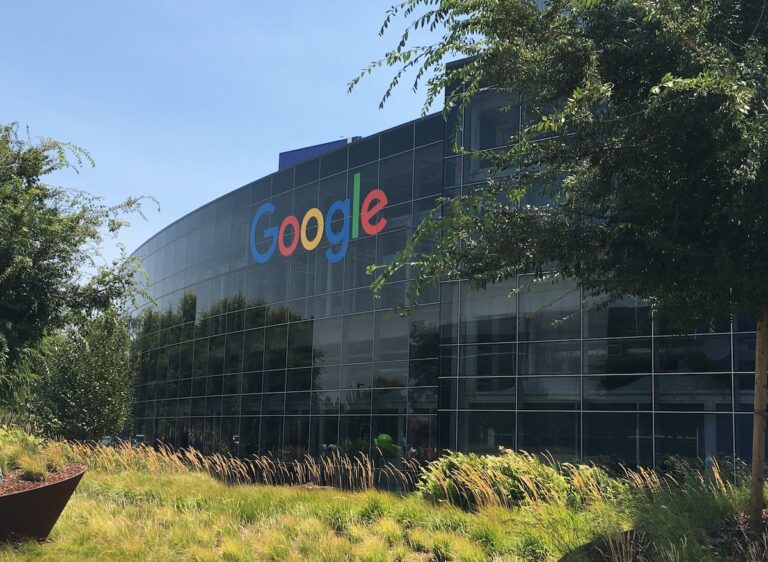
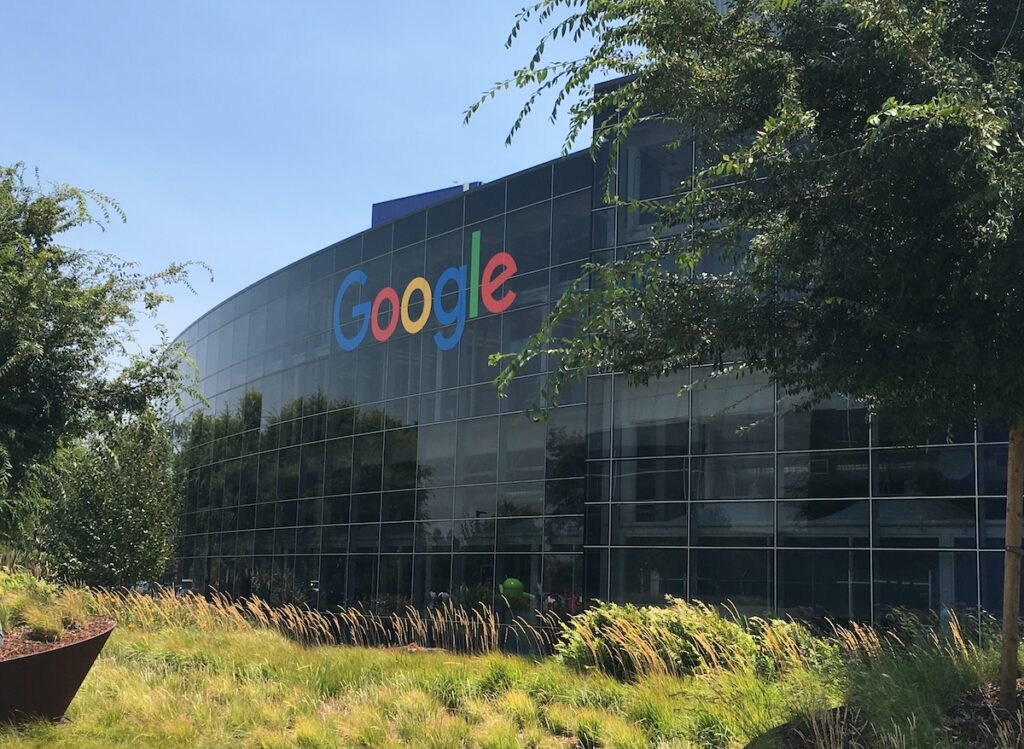
Instead, Google's offices are threatening to open and require workers to relocate as soon as possible to their facilities starting this month and, if any worker requires it, they will be able to work only 14 days remotely with advance notice.
Google anticipates that all staff will be working from headquarters no later than September 1 of this year, with the limitation of appealing the decision "in specific cases" for an additional 12 months of teleworking.
As reported by CNBC, the computer giant planned a strategy of returning to the office from December 2020 and incorporating its face-to-face activities by the end of 2021 three times a week.
However, starting this April 20, some of Google's established Seattle offices will reopen again to return to face-to-face work.
The Anderson Collection and the Cantor Arts Center will be awaiting the general public beginning Wednesday to delight the senses of all art lovers.
While the doors of these venues will reopen, people will be required to reserve timed tickets through the website. sto.stanfordtickets.org.
It should be noted that only the first floor of the Anderson Collection will be reopened initially. The second floor will remain closed during this first phase of reopening, and the entire museum will be temporarily closed for the summer beginning May 3 for building maintenance. The Anderson Collection will reopen in fall 2021.
The opening hours to attend the collections will be: Monday and Tuesday: CLOSED, while from Wednesday to Sunday the opening hours are from 11 am to 5 pm.
Special hours for members will be held from April 21 to 25 from 10 am to 11 am.
"These times are reserved exclusively for our members, however, they can also book tickets during regular hours," the institution said in a statement.
To access the spaces, a "new normal" must be followed that includes: staying home if you feel unwell, timed tickets for entry, face masks for all visitors over the age of 2, maintaining a social distance of six feet between visitors.
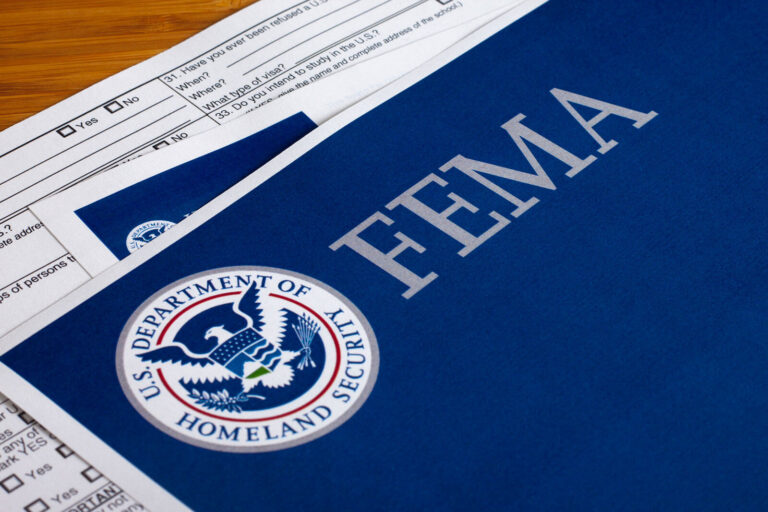
In an effort to provide some relief from the economic stress and burden the pandemic is causing, in early April, the Federal Emergency Management Agency (FEMA) began providing financial assistance to cover funeral expenses incurred after January 20, 2020, as a result of deaths related to COVID-19 disease caused by the new SARS-CoV-2 coronavirus.
"At FEMA, our mission is to help people before, during and after disasters," said the agency's acting administrator, Bob Fenton.
The official added that the COVID-19 pandemic has caused immense grief for many people. "Although we cannot change what has happened, we affirm our commitment to help with funeral and burial expenses that many families did not anticipate.
FEMA policy states that to be eligible for assistance you must meet certain criteria:
Applicant must be a U.S. citizen, non-citizen national, or qualified alien who incurred funeral expenses after January 20, 2020 as a result of a death attributed to COVID-19.
If more than one person contributed to funeral expenses, they must apply under the same application. FEMA will also consider documents provided by other persons who are not listed as applicant and co-applicant but who have incurred funeral expenses for the deceased person for whom assistance is requested.
An applicant may apply for assistance for more than one deceased person.
The death attributed to COVID-19 must have occurred in the U.S. - which includes all U.S. territories and the District of Columbia.
Assistance is limited to a maximum monetary amount of nine thousand per funeral service and up to a maximum of 35 thousand per request.
Assistance is intended to help cover funeral, burial or cremation expenses.
Applicants must also retain and compile the following documentation:
An official death certificate attributing the death to COVID-19 and showing that the death occurred in the U.S. The death certificate must state that the death "may have been caused by", "possibly as a result of" COVID-19 or symptoms similar to those generated by SARS-CoV-2, or other similar phrases indicating a high likelihood of such disease will be considered sufficient.
Funeral expense documents - receipts, funeral home contract, etc. - that include the applicant's name, the name of the deceased, the amount of funeral expenses, and the dates the funeral expenses were incurred.
Evidence of funds received from other sources to be used specifically for funeral expenses.
For more information on this assistance, interested parties can visit the COVID-19 Assistance website at FEMA.gov.
To apply for assistance, call 1-844-684-6333 (TTY 1-800-462-7585), which is open Monday through Friday, from 6:00 a.m. to 6:00 p.m.
Today, Jim Ryan, president, CEO of Sony Interactive Entertainment, announced that the store PlayStation Store - which currently offers its service for older PlayStation 3 consoles (launched in 2006), the PlayStation Vita (2011) - will continue to operate.
Upon further reflection," Ryan says, "it's clear that we made the wrong decision here," referring to the announcement of the closing of the PlayStation Store on July 2 for the PlayStation 3 and for the PlayStation Vita on August 27, which will only be effective for the PlayStation Portable.
The decision comes with criticism of Sony Interactive Entertainment, especially its executive management, for making the decision to close the PlayStation Store on those legacy platforms, which would mean that access to all video game development from the past 15 years would be lost.
Another criticism opened up the debate of planned obsolescence for current and previous generation Sony-produced consoles, after it was discovered that both as digital and physical licenses - the video games - would lack functionality once the PlayStation 4 or PlayStation 5 could no longer keep track of the time and date after the CMOS battery power runs out in the future and cannot connect to the PlayStation Store due to its eventual shutdown.
This deliberate failure on Sony's part was proven by Spawn Wave, who set about the task of disassembling a PlayStation 4 only to discover that the device "could be rendered unusable years later".
In the video, it is demonstrated that, after removing the battery that keeps the internal clock running -emulating its lack of power- from the game console; the device loses the ability to run any kind of physical software or software purchased through the PlayStation Store to emulate a scenario where the service has been interrupted as it was originally planned to do with the PlayStation 3 and PlayStation Store Vita.
After years of court battles, several environmental groups that have sought to protect Redwood City's salt ponds can finally claim victory, as the company Cargill Salt announced that it will not appeal a judge's decision, which prohibited it from building a giant real estate development in the area, which since March has been subject to the federal Clean Water Act.
The Minnesota-based private company released its decision this week, ending a nearly 12-year federal dispute.
In March of this year, the U.S. Environmental Protection Agency (EPA) withdrew an appeal made during the administration of Donald Trump for the possible expansion and development of the Cargill property, which would have meant a business of billions of dollars, at the expense of ecological loss in the place.
Thus, the land, being subject to the 1972 Clean Water Act, sharply limits what can be built in the area, a ruling that environmentalists widely applauded, as for years they pointed out that the land, which sits at sea level and was once part of San Francisco Bay before it was leveed in 1902, should be restored as tidal wetlands for fish, wildlife and recreation.
At the time, the groups also argued that any attempt to develop the land in front of the bay is impractical due to sea level rise.
"We are pleased that Cargill saw the light and has withdrawn its appeal," Megan Fluke, executive director of Green Foothills, told the Mercury News.
The activist also called on the company to sell the Redwood City salt ponds for conservation. "In the face of the climate crisis, every acre of wetlands that still have restoration must be protected.
Cargill Salt's recall announcement could mean an EPA ruling aligned with the federal court that salt ponds are part of U.S. waters, which would mean they are protected by the Clean Water Act.
In this way, the salt ponds - which are at sea level and were part of the bay before it was enclosed by a dike in 1902 - could be converted into tidal wetlands and returned to their natural state.
According to the Mercury News, Cargill spokesman David Smith said in a written statement that salt harvesting operations at the site will continue while the company determines next steps as it currently evaporates water from the 1,365-acre property in "crystallization beds" to make salt for industrial uses.
Smith said the withdrawal is part of the company's goals, which, he said, "remain to protect environmental resources and to work with our Bay Area neighbors to study future uses of the saltworks site."
One of the options for the salinera, is to sell the land to the federal or state government for restoration, however, will have to wait for the next step of the subsidiary belonging to Cargill, the largest U.S. corporation that remains unlisted on the stock exchange.
Notably, in 2003, Cargill sold 16,500 acres of its South Bay salt ponds to the public for $100 million, launching one of the largest wetland restoration efforts ever attempted in the United States.
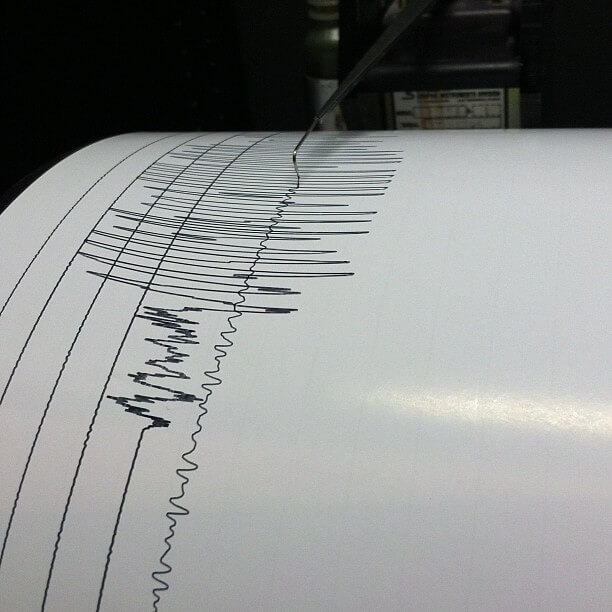
San Mateo County leaders urged residents to be prepared for natural disasters such as earthquakes as they commemorate the anniversary of the Great Earthquake of 1906 on Sunday.
"Although we are emerging from the effects of COVID-19 and the risk of another dangerous fire season caused by the drought, there is an ongoing risk of a major earthquake," said Dan Belville, director of the San Mateo County Office of Emergency Services (OES).
In that sense, the official also called on residents to check their emergency supplies and take the necessary measures to be prepared for possible seismic events.
Because April is "Earthquake Prevention Month," the California Office of Emergency Services Early Warning Program (CalOES) reminded people that during an earthquake, seconds count in saving lives.
Dan Belville urged people to download the free MyShake app, which offers early warnings to users, providing seconds before the quake strikes. "It's one of the easiest and most useful actions residents can take in the face of such natural disasters," Bellville said.
"Those precious seconds give users a better opportunity to duck, cover and hold on - cover and hold on if they use a wheelchair," the authority said in a statement.
Earthquake Warning California, the nation's first publicly available statewide warning system, is available on the MyShake application.
Also, wireless emergency alerts (WEAs), which are text messages the U.S. government issues during emergency situations, including presidential emergencies, imminent threats - fire, earthquake, flood, etc. - and AMBER alerts.
"When an earthquake warning is issued from any of these sources, people should quickly take protective measures to keep themselves safe, such as dropping to the ground, covering their heads with their arms and holding their necks with both hands until the shaking stops. Do not stand in doorways or near glass windows," they said.
In that regard, they noted that San Mateo residents should also sign up for county alerts that, while they will not provide early warning of impending tremors, will provide critical instructions in response.
A little more than a year after San Mateo County Public Safety Communications operators moved to the new Regional Operations Center in Redwood City, the number of 9-1-1 calls per day has reached 800 calls, 200 more than the call center received one day prior to the COVID-19 pandemic.
This was reported by the San Mateo County Administrator's office, which detailed in a statement that, as of March 16, 2020, the volume of calls for the operators of the emergency number increased significantly.
However, he noted that there are fewer calls about where to get tested for COVID-19 and which businesses can stay open during the pandemic; instead, there are more about vaccine questions, mental health crises and the need for general medical assistance, especially since there are more people on the road since the state of California lifted its stay-at-home order on Jan. 25, 2021.
In that regard, operators noted that resources such as the 2-1-1 call center, www.smcgov.org, social media postings and public service announcements continue to make a difference in decreasing the number of calls to the center.
"Protocol within the call center has also remained ongoing over the past year. Increased cleanliness, use of masks, temperature measurement and rearrangement of desks to allow for social distancing continues to keep everyone healthy," the administrator said in a statement.
Dispatchers also reported that the time spent on each call remains about the same from last year due to the COVID-19 screening protocol that was first implemented by the call center on February 6, 2020 to ask callers about recent travel and flu-like symptoms.
They also detailed that the call volume was particularly high last summer, not only to air quality issues and the fires in South County, but after the May 25, 2020, death of George Floyd in Minneapolis, which sparked protests across the United States, including the Peninsula.
And when San Mateo County imposed a nighttime curfew on June 2 to help prevent looting and civil unrest by profiteers, the call center answered 1,888 calls in just two days.
"Last year, it was a very challenging year both personally and professionally for our operators. Despite the workload and personal difficulties some experienced due to COVID-19 with their own families, they showed up every day to serve others, and we couldn't be more proud of our team's resilience and flexibility," said Natasha Claire-Espino, interim director of communications for Public Safety.
"They are extraordinary people. We survived 2020, which presented many historic challenges, and as first responders, we are ready to take on 2021 no matter what comes our way - we are here for San Mateo County," he added.
Therefore, the San Mateo County Board of Supervisors presented a proclamation at its April 6 meeting designating April 11-17 as Public Safety Operators Week as part of National Public Safety Telecommunications Week.