


Monday, December 22, 2025
Home Blog Page 412

Strong winds start forest fires in San Mateo

Peninsula 360 Press editorial office

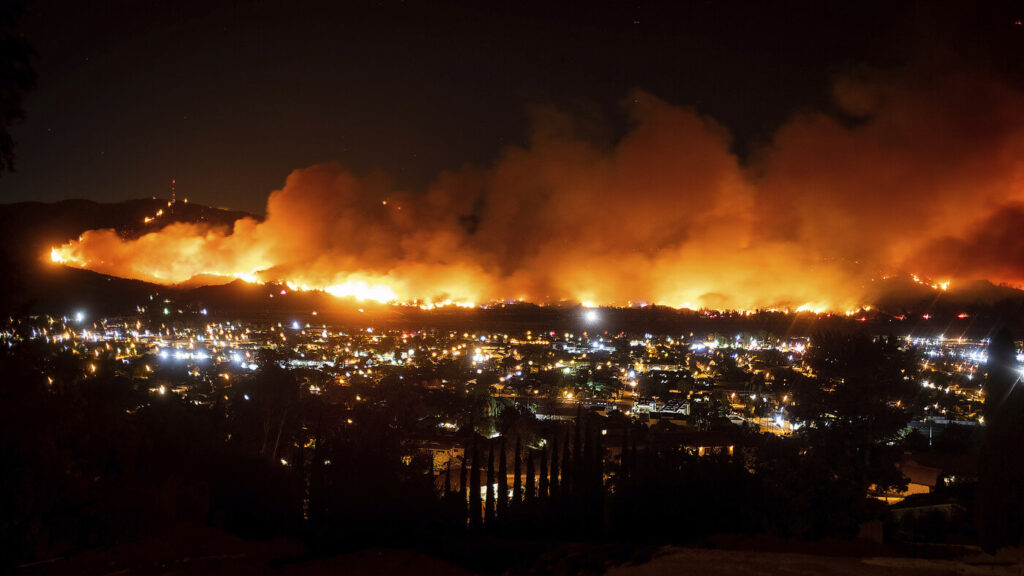
Southern San Mateo County has been affected by wildfires caused by high winds in different parts of the Bay Area, officials reported.

According to the California Department of Forestry and Fire Protection -CAL FIRE-, until noon, the 10-acre fire in North Butane had not been controlled at all, however, it does not threaten any structure.

While the 20-acre fire, reported in China Grade Road and Foxglove Lane, northwest Boulder Creek in Santa Cruz County, is contained at 50 percent.

The fire department that covers San Mateo and Santa Cruz counties has received several fire alarms in the last 12 hours, when the strongest winds began to be registered.

According to the National Weather Service, winds are expected to begin to gradually ease off from 6:00 pm, but so far they continue to wreak havoc in the Bay Area.

So far, strong winds have caused power lines to fail and branches to fall.

Mexican Consulate in SF calls for speculation and calls for COVID-19 vaccine

To Pamela Cruz. Peninsula 360 Press

After the Latino community is one of the most affected in the U.S. by COVID-19, it is extremely important that there is no room for speculation and that the vaccine against the virus that produces it is chosen, because only in this way can the disease be controlled and the deaths that are registered today be stopped.

This was pointed out by the director of the Latino Center of Excellence, Dr. Alicia Fernandez, who highlighted that the COVID-19 vaccine is very safe, reaching up to 95 percent effectiveness against the virus, and very few people have serious allergic reactions to such immunization.

"COVID-19 vaccine, no Covid, not possible. It contains only a small piece of the instructions, and these never mix with the part of the cell that has the human instructions. You can't bring in genetic material and mix it with human genetic material," he said.

During a Facebook briefing held today by the Mexican Consulate in San Francisco, the also medical professor said that vaccines, so far available, such as Pfizer and Moderna, "protect very well.

"In the case of the Pfizer vaccine, a study was done with 42,000 people, of which 21,000 were given the vaccine and the remaining were given a placebo, that is, a fake vaccine containing only water, among those who received the vaccine, there were eight cases of COVID-19, while those who received the placebo had 162 positive cases. That's 95 percent effectiveness -- these vaccines protect very well," he said.

Although, he detailed, there are short-term adverse effects from the vaccines, these are only: arm pain on the first application, while for the second dose there may be headache, fatigue, and only 10 percent have fever "... in no case did people have to be hospitalized and all symptoms disappeared by the third or fourth day.

In cases of severe allergic reaction, he reported that after 12 million people have been vaccinated, only 29 cases of such reactions have occurred, and they have been given medication.

"We know that the vaccine works well for people over 65, in both women and men, in everyone over 16, and for all races, including people with obesity, diabetes and HIV," she said.

On the other hand, he said, "the decision - to get the vaccine - is very particular, but I suggest you think of it this way: you have to compare the fears of the side effects of the vaccine to the risks of getting COVID-19.

However, he said, "many people who get COVID-19 have no symptoms, and there have been 400,000 deaths in the U.S. from SARS-CoV-2, so I recommend all my patients get the vaccine.

In that sense, he specified that so far there is no contraindication for the COVID-19 vaccine, only for those who have presented a severe allergic reaction in their first dose, it is recommended not to apply a second one.

The specialist added that, despite having been vaccinated, it is necessary to continue with safety measures to prevent the spread of the virus, such as the use of the mask, social distancing, constant hand washing and not going to crowded places.

Well, he stressed, "until there are enough people vaccinated, the level of virus that is circulating will drop, and then we will finally be able to take off all the masks. But if you are vaccinated you can, say, join your family, because you are protected.

Fernandez reminded the population that vaccines are free and accessible to everyone, regardless of their immigration status, however, vaccination protocols depend heavily on each state and county, so it is important to keep informed of every step taken by the location where one is living.

In some parts of the Bay Area vaccinations are already available for those 65 years and older, however they are only available to those who have health insurance or health care providers, so call those who have such services to find out how they can get immunized.

For those who don't count such services, he said, it is not yet known when the vaccines will be available, since priority has been given at this time to health workers, such as those working on long-term stays, and then priority will be given depending on age and occupation, with those working in essential industries being the first to receive their doses.

For its part, the Consul General of San Francisco, Remedios Gomez, reported that the Consulate of Mexico will remain alert to the various health authorities, to communicate in a timely manner to Mexicans living in the area, on how, when and where they can go to receive their vaccination in a timely manner.

Great or false hope? Residence for Essential Undocumented Workers on Biden's Agenda

Anthony Advincula. Ethnic Media Services [EMS].

New York, USA - One Monday, Maribel Lapuz woke up at 4:30 in the morning. The 46-year-old immigrant from the Philippines braved the sub-zero weather and took the train from Jersey City, New Jersey, to a nursing home in Brooklyn, New York, where she has worked six days a week as a caregiver since last February.

Thousands of miles away, Mario Ramirez has been driving from one house to another since 5 a.m. He does construction and plumbing work in Marietta, Georgia. Ramirez, a 52-year-old Mexican immigrant, has never missed a day of work since the beginning of the pandemic.

"When the Trump administration sent the $1,200 stimulus checks to the workers, I didn't receive them; they ignored me," Lapuz said,

"Someone like me in this country is not eligible for unemployment," Ramirez said. "That means I can't stop working to support my family, despite the risk of COVID-19.

Your situation may change soon.

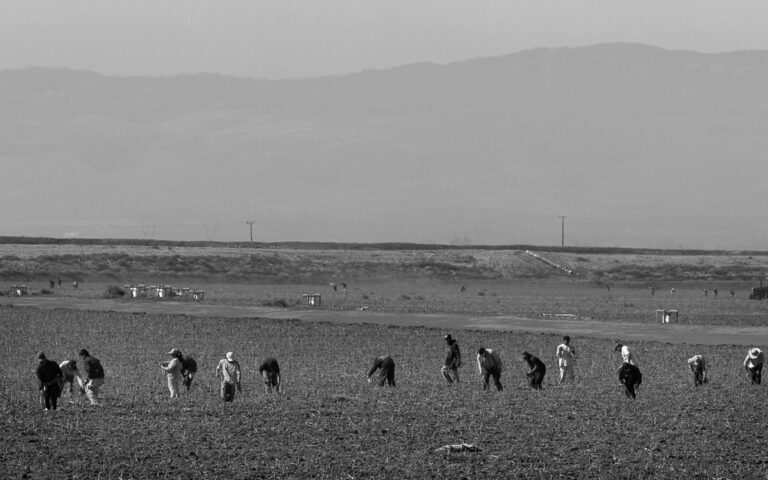
Considered "essential workers" by the federal government, Lapuz and Ramirez are among the 5 million undocumented immigrants who can be rewarded with citizenship, and it could happen during the first days of the Biden-Harris administration.

Indispensable to American life and the economy, essential undocumented workers are now at the center of an immigration plan being drafted by Congressional Democrats and immigrant rights advocates, and being promoted extensively by the incoming administration.

The new immigration legislation - found in the $1.9 billion COVID support bill Biden unveiled last week - will include granting citizenship to essential undocumented workers and reducing the waiting time for U.S. citizenship.

"Essential workers, many of whom are undocumented immigrants, are unsung American heroes, risking their lives during this deadly pandemic to care for our communities and ensure that food is on the table," said Rep. Joaquin Castro (D-Texas) at a recent virtual press conference. "I am working on legislation to immediately protect essential workers and their families from deportation and provide them with a fast track to citizenship.

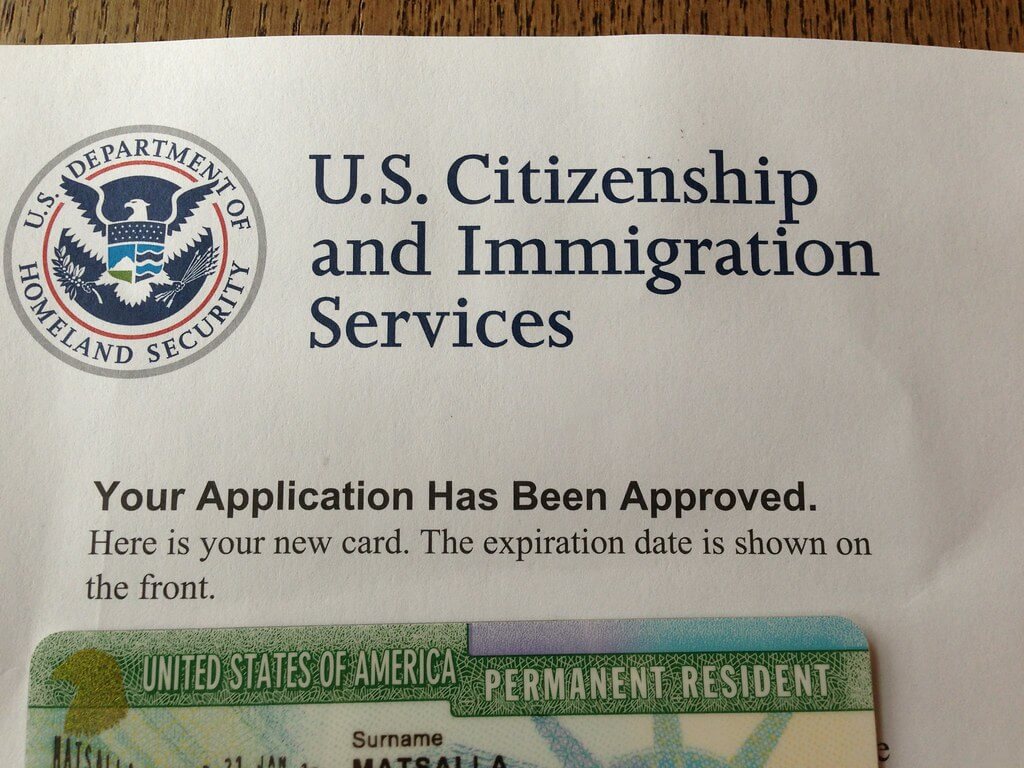
Vice President-elect Kamala Harris spoke publicly on the subject. She spoke last week with Spanish-language television station Univision, and said the incoming administration will automatically grant green cards not only to essential undocumented workers, but also to DACA (Deferred Action for Children) beneficiaries, as well as to holders of Temporary Protected Status (TPS), and will shorten the time it takes to become a U.S. citizen by five years.

"The incoming administration has a golden opportunity to set things right and offer essential immigrant workers and their families relief from this pandemic, relief from persecution for their immigrant status and relief from invisibility," Angelica Salas, executive director of the Coalition for Humane Immigration Rights, said in a press call organized by America's Voice.

The Republican rollback has already begun. Lora Ries, a former interim chief of staff at the Department of Homeland Security, told The Los Angeles Times that the legislation will create more problems.

"Such advantages will attract more people to enter the United States illegally to await their eventual residency, undermining border security," Ries said.

This week, more than 6,000 Honduran migrants and asylum seekers have made their way north through Guatemala and Mexico. This caravan could represent a resurgence of such efforts, as Biden has promised to reform President Trump's harsh immigration policies.

Some immigration advocates and academics also question whether the next immigration plan has the right focus. If the Biden-Harris administration proposes to extend legalization opportunities to 5 million essential undocumented workers, what about the other 8 million undocumented immigrants?

"Millions of immigrant workers are on the front lines, risking their lives to keep our country going. The depth of this crisis requires urgent action," said SEIU President Mary Kay Henry in America's Voice. "We cannot defeat the virus when millions of essential undocumented workers are left out; providing [a fast track to citizenship] is the only way we will be able to deal with the pandemic.

Alex Padilla, the California secretary of state who will replace Vice President-elect Kamala Harris in the U.S. Senate, defended the immigration plan for undocumented essential workers.

"It's not that we're not going to deal with other undocumented immigrants," Padilla said in the call with reporters. "Because of the urgency of COVID's assistance, it's better to act sooner rather than later.

Padilla referred to the immigration experience of his own parents, who came to California from Mexico in the 1960s. They never had a formal education, he said, and never had a day off; his father worked as a cook and his mother cleaned houses.

"But we were told that if we work hard and do well in school, we can do what we want to do. That's the American dream," he added. "After four years of [Trump's] constant attack on immigrant communities, the Biden-Harris administration will help us change things. I hope Congress and our nation will recognize that these [essential undocumented] immigrants stepped forward when America needed them most and put themselves in harm's way during this deadly pandemic.

"I was thrilled when I heard this great news," said Lapuz in Jersey City, New Jersey. "But I can't stop worrying that they're sending another false hope again. I've been through this before."

"My family has been waiting for this moment. We risked our lives and helped this country survive the pandemic," Ramirez said. "We must not continue to stay in the shadows. All my children were born here, this is our home.

COVID-19: vaccine is completely safe, experts

Pamela Cruz. Peninsula 360 Press [P360P].

Although the COVID-19 vaccines were approved for emergency distribution by the Food and Drug Administration (FDA) last December, they are completely safe and necessary, guaranteeing up to 95 percent protection after two doses against the SARS-CoV-2 virus, which has so far caused, at least in the United States, over 23 million positive cases and over 385,000 deaths.

This was argued by physicians and specialists William Shaffner and Robert M. Wachter, who during the panel "Challenges in Vaccine Distribution", organized by Ethnic Media ServicesThey stressed that today, more than ever, it is necessary to trust the vaccine, use it and continue to maintain the necessary care to prevent the spread of the virus.

However, distribution of the vaccine in various parts of the country has been slow, with only five million doses from Pfizer-BioNTech and Moderna laboratories being distributed in the United States so far, due to "bottlenecks at both the national and local levels," said Dr. William Shaffner.

In that regard, he noted that residents in hundreds of cities are unsure of when the vaccine will arrive. "Sometimes it comes a little late, sometimes it comes with fewer doses than anticipated, and sometimes the Minnesota vaccine comes to Tennessee," he said.

"Frankly, some of the places - where the vaccine is distributed - thought this was just going to be another flu vaccination campaign. They didn't prepare enough," said the also professor of preventive medicine at the Department of Health Policy in Nashville, Tenn.

Added to this, he said, are the logistical challenges, since in the case of the Pfizer vaccine, super-coolers are required that can keep doses at extremely cold temperatures and thus the vaccine maintains its stability and good condition.

Dr. Robert M. Watcher is not surprised that "we're not doing very well" at vaccination, because he said, "the only parts we've liked are the vaccine discovery and the science. We don't seem to have the logistics, the politics, the society and all the other components that need to come together.

However, they agreed that it is extremely necessary and advisable to be vaccinated when the time comes and when it is time, because there is, so far, no other way to fight against the virus that continues to cause more deaths every day.

There is a whole series of videos, texts and messages on the Internet that generate bad information against vaccines, many of them even paranoid and conspiratorial, which only cause uncertainty in people and thus advance ignorance and people continue to die.

"There's a lot of nonsense on the Internet that causes concern," Watcher said, so he and his colleagues have taken it upon themselves to make videos, texts and messages that can answer all the questions people might have about the COVID-19 vaccine and thereby eliminate the fear of immunization against the virus.

"The fact that they're choosing not to get vaccinated is absolutely horrifying, because we know that vaccines are incredibly effective and now we know that they're very, very, very safe," he said.

For his part, Dr. Shaffner said and made clear that those women who seek to become pregnant, are pregnant or breastfeeding, can, without fear, get the vaccine, because it does not transmit or harm the fetus or the baby that consumes the milk.

"The vaccine is safe, the American College of Obstetricians and Gynecologists strongly supports it, and we can be confident that it is a good and appropriate thing. These women need to be reassured because, as I said earlier, there are all sorts of things on social networks that could discourage them from doing that -- getting vaccinated -- anytime soon," she said.

In that sense, he added that RNA vaccines do not approach or alter "anything in the human DNA of our cells, neither mothers nor babies. So this is a safe process for all of them," she said.

He said the COVID-19 vaccine was essentially designed to ensure that someone could receive a second dose three weeks after the first immunization in the case of Pfizer-BioNTech and four weeks in the case of Moderna.

However, it is necessary that the first doses of COVID-19 vaccine are applied because they protect the immunized person by about 45 or 50 percent, while for the second dose, the effectiveness reaches up to 95 percent.

The specialist said that, despite having the first dose of the vaccine, it is necessary to continue with the care that has made a difference in the transmission of the virus so far: washing hands constantly, wearing a mask, keeping a distance of at least two meters from other people outside the home and not going to crowded places.

Dr. Sheffner explained that, according to one study, a substantial proportion of those vaccinated are no longer able to transmit, "but this is preliminary data and we know that there is some potential for transmission. So, until full data come in, if you are not vaccinated for the first or second dose, please continue to wear a mask and practice social distancing.

The fact is that misinformation about VIDOC-19 disease, treatment and vaccines has come from the very top, as in the case of President Donald Trump, because his administration has not handled the issue well, which has helped the virus to spread. 

"I think that when there is a lack of national orientation, there is too much room for maneuver," Robert Wachter said.

He added that there is a well-intentioned effort to try to be very careful about which groups receive vaccines first and when, in addition to paying attention to equity and ensuring that groups that appear to have the greatest number of victims of the pandemic, particularly communities of color, are prioritized.

He explained that while it is required that the most vulnerable groups be vaccinated, the fact that Walgreens or CVS helps implement the vaccine doses, it is not certain that the people who are immunized actually belong to those groups.

In response, he said, "the answer is always 'we'll work it out,' and I think the lesson of the last 10 months in terms of COVID-19 is that 'we'll work it out' is not a good answer," he said.

He said vaccination has not been treated as the emergency it is, because people who should have been immunized and were not, are the ones who could get sick, some of whom will be treated and some of whom will die.

"Because of the value of people dying every day, we had to attack this as an absolute emergency, that's how it was with the development of the vaccine, but we've faced the distribution of the vaccine as a relatively routine process that will stumble until we find the right answer, and that clearly doesn't work very well," said the chairman of the University of California, San Francisco's Department of Medicine.

The situation could be very different as soon as Joe Biden comes to power next Wednesday, January 20, and with it comes the change of administration, he said, because from there the communication with people will be much clearer and more forceful.

"Leadership is going to be very important, and the new administration has already appointed many of the key leaders to these roles, there are a couple more coming and they are great. They are smart, they are good communicators, they are able to communicate science," Dr. Wachter said.

Robert Wachter noted that the national average for vaccine distribution in the country is about 30 or 32 percent, "that's nothing to be proud of, so the fact that we're falling behind -- California -- the national average is terrible,

She said the state health department is trying to figure out what the problem is with the poor distribution and slow application of the vaccine, a complex problem attributed to Southern California's experiencing a massive increase in SARS-CoV-2 positive cases.

"Right now and in many cases the same entities you count on to carry out large and complicated vaccination programs are also taking care of hundreds and hundreds of really sick patients. We have to do both at the same time. You can't say it right, we're too busy. We don't have the people to do the vaccination.

In this regard, he said the state must be more creative and provide the resources necessary for more and more people to be immunized, whether it be hiring doctors, nurses, dentists and pharmacists to do so.

"This is the most important problem in the world today and the faster we vaccinate people, the more lives will be saved," he said.

One idea that experts considered might work, in order to distribute the vaccines, is to address the lottery or randomization system to make the vaccination service more equitable, once those who are a priority and who suffer most from the consequences of the pandemic have been immunized.

In the case of California, they said, if vaccination continues at the current rate, it will take just over a year for everyone to be immunized, a situation that is "unacceptable.

COVID-19: Our House supports families in San Mateo due to lack of resources

Pamela Cruz. Peninsula 360 Press [P360P].

Today, thousands of families in San Mateo County are living a difficult situation due to the COVID-19 pandemic, and the lack of resources to buy food has led organizations like "Nuestra Casa" to take to the streets to help all those who need a hand.

"We are, as always, working hard for our community and we are representing 'Nuestra Casa' here, which is an organization based in East Palo Alto that is helping the community a lot, especially in these times of pandemic," he said.

During the program Hablando del Tema, broadcast every Saturday on Peninsula 360 Press, the promoter of the non-profit organization, Maritza Leal, said that during their walking tours of Redwood City, where they promote the services of "Nuestra Casa", they provide information for all those in need.

"Our food program is in collaboration with the Harvest Food Bank, and what we are doing in this time of pandemic is alleviating some of the needs of families, especially low-income Latinas," she said.

He noted that Nuestra Casa gives approximately 40 or 50 pounds of food per family. These packages include vegetables, fruits, meats, dairy.

"We are serving about 1,200 families, so if we go individual we have about 6,000 individuals to whom we are distributing food," he added.

He pointed out that Nuestra Casa will have a new location at 909 Redwood City Avenue, where every second and fourth Saturday of the month - starting in February - food will be distributed to families, no matter where they live.

"Every family can come and pick up their food, no matter what race you are, no matter what you do, we're not asking for anything more than your name, your phone number and how many people are in that family," he said.

"This food program is for all families, you don't necessarily have to live in Redwood City to come and pick up food from our organization, so everyone is welcome," he added.

Meanwhile, he noted that food service is provided every Wednesday at KIPP Excelencia at 2950 Fair Oaks Avenue in Redwood City.

"We are here as promoters helping to spread the word so that all families can benefit from coming to collect their food, especially in these programs and in these difficult times where, sometimes, many people have been left without work and there are more needs," Maritza said.

He recalled that the organization Nuestra Casa accepts volunteers, so he called on all people who seek to collaborate with the cause to contact (650) 501-1846, as well as all those who have questions about the food program or any other.

COVID-19: Latino community most affected in San Mateo

Pamela Cruz. Peninsula 360 Press [P360P].

Nearly 11 months into the VID-19 epidemic, the Latino community has become the most affected by the health, economic and social havoc left in its wake by the virus that continues to affect many across the country.

This is what Judith Guerrero, executive director of the non-profit organization "Coastside Hope" said and which, between 2019 and 2020 has supported 3,934 people in 1,576 homes in the San Mateo community with safety net services.

A large part of the assistance provided by the organization located at 99 Alhambra Avenue, El Granada, is for Latino families, a large part of which are Mexicans who face daily adversities, especially due to the pandemic.

Coastside Hope's assistance ranges from financial to food assistance, immigration, tax preparation and help with consulate appointments, document translation, or even support with online paperwork.

"We offer help in the form of financial assistance, it can be rented to pay for utilities or during the pandemic we have been a little bit more open and creative in the way that families can be helped," Judith said during the program We Vote that is broadcast every Saturday on Peninsula 360 Press.

"What we are seeing a lot is that Latino families have been the most affected in our community, who are the ones who serve and work in places like restaurants, hotels and in agriculture, and - they live - with the uncertainty of one month we are open and the next we have to be closed. It's difficult for them financially," he added.

In that sense, he stressed that when those families approach the organization, they usually already need help to cover more than one month's rent.

"They have been the most affected especially because some of them don't qualify for unemployment because of their immigration status in this country, or maybe those who qualify for unemployment don't realize they could apply," he said.

Judith Guerrero said she has heard of cases of Latino employees who have not been paid for their work for weeks, a situation, she said, that is not the first time that has happened, however, and because their employers issued them a letter, the association was able to find out what was going on and was able to help four families pay their rent.

"We have helped four families with rent because apart from being a victim of this problem, many of our families live in non-ideal situations, what I mean is they live in a house with four other families, and there are regulations and rules so you can't be kicked out of your house, but many times the people you are sharing with don't care and many of these families can become homeless without notification," she said. "The pandemic has forced us to be creative with everyone," he said. "During this time we are looking at ways to help them with what we can.

Judith added that they are already looking for ways to ensure that situations such as the lack of payment for Latino workers do not happen in other industries.

"The intention is not to have that happen to another worker, it's hard not to get paid when we're going through a pandemic. I've heard of people who may not know about our services and borrow money, and sometimes not from the people with the best intentions, but from those who are abusing - the situation.

In view of this, he called on all those who are going through a difficult situation due to the pandemic, not to have resources to pay their rent and especially to get food, to approach the organization whose website is www.coastsidehope.org.

Likewise, he made a and loved for all those people who want to serve their community, to be part of the organization's volunteering or to donate, since in these moments the support of everyone is needed to get the help to those who need it the most.

Winners of the "Ibero-American Photographer of the Year" Award POY Latam 2021

Editorial office. Peninsula 360 Press [P360P].

The competition organized by POY Latam -Pictures of the Year, Latin America- is the most prestigious competition for visual creators in Latin America. POY Latam is an organization directed by Pablo Corral Vega, Loup Langton and Kim Grinfeder.

The photographs and photo essays could be submitted in a period from 30 November to 2 January, a longer period to adapt the competition to the new normality. In addition, this year, Gael Almeida, Daniel Rodrigues, Gisela Volá, Magdalena Herrera, Mallory Benedict, and Karla Gachet served as judges and, for three days - from January 14 to 17 - reviewed each image remotely - given the pandemic by COVID-19 - and discussed its history to be the best photograph of the year.

Lalo de Almeida

Lalo de Almeida, from Brazil, won first place for the "Ibero-American Photographer of the Year" Award. His photo essay shows the process of the fires in the Brazilian Pantanal, the largest wetland on Earth.

Sarah Pabst

In Argentina, second place for the "Ibero-American Photographer of the Year" award went to German photographer Sarah Pabst. "It's a huge recognition of my work and I still can't believe it," she said in her Instagram account. "I learned a lot by listening to you these days and I want to thank you also for all the effort and hours you dedicated (...)", she added. His photographs show the coldest place on planet Earth: the Antarctic continent.

Luis Antonio Rojas

The COVID-19 pandemic, which officially began 300 days ago, has left 140,241 deaths in Mexico. For his photo essay on how the new SARS-CoV-2 coronavirus changed the daily life of Mexico, third place for the "Ibero-American Photographer of the Year" award goes to Mexican photographer Luis Antonio Rojas.

Florence Goupil

In Peru, Florence Goupil won an honorary mention in the same category. In one of her photographs, Goupil states: "How little can we offer the indigenous peoples of these ancient lands?

To learn more about the winners, you can visit the POY Latam website: http://poylatam.org/as well as his Instagram account, where you can see a broader picture of such an ambitious contest.

Google building cleared for suspicious package. It's all a scare.

To Pamela Cruz. Peninsula 360 Press. [P360P]

On Friday morning, a Google building was evicted after a suspicious package was discovered, which ultimately turned out to be harmless, the Mountain View Police Department reported on its Twitter account.

The property located in 2000 on Casey Avenue was evacuated "as a precaution" so that the package could be of an explosive nature. This would put at risk the people inside the building at that time.

The police requested help from the Santa Clara County Sheriff's Office bomb squad, who after reviewing the suspicious package, at 11:30 am determined that there was no danger, so the area was cleared.

"A preliminary investigation has revealed that the package is not dangerous. We will continue to hold the bomb squad accountable as a precaution," the Montain View police quoted in a tweet.

Former Mexican Defense Attorney Exonerated on Drug Trafficking Charges

Cristian Carlos. Peninsula 360 Press [P360P].

The former head of Mexico's National Defense Secretariat, General Salvador Cienfuegos Zepeda, was acquitted Thursday of the crimes that the U.S. Drug Enforcement Administration (DEA) charged him with for links to drug trafficking, which detained him at the airport in Los Angeles, California, on October 15, 2020.

In Mexico, the Attorney General's Office determined that it would not proceed criminally against General Cienfuegos, who would be charged by the New York court with collaborating with the Sinaloa cartel and who sentenced Joaquin Guzman Loera, "El Chapo".

This morning, Mexico's President Andres Manuel Lopez Obrador said at a press conference that although the Mexican prosecutor's office did not find elements to sentence him, according to U.S. records, a legal process will take place. And that the arbitrary fabrication of crimes will not be allowed.

Foreign Minister Marcelo Ebrard said that for the good relationship of both countries, they should trust the evidence presented by the U.S. authorities in charge of referring the former head of the headquarters to Mexico.

"On this stand I said that, for Mexico, it would be unthinkable, suicidal, to do nothingBut what the Attorney General's Office did was to summon Salvador Cienfuegos Zepeda to appear," the minister said.

Meanwhile, journalism in Mexico was convulsed by the exoneration of "El Padrino".

Dolia Estévez, a Mexican journalist, exposed:

Anabel Hernández, a woman journalist who is known in Mexico for her investigative journalism work on Mexican political figures related to drug trafficking, as well as crimes committed by the Mexican State, declared a few months ago that the Mexican Government, specifically President Andrés Manuel López Obrador, has been a victim in the outcome of Cienfuegos' exoneration.

On the other hand, Julio Astillero, a Mexican journalist, writer and lawyer pointed out what was said by Vice News reporter Keegan Hamilton, where he refers to the fact that the U.S. Department of Justice could change its mind if the Mexican government fails to proceed with the Cienfuegos case:

OCME records 699 accidental overdose deaths in San Francisco

Pamela Cruz. Peninsula 360 Press [P360P].

San Francisco reported a total of 699 deaths from accidental opioid overdoses during 2020, a record number, after a 63 percent increase from 2019, the county's Office of Forensic Medicine (OCME) reported.

The report, which runs from Jan. 1 to Dec. 31, 2020, and was released Thursday, says 82 percent of those who overdosed were men, while 18 percent were women.

In terms of race, the most affected was Caucasian, representing 48 percent of deaths, followed by people of African descent with 25 percent, Latinos, 16 percent, others, 5.0 percent, and Asians, 4.0 percent.

The report itself details that, according to the preliminary data, the ages with the highest number of incidents were 55 to 64 years old with 25 percent of total deaths; followed by 35 to 44 years old with 23 percent; 45 to 54 years old with 22 percent; 25 to 34 years old with 16 percent; 65 years old and over with 10 percent; and 15 to 24 years old with 4.0 percent.

The OCME highlights in the document that the drug that was responsible for the highest number of accidental overdoses was fentanyl, followed by methamphetamines, cocaine, heroin and medical opioids.

Experts believe the increase in overdoses may have been driven by the VID-19 epidemic, because while isolation helps stop the spread of the virus, for drug users it has increased the possibility of taking hard drugs that lead to death.

More than 20 percent of accidental overdose deaths in San Francisco were in the Tenderloin, followed by SOMA, Nob Hill and Inner Mission.

The U.S. Centers for Disease Control and Prevention (CDC) has not yet issued its report on the number of deaths in the country due to accidental opioid overdoses, but in 2019 it said that nearly 71,000 people died from such causes, much of which were due to fentanyl.