A 43-year-old man is facing hate crime charges following his arrest Monday morning on suspicion of attacking three people of Asian descent, the San Francisco Police.
The assaults occurred shortly before 8 a.m. at Polk and Clay streets, where a man told officers the suspect was following two Asian women and threw an object at them as they began to flee, striking one of them in the back, police said.
The witness said he used pepper spray on the suspect, who threatened violence against him. The suspect took a broomstick and again threatened violence against the witness, who managed to repel the assault and used pepper spray again, according to police.
The suspect then proceeded to assault a homeless man who was lying on the sidewalk, another person intervened and was attacked with the broomstick. Both were subsequently treated by medical personnel for their injuries.
Witnesses positively identified the man located by officers who matched the suspect's description, police said.
Officers arrested Michael Lopez, found in his possession methamphetamine and drug paraphernalia, police said.
Lopez is now being held in the San Francisco County Jail on suspicion of several crimes, including assault with a deadly weapon, assault and battery, aggravated hate crime, alleged possession of methamphetamine and narcotic paraphernalia.
First they came for the socialists, and I didn't say anything? because he was not a socialist. Then they came for the trade unionists, and I didn't say anything? because he was not a trade unionist. Then they came for the Jews, and I said nothing? because he was not a Jew. Then they came for me... and there was no one to say anything for me anymore.
Pastor Martin Niemöller
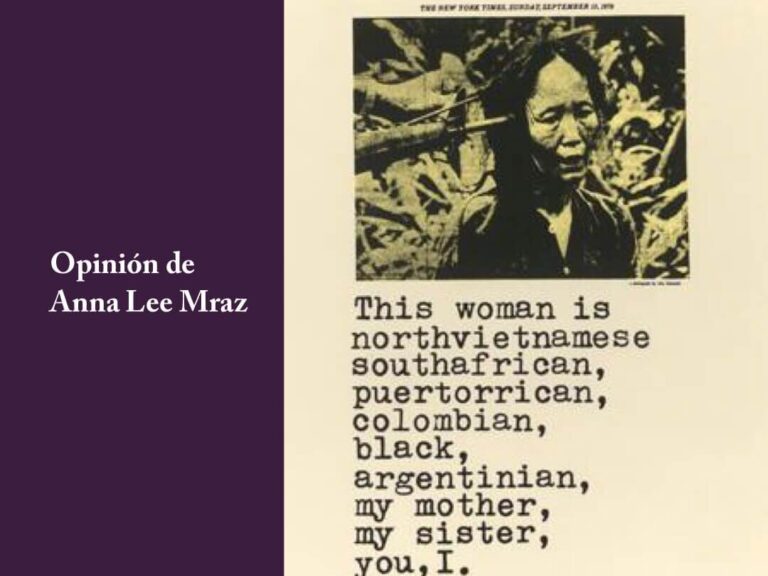
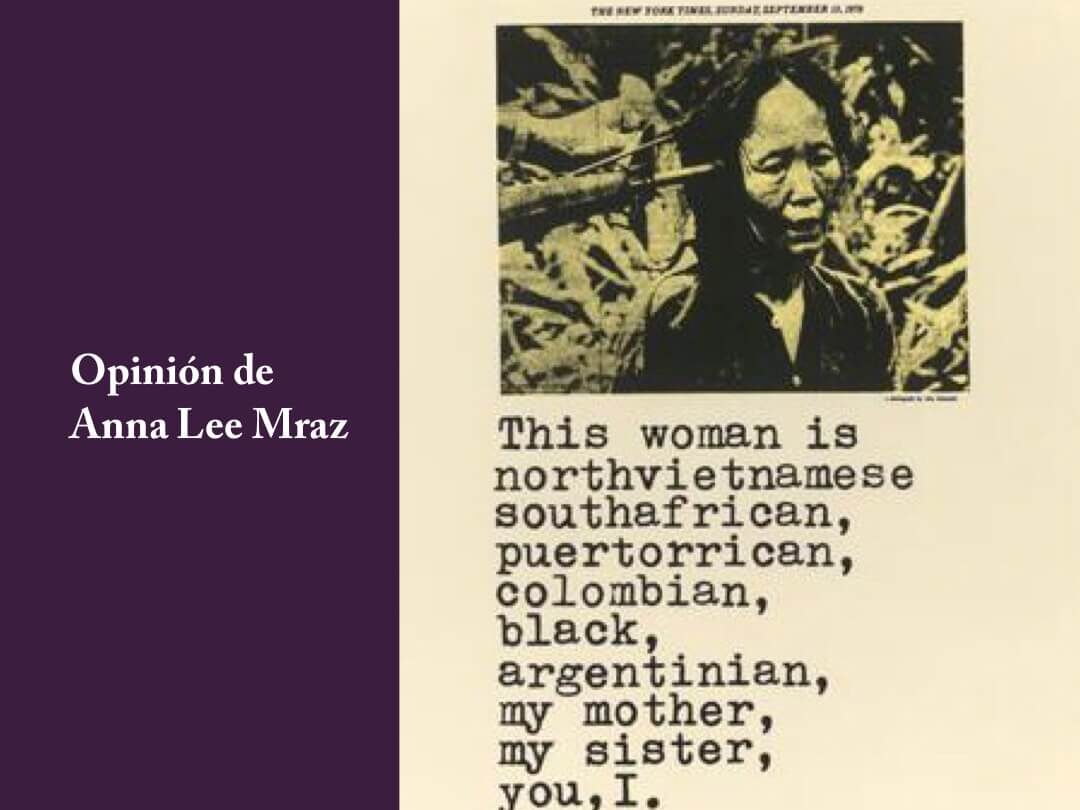
This work of art created in 1970 denounces the racial hatred against Asians that, to this day, continues to kill innocent people.
It was a long time coming. It always starts the same way: a hurtful joke, a put-down, a negative connotation. Then come the insults, the humiliation. There were warning signs. The Asian community in the United States set off alarm bells.
There was a warning about the use of the "Kung Flu", the "China Virus", the "China plague" and the attacks began.
While in 2019 there were 49 reported hate crimes against Asians in the 16 major U.S. cities; between March and December 2020 there were 2808 hate crimes reported on the Stop AAPI Hate page, a site created by the Asian American Studies department at San Francisco State University in response to the escalating attacks against Asians.
On February 27, 2021, during the walkout in protest of recent hate crimes, recounts Redwood City Councilman Jeff Gee during the March 22, 2021 council meeting, a car approached to roll down the window and yelled out F**k you against families with children marching in the street.
"He doesn't hide. It's crystal clear. The hatred and intensity directed at the group cannot be misinterpreted."
Jeff Gee, Redwood City Councilman.
The artwork in question is by Liliana Porter. This piece hung on the wall in my parents' house and always impressed me. It is especially poignant because it takes the viewer from the macro to the micro, from the generic to the personal. She is You. She is Me. She is us.
Anti-Asian racism is not new. It is the product of a historical construct that has been cemented by white American men against anyone who is different.
"Despite the important role that immigrants have played in the economy of the receiving countries, the rejection of this sector is constant in almost all migratory processes. Rejection towards this sector is a constant in almost all migratory processes. The rejection is greater against people whose ethnicity, language, religion or appearance is markedly different from the inhabitants of the place of destination".
Manuel Ortiz.
The hatred of Asians began, according to historical documents, with the arrival of Chinese laborers for the construction of the railroads that connected the Union Pacific and Central Pacific to the town of Promotory, Utah in the period from 1860 to 1869.
According to the work of Manuel Ortiz: "Once the union of the railroad stretches was finished, an ideology of rejection towards this population began to increase, mainly encouraged by the different North American power circles: legislators, big businessmen and the American Federation of Labor. They described the Chinese as depraved, vicious, bloodthirsty and inhuman. They were known as the Yellow Peril.
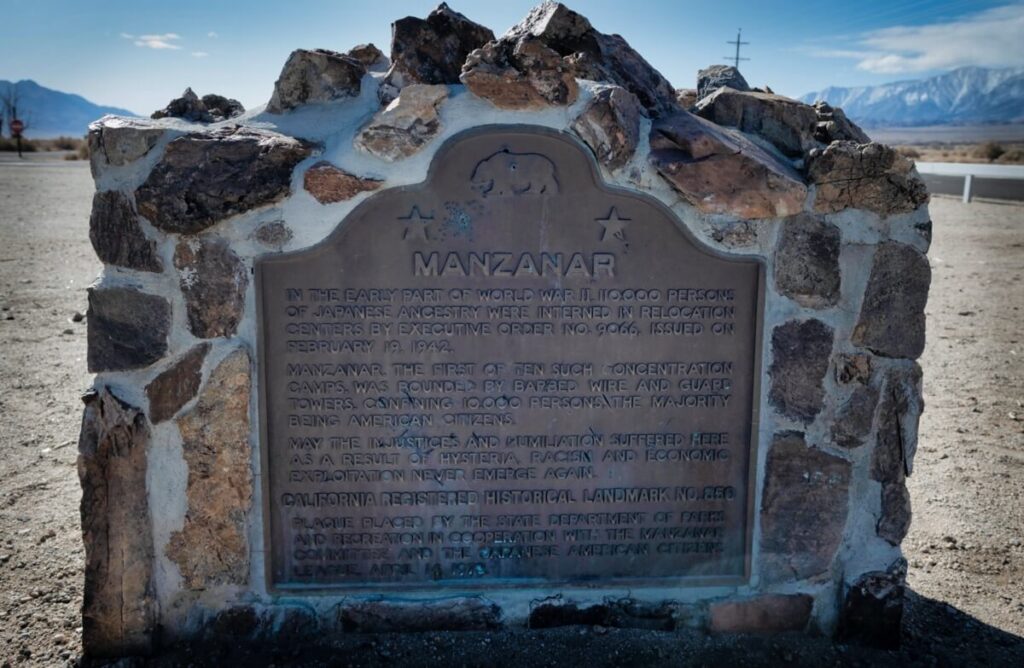
During World War II a deep anti-Japanese sentiment was catalyzed throughout the country through racist propaganda depicting the enemy as a dehumanized monster and "110,000 people of Japanese ancestry were imprisoned in concentration camps in the United States during World War II" as can be read in the article The ghost of Manzanar.
The Vietnam War was another turning point in the structuring of anti-Asian racial hatred in the United States. According to Kathleen Belew in her book Bring the War Home: The White Power Movement and Paramilitary America; Wars abroad, like racial violence at home, are recurring - arguably even defining - features of U.S. history, and Belew notes that spikes in domestic white supremacist terrorism have regularly followed the close of major military hostilities.
"In contrast to earlier racist violence, a new stream of white militancy emerged after Vietnam... This new ideology proved so effective in attracting adherents and building coalitions that it can be seen as constituting a new social movement: white power. Beyond the attitudes and positions designated by the terms "white nationalism," "white supremacy," or even "racist right," "white power" came to represent something much more specific: a radical, well-organized movement of hard-core militants on a mission.
This racial hatred spreads today through new channels - the socio-digital networks - more quickly, more effectively. A short video, a single image, a meme, a tweet is enough to generate unreasonable and inconsequential repudiation.
It is coupled with the ease of obtaining firearms in this country; so readily available and accessible to any hostile individual with despicable ideas legitimized by a racist ex-president.
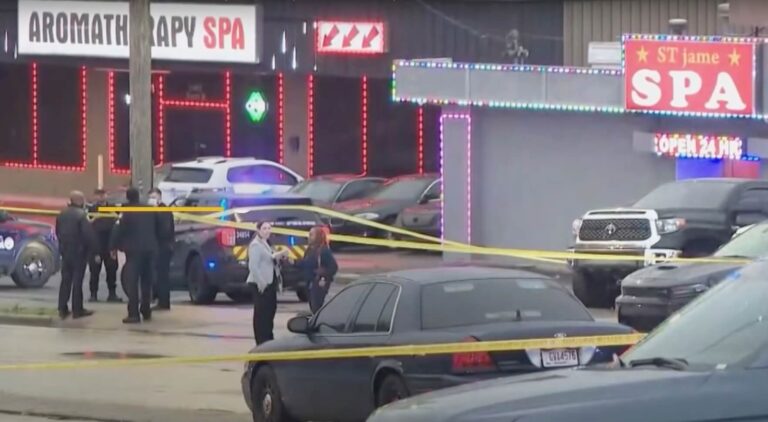
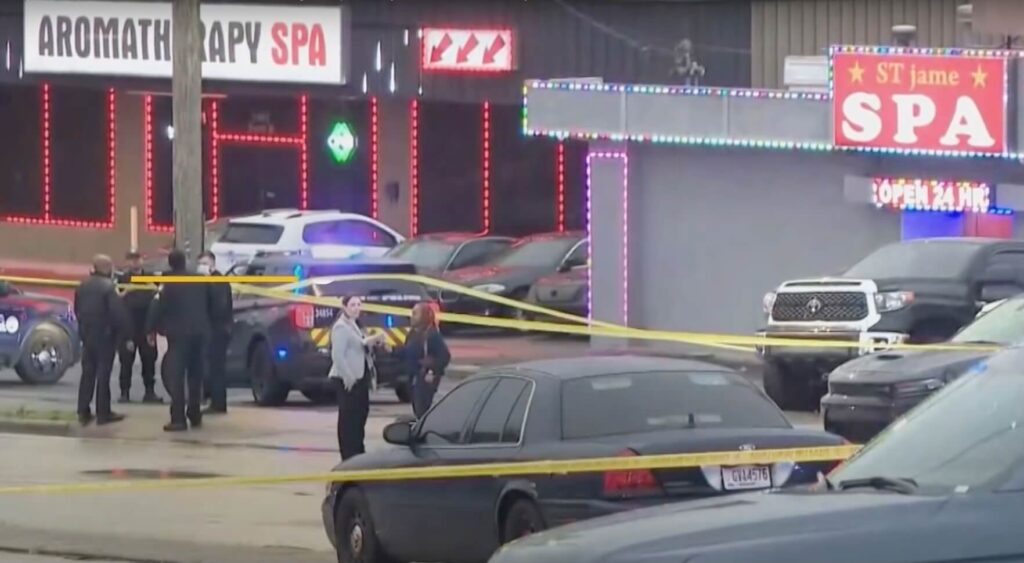
If you don't name it, you can't fight it. And here it is: last week's attacks in Atlanta where a white man cold-bloodedly murdered 8 people, 6 Asian women is a race crime, it is a hate crime, and it is a misogynistic crime. It must be punished by those who commit it and those who encourage it, and it must be made sure that it never happens again.
Gun control legislation is urgently needed in this country. Comprehensive, anti-racist, anti-misogynist and social justice education and culture must be guaranteed. I vehemently support the protests against racial hatred in the United States and this fight will not stop until it does.
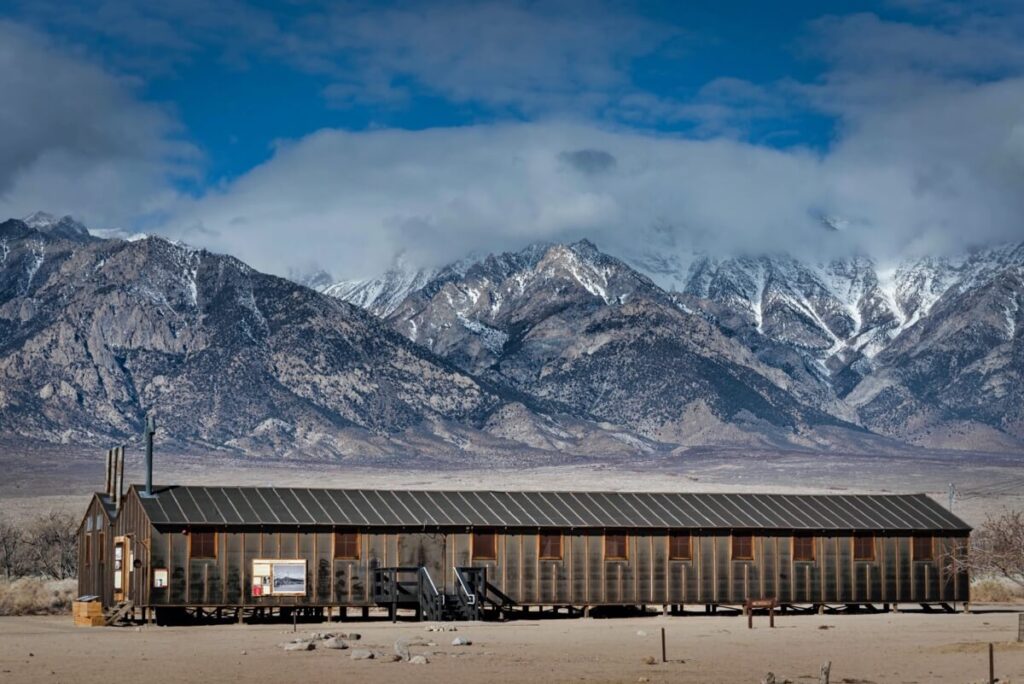
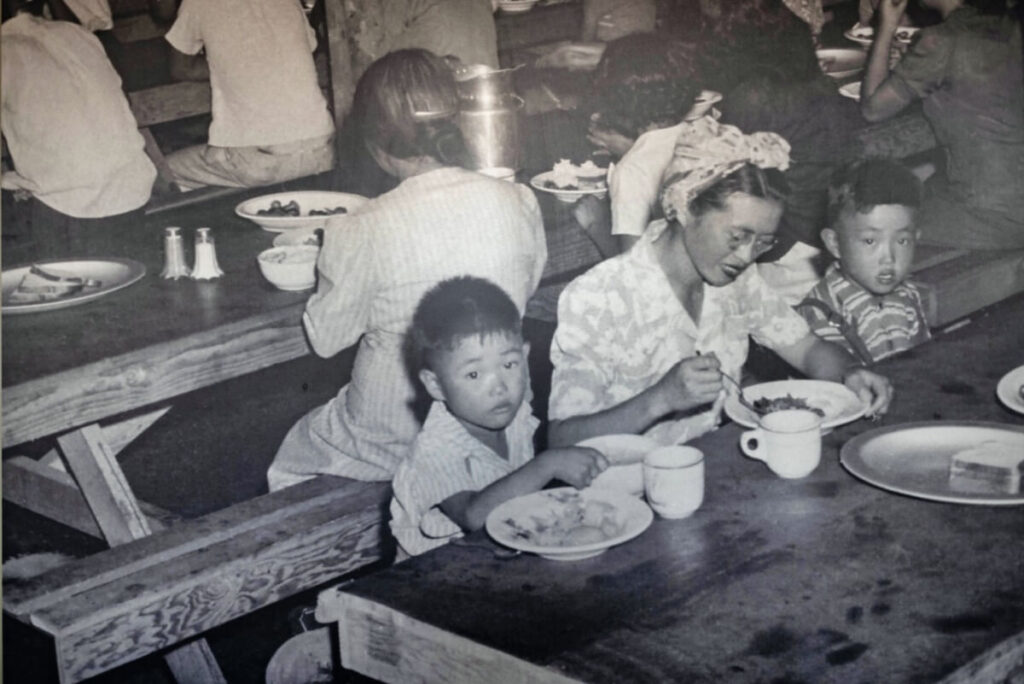
Photo: Manuel Ortiz. National Historic Site: Manzanar. "At the beginning of World War II, 110,000 people of Japanese ancestry were interned in concentration camps. At the beginning of World War II, 110,000 people of Japanese ancestry were interned in concentration camps according to Executive Order 9066 of February 19, 1942. Manzanar, the first of the ten concentration camps, was enclosed with barbed wire and guard towers where 10,000 people, mostly U.S. citizens, were confined. May the injustice and humiliation suffered here as a result of hysteria, racism, and economic exploitation never emerge again."
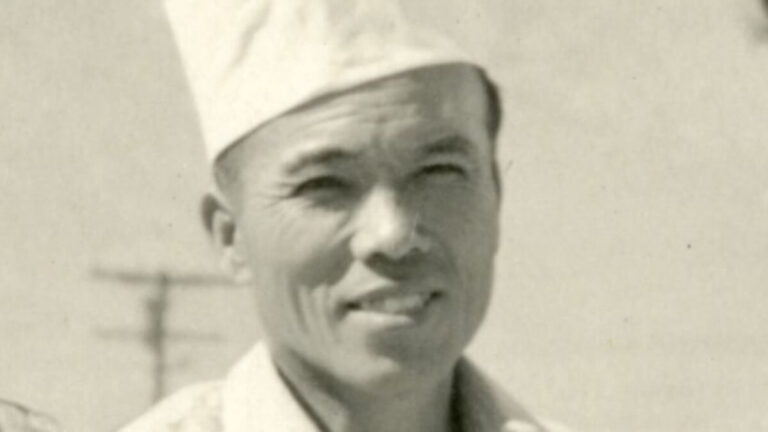
Artist Giichi Matsumura was one of 110,000 people of Japanese ancestry who, without having committed any crime, were imprisoned by the United States government and forced to live in deplorable conditions in ten militarized concentration camps in remote areas of the country during World War II.
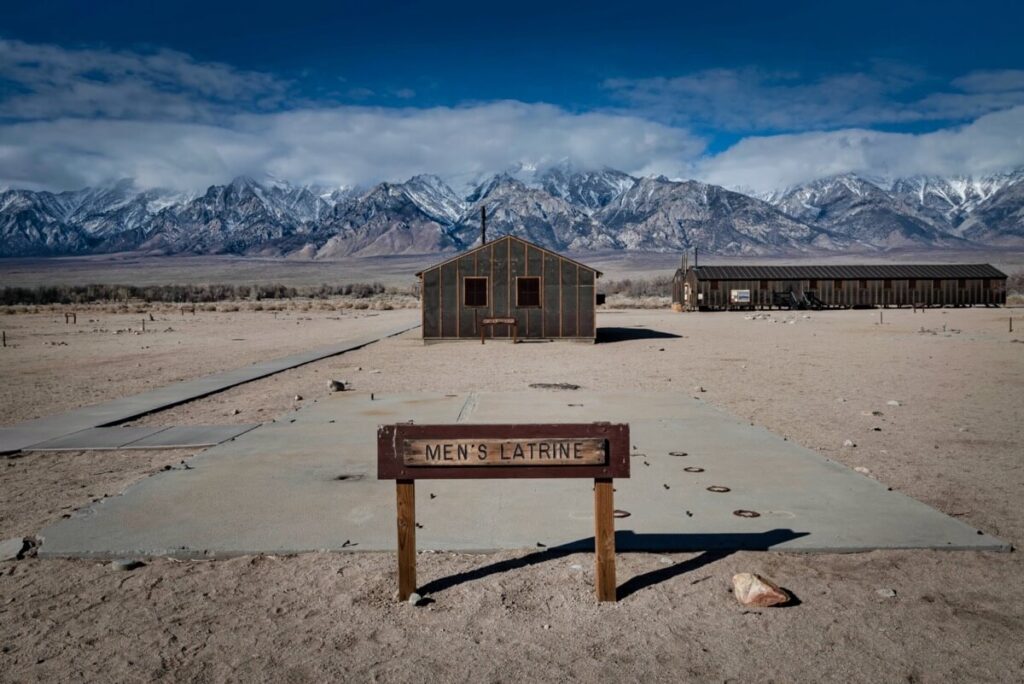
Photo: Manuel Ortiz. Manzanar is one of the concentration camps where the U.S. government imprisoned and forced people of Japanese ancestry to live in deplorable conditions during World War II.Photo: Manuel Ortiz. Manzanar was one of the ten concentration camps and is located at coordinates 36°43′42″N 118°09′16″W.
The concentration camps were set up in places with extreme weather conditions in California, Arizona, Arkansas, Colorado, and Wyoming. Matsumura was sent in 1942, along with his family, to the inhospitable Manzanar camp in the California desert.
Photo: Manuel Ortiz. Manzanar was one of the concentration camps, located at the foot of the Sierra Nevada in the Owens Valley, California, and between the towns of Lone Pine, to the south, and Independence, to the north, approximately 370 kilometers northeast of Los Angeles.
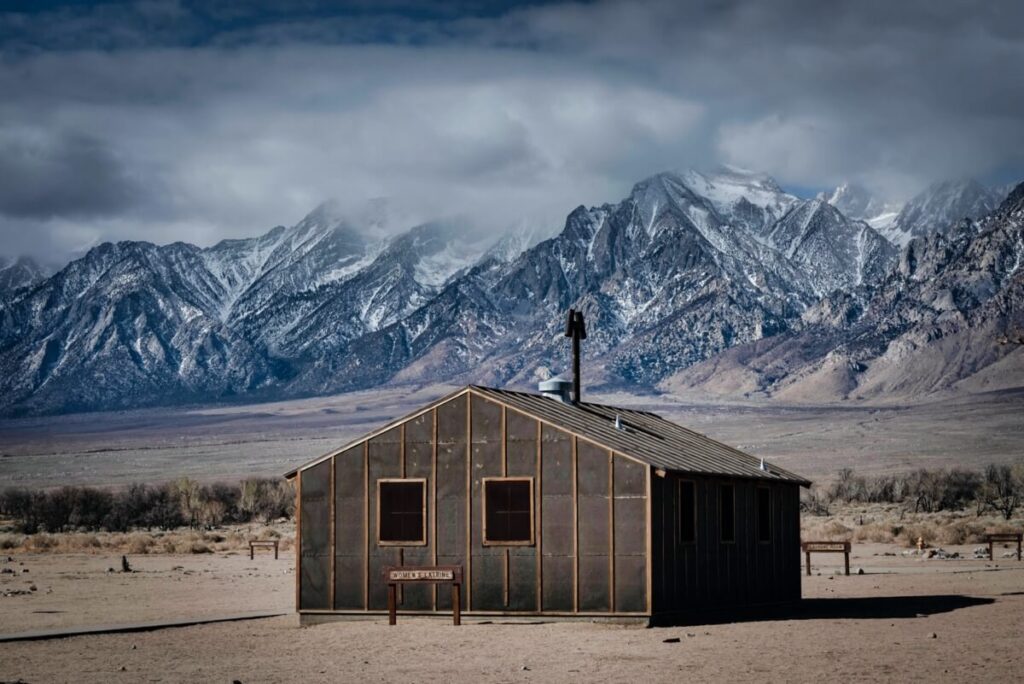
Summers in Manzanar reach 43 °C (110 °F), while in winter temperatures drop below freezing, with gusts of icy air blowing down from the Sierra Nevada mountain range that stands like an insurmountable rampart on one side of the camp.
Photo: Manuel Ortiz. Summers in Manzanar, one of the ten American concentration camps, reached 43 °C.
The order to create concentration camps for Japanese was given after Japan's attack on Pearl Harbor in December 1941. With this excuse, President Franklin D. Roosevelt signed Executive Order 9066 so that all persons of Japanese ancestry, of any age and without any criminal record, would be interned as "an enemy race.
Photo: Manuel Ortiz. Manzanar, once one of the concentration camps in the USA, is now a museum.
The forced confinement was devastating because it disintegrated many families and destroyed hundreds of lives, recalled in an article in Foreing Policy magazine actor George Takei, who at the time spoke out against the detention centers for Latin American migrants and family separation created by former President Donald Trump on the U.S.-Mexico border.
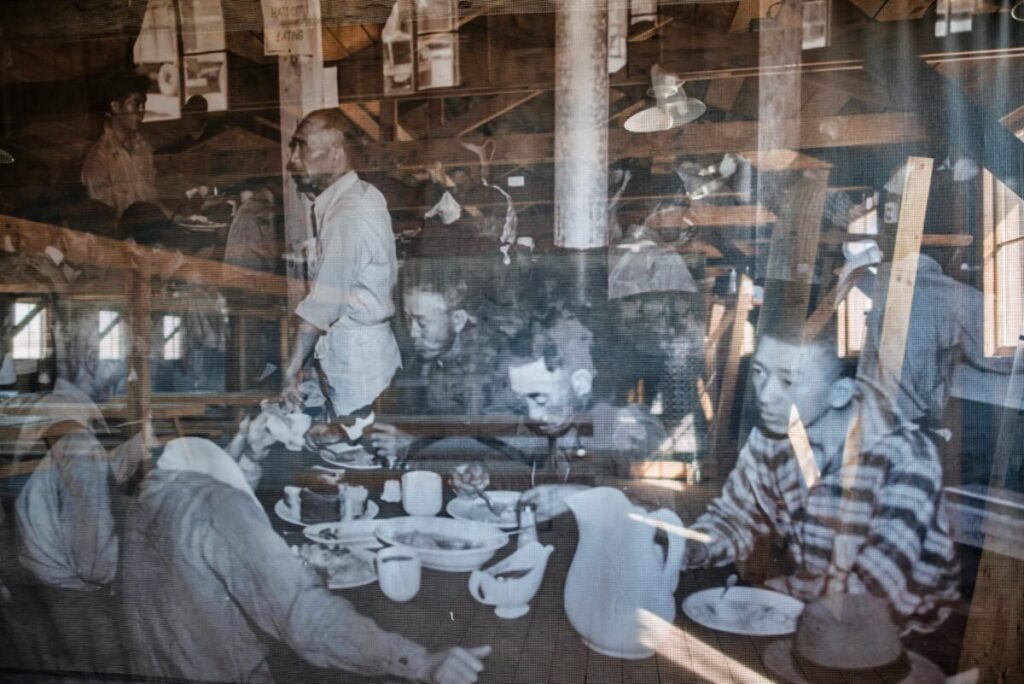
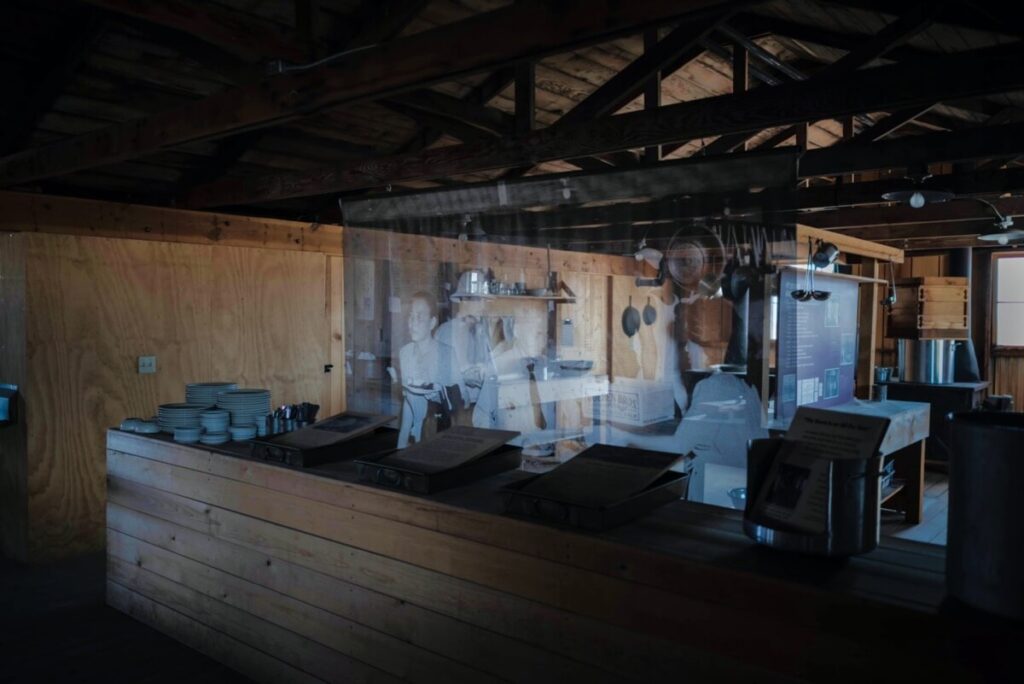
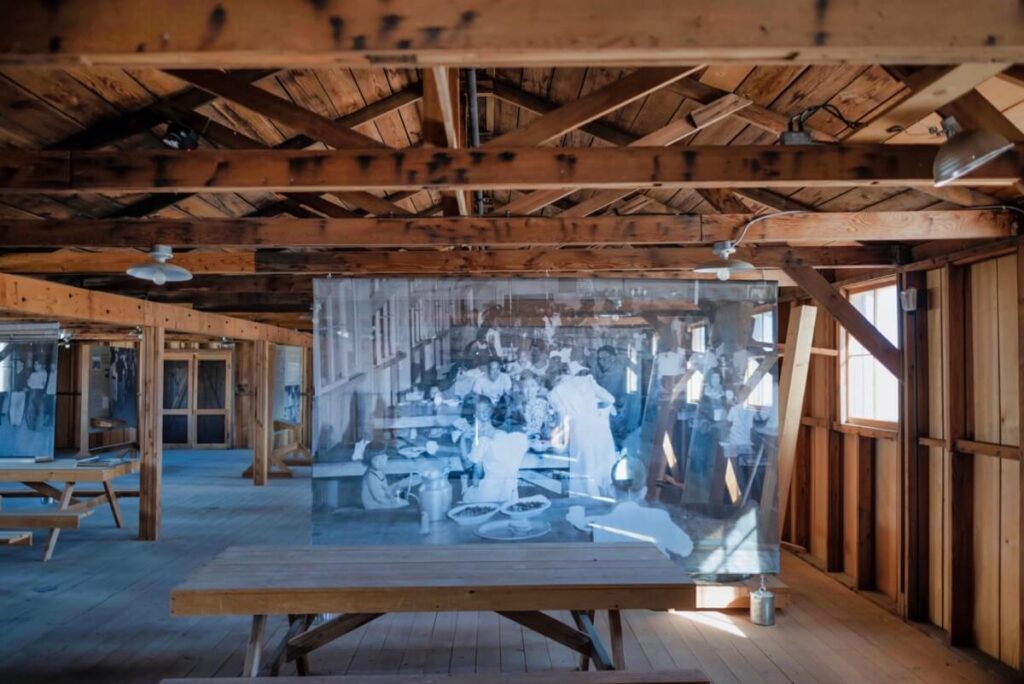
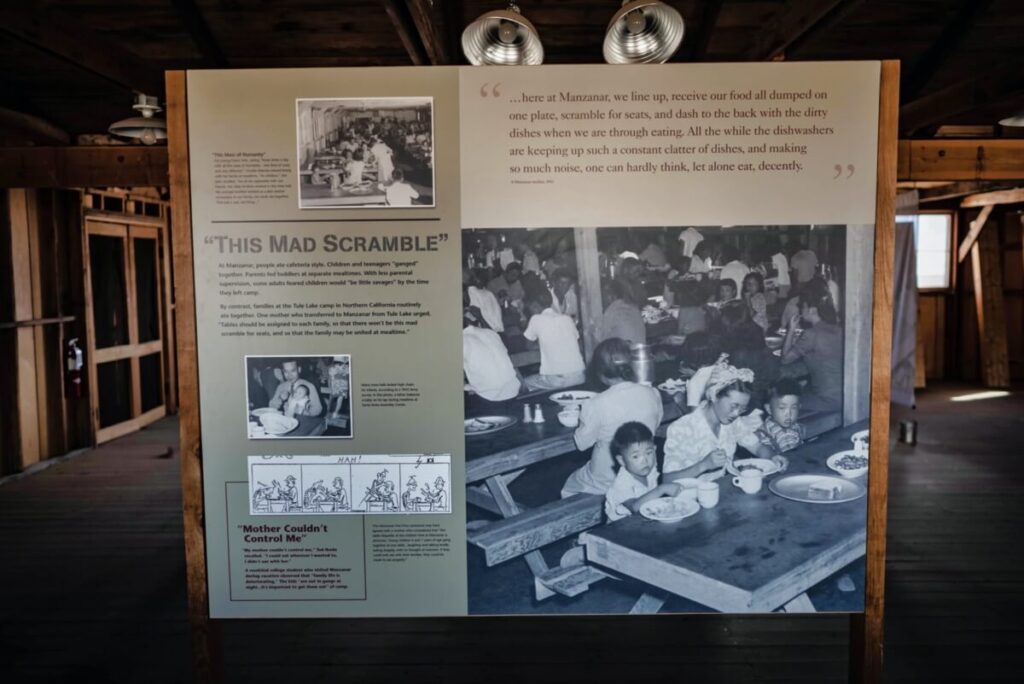
Photo: Manuel Ortiz. The historical exhibition shows the daily life of Manzanar, one of the U.S. concentration camps.
Thus, in deplorable conditions, crammed together with innocent men, women and children in wooden-walled barracks without thermal insulation, victims of hatred and the violation of their most basic civil and human rights, Matsumura spent his last days. He died mysteriously in August 1945 in the foothills of the Sierra Nevada where he supposedly went with friends to draw.
Photo: Manuel Ortiz. Manzanar was located in the vicinity of Sierra Nevada, location of one of the ten concentration camps in the USA.
Some claim that Matsumura appears in the Sierra Nevada and that is why he was named the "ghost of Manzanar", a ghost that today, in the face of the colossal increase in hate attacks against Asian communities, appears across the country to remind us that this hatred, promoted in recent years by Trump, is historic and has been the cause of some of the darkest and most shameful episodes in the U.S., such as the Atlanta massacre, where eight Asian women were executed.
Photo: Manuel Ortiz. Inside Manzanar, you can see the conditions in which people were subjected during their confinement in the concentration camps.
Manzanar, which was once one of the American concentration camps. is now a museum dedicated to the memory of the 110,000 incarcerated people of Japanese ancestry; it is now a National Historic Site.
Photo: Manuel Ortiz. Manzanar, which served as one of the American concentration camps, offers to know the history of the place that is now a museum.
Currently, every day there are about 700 deaths in the U.S. due to COVID-19, which has significantly impacted the world. During the last few months, it has registered variations of the SARS-CoV-2 virus, which have proven to be stronger, faster and much more contagious, so experts suggest getting vaccinated against the disease as soon as possible, because, today, it is our only weapon to win the race against it.
Stanford University School of Medicine principal investigator Dr. Nirav R. Shah said that while it's a great happiness for the country that more than 100 million COVID-19 vaccines have been given, meaning that more than 75 million Americans have received at least one dose, "we can't start celebrating yet.
And the story of virus variation involves evolution and natural selection. "What happens is that the more virus particles there are, the more chances there are that, just by chance, a single virus particle is a little bit different from the rest, many of them with variation".
During a briefing held by Ethnic Media ServicesThe expert noted that, so far, the four variations of the virus that causes COVID-19 have started where there is high exposure to it, and in places with many infected people.
"One or more virus particles is all you need to make a slight change. Although vaccines are intended to stop the spread, those strains with selective advantages will spread faster and stronger.
"This is a race to see how quickly we get people protected, that is, fully vaccinated, versus the level of the disease in a community and its ease of transmission," he said.
Classifications and Definitions of SARS-CoV-2 Variants
Variant of Interest
Dr. Shah said that the variant of interest is one that has some changes in its genetic sequence, suggesting that it may be more contagious, that it may escape immunity, or that the type of immunity that is obtained from treatments and vaccination trials may not work as well against that variant.
"Today the CDC - Centers for Disease Control and Prevention - is looking at three variants of interest, the most common one they've heard of is the P2 variant - Brazil strain," which was discovered in April 2020.
Of it, he said, actual transmissibility and lethality are still unknown. The other two variants of this type are B.1.53 and B.1.52, both first detected in November and December, respectively, in New York.
Variant of Concern.
The variant of concern has been shown to be more contagious and/or cause more severe disease.
It has a significant reduction in neutralization by antibodies generated during a pre-vaccination infection, reduced effectiveness of treatments or vaccines, or even diagnostic detection failures.
Therefore, the therapies being developed are less effective against this specific strain, he said, adding that people who have had one strain of COVID-19 can potentially be reinfected with a new strain. "That's very worrisome because today there are five of these variants of concern that are being tracked by the CDC," he said.
The best known strain is B.1.1.7 - UK strain - and we know from research published to date, early studies show that it transmits from person to person 50 percent faster compared to some of the original strains.
He further specified that this strain can lead to increased mortality.
According to an article published March 15, he said, the antibody response to the Moderna and Pfizer vaccines is a little lower when you have this strain compared to previous strains, but it's still generally susceptible to those vaccines, as well as the Oxford-AstraZeneca and Novavax vaccines.
In the case of the B.1.3.5 variant - the South African strain - he noted that the vaccines continue to show good effectiveness, but more studies are needed to see the true impact.
These strains are joined by P.1 (Japan-Brazil) and B.1.43 (California, USA).
Variant of great consequence
Such strains, Dr. Shah said, cause more severe disease and more hospitalizations, and have been shown to defeat medical countermeasures.
According to the CDC, these types of strains have demonstrated diagnostic failure, and evidence suggests a significant reduction in vaccine effectiveness, a disproportionately high number of cases in which vaccines are ineffective, or very low vaccine-induced protection against serious disease, as well as a significant reduction in susceptibility to multiple approved or Emergency Use Authorization treatments in the country.
However, it should be noted that, so far, "there is no variant that meets this definition," nor has it been detected by the CDC.
"To win this race we have to focus on those - the variants - that are easiest to attack. And we have to get people vaccinated as quickly and broadly as possible," he said.
Similarly, he noted that several pharmaceutical companies are testing multivalent vaccines, creating different combinations to better target variants of the SARS-CoV-2 virus, similar to flu immunizations.
Group or Herd Immunity
For Dr. Nirav R. Shah, to get to "herd" immunity, 50 to 70 percent of people should already be resistant to existing strains, "if you're protected - vaccinated - you're not going to be a host for potential genetic variants to grow and that's an important level to reach".
However, he said there are a number of factors for that to happen. "First of all, we have seen that more than a dozen states are relaxing restrictions. So, for example, if you're not required to wear a mask, it's not surprising that a lot of people in a given state are not wearing masks. That's a problem, because what happens is that those are the public health measures that have been shown to work against the spread, because more people being infected means that we have a greater chance of variation.
He added that "there is a race" to vaccinate as many people as possible, with the goal of reaching that percentage of 60-70 or more.
And while it's true that no vaccine is perfect, the good news is that many of America's seniors are inoculated.
However, he said, one population that has been ignored and not effectively reached is the vulnerable homebound elderly, who have not been able to attend immunization appointments, go to hospitals or other places, or even register for immunization.
As of two weeks ago, the vaccination rate among homebound seniors was only 20 percent. "They're very vulnerable, so we need this level of herd immunity to protect those who are vulnerable and who are not protected by the vaccine for one or more reasons, and by fall we should be closer to that."
On the other hand, he stressed that, to date, none of the mutations or strains have completely escaped the major vaccines that exist. "Our hope is that with small modifications we can achieve a continuous evolution of the vaccines to match the evolution of the virus".
"The reality is, until the whole planet is vaccinated, we will achieve herd immunity. There will be pockets of people who haven't been vaccinated and the virus will survive, and that's all it takes. We know how fast it spreads.
An example of this is that if one of the unvaccinated people gets on a plane and exposes others who are part of the 20-30 percent who are also unvaccinated, there is a 70 percent chance that they will start another small cycle of infection and have to start all over again.
"It's a race around the world, we know that the virus doesn't respect any borders, so we should be as broad as possible in thinking about getting the vaccine to everyone.
For Dr. Dali Fan, clinical professor of health sciences at UC Davis, Johnson & Johnson's vaccine will be of great relevance in achieving herd immunity, not only because of its easy portability and single dose, but because from published clinical trial data, such immunization can provide, within 14 days of administration, 67 percent prevention of moderate to severe COVID-19 infections.
In addition, at 14 days it prevents 77 percent of severe COVID-19 infection, at 28 days that protection increases to 85 percent, and at 29 days, it provides 100 percent efficacy against severe cases.
He also noted that, at 28 days, the daily vaccine reduces hospitalization by 93 percent, 75 percent of the level of mortality, and at 10 weeks, it reduces a systemic infection by 75 percent.
All of this, coupled with easy transportation and storage, will be part of the formula for the vaccine to reach the least accessible places so that more people around the world can be immunized and finally achieve herd immunity, he said.
Dr. Daniel Turner-Lloveras, of the University of Southern California, said it's still uncertain when all people will finally be able to walk the streets without masks.
"I don't think anyone we trust can say when that will happen, but we do know that herd immunity will most likely be achieved once we reach the threshold number of people vaccinated, and so getting people vaccinated is extremely important and I think everyone will agree on that," he said.
He recalled that the rollout of the COVID-19 vaccine in the U.S. began under the administration of President Donald Trump, who decided that distribution should be up to the states and counties, which resulted in a lack of homogeneity.
"If we had been more unified, I think it would have helped a lot, especially with the black and Latino community, because now each state and county is coming up with their own method of providing culturally sensitive health information, some are making an excellent connection and some are not so much," she said.
Given this, he explained that it would be helpful if all levels of government could share resources in strategies to reach vulnerable populations, because the differences that are seen in terms of health have highlighted the digital divide that exists.
"I think it's a civil rights issue right now, we know that all the resources that are provided to people are now online. Minority communities are being left out in the rise of telehealth, in the race to sign up for vaccines, and unless we do something about it, they will continue to be left out and it will continue to contribute to the unequal distribution of COVID-19 vaccines."
Turner-Lloveras explained that, according to a recent report, 22 million elderly Americans do not have broadband Internet access at home -- that's 42 percent of the nation's population age 65 and older.
Before the pandemic, he said, 57 percent of Latino households said they owned a computer, and as the pandemic increased nearly 40 percent of Latinos did not have broadband Internet access at home.
He added that "this is a major barrier to access to education and health, and is one of the reasons why we started the "Compañero" Digital Program.
The volunteer-led bilingual program teaches Latino community members how to use technology to open doors, including registering for immunization appointments. "Digital literacy, skills and empowerment are no longer just a nice to have, they are a necessity.
"One of the components is teaching them the skills and getting their digital literacy level to a point where they can not only sign up for vaccines, but also expand options for finding a job during and after the pandemic," she explained.
Those interested in the program can access it through the website https://lcac19.org/digital-companero/ or WhatsApp +1 (323) 607-8861.
For her part, Dr. Kim Rhodes of the University of California, San Francisco (UCSF) said that to bring the African-American community together to get tested for COVID-19 and help them access vaccines, the organization United in Health Oakland, of which she is a participant, has resorted to setting up pop-up clinics throughout Alameda County in California.
"In the vaccination phase, the Alameda County Public Health Department recognized that this was a significant advantage because we were able to reach 57 percent of African Americans with our testing resources."
He noted that 60 percent of those African-American participants were first-time COVID-19 testers, so the African-American community hopes that now, through COVID-19, they will be able to access vaccines.
The Redwood City Police advised all city residents who may have information about a suspect who robbed a Subway store Monday night to contact the department for further action.
This Monday, at approximately 7:53 p.m., an unknown person entered the Subway fast food restaurant, located at 758 Woodside Road, through a back door.
According to a statement from the Redwood City Police Department, the suspect ordered a sandwich and brandished a black handgun at an employee, demanding all the money in the register, so he was able to take between $200 and $400 before fleeing out the back door onto Gordon Street.
The suspect was described as a white or Latino adult male in his late 20s, approximately 5'11" tall with a medium build. He was last seen wearing a black hooded sweatshirt, a black face covering, a black hat with a logo on the front, black shorts and black shoes with white soles.
"Anyone who may have additional information about this incident is encouraged to contact Redwood City Police Detective Sergeant Nick Perna at 650-780-7672 or the Redwood City Police Department's tip line at 650-780-7107."
Following attacks on the Asian-American community in various parts of the Bay Area, the chairman of the San Mateo County Board of Supervisors is seeking to make the area a "zero tolerance zone" against racism and xenophobia.
In an interview with KPIX5Supervisor David Canepa said he plans to introduce a bill Tuesday "condemning hate crimes against the Asian-American and Pacific Islander community to establish the county as a zero tolerance zone against these attacks, from Daly City to Menlo Park.
This Tuesday, Santa Clara County will discuss a similar proposal, bringing several counties in line to banish hate crimes and attacks against the community that has been scourged since the beginning of the COVID-19 pandemic.
"We are all aligned and want to make sure we do not tolerate this in our county. We can no longer simply sit and listen to our Asian American friends and neighbors tell these ongoing stories of how they are victims of violent and racist hate crimes: we must take swift and definitive action to stop the hate through bold policies."
It's worth remembering that two days after the shootings at a spa in metro Atlanta that left six Asian women dead, a 69-year-old woman was attacked and robbed in a Daly City neighborhood.
The bill, which could pass Tuesday, would encourage investigators to consider motives for hate crimes.
KPIX5 detailed that the incident in Daly City left Anna Louie in shock, as, now, her trips abroad are filled with fear and anxiety about a possible attack.
Pastor Alesana Eteuati of the First Congregational Christian Church of American Samoa in Daly City said her 200-member congregation lives in fear.
"I pray for you to change your attitude, change your thinking and change your actions towards others. Embrace other people," Eteuati said as a message to those who wish to cause harm in the county and elsewhere.
Canepa will present the bill at today's board of supervisors meeting and the board is expected to hold a final vote on April 5.
The Institute of Museum and Library Services -IMLSannounced this week that the Redwood City Public Library is among 30 finalists for the 2021 National Medal for Museum and Library Service, becoming the only institution in California selected as a finalist for the award.
"IMLS' revival and reinstatement of the National Medals is another sign of recovery and renewal in very challenging, but very hopeful, times for the nation," said IMLS Director Crosby Kemper.
He added that, with this medal, he is celebrating not only the continued excellence of the best of the nation's museums and libraries, but the "extraordinary efforts through pandemic, recession, racial justice protests and national divisions to serve, heal and unite our communities."
The National Medal is the nation's highest award given to museums and libraries that demonstrate a significant impact on their communities.
Notably, for more than 25 years, the award has honored institutions that demonstrate excellence in service to their communities.
"The Redwood City Public Library has always prided itself on its creative and innovative approaches to fulfilling its mission of nurturing community by welcoming all people to experience the shared joys of literacy and learning," said Diane Howard, Mayor of Redwood City.
He also noted that the library's success in working toward the community's aspirations of inclusion, equity, awareness, safety and education has always been significant to the community, "but the library's services were truly a lifeline for residents during the incredible challenges of the past year."
To celebrate the recognition, IMLS is encouraging members of the Redwood City Public Library community to share stories, memories, photos and videos on social media as part of the campaign. Share Your Storyusing the tag #IMLSmedals.
National medal winners will be announced later this spring, and representatives from the winning institutions will be honored for their extraordinary contributions during a virtual National Medal Ceremony this summer.
For a complete list of finalists and more information about the National Medal, visit https://www.imls.gov/.
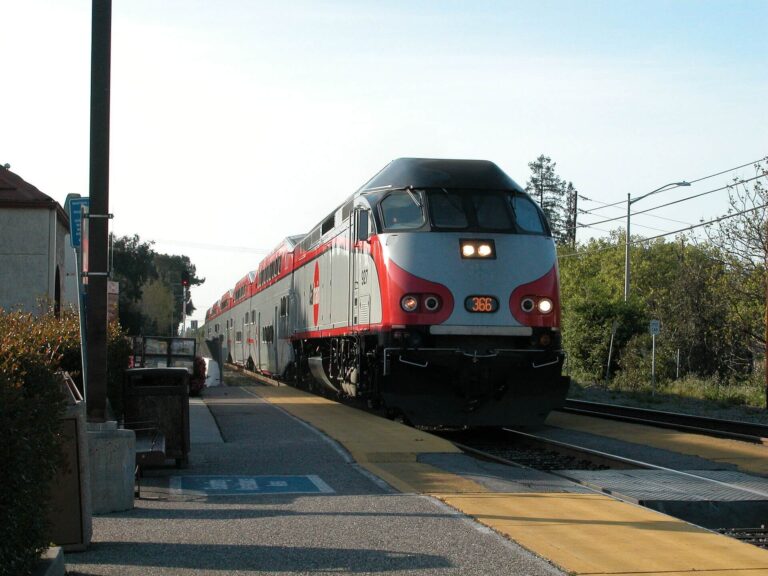
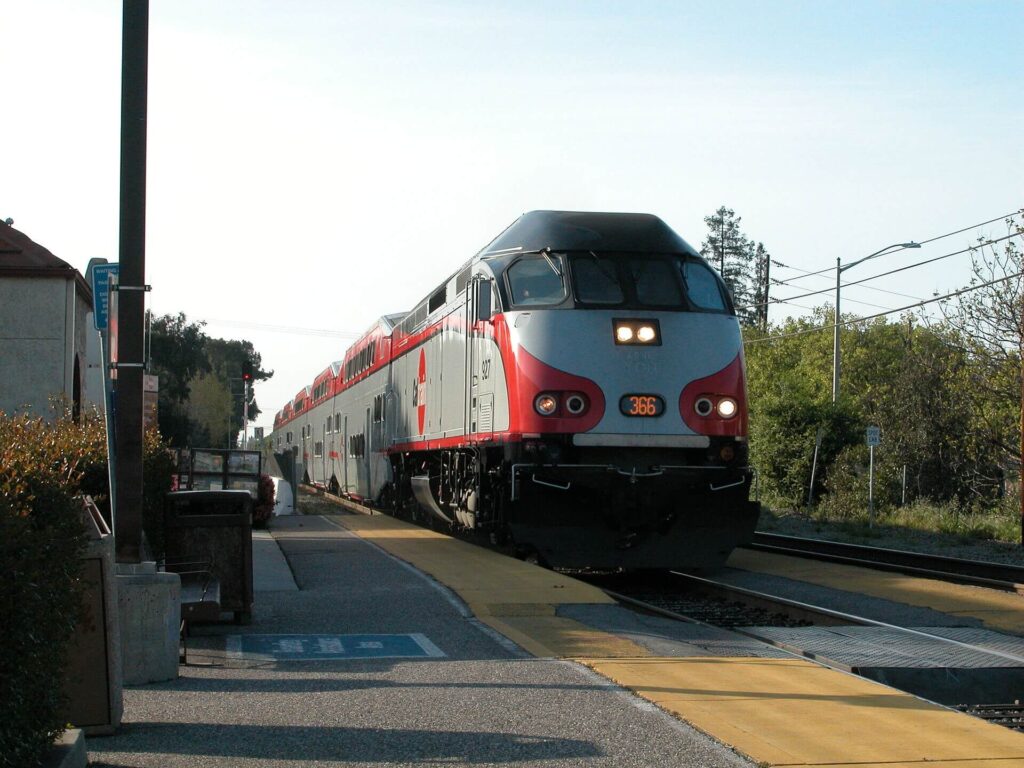
Starting Monday, March 22nd, Caltrain will offer free transportation for all those who need get to a vaccination site to receive the inoculation within the counties of San Mateo, Santa Clara and San Francisco.
The Bay Area rail system will provide the benefit free of charge, until further notice, to people who show proof of an immunization appointment or an immunization card, which will allow them to board the train.
"Since the beginning of the pandemic, Caltrain has helped ensure that essential workers and riders who rely on public transportation can stay on the move and get where they need to go," Caltrain's director of rail operations, Michelle Bouchard, said in a news release, which noted the importance on Caltrain for free transportation.
She noted that by offering free transportation to and from the vaccines, she hopes to eliminate cost barriers so that all those living in the three counties will have access to the vaccine.
Caltrain's free service joins VTA and SamTrans, which already offer free rides to vaccination sites in Santa Clara and San Mateo counties, respectively.
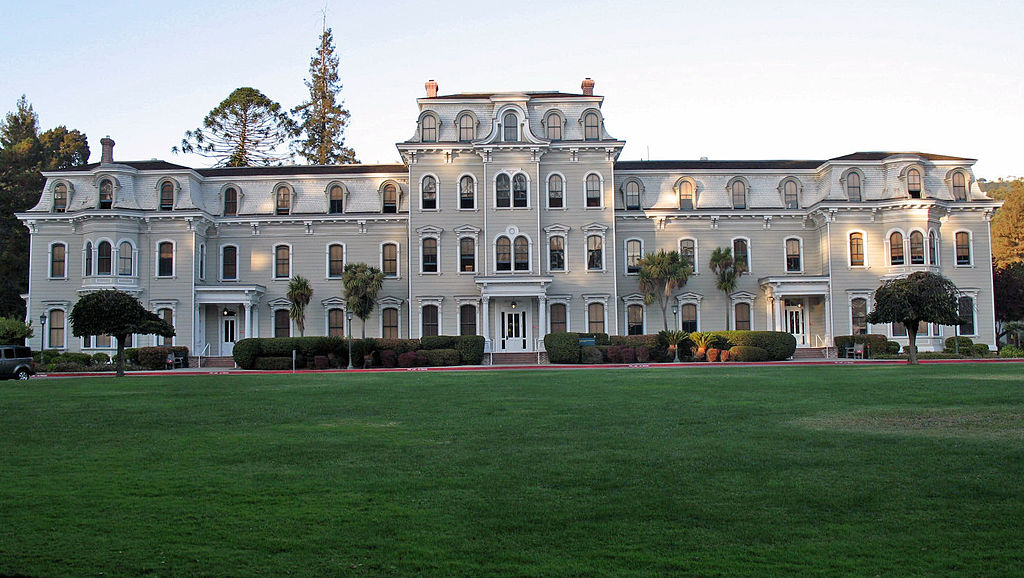
Mills College, a very prestigious women's liberal arts college with a 169-year history located in Oakland, California, will close to new students to possibly become an institute.
I have been fortunate enough to participate as a guest lecturer at Mills College's Research Justice at the Intersections (RJI) for a year now, and it has been a profound and enriching experience, despite the pandemic and the virtuality.
Unfortunately, due to the economic burdens of the COVID-19 pandemic, structural changes in higher education, and declining enrollment, as well as Mills' budget shortfall, the college will no longer be accepting freshmen beginning fall 2021. That's a real shame.
It was founded in 1852. Mills College provided transformative learning opportunities for many people, broke barriers, forged connections and changed lives.
In recent years, women's colleges have suffered declining enrollment and several have had to close or become coeducational to survive. These colleges top the rankings for the most racially diverse student bodies, and several educate large numbers of low-income and first-generation students.
Mills, for example, has actively recruited students of color, especially those from surrounding areas like Oakland, and has tried to reduce tuition costs. Mills has also worked to provide a safe campus for transgender students.
The group I belong to focuses on interdisciplinary research at Mills College that fosters social justice-oriented research and innovative critical analysis.
RJI encourages scholars to consider new forms of knowledge production that challenge traditional research hierarchies, mobilize the leadership of those directly affected by the phenomena under investigation, and recognize and engage with subaltern forms of knowledge.
This group is just one example of Mills' mission: promote women's leadership, advance gender and racial equity, and foster critical and creative thinking.
But major changes are coming. "Mills must begin to move away from being a degree-granting college and become an institute that upholds the Mills mission," said Mills College President Elizabeth Hillman. The "transformation" of Mills College is a blow to fair and equitable education, as it will close to new students to become an institute.
The closing of universities like Mills is part of a crisis of values in the United States in general, manifested in the cruelty of the use of excessive violence towards certain specific groups - African Americans, Asian Americans, Native American Indians, women, people of the LGBTTTIQ+ community - as we saw with the murder of George Floyd, the massacre of Asian women in Atlanta, the indigenous women in Montana who continue to disappear.
Just when the recognition of ethnic diversity and the fight against white supremacism and sexism is more necessary than ever. Just when the best weapon and defense against racism and sexism is education; the closing of Mills College, as a center of educational specialization whose priority is social justice, does not contribute to the formation of a more just society. This loss is regrettable.
Today's news marks the end of an era in Mills College history. "It is likely to provoke a variety of reactions and emotions in you, as it has in me," wrote Elizabeth Hillman.
The statement has sent shock waves through students, teachers and my colleagues at RJI. It is sad.
"We're all devastated but the students are really hurting."
said an associate professor of Ethnic Studies.
In the coming months, faculty, administrators, staff and others will discuss the future Mills Institute that will be grounded in the principles of the college, prioritizing racial justice and the voices of women and people of color.
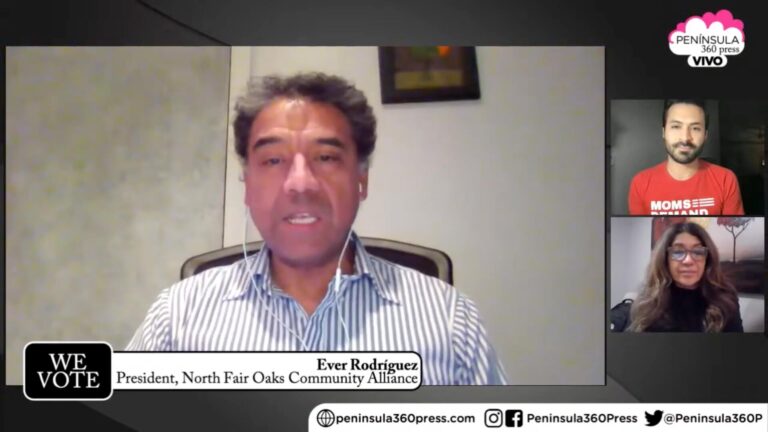
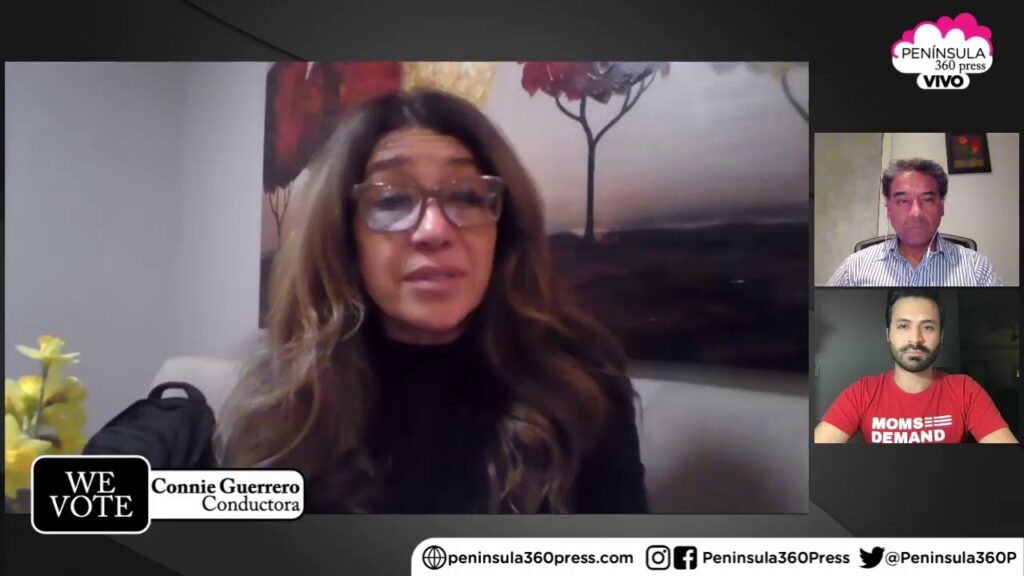
Hosted by Connie Guerrero and Rudy Espinoza Murray, this time on We Vote: Ever Rodriguez. However, before giving way to the guest, Peninsula 360 Press, in their live broadcast, the anchors offered a moment of silence due to the unfortunate massacre that occurred in Cherokee County, Atlanta, Georgia, where eight people lost their lives - seven of them women and, in total, six of Asian origin.
Peninsula 360 Press, from its We Vote broadcast, condemns any act of violence, as We Vote broadcasts are characterized by the inclusion of the opinion and message of members of different ethnic communities.
In this edition of We Vote, we had the presence of Ever Rodriguez, president of We Vote. North Fair Oaks Community Alliance and North Fair Oaks Council Member to discuss the urgent issues in managing the non-San Mateo County city's COVID-19 response, noting that at the last health issues session, North Fair Oaks had only 10 confirmed positive cases of COVID-19 since the pandemic began and the number suddenly increased by 500 cases.
Ever Rodriguez told We Vote that North Fair Oaks, with a population of about 15,000, is home to 75 to 80 percent of the Latino community, he said. Ever Rodriguez told We Vote that he was disappointed by the response of health authorities in dealing with the COVID-19 pandemic. Ever Rodriguez said on We Vote that he has repeatedly lobbied health officials for resources such as SARS-CoV-2 testing and updated data to effectively serve the North Fair Oaks community.
We Vote is produced live by Peninsula 360 Press on Wednesdays at 7 p.m. on all of our social media platforms. Follow us on Facebook, Twitter and YouTube to follow live broadcasts of We Vote, with Connie Guerrero and Rudy Espinoza Murray.