


Wednesday, April 1, 2026
Home Blog Page 415

Georgia massacre fuels fears of attacks on Asians in San Francisco Bay Area

Georgia massacre fuels fears of attacks on Asian community in San Francisco, frequent xenophobic and racist attacks.

san Francisco community
Pamela Cruz Peninsula 360 Press [P360P].

Every day, fear and uncertainty grows among members of the Asian-American community throughout the country, as xenophobic and racist attacks against them are increasingly continuous, due to the ignorance of many, who believe that because they are from the continent where the SARS-CoV-2 virus emerged, they are responsible for the pandemic that today afflicts the world.

The recent attack at a spa area in Atlanta, Georgia, that left eight people dead, including six women of Asian descent, has reignited the debate in the country about hate crimes against people with Asian roots, which have reached nearly 3,800 nationwide since the pandemic began, according to a report released Tuesday by the organization Stop AAPI Hate.

The San Francisco State University-based project, which asks members of Asian-American and Pacific Islander communities across the country to self-report acts of hate and discrimination, found that, of those attacks, 1,226 incidents occurred in California and 708 in the Bay Area alone. 

The organization also notes that the most incidents in the Bay Area -292- took place in San Francisco, while the cities with the second and third highest number of attacks were San Jose -58- and Oakland -55-.

The report issued by the organization in February this year highlighted that, from March 19 to December 31, 2020, the attacks reported across the country amounted to two thousand 808; while, as of February 28, 2021, the incidents grew to 3 thousand 795, which means an increase of 987 more cases in just the first 59 days of this year. 

This reflects that, despite the efforts made, even from the White House, to contain the hatred against the Asian community, they have simply not been enough, because every day the acts are more frequent and violent.

At the beginning of the year, the people of San Francisco and the country were outraged by the attack suffered by a 91 year old man who was violently pushed to the ground in public, a situation that became known due to the enormous diffusion of a video that captured the moment. 

At that time, the co-founders of Stop AAPI HateManjusha Kulkarni, executive director of the Asian Pacific Planning and Policy Council, Cynthia Choi, co-executive director of Chinese for Affirmative Action, and Russell Jeung, professor of Asian American studies at San Francisco State University, said they were outraged by the "disturbing" incidents that the community has suffered.

"These violent assaults have a devastating impact on our community, as they are part of an alarming rise in anti-Asian American hatred during the COVID-19 pandemic," they said.

Such incidents, they said, are stark reminders that urgent action must be taken to protect the AAPI community from hate, discrimination and violence. 

"It is up to all of us - business, government and community partners - to come together and immediately support the victims and families affected by these incidents, and to work together to create lasting solutions that empower our communities with resources, support and education," they stressed.

One by one, the cases have shown the hatred that exists against a community that has also been strongly affected by COVID-19.

Cynthia Choi said one of the reasons the numbers of attacks are high statewide in California is because the state has large concentrations of Asian-American communities. 

He also told KQAD that the Asian-American community has reported that the actions taken by law enforcement agencies to prevent further incidents are insufficient, "we believe that the reporting of such incidents is insufficient in general".

Choi noted that there is often a distrust among affected communities to report hate crimes in order to avoid trouble.

"In general, it goes unreported because there is distrust of government, including law enforcement. And there is data showing that even when people report crimes or incidents that could potentially be racially motivated, their experiences have not been positive," she stressed.

The expert pointed out in the interview that most of the incidents with the community have been hate speech and harassment, problems that do not reach the level of a hate crime, but still have long-term damaging impacts on people.

"Just because it's not a crime doesn't mean it doesn't cause harm. We received reports from families who reported that their elderly parents were walking around the neighborhood as they traditionally did ... being harassed, accosted and, in some cases, assaulted," he concluded.


COVID-19: San Mateo County Targets Hardest Hit Communities for Vaccination Efforts

San Mateo County targets vaccination efforts to communities most affected by COVID-19, doses at smaller, targeted clinics.

san mateo vaccination
Pamela Cruz. Peninsula 360 Press [P360P].

San Mateo County is targeting its efforts to bring the COVID-19 vaccine to communities most affected by SARS-CoV-2 by moving away from mass vaccination sites and placing doses in smaller, targeted clinics.

"Census district data shows us exactly which neighborhoods are being most affected by COVID-19. That's why we are focusing our vaccination efforts by providing clinics in hard-hit zip codes and getting a greater number of doses in the neighborhood they live in and in the language they speak," said Board of Supervisors Chairman David J. Canepa.

And, community clinics will generally operate on regular hours, which will allow for better outreach to residents and more opportunities to schedule appointments. So many clinics will also be able to vaccinate eligible residents without pre-scheduled appointments.

"We look at the data and want to focus on neighborhoods where vaccination rates are lower than the county overall," said Anand Chabra, chief of the county's COVID-19 Immunization Division. 

"We're trying to reach people where they live and in a format that makes sense to them. As much as possible, we want to remove barriers to getting vaccinated," she added.

This week, county-sponsored or supported community immunization events will be held in East Palo Alto, South San Francisco, Belle Haven and North Fair Oaks. County Health is planning community clinics next week and expects to announce additional locations soon.

This focus on community clinics will allow the county's Emergency Operations Center (EOC) to plan for expanded mass vaccination sites when more doses become available. 

Notably, since January, clinics at the San Mateo County Event Center and San Francisco International Airport have often vaccinated between three and four thousand residents per day, according to the immunization supply. 

However, the county stressed in a statement that it expects to be able to increase daily capacity at these sites significantly when vaccine supplies improve.

"The county's priority, especially through an equity lens, is to vaccinate all residents when they're eligible, and that means we need to take the fight to where the battle is," stressed Warren Slocum, whose fourth supervisorial district includes East Palo Alto, North Fair Oaks and Belle.

Through various health care providers, community clinics, partner organizations and County Health, the County has successfully immunized one-third of adults in San Mateo County with at least one dose. 

"Ensuring equitable access to vaccines must be our top priority," Supervisor Dave Pine said. "Administering additional vaccines within our vulnerable communities is key to stopping the spread of the virus."

In addition to the additional focus on community clinics, County Health will continue to support vaccination for homeless, prisoners, and those with state-identified medical conditions, as well as the other groups eligible under state Phase 1A and 1B.

Eligible residents of the selected communities or groups will be contacted by the county or outreach partners. 

Those who wish to be vaccinated should register on the county's notification tool, as well as the state's MyTurn, to be informed of vaccination opportunities when eligible.

San Mateo seeks resident support to create Local Hazard Mitigation Plan

San Mateo is seeking support from residents to create a Local Hazard Mitigation Plan for hazards such as earthquakes, floods, and more.

Local Risks San Mateo
Pamela Cruz. Peninsula 360 Press [P360P].

San Mateo County, led by the Office of Emergency Services, has begun developing the updated Multi-Jurisdictional Local Hazard Mitigation Plan to address hazards such as earthquakes, flooding, extreme heat and landslides.

In response, the county has asked for residents' help in identifying solutions to problems associated with natural hazards.

For Phase 1, the County invites the public to participate in the hazard mitigation plan by completing a survey about natural hazard risks in San Mateo through the link: https://www.surveymonkey.com/r/RG5GTPS, and then attend the first virtual public workshop on Thursday, March 25 at 4:00 p.m. at https://cmo.smcgov.org/events/march-25-2021-preparing-hazards-san-mateo-county-local-hazard-mitigation-plan-public-workshop.

He also called for a virtual meeting of the Steering Committee on March 22 at 2:00 p.m. on the website: https://cmo.smcgov.org/events/march-22-2021-hazard-mitigation-plan-update-steering-committee-meeting.

The county detailed in a release that an updated Multijurisdictional Local Hazard Mitigation Plan will serve as an important foundation for a more resilient and sustainable area. 

"The plan looks at how San Mateo County and its planning partners can reduce the impact of natural hazards such as earthquakes, flooding, extreme heat and landslides," he said.

He added that once approved by the Federal Emergency Management Agency (FEMA), the plan ensures that San Mateo County and its partners remain eligible for grant funding for pre- and post-disaster mitigation projects.

This, he said, through FEMA's Hazard Mitigation Assistance programs and other non-emergency disaster assistance, such as the agency's new Building Resilient Communities and Infrastructure (BRIC) program. 

The current San Mateo County Multi-Jurisdictional Local Hazard Mitigation Plan expires in September 2021, as each plan is updated every five years.

The planning process will be organized in three phases and each phase will include opportunities for public comment and input.

Phase 2 will begin in May-June, with an evolving and interactive component of the project website. In addition, there will be a Steering Committee meeting on May 24, 2021 and June 28, 2021 at 2:00 pm. To which residents are also invited.

For Phase 3 to be held in July-August, it will be possible to attend the second public workshop on July 22, 2021 at 4:00 pm, as well as attend another Steering Committee meeting on July 26, 2021 and August 23, 2021 at 2:00 pm.

For more information about the San Mateo County Multijurisdictional Local Hazard Mitigation Plan or to learn ways to get involved in the development you can visit the project website at: https://cmo.smcgov.org/multijurisdictional-local-hazard-mitigation-plan.

U.S. Bailout Plan Will Benefit Domestic Economy by Millions of Americans

Without the U.S. bailout plan will benefit national economy in millions of Americans would further worsen the situation of the population.

Rescue plan
Pamela Cruz. Peninsula 360 Press. [P360P].

Without the recently approved U.S. bailout plan that includes the $1.9 trillion financial relief package pushed by President Joseph Biden, the substantial hardship and uncertainty in the national economy that millions of Americans have endured over the past year would have worsened even more, especially among African Americans, Latinos and Native Americans.

So said Center on Budget and Policy Priorities Chief Economist Chad Stone, who added that the economic relief plan will address three points: First, getting the SARS-CoV-2 virus under control so that the economy and life in general can operate more safely and normally.

Two, to alleviate the uncertainties and hardships that have been experienced by many Americans over the past year, and which would have worsened had this relief not been enacted; and third, it provides a substantial stimulus to an economic recovery that, frankly, has stalled halfway back to full employment.

During a briefing held by Ethnic Media ServicesThe expert stressed that programs that alleviate hardship and give money to people who will spend it quickly, such as unemployment insurance and nutrition assistance, are very useful in stimulating economic activity and employment once it is safe to return to work.

"Controlling the virus is the most important thing to deal with the difficulties, but there will also be stimulus that will put us back on the path to recovery," Chad Stone stressed.

This law, he said, expands the availability of nutrition assistance to help address extraordinarily high levels of hunger and poverty, in addition to making comprehensive health coverage more affordable and accessible to millions of people during the current crisis.

And, he recalled, the support includes critical housing assistance for millions of people struggling to pay rent and avoid evictions, as well as providing much-needed funds for communities to cope with homelessness during the pandemic, and emergency funds to help families with the lowest incomes.

"I should stress that all of these provisions are short-term, they are not permanent. But they provide guidance on the kind of policies that we might want to see in the future on a permanent basis," he stressed.

Regarding unemployment insurance, he said the expansions in unemployment benefits in the pandemic have been "an imperfect miracle," as they have been substantial, but temporary.

In that regard, he explained that the rescue plan extends through September 6 three key unemployment programs: The first, additional weeks of benefits to people who exhaust their regular state benefits; The second, called the Emergency Unemployment Compensation Program, which is really important for people who don't qualify for regular state benefits; And the third, a federal supplement of $300 a week to regular benefits for all unemployment programs.

"These measures ensure that no one is at risk of running out of unemployment benefits before finding a job, but only through the week ending Sept. 6," he said.

Finally, he pointed out that it will be necessary to wait for Congress, before going on its summer recess, to analyze the economic conditions and decide whether it is reasonable to let these benefits expire on September 6 or to extend them.

Healing and moving forward

Congressman Raja Krishnamoorthi, who represents Illinois' 8th District, said the package "will help our economy heal and, of course, help America recover from the health crisis, and I think it's a great victory for the American people.

He further stated that local aid is basically necessary for two reasons: one, because sales tax revenues and other sources of tax revenue have declined dramatically for many states and local municipalities in the jurisdictions.

He noted that those governments, in particular, face one of two choices: raise taxes or cut services, or potentially do both, "but neither of those options is acceptable during a pandemic.

"Yet because of our inaction to this point at the federal level, 1.4 million government workers have been furloughed, many of whom are first responders needed to fight COVI-19," he stressed.

He said the reality is that many of these governments need additional revenue and to fill gaps, so taxpayers should be spared tax increases or cuts and services.

A Plan that gives children a hand

At the meeting, Elaine Maag of the Urban Institute Policy Center noted that economic impact payments, sometimes called clawback rebates, and an increase in the child tax credit are cash benefits that will help a large share of low-income families.

He explained that in 2021, researchers at the Urban Institute estimated that poverty would be around 14 percent unless action is taken. This figure hides some important differences, because while white families would have a poverty rate of less than 10 percent, black families would have a poverty rate of 18 percent, while in the case of Hispanic families the percentage rises to 22 percent.

In that sense, he said that the American Rescue Plan will reduce these rates substantially. The poverty rate for white families would be reduced by 26.4 percent, for black families by 10.5 percent and for Hispanics by 13.3 percent.

"In other words, the law would reduce the poverty rate for children by 7.0 percent, which is a larger cut than that projected for adults 18 to 64 or for those 65 and older."

He added that poverty harms children throughout their lives, as early brain development is affected, resulting in slower and stunted growth. "They get worse jobs, their health is worse and they live shorter lives."

He said all of those things are bad for the children affected, but also for society, because before the pandemic, child poverty was 11 percent. "So it's gone up during this pandemic, but the American Rescue Plan would bring the poverty rate for children well below pre-pandemic levels.

However, he stressed that it is not just a question of relatively high poverty, as the situation has exacerbated other problems, such as financial and food insecurity, which has almost doubled in the case of families with children.

"Nearly a quarter of families with children report not eating a balanced meal or skipping meals or reducing portion sizes because they don't have enough money to eat."

The story is worse for families with African-American or Hispanic parents, where about four in 10 families reported being food insecure, and about 17 percent of renters reported being behind on their payments.

"The problem is the lack of cash, people need unrestricted funds to catch up."

Elaine Magg stated that President Biden's American Recovery Plan expands the credit in four important ways: number one, the credit will be fully refundable. Families will receive the full value of the credit, even if they don't work; number two, the credit will now include children who are 17; and number three, the maximum credit will increase for most families from two thousand dollars per child to three thousand six hundred dollars per child under the age of 6.

The need for a minimum wage

ROC United President and CEO Dr. Sekou Siby explained that 27.1 million service workers are women, people of color and immigrants, while more than one-third of the nation's service workers do not have enough money to make ends meet.

12 percent of service workers live below the poverty line, of which 85 percent are, again, women, people of color and immigrants. Overall, 17 percent of all service workers rely on public strategies, such as food stamps and Medicaid, while working longer hours just to make ends meet, she said.

The minimum wage in California is $12 per hour on average, in Mississippi it is $17.25, however, for those who work in the service area, he noted, in California it is $13 on average, and in Mississippi it is $9, while a living wage in California is $18.66 and in Mississippi it is $13, "you can see the gaps".  

"We have a huge gap between what people need to live on and what they're actually getting, which is why there's such a high dependency on government subsidies."

With the American Rescue plan, 553,000 children will be lifted out of poverty and 460,000 restaurant workers who are parents will also benefit from the rescue package, "so it's a great deal nationally," he said.

In that regard, she stressed that to see meaningful and impactful change in the country's society, it is necessary to increase the wages of all workers and "build a ladder" by creating upward mobility and opportunity for all, especially women of color and immigrants."

And, he noted, "it's not dignified for workers to work full time and still rely on public assistance. He said that, because of the pandemic, paid sick days have become a priority for workers.

While small businesses will begin to pick up the slack after the COVID-19 pandemic closures, wage increases are intended to be gradual until there is a win-win situation for both parties.

Finally, he noted that the wage increases for service and agricultural workers will help undocumented people also receive help, since the U.S. Rescue Plan will not support them.

California Landlord and Tenant Rent Forgiveness Web Site

rental support California
Bay City News. [BCN]. Peninsula 360 Press [P360P].

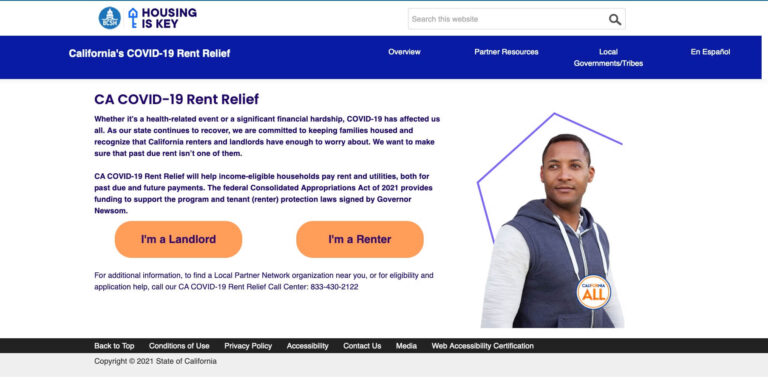
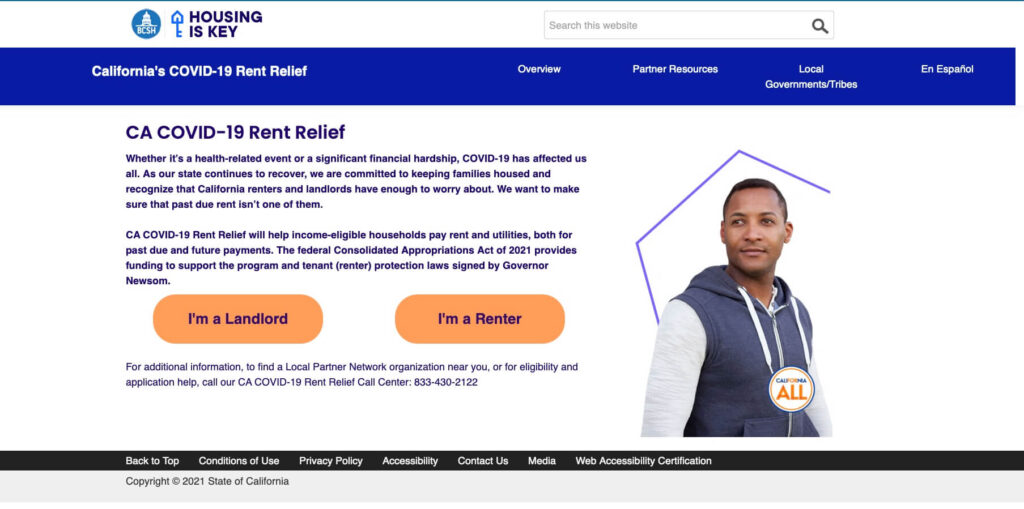
California's COVID-19 rental support application website is available starting Monday, which will help eligible landlords and tenants cover last year's unpaid rent.

Funding for the support comes from the $2.6 billion in rental support California's federal share of the U.S. Treasury Department's emergency rental assistance program.

The application for California tenants and landlords is available at https://housing.ca.gov/covid_rr/.

Although some counties or cities have their own application portal for administering rental assistance, Russ Heimerich, spokesman for the California Housing, Consumer and Business Services Agency, said you can apply at any portal. The California state website will direct people to the appropriate website by city or county.

Eligible landlords and tenants may apply for reimbursement of 80 percent of the tenant's outstanding rent between April 1, 2020 and March 31, 2021 if they accept the remaining 20 percent remission.

Tenants may also apply on their own if their landlords choose not to participate. Those who meet the eligibility requirements can receive 25 percent of the rent in forgiveness accrued between April 1, 2020 and March 31, 2021. This is the amount tenants must pay by June 30 to avoid eviction under California's COVID-19 Tenant Relief Act (Senate Bill 91).

Some tenants may also receive assistance to cover 100 percent of utilities for the past year and 25 percent of future rent when these protections expire to stop evictions.

Applications are not assigned on a first-come, first-served basis, but will be accepted on a rolling basis. Eligible tenants must earn 80 percent or less of the area median income (AMI) for their location and the state will give priority to those earning less than 50 percent of the AMI for their location.

Community organizations in each county are also available to assist with such requests. A list of support organizations and their contact information is available at https://housing.ca.gov/covid_rr/partner_resources.html.

For more information and eligibility requirements, you can visit HousingIsKey.com or call toll-free (833) 430-2122.

The form will be available in English, Spanish, Vietnamese, Tagalog, Chinese and Korean. Support is available in over 200 additional languages via telephone.

Arrested for firearm in Redwood City

Arrested Redwood Firearm
Bay City News [BCN]. Peninsula 360 Press [P360P].

Police have arrested Nestor Lopez, 66, in Redwood City for allegedly making threats with a gun Friday night in the 500 block of Shorebird Circle.

Police responded to a call at 8:46 p.m. for a report of a domestic disturbance involving, they say, a suspect with a gun.

Police arrested Lopez on suspicion of threatening bodily injury with a firearm and injury with a firearm. They also recovered a .38 caliber handgun.

Police urge anyone with information about this incident to contact Detective Sergeant Nick Perna at (650) 780-7672 or the department's communications line at (650) 780-7107.

Group of men beat up in Redwood City bar

Redwood bar beating men
Bay City News [BCN]. Peninsula 360 Press [P360P].

Police are looking for a group of men who beat up a person early Monday morning at a bar located at 840 Brewster Avenue.

Redwood City Police responded to a report, generated at 2:18 a.m., of a fight at Wine Bar and found a victim unconscious with head injuries. Witnesses told police that the victim was assaulted by a group of men who had been drinking at the bar, that the men punched the victim, he fell to the ground and the men continued to punch and kick the victim.

Witnesses told police that the group of men fled the scene in several vehicles in different directions.

The victim was transported to a local hospital and is expected to survive his injuries.

Police encourage anyone with additional information about this incident to contact Detective Joe O'Gorman at (650) 780-7147 or the department's tip line at (650) 780-7107.

COVID-19: San Mateo Goes "Orange," Allows More Businesses to Open

Pamela Cruz. Peninsula 360 Press [P360P].

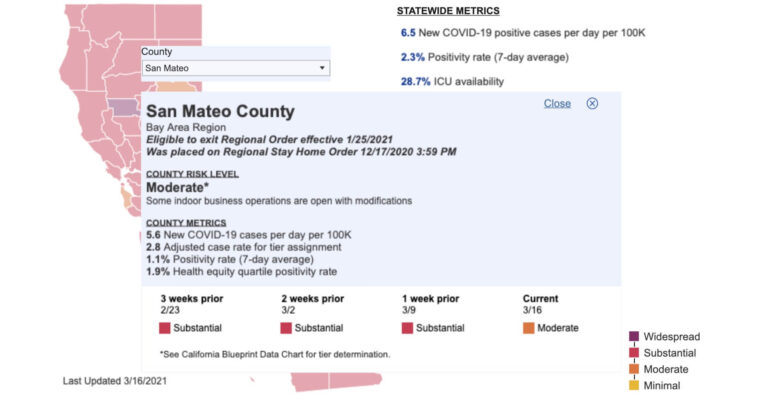
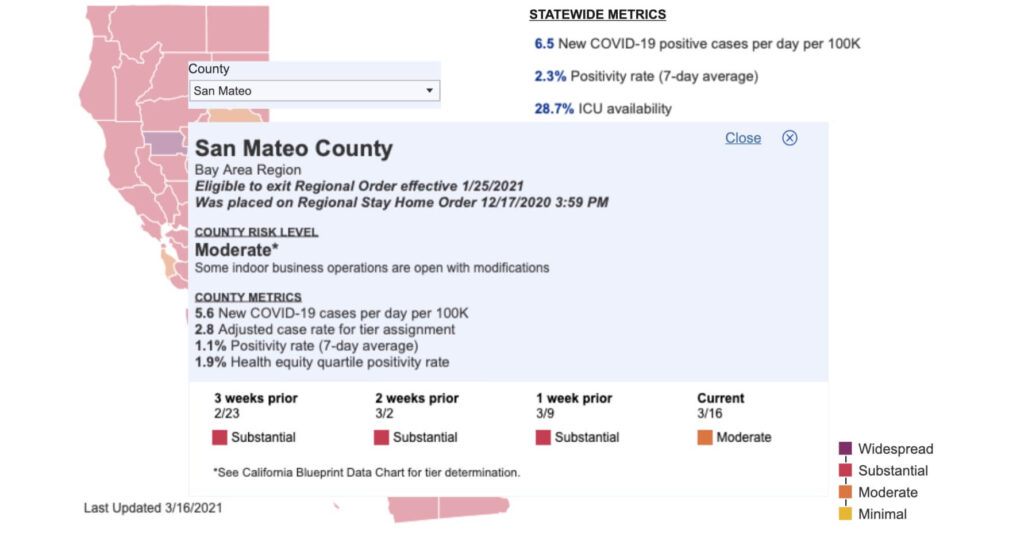
The state of California announced Tuesday that, as of tomorrow, March 17, San Mateo County will move to the "orange level," a less restrictive level that allows for the easing of certain limitations and where most indoor businesses will operate with modifications.

The change to orange will happen in the first minute of this Wednesday. The move comes a year to the day after the first stay-at-home order in the Bay Area.

"This is an important milestone for San Mateo County and all residents should be proud of the role they played in bringing us here by continuing to wear a mask, maintaining social distance, getting tested and receiving the vaccine when eligible," said Board of Supervisors Chairman David J. Canepa.

Through a statement he stressed that "this is not the time to become complacent. This is the time to stand strong as a community and help those around us so that we can continue to open up our economy even more.

The county moved to the orange or "moderate" level because of two metrics calculated by the state: the adjusted case rate has dropped to 2.8 per 100,000 in the population and the test positivity rate, excluding prisons, is 1.1 per 100,000.

They also noted that the health equity quartile positivity rate is 1.9 per 100,000 population. The health equity quartile measures rates of HIV infection in the county's most disadvantaged communities according to the California Health Place Index.

With the change to the orange level, malls are now allowed to open with indoor modifications, where common areas must be enclosed, and food courts with reduced capacity.

Meanwhile, places of worship can now open indoors with modifications, where they can be at 50 percent capacity or 200 people, whichever is less, as can restaurants.

Non-essential business offices, bars/breweries where food is not provided, as well as movie theaters, gyms and fitness centers, including indoor swimming pools may also operate with modifications and a maximum capacity of 25 percent. However, indoor hot tubs, saunas and steam rooms must be closed.

Climbing walls can be opened as well as family entertainment centers, go-kart racing, miniature golf, batting cages, bowling alleys, amusement parks and theme parks, all with modifications and limited capacities.

Attractions may only open by reservation or advance ticket sale, and only with local attendants - from the same county as the park location.

As for hotels, lodging and short-term lodging rentals, these will also begin operations with the necessary modifications.

Museums, zoos and aquariums will be limited to 50 percent of their capacity.

For schools, California has updated guidance and framework for reopening 12 schools for in-person learning by the 2020-21 school year.

More information about COVID-19 vaccines in San Mateo County can be found on the website: https://www.smchealth.org/covidvaccineFor information on coronavirus testing, visit the coronavirus testing page. https://www.smcgov.org/testing.

Baby born with COVID-19 antibodies in Florida

Cristian Carlos. Peninsula 360 Press [P360P].

It was reported that, in the state of Florida, a mother, a frontline health care worker, gave birth to a baby girl with antibodies to COVID-19.

The mother, at 36 weeks of pregnancy, reportedly received the Moderna vaccine because she was a frontline health worker caring for COVID-19 patients.

The birth took place at the end of January; however, the specialized media MedRxiv reported the findings of the investigation recently.

Once the mother gave birth, the researchers took a blood sample from the umbilical cord immediately after it was cut, and plasma was obtained from the placenta to see if an antibody test resulted in any reaction to the S protein of the new SARS-CoV-2 coronavirus, which causes the COVID-19 disease thought to have originated in a market in the Wuhan region of China.

It is important to note that the vaccine from Moderna Pharmaceuticals requires two doses. The mother would have received the second dose during her postpartum period, after 28 days of receiving the first dose of vaccine to achieve immunity.

The study urges the scientific community to thoroughly investigate the safety and efficacy of vaccines against the new SARS-CoV-2 coronavirus during pregnancy, as the effectiveness in newborns is unknown even when clinical studies show the presence of antibodies against SARS-CoV-2 to prevent disease derived from the new coronavirus: COVID-19.

In addition to its effectiveness in newborns, the researchers also called for research into the ideal time for pregnant women to get any of the available vaccines.

Details of the research can be found on the MedRxiv website: https://www.medrxiv.org/content/10.1101/2021.02.03.21250579v1

COVID-19: Bay Area health officials emphasize vaccine safety

0

Pamela Cruz Peninsula 360 Press [P360P]

Bay Area health officials expressed full support for the three vaccines currently available in the U.S. against COVID-19, issuing a letter emphasizing the safety of the immunizations and calling on the public to get their doses.

"As local health officials, we fully support the three vaccines currently available for COVID-19. All three vaccines are safe and have been shown to be highly effective in preventing symptomatic disease and hospitalizations," notes the letter, which was released March 15.

The document notes that clinical trials of all three vaccines showed that they were 100 percent effective in preventing deaths from COVID-19, and that there is growing evidence that such immunizations also help prevent asymptomatic disease.

This, they said, means that people who have been vaccinated are unlikely to transmit COVID-19 to others who are not immunized.

"There has been much debate about the advantages of one brand of vaccine over another, but it is difficult to compare their efficacy. The different brands of COVID-19 vaccines have not been studied in head-to-head comparisons," they explained.

They noted that each of the vaccines has been studied in slightly different groups of people and tested in different phases of the pandemic.

They also noted that community transmission rates and the presence or absence of COVID-19 variants differed between studies.

"What we can say with certainty is that all three vaccines provide levels of protection that are comparable to some of the best vaccines we have for other serious infectious diseases for which we routinely vaccinate people," they stressed.

Experts advised that while working toward community immunity, "the best vaccine is the one you can get as soon as possible. Different immunizations have different storage requirements, and with current limited vaccine supplies, the same brand may not be available at all vaccine sites on a consistent basis.

They called on the public to talk to their medical provider if they have questions about the vaccine, and more information about the vaccines is available on the state's COVID-19 website.