


Wednesday, April 1, 2026
Home Blog Page 416

COVID-19: Sacramento Struggles to Demonstrate Pandemic Resilience

Pamela Cruz Peninsula 360 Press [P360P]

It was March 5, 2020 when Sacramento County declared a health emergency due to COVID-19, and since then, for residents, organizations and government "it's been quite a journey" of learning, which will make the word "normalcy" take on a whole new meaning, as despite efforts it has not been able to break free of the Purpura level of restriction.

The return of some travelers who had been on a cruise ship was the beginning of the county's "Stations of the Cross" that brought with it guidelines, restrictions, tests and more tests and additional measures that were never enough, recalled Olivia Kasirye, an official with the Sacramento County Department of Public Health.

As of March 12, Sacramento had 4,770 cases of COVID-19, with a stable pattern where about 60 percent of those infected are residents between 18 and 59 years of age, which speaks of a mobile population, said the official during a briefing held by Ethnic Media Services.

In that regard, he noted that of the deaths recorded due to the SARS-CoV-2 virus - 1,525 - about 80 percent of them were in people over 65, and of those, 50 percent were in residents who were in long-term care facilities, which made it "one of the most affected populations. 

This population was joined by those who, because of their geographic location, were underserved, those where the zip code makes a difference in services and care. So when the Department of Public Health received funds to help the community, part of that response was allocated to serve these vulnerable areas.

Kasirye recalled that through different collaborations they were able to help homeless people by giving them access to clean water, sanitation and testing.

The team of firefighters and paramedics made a difference, because thanks to them, older adults from various long-term care facilities were able to be diagnosed with tests, and if necessary they themselves transferred them to hospitals, he said.

He explained that another vulnerable group were farmers, who could not stay at home and continue to work during the pandemic, a situation that placed them in the most vulnerable spectrum, the positive cases were not long in coming.

In response, she said, the Housing for the Harvest program provided comprehensive services for people in the agriculture sector, and community-based testing was also offered at 11 sites, which helped ensure that even people without health care, without a home or medical facility to go to for testing or with transportation issues, could be tested. "So we made sure that these testing sites were in communities that were underserved."

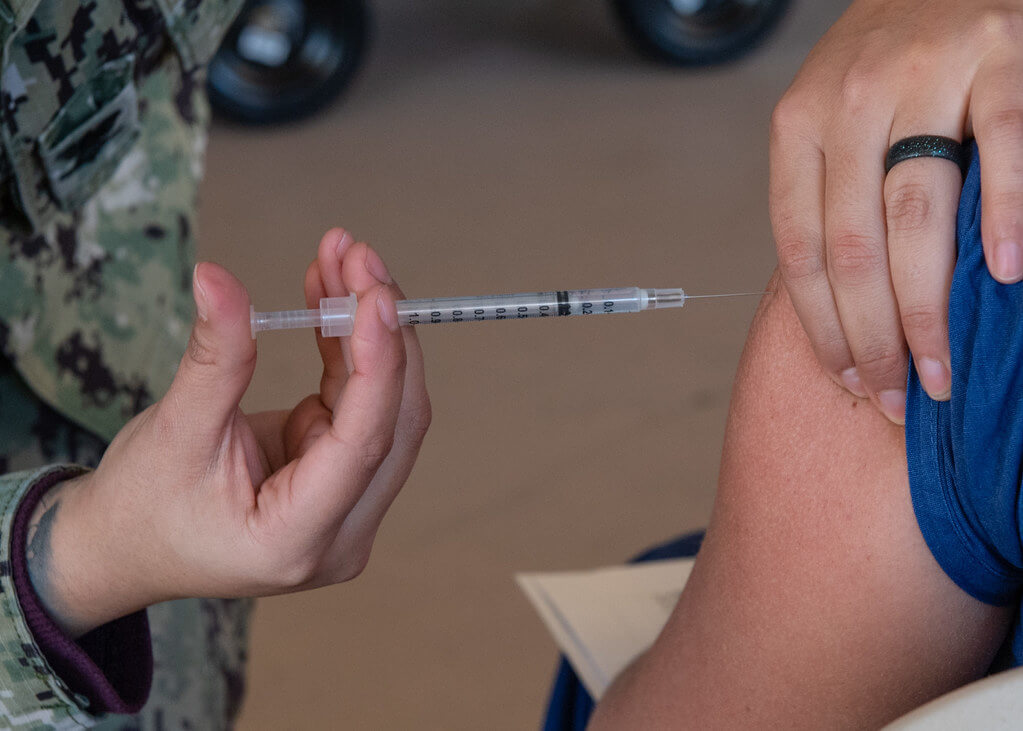
Vaccines have arrived in the county, however, Sacramento remains at Purple, the most restrictive level of all due to the still high incidence of COVID-19 positive cases.

"-Contagion- is way down compared to where it was at the end of 2020. So we've definitely turned the corner, we've passed the peak and now our efforts are focused on vaccination," determined Olivia Kasirye.

Mike Nguy, Health Equity Lead for the Sacramento County Department of Public Health, noted that the deployment of vaccine doses in the area has been thanks to multiple partners who have sought to make Cuellar the most efficient route for these immunizations to reach everyone.

In that regard, he said that with a limited number of vaccines, "we were really working very hard and closely with our community partners to ensure equity and inclusive outreach, especially in those zip codes that have been disproportionately impacted by SARS-CoV-2.

Currently, the county has two mass vaccination sites, one of which is in one of the hardest hit and underserved areas, in an effort to level the "playing field" and ensure that disproportionately impacted communities and areas have equitable access to the resources needed to address the pandemic.

Added to this, she recalled, have been community pop-up clinics, in which they work closely with areas and organisations to reach out to those residents who face digital language barriers. 

"We not only talk about how to provide vaccines equitably, but also how to combat misinformation and align some of the communication to build trust among community members, especially in indigenous people and communities of color," she added. 

Mike Nguy, Sacramento County Department of Public Health Health Health Equity Leader

He reminded that it is necessary that residents can have access to resolve all their doubts regarding the vaccine, so that they can apply it and enter a new phase of the pandemic.

In that sense, he explained that the best vaccine is the one that is available, and given the shortage of doses it is necessary that people accept the vaccine that is currently available to them, which will prevent further spread of the virus and the disease.

"Especially at this time when we have so few doses available and the demand is so much greater than the number of doses, if you go to a site, whatever vaccine they offer, it's the best," he added.

Mike Nguy, Sacramento County Department of Public Health Health Health Equity Leader

Currently, Sacramento County has administered 429,212 doses to its residents, of which 33.8 percent have been to Caucasians, 11.1 percent to Asian Americans, 11.1 percent to multiracial, 8.4 percent to Latinos, 4.1 percent to African Americans and 4.1 percent to Native Americans, 11.8 percent were of other ethnicities, and the origin of 18.3 percent of those immunized is unknown.

The Sacramento Native American Health Center, led by Britta Guerrero, is one of the sites serving one of the communities most affected by COVID-19, and one that has been disproportionately underserved in health care throughout history, as well as serving other underserved communities such as those of color who do not have health insurance.

"About 80 percent of our patients suffer from more than one chronic condition and also have some mental health issue. So there are a lot of social determinants that we need to work on," he stressed.

He added that his patients bear the burden of disproportionate health disparities, which has led to very high rates of COVID-19 and deaths from the disease. 

This, he said, is mainly due to the limited access that minority communities have to adequate health facilities, in addition to the poverty they face and the need to keep their jobs, many of them without adequate protection, in order to meet their basic expenses.

Recently, she said, they've increased 106 percent in psychiatric appointments, which meant patients were suffering from depression and anxiety and dealing with all the additional stressors of being isolated, missing work and caring for children, and perhaps dealing with substance abuse issues while separated from their families and community. 

"As one of the most vulnerable communities, we decided to start vaccinating all Native Americans 18 years of age and older who have had the opportunity to participate in the Indian Health Services vaccine program. So we are using the Indian Health Services vaccines for our patients who are Native," she said.

"I have a lot of hope and also a lot of concern about the current situation. The peace of hope is that native people have a sense of sharing or collective responsibility for each other and protecting our most vulnerable, so many of the young people have been rushing to get vaccinated. We wanted to work with other communities to make sure that we are doing our part to protect other communities that are underserved or vulnerable," he stressed.

Finally, she said she is hopeful that for the first time, there will be equity for all in obtaining vaccines and that systemic racism in Native communities will be openly discussed, so that barriers can be removed and the Native community can be valued.

For Rachel Rios, executive director of La Familia Counseling Center, it is very clear that the Latino community has been heavily impacted both in terms of COVID-19 positive cases and deaths, so many of the disparities that exist are represented. 

He pointed out that when the pandemic arrived, they did not have the "luxury" of closing the doors of the organization, due to the services they provide to the Latino community that has diverse needs to meet their day to day life.

Currently, he noted that services are focused on telehealth or remote health, with virtual services, however, they recognize that the community suffers from a lack of digital devices, so they cannot access services in any way other than face-to-face.

He explained that since the beginning of the pandemic, infection rates were increasing for Latinos and no one seemed to be paying attention to that, a situation that could have been controlled if they had been "a little more proactive.

"People say Latinos are rallying, but the data shows that Latinos are the essential workers. They are the backbone of our economy in California. They're the ones who go to work. They didn't have the opportunity to telecommute and stay home. They had to show up to work or lose their jobs," he stressed.

Rachel Rios, executive director of La Familia Counseling Center

Given this, she urged that there be a Spanish-speaking testing center in the community where people can feel comfortable, especially people with mixed immigration status or who are undocumented, "so they can come and feel comfortable giving their information and getting a COVID-19 test, because there are a lot of fears, we know that there is a lot of anti-immigrant rhetoric before this pandemic happened.

Because of this, he explained that he is hopeful that the narrative around immigrants will change, "that we will see the value and finally recognize that they have been working and that they have been holding our economies together, that we will see the value of all of our diverse communities, but I worry that once the infection comes back, we will go back to the way things were."

Stephanie Nguyen, executive director of Asian Resources, explained that we must ensure that we continue to educate communities to collaborate with each other and to ensure that information, resources and health equity reach everyone.

In that sense, he said that before a new pandemic arrives or a new serious health situation arises in the country, it is necessary to unite and work in the communities to prevent a disproportionate number of lives from being lost again.

For Nancy Xiong, director of development and communications for Hmong Innovating Politics, she noted that two of the biggest challenges right now are access to vaccines and misinformation that exists for some non-English speaking communities.

She explained that many members of the Asian community are ready and interested in getting the COVID-19 vaccine, but in the absence of accurate information about immunization in their language, they are distrustful and sometimes choose not to seek access to the doses.

In addition, there is a lack of data to quantify the real impact on the Asian American community.

"We don't know how many Southeast Asian people have died or if any of our Southeast Asian-owned businesses have received recovery dollars and I think both of those numbers are going to be really important moving forward in terms of how we can take the next steps to really address the issues at hand and find solutions around that," he referenced.

Today, Sacramento County is struggling to make progress on health disparities and is seeking to get more and more residents vaccinated and cared for in the face of a relentless war against COVID-19.


Human beings will face 'frightening future' due to climate change: experts

frightening future climate change
Pamela Cruz. Peninsula 360 Press [P360P].

Without immediate and drastic intervention, humans face a "frightening future," including declining health, climate devastation, tens of millions of environmental migrants and more pandemics, in the coming decades, according to an international team of 17 leading scientists.

According to an article published in January in the journal Frontiers in Conservation Science, researchers cite more than 150 scientific studies and conclude that "we are already on the path to a sixth major extinction, which is now scientifically undeniable."

Because too many people have underestimated the severity of the climate crisis and ignored the warnings of experts, scientists must continue to speak out, said Daniel Blumstein, professor of ecology and evolutionary biology at the University of California, Berkeley. UCLA and a member of the UCLA Institute for Environment and Sustainability.

The author of the book "The Nature of Fear: Lessons in Survival from Nature," also noted that experts should avoid "sugarcoating" overwhelming challenges or inducing feelings of despair.

"Without fully appreciating and publicizing the scale of the problems and the enormity of the solutions required, society will not be able to achieve even the most modest sustainability goals, and catastrophe will surely follow," he said. 

"What we are saying is frightening, but we must be honest and vocal if humanity is to understand the enormity of the challenges we face in creating a sustainable future," he added.

The paper details that the Earth has experienced five mass extinctions, each representing a loss of more than 70 percent of all species on the planet. The most recent was 66 million years ago. 

Currently, the study notes, projected temperature increases and other human attacks on the environment mean that approximately 1 million of the planet's 7 million to 10 million species are threatened with extinction in the coming decades.

Blumstein said the level of damage could occur in the next few decades; an extinction affecting up to 70 percent of all species could potentially occur in the next few centuries.

There are now 7.8 billion people, more than double the population of the Earth just 50 years ago, and by 2050, the number is likely to reach 10 billion, scientists write, which would cause or aggravate numerous serious problems. 

In view of this, they said that more than 700 million people die of hunger and more than a billion are already undernourished, so it is likely that both figures will increase as the population grows.

In that sense, they noted that population growth also greatly increases the risk of pandemics, because most new infectious diseases are the result of human-animal interactions, "humans live closer than ever to wild animals and the wildlife trade continues to increase significantly". 

Thus, "population growth also contributes to rising unemployment and, when combined with a warmer Earth, leads to more frequent and intense floods and fires, poorer water and air quality, and worsening human health," they said.

The authors write that there is a "near certainty that these problems will worsen in the coming decades, with negative impacts for centuries to come" and that adverse global trends are obvious. 

"Humanity is running an ecological Ponzi scheme in which society robs nature and future generations to pay today for short-term economic improvement," said Paul Ehrlich, professor emeritus of population studies at Stanford University and co-author of the study.

He added that "while it is welcome news that President-elect Biden intends to re-engage the U.S. in the Paris climate agreement within his first 100 days in office, it is a minuscule gesture given the scale of the challenge."

In the face of the situation, experts said that completely and quickly ending the use of fossil fuels, strictly regulating markets and property acquisition, reining in corporate lobbying and empowering women could help avert catastrophe.

However, they detailed that humans' innate "optimistic bias" has led some to ignore warnings about the future of our planet.

"By the time we fully understand the impact of ecological decline, it will be too late," Blumstein said. 

The study can be read in its entirety at the following link:  https://www.frontiersin.org/articles/10.3389/fcosc.2020.615419/full 

Excessive parental intervention in children's early years affects decision-making: study

Excessive parental intervention in the early years of their children's lives affects decision-making: a study led by Jelena Obradović.

intervention parents children study
Pamela Cruz. Peninsula 360 Press [P360P].

Research has shown that engaged parenting helps children develop cognitive and emotional skills. However, too much parental direction can sometimes be counterproductive, according to a new study led by Jelena Obradović.Associate Professor at the Stanford Graduate School of Education.

In the paper published March 11 in the Journal of Family Psychology, researchers looked at parents' behavior when kindergarten-age children were actively engaged in playing, cleaning up toys, learning a new game and discussing a problem.

The study revealed that children of parents who intervened more often to give instructions, corrections or suggestions or to ask questions, even though the children were appropriately focused on the task, showed more difficulty regulating their behavior and emotions at other times.

These children also performed worse on tasks measuring delayed gratification and other executive functions, skills associated with impulse control, and the ability to switch between competing demands for attention.

According to Obradović and his co-authors, such reactions in children occur across the socioeconomic spectrum, so all children are susceptible to such treatment.

"Parents have been conditioned to find ways to get involved, even when children are focused and actively playing or doing what they were asked to do," said Obradović, who also directs the Stanford Project on Adaptation and Resilience in Children (SPARK).

However, she added that "too much direct involvement can take a toll on children's abilities to control their own attention, behavior and emotions. When parents let children take the lead in their interactions, children practice self-regulation skills and develop independence.

Obradović's research sheds new light on how "helicopter" or "snowplow" parents hinder their children's development during the critical transition to primary school.

Finding the right balance when interacting with children is especially important in kindergarten, said Obradović, whose research examines how nurturing environments contribute to children's health, learning and well-being over time.

She added that the beginning of elementary school is an especially challenging time when children are expected to manage their attention, emotions, and behaviors without direct help from parents.

"This is a really important change, when parents have to learn to push back," he said.

For their research, Obradović and his co-authors, Michael Sulik, a research scientist at SPARK, and Anne Shaffer, an associate professor of psychology at the University of Georgia, gathered a diverse group of 102 children ages 4 to 6 and their primary caregivers in a Stanford lab.

For their analysis, Obradović and his collaborators created a measure of what they called "excessive parental involvement. They noted times when a child worked independently or led an activity, and calculated the ratio of times when parents intervened in ways that should be helpful (not harsh or manipulative) to times when they followed the child's lead.

Thus, the researchers found a correlation between high levels of parental involvement when a child is focused on a task and infants' difficulties with self-regulation and other behaviors.

The researcher said that the aim of the study is not to criticize parents.

"When we talk about excessive parental engagement, we're not saying it's bad or obviously intrusive engagement," she said. "There's nothing wrong with suggesting ideas or giving kids advice."

However, she said it is important for parents to be aware that teachable moments have their place.

Helping a preschooler complete a puzzle, for example, has been shown to support cognitive development and build independence. And guidance is important when children don't pay attention, break rules or only half-participate in an activity, she explained.

She added that sometimes children just need to be left alone or allowed to be in charge.

This message may be especially relevant during the COVID-19 pandemic, Obradović noted, when parents may wonder how much direct involvement their children need, especially as everyone balances new obligations.

"Have that honest conversation with yourself, especially if your child is doing well," she said. "As stressful as this time is, try to find opportunities for them to take the lead," she finished.

COVID-19: Los Angeles walks to recovery without letting its guard down

COVID-19: Los Angeles is on the road to recovery without letting down their guard, 80,000 people and now immunizing 25,000 residents per week.

COVID-19 Los Angeles recovery
Pamela Cruz. Peninsula 360 Press [P360P].

Los Angeles County has moved to "Red" in the state's four-tiered reopening system, which will allow many businesses and services to resume serving the public, due to the large number of people who have been able to get immunized against COVID-19, but now is not the time to let down our guard, experts said.

After an extremely difficult year for the county health-wise due to the SARS-CoV-2 pandemic, the area is taking a breather and beginning to enter a renewal of sorts, as thoughts of returning to "normalcy" are far removed and thoughts of becoming a better county are closer.

So said Los Angeles County, California, Second District Supervisor Holly J. Mitchell, who said during a briefing by Ethnic Media Services that "regaining a sense of normalcy is difficult, because I hope that what we're going to learn from this pandemic will make us a better county rather than a return to normalcy.

Switching to a "red" level, he noted, will allow the opportunity to experience the reopening of indoor canteens, cinemas, museums and schools, but with restrictions and limited capacity.

She said she is aware of the needs of the district's small businesses and businesses that have struggled with the economic impact of the COVID-19 pandemic and announced that through an organization, a free 30-day supply of Personal Protective Equipment (PPE) is being offered to any business in LA County with 100 or fewer employees.

He noted that the organization through which this action is being carried out is PPE Unite, for which, businesses must register through the website www.ppeunite.org and then pick up the protective equipment.

He also shared that the county has launched a small business stabilization loan program, which ranges from fifty thousand to three million dollars, capital that can be used for equipment, inventory purchases, or to refinance existing loans.

In this regard, he said that loan applications will be accepted until April 16, 2021. Applications can be processed through the site https://bizstabilization.lacda.org/.

"You have my personal commitment that we will deliver these critical resources to our neediest businesses," Mitchell said.

On the other hand, he assured that there is a concern in the county, due to the lack of equity and distribution of vaccines, so actions were taken that resulted in the vaccination against COVID-19 to more than 70,000 African American and Latino residents in South Los Angeles.

"The county has partnered with community organizations to make sure our communities of color are not disproportionately impacted by this pandemic, and have access to the vaccine they need so they can return to work safe and protected," he said.

A year ago, no one would have imagined that schools and small businesses would be opening until now. But the health guidelines have paid off, the Los Angeles County supervisor said.

"We have reached this moment because of our collective effort to socially wear our masks, get tested and get vaccinated when it's our turn to get vaccinated," he stressed.

For his part, Los Angeles County Department of Public Health official Dr. Muntu Davis recalled that last Friday the state announced that two million doses have been administered to people in the lowest-income communities across the state.

He reported that, as of today, Los Angeles County is aligning with the state's red reopening framework, which includes mandatory face shielding, social distancing, and infection control practices for every business and permitted activity, so additional safety modifications are required or recommended for certain sectors.

He noted that museums, zoos and aquariums may operate indoors with a maximum occupancy of 25 percent, while gyms, fitness centers, yoga and dance studios must have a maximum capacity of 10 percent, and masks are required for all indoor activities.

In the case of movie theaters, they may have a 25 percent maximum occupancy with reserved seating only and with at least 6 feet of distance in all directions between people who do not live together.

In retail and personal care services, occupancy increases to 50 percent with mandatory masking at all times.

In the case of restaurants, they may operate indoors with a maximum of 25 percent occupancy, provided they have the best possible ventilation, distance between tables of 8 feet, one fireplace per indoor table with a limit of 6 people, outdoor dining with up to three different fireplaces per table, with a limit of 6 people.

He also noted that the County Health Department strongly recommends that all restaurant employees who interact with patrons indoors wear additional face shield protection (above the currently required face shield over face masks); this can be N95 tested masks, KN95 masks, or double masks and a face shield.

Similarly, all restaurant employees should be informed and offered opportunities and time to be vaccinated against COVID-19.

Shopping centers shall have a maximum occupancy of 50 percent with areas remaining closed. Food courts may be at 25 percent maximum occupancy attached to the restaurant with protocols for indoor dining.

Davis further stated that institutes of higher education may reopen all permitted activities with required safety modifications except for residential housing which remains under current restrictions for the spring semester.

At last, schools will be allowed to reopen for face-to-face instruction for students in grades 7-12, adhering to all state and county guidelines.

In private homes, meetings may be held with up to three different households, in a maximum of 15 people, all with masks and required distancing at all times, without ingesting food and beverages inside.

For those who are fully immunized, they can gather indoors in small numbers, and in the event that they are living with others who are fully immunized they can be without the use of masks and distancing.

He reminded that outdoor activities are safer, continue to wear masks, keep a physical distance, if you are exposed or have symptoms, get tested, and get vaccinated when it is your turn.

"These reopenings are the result of hard work and sacrifice on the part of businesses and individuals. Thank you to all those who have had to endure sacrifices and who have made the prevention of COVID-19 transmission part of their daily lives," he stressed.

He added that new variants of the SARS-CoV-2 virus may spread more easily or cause more severe disease in the county, but "their impact on our local pandemic is largely unknown.

Both officials explained that although there is still fear of getting the COVID-19 vaccine, it is necessary to get it in order to move forward and get out of this pandemic.

Dr. Sarah Lopez, patient safety officer for Harbor UCLA Medical Center's Department of Health Services, emphasized that the three vaccines available in the United States, such as those from Pfizer-BioNTech, Moderna and Johnson & Johnson, are highly effective and safe, "all preventing severe COVID, which requires hospitalization and results in death.

He further stressed that, to get to herd immunity without the use of vaccines, it would take about 159 months - 5 years, "I don't know about you, but I feel like 2020 was very long and to have to do this for another five years is really unimaginable."

He explained that if 25 percent of the population is vaccinated, herd immunity would be reached in 30 months, if 50 percent is vaccinated, herd immunity would be reached in about 10 months, and if 75 percent is vaccinated, herd immunity will be reached by this summer.

Jim Mangia, president and CEO of St. John's Well Child and Family Center, recalled that what was seen on the front lines of those fighting COVID-19 "was unbelievable suffering and unbelievable infection rates."

"People who worked on the front line and essential workers didn't have the ability to quarantine themselves at home and so they got infected and took it home and infected their families, and we're talking about factory workers, garment workers, warehouse workers, restaurant workers, grocery store workers, who live primarily in South Los Angeles. If they tested positive they weren't allowed to come back. They lost their homes. So we saw a tremendous amount of suffering," he added.

He explained that the organization he works for has been able to vaccinate, as of this weekend, 80,000 people and is now immunizing 25,000 residents a week.

COVID-19: San Mateo to Discuss Back-to-School in-person classes

Bay City News [BCN]. Peninsula 360 Press [P360P].

The San Mateo County Office of Education will host a webinar on the COVID-19 pandemic next Tuesday to discuss school safety practices as more schools return to school-based learning.

The session will take place on Tuesday, March 16th from 6:30 pm to 8 pm via Zoom.

Speakers include state Assemblyman Phil Ting (D-San Francisco), San Mateo County Superintendent of Schools Nancy Magee and other health experts and educators.

People can register to attend at https://smcoe.zoom.us/webinar/register/WN_1OU07DDCStq6MQb0IMSodg.

This session is part of the Office of Education's "Better Together" session to share medical and public health guidance for educators during the pandemic. Previous sessions are available at https://www.smcoe.org/for-communities/better-together.html.

Shireen Malekafzali, San Mateo's first health equity director

Shireen Malekafzali, San Mateo's first health equity director, the goal is the well-being of employees and residents.

Shireen Malekafzali Health equity
Pamela Cruz. Peninsula 360 Press [P360P].

The San Mateo County will have its first Director of Health Equity, a position that will be filled by Shireen Malekafzali, who currently serves as Health Equity Officer and Senior Manager of Health Policy, Planning and Equity for County Health.

Malekafzali will begin his new role later this month and said he looks forward to working with county, city and community leaders on the path toward implementing equity.

"Starting the journey in partnership, with clear goals and a shared language will help us build the trust and infrastructure needed to support the success of the journey," Malekafzali said.

"When equity is achieved, we will ensure that all people can reach their full potential in San Mateo County, regardless of race, ethnicity, immigration status, income, zip code, ability, gender, sexual orientation or age," he added.

County Administrator Mike Callagy said the new position will help his office reach out to all departments and bring an equity lens to issues like housing, employment, transportation and food access.

"Equity must be woven into every aspect of how the County provides for all of our residents, and in particular those who are our most vulnerable. The COVID-19 pandemic shed a brighter light on our structural biases and disparities and showed us that we must do better," he said.

Callagy said Malekafzali will expand on the work she spearheaded for seven years at County Health, building diverse partnerships, advocating for policies, providing leadership and strategically engaging the community to empower all voices.

Malekafzali's 20-year career includes policy, teaching, research, and coalition-building work across the country. She holds a bachelor's degree in environmental studies and a master's degree in public health.

Both she and Callagy said the role of the chief equity officer and countywide accountability are more critical than ever to ensure that government institutions do not unknowingly perpetuate inequities by maintaining the status quo.

"To truly be a government of the people and for the people, we must continually strive to understand how we can do better. Equity cannot be expressed in the way we administer a program or resource, but in all the ways we hold ourselves accountable and define successful governance," Malekafzali said.

The equity director position is the second newly created position in the county aimed at improving the well-being and outcomes of both employees and residents.

In late 2020, the County Administrator's Office also hired Nicole Westercamp as its first wellness director and tasked her with implementing systemic measures to promote employee self-care and emotional wellness.

COVID-19: San Mateo County on track to move to "Orange" status

COVID-19: San Mateo County on track to move to "Orange" status, which will allow for additional economic activity.

COVID-19 San Mateo level
Pamela Cruz. Peninsula 360 Press [P360P].

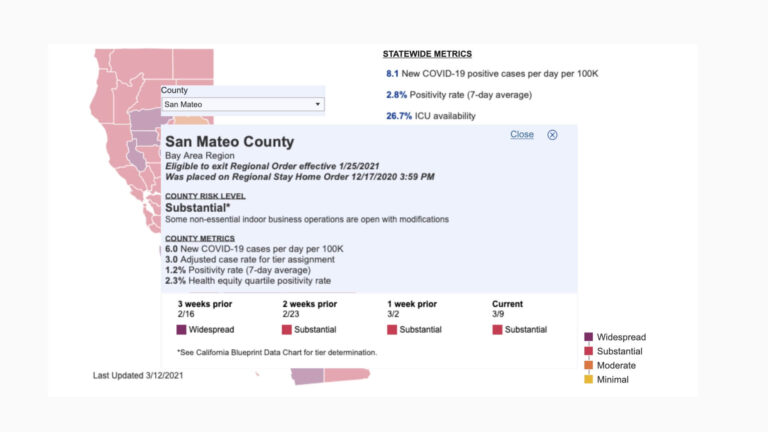
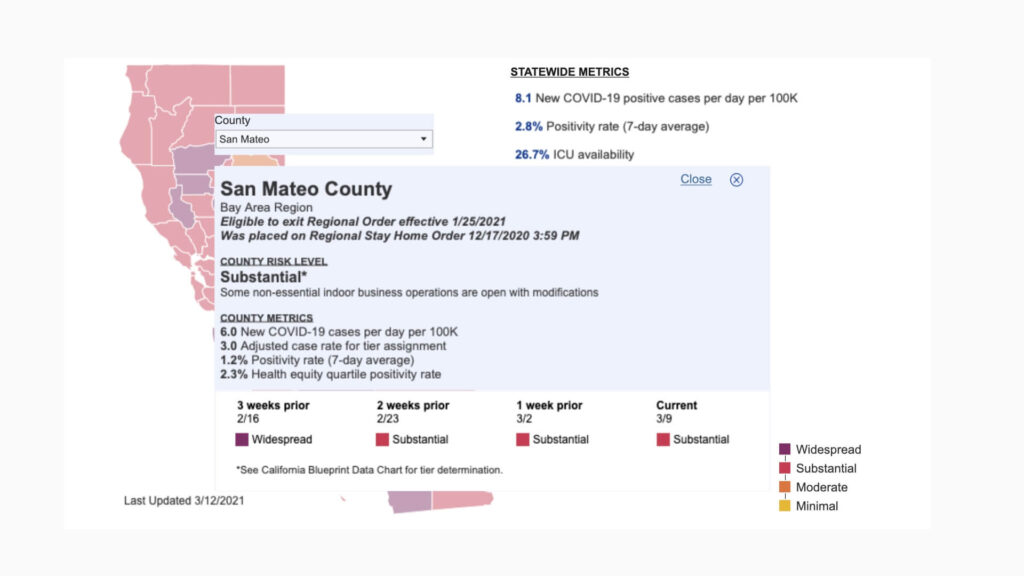
After San Mateo was declared a "Red" level on Feb. 23, the county is on track to move to Level 2 "Orange," allowing for additional activities.

"With coronavirus case rates down, San Mateo County is on track to reopen more shopping centers and retail stores, places of worship, restaurants, gyms and other indoor operations," the county said in a statement.

He specified that, if current metrics hold, the county could join Tier 2 "Orange" on Wednesday, March 17, 2021, under the state's four-tiered, color-coded Plan for a Safer Economy.

The state is expected to announce Tuesday whether San Mateo County can advance to Level Orange 2. So far, only three of California's 58 counties representing 0.1 percent of the state's population are currently at Level Orange.

The Bay Area regional intensive care unit's capacity has increased to 27.2 percent.

Separately, he noted that on March 15, people with certain medical conditions, described in the Feb. 12, 2021, state guidance to providers, will be eligible to receive the vaccine.

"We expect health care providers to identify those who will be eligible for vaccination beginning March 15 based on specific medical conditions," said Anand Chabra, MD, chief of the COVID-19 Immunization Division.

The county said that as vaccine supply allows, many residents will have access to vaccines through the large health care provider systems - Kaiser, Sutter, Dignity, AHMC-Seton.

Meanwhile, for those who are eligible by their health care provider who do not have an immunization pathway, the county will continue to arrange access and partner with local providers such as pharmacies and safety net clinics.

"We are awaiting any additional state guidance on documentation that could facilitate eligibility confirmation at the local level or any aspects that will be standardized as appointments are offered through the state's My Turn platform," Dr. Chabra said.

He also recalled that tests for SARS-CoV-2 are widely available throughout the area and are safe, easy and free of charge.

And that's because, to move through tiers, the state looks at several metrics: the number of people tested as a share of a county's overall population and the rates of positivity and cases. A county must also meet an equity metric in underserved neighborhoods.

Currently, vaccine doses administered exceed a quarter of a million, with a total of 181,504 people having received at least one dose of COVID-19 vaccine in San Mateo County as of Wednesday, March 10, 2021.

Of the total, 77,605 people have completed the vaccination series, bringing the total number of doses administered to 259,109.

As of March 7, 2021, of all county residents who have received the vaccine, 60.5 percent identify as people of color, 33 percent as white, and 6.5 percent as other.

Of note, San Mateo County has expanded eligibility for COVID-19 vaccine to include teachers, child care providers, first responders, and food and agricultural workers who meet the state's Phase 1B criteria, as supply allows.

Phone Scam Warned In San Mateo

This week, authorities warn phone scam in San Mateo, police will never ask for money, gift cards or personal information over the phone.

San Mateo phone scam
Bay City News [BCN]. Peninsula 360 Press [P360P].

Scammers posing as police detectives have recently been calling residents and asking for gift cards, police said this week.

               The caller's phone number may look legitimate, but authorities said it is a scam and advise residents to hang up and block the number. The call can also be reported to the Federal Trade Commission at https://reportfraud.ftc.gov/#/ .

               Legitimate calls from the San Mateo Police Department will usually show up as "unknown" since the department's lines are blocked. Police will never ask for money, gift cards or personal information over the phone.

               When the police call, it is usually to inform or ask residents to take action for their safety.

               Whenever a resident is not sure who is calling, they can call the police station number at (650) 522-7700.

               More information is available on a scam alert website at https://www.cityofsanmateo.org/4091 and at the Federal Trade Commission at https://www.consumer.ftc.gov/articles/0208-phone-scams.

East Palo Alto: Antonio Lopez Calls For Unity After Winning Trial For Alleged Election Violations

East Palo Alto: Antonio Lopez calls for unity after winning lawsuit for alleged election violations for allegedly offering tacos near polling place.

Palo Alto Antonio Lopez
Bay City News [BCN]. Peninsula 360 Press [P360P].

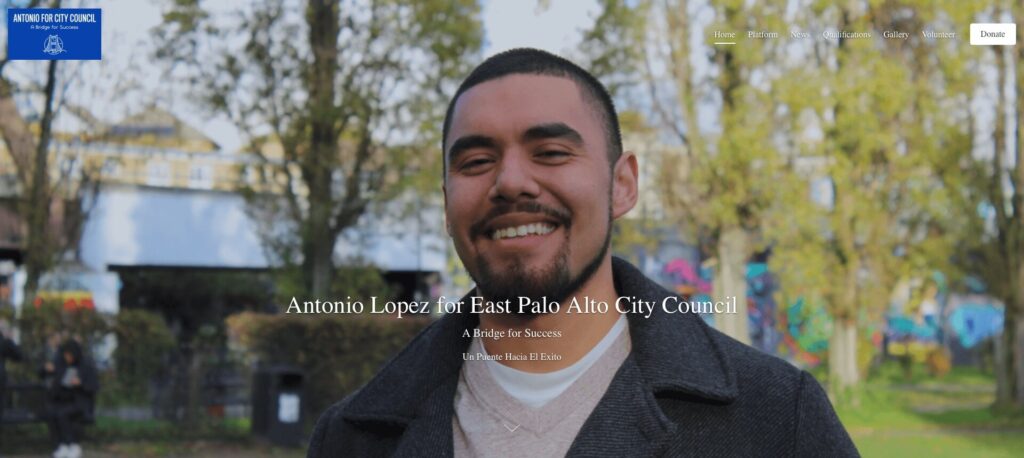
The latest addition to the East Palo Alto Council won his council seat by 69 votes. 

               In doing so, Antonio Lopez has won a court case filed against him after the court ruled that he did not violate election laws after offering tacos near a polling place.

               Lopez defeated candidate Webster Lincoln for the third and final Council seat. After the election results were certified in December, Lincoln challenged the results and filed a lawsuit against Lopez in San Mateo County Superior Court, accusing him of electioneering, defined in state law as a visible display or audible dissemination of information advocating for or against a candidate within 100 feet of a polling place. Lincoln alleged that Lopez was giving away tacos as an incentive to get votes.

               Superior Court Judge Danny Chou ruled in favor of Lopez on Wednesday, as the court found that Lopez did not violate election laws.

               During a press conference Thursday, Lopez said he wanted to move on and focus on his duties as a councilman. He encouraged Lincoln to work with him so he could put the case behind him.

               "I am optimistic that now that the facts of this case have been meticulously analyzed by the court, we can reorganize and work together in solidarity of all colors and creeds that make up our community," Lopez said. "Let's put this behind us," he urged.

               On Election Day, Lopez and other candidates campaigned in front of St. Francis of Assisi Church, one of three polling places in East Palo Alto. The candidates campaigned in an area marked by election officials, which was less than 100 feet from a ballot box. Lopez also hired a taco truck to offer free tacos at the church..

               In its decision, the court stated that the tacos were not given in exchange for votes, as there was "nothing on or near the taco truck that would indicate any connection to Lopez." Although Lopez and other candidates had campaigned within 100 feet of the mailbox, they followed the directions of election officials and moved to a more distant location following a complaint of possible proselytizing. In addition, the court found that "voter fraud is much less of a concern at a ballot box because the voter simply returns a completed ballot."

               Lopez said it was offensive to believe that the community would sell out their beliefs for tacos.

               "What I despise most about this case is the damage it did to our city's reputation. At a time when all the headlines should have been about the huge disparities in infection rates, about getting more funding for more testing, about advocating for more equitable vaccine distribution as soon as possible, this from a taco truck," Lopez said. "For months, we looked like a city too busy throwing itself on the ground to advocate for itself," she added.

               Ann Ravel, the attorney who represented López pro-bono, said in her eyes the case was an attempt by a more powerful candidate to intimidate López.

               "Unfortunately, the courts are being used to instrumentalize our elections in an attempt to undo the will of the people," Ravel said. 

               Lopez said the case also stoked existing racial tensions in the community. Ravel said there was racial bias in the trial and in the way people responded to the case on social media. 

               Ravel added that some of Lincoln's witnesses were not present at the church and had no personal knowledge of the incident.

               "What they knew was what they believed and what they believed was extremely barbaric, extremely negative and a lot of it was clearly anti-Latino," Ravel said. "I think that part of the trial was perhaps the most disconcerting and I'm sure it was for Antonio as well because he really is someone who uses his role in the community to try to bring people together," he sentenced.

               Lincoln did not comment on the matter.

               East Palo Alto City Clerk Walfred Solorzano, who served as the city's chief election official and was also a defendant in the case, said he was glad the case was resolved and praised county officials for mitigating problems on Election Day.

               "I'm very pleased that the integrity of the election was maintained. It showed that the will of the people and the participation of the voters and the use of that right to vote is really the most important way to decide who the leaders of the community are, rather than going to court," Solorzano said.

               Objections to the judgment may be filed by March 17 and the court will issue a final statement by March 24. Court documents are available online at https://odyportal-ext.sanmateocourt.org/Portal-External/Home/WorkspaceMode?p=0 by entering the case number 20-CIV-05468.

Study Reveals Redwood City Residents Face Serious Problems Meeting Basic Needs Due to COVID-19

Study reveals Redwood City residents face problems meeting basic needs because of COVID-19, according to Gardner Center.

Redwood Studio needs COVID-19
Pamela Cruz. Peninsula 360 Press [P360P].

The economic and educational consequences due to the COVID-19 pandemic have had a far-reaching impact on a number of issues. School closures have resulted in limited access to food and medical care for children, while business closures have left Redwood City families unemployed and unable to afford basic necessities such as food and housing.

Thus, a large portion of Redwood City residents are struggling to meet their basic needs. A study being conducted by Gardner Center has highlighted that a third of those surveyed for the research responded that they have not paid rent and a quarter have foregone medical care because of the cost.

Meanwhile, half of the respondents who work full time also provide more than eight hours of child care per day. And one-fifth of respondents with school-age children reported not having a computer in their home.

Spanish-language respondents, compared to English-language respondents, were six times more likely to be food insecure and twice as likely to be housing insecure, which is a much larger difference than in other demographic comparisons.

Survey responses show that the majority of food insecure households - 75 percent - are aware of or receive local food services, but only a small proportion of food insecure renters - 25 percent - are aware of or receive rental assistance. 

The proportion of unemployed or suspended respondents increased from 10 percent to 20 percent since COVID-19 arrived in March 2020. 

When statistically weighting responses by race and household size, no changes in need rates were observed, "suggesting that our survey sample is representative of the broader Redwood City population," said Brandon Balzer-Carr, a research associate at the Gardner Center.

For Kristin Geiser of the same research centre, the impact of unmet needs on young people is compounded by prolonged isolation, anxiety and interruptions in developmentally appropriate opportunities for learning, growth and development. 

"Our findings will provide local organizations with information they can use to develop collaborative, strategic and effective approaches to meet the needs of youth and their families and, in turn, support community health and well-being," she said.

The study, which is still ongoing, has conducted three community briefings of the survey results to audiences of direct service providers and elected officials, many of whom supported the survey recruitment. 

"We have two more scheduled in the coming weeks. We have used these reports as an opportunity to identify further analysis that would be valuable to local stakeholders," Balzer-Carr said.

She added that several community leaders expressed interest in learning more about households with children 0-5 and immigrants, so analyses are currently being conducted for those groups.

Study reveals Redwood City residents face problems meeting basic needs because of COVID-19, according to Gardner Center.