Anna Lee Mraz Bartra. Peninsula 360 Press [P360P].
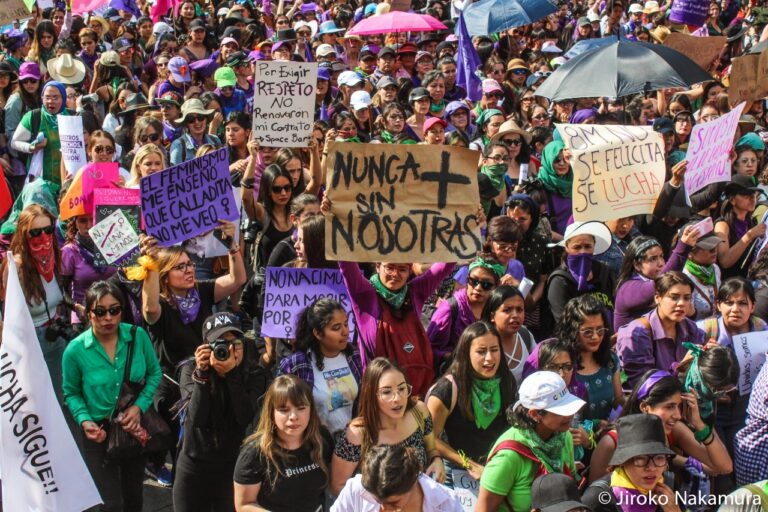
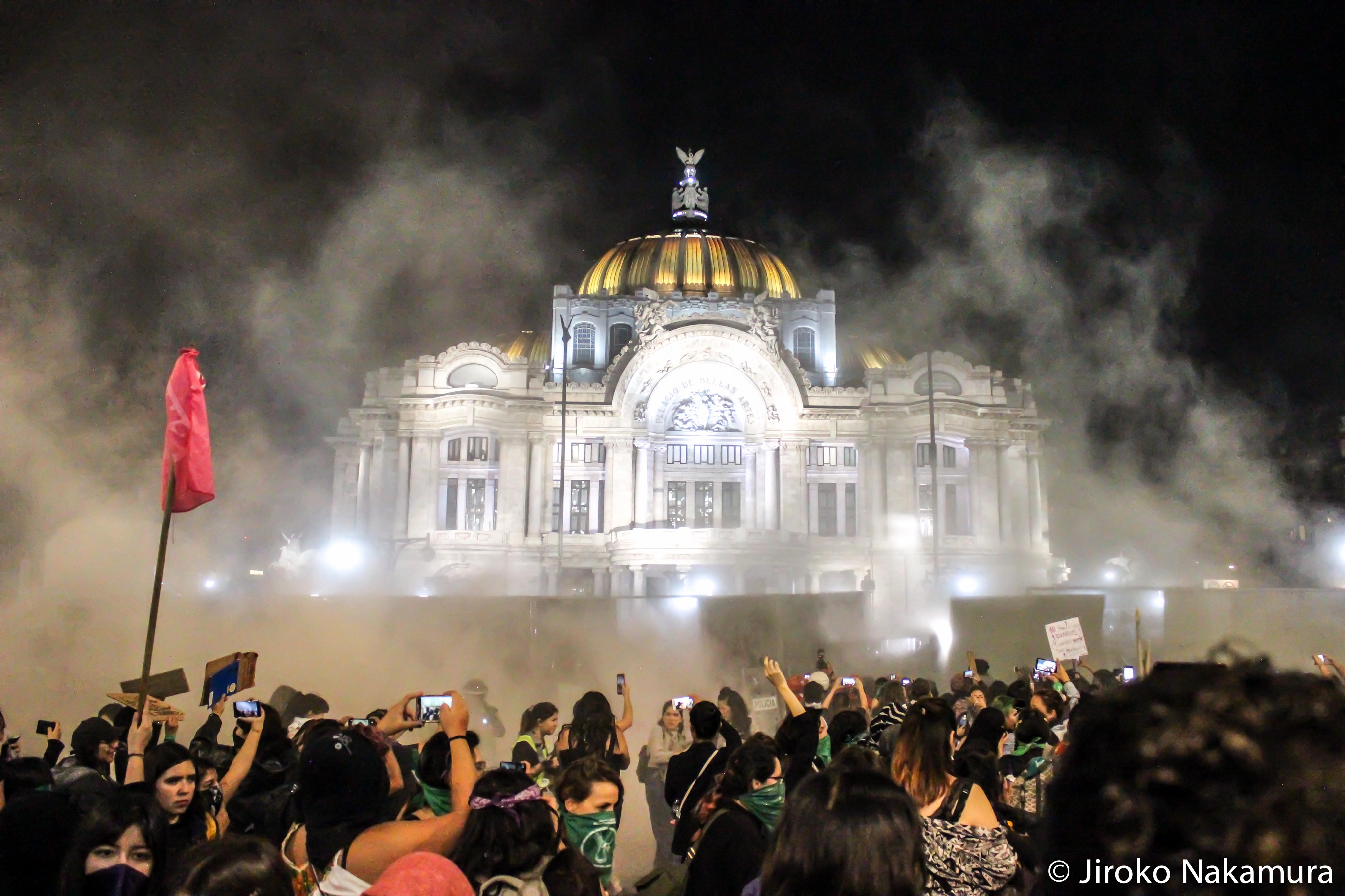
Listen to the article8M March. Mexico City, 2020. Photo: Jiroko Nakamura
When I asked as a girl why the April 30th celebration of childhood was called "Día del Niño" (Boy's Day literally because in Spanish the masculine is used for both genders), I was confused. When I was the girl in the classroom who wanted to play soccer, even if it meant being the only one, I was called weird. When I went outside to play with my neighbors and they talked about "Viejas" (a derogatory way of referring to a woman), I was annoyed and asked them not to do so, sometimes they would walk away. When my mother explained to me that feminism was the struggle for equality for women, I responded that all women should be feminists, it was only logical. And so, I got tired of feeling alone and, for many years, I gave up the fight.
Something was gnawing inside me as I went through adolescence, the fire still quiet. But, when men looked at us lustfully when walking with my friends from the car to the club, a spark ignited; when a man put his hand down the blouse of my friend who was walking down the street, a spark ignited; when a colleague heard an idea of mine in a meeting and repeated it louder to make it his own, a spark ignited; when I heard the stories of women in shelters fleeing from drunken, abusive husbands, a spark ignited. When my students cried with me about being hurt before, a spark ignited.
And when I realized that every woman I know has suffered some kind of sexual violence, the fire lit.
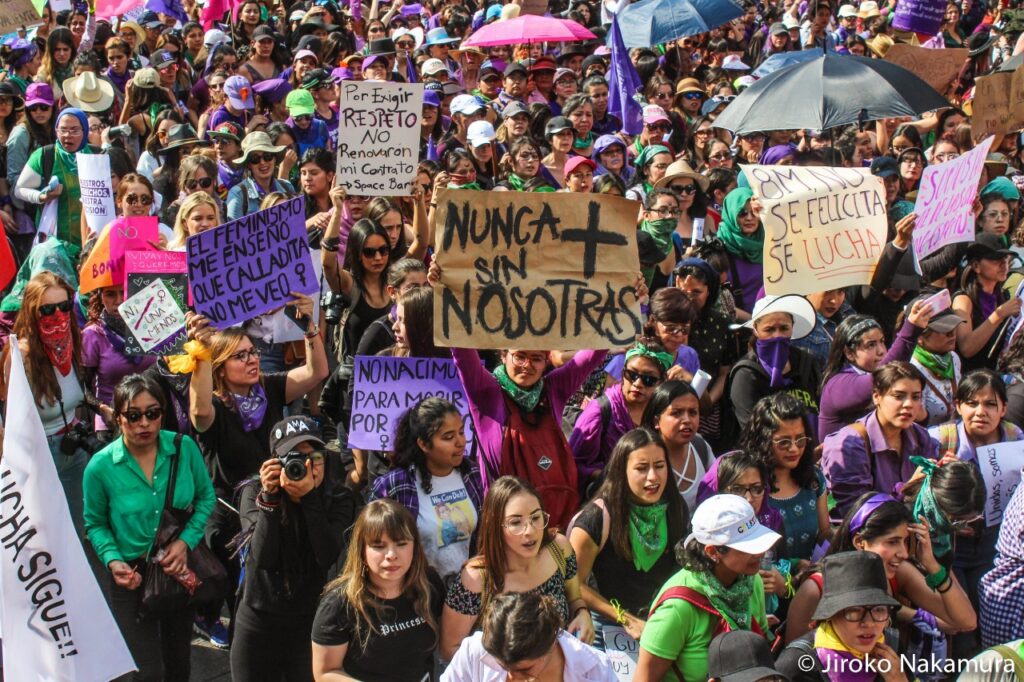
8M March, Mexico City, 2020. Photo: Jiroko Nakamura
That fire inside of me, which had been dormant for so many years, lit the way for me to connect with other fires.
This is what feminism feels like, a warmth that runs through your body and takes away the cold left by abuse or mockery. It is the light that shines from the chest, welcomes you from the shadows and rejection. It is the vibration that shakes off mistreatment, hurtful words and clears the sky to allow you to fly.
It is the individual and the collective, for your fire does not burn alone. It absorbs the energy of the others, in a give and take of strength. When we realized it, we were thousands. And Latin America ignited. It ignited with rage, indignation and courage.
It does not come from nothing this flame that now threatens to set fire to the doors of all the palaces and glass roofs; for wise women, ancient witches and powerful dinosaurs had already loaded with stones, logs and ocote. They had already created their own fires that knocked down more than one monument.
They pass us the baton, a heavy, dangerous baton with a giant warning sign on it: "It won't be easy." And it is not.
The struggle is imperfect, we make mistakes. We listen to each other, but sometimes we don't. We don't always agree and we throw it up for debate. We want to run before we walk and we stumble. Some of us want to change everything, aware that it will also change us inside.
They call it radical, liberal, philosophical, equality, difference, abolitionist, Marxist, white, colonial, decolonial, postcolonial, anarcho, institutional, lesbian, black, cultural, separatist, cyber, eco, dissident, queer... It comes in all shapes, backgrounds, tones, sizes, colors and smells.
And it's uncomfortable, it's bitter to dig into one's own coding. That's why we embrace and sing in unison, like someone who puts sugar in medicine. We cry and laugh hand in hand, we share what is difficult. And we irritate, because we are changing things, but there is still a long way to go.
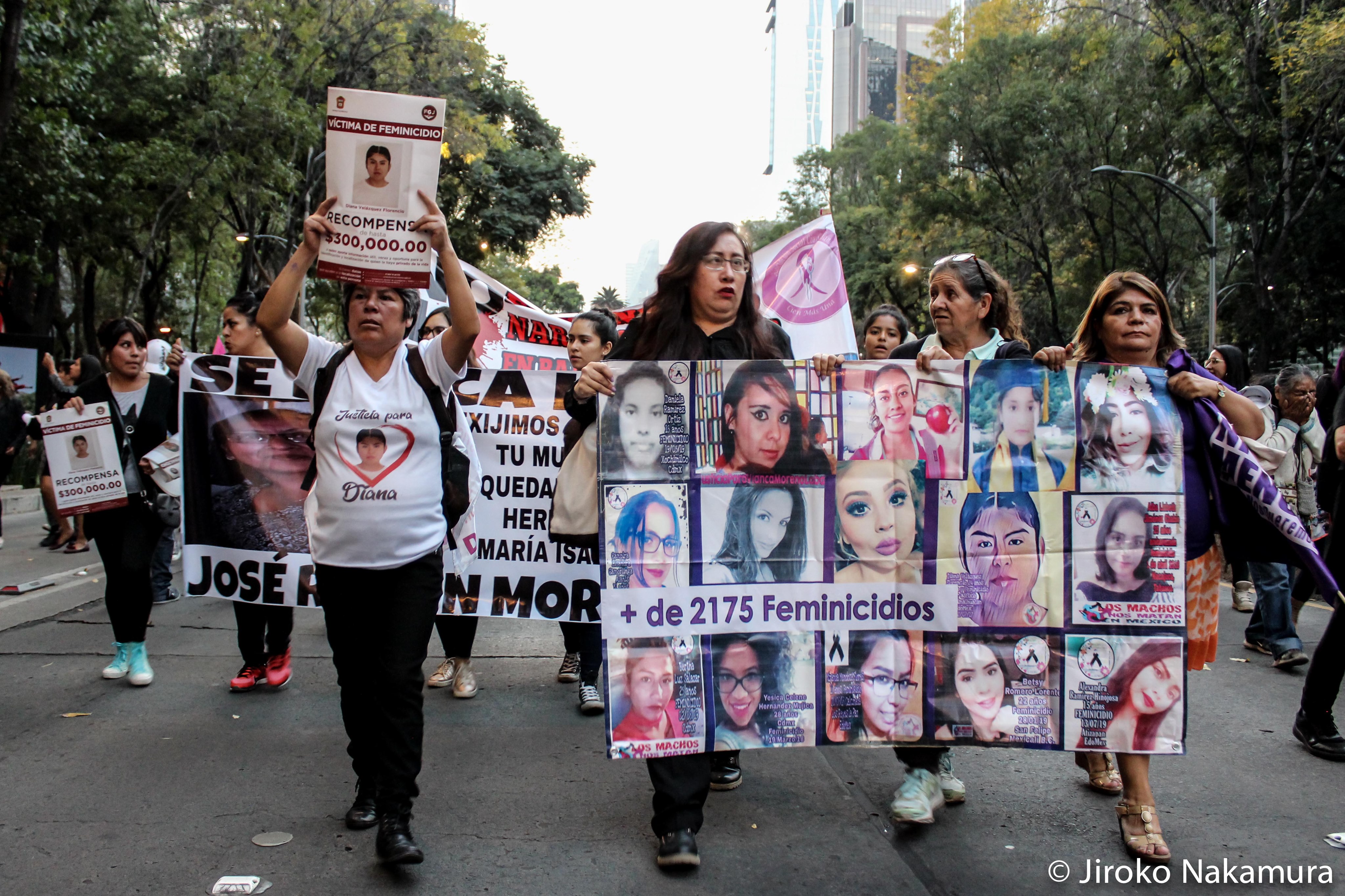
The struggle is still needed as long as they keep killing and disappearing our sisters.It goes without saying how repulsed I am that this happens every two hours in Latin America. The United States is not far behind, as in 2018 nearly two thousand women were murdered, mostly at the hands of their intimate partner. I can't understand why I can't find more recent data, but it's clear to me that the murder of Vanessa Guillén is not the only one of its kind in this country and it touches a chord in all aspects.
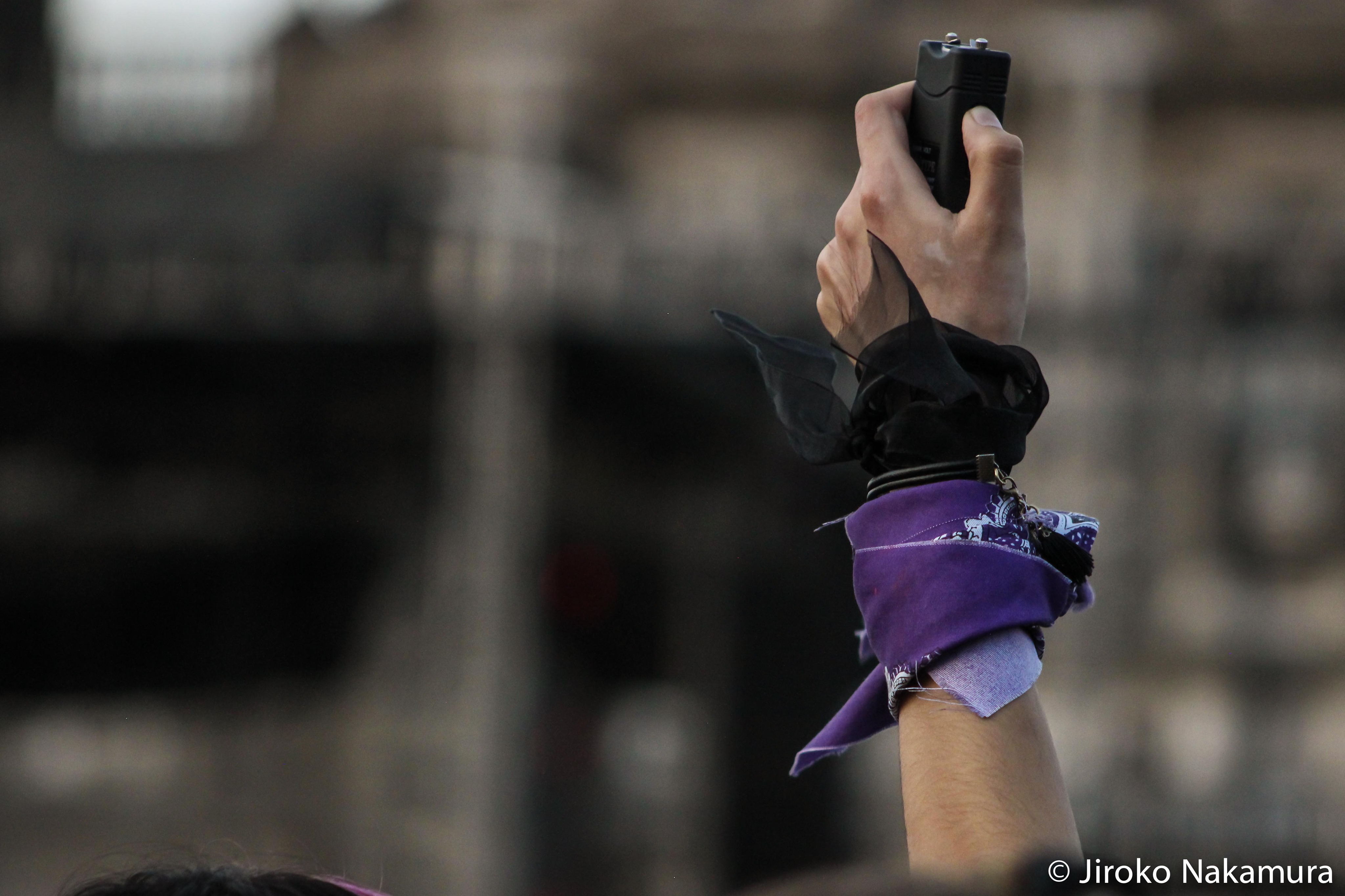
8M March, Mexico City, 2020. Photo: Jiroko Nakamura.
It will be a long way off as long as we continue to earn less than our male counterparts in the job market. The fight will be necessary as long as the girl I teach dance on Saturday mornings to doesn't cry because her older brother is the only one allowed to play video games because "that's for men". It will be necessary as long as they look at us with lust in the street, as long as they touch us, and it will continue to be necessary as long as they continue to make laws about what to do with our bodies, without our authorization.
This movement has been around for 3 centuries, no matter what you call it, the objective is common. And we will continue to burn until we break everything.
8M March, Mexico City, 2020. Photo: Jiroko Nakamura.
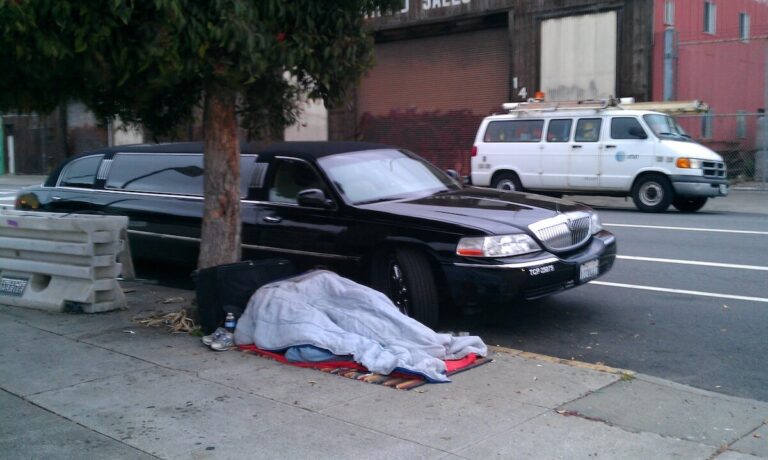
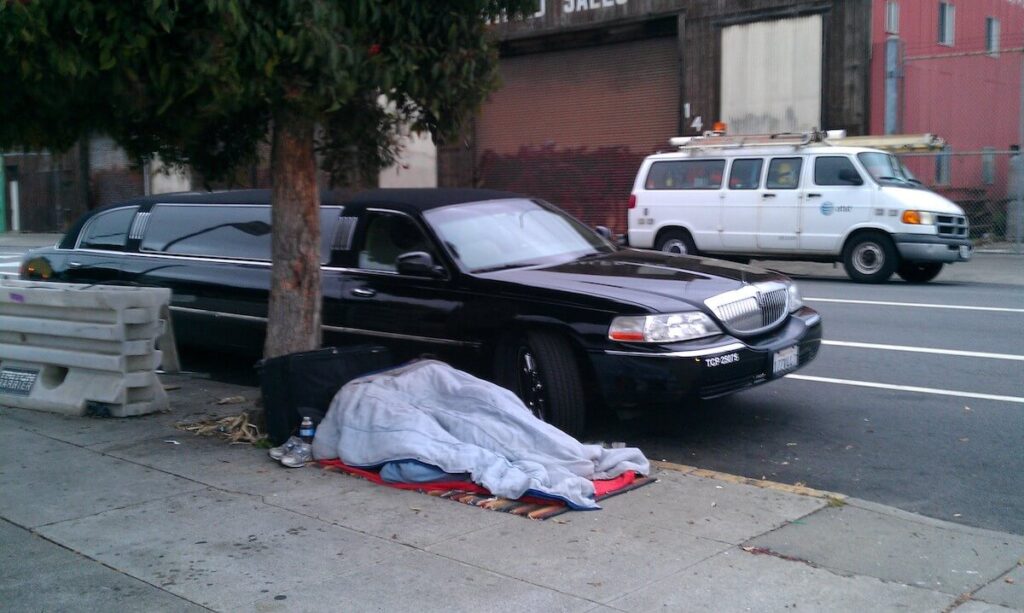
In the wake of the rising number of homeless in San Francisco, officials have raised concerns as shelters have had to reduce the number of people they help due to COVID-19, and the cost of housing homeless people in tents has reached more than $16 million.
San Francisco is paying $16.1 million to house homeless people in 262 tents in vacant lots around the city, where they also receive services and food.
When you do the math, it's clear that the cost of supporting each of those tents on the land is more than $61,000 per tent per year.
That's more than double the cost of an average one-bedroom apartment in San Francisco, so why waste money, especially when the city is projected to have a budget deficit of more than $650 million over the next two years.
The six tent sites, called "safe sleeping villages," are monitored 24 hours a day, with food distribution, clean water, garbage collection and access to toilets.
It should be noted that the tent program is not eligible for federal reimbursement, and the $16.1 million allocated for the program in the current budget is a fraction of the more than $300 million spent annually on homeless services.
While the program is expensive - the average nightly cost per tent is $190 - it is $82 less than what the city pays to house the needy in its homeless hotel program.
However, the hotel program, which offers four walls, a bed and a private bathroom, costing about $21 million a month, is reimbursable by the Federal Emergency Management Agency (FEMA).
During last Wednesday's budget committee hearing, the department's acting director of homelessness, Abigail Stewart-Kahn, pointed out that tent sites are not eligible for federal reimbursement because they are considered a group shelter.
He added that the city struggled to create other options for the homeless, as indoor shelters were closing early in the pandemic, and officials did not have time to conduct a more thorough contract bidding process, which may have reduced operating costs.
In that regard, Stewart-Kahn said the department is "conducting an analysis" on the tent program and figuring out how it can move forward with the program.
The city, which originally thought the program would be reimbursed by FEMA, has paid for it through a combination of state grant money, the city's general fund and money from a 2018 business tax; so stated the department Wednesday.
Residents near the designated tent areas have expressed anger and raised complaints about pests and drug use in the spaces.
The executive director of the city's Coalition for the Homeless, Jennifer Friedenbach, said San Francisco made the right decision at the beginning of the pandemic to create the program, but she said the program should be expanded at the current rate. Instead, she called for investing that money in more stable options, such as housing subsidies.
It is necessary to understand that indoor shelters can cost millions of dollars to build and operate, while affordable housing can cost at least $700,000 per unit. Both proposals could take years to build.
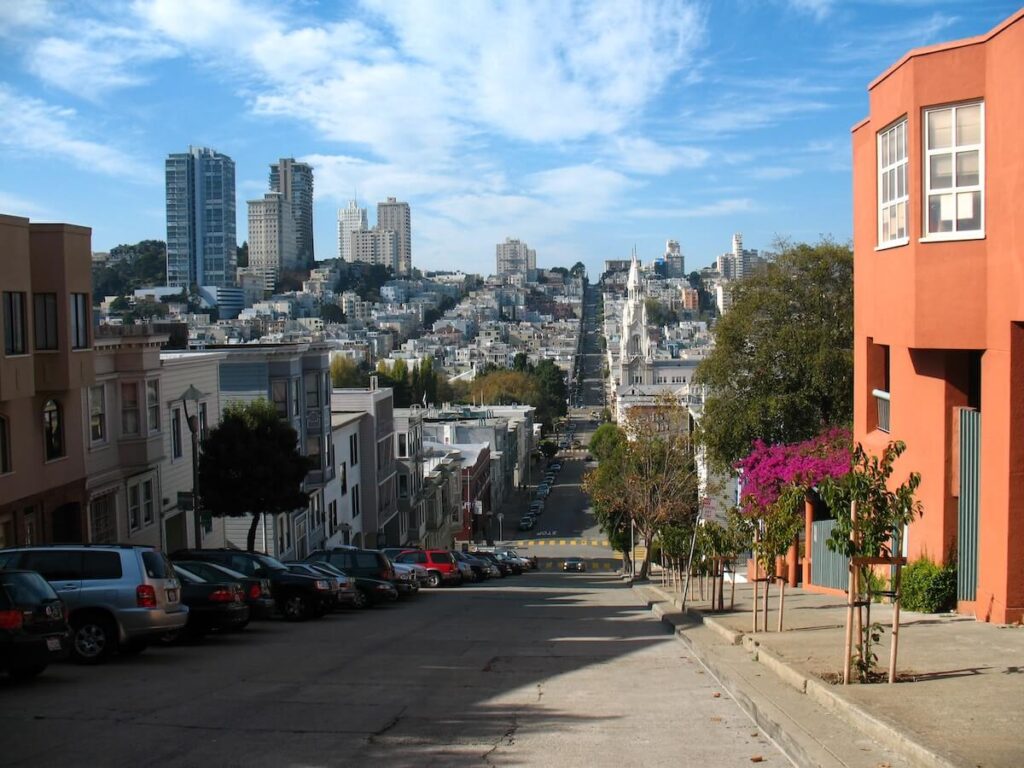
New research published today by the California Policy Lab -California Policy Lab-points out that San Francisco is experiencing a unique and dramatic exodus, which is causing a 50 to 100 percent increase in Bay Area immigration to some counties in the Sierras.
And it is that, contrary to suggestions of a mass exodus from California, most of the movements in 2020 occurred within the state.
California departures in 2020 largely mirrored historical patterns, while the largest statewide change was a decline in people moving to California.
Using a new dataset of quarterly credit bureau data, the research team analyzed where Californians in each county moved to after the pandemic in March 2020.
"While a mass exodus from California clearly did not occur in 2020, the pandemic did change some historical patterns, for example, fewer people moved into the state to replace those who left," explained author Natalie Holmes, a researcher at the California Policy Lab and graduate student at the Goldman School of Public Policy at UC Berkeley.
For Evan White, executive director of the California Policy Lab at UC Berkeley, "some people seem to be concerned about the fiscal implications of wealthy people leaving the state, but we don't yet see any dramatic evidence that wealthy households are fleeing California in droves."
He added that, unfortunately, because the state relies heavily on income taxes from the "super-rich," the departure of even a small number of wealthy individuals could negatively affect revenues if they are not replaced with new entrants.
This is the first published analysis using a new dataset of quarterly residency and credit information that California Policy Lab will use to inform the state's understanding of mobility, wildfire impacts, financial wellbeing, and student loans.
Among the findings in the study, it noted that the proportion of people moving out of state has grown slightly since 2015, from 16 percent to 18 percent, a trend that continued in 2020 without a marked increase.
Historically, the document details, the number of people leaving California follows the number of people entering the state; however, the pattern diverged in the fourth quarter of 2020, when 267,000 people left the state and only 128,000 entered.
Similarly, the study notes that there is no evidence that wealthy households are leaving the state in droves. "Their exit rates follow trends in less affluent areas."
He also highlighted that San Francisco's net departures from the end of March through the end of the year increased 649 percent compared to the same period in 2019, from 5,200 net departures to 38,800.
Also, about two-thirds of the people who moved out of San Francisco stayed within the 11-county Bay Area economic region, and 80 percent remained in California.
Notably, counties in the Sierra Nevada Mountains and other parts of Northern California saw huge increases in inflows of former Bay Area residents, with 50 percent and in some cases 100 percent more immigrants in 2020 compared to 2019.
Tomorrow is International Women's Day and a few days ago we woke up to find the National Palace and other buildings, some of them listed as historic monuments, surrounded by steel fences. At night (or was it the early hours of Saturday morning?) we woke up to the shocking spectacle of hundreds, perhaps thousands of names of women victims of femicide across the country that feminist collectives painted in white letters on top of the ill-fated steel. I don't know if there are names of trans women; I hope there are, because as I wrote here a few days ago, this struggle is for all of them and for all of them.
Definitely, the image of the National Palace with its billboards full of the names of women murdered by the capitalist patriarchy is a reminder that we are here, for them, and that we will not remain silent.
National Palace with the names of the victims of femicide. Santiago Arau. Source: Twitter
I don't pretend to teach feminism to anyone; I don't have the reading or the experience to do so. That's why this text is about books, which are among the things I enjoy and treasure most in life.
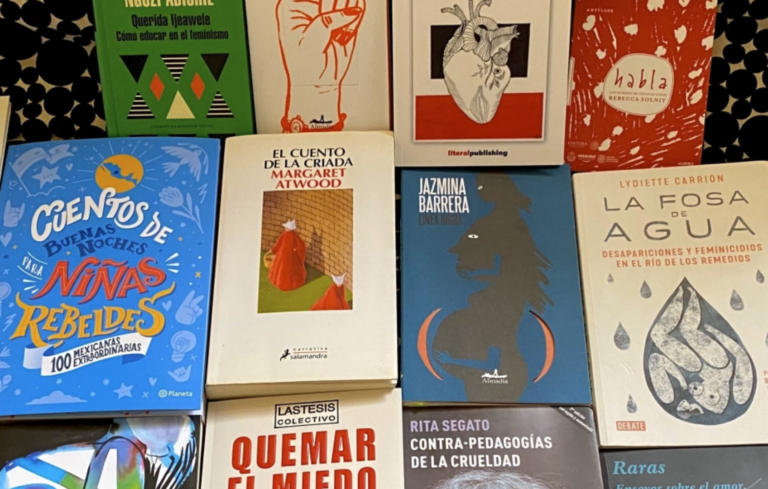
I am not going to get into discussions about whether this or that text is more academic, or more problematic, or is already outdated, or does not meet the theories. queer. I'm not going to do that because these are very different books, not necessarily academic or aimed at specialist readers; indeed, there are a couple that are more for children and teenagers. Some of these texts may not have been written with the intention of appearing on a list of feminist books, and their authors may not necessarily agree with each other. They're not all new releases either (of course!) But I chose them because I think they can give a good overview of the reasons for our rage.
I mean, in case anyone still has doubts.
We/Weby Valeria Gallo and Ana Romero
In this book, author and illustrator make a journey through all the prohibitions and obligations attributed to human beings throughout history for the simple fact of having been born with this or that biological sex, to reach the conclusion that, at the end of the day, we are all simply people.
Rare. Essays on love, the feminine, the creative will, by Brenda Rios. Turner.
2. Raras. Essays on love, the feminine, the creative will, by Brenda Ríos
From Becky G, to Anaïs Nin, from Anne Sexton to Carson McCullers, from Amy Winehouse to Clarice Lispector, from Emily Dickinson to María Moreno, these essays by Brenda Ríos are a scrutiny of the feminine and its circumstances in relation to the creative act: everyday life with its caring for children and tending to the home, loving passion, the expression of open and joyful sexuality, addictions, self-imposed confinement, the punishment of patriarchy in the form of the denial of just recognition, are just some of the lines that intersect in the stories of these women.
Tsunami 2. VV.AA. Edition and Prologue: Gabriela Jáuregui. Sixth Floor
3. Tsunami 2, VV.AA. Edition and Prologue by Gabriela Jáuregui
Marina Azahua, Lydia Cacho, Dahlia de la Cerda, Diana del Ángel, Lía García (La novia sirena), Valeria Luiselli, Fernanda Latani M. Bravo, Luna Marán, Sylvia Marcos, Ytzel Maya, Brenda Navarro and Jumko Ogata could not be more different from each other. And therein lies the richness of this book. A few weeks ago we interviewed Gabriela Jáuregui, Lía García La novia sirena, Fernanda Latani M. Bravo and Jumko Ogata for this same space; we invite you to read so as not to repeat ourselves: https://lalibretadeirmagallo.com/2021/02/01/tsunami-2-por-la-necesidad-de-escuchar-otras-voces/
Breaking in Other Ways. Filmmakers, journalists, playwrights and performers in contemporary Mexico, by Adriana Pacheco Roldán (Coord). Literal Publishing/Hablemos, escritoras/Ediciones Eón.
4. Breaking in other ways. Filmmakers, journalists, playwrights and performers in contemporary Mexico, by Adriana Pacheco Roldán (Coord)
Just out of the oven, this book gathers four essays by different academics and artists: Maricruz Castro Ricalde, Gabriela Polit Dueñas, Fernanda del Monte Martínez and Artemisa Téllez, a prologue by Cristina Rivera Garza, an introduction by Adriana Pacheco Roldán -who is the compiler and also the creator of the project of diffusion of women writers in Spanish, Hablemos, escritoras- and an appendix that includes names, date and place of birth, and genres of more than 300 contemporary Mexican women writers.
The Handmaid's Tale, by Margaret Atwood. Salamandra Editions
5. The Handmaid's Tale, by Margaret Atwood
In a country, in the not too distant future, women have lost all their freedoms and privileges and are organized by castes, according to their ability or inability to conceive and give birth. Maids, like the protagonist Offred, are passed from one family to another to serve as human incubators, which means, of course, being raped by the heads of families. When Margaret Atwood was asked if she considered her novel to be a feminist book, she replied, "If that means an ideological treatise in which all women are angels and/or victimized to such an extent that they have lost the ability to make moral choices, no. If it means a novel in which all women are angels and/or victimized to such an extent that they have lost the ability to make moral choices, no. If it means a novel in which they have lost the ability to make moral choices, then no. If it means a novel in which women are human beings - with all the variety of personalities and behaviors that implies - and are also interesting and important and what happens to them is crucial to the subject matter, structure and plot of the book... Then yes."
Burning Fear. A manifesto, by Colectivo Las Tesis, Planeta.
6. Burning Fear. A manifesto, by the Las Tesis Collective
Last year, a couple of months before the pandemic forced us to lock ourselves in our homes (the lucky ones, because many people had to keep going out to get their daily bread), we started to hear everywhere: "And it wasn't my fault/Nor where I was or how I was dressed/The rapist is you". This is part of the lyrics of the performance A rapist in your way, by the Chilean collective Las Tesis, formed by Dafne Valdés Vargas, Paula Cometa Stange, Lea Cáceres Díaz and Sibila Sotomayor Van Rysseghem, who compile in this manifesto some of their main postulates.Speak to by Rebecca Solnit and Mary Beard. Antelope Editions
7. Speak. Mary Beard/Rebecca Solnit
This small - in size, but not in impact - book published by Ediciones Antílope, brings together the essays "Men Explain Things to Me" (2008) by Rebecca Solnit and "The Public Voice of Women" (2014) by Mary Beard, published together for the first time in Spanish, with an introduction by Margarita Velázquez Gutiérrez and a preface by Tania Tagle, as well as illustrations by Renuka Rajiv. Beard's essay grew out of a lecture she gave at the British Museum in London, while Solnit's was originally published on TomDispatch.com.
Counter-Pedagogies of Cruelty, by Rita Segato. Prometheus Books
8. Counter-Pedagogies of Cruelty, by Rita Segato
Published in Buenos Aires in 2018, this book brings together the reprinting of the three original lectures of the Counter-Pedagogies of Cruelty with a fourth one, called Frente al espejo de la reina mala, which according to its author, although it was not given in the same cycle as the previous ones, at the Free Faculty of Rosario, "includes the main counter-pedagogy of cruelty: the bond, affection, friendship". It also includes a brief introductory prologue by Segato herself and a presentation.
A series of possible circumstances surrounding a working class Mexican woman, by Yolanda Segura. Almadía
9. Series of Possible Circumstances around a Working Class Mexican Woman, by Yolanda Segura
This poetic essay by Yolanda Segura is the story of Eloísa, a woman born in the 1940s, whose dreams, desires and aspirations are dashed time and again by her condition as a "middle-class" woman as capitalism grows ever more savage and takes its fiercest revenge on women's bodies.
Good night stories for rebellious girls. 100 Extraordinary Mexican Women. VV.AA. Planeta
10. Good night stories for rebellious girls. 100 extraordinary Mexican girls. VV.AA.
After the success of the previous three issues, Planeta dedicates this issue of the Goodnight stories for rebellious girls... to Mexican women. In its pages you can find from the 68 activist Ana Ignacia Rodríguez "La Nacha", to the writer Inés Arredondo; the painter and poet María del Carmen Mondragón, better known as Nahui Ollin or the heart surgeon María del Sol García Ortegón; the actresses of the golden cinema María Félix and Dolores del Río and the activist Hermelinda Tiburcio.
Nigra Line, by Jazmina Barrera. Almadía
11. Linea Nigra, by Jazmina Barrera
In this biographical essay, Jazmina Barrera explores pregnancy, childbirth and breastfeeding from her own experience, but also networks with other writers and visual artists who have explored the female body in full transformation through these stages.
Dear Ijeawele. How to educate in feminism, by Chimamanda Ngozi Adichie. Random House Literature
12. Dear Ijeawele. How to Educate in Feminism, by Chimamanda Ngozi Adichie
What began as a letter to a friend who had just had a baby, and asked Chimamanda Ngozi Adichie for her advice on how to educate her on feminism, became almost a classic when the author decided to publish it in the form of an essay, corrected and expanded.
Water of Lourdes. Being a woman in Mexico, dand Karen Villeda. Turner.
13. Water of Lourdes. Being a woman in Mexico, by Karen Villeda
Based on the death in unclear circumstances (it is not known if she committed suicide or was the victim of femicide) of an aunt with whom she shared her first name, Karen Villeda writes a biographical journalistic essay about the violence that is exercised both in her homeland, Tlaxcala, and throughout Mexico, towards women's bodies.
The water pit. Disappearances and femicides in the Remedios River, by Lydiette Carrión. Debate.
14. La fosa de agua. Disappearances and Feminicides in the Remedios River, by Lydiette Carrión
For six years, Lydiette Carrión dedicated herself to reporting on the disappearances and femicides of women and girls in the metropolitan area of Mexico City and the suburbs of the State of Mexico. She was struck by the number of disappearances she documented in Ecatepec and Los Reyes Tecámac, in the State of Mexico. The water grave documents the cases of at least ten teenage girls who disappeared in that area. Some of their bodies were found in pieces, in black bags, in the Remedios River.
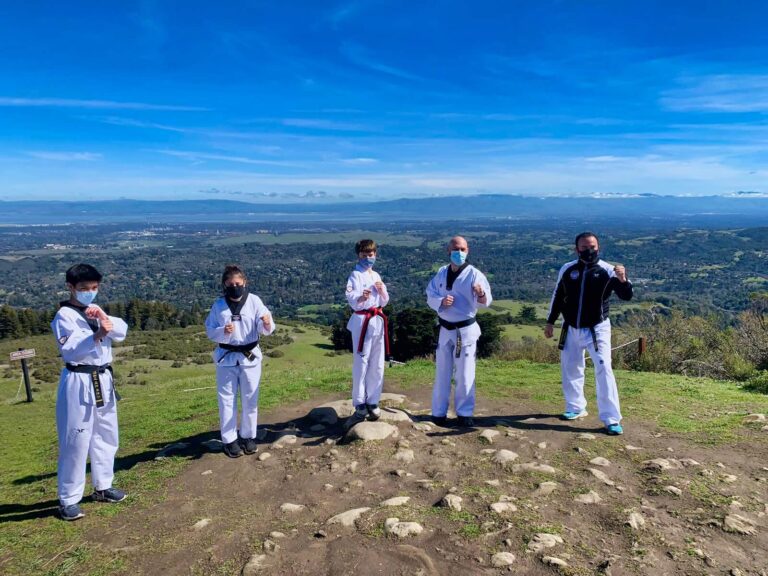
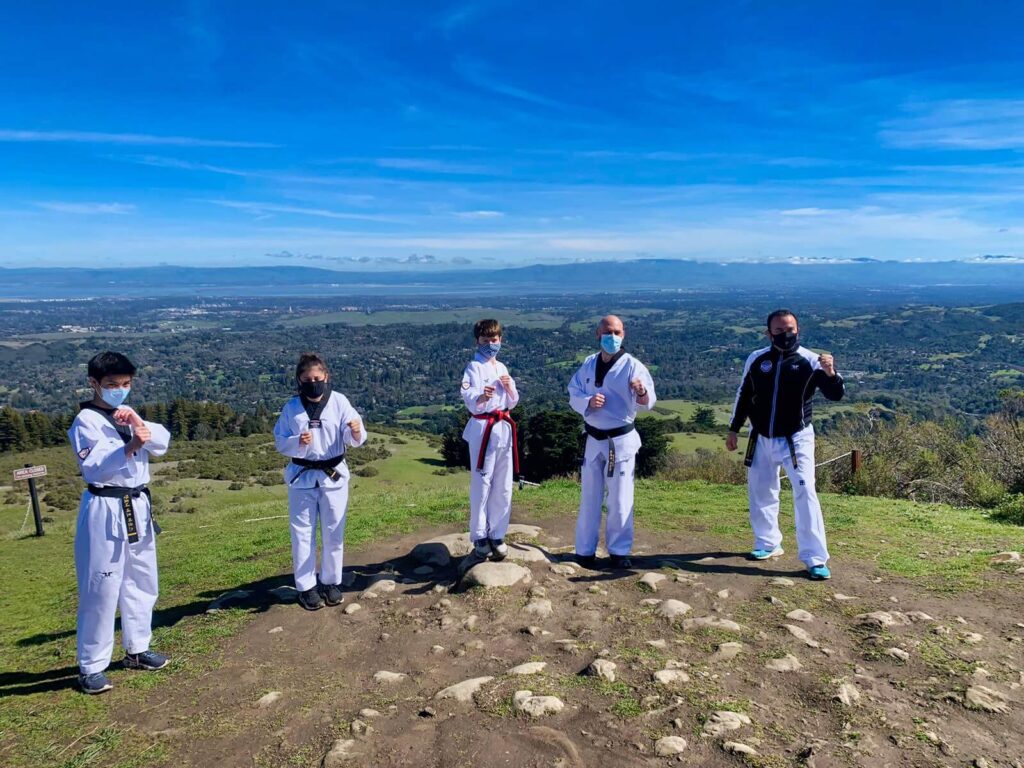
Three students from Casa Circulo Cultural and Metro Tae Kwon Do, in Redwood City, took the first stage of their outdoor black belt exam this Saturday with masters Gerardo Ortiz (5th Dan) and Henry Villar (4th Dan).
It takes a person four to six years of arduous and constant training to become a black belt. "Due to the pandemic we had suspended the exams, but today we resumed outdoors, with social distance and using masks, so that students do not fall behind. In addition to these children continued training with great effort via Zoom from their homes," said the teacher Ortiz.
It took Eliot six years to reach his 1st Dan black belt exam. He started training taekwondo and is now 12 years old. Neal and Sofia were tested for 2nd Dan.
Taekwondo, explained Master Ortiz, provides enormous benefits to children, adolescents and adults. "This sport forms human beings with discipline, perseverance, and high self-esteem, in addition to serving as an instrument of self-defense.
However, obtaining the black belt is a great achievement that very few reach. "I estimate that out of a hundred children who start training taekwondo, between one and two will reach the 1st dan black belt," said Master Ortiz. "Moving up to second and third dan is even more complicated. Possibly, one out of every 500 taekwondo students reaches these levels.
"Whether a child gets a black belt depends not only on his or her own hard work, but also to a great extent on the parents, since they are the ones who should support and motivate their children. Many parents keep their children jumping from one activity to another, and that's not a bad thing, but that way the children don't go deep into anything or learn to complete what they start," said Ortiz, who began training the sport as a child in Mexico.
However, explained Master Ortiz, all students who train taekwondo, regardless of the belt they reach, get a benefit that is usually for life.
The California Governor Gavin NewsomOn Thursday afternoon, the President signed an executive order extending authorization for local governments to halt evictions of commercial tenants affected by the COVID-19 pandemic until June 30, 2021.
The order also extends protections against excessive price increases for emergency supplies and medical supplies in the midst of the ongoing emergency response to the pandemic, which will be in place until September 4.
Newsom noted that the executive order comes as a result of the Legislature declaring its intent to protect residents from price hikes during states of emergency, as it did last March 4, 2020, when such a situation was proclaimed in California as a result of the threat of COVID-19.
He recalled that the March 4, 2020 State of Emergency Proclamation triggered certain protections against excessive price gouging set forth in Penal Code 396, and Executive Orders issued pursuant to the Emergency Services Act-including Executive Orders N-44-20 and N-78-20-which have implemented further protections against price gouging.
He stressed that to combat the spread of COVID-19, support to ensure that all Californians maintain uninterrupted, reasonable access to medical and emergency supplies remains essential.
He added that, in addition to the protections against excessive price increases provided by state law, numerous local jurisdictions have determined that promoting stability among commercial leases is necessary to mitigate the impacts of COVID-19 and, therefore, have enacted restrictions on lease-related evictions.
Thus, pursuant to the provisions of Government Code section 8571, the Governor found that strict compliance with various statutes and regulations specified in this newly signed order would hinder or delay appropriate actions to prevent and mitigate the effects of the SARS-CoV-2 pandemic.
So, Gavin Newsom halts commercial evictions until June, evictions of commercial tenants affected by the COVID-19 pandemic.
Briana Evans has become Redwood City's first equity and inclusion officer, a position in which she will support the City Council's efforts to make equity a key guiding principle for the City's strategic plan.
As a member of the City Manager's Office, Evans will work with the City Council and staff to develop an Equity Work Plan that reaches across all city services.
"Redwood City has a rich history of community engagement and welcoming everyone into our community. With the City Council's support for this new position, we can increase our focus on diversity, equity and inclusion in both policymaking and City operations," said Redwood City Manager Melissa Stevenson Diaz.
She added that Briana will be a strong leader, accelerate efforts already underway and develop new initiatives based on best practices.
Evans holds a master's degree in social and cultural anthropology and a bachelor's degree in medical anthropology, both from Stanford University.
She also has a strong background in research, policy, and leadership, and brings an innovative and forward-thinking approach to complex issues. Most recently, Evans worked as an equity design strategist with Reflex Design Collaborative, a consulting firm that uses collaboration to design solutions that improve social equity.
Previously, she supported the San Mateo County Health Department's Office of Diversity and Equity, where she designed organizational change strategies and trained community leaders to create a more culturally humble and inclusive behavioral health care system.
"My passion is to make sure that everyone has a voice and can bring their best to the world. I believe in the wisdom and strength of communities, including those who have been marginalized for generations," Evans said.
In a statement, the new equity officer said she is eager and excited to support and challenge Redwood City "to listen and act on systems change, inclusion and community engagement that is built with communities, not for them.
After San Mateo County went "Red" following months of closures due to the COVID-19 pandemic, hundreds of establishments are beginning to open their doors, but the next problem to solve in Redwood City will be finding parking.
Remember how hard it was to find a parking spot when you went out to a movie, restaurant or bookstore in the Bay Area on a Friday or Saturday? Well, that could soon be over thanks to a measure being taken to make that a thing of the past.
After a pandemic year, where business closures were the bread and butter, Redwood City's 245 downtown stores, restaurants, theaters and businesses are eagerly awaiting the return of customers.
According to some media, in recent months, the demand for parking was reduced by 90 percent, however, currently, it is at 50 percent, which shows that, every day, people are slowly returning to enjoy spaces in the city.
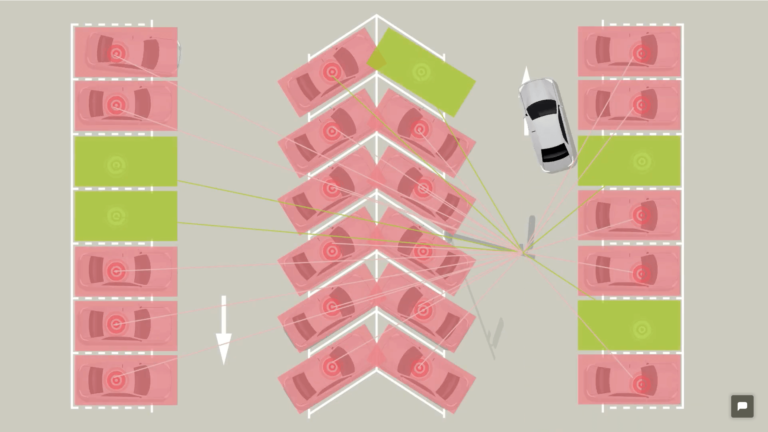
Its name is Cleverciti and it came from Germany. Its installation is already underway. It is a network of sensors mounted on light poles that can identify empty spaces; not only the 400 on the street, but also in seven lots and 11 garages, reported ABC7.
The 360-degree LED signs, mounted 20 feet high, show step-by-step directions to where to find empty spaces and how many are available.
It should be noted that Redwood City is the first city in the U.S. to have this system, and the system is expected to begin operating this summer.
The parking alert system will make it easy to find a spot in Redwood City, Cleverciti promises to reduce search times by up to 45,m not bad for those who are looking to spend more time on other activities than on running around trying to find an empty space.
After the city of San Francisco recently joined forces to tighten security, especially for members of the Asian-American community, a new video was released of an attack on an elderly Asian-American man at a laundromat in Chinatown.
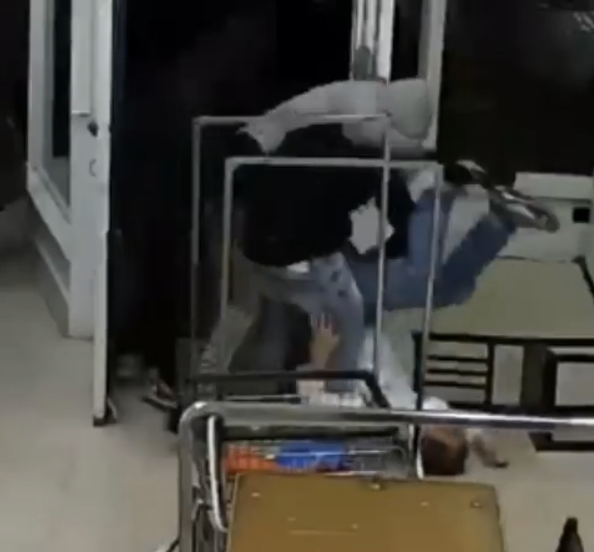
According to the media ABC7The video, which belongs to the closed circuit of the same establishment, shows the terrible attack on a 67-year-old customer, who is raped by three people in a laundromat around 10 p.m. on February 23.
In the video you can see how the older man was ambushed by three men and dragged and then robbed of several dollars, all in a matter of about 45 seconds.
The violence in the area continues unabated despite the efforts of the San Francisco Police Department (SFPD) and residents themselves, who have formed alliances to watch out for and protect seniors who are susceptible to these types of attacks.
It is worth noting that last February 18, SFPD community liaison members handed out flyers to raise awareness about the value of the Asian American community to prevent further attacks against them. Since then, the work has not stopped.
Robert Rueca, SFPD public information officer, spoke to ABC7 about the newly appointed central station captain's effort to include a greater patrol effort and "ability to respond to the needs of the community."
The official stressed that despite law enforcement efforts, including Chinese-language hotlines, residents must remain vigilant against any attacks.
It should be noted that the San Francisco Police Officers Association (SFPOA) is offering a $2,500 reward for anyone who provides information leading to an arrest.
"These random acts of violence against members of our Asian community are no accident and must end. The SFPOA stands with our Asian community and all San Franciscans in wanting these perpetrators caught and held accountable," said Tony Montoya of the SFPOA.
Finally, the San Francisco Police Department called on the entire community to remain vigilant and stay safe, and encouraged any witnesses to these violent acts to call 415-558-5588, where they can receive support and translation in Cantonese and Mandarin.
They release video of new attack on Asian-American senior in San Francisco at a laundromat in Chinatown via Instagram.
One person was wounded in a shooting in Fremont Wednesday morning, an investigation that led authorities to cordon off a home in another part of the city, according to police department information.
The shooting was reported at 10:50 a.m. in the 5700 block of Lemke Place. The victim was transported to the hospital with life-threatening injuries.
Additionally, the police department said several people were detained after the shooting and that, over the course of Wednesday afternoon, a home in the 43000 block of Ellsworth Street was also cordoned off as part of the investigation.
The residence and surrounding area were secured, and no lockdowns have been issued, police said.
Just hours ago, the Fremont Police Department stated in a tweet that the victim - in custody by authorities - is out of danger.
In addition, a 15-year-old boy was arrested for the shooting and charged with weapons possession and attempted murder.
A 15-year-old juvenile has been arrested for the shooting and was booked for attempt murder and firearms possession. Detectives are continuing to work on identifying and arresting additional suspects.
- Fremont Police Department (@FremontPD) March 4, 2021