U.S. President Joseph Biden and his Mexican counterpart Andres Manuel Lopez Obrador are scheduled to meet on March 1, where they will discuss various issues involving both nations.
The meeting will be part of the follow-up to the various talks between the leaders, said the Mexican Foreign Ministry in a brief statement.
Likewise, the Ministry of Foreign Affairs -SER- noted that Presidents Lopez Obrador and Biden will discuss the shared vision and objectives of the bilateral agenda.
In the virtual meeting, both presidents will give special attention to address cooperation mechanisms to address the structural causes of migration in northern Central America and southern Mexico.
In addition, they will discuss the ravages of COVID-19 and the areas of opportunity presented by the T-MEC towards a sustainable and more equitable economic recovery in North America.
It is recalled that the first time that Andres Manuel Lopez Obrador and Joseph Biden engaged in a conversation was on December 19, 2020, after the U.S. president was recognized by the U.S. Congress as the president of the United States.
Subsequently, on January 22 of this year, the presidents held another conversation, in which Lopez Obrador stressed that the dialogue was "friendly and respectful".
"We discussed issues related to migration, COVID-19 and cooperation for development and welfare. Everything indicates that relations will be good for the good of our peoples and nations," said the Mexican president through his Twitter account.
Pfizer and BioNTech announced Thursday that they have initiated an evaluation of the safety and ability of their antigen to activate the immune system and induce an immune response - immunogenicity - with a third dose of their COVID-19 vaccine, following strong concerns about variants of the SARS-CoV-2 virus.
In a statement, Pfizer said that these tests "will serve to understand the effect of a boost in immunity against COVID-19 caused by circulating and potential emerging variants".
The study will be based on U.S. Phase 1 study participants who will be offered the opportunity to receive a 30-microgram booster of the current vaccine 6 to 12 months after receiving their initial two-dose regimen.
The study is part of the companies' clinical development strategy to determine the efficacy of a third dose against evolving variants.
Separately, in order to be prepared for any potential future strain changes, Pfizer and BioNTech are in discussions with regulatory authorities, including the U.S. Food and Drug Administration (FDA) and the European Medicines Agency, regarding a clinical study to allow registration to evaluate a variant-specific vaccine that has a modified mRNA sequence.
This study would use a new Pfizer-BioNTech vaccine construct based on the B.1.351 lineage, first identified in South Africa.
With such studies, the company could quickly update the current vaccine if the need arises to protect against COVID-19 from circulating strains.
Thus, in accordance with the updated guidance issued by the FDA regarding the emergency use of vaccines to prevent COVID-19, which provides recommendations for evaluating a modified vaccine to address variants, the companies expect to continue validation of future modified mRNA vaccines with a regulatory pathway similar to that which currently exists for influenza vaccines.
"While we have not seen any evidence that circulating variants result in a loss of the protection provided by our vaccine, we are taking multiple steps to act decisively and be ready should a strain become resistant to the protection provided by the vaccine. This booster study is critical to understanding the safety of a third dose and immunity against circulating strains," said Albert Bourla, president and CEO of Pfizer.
The executive added that, at the same time, it is making the right investments and engaging in the necessary discussions with regulators to help it position, develop and seek licensing for an updated mRNA vaccine or a booster if needed.
"Our proactive clinical development strategy aims to create the foundation today, which will enable us to address tomorrow's challenges. We want to be prepared for different scenarios," said Ugur Sahin, CEO and co-founder of BioNTech.
"We will therefore evaluate a second booster in the current regimen and prepare for a possible rapid adaptation of the vaccine to address new variants that might escape the current version of our mRNA-based vaccine," he stressed.
In that regard, he noted that the flexibility of their proprietary mRNA vaccine platform allows them to technically develop booster vaccines within weeks, if needed.
This study will evaluate up to 144 Phase 1 participants in two age cohorts, 18-55 and 65-85 years. The study will include trial participants who received both doses in the Phase 1 study 6 to 12 months ago to assess the boosting ability of BNT162b2.
Therefore, the study will assess the safety and tolerability of a third vaccine regardless of the trial participant's level of antibody titers. Participants will be evaluated at the time they receive the third dose, then one week and one month later, and Pfizer and BioNTech plan to study the ability of those participants' sera to neutralize the SARS-CoV-2 strains of interest.
Pfizer-BioNTech COVID-19 vaccine has not been approved or licensed by the FDA, but has been cleared for emergency use by the FDA, under a license, to prevent COVID-19 disease for use in people 16 years of age and older.
Authorities of the Contra Costa County are still searching for a coyote that has attacked at least five people, including two minors, which is why an alert has been issued for people to take precautions when walking in the area.
The latest case involved a man who was bitten in front of the Kwik Stop convenience store on Golden Gate Way in Lafayette, CBS SF Bay Area media reported.
The person attacked by the animal was interviewed by Contra Costa Animal Services, who also clipped his clothing was collected for DNA testing, which showed it was "the same coyote responsible for the other four bite incidents," authorities said in a news release.
The latest report of bites came just three days after a child was bitten in an attack around 8:30 a.m. near the intersection of Campolindo Drive and Calle la Montana in Moraga.
Of note, local agencies are working with the state Department of Fish and Wildlife, which is the lead organization in investigating bite reports and partners with the U.S. Department of Agriculture and Wildlife Services.
Authorities said a round-the-clock effort is underway to eliminate the coyote.
"A detailed survey of the surrounding terrain, including the use of game tracking cameras and field tracking, has been conducted to determine specific areas of coyote activity and patterns," officials said.
Lafayette and Moraga police asked the public to report any coyote sightings, and to call Moraga police dispatch at (925) 284-5010 and the Lafayette office at (925) 284-5010.
Also, authorities advised those who see a coyote to make loud noises and use noise-making devices such as a whistle or horn or even throw rocks if necessary, and they should never be fed.
Coyotes, being wild animals, are unpredictable in their behavior, so be aware of your surroundings when outdoors and do not leave small children or pets unattended outside.
In addition, special care should be taken at dusk and dawn when coyotes are known to be most active, officials said.
As of Tuesday night, San Carlos County representatives are searching for a suspect in the stabbing of a 39-year-old man, the San Mateo County Sheriff's Office said. Authorities are investigating a stabbing in San Carlos, the San Mateo County Sheriff's Office said Tuesday night.
The man was found in a parking lot and severely bleeding from a laceration to his right arm about 5:30 p.m. at 1100 Old County Road, authorities reported.
Authorities are investigating a stabbing in San Carlos, the San Mateo County Sheriff's Office said Tuesday night. The man was experiencing episodes of unconsciousness and was given trauma care while other sheriff's deputies searched unsuccessfully for suspects and witnesses.
Firefighters and medical crews attended to the man before he was hospitalized. His condition is reported to be stable.
"The victim indicated she knew the suspect; however, investigators are looking for additional witnesses who may have seen the crime," the sheriff's office said.
The economic impact generated by the COVID-19 pandemic that prompted the closures in the local food and beverage industry has been significant, to the extent that many of these establishments have closed their doors permanently.
Currently, there is a one-of-a-kind grant program in San Mateo County that focuses on restaurants, breweries and wineries, with funding of more than $2 million to help businesses that have not qualified for previous grants.
Thus, the San Mateo County Emergency Fund's Restaurant, Brewery, and Winery Assistance Grant Program will provide these establishments with grants of up to $10,000 each for eligible establishments to ensure continued operation and help cover the businesses' ongoing operating expenses.
Operating expenses to be covered include, for example: rent, payroll, and modifications needed to the facility to provide indoor and outdoor food services on site.
San Mateo County said it is keeping the grant application process as simple as possible by eliminating the first-come, first-served system and instead giving businesses two weeks to apply.
The application portal began this Monday, February 22 and will remain open until Monday, March 8, 2021 at 12 noon, for more information and to apply you can access to the website www.smcstrong.org.
After applicants answer about 20 questions to determine program eligibility, a lottery system will choose about 200 businesses for grants of up to $10,000.
Businesses will be able to use the money to pay rent, buy equipment, and pay employees. They will not need to show proof of how they spent the grant funds or return it at any time. The application will be available in English, Spanish, Chinese and Tagalog.
It should be noted that the applicant does not need to be a U.S. citizen or legal resident to submit an application, they just need to provide evidence of eligibility and the required documentation, the county notes.
And that is, despite San Mateo County returning to purple at the end of January 2021, the economic impact of the closures, according to the National Restaurant Association's fifth national membership survey, completed in early December 2020, 87 percent of full-service restaurants - independents, chains and franchises - report an average 36 percent drop in sales revenue.
In that sense, for an industry with an average profit margin of 5.0 to 6.0 percent, the situation is simply unsustainable.
The vast majority of the restaurants that closed their doors permanently were well-established businesses that were part of the landscape of their communities. On average, these restaurants had been in business for 16 years, and 16 percent had been open for at least 30 years.
In December 2020, the San Mateo County Economic Development Partnership, the San Mateo County Chamber, the San Mateo Credit Union Community Fund, and the Chan Zuckerberg Initiative began discussions around the establishment of a "Restaurant Assistance Grant Program" for independently owned restaurants in South San Mateo and Palo Alto County that have been negatively impacted by the public health emergency caused by the COVID-19 pandemic.
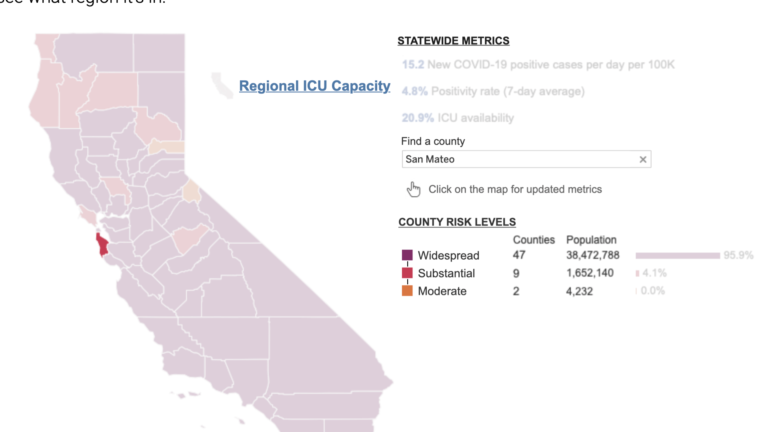
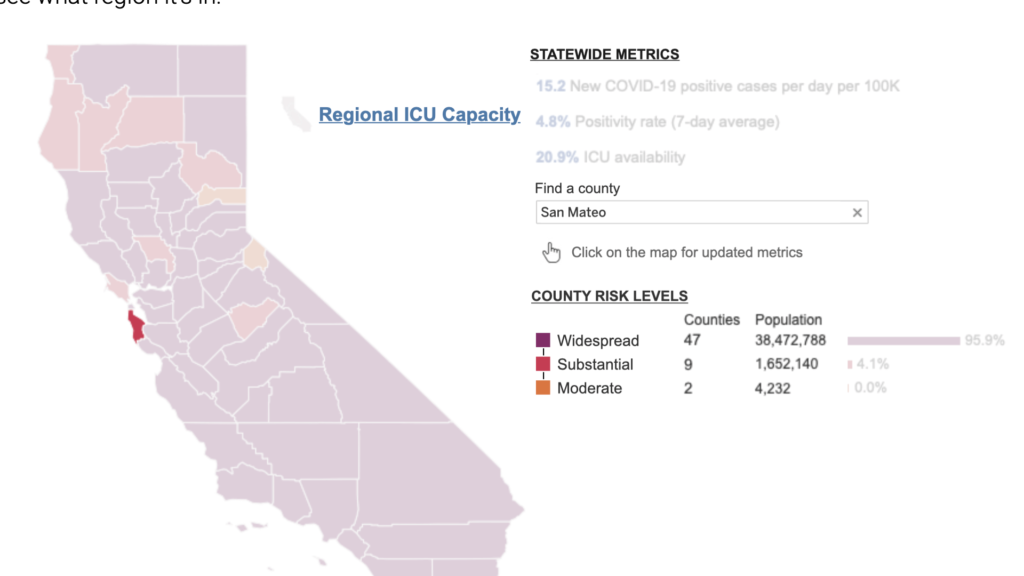
Effective the first minute of this Tuesday, February 23, San Mateo County will move from "Purple" to "Red" in California's four-tiered color-coded reopening plan after the rate of COVID-19 positive cases has declined in the area.
Through a statement, the county said the action will allow for expanded business openings and certain activities.
Thus, restaurants will be able to resume indoor dining with modifications; while gyms will be able to open indoors with modifications, and shopping centers and retailers will be able to increase capacity.
"This movement is a direct result of all of us taking personal responsibility for our actions. If we wear our damn masks, keep our distance and follow common sense health and safety protocols, we can get back to doing what we all love to do," said Board Chairman David J. Canepa.
The county said the area advanced to the "Red" level because of two metrics, calculated by the state: the case rate has dropped to 5.6 percent and the health equity quartile positivity rate to 3.7 percent.
The health equity quartile measures rates of infection with the virus in the county's most disadvantaged communities according to the California Health Place Index.
"It's something to applaud," said Louise Rogers, chief of San Mateo County Health. "Reducing that disparity is going in the right direction. Our goal is to reduce that disparity, which affects our hardest-hit communities, to zero."
Rogers said COVID's local testing rate - 821 per 100,000 residents each day - puts the county second only to Yolo County in the most tests per day among the state's 58 counties.
Local COVID-19 cases increased in December 2020. Positive cases set a record high of 546 on January 4, 2021, and then declined over the last month. Still, cases have doubled since December 9, 2020, from 19,107 to 38,353 as of Sunday, February 21, 2021.
To move to the next level, the "Orange" level that opens up more sectors of the economy, positivity rates and additional metrics must continue to fall.
Meanwhile, decisions about public school operations are made by local school boards in consultation with the San Mateo County Office of Education.
Also, the California Department of Public Health has issued new guidance on outdoor and indoor sports that will go into effect on Friday, February 26, 2021.
It is worth noting that going to level 2 -Red- allows you to:
- Indoor restaurants - maximum capacity of 25 percent or 100 people, whichever is less.
- All indoor retail stores - 50 percent maximum capacity.
- Shopping malls, indoor swap meets - 50 percent maximum capacity, enclosed common areas, small-capacity food courts.
- Personal care services: beauty and nail salons, hairdressing salons -open with modifications-.
- Museums, zoos and aquariums -maximum 25 percent of capacity-.
- Places of worship - maximum 25 percent capacity.
- Indoor cinemas - maximum capacity of 25 percent or 100 people, whichever is less.
- Indoor gyms and fitness centers - maximum 10 percent capacity.
- Family entertainment centers - go-kart racing, miniature golf, batting cages - outdoors with modifications only.
- Amusement parks, non-food service bars, bowling alleys, indoor play areas, live theater, saunas and steam rooms, nightclubs and festivals are not permitted.
- Businesses can find guidelines that apply to their industry on the state's COVID-19 website.
- Small private outdoor and indoor meetings are allowed with modifications: Use of masks and physical distancing, no more than three separate households - including the host's - attend, meetings should last 2 hours or less, those with symptoms should not attend, and people at high risk of serious illness are strongly discouraged from attending.
Also, singing, yelling, chanting, cheering, or exercising outdoors is encouraged and is not allowed indoors.
When it comes to travel, Californians should remain local - travel no more than 120 miles from their home or other place of residence - and avoid non-essential travel. Travelers from other states or countries are strongly discouraged from entering California for tourism and recreation.
Starting this Monday, Feb. 22, San Mateo County expanded eligibility for the COVID-19 vaccine to include teachers, child care providers, first responders, and food and agricultural workers who meet the state's Phase 1B criteria.
That's as long as vaccine supplies allow, the County Health Department said in a statement.
Most San Mateo County residents will receive the vaccine from their primary care provider. You will need to contact your health care provider for the most accurate and up-to-date information on when and how you can expect to receive the COVID-19 vaccine.
In that regard, the County noted that residents will be able to receive a notification on their devices when they are eligible for the SARS-CoV-2 virus vaccine.
She added that while the supply of COVID-19 vaccine remains limited, residents can sign up for the county's notification tool to receive an alert when the state makes them eligible, as well as information on how they can get an appointment.
The notification system is intended as an interim strategy as the state of California prepares a vaccine alert system called MyTurn.
Of note, the county is currently vaccinating Phase 1A members - health care workers and residents of long-term care facilities - and Phase 1B residents 65 years of age and older as vaccine supply allows, in accordance with state guidelines.
And because of vaccine supply constraints, the Health Department remains focused on the needs of eligible people most at risk of death.
Residents who do not have health insurance should not worry, as it is not required to receive their doses of COVID-19 vaccine.
However, for residents without health insurance, but who do have a health care provider - including patients at San Mateo Medical Center clinics - they can contact their provider.
And for those residents who do not have a provider and wish to enroll in a health plan, you can access www.smchealth.org/insurance.
Health insurance is available regardless of immigration status through a combination of federal, state and county programs. So call (650) 616-2002 to speak with an enrollment counselor.
Both San Mateo County and the State of California have made equity a key priority in local vaccine delivery, as communities of color, low-income, older adults, and other affected populations face many barriers to vaccine uptake and access.
"We are currently engaged in a community engagement effort to learn from leaders closest to our most impacted communities," notes the County Health Department.
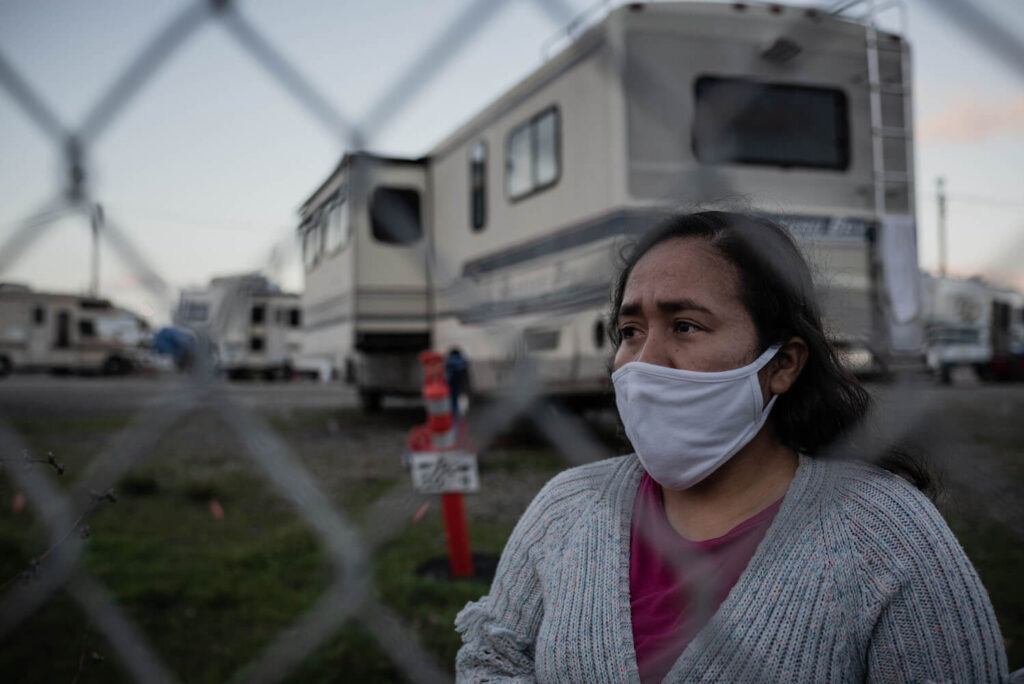
Maria Garcia lives in Redwood City, in wealthy San Mateo County, with her husband and 2-year-old son in a mobile home that lacks basic services: running water, electricity and sewer.
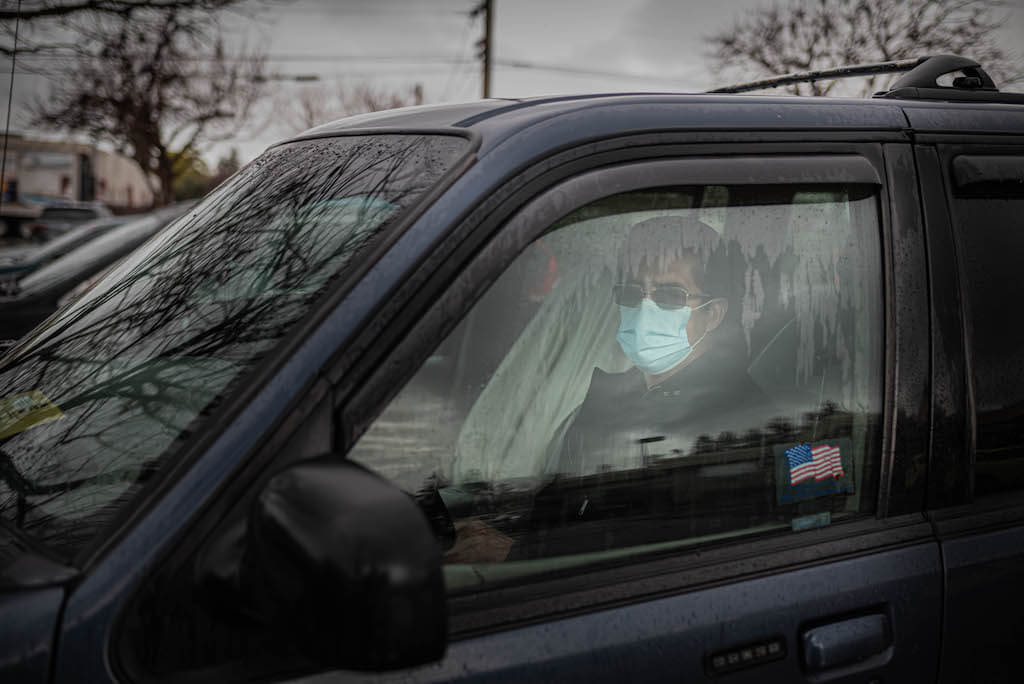
The COVID-19 pandemic and the high cost of housing in San Mateo has resulted in some residents now having to live in their vehicles; some on the street and others, like Maria, in the "Parking Seguro y Solidario," a fenced parking lot created by the city and managed by the nonprofit Life Moves.
The high cost of housing in San Mateo
Paradoxically, while the COVID-19 pandemic left millions of people in debt, unemployed, or with lower incomes than they had before the pandemic, the cost of housing in San Mateo County increased substantially.
According to a report by the San Mateo County Association of Realtors, the median cost of homes in this area went from $1.4 million in 2019 to $1.7 million by the end of 2020. This phenomenon generated rent increases for some homes and apartments, which severely affected low-income families.
"My husband and I lived in one room, but the rent kept going up and up until the pandemic started and we couldn't pay the bills anymore," said Maria, who left Guatemala, her home country, because of death threats and is now in the process of applying for political asylum.
Maria said she used to clean offices in San Mateo: "I lasted in that job for a year and three months, but when the pandemic started, they laid off a lot of people, including me, and I haven't been able to find another job since.
With no other options, Maria and her partner decided to sell their car and take out a loan to buy, for $10,000 - which they are still paying off - a 1995 model mobile home. They planned to live in a trailer park -a parking lot for private recreational vehicles- but their vehicle was not admitted since these places only accept 2010 and recent models. So she, her partner and their baby ended up living with their vehicle on the streets of Redwood City.
In California, there are 26 metropolitan areas, with the most expensive being the San Francisco-Oakland-Hayward area, where the cost of goods and services is 31.6% higher than the national average and 16.2% higher than the state average.
According to the list, the most expensive county to live in is Marin, where the annual cost per person is estimated to average $155,000. Next on the list is San Mateo, with an average annual cost per person of $151,000. Third place is San Francisco, with an annual cost per person of $141,000.
Background
As a result of the high cost of housing in San Mateo County, coupled with the COVID-19 pandemic, many people like Maria and her family ended up living on the streets in RVs and even SUVs or compact cars.
The same thing happened in other Bay Area cities.
This generated annoyance in various sectors of the population, some of the merchants, who argued that people living on the streets in their vehicles generate garbage and insecurity, said Teri Chin, manager of Community Services of the Fair Oaks Community Center, in an interview via Zoom for this media.
According to Chin - who has a 20-year history of community work in Redwood City - city representatives created a committee and set up meetings with different sectors of the community "to understand the needs and concerns." "We talked to people living on the street, as well as homeowners who were complaining and business owners," Chin said.
The committee included Captain Ashley Osborne, who has been with the Redwood City Police Department since 1994 and whose duties include policing the streets and serving the homeless.
Chin and Osborne - who was also interviewed by this media outlet - mentioned that some Redwood City residents demanded penalties for people living inside their vehicles on the street or, instead, to act with an iron fist by forcibly removing them as is done in other cities.
"We understand the people who were complaining about the presence of people living on the street in their vehicles, but we also know that most of these individuals and families had no other choice and were forced by current conditions to live on the street, so this problem was not solved by simply issuing violations," Osborne said.
"We were faced with the challenge of serving the different sectors of the population in the most effective and humane way possible." So it was that, after a thorough study of the situation, "the committee proposed the creation of the temporary safe parking program," Chin said.
A safe parking lot, but without water and with "bad treatment".
The safe parking program was unanimously approved by the Redwood City Council on June 22, 2020, and began operating in September of that year under the administration of Life Moves, with a budget of $1.7 million.
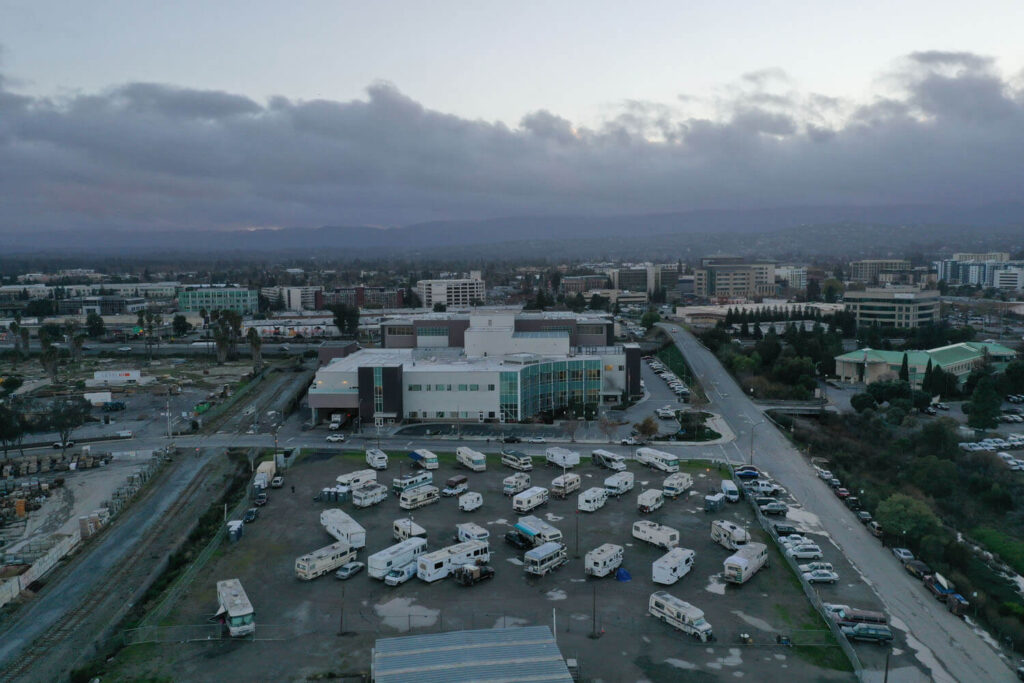
The program was envisioned to consist of a temporary living space - for 2 years - located on San Mateo County-owned land at 1402 Maple Street. Services would be for people living in recreational vehicles on the street, with priority given to families and seniors.
The secure parking lot has a dirt floor and is enclosed with a metal fence. According to Life Moves representative and site manager Hannah Blankenship, portable latrines, concierge service and security staff are available. Blankenship said residents receive vouchers for sewage collection and receive one-on-one counseling to improve their living conditions and find stable housing.
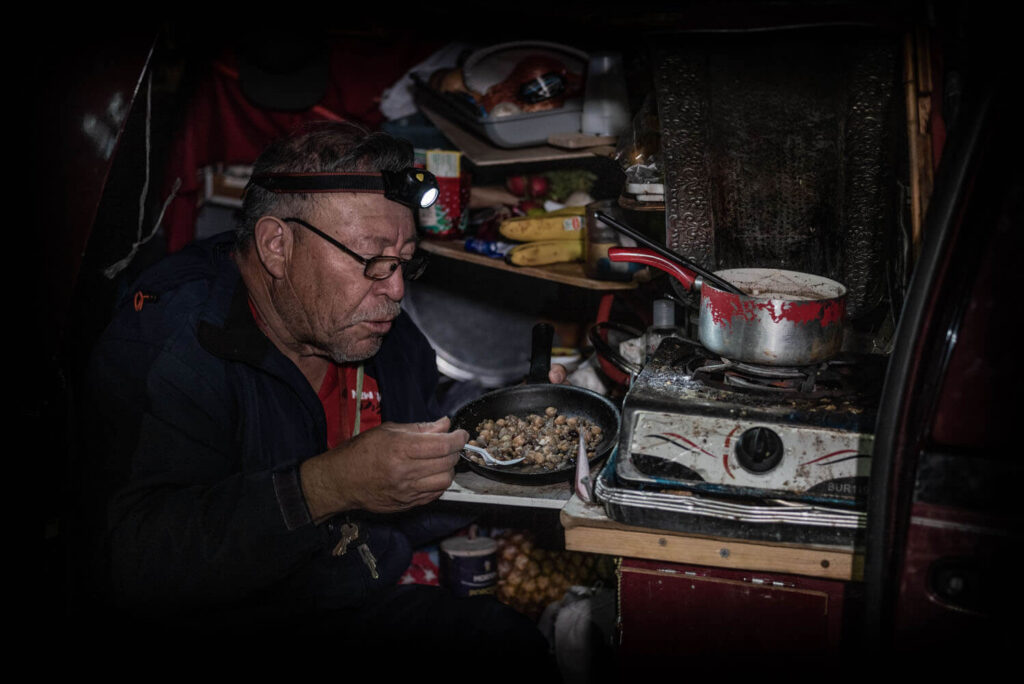
"We don't have electricity, and we have to wrap up very well because otherwise we will freeze. It's very cold. If we want to put a heater on at night, we can't because the people in charge here [Life Moves] don't want us to have the generators on, so the food is constantly spoiling," said Maria.
She added that although her motorhome and those of the other residents have generators for power, they have to turn them off at 10 p.m. because of site rules. "We get sick. My son catches a lot of colds," Maria laments.
"We don't have drinking water here. The water we have we carry in bottles in the car. We don't have the essentials," says Juan Argueta, who also lives in the guarded parking lot with his wife and three children.
"Not having clean water is very, very bad because we have to wash the dishes with the same water we use during the day to save the water we have," Maria said.
In different interviews for this media, the families commented that the main need for safe parking is drinking water and agreed that the members of Life Moves had mistreated them.
"They [Life Moves] told us they would give us vouchers for sewage disposal. I asked them the first time and they gave it to me; then I asked them again and there was one person who told me, very aggressively, that they didn't have to give me any more passes," Argueta said.
Repeatedly, this media outlet requested permission to enter the guarded parking lot to document living conditions there and hear testimony from more residents. We stated that we would do so while respecting physical distance and taking necessary hygiene measures due to the COVID-19 pandemic; however, permission was denied on one occasion, and subsequent emails were ignored.
Later, in an interview with Blankenship and Brian Greenberg, vice president of programs and services for Life Moves, outside the guarded parking lot, the two argued that entry was not allowed on the grounds because of safety concerns for residents.
As for allegations of mistreatment by Life Moves staff, Blankenship and Greenberg denied it and responded that some residents complained because they didn't like to follow the rules of the place, but that the rules were necessary for everyone's safety.
For their part, the families interviewed said they understood the rules, but expressed disagreement with being forced to provide private information to Life Moves every time they entered and left the site.
"We never expected that they would deprive us of our freedom because that is practically what they do with us. They don't let us have visitors and they keep a close eye on our comings and goings. You have to tell them where you are going: if you go to the doctor, you have to tell them. If you have to go somewhere, you have to ask them. If you're going on an errand to San Jose or San Francisco, you have to tell them [Life Moves] why; if you don't, they get mad. At no time has the city told us that we have to air your private life with [Life Moves]. That's why it's called 'private life,'" Argueta said.
In addition, Argueta said, "the security guard mistreats us. If we go out to the car, the security guard follows us as if we were criminals. They practically hold us like we're in jail.
On the other hand, Greenberg commented that "there are people who are not used to paying rent," inferring that this was one of the reasons some residents lived in their vehicles. Contrary to this assertion, the people interviewed for this report who live in their vehicles say they do so not because they do not want to pay rent, but because their income and housing costs do not allow them to do so.
It is worth noting that the average cost of a one-bedroom apartment in San Mateo County is $2,700.
"Over time, we've adapted to living like this. We do it for the children because, when you rent, all the money you earn goes to rent, and the children are left with nothing. On the other hand, we don't pay rent; the children don't have what they need, but at least they have their daily food. When we were renting, sometimes my children only had one meal a day because it was all for rent," Argueta said. She added, "I don't understand the logic of scolding us. In the beginning, they told us we could tell them if we didn't like something. Recently, I complained about a security guard who supposedly watches us in the evenings and they got upset because I told them he treats us like criminals. He aggressively knocks on our door at 9:59pm to get us to turn off the generator. I tell him that we understand the rules, but that's not the way".
In one of the requests to Life Moves to request entry to the guarded parking lot and speak on our own with residents, the organization asked Alex Huezo to grant us an interview at the Fair Oaks Community Center, away from the guarded parking lot.
"I'm very grateful to Life Moves because I used to live on the street in my car and was exposed to crime, but they supported me to live in the secure parking lot and I feel good about the place," said Huezo, who lives alone in his motor home. "I'm, also, happy because I was put on a Life Moves list to access low-cost housing." However, Huezo mentioned that if anything could be improved in the secure parking lot, it would be the drinking water.
The only difference between living in a secure parking lot and living on the street, according to Maria, is that "here we are not exposed to theft because when you are on the street, you get robbed.
He said, "There's also a problem with the police, some of them say nasty things to people. They've never said anything to me, but I've seen other people being insulted, just because you're parked on the street.
"I feel like we all work together in this country. For as long as I've been in the United States, I've always paid taxes and I've always worked, so I don't know why they treat us like this. Just for being an immigrant they try to humiliate you because that's what they [Life Moves] are trying to do," Argueta said.
According to Argueta, several residents of the guarded parking lot complain of mistreatment by Live Moves staff.
However, he assured that he and his neighbors have recently achieved good communication with city representatives, hoping that their two main requests will be met: potable water and respectful treatment by Life Moves.
Notes to the reader.
Mr. Alex Huezo does not appear in the video testimonials from residents of the guarded parking lot that accompanies this report because he asked not to be videotaped.
Interviews conducted for this report were conducted through the gate of the guarded parking lot managed by Life Moves due to the organization's refusal to enter. It should be noted that, by telephone, Blankenship warned this reporter that not only could he not enter the parking lot, but that he could not go around it, even to conduct interviews outside the guarded parking lot, because if he did, the police would be called.
Despite multiple attempts, those involved could no longer be contacted due to the refusal to offer interviews to follow up on the case.
Following this investigation, the inhabitants of the parking lot claimed to have gained access to drinking water; however, this fact could not be verified due to the absence and denial of testimonies.
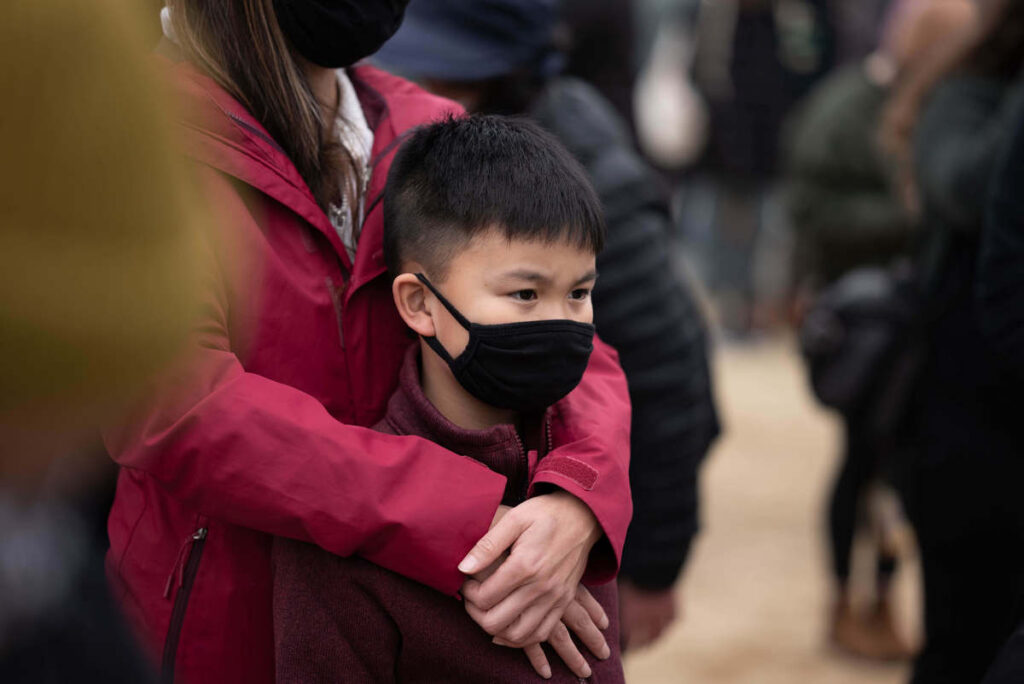
After several videos that have been disseminated and spread by social networks and media where aggressions against Asian Americans are observed, as well as thousands of reports of attacks against them, experts say that the community faces a double virus, because in addition to facing the pandemic by COVID-19 they also have to deal with exacerbated racism.
After President Donald Trump left office on January 20, Asian Americans and Pacific Islanders (AAPIs) thought that the attacks against their community would decrease, unfortunately, "the problem has not gone away".
That's according to John C. Yang, president and CEO of Asian American Advocacy for Justice (AAJC), who noted that the attacks have been increasing for more than a year.
"Asian Americans have been struggling with two viruses: one is the COVID-19 virus, which we all face, as well as its health and economic effects. But, unfortunately, Asian Americans have also had to fight a second "virus," racism. A virus that is affecting us in spirit," he added.
During the briefing "Communities Unite to Combat Violence Against Asians" held by Ethnic Media ServicesIn addition, he noted, many Asian-Americans are front-line workers, working in grocery stores, hospitals, community centers and custodial services. "So the effect on our community is definitely very significant.
"This virus of racism is a virus that is very contagious and that affects all of our communities. We have to fight this virus together," he said.
And that's because, he said, in a recent survey, more than 75 percent of Asian-Americans felt they were targeted or had increased fear of discrimination, while another study in 2020 found that 40 percent of people in that community experienced discrimination or heard someone blame Asia or China for COVID-19.
"Words matter. We can't discount that we've had a full year where a president - Donald Trump - and some of his colleagues have called this virus 'the China virus' or 'the Wuhan flu,'" he noted.
While it is true that attacks on the Asian-American community are not new and date back to the 1880s, today the violence and insults towards the Asian-American community have gotten out of control.
"We are seen as foreigners who carry the disease. There's definitely a conditioning that's happened in the last year that's caused people to be afraid of Asian-Americans," he added.
Yang acknowledged that the root of that fear is health fears, as well as economic fears, so people look for someone to blame, and as the COVID-19 pandemic began in China, the Asian community was the one to blame.
One of the first memos President Joe Biden made upon his arrival at the White House a month ago was on racial equality and anti-xenophobia in the Asian-American community, but that's just the beginning, Yang said.
"There's more the government can do, it needs to invest in communities, whether it's to promote victim response centers, whether it's to provide resources and financial assistance, whether it's to encourage cross-cultural community conversations, because it's important to break down some of these barriers," she said.
For Marc Morial, president and CEO of the National Urban League, "hate is everywhere and it's an invisible disease".
Speaking out against the "demonization" against Asian Americans for the COVID-19 health emergency, he said that all communities - African American, AAPI, Latino, LGBTTTIQ+, Jewish American, and Islamic American - must stand together "to urge investment in holding those who carry out these acts accountable and to continue our commitment to the cross-cultural work and understanding that is essential to civil rights work in the 21st century.
"There has always been a line between free speech and hate speech. When we see hate speech we must condemn it. We must denounce it. We must confront it. When hate speech instigates acts of violence, then the protections of free speech disappear," he said.
Morial explained that "we have to make it very clear that hate speech that leads to violent acts against innocent people is illegal. The most important thing we have to do as leaders, is to condemn these actions, condemn these words, we have to do it in the morning, in the afternoon and at night, from Sunday to Saturday, we have to keep doing it because we have to fight hate with messages of tolerance, understanding and love for humanity".
The Executive Director of the Asia Pacific Council for Policy and Planning - Asia-PacificA3PCONManjusha P. Kulkarni noted that in a nine-month period, more than 2,800 incident reports - attacks on the Asian-American community - were recorded over the course of 41 weeks.
At the same time, he detailed that, while it is true that most of the attacks have been reported in the states of California and New York, it does not mean that no area of the United States is immune. "In fact, we've had reports from both rural and urban areas in far-flung states like Alaska and Hawaii, as well as the American heartland.
He clarified that women are experiencing hatred at a rate 2.5 times higher than men, and that the increase in attacks on the elderly is because "perhaps the perpetrators think that - the elderly - cannot defend themselves, at least physically, and may be the target."
He also said that about 40 percent of the attacks have taken place in private businesses - grocery stores or pharmacies - while about 30 percent have occurred in the public realm - public streets, sidewalks, parks, or public transportation - and about 10 percent, at least in California, have occurred in private residences.
And it's not that the schools are not being attacked, but they have been closed for almost a year.
"About 40 percent - of those attacked - are individuals who identify as Chinese-American so they constitute a plurality...community followed by Korean, Filipino, Vietnamese and Japanese."
In that regard, Cynthia Choi, co-executive director of Chinese for Affirmative Action and co-creator of the Stop AAPI Hate Center, noted that the impact of the attacks on the Asian-American community has been "traumatizing."
"There has been an alarming rate of depression and anxiety related to COVID-19-related bias. And the recent events of seniors being attacked and killed, whether racially motivated or not, continues to create a climate of fear and anxiety."
He added that there is a historical precedent of prejudice and discrimination against Asians.
"We have to understand that this has defined our experience, being denied basic human rights, subjected to mob violence and discriminatory treatment. Our systems of laws, at different times, have painted us as a threat to public health, as dirty disease-carrying aliens, as economic strings that take away jobs, and sometimes as a threat to national security."
He also noted that "anti-Asian and 'anti-China' rhetoric and the general anti-immigrant climate that blames scapegoating is directly responsible for the unprecedented levels of interpersonal attacks we are seeing."
Jose Roberto Hernandez of the Koreatown Immigrant Workers Alliance noted at the time that "what we are living right now are still the aftershocks of the political and social context that we have been living in since the United States was founded.
"What we're really experiencing is the America First virus. That's the one virus that we have to start dismantling going forward because that's embedded in society."
"We have to start undoing the damage that Donald Trump and all the cronies and political allies and selected media outlets that were promoting all of this. We have to find a way to start a new cultural evolution that reflects the reality of this country. We have to start working on a long-term plan. We have to make sure that we hold people accountable for promoting leadership within our communities."
Light, paper, fire, wishes and riddles, the lunar New Year ends. The Lantern Festival -"Shangyuan"Yuanxi" - is one of the main traditional celebrations in China and is celebrated on the 15th day of the first lunar month, usually in February or March of the Gregorian calendar. And today, Peninsula 360 Press invites you to close with a flourish the arrival of the Year of the Ox, where work and effort will be the most rewarding qualities.
And to celebrate the Lantern Festival, this February 20th, Peninsula 360 Press invites you to celebrate the closing of the Lunar New Year in a virtual way. Don't miss it, there will be a variety of activities for all ages.
Origin of the Lantern Festival
Its origin dates back to the Han Dynasty (206 BC-220 AD), a time when Buddhism became popular throughout the country. And according to the government of the People's Republic of China, an emperor learned that Buddhist monks would look at the cremated remains of the Buddha's body, and light lanterns to worship the Buddha on the 15th day of the first lunar month, so he ordered lanterns to be lit in the imperial palace and temples to show respect to the Buddha.
In time, the Buddhist rite became a great festival among the common people and its influence spread throughout the central plains of China.
Riddles and Magic
Guessing riddles on lanterns is an essential part of the holiday. The owners of these lampshades write riddles on a piece of paper and stick them on the lanterns. According to the tradition, which dates back to the Song Dynasty -960-1270-, if visitors have the solution to the riddles, they can take the paper and go to the owners to check the answer. If the answer is correct, they will receive a small gift.
Long tablecloths
A typical food on this holiday is "yuanxiao", glutinous rice dumplings with sweet or meat filling. Being round and compact, they represent the solid family reunion, even their pronunciation means the same thing. The dish is named after tangyuan, and they can be boiled, fried or steamed. The taste is sweet and delicious.
Party here. Party there
The celebration is not the same everywhere. Midu district is located in the Bai nationality autonomous prefecture of Dali, southwest China, and there, the Lantern Festival celebration was introduced from inland China since the Yuan Dynasty, which means it has a history of about 800 years.
During the festival, besides exhibiting lanterns, people dance folkloric dances and perform Opera de Faroles.
The Lantern Opera is also performed in Yunnan and Guizhou provinces and has evolved by adopting the songs and dances of the celebrations.
With hype
Before the celebrations, lanterns of various shapes and bright colors are made in every family in the villages and rural areas of China and in various parts of the world.
These lamps are placed on the main doors of the house and are lit at night.
In addition to the exhibition of all kinds of lanterns, the celebration is accompanied by other activities such as the dragon and lion dances, interpretation of songs and other folk dances.
Throughout China, there are a number of lantern makers. The construction process is not easy. They have to make frames, lay paper or silk, apply patterns and paint.
Heritage and tradition have fostered that generation after generation, the celebration continues and has become a unique flower of Chinese art.
Join us to learn about this and other traditions at Peninsula 360 Press this afternoon. Don't miss out on a variety of activities where kids and adults can enjoy, learn and celebrate a celebration that is hundreds of years old.