
With an advance of 99% of votes counted, where the candidate for the presidency of the United States for the Democratic Party, Joe Biden surpassed his Republican counterpart, Donald Trump, this morning by only 1,579 votes, the secretary of state of Georgia, Brad Raffensperger, announced to the media that it is necessary to restart the counting of the ballots.
In the early hours of this Friday morning, November 6, the state of Georgia turned blue, as Biden had taken away from Trump the state of Georgia with 16 electoral votes. Had he continued a clear upward trend for the Democrat, he would have been only 1 electoral vote away from winning the race.
This situation reverses speculation that Joe Biden could reach 269 electoral votes at the end of the vote count in Georgia's polls, keeping Biden with 253 electoral votes out of 270 to be declared the winner in the presidential election.
"By 10 a.m. local time, we were missing the 5,500 vote count in Gwinnett, Floyd, Cherokee and DeKalb counties, and the Army voters have yet to arrive," Raffensperger announced. "The margin is so narrow between one candidate and the other that there will surely be a recount in Georgia. We know that the recount has implications not only for our state, but for the entire nation.
He recalled that in this election process, mainly in the state of Georgia, "the stakes are high as there is a heated debate on both sides," referring to both Trump and Biden; however, he stressed that he will not allow those clashes to distract his work from counting the votes and then declaring a winner. "We will defend the integrity of our electoral process with all our might," he said.
The Secretary of State of Georgia stressed that the electoral process is open to public opinion as well as transparent. "If any public figure dares to question it, we will use any procedure to defend the integrity of every person's vote in Georgia," he said.
Subsequently, Gabriel Sterling, head of Georgia's counting system, admitted an error in the counting of the postal votes, which were added to the initial vote count on November 3. He said Georgia will provide election results "by the end of this weekend.
This November 3 took place the presidential election of the United States for the period 2021-2024. The race between the Republican candidate, Donald Trump, and the Democrat, Joe Biden, transcended to the world of sports, where athletes from different backgrounds incited the vote, both in favor of Trump to remain four more years in the White House, and for a change in the Oval Office.
In the NFL, Tom Brady and Drew Brees, quarterbacks of the Tampa Bay Buccaneers and New Orleans Saints respectively, spoke in favor of Republican continuity, even the '12' of the Florida team declared himself a close friend of the current president.
After racial discrimination caused several gridiron players to raise their voices and force the league not to punish those who kneel when the national anthem is played during games, Drew Brees expressed that, under his values and beliefs, he could not support those who do not respect the national symbols, which led him to the rejection of figures of his team, mainly those who support the movement. Black Lives Matterand the label of a racist character.
Former quarterback Brett Favre also took a stand as a friend of Donald Trump. "My vote is for what makes this country great, freedom of speech and religion, the second amendment, hard working, tax paying citizens, police and military. In this election, we have freedom that everyone should respect. For me and these principles, my vote is for @RealDonaldTrump," he said.
Likewise, Jack Nicklaus, former golfer, was interested in the government to continue for the next four years. He tweeted that he had cast his vote in favor of the reelection of the current president.
And although under this administration has gained strength the movement that aims to highlight racism and police brutality against African Americans, also the boxer Mike Tyson showed his support. Through the manifesto: "If I can convince 200,000 people or more to vote for Trump, I will".
On the other hand, the team of athletes supporting the Democratic Party is mainly made up of African-American NBA stars, led by LeBron James, star of the Los Angeles Lakers, who told The New York Times: "We want something better, we want change in our community. We always say we want a change and now we have the opportunity".
James has been a constant critic of the abuses and lack of conditions to ensure racial equity in the United States, even raised, along with other colleagues, the boycott of the league playoffs last August 26, when they demanded justice for the oppression of white police officers to African American citizen Jacob Blake.
Other supporters of Joe Biden who look forward to the victory of the Democrat, are Magic Johnson, NBA legend, and Megan Rapione, women's soccer icon and world champion, who in social networks showed rejection of Trump, calling him a "white nationalist who promotes hatred".
The call of sports, athletes and the great focus of attention that they represent in the United States, can mark the course of a very even election, which, from the courts, has been polarized to strengthen the link between politics and critical thinking in the protagonists.
🎧 Listen to this note. In compliance with sound accessibility.
Pamela Cruz and Cristian Carlos. Peninsula 360 Press.
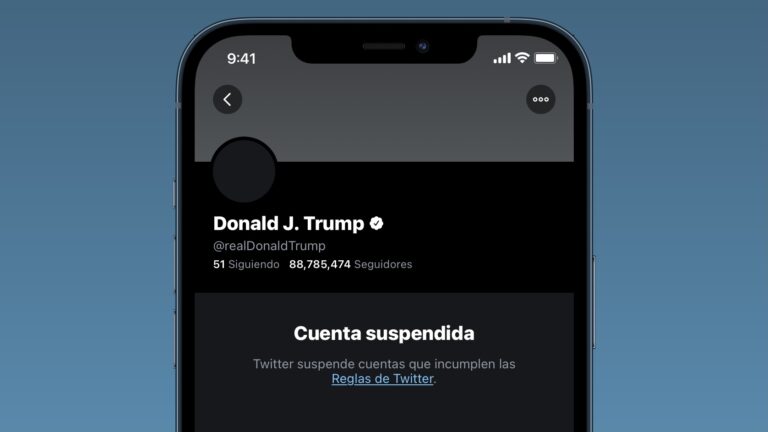
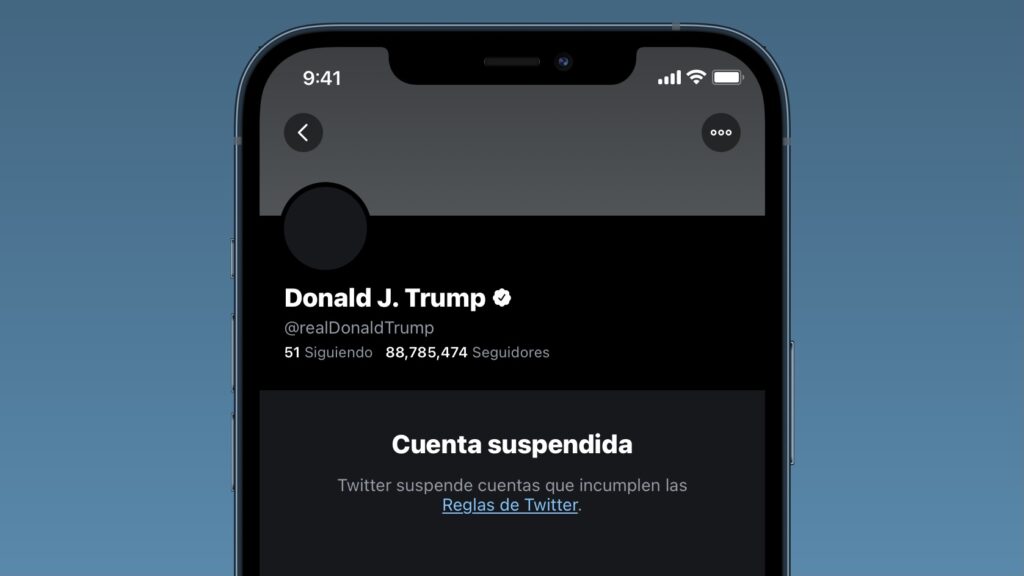
"Desperation instills courage in the coward," historian Thomas Fuller once said, and the U.S. presidential election has brought out the true substance of what Republican candidate Donald Trump is made of, who through his Twitter account - @realDonaldTrump - has expressed his mood in the face of what could be his defeat.
After this Tuesday afternoon, November 3, the counting of votes began in what is perhaps the closest electoral contest in the country's history, the national map began to be painted red and blue, and so did Twitter.
The reactions were moving forward, and with them the comments of Donald Trump, who is seeking to secure four more years of the presidential chair, everything was going well until Democratic candidate Joe Biden began to overcome it.
The Twitter guidelines began to be applied on election night, and while the social network is monitoring Trump's tweets, it is very likely that we will see very few of them spread not only in people's chronologies - tweets with this warning are limited to the person's profile - but for the Democratic candidate's followers.
It was at 11:49 p.m. on November 3 that the signs of anger began: "We are in a big way, but they are trying to STEAL the election. We will never let them do that. No votes can be cast after the polls are closed.
The reaction of the blue bird's social network was to put up a warning. "Some or all of the content shared in this Tweet has been objected to and may be misleading as to how to participate in an election or other civic process.".
Moreover, it would be the first wake-up call for an already obviously upset Donald Trump, who a few hours later would give a short speech to the voters to tell them that everything was going well, that he "had a great night" and that he had surely won. Nothing could be further from the truth.
1TP3Lessons2020 - "It's a fraud for the country that the election results were stopped. We won the election. We believe that the law will prevail. It's a sad moment. We already won. I want to thank you for your support," he said. @realDonaldTrump. pic.twitter.com/QGG5P54Chw
Specifically, the social network establishes two cases for "conversation moderation" on Twitter about the U.S. elections; the first of the rules states that: "People on Twitter, including candidates for public office, cannot claim an election victory before it is confirmed by the authorities.
This is just one of the measures that Twitter implemented for the general elections in the United States; as stated in the article on its official blog since October 9, where it urged tweeters about the measures that would be taken to ensure that these publications become "de-amplified" or hidden. Twitter said these elections represent "a safe, fair and legitimate democratic process.
By 9:04 a.m. on Wednesday, November 4, Trump wrote: "Last night I was leading, often solidly, in many key states, in almost every state controlled by the Democrats. Then, one by one, they began to magically disappear as surprise ballots were counted - VERY Odd, and the "pollsters" got it completely and historically wrong!
Again Twitter put a stop to it: the second to the account.
Only 13 minutes later (9:17 am) he had already written again on the web that, since four years ago, he has loved to make statements. "How is it that every time they count the postal vote dumps are so devastating in their percentage and power of destruction?
Doubt about what he had said just a few hours earlier, about doing very well and winning, began to take hold of him. By 9:35 a.m., the Republican said, "WHAT IS ALL THIS?" Thus, in capital letters. And Twitter gave him the third warning.
Six minutes after his last tweet, Twitter hid one of his messages again, which reads: "They are working hard to make the 500,000 vote lead in Pennsylvania disappear - ASAP (as soon as possible). So are Michigan and others.
At 12:43 p.m., the U.S. president called it "terrible what is happening" when he said that "Michigan has found a way to get the wonderful young man, John James, out of the U.S. Senate at the polls.
Not ten minutes had passed when the U.S. president again tweeted, this time to declare himself the winner in Pennsylvania, but, in a more pessimistic tone, he referred to the statements made by Pennsylvania's "secretary of state," Kathy Boockvar, saying that there were still "millions of ballots to be counted.
Three hours and one minute later, at 3:53 p.m., two more messages appear on Donald Trump's account. In the first one, he had won the states of Pennsylvania, Georgia and North Carolina as well as Michigan. Twitter put on notice this message that the information at the time of publication had not been released by an official count.
Subsequently, Trump claims that it has been "widely" reported that "a large number of ballots" have been "secretly" turned over. Twitter hid the content of this particular tweet.
Realizing that both tweets had been flagged in the conversation between the Twitter rules and Trump's disinformation, he added almost two hours later that "the damage to the integrity of the system - election - was done and, with it, the presidential election - is something that must be discussed.
Subsequently, and to prevent the Twitter algorithm from attacking Trump, it retweeted the information from Breitbart News against the Pennsylvania Attorney General and irregular acts in the Detroit boxes.
Then, after a 12-hour break, Trump explodes, "STOP THE COUNTING!" was the first thing he said this Thursday morning, November 5.
At 9:09 a.m., another tweet from the governor followed, written in capital letters: "ANY VOTE THAT HAS ARRIVED AFTER THE DAY OF VOTING WILL NOT BE COUNTED!
Twitter puts a stop to it for the fourth time and calls on it to moderate itself, as its information is false and accurate: "some of the votes still need to be counted".
Luckily for the Republican, Pennsylvania joined the winning states. Twenty more points for Donald Trump and he celebrated via Twitter: "We won the state of Pennsylvania legally in a big way!
At 10:22 a.m., the President of the United States claims to have "sufficient evidence" that there is "fraud" in state elections and voter fraud; consequently, states in which Joe Biden has won will be legally challenged. "We will win! America first!" he said.
And, for the fifth time, Twitter puts a stop to it, as no authority has reported incidents that indicate either of these two crimes.
Not even half the day had passed when a "STOP THE FRAUD!" appeared on the account of the current US president, @realDonaldTrump. Could it be that he's given up?
In the case of Trump's tweets, the U.S. president is violating a very specific company rule that states that "we can now label tweets that violate our policies against misleading information about civic integrity.
Actually, the tweets are still there in case they want to be consulted via their original source; in this case, the profile of the person with "tagged" tweets; however, as we announced at the 10:50 p.m. pacific time cutIn the second instance, they declared that such tweets will not be taken into account within the algorithm of the recommendations in the personal chronologies.
In doing so, Twitter hopes "that this will further reduce the visibility of misleading information and encourage people to reconsider" the dissemination of messages that meet these characteristics. Finally, Twitter regrets the use of these measures and their implementation; however, it is justified on the grounds that it represents "a worthwhile sacrifice to encourage more thoughtful and explicit amplification".
So farThe Democratic nominee for president of the United States, Joe Biden, leading with 248 electoral votes out of the 270 he needs to winaccording to The Associated Press (AP).
The agency notes that Republican Donald Trump has 214 electoral votes so far.so we still is 56 to winThe White House, and with that, he will be able to remain in the White House for four more years.
Thus, Biden has been made from the states of: Wisconsin (10 votes), Arizona (11 votes), Minnesota (10 votes), Hawaii (4 votes), California (55 votes), Colorado (9 votes), New Hampshire (4 votes), Oregon (7 votes), Washington (12 votes), New Mexico (5 votes), Illinois (20 votes), Virginia (13 votes), and Maryland (10 votes), Delaware (3 votes), New Jersey (14 votes), New York (29 votes), Connecticut (7 votes), Rhode Island (4 votes), Massachusetts (11 votes), Vermont (3 votes), and the District of Columbia (3 votes).
While Donald Trump has been crowned in the states of: Texas (38 votes), Florida (29 votes), Ohio (18 votes), Montana (3 votes), Iowa (6 votes), Missouri (10 votes), Utah (6 votes), Idaho (4 votes), Kansas (6 votes), North Dakota and South Dakota (3 votes, respectively), Wyoming (3 votes) and Nebraska (5 votes) Oklahoma (7 votes), Arkansas (6 votes), Louisiana (8 votes), Mississippi (6 votes), Alabama (9 votes), Tennessee (11 votes), Kentucky (8 votes), Indiana (11 votes), West Virginia (5 votes), and South Carolina (9 votes).
Still 76 votes remain out of 538 that the Electoral College has. While still votes have not been cast in the states of: Michigan, Nevada, Pennsylvania, North Carolina, Georgia, and Alaska.
It is worth noting that AP points out that in the case of North Carolinawhich equals 15 electoral votes, 94% of the votes have been counted, and so far, Trump is up with 50.1% of the vote, while Biden has 48.7%.
In the case of Georgia (16 electoral votes), Trump also leads with 50.2% of the vote, to Biden's 48.6%, with 95% of the votes having been counted.
Michigananother key state, which has 16 electoral votes, is leaning towards the Democratic contender, as with 99% of the votes counted, Biden leads with 49.6% compared to Trump's 48.9%.
Nevada also shows leaning toward Biden, who with 75% of votes counted gets 49.2% of the electorate, to Trump's 48.6%.
In the case of PennsylvaniaIn the first round of the election, the canvass gives Republican Donald Trump the edge with 52.7% of the vote compared to Biden's 46.2%, with 84% of the votes having been counted.
The measures R and Y -two opposing measures that address density limits, height limits and inclusive housing policies in the City of San Mateo's master plan-have yet to achieve the majority of votes needed for either to pass.
Unofficial election results released by San Mateo County at 1:30 a.m. Wednesday show that Measure Y had 49 percent of votes in favor whilst Measure R had 47 percent of votes in favor, less than the required majority for either of them to be approved.
The results will be updated Thursday at 4:30 p.m., and may differ from the final count on election night, as there are still ballots to be counted.
If Measure Y is approved, it would extend existing citywide density and height limits through 2030 and prevent developers from choosing not to meet the requirement for inclusion of housing to provide at least 10 percent affordable housing units - that is, below market rate units (BMR).
Supporters of Measure Y include a coalition of residents, former urban planning commissioners and several neighborhood associations. They argue that Measure Y will allow balanced city growth, avoid skyscrapers and support affordable housing by eliminating alternatives to inclusive housing policy.
If the Measure R, would also extend the current height and density limits until 2030 with some exceptions: it would allow the City to increase the limits in designated areas near Downtown, Hayward Park and Hillsdale Caltrain stations.
The Measure R would also allow for alternatives to inclusionary housing policy, such as entrance fees or expanded building spaces. Supporters of Measure R include the San Mateo County Housing Leadership Council, several housing developers, and a variety of nonprofits, among other organizations.
Supporters of Measure R argue that current density and height limits are not sufficient to meet the need for affordable housing, Measure R would allow efficient growth near roads, allowing residents to maximize the use of public transportation.
If both measures end up being approved, the measure with the most votes in favour will enter into force.
Currently, the San Mateo P measure dictates density and height limits. Building heights are limited to 55 feet (about five floors), and 75 feet (about seven floors) in exceptional cases.
Residential projects are limited to 50 units per acre. Measure P is scheduled to expire at the end of 2020.
If Measures R and Y are rejected, with no further action, the City Council would go through a general plan update process to amend density and height limits as well as inclusionary housing policies. The general plan update process is expected to be completed in 2023.
Proposition G, which would lower the voting age to 16 for San Francisco city elections, fell short of the votes needed to pass, unofficial trends show Tuesday.
According to the latest figures, just over 50 percent of voters voted against Proposition G. The measure needed a majority vote to pass.
If confirmed for rejection, it would be the second time San Francisco voters have voted against lowering the voting age in local elections as, in November 2016, Proposition F also sought to have the voting age in municipal elections lowered to 16, as long as they were U.S. citizens and registered to vote; however, 52 percent of voters voted against that measure at the polls.
The measure was backed by the San Francisco Youth Commission, arguing that because teens are affected by issues such as education, transportation and housing, they deserve a say in the voting process.
In addition to the general election, Council elections were held in Redwood City, California for District 1, District 3, District 4 and District 7. Council voting in Redwood City in all other districts will be held until 2022. The preliminary results so far are as follows:
District 1.
Jeff gee,2,311 votes. 65.12% Nancy Radcliffe: 1,338 votes. 34,88%
Pamela Cruz and Cristian Carlos. Peninsula 360 Press.
Update at 23:30 Pacific Time.
The candidate for re-election to the presidency of the USA by the Republican Party, Donald Trump, held a press conference at the White House.
1TP3Lessons2020 - "It's a fraud for the country that the election results were stopped. We won the election. We believe that the law will prevail. It's a sad moment. We already won. I want to thank you for your support," he said. @realDonaldTrump. pic.twitter.com/QGG5P54Chw
At the close of this election day, Donald Trump joins his electoral votes 38 of the state of Texas, which after a long count finally turns for the Republican candidate seeking to have a second term at the helm of the US.
That way, Trump already has 213 electoral votes, of the 270 he needs to achieve his goal.
The states Trump has won so far are: Florida (29 votes), Ohio (18 votes), Montana (3 votes), Iowa (6 votes), Missouri (10 votes), Utah (6 votes), Idaho (4 votes), Kansas (6 votes), North Dakota and South Dakota (3 votes, respectively), Wyoming (3 votes), and Nebraska (5 votes).
Plus Oklahoma (7 votes), Arkansas (6 votes), Louisiana (8 votes), Mississippi (6 votes), Alabama (9 votes), Tennessee (11 votes), Kentucky (8 votes), Indiana (11 votes), West Virginia (5 votes), and South Carolina (9 votes).
For his part, Joe Biden has advanced in the race and has 224 Electoral College votes, just 46 votes away from becoming the 46th president of the United States, as he has added the state of Minnesota to his list, which adds 10 more votes.
So far, the Democrat has won the states of Hawaii (4 votes), California (55 votes), Colorado (9 votes), New Hampshire (4 votes), Oregon (7 votes), Washington (12 votes), New Mexico (5 votes), Illinois (20 votes), Virginia (13 votes), and Maryland (10 votes).
Added to Delaware (3 votes), New Jersey (14 votes), New York (29 votes), Connecticut (7 votes), Rhode Island (4 votes), Massachusetts (11 votes), and Vermont (3 votes), and the District of Columbia (3 votes), there are still 101 votes remaining of the 538 votes in the Electoral College. While the votes in the states of: Arizona, Michigan, Nevada, Maine, Maine, Wisconsin, Pennsylvania, North Carolina, Georgia, and Alaska.
Update at 22:50 Pacific Time.
Meanwhile, the social network Twitter hid one of the recent tweets of the candidate for re-election to the US presidency by the Republican Party, Donald Trump, where the president said that they are trying to steal the election from him. "Some or all of the content shared in this Tweet has been objectionable and may be misleading regarding how to participate in an election or other civic process." The post in question may not be shared, retweeted, replied to, and flagged as "I like it.".
From Wilmington, Delaware, and accompanied by his wife Jill Tracy Biden, Democratic presidential candidate Joe Biden delivered a message to voters at about 9:45 p.m. Pacific Time.
"We knew that, because of the early voting, we would have to be patient. Until all the votes are counted. We feel good about our current position. We think we've already won Arizona, Minnesota, Michigan, Pennsylvania," he says. JoeBiden. "We're going to win," he added. pic.twitter.com/2OxZJWW3YJ0
At the cut-off time until 22:15 Pacific Time, the state of Florida went for Donald TrumpThe president, who advances with 29 votes of the electorate, with which he is placed in 174 votes of the 270 that he needs to stay for four more years in the presidency of the United States.
Florida is known for being one of the states with the most weight in the electorate, and finally took the Republican, who through his Twitter account announced that he will soon give a speech, as he wrote: "They are trying to STEAL the Election. We will never allow it.
So far, Trump has won the states of: Ohio (18 votes), Montana (3 votes), Iowa (6 votes), Missouri (10 votes), Utah (6 votes), Idaho (4 votes), Kansas (6 votes), North Dakota and South Dakota (3 votes, respectively), Wyoming (3 votes) and Nebraska (5 votes).
Plus Oklahoma (7 votes), Arkansas (6 votes), Louisiana (8 votes), Mississippi (6 votes), Alabama (9 votes), Tennessee (11 votes), Kentucky (8 votes), Indiana (11 votes), West Virginia (5 votes), and South Carolina (9 votes).
Joe Biden has advanced in the race and has 223 Electoral College votes, just 47 votes away from becoming the 46th president of the United States, as he has added the state of Minnesota to his list, which adds 10 more votes.
So far, the Democrat has won the states of Hawaii (4 votes), California (55 votes), Colorado (9 votes), New Hampshire (4 votes), Oregon (7 votes), Washington (12 votes), New Mexico (5 votes), Illinois (20 votes), Virginia (13 votes), and Maryland (10 votes).
Added to Delaware (3 votes), New Jersey (14 votes), New York (29 votes), Connecticut (7 votes), Rhode Island (4 votes), Massachusetts (11 votes), and Vermont (3 votes), and the District of Columbia (3 votes).
There are still 141 votes remaining of the 538 votes in the Electoral College. While the votes in the states of Texas, Arizona, Michigan, Nevada, Maine, Wisconsin, Pennsylvania, North Carolina, Georgia, and Alaska have yet to be decided.
Update at 21:30 Pacific Time.
Until 21:30 hrs Pacific, the Republican Donald Trump continues to advance in his goal of continuing four more years at the head of the White House, as he now adds to his list the states of Ohio (18 votes), Montana (3 votes), and Iowa (6 votes) so he has 145 delegates of the 270 he needs.
Thus, so far he has emerged as the winner in the states of: Missouri (10 votes), Utah (6 votes), Idaho (4 votes), Kansas (6 votes), North Dakota and South Dakota (3 votes, respectively), Wyoming (3 votes) and Nebraska (5 votes).
Plus Oklahoma (7 votes), Arkansas (6 votes), Louisiana (8 votes), Mississippi (6 votes), Alabama (9 votes), Tennessee (11 votes), Kentucky (8 votes), Indiana (11 votes), West Virginia (5 votes), and South Carolina (9 votes).
For his part, the former vice president and current Democratic presidential contender added the state of Hawaii, which added 4 electoral votes to the 209 he had, to place him with 213 votes.
In that sense, the Democrat has been the winner in the states of: California (55 votes), Colorado (9 votes), New Hampshire (4 votes), Oregon (7 votes), Washington (12 votes), New Mexico (5 votes), Illinois (20 votes), Virginia (13 votes), and Maryland (10 votes).
Added to Delaware (3 votes), New Jersey (14 votes), New York (29 votes), Connecticut (7 votes), Rhode Island (4 votes), Massachusetts (11 votes), and Vermont (3 votes), and the District of Columbia (3 votes).
Votes have not yet been cast in the states of Texas, Florida, Arizona, Michigan, Nevada, Maine, Minnesota, Wisconsin, Pennsylvania, North Carolina, Georgia, and Alaska (which has not yet closed).
So far, 180 electoral votes remain out of 538 in the Electoral College.
Update at 20:30 Pacific Time.
So far, 327 electors have been counted out of 538 Electoral College votes, leaving 211 delegates still to be decided.
At the 20:30 Pacific time cut-off, Donald Trump advances in his bid to remain four more years in the U.S. presidency by adding the states of Missouri (10 votes), Utah (6 votes) and Idaho (4 votes) to his list, which now totals 118 electoral votes out of the 270 he needs to win.
The Republican already had the votes of Kansas (6 votes), North Dakota and South Dakota (3 votes, respectively), Wyoming (3 votes), Nebraska (5 votes), Oklahoma (7 votes), Arkansas (6 votes), Louisiana (8 votes), Mississippi (6 votes), Alabama (9 votes), Tennessee (11 votes), Kentucky (8 votes), Indiana (11 votes), West Virginia (5 votes), and South Carolina (9 votes).
For his part, Joe Biden adds the states of California (55 votes), Colorado (9 votes), New Hampshire (4 votes) Oregon (7 votes) and Washington (12 votes)The campaign has already won 13 states, totaling 209 electoral votes, narrowing the gap to the White House.
And is that the Democrat already had: New Mexico (5 votes), Illinois (20 votes), Virginia (13 votes), Maryland (10 votes), Delaware (3 votes), New Jersey (14 votes), New York (29 votes), Connecticut (7 votes), Rhode Island (4 votes), Massachusetts (11 votes), and Vermont (3 votes), Colorado (9 votes) and the District of Columbia (3 votes).
It should be noted that the states of Florida, Texas, North Carolina and Ohio are still to be defined.
Update at 19:15 Pacific Time.
At the cut of 19:15, Pacific time, Democrat Joe Biden remains in the lead for the race for the U.S. presidency with 131 electoral votes, 39 more than the Republican Donald Trump, who registers so far 96 votes.
To the states won by Joe Biden "New Mexico (5 votes), Illinois (20 votes), Virginia (13 votes), Maryland (10 votes), Delaware (3 votes), New Jersey (14 votes), New York (29 votes), Connecticut (7 votes), Rhode Island (4 votes), Massachusetts (11 votes), and Vermont (3 votes)", we add Colorado (9 votes) and the District of Columbia (3 votes).
In the case of Republican Donald Trump, the state of Kansas (6 votes) is added to those already obtained "North Dakota and South Dakota (3 votes, respectively), Wyoming (3 votes), Nebraska (5 votes), Oklahoma (7 votes), Arkansas (6 votes), Louisiana (8 votes), Mississippi (6 votes), Alabama (9 votes), Tennessee (11 votes), Kentucky (8 votes), Indiana (11 votes), West Virginia (5 votes), and South Carolina (9 votes)."
So far, 229 electors have been counted out of 538 Electoral College votes, leaving 309 votes still to be decided.
It is noteworthy that in the state of Florida have been computed 94 percent of the votes reported, which give a slight advantage to Donald Trump with 51.2 percent, against 47.8 percent of the votes to Joe Biden.
Meanwhile, in North Carolina, with an 86 percent advance in registered votes, both candidates are tied at 49.4 percent, with 15 electoral votes in dispute.
While in southern Texas, where 38 delegates are disputed, 78 percent of the votes have been computed, giving a slight advantage to Donald Trump with 50.7 percent, compared to 47.8 percent of Joe Biden.
Update at 18:00 Pacific Time.
Until 16:00 hours (Pacific time), the Democratic candidate for U.S. President Joe Biden leads the race with 119 electoral votes against 96 of his opponent, Republican Donald Trump, who seeks to stay four more years in the White House.
So far, Joe Biden has won the states of New Mexico (5 votes), Illinois (20 votes), Virginia (13 votes), Maryland (10 votes), Delaware (3 votes), New Jersey (14 votes), New York (29 votes), Connecticut (7 votes), Rhode Island (4 votes), Massachusetts (11 votes), and Vermont (3 votes).
In the case of Republican Donald Trump, the states obtained so far are: North Dakota and South Dakota (3 votes, respectively), Wyoming (3 votes), Nebraska (5 votes), Oklahoma (7 votes), Arkansas (6 votes), Louisiana (8 votes), Mississippi (6 votes), Alabama (9 votes), Tennessee (11 votes), Kentucky (8 votes), Indiana (11 votes), West Virginia (5 votes), and South Carolina (9 votes).
Update at 17:45 Pacific Time.
After polls in some U.S. states have closed on Election Day, the votes have begun to show the winning contenders in some states along the U.S. East Coast.
Thus, Republican Donald Trump, who seeks to stay for four more years in the White House, was the winner in the state of Indiana, which won his first 11 electoral votes in the race.
However, according to the Associated Press (AP), Democratic presidential contender Joe Biden won Vermont, adding three delegates.
Later, several media reported that Donald Trump would win Kentucky, his second state during this election day, with which Trump would lead the preferences with 19 votes against 3 for Biden.
Minutes later, Trump again leads, this time by winning the state of West Virginia, adding five more votes to the count and placing him with 24.
It should be noted that so far, both contenders maintain their fight for the long-awaited state of Florida, as the Democrat maintains a slight lead with 50.5 percent of the vote, and Trump remain at 48.7 percent.
Biden comes from behind to win the state of Virginia, according to the AP, his second state in the race, which would bring his total to 16 electoral colleges.
The Democratic challenger also advances in the states of Massachusetts with 11 electoral votes, Connecticut with 7 votes, Delaware with 3 votes, Maryland with 10 votes and Illinois with 20 votes, Rhode Island with 4 votes, New Jersey with 14 votes.
However the Republican Donald Trump, advances with the states of Oklahoma with 7 votes, Arkansas with 6 votes, Mississippi with 6 votes, Alabama with 9 votes, Tennessee with 11 votes.
In that sense, Joe Biden is placed in the lead with 85 electoral votes against 72 of Trump, it should be noted that the first to reach 270 electoral votes, will get the U.S. presidency.
So far, the elections have been carried out without incident, and are expected to continue that way as the polls close, which continue to present long lines of people seeking to exercise the suffrage in person.
The United States has 6 time zones, so many of the results will be visible late into the night or even into the morning of Wednesday, November 4.
It is noteworthy that the Republican Donald Trump, who seeks to stay four more years at the helm of the country, follows the results from the White House with a group of close friends, while Democrat Joe Biden does it from his home in the company of his family.
Today, the general election is taking place across the country, and it's important to know all of the propositions on the California state ballot, which include issues such as health, diversity, rent and tax price controls.
For example, the Proposition 14 allows bonds to be sold to finance the stem cell researcha special type of human cells that are used for medical research to find treatments for various diseases.
In 2004 California voters approved the Proposal 71which allowed the sale of 3 billion dollars in bonds to pay for research, medical studies with this type of cells, and create the California Institute for Regenerative Medicine -(CIRM), for its acronym in English.
If the initiative passes, the state could sell $$5.5 billion in new bonds to continue CIRM operations, fund more research and patient treatments, of which $$1.5 billion is for diseases such as Alzheimer's and Parkinson's.
Meanwhile, the Proposition 15 modifies the tax on land used as a shopping center or business.Currently owners pay taxes based on the value of the property at the time it was purchased and go up a small percentage each year.
Under this measure commercial properties worth more than $3 million would pay taxes based on their current value, which would allow local governments to raise between $6.5 billion and $11.5 billion in taxes per year starting in 2025.
In turn, the Proposition 16 would allow colleges, universities and public agencies to take into account race, sex, color, ethnicity and country of origin to create "affirmative action" programs.to increase diversity or help certain groups.
The Proposal 17 is intended to enable the people on parole ("on parole") can register and vote in electionsThe law provides that certain persons who are in this situation would be allowed to run for public office.
When someone finishes their sentence for a serious crime, they can spend up to three years on parole as long as they follow certain rules, such as meeting regularly with their parole officer, during which time they are not allowed to vote.
For its part, the Proposal 18 This is an amendment to the California Constitution to allow the California 17-year-olds can vote in primary elections and special if they are 18 years old for the November general election.
Meanwhile, the Proposal 19 would allow people to over 55, as well as people with disabilities and those affected by natural disasters can keep their taxes lower. when moving to a new home anywhere in the state up to three times.
They could also get a tax break if they move to a more expensive house and people who inherited a house could pay lower taxes only if they live in it full time. Taxes would go up for inherited homes worth more than $1 million.
The Proposition 20 would return some criminal laws to the way they used to be.For example, some petty theft offenses may be punishable as felonies or persons convicted of stealing property worth between $250 and $950 may be sent to county jail for up to three years.
The measure would also change the factors that can be considered for early release from prison, as well as limit early release to people convicted of felonies.
With the Proposition 21, cities and counties could pass rent control rules for homes more than 15 years old and limit the amount of rent to be charged when a new tenant moves in.
Also, landlords could raise rents by up to 15 percent over three years for new tenants, plus any increases allowed by local law, which would help control rents, which tend to be higher than in other states.
Meanwhile, with the Proposition 22The ridesharing and delivery drivers would remain as independent contractorsThe companies would have to pay them 20 percent more than the local minimum wage for the time they spend driving.
These companies would have to help pay all health insurance costs for contractors who drive more than 15 hours per week, in addition to paying the medical costs of a driver who is injured on the job.
In turn, the Proposition 23 would require dialysis clinics to have a doctor present during all treatment hours. and every three months they would have to report any dialysis-related infections to the state.
The Proposition 24 on consumer privacy allows people to have more power over their personal data, because when someone buys or uses a product or service, businesses can collect their data, sell it to other companies or use it to improve their services.
Finally, vote "yes" to Proposition 25 would eliminate the bail bond system.The court would then be able to let people charged with less serious crimes out of jail before trial without having to pay this fee.
Judges would then decide whether defendants charged with more serious crimes should get out or stay in jail, either because they were considered a public danger or because they might not return to court.
San Jose residents will have two measures on their ballots that they can say yes or no to; the first, regarding an amendment to the City Charter; and the second, regarding taxes on gambling halls.
Thus, Measure G will challenge residents if an amendment is created to expand oversight of the Independent Police Auditor, including review of officer-involved shootings and use of force incidents that cause death or bodily injury.
Likewise, voters will decide whether to review investigations initiated by the department against the officers as well as other technical amendments.
In addition to whether to increase the Planning Commission to 11 members with the council appointing one member from each Council District and one member "at large"; as well as allowing the Council to set timeframes for redistricting when census results are late.
On the other hand, Measure H seeks to fund general City of San José services, including fire protection, disaster preparedness, 911 emergency response, street repair, youth programs, addressing homelessness and supporting vulnerable residents.
It will also be decided whether to adopt an ordinance to increase the gaming room tax from 15 to 16.5% by applying those rates to third parties: up to $25,000,000 at 5%; $25,000,001 to $30,000,000 at 7.5%; and over $30,000,000 at 10%, in addition to increasing the gaming tables to 30, generating approximately 15 million annually.
Polls will be open this November 3 from 7:00 am to 8:00 pm.