


This Thursday, September 17, from 3 to 4 p.m. on Facebook Live.
With the participation of the Immigration Institute of the Bay Area, Linking Immigrants to Benefits, Resources and Education in Redwood City.


This Thursday, September 17, from 3 to 4 p.m. on Facebook Live.
With the participation of the Immigration Institute of the Bay Area, Linking Immigrants to Benefits, Resources and Education in Redwood City.

Xiadani Flores / Peninsula 360 Press
During the quarantine, calls to family violence helplines have increased worldwide. Domestic violence is another problem that women have faced during the Covid-19 pandemic.
While, for some people, quarantine has been synonymous with boredom, time to experience new things, or simply time for "introspection", the calls for help made by women around the world have shown us that these experiences are also a privilege.
The phrase "Quédate en casa" ("Stay home" in Spanish), for some women, represents the risk of losing one's life; rather, the danger is embodied in their partners, fathers, brothers, uncles, etc.
For example, on May 27, following a call for help, authorities arrested Anthony Gonzalez in San Mateo County.
According to CBS San Francisco Bay Area, the victim was allegedly knocked unconscious by a punch to the face from Gonzalez, stemming from a child custody dispute. The victim was taken to a hospital for medical attention.
The United Nations (UN) says that since the beginning of the pandemic and, compared with data from the previous year, until April 5, doubled the number of calls for help in Lebanon and Malaysia. In China, it tripled; and in Australia, Internet searches for help for domestic violence have increased in the last five years.
The Covid-19 figures have shown us that there is another type of pandemic in which people who are not cisgender men are in the population at risk.
Gender violence has existed since before the contingency, but it is now that we see that, in the face of an extraordinary situation such as a pandemic, the problem is exacerbated. The figures collected during the first months of quarantine show that not all women feel safe and free in their homes.
According to World Bank data, in Latin America, since the quarantine was imposed in Colombia, calls to the hotlines for victims of domestic violence increased by 91 %, while in Mexico they increased by 36 %. According to the NGO Latin American and Caribbean Network for Democracy (Redlad): "In Ecuador, from March to June, ECU-911 had received an average of 278 calls per day".
In the state of California, the data is not encouraging. According to the Public Policy Institute of California, calls to the National Domestic Violence Hotline increased by about 17 % from March to May; however, as of April, in San Mateo, the county court stated that, despite a slight spike in domestic violence restraining orders in March 2020 - compared to March 2019 - there was no significant increase, justifying this violence with alcohol abuse.
Domestic violence is experienced daily in many homes and yet not all women report it, either for fear of being discovered by their aggressor, for fear of being left without shelter and alone, or for lack of knowledge and facilitation of help.
It is important to mention that, in case you are in a situation of violence, remember that you are not alone: there are associations all over the world that are ready to provide support in situations like these.
San Mateo is home to Community Overcoming Relationship Abuse (CORA) which provides help 24 hours a day. Their number is 1-800-300-1080. You can also call 911 for police support and advocacy or call the National Domestic Violence Hotline at 1-800-799-7233 (for Spanish press 2) or 1-800-787-3224 (TTY for hearing impaired).

Peninsula 360 Press / BCN
Despite the economic disputes between the authorities of the Santa Clara stadium and the San Francisco 49ers, this Tuesday the team paid the rent for the facilities, whose annual value is 24 million 762 thousand dollars.
The payment consisted of two rents to the Santa Clara Stadium Authority, one of which had been overdue since September and was in dispute, as well as the rent for the month of October.
The Bay Area team had sought a 20 percent reduction in monthly rent due to the closures that occurred because of the COVID-19 pandemic, as well as the cancellation of two preseason games.
However, the city notified the 49ers that the provisions of the lease do not allow for rent abatement, as the cancellations were on the part of the NFL and not the stadium authority.
Just a week ago the Santa Clara City Stadium Authority Board unanimously approved getting at least $2.7 million in rent that had fallen into default.
"Only after receiving a notice of default and because of the board's action did the 49ers pay the rent in full a week later," Santa Clara Mayor and Stadium Authority board chair Lisa M. Gillmor said in a statement.
He added that "the rental of the facility is a major source of funds to pay off the public debt incurred by the authority in building the stadium."
Gillmor said the agency's action resulted in the 49ers paying rent for the use of Levi's Stadium, and the costs were not passed on to taxpayers.
"In the future, I hope the Santa Clara Stadium Authority Board avoids having to take such action so that the 49ers can follow the stadium lease provisions," he added.
This isn't the first dispute between Santa Clara and the 49ers; the sides are currently in litigation since the city council voted in February to end the agreement allowing the team to operate the stadium, due to allegations of fraud.
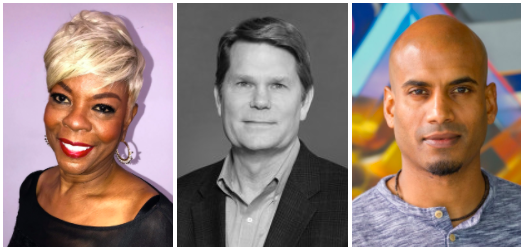
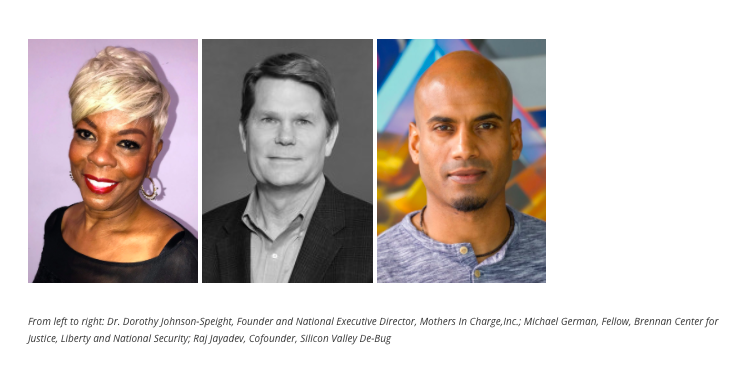
By: Jenny Manrique / Ethnic Media Services
In secret Facebook groups, retired and active officers of the San Jose, California Police shared racist views about African Americans and Muslims. Comments such as: "Black lives don't matter" and "Hijabs should be used as ropes" were part of the posts of a group called 10-7ODSJ, a reference to the "off-duty" police code, which was dropped at the end of June.
The episode laid bare something on which those protesting on the streets against structural racism, such as the same 35,000-strong police force, the 83% of which are white and the 80% of which are male, can agree: race supremacy is something that has permeated the exercise of law and order.
"It's not just that racism is longstanding and consistent, it's the fact that it's embedded in an institution that has the legal authority to kill, to take away your freedom," Raj Jayadev, co-founder of Silicon Valley De-Bug community media in San Jose, said during a news conference organized by Ethnic Media Services via Zoom.
"It's the same officials assigned to monitor the protests, the ones who control the public discussion about law and order in many cities... it's the officials we can't hold accountable because they are protected in their union's arbitration system," he added.
Since Donald Trump became president, the discussion has been polarized between support for the police and chaos in the streets, agitated by the idea that there is an increase in crime and violence if law and order is not dealt with strongly.
Repeated images across the country show the brutal actions of the police against peaceful protesters, mostly African Americans and Latinos, who are shot with tear gas and rubber bullets on the grounds that "they are threatening thugs. Mayors have responded by imposing curfews, which limit the right to protest. And white supremacist groups have increased their presence inside and outside these structures of law.
"There is a false presumption that 'security' is equivalent to 'law and order'. It's a trumped-up premise created to increase community surveillance and incarceration... a crime committed by a black man is sensational and worries more than the thousands of arrests and abuses by police violence," said Jayadev.
Misperception of crime
The numbers contradict the alleged rise in crime. In San José, according to data from the same police force, in the last year the rates of crimes against property plummeted by more than 22%, and violent crimes decreased by 28%. In contrast, the death rate caused by active officers increased.
"One way to hold the government accountable is to ask for the data, because there is a perception that crime is on the rise and that's not true," said Michael German, a member of the Brennan Center for Justice's Freedom and Homeland Security program who in the 1990s worked as an undercover agent for the Federal Bureau of Investigation (FBI) and infiltrated white supremacist and far-right groups.
"There were a lot more murders in the '90s and they've gone down since then. The violence today is nothing compared to what was seen in the civil unrest of the 1960s and 1970s," he added. "In contrast, the authorities are not aggressive in investigating crimes against Native American, black and brown communities, but are pursuing them as suspects in crimes.
According to German, despite the fact that between 2006 and 2015, the FBI recognized that white supremacist violence was a significant problem many years after the Ku Klux Klan made headlines for its violence against blacks, the federal government never made this work a priority and state and local governments have not been willing to address it either.
The FBI does not track these groups, but some of these subjects feed into the terrorism watch list. But the violence of white supremacists falls below priorities such as domestic, international and even environmental terrorism. When it is categorized as a hate crime, it is relegated as a non-priority investigative issue.
"Right-wing violence is at best ignored and at worst instigated by government officials, including the president of the United States," German said. "In the protests, the government has used the figure of outside agitators, anarchists and anti-fascists to divert attention from legitimate concerns expressed by community members. When they say they are "outsiders" it allows for more aggression from the police and supremacists.
The fact that law enforcement agencies attract certain types of ideologies and are composed of a predominantly white and male force complicates structural racism. Aggressive police officers are rewarded with jobs in high crime areas and are often hailed as protectors of social order and the status quo.
"Police departments don't look like the communities they're supposed to protect," said Dorothy Johnson-Speight, founder and national executive director of Mothers in Charge, a grassroots organization that brings together mothers affected by racist violence. In 2001, her 24-year-old son, a college graduate, was shot seven times in a dispute over a parking space.
"And even though they recruit more Black officers, they are oppressed by the system. Their lives are at risk or in danger if they take a stand against racism, the code of silence is a relevant piece of that," he added. Some police departments have made an effort to recruit officers in communities of races other than white, but that has not had an impact on decreasing violence in those neighborhoods because those officers are not allowed to rise in the ranks to make decisions.
"Police arrest and suffocate a man in Rochester (NY, Daniel Prude) with a plastic bag, and then the report says he died of an overdose. He kills a woman in her home and then brings her boyfriend to testify against her that she was engaged in criminal activity. Police officers are corrupt, they kill, they lie and they go unpunished," Johnson-Speight said indignantly.
She recognizes that every time she talks about her son's murder, she has to defend who he was as a black man. "Because he wasn't a criminal or a gang member. He didn't use drugs or alcohol. There are a lot of young African-American men doing wonderful things so the question is not what is wrong with them but what happened to them... What we are as people, you have no idea if you haven't walked in our shoes.
The mother activist says that episodes like George Floyd's death, which aroused worldwide condemnation, have made more people understand these difficulties and how wrong the system is, and that those who are not part of the solution are part of the problem.
"Disbursing the police and diminishing their role in society, especially in cases related to mental health, is the only real solution to the problem," he added. "No one is safe until (African Americans) are safe," he concluded.
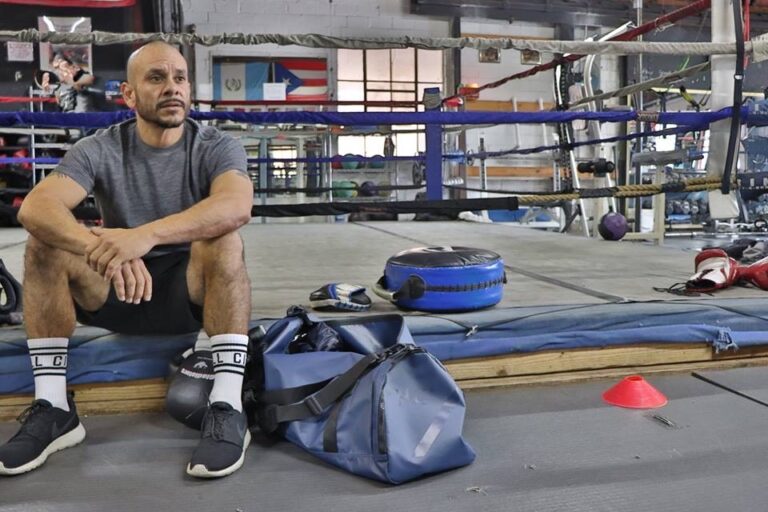
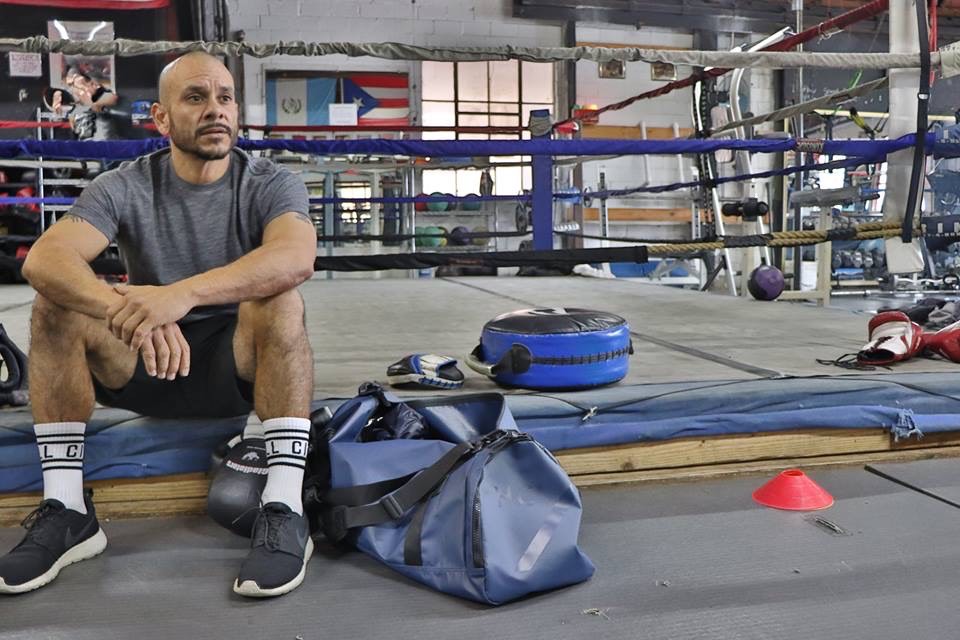
Born in Redwood City to Mexican parents from the state of Jalisco, Antonio Rentería is the owner of Gladiators Boxing Gym, a gym that trains both boys and girls with problems, amateurs and professionals of boxing, such as Mariana González and Alexis Gómez, who pre-qualified for the U.S. team's qualifying rounds for the 2020 Olympic Games.

Peninsula 360 Press
Redwood City. Gladiators Boxing Gym is a training center for boxers that was created by Eloy Ramirez in Redwood City during the 1990s. Currently this center, which trains from children to professional boxers, is owned by Antonio Rentería.
Born in Redwood City and the son of Mexican immigrants from Jalisco, Renteria joined Gladiators Boxing Gym in 1994 at the age of 14. In 2004 he competed in the renowned "Golden Gloves" tournament and made it to the semifinals, "but then I had a family and went to work, but I never stopped all the boxing, I never left Gladiators Boxing Gym," Rentería said. In 2017, Ramírez retired and Rentería took over the gym.
Gladiators Boxing Gym works with San Mateo County and provides training to children who have been victims of bullying, low self-esteem and other emotional problems. "We've had girls come in who have cut their bodies or tried to kill themselves. These are children who have no social life or society rejects them because of the way they communicate or act," Renteria said.
According to Rentería, "Boxing takes away the courage these kids bring to themselves and allows them to open up, communicate with other kids and even find friends, and this allows them to rebuild their self-esteem.
In addition to amateur training, Gladiators Boxing Gym has also trained national champions. Currently, this gym trains Mariana Gonzalez and Alexis Gomez, two professional boxers who pre-qualified for the U.S. team's playoffs for the 2020 Olympic Games to be held in Japan, but were suspended due to the pandemic by the COVID-19.
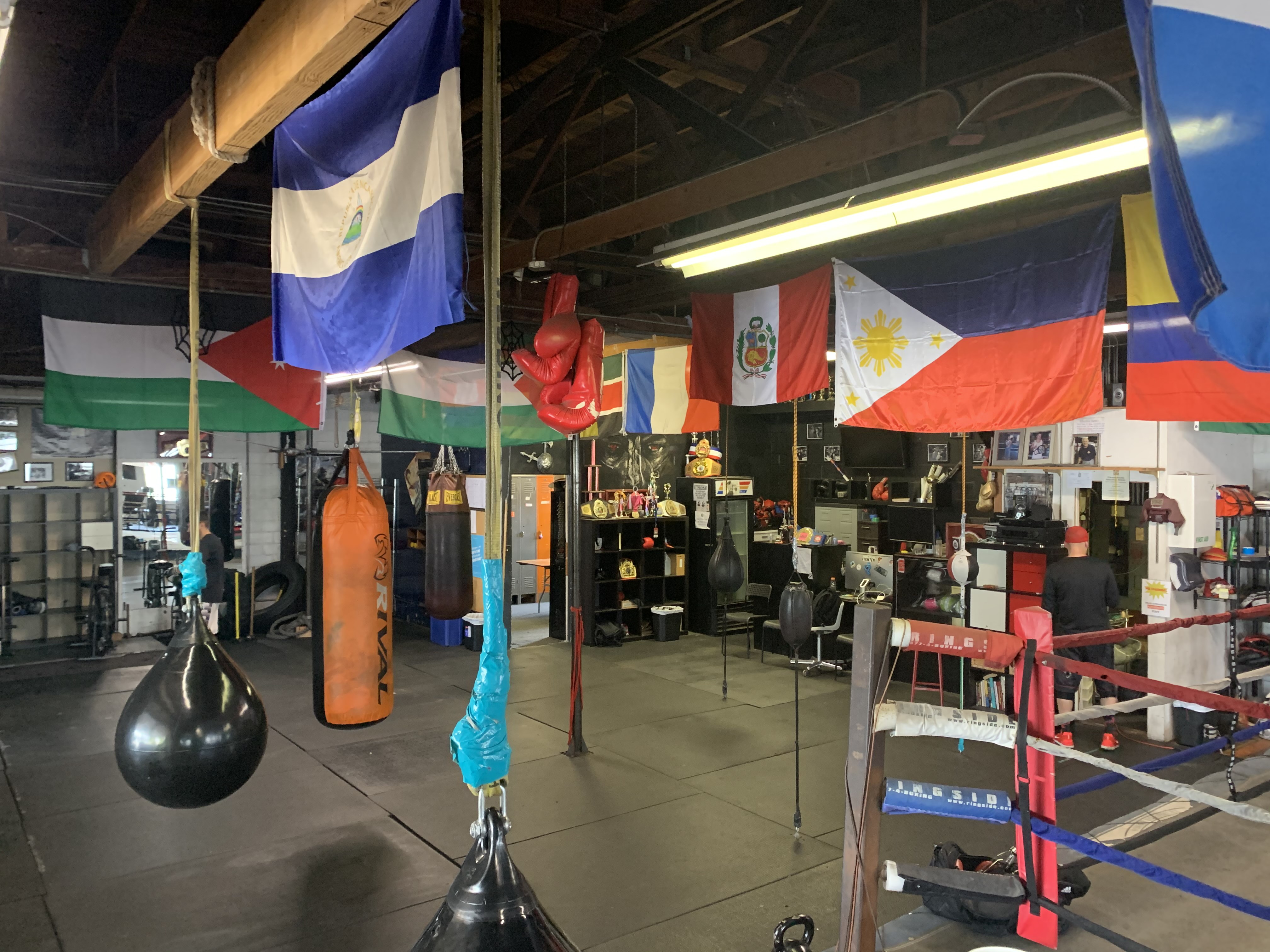
Glatiators Boxing Gym has adapted to the health and safety measures demanded by the COVID-19 pandemic. Training, which costs one hundred dollars a month, continues, but for the moment it is only private.
For more information visit the Gladiators Boxing Gym website
https://www.gladiatorsboxinggym.com
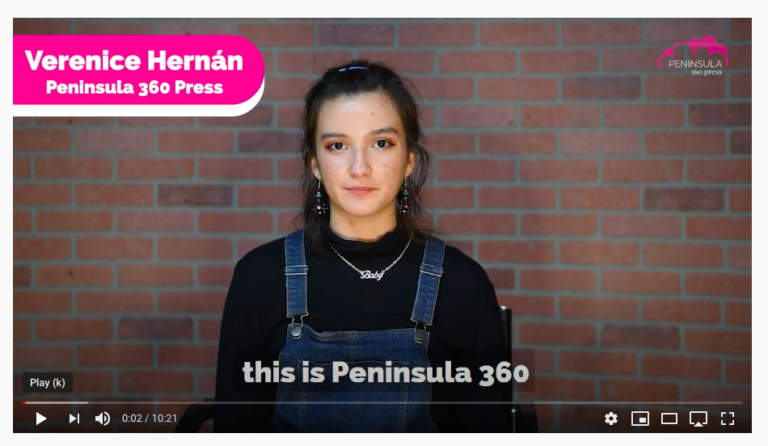
By Verenice Ramírez Hernán / Península 360 Press
On November 3, 2020, at the same time as the presidential election, Redwood City, the county seat of San Mateo County, will elect councilmembers for this city of more than 86,000 people.
This video is part of a series of interviews by Peninsula 360 Press to each and every one of the candidates. The interview consists of the same 9 questions for each and every one of them.
This time, we interviewed Isabella Chu, candidate for Redwood City Council District 3.

By Eli Bartra, courtesy of Peninsula 360 Press
April 2020. A very dear friend of mine who lives in Paris tells me an anecdote about her daily life in the middle of the pandemic. She goes out to the supermarket near her house to buy the essential groceries for survival, as fast as she can, according to her. It turns out that she can't go very fast. She stands in line for 40 or 50 minutes on the street, since very few people must be inside at the same time. Finally she enters and finds the little old ladies strolling down the aisles with all the calm in the world and studying every shelf, every product, as if it were the Louvre Museum. They gloat, enjoy themselves, in front of the cans of peas as if they were works of art. The more time they can spend there the less they will be in their solitary confinement in a small, and perhaps dark, Parisian apartment. They should regulate the time they spend in the store, thinks my friend, who has already reached her seventh decade, just like me! But the old ladies are the others.
The life of lonely and old women in the midst of the covid-19 contingency in Europe is sad. As sad as the whole situation is. Those who are not in nursing homes - where the situation is perhaps worse since they are dying like flies - lead a difficult existence. Everything is complicated, going out to shop is a risk, not going out, too. Loneliness and limited mobility are taking their toll. Old women are absolutely disposable in our societies, they are only good for being grandmothers, if they are doing well.
I am in Barcelona where I decided to spend my sabbatical. Since the pandemic started in Spain, which came out of the blue, without really being expected even though it was in China, and without knowing what it meant - because Italy and Spain were the first places in the old continent where it took on horrifying dimensions very quickly - from the moment it started, it was clear that it was a disease that was going to affect, first and foremost, the elderly population.
Women live longer than men and, therefore, there are more elderly women than elderly men; furthermore, more men die from the virus, which means that the female population, in this age group, is at lower risk in terms of gender. Where does this lead us? Well, it is above all the elderly women.
The dreadful decisions that health personnel must make are a moral issue of the first order. If necessary, saving the life of a 30-year-old is privileged over that of an 89-year-old. In principle, because one has many more years to live than the other. By virtue of what is one worth more than the other, the number of years to live? Is age the only important thing? There is little social significance in the experience of one or the other or in the service to humanity that they can render.
In Barcelona, the confinement can be very heavy for old women who have to do the shopping, because, in general, they are in charge of these tasks. Often, it is a young family member who does this task. It is said that older people will have privileges in terms of buying groceries, for example, over the Internet. "Let them stay at home". Hollow words, because we older people have much more trouble shopping on the Internet. We do not manage like fish in water as young people do. And some are frankly cybernauts. Lucky those of us who have help from young people, but what about those who don't? How do they shop online? I'm having a hard time getting food week to week and it's an additional source of anguish, in case another one is needed.
We must hope that no evil lasts a hundred years... with patience and... we will get out of this.
---
PhD in Feminist Studies, Master's Degree in Women's Studies and Research Area Women, Identity and Power of the Department of Politics and Culture, UAM-X.
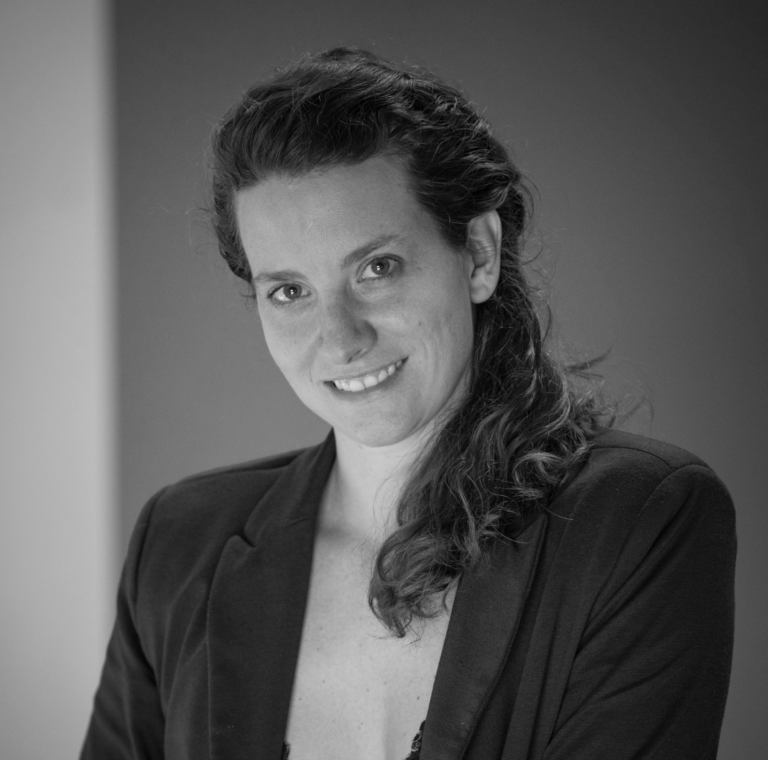
Anna Lee Mraz Bartra / Peninsula 360 Press
Confinement has been hard for most, but it is clear that it is much harsher for those who already lived in worse social conditions: the poor, the elderly and for women in general, life has been complicated and for more than one reason.
After months of being enclosed, isolated from the world, we can already notice that the best and worst versions of ourselves have emerged, as indicated by the opaque reflection of the computer or cellular lithium crystal, which when it emits light, the electromagnetic waves are obfuscated, negative, contradictory. They make us witnesses of the tragedy that results from human meanness, on the one hand. In the best of cases, we find new ways of expressing affection at a distance.
Those who have no choice continue to leave the house, exposing themselves and their loved ones. They have no one to leave their children with who would normally be at school sheltered while their mothers and fathers work.
Older people are being overtaken by the technology on which daily life and the most essential tasks of our system now depend.
It is becoming clear to us that unprecedented changes in human endeavour will come. The house, for example, a place of rest par excellence, has become for some people an office, a school, a cinema, a restaurant and, in the best of cases, a gym and a discotheque. In the worst case, a nightmare you can't get out of.
Daily life, usually sustained by countless people around us, turns inward like a hastily torn sock and we find that these daily tasks are slower and more difficult to carry out. Even concentrating on work is more difficult. We have double or triple the responsibility in the home office, in addition to the housework and full-time parenting. When it's time to rest, the only thing that shows up as an uninvited guest is insomnia.
Another issue that has become - to say the least - a challenge is education. I believe that, in principle and in ordinary circumstances, raising new human beings should be a collective task. Now it has become an extraordinary and monumental task to try to resolve it within the same four walls that confine us. The size of the challenge will depend on many factors and also on the size of the child. A distinction must be made between those who have school-age and literate children and those who have pre-school children, who are illiterate, who do not read books alone, who do not write and who demand as much time as possible from their parents. We have become teachers, cooks, full-time animators of our sons and daughters. As if that were not enough, now the authorities in the schools are asking us to create a portfolio of evidence of what the children learn at home and to hand it over when they return.
Those of us who are teachers have become radio journalists. We talk for two hours running to a computer where we don't even see the students' faces because they have to turn off their cameras so the connection is not interrupted. The levels of surrealism are progressively increasing.
Our life revolves around the coronavirus, to the point that even a friend called the feline she found abandoned on the street and rescued it: Pandemic.
What days! What a year! All we have to do is resist and give the bad weather a good face.
Anna Lee Mraz Bartra is a doctor of sociology and a university professor. She lives in Redwood City.
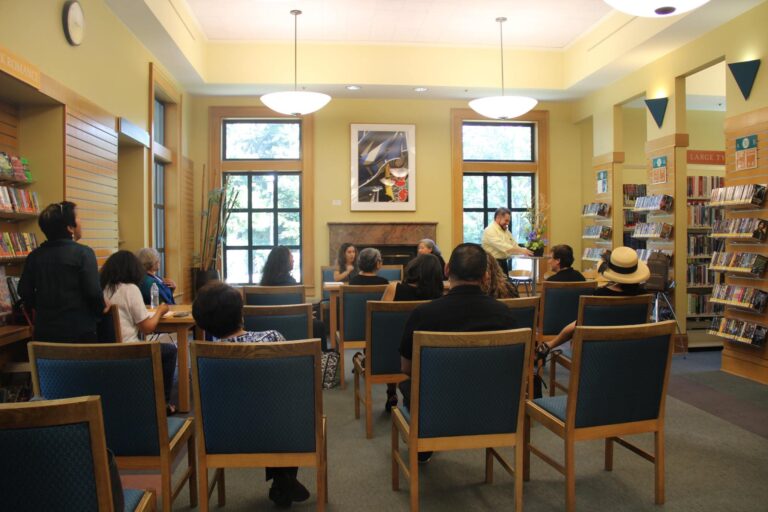
Calapiz Stela. Peninsula 360 Press.
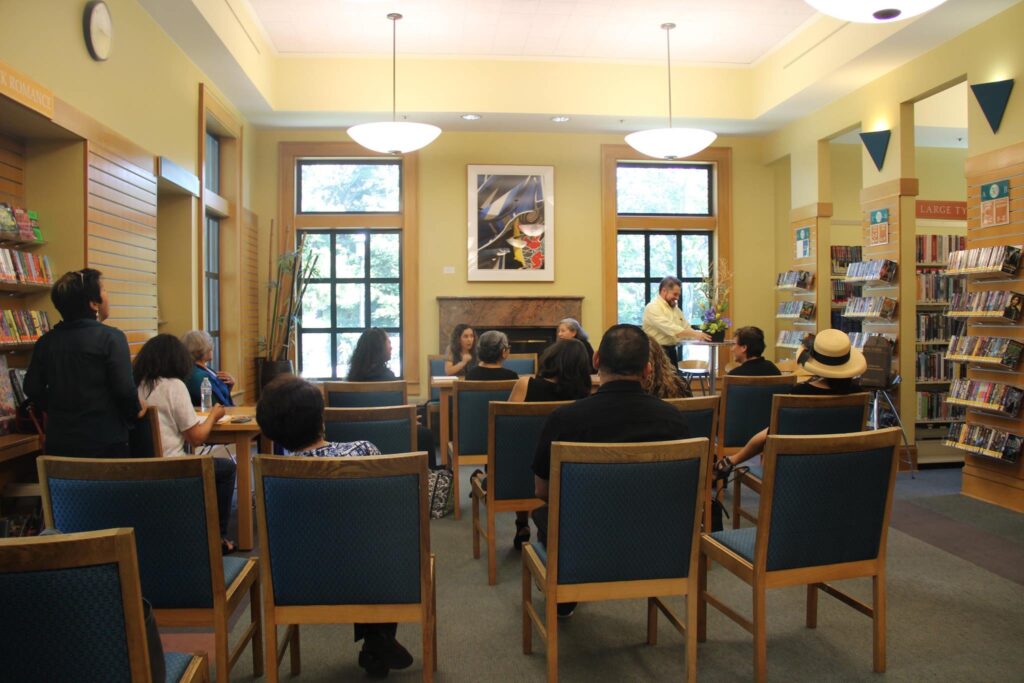
More than ten years ago, Casa Círculo Cultural emerged, a space made to bring Latin American culture to this part of the Bay Area. The sense of this project was -and still is- that our families have a place to belong and that their children and the new generations do not forget their mother tongue through art, theater, music, creative writing workshops, craft workshops, community living such as clubs, film debate, book club and radio programs.
Community work is done through volunteerism. At first, as you can see, this goal seemed distant and ambitious, but it was achieved with the effort of many people and with the tenacity of its director who has not given up, to date, to achieve the initial task.
This time I'll talk about how it started "The Creative Writing Workshop" and the benefits it has provided to the migrant family community living in this part of California. I will tell you how the idea of involving these women in writing came about: it came from the need to create a space for free expression by observing mothers waiting for their children to leave the workshops offered at The Cultural Circle HouseThe women began to form a group in which they talked spontaneously, a situation that led us to think that this socialization could be channeled into some benefit for this group. It was then that the project to start learning to write arose.
The origin of these women was varied: one or two came from El Salvador, Guatemala, Peru, different states of the Mexican Republic; as well as their schooling: there were women who barely counted elementary school, others had reached high school and one or two had a profession. It was a somewhat uneven group, but each one, at her own level, was able to start writing short stories, other texts, such as poetic prose, some verses, some songs. The compendium of the small writings was the publication of a book. Some even wrote their own book.
The work that was done did not try to teach everything that they needed, but how to achieve enthusiasm and create in these women: love and esteem for knowledge, reading and self-criticism, and also to work with their self-esteem when seeing their writings published. For some, this workshop was basically about learning new words and getting them to start reading.
Readers will wonder why write? I will tell them that writing is a craft that can be learned - although being a writer is another matter - but from there you can discover a writer, a woman who would never have realized it if she had not tried.
If you want to write, you can, but first you must know the techniques of a trade as old as man, for example, that of storyteller, and all these women had much to tell; because a story can take many forms: that of a letter, a story or a novel, that of a song, or a biography. Writing also is a cultural tool that facilitates cognitive development, rescues memory and privileges power. According to the cognitive conception, writing is a process that requires the active participation of the writer who must apply very complex mental operations: planning, writing and reviewing.
In conclusion, I will say that the purpose of this writing workshop was not to be a school for training writers, but rather a laboratory for literary creation. Spaces of relationship between people of the community, of dialogue, of help to the people who have just arrived to the United States, place of exchange where doubts are solved, insecurities are filed and one learns to move in this culture and to learn a new language.
I would like to tell you that during this time of confinement, in order to continue with the Project, the Book Club has been created virtually, a space where we have begun to read famous writers, of course little by little, and we have also read our own writings. "The Writing Workshop" or now "The Book Club" where more people of either sex are already attending, is the place where you finally meet people with common interests, with whom you can give your opinion, share your tastes and inclinations, but also your anxieties and obsessions, those of each and every one.
In this space you can not only share with people of sexual diversity, but also with people of different ages, older or younger than you, more or less wise, more or less capable, better or worse; just as it happens in your daily life. With these workshop partners, you will achieve belonging and closeness with like-minded people whom you will end up knowing very well. In this way we will learn to respect different opinions: they will not necessarily be complacent and flattering, but they will be critical and sometimes merciless when it comes to making judgments on the topics that are written or read.
To Finish: Here is this text by Gilles Deleuze:
"Literature is beside the formless, the unfinished... Writing is a matter with becoming, always unfinished, always in progress, and overflowing with any living or experienced matter."