

By Pamela Cruz with collaboration from Manuel Ortiz. Peninsula 360 Press.
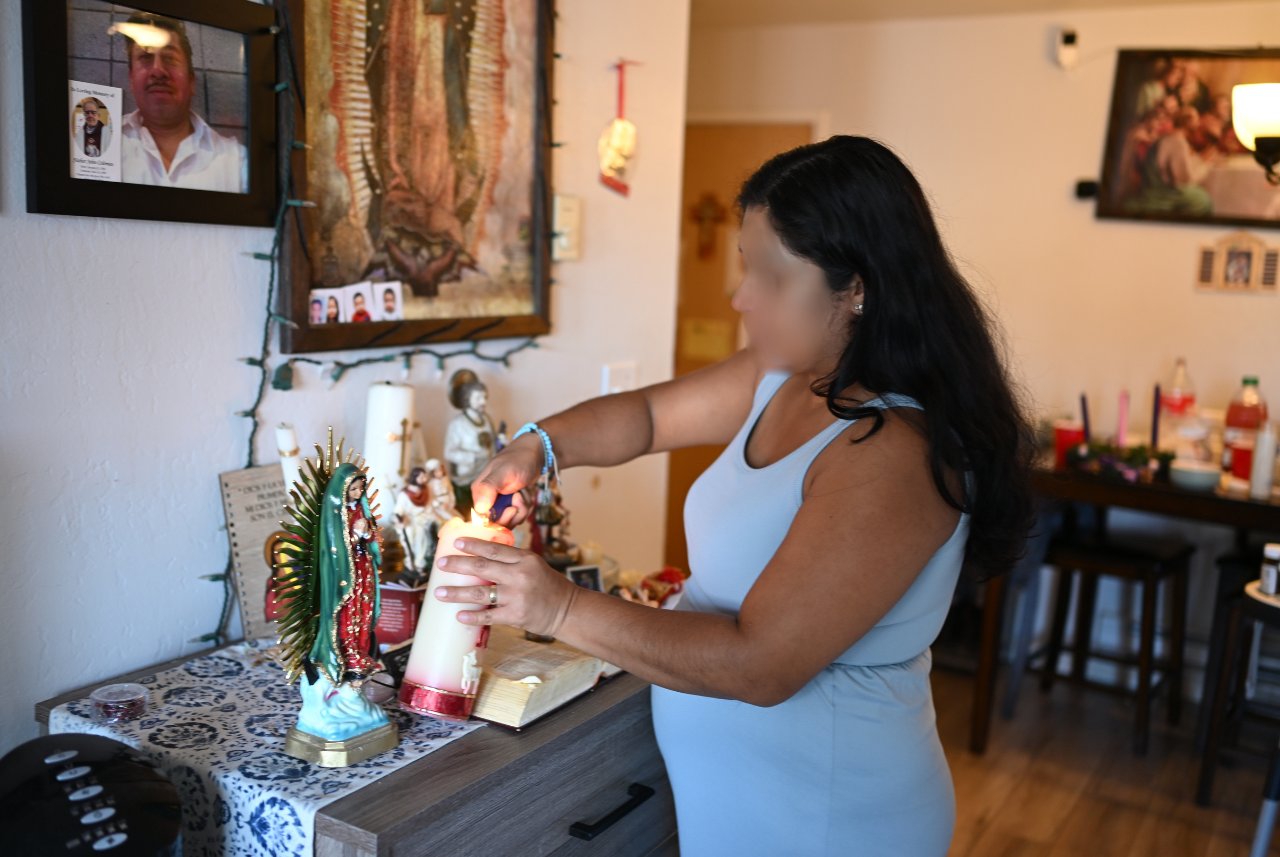
Adriana is 20 weeks pregnant. She lives in the Bay Area, has three children and, like thousands of immigrant mothers in the United States, is going through her pregnancy with an anxiety that just a few years ago seemed unthinkable: not knowing whether the baby she is expecting will be recognized as a U.S. citizen.
“Yes, I have heard about it and it is a major cause for concern not knowing what awaits us as mothers… I have other children, and that’s when I start thinking about what is going to happen in this case with my other children and with the one who is coming,” she says.
Her fear has a concrete origin. In January 2025, President Donald Trump signed an executive order to restrict birthright citizenship, a measure that seeks to automatically deny citizenship to children of undocumented immigrants or those with certain temporary immigration statuses.
The order directly challenges the 14th Amendment of the U.S. Constitution, in force since 1868, which establishes that every person born on U.S. soil is a citizen.
The dispute has already reached the U.S. Supreme Court, where several justices expressed skepticism toward the Trump administration’s arguments during oral hearings held on April 1, 2026.
However, while the justices deliberate, the effects of the policy are already being felt in the daily lives of immigrant families.
Childhood under watch
In Adriana’s home (her name has been changed for security reasons), fear has altered the family’s routine. Parks, children’s parties, and even family trips are no longer safe spaces.
“We have limited some things… not going to parks that my children want to go to because we can’t,” she explains.
The reason behind those decisions is fear of immigration enforcement operations or encounters with authorities. Even simple activities, such as visiting Disneyland or Universal Studios, have become risks the family is no longer willing to take.
“My daughter has been asking since last year for us to take her to Disney… and with tremendous sadness, I just tell her later,” she says.
Her youngest son dreams of visiting Toy Story Land. She tries to make up for it by buying him toys.
“It’s very sad… not being able to take them out freely,” she says.
The emotional impact is already visible in her children. Her eldest daughter has developed anxiety and fear of the police.
“Mami, ¿no va a llegar la policía?”, recuerda Adriana que le pregunta constantemente.
“It breaks my heart that this is affecting my daughter as well,” she adds.
Mental health specialists have warned in recent years that constant fear of deportation and immigration uncertainty generate toxic stress in minors, affecting sleep, school performance, and emotional well-being, particularly in mixed-status families.
A pregnancy shaped by stress
For Adriana, pregnancy unfolds between daily exhaustion and psychological pressure.
“Daily life is already stressful with the children, but now adding all this about what is going to happen… it has a tremendous effect,” she says.
Prenatal stress linked to immigration fears has become a growing concern among community organizations and specialists, who warn that chronic anxiety during pregnancy can affect both physical and emotional health.
Legal uncertainty is also pushing many families to consider extreme decisions.
“I have sometimes wanted to make the decision to go back to my country… but my husband asks me, what about the children?” she says.
The possibility of separating from her partner or leaving behind the life built in the United States is a constant topic in family conversations.
“It’s very sad… breaking up a family,” she says.
A debate that redefines belonging
During a briefing organized by American Community Media (ACoM), academics, lawyers, and activists warned that the debate over birthright citizenship is not only about immigration, but identity.
“Fundamentally, we are debating what kind of country the United States should be,” said Hiroshi Motomura, a law professor at UCLA and immigration expert.
He warned that the Trump administration is not only seeking to restrict rights for those who are undocumented, but to redefine who can be considered American.
“The administration has announced that they are trying to redefine what it means to be a U.S. citizen,” he said in a previous ACoM conference.
Concerns have grown as recent immigration measures have also affected people with recognized legal protections, including DACA, TPS, humanitarian parole beneficiaries, and some permanent residents.
“One day we are welcomed into the United States, and the next we are discarded,” said Venezuelan activist Adelys Ferro.
Economic and social consequences
Beyond the immediate human impact, experts warn that restricting birthright citizenship would have profound economic consequences.
A study cited during the ACoM session estimates that beneficiaries of this right will have contributed $7.7 trillion to the U.S. economy between 1975 and 2074.
Researcher Phillip Connor of Princeton University explained that approximately two-thirds of those who obtain birthright citizenship work or will be employed in professions that require higher education.
Eliminating this right could result in a projected shortage of 400,000 skilled workers in the coming decades.
Sectors such as healthcare would be particularly affected, according to Xiao Wang, CEO of Boundless Immigration, who warned that foreign doctors and nurses might choose other countries if their children’s legal future remains uncertain.
“Does the United States want to continue being the place where the brightest people in the world come to build, discover, heal, and stay?” he asked.
The risk of creating a new population without rights
Dr. Julia Gelatt of the Migration Policy Institute warned that abolishing birthright citizenship could increase, rather than reduce, the undocumented population.
“The undocumented immigrant population could grow significantly by 2.7 million over the next 20 years,” she said, noting that around 255,000 children could be born each year without legal status.
Experts warn that this could lead to entire generations excluded from public benefits, with limited access to higher education and no ability to work legally.
“This means that children would grow up in the United States without access to Medicaid, food assistance, or other public benefits,” Gelatt explained.
The fear is not abstract. For Adriana, it has a face: that of her children.
“I am very grateful to this country mainly because it gave me my children… this is where I built my family,” she says.
That is why the fear feels even more painful.
“All we want is what is best for our children,” she says.
As the Supreme Court prepares to issue a ruling that could redefine the very meaning of citizenship in the United States, thousands of migrant mothers are living their pregnancies between medical appointments, sleepless nights, and questions that still have no answers.
This story was produced as part of “Aquí Estamos/Here We Stand,” a collaborative reporting project of American Community Media exploring the impact of Trump Administration’s war on immigrants in communities across California.
-
Esta historia fue producida como parte de «Aquí Estamos/Here We Stand», un proyecto de reportaje colaborativo de American Community Media que explora el impacto de la guerra de la Administración Trump contra los inmigrantes en comunidades de toda California.
You may be interested in: Temperaturas gélidas y pollo crudo: una mujer del Valle Central recuerda las condiciones de detención de ICE


 WeEvolveIT