Trump is the president with the worst approval rating at the beginning of his term, with only 47 percent approval as he enters his second term, making him the most unpopular US president in the country's history.
The Washington DC-based consulting firm Gallup, famous for its public opinion polls around the world, reported that the new president of the United States, Donald Trump, barely has a 47 percent approval rating as he enters his second term, making him the most unpopular American president in the country's history.
“At 47 percent, President Donald Trump’s initial job approval rating for his second term is similar to the 45 percent he earned during his first term, again putting him below every other president-elect since 1953,” the pollster said in a statement.
And, he added, “Trump remains the only president-elect with initial approval ratings below 50 percent, and his latest disapproval rating (48 percent) is three percentage points higher than in 2017.”
The highest-ranked candidate so far, according to Gallup, remains Democrat John F. Kennedy, who, in the first month of his presidency in 1961, had a 72 percent approval rating and just 6 percent disapproval rating.
Kennedy is followed by Dwight Eisenhower (1953) and Barack Obama (2009), both with an approval rating of 68 percent, while third place is occupied by Jimmy Carter with 66 percent.
While it is true that other polls put Trump in a better position in terms of American liking, they do not radically change the figures. CNN poll says 56 percent of adult citizens expect Donald to be a very good or fairly good president, while 43 percent expect him to be a fairly bad or very bad president.
Polls conducted before Trump was sworn in as president barely gave him 50 percent of voter approval, such as the one conducted by Fox News, while that of the Wall Street Journal found that 47 percent of registered voters viewed him favorably, while 51 percent viewed him unfavorably.
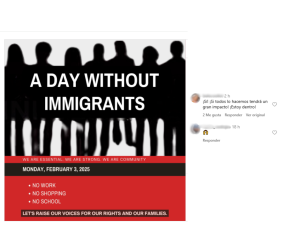
A day without immigrants is an initiative that has emerged through social networks. The call is for Monday, February 3, 2025. All migrants are invited to stop working, miss work, school, not shop, or use media and services, in order to generate an economic impact.
An initiative to carry out a national strike of the immigrant community in the United States, “A day without immigrants”, is circulating on social media. It seeks to demonstrate the importance of this sector in the country's economy. However, opinions for and against are present.
The call is for Monday, February 3, 2025, and all migrants are invited to suspend their work, miss work, school, not shop, or use media and services, in order to generate an economic impact with million-dollar losses. However, controversy has arisen among users, as many do not agree with this movement.
According to the Center for Migration Studies, there were 11.7 million undocumented immigrants in the United States in July 2023, a figure that changed for 2024, since the Department of Homeland Security, In April 2024, the US published a report indicating that by early 2022 there were some 11 million undocumented immigrants in the country.
In 2022, undocumented immigrants paid $1.496 billion in federal, state, and local taxes, the majority of that amount, $1.459 billion, was paid to the federal government, while the remaining $1.437 billion was paid to state and local governments, this According to the Institute for Fiscal and Economic Policy (ITEP),
The Institute on Taxation and Economic Policy's report shows that undocumented immigrants pay about $$8,889 per person in federal, state, and local taxes in 2022, showing that for every million undocumented immigrants residing in the country, public services receive $$8.9 billion in additional tax revenue.
The immigrant community is part of the country's economy, and its importance has been demonstrated in various reports, however, different users have shown apathy towards the initiative of "A day without immigrants."
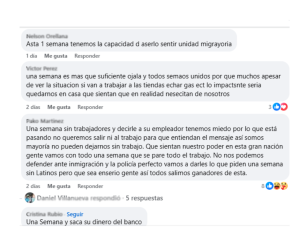
For some, one day is too little, so they suggest a week or two, however another sector of Internet users considers that it would put their well-being and safety at risk, as they fear losing their jobs or putting themselves in a vulnerable position.
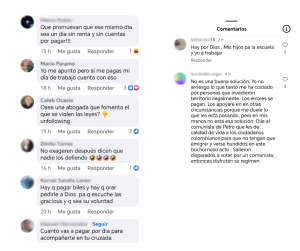
On the other hand, there are those who support and join, with the commitment to demonstrate the importance of migrants for the United States: “Yes! If we all do it, it will have a great impact! I'm in!” reads one comment on Instagram.
Although support and unity are requested, other users have shown themselves to be against the national strike, as they consider their work, paying their rent and avoiding problems to be more important, or they simply show themselves to be against immigrants.
There are endless comments on social media, but it remains to be seen what action the immigrant community will take. If they actually suspend their activities, how many will do so, what impact it will have, and the number of participants. This will determine citizen unity and participation, including for the next calls to action against the measures taken by President Donald Trump.
Santa Clara County officials have filed a federal lawsuit seeking to block President Donald Trump's executive order ending birthright citizenship.
By Brandon Pho. San José Spotlight via Bay City News.
Santa Clara County officials have filed a federal lawsuit seeking to block President Donald Trump's executive order ending birthright citizenship.
The lawsuit filed Thursday in federal court calls the order illegal and unconstitutional. Trump issued the order just hours after taking office on Jan. 20, calling for the repeal of a 150-year-old constitutional provision that holds that anyone born in the United States is a U.S. citizen regardless of the citizenship of their parents.
The 14th Amendment guaranteed birthright citizenship in 1868, as one of the post-Civil War Reconstruction amendments to address the treatment of enslaved people. The U.S. Supreme Court upheld the amendment in an 1898 ruling involving a baby born in San Francisco to Chinese parents, which was filed in the same federal court as the Santa Clara County lawsuit.
The Trump administration argues that children of undocumented immigrants are not subject to the jurisdiction of U.S. law and that the 14th Amendment does not apply to children of people who are in the country illegally.
County leaders argue that Trump's order could have profound local impacts, such as denying benefits to children.
“This order is an attack on our entire community, particularly our immigrant community, and the moral fabric that allows Santa Clara County to thrive,” District 1 Supervisor Sylvia Arenas said in a statement. “All children born in the United States have the same rights of citizenship, and that is something this president cannot take away from us.”
According to U.S. Census data, Santa Clara County has one of the largest and most diverse immigrant populations of California's 58 counties. Hundreds of thousands of county residents were born outside the United States and speak a language other than English at home.
More than 60 percent of Santa Clara County children are believed to have at least one foreign-born parent. County leaders say this is the highest percentage in California and one of the highest percentages of any county in the United States.
Tony LoPresti, the county's top attorney, said Trump's order has no legal basis.
“No president has the power to enact, amend, or repeal laws, much less the Constitution itself,” LoPresti said. “This order unlawfully directs federal agencies and officials to refuse to comply with and enforce a broad range of laws that rely on the constitutional foundation of birthright citizenship.”
The county's lawsuit comes amid a chorus of other lawsuits against the order from other states. A Seattle judge imposed a temporary block on the directive through a 14-day temporary restraining order on Jan. 23.
API leaders in Atlanta say the raids call for “solidarity” among immigrant communities. “We have to realize that at any moment this could spread to other communities.”
API leaders in Atlanta say raids call for “solidarity” among immigrant communities.
ATLANTA, Georgia – “Pastor, can we send our kids to school?” parishioners at Penuel Mission Church in Duluth, Georgia, constantly ask Pastor Jay Kim, whose church serves the large immigrant Latino population in the Atlanta suburb.
Kim's comments come just days after a series of ICE raids in the Atlanta metropolitan area , including one that targeted a church, spreading fear among migrant families across the country.
Members of the Atlanta API community have stepped up their response.
“We are organizing temporary shelters for migrants who have been expelled due to immigration raids,” says Kim, who is ethnically Korean but grew up in Paraguay and Argentina and speaks fluent Spanish. “They need a roof to protect them from the rain.”
The raids have led to the loss of income and, in some cases, housing for families whose primary breadwinners have been deported.
Kim's church is located along Buford Highway, a 30-mile stretch of road in the Atlanta metropolitan area that is a center for the city's large immigrant community , with restaurants and other businesses catering to the area's wide diversity.
“Latinos are neighbors to our Korean-American community. In the workplace and at home, Latinos are indispensable to Korean-American immigrants,” she says. “Many Koreans help them in invisible ways.”
Atlanta is home to one of the largest Korean communities in the country, second only to Los Angeles, as well as one of the largest Latino populations in the country.
A report from Telemundo He notes that arrests during last week's raids took place along Buford Highway, as well as in other Atlanta neighborhoods.
The DEA’s Atlanta division along with the FBI issued statements acknowledging their involvement in the raids. “The FBI, along with our partners at the Department of Justice, is assisting DHS and other federal law enforcement partners in their immigration enforcement efforts.”
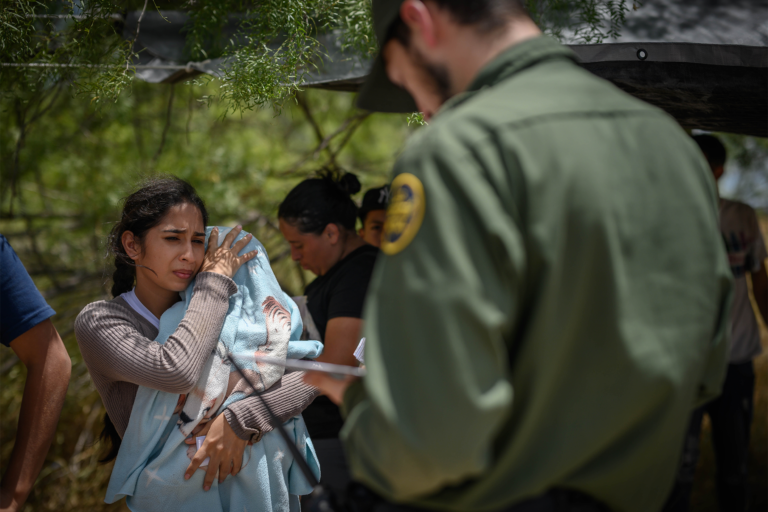
According to reports, several thousand immigrants were deported during the first week of Trump's presidency. At least Half of the deportees had no criminal record, despite government assurances that it would only target people with criminal records.
According to the Washington PostThe administration has now issued quotas to ICE agents seeking to increase the number of daily deportations to at least 1,200 to 1,500.
“It’s a moment of solidarity,” says Lily Pabian, executive director of the nonprofit We Love Buford Highway , which works to preserve the multicultural identity of the area. “We have to realize that at any moment this could spread to other communities.”
Referring to refugees and asylum seekers, whom Trump has also targeted for deportation, Pabian emphasizes: “This is a moment for all of us to be very realistic about what is happening and the potential of how far this could go.”
The area around Buford Highway first emerged as an immigrant enclave about 50 years earlier, a time of growing opportunity thanks to the expansion of the region's automotive industry, Pabian explains.
“There were many immigrant communities that brought their entrepreneurial spirit with them to create small businesses,” he says.
That spirit helped to boost Atlanta's economic growth . Immigrants, including unauthorized immigrants, contribute approximately $9 billion in tax revenue to the city each year and are 41% more likely to start a business compared to their U.S.-born counterparts.
Despite their contributions, immigrants have often had to face waves of racism and xenophobia, Pabian says, including during the Covid 19 pandemic, when the API community became a target of hate, the most disturbing example of which came in 2021 after a mass shooting which targeted Asian-owned spas in the city.
“For us it was like 9/11,” Pabian says of the scars that remain from that period, adding that the experience generated a sense of solidarity and empathy that is now extending to the Latino migrant population. “Since the ICE raids, we see that another community is being marginalized… empathy is very important.”
Meanwhile, fear and anxiety continue to spread in communities here.
“Many immigrant parents will stop sending their children to school,” Kim says, “and there will be more cases of workers not being paid for their work. Immigrant women who are victims of violence will also be reluctant to go to the police.”
For his part, Kim acknowledges that there is little he can do to prevent the police from arriving at his church's door.
“If I hear that a member of my church has been arrested, I will try to find out how to contact their family. But if ICE wants to arrest undocumented people in my church, I can’t stop them,” he says, pointing to the absence of “sanctuary churches” in Georgia, which he calls “unfortunate.”
Since the raids, Kim’s church has returned to the COVID-19-era practice of holding online prayer meetings. “We created a chat room with 100 immigrants. We posted morning and evening prayers in the chat room every day with the goal of praying for 40 days.”
And he adds: “We pray on our knees that we will survive the raids.”
The San Mateo County Board of Supervisors said it will maintain protections for vulnerable and marginalized groups despite new federal priorities.
After President Donald Trump said there would be cuts to DEI (Diversity, Equity and Inclusion) programs, the San Mateo County Board of Supervisors has indicated that, despite new federal priorities, it will maintain protections for vulnerable and marginalized groups.
“We know there is a growing effort to dehumanize, degrade and destroy our vulnerable communities and it is up to us, as county leaders, to protect our most vulnerable communities during this time of fear and uncertainty,” said District 2 Supervisor Noelia Corzo.
In co-sponsoring the resolution, the official noted that “here in San Mateo County, we can make the decision not to go back decades in our social progress.”
The Board reaffirmed several steps it has taken in the past to ensure that populations such as immigrants, people of color, LGBTQIA+, and people with disabilities feel welcome and safe in San Mateo County.
Among the measures are a resolution to promote and enhance the County’s racial equity efforts, including the creation of an Office of Racial and Social Equity and an equity director position; and an ordinance to advance racial and social equity through specific goals, including integrating equity as a core value for strategic and budgetary decisions.
Additionally, establish a deportation defense fund and rapid response hotline; host “Know Your Rights” trainings and contribute to the Immigrant Family Recovery Fund; and establish the County’s LGBTQIA+ Commission and support the San Mateo County Pride Center.
Furthermore, establish a dedicated Women and Children Officer position and adopt a comprehensive action plan for women and children to address inequalities, expand services and improve opportunities for economic mobility; and promote inclusive and accessible activities and resources for persons with disabilities, including the annual Inclusion Festival.
These actions led to San Mateo County being recognized nationally in January 2024 as a “certified welcoming county,” a first for any county in the country.
Supervisors also hope the support will help ease ongoing anxiety that may prevent some people from seeking services, education and employment.
District 3 Supervisor Ray Mueller, the resolution's other co-sponsor, said some students are avoiding school and adults are skipping work for fear of immigration officials.
“It’s just horrible to watch,” she said before speaking directly to the transgender youth: “Right now, those kids are loved and valued and this county will stand by them.”
Thursday's vote also gave new Supervisors Jackie Speier of District 1 and Lisa Gauthier of District 4 the opportunity to voice their support for the Board's previous commitments.
Gauthier successfully suggested adding indigenous peoples to the list of populations specifically named in the resolution.
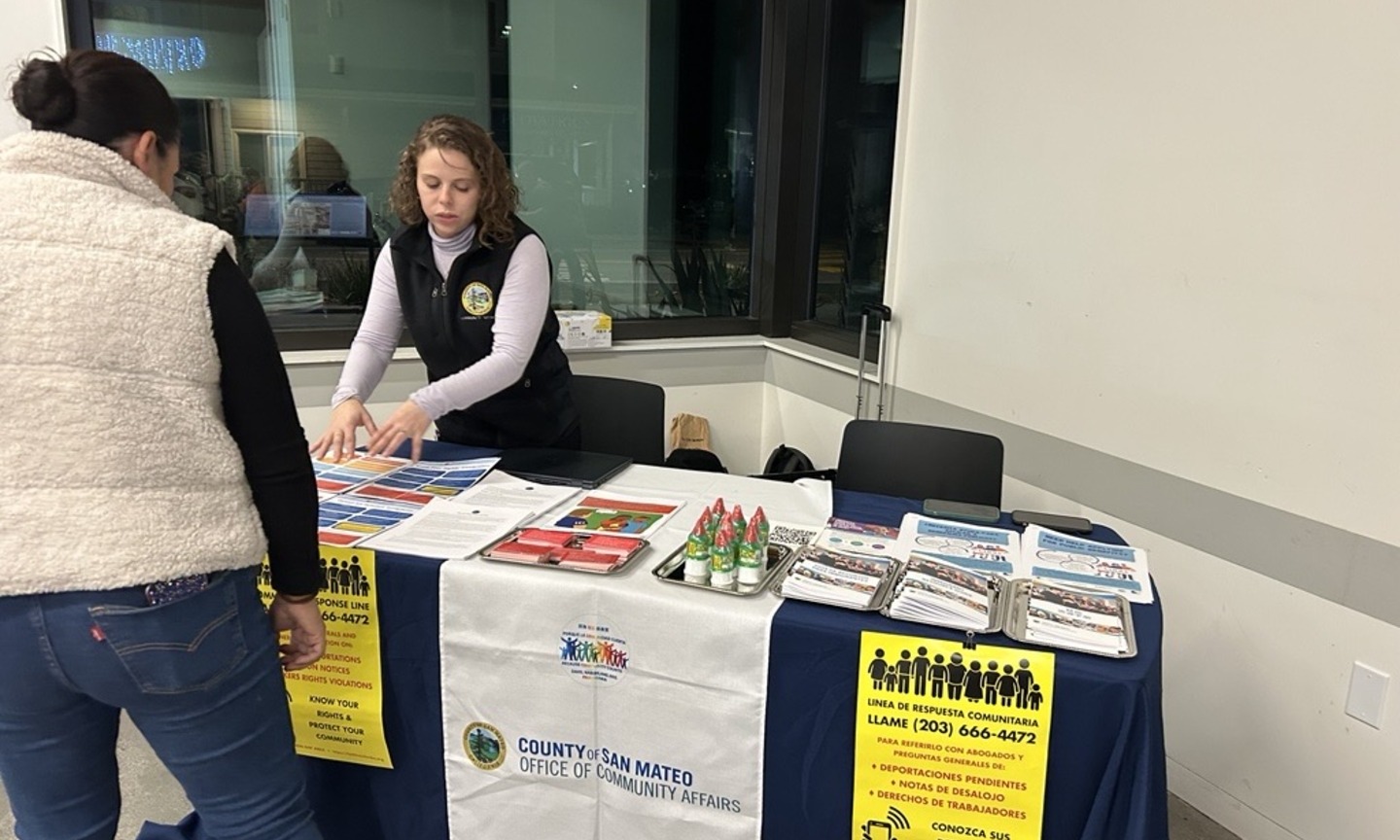
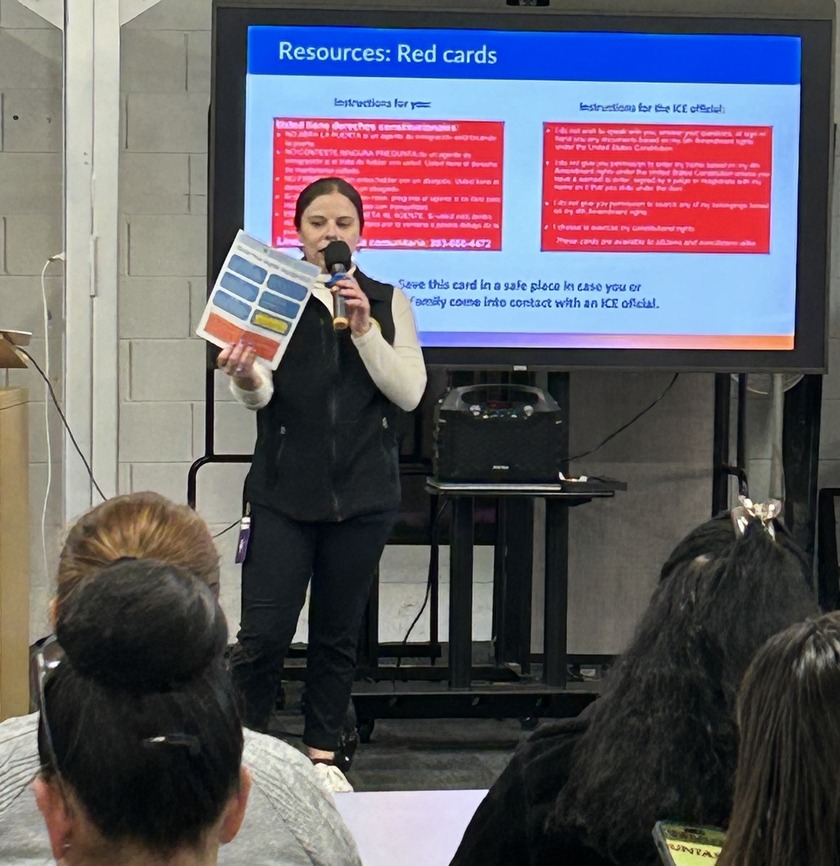
San Mateo County has prepared and issued a number of resources to immigrants, including red cards that include a script to help people assert their rights at home, in the workplace, or in a public place.
San Mateo County has made its position regarding the immigrant community clear: to protect, embrace and include them in all areas of civic, social and economic life. In light of this, it has prepared and issued a series of resources that seek to help this sector of the population in the face of the intensification of raids and deportations by immigration authorities.
In addition to the “Know Your Rights” workshop, which is conducted by the San Mateo County Office of Community Affairs at nonprofit organizations from Daly City to Pescadero, it has added important documents that inform immigrants.
“The immigration system is extremely complex,” said Board of Supervisors Chairman David Canepa. “These workshops help people gain the confidence they need to navigate that system and can help them better understand the avenues available to them.”
The workshops are in line with the County's recognition as a certified welcoming place by Welcome America, becoming the first county in California to achieve the distinction for its commitment to immigrant inclusion and belonging.
In the approximately 90-minute workshops, outreach workers in English and Spanish cover a variety of topics that many immigrants consider crucial to their future and that of their families.
In these meetings, they are also distributed red cards which include a script to help people assert their rights at home, in the workplace or in a public place.
In addition, they offer a rapid response hotline (203-666-4472) to call if federal immigration agents come to your home or work, contacts for legal assistance and additional resources.
Among the advice that the workshop leaders have given is that all people in the United States, regardless of their immigration status, have certain rights and protections under the Constitution of this country. You have the right to remain silent. You do not have to open a door unless you are presented with a search warrant from a judge. You do not have to sign anything without a lawyer.
In addition, they have pointed out that it is crucial to make a family plan, in case they are detained and separated from their children.
“One of the goals is to help people overcome fear and anxiety by providing them with reliable information as well as concrete actions they can take,” said Sarah Dewitt-Feldman, the county’s Immigrant Services Coordinator, who leads workshops alongside teammate Carolina Salinas.
Sarah Dewitt-Feldman leads a “Know Your Rights” workshop, one of many held throughout San Mateo County.
“These workshops also give people the opportunity to ask us questions directly and share information,” Dewitt-Feldman added. “What we’re trying to do is empower people with facts.”
Dewitt-Feldman and other county presenters do not provide legal advice. Instead, they refer people to a network of free and low-cost immigration legal services providersIn some events, attorneys from the Legal Aid Society of San Mateo County or other organizations provide guidance.
Know Your Rights workshops are scheduled and hosted by nonprofits and other community organizations. For information about upcoming workshops, please contact the Office of Community Affairs at immigrationservices@smcgov.org or at 650-363-4194.
Victor Aenlle, eThe now former chief of staff for the San Mateo County Sheriff's Office alleged that he was removed from his post "without apparent reason" and in an "illegal" manner, according to an order sent by County Executive Mike Callagy, and he will take his case to court.
The now former chief of staff of the San Mateo County Sheriff's OfficeVictor Aenlle, who claimed to have been removed from his position “without apparent reason” and in an “illegal” manner, said the order was sent by County Executive Mike Callagy, and he will take his case to court.
This was stated by Aenlle himself in an interview with Marcos Gutiérrez and Manuel Ortiz during the radio program Península 360 Press on Hecho en California, where he said that they have kept in office elements who do not want Christina Corpus as sheriff, joining Mike Callagy to remove her.
"They know they should have removed me, because I have always supported Sheriff Corpus since day one when they wanted to remove her," he said.
“Mike Callagy thinks he is God, that he has a lot of power, and if you are not on their side, if you do not think like them, then they take you away, push you away and use the county attorneys, the power and our money to advance their opinions and agendas that they have,” Aenlle said.
Christina Corpus, was accused of abuse of power, retaliation, intimidation, homophobia and racism in her office, through an independent investigation. When facing the charges, her immediate resignation was requested, even in December 2024 she was offered one million dollars and four years of health insurance in exchange for leaving her position; it is currently unknown whether this figure has increased, however, other means have been sought to remove her from office.
“Now they are trying to get rid of her with 5.5 million dollars for an election that would not be legal, because it is only a proposition for the general election,” explained Marcos Gutierrez.
The media fight between San Mateo County and Sheriff Christina Corpus has been marred byinconsistencies with interviews and dubious evidence; despite the accusations, the community has shown its support for the sheriff on several occasions.
For his part, Marcos Gutierrez said that the San Mateo County administrator has manipulated several administration supervisors to campaign against Sheriff Christina Corpus, questioning why they do not like her.
Aenlle responded that Corpus went so far as to change the administration and all the plans that the county supervisors had, who have not agreed with the sheriff, as they want to continue operating in a bad manner.
The former official experienced the death of his brother, who was murdered in San Mateo County, experiencing the injustice that exists among the authorities, which is why he decided to make a difference, dedicating 17 years of his life to service to generate change.
“We came in with passion and heart to generate change. We started looking for police officers, people who were police officers with good hearts, so that they could truly serve the community, but they don’t want that change. They were saying that with Sheriff Corpus there are too many Mexicans, Latinos, Chinese or blacks, they don’t want that, they stick with the mentality of racism,” he said.
He also commented that Mike Callagy wants his friend Ryan Monaghan to take over as Corpus: “Ryan is not a leader and he does not do things right, he only does what people want, and what I have heard is that he only wants to put his friends in.”
For the former Corpus Chief of Staff, the sheriff represents the Latino community, she has compassion and reflects it in her treatment of people and her way of speaking, “it is seen in the affection of the people and in the programs that have been generated in the community, the commitment to others.”
He also expressed his disagreement with what they want to do with Corpus and the community, because “just trying to remove a sheriff who was elected by the community itself, with 760 thousand people in the county, only to put 5 people that they want is not right.”
In the investigation, Aenlle said that of the 40 people who were interviewed, half no longer worked at the Sheriff's Office, and the other half are against Corpus' position, which casts doubt on the report "which is based on many lies," putting into question the real interests behind the conflict.
Finally, Aenlle explained that she will file the corresponding complaints so that her rights are respected.
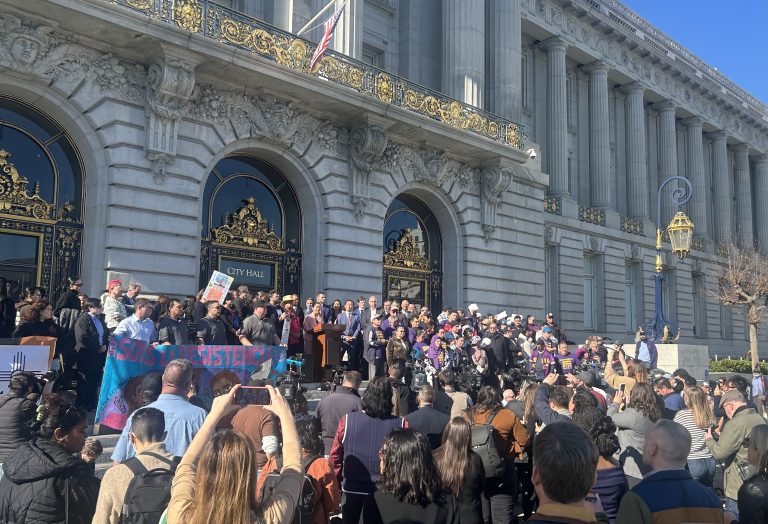
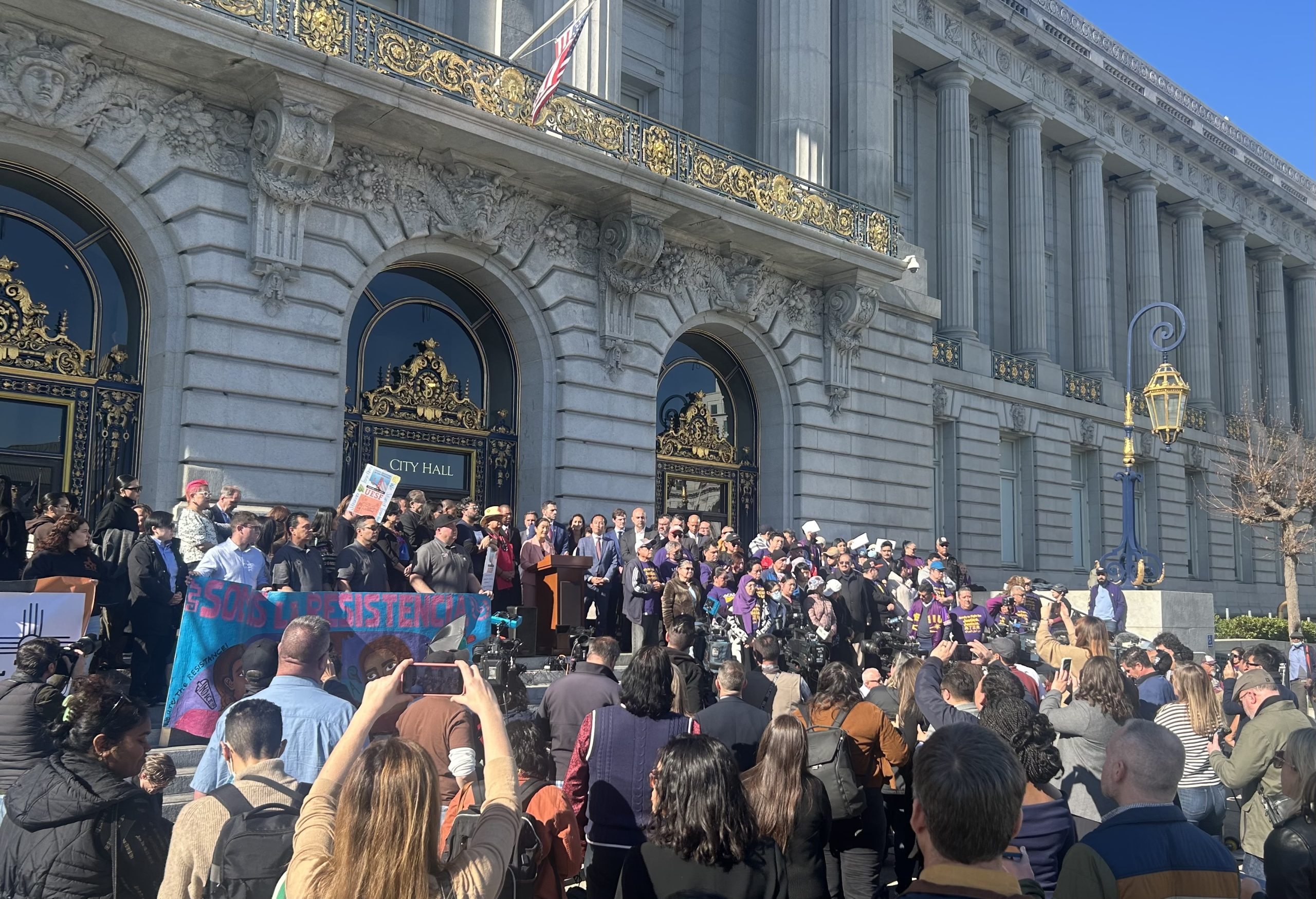
Hundreds of people gathered on the steps outside San Francisco City Hall on Tuesday to reaffirm the sanctuary cities policy and unite against President Donald Trump's deportations of undocumented immigrants across the country. Photo: (Alise Maripuu/Bay City News)
Hundreds of people from local unions, nonprofits, law enforcement and city government gathered on the steps outside San Francisco City Hall on Tuesday to reaffirm the city's sanctuary policy and unite against President Donald Trump's nationwide deportations of undocumented immigrants.
“In San Francisco, we value our immigrant communities. We recognize your contributions to our city and we stand with you,” said Mayor Daniel Lurie. “This city is your home.”
Since Trump took office just over a week ago, deportations have increased across the country, just as he promised during his campaign. U.S. Immigration and Customs Enforcement (ICE) has carried out several raids across California, including in the Bay Area.
On Friday, ICE reportedly conducted raids in downtown San Francisco, according to state Sen. Scott Wiener, D-San Francisco, and Olga Miranda, president of SEIU Local 87. San Jose Mayor Matt Mahan confirmed that ICE was also active in his city on Sunday.
“We are not going to be driven by fear,” shouted Roberto Hernandez, a community leader from the city’s Mission District. “Please send your children to school, don’t be afraid! Go to church, don’t be afraid!”
The purpose of Tuesday's press conference was to demonstrate that many city leaders have no intention of assisting federal efforts to remove illegal immigrants.
Lurie, Police Chief Bill Scott, District Attorney Brooke Jenkins, City Attorney David Chiu and Public Defender Mano Raju were just a few of the many local officials who spoke during the event to establish their commitment to complying with the sanctuary city policy.
“I want to make some things very clear,” Scott said. “First, the San Francisco Police Department does not assist in immigration raids… Targeting immigrants who have built families, businesses and homes here does not improve public safety, but does exactly the opposite. It makes people afraid to report crimes, get necessary medical care or use other city services. It makes children afraid to go to school.”
San Francisco's sanctuary city policy was enacted in 1989 to prevent local agencies from assisting federal authorities like ICE in enforcing immigration law.
However, federal immigration authorities still have the power to carry out their own deportations in the city.
Additionally, state prisons and county jails may cooperate and share information with ICE if they release an undocumented immigrant connected to violent crimes.
“My office is unique in that we are the only one that can communicate with federal immigration officials if they ask when a serious or violent criminal is going to be released from our custody and only if that person meets very specific criteria,” said San Francisco Sheriff Paul Miyamoto. “Unfortunately, there are people who commit crimes here, including those in the immigrant community. Sometimes, people are held accountable for that.”
Supervisor Jackie Fielder introduced a resolution a few weeks ago to ensure that San Francisco reaffirms its sanctuary city policy. The other 10 members of the Board of Supervisors joined as co-sponsors of the resolution and officially approved it in a unanimous vote at Tuesday’s board meeting.
“What this should say to Trump and anyone who wants us to back down is that we are not going to back down,” Fielder said. “No matter your status, you deserve to feel safe and that is exactly what sanctuary is all about.”
The strong turnout at Tuesday's rally, including many local leaders, provided a sense of relief to some members of the immigrant community.
“I’m not scared anymore,” Hernandez said. “Our sheriff is here, the public defender is here, the district attorney is here. The firefighters are here, all the unions are here. We’re in this together, so I feel safe.”
Frozen federal funding directly impacts local governments, harming communities across the country and increasing costs for Americans.
California Congressman for District 15, Kevin Mullin, has joined 153 House Democrats in sending a letter to the Office of Management and Budget urging the Trump administration to disclose a full list of initiatives affected by frozen federal funding, which directly impacts local governments.
The Trump administration announced a plan to freeze virtually all federal funding for essential services, harming communities across the country and increasing costs for Americans.
This reckless action, Mullin said in a statement, blocks funding to pay teachers, support first responders, sustain life-saving medical research and more.
The San Mateo County native noted that, according to federal data from last month, at least $675 million in pending grant funds for California District 15 alone could be withheld, and billions of dollars are at risk for future programs.
Much of this funding has already been allocated to communities, Mullin said, adding that Trump's directives to the Office of Management and Budget greatly exceed their constitutional limits by blatantly ignoring the fact that Congress, not the president, has the power over the money.
“The Trump Administration’s decision to freeze federal funding approved by Congress is dangerously cruel and incredibly damaging to communities that rely on aid for critical services and necessary infrastructure improvements,” Mullin said.
She added that this freeze will have direct negative consequences for programs in California's District 15, such as early childhood education and community college programs, affordable housing developments and rental assistance for low-income housing, and support for advancements in the life sciences.
“Much of this funding had already been awarded to cities and grant recipients, and the Trump Administration’s failure to honor these federal commitments is an unlawful disgrace. This is a reckless decision that will ultimately hurt hard-working Americans and increase costs for communities across the country,” he explained.
In addition, he said, it will disrupt popular projects funded by the Inflation Reduction Act (IRA) and the Bipartisan Infrastructure Act (BIL).
In that regard, Congressman Mullin explained that communities across the country depend on this essential funding to build new roads and bridges, expand access to broadband, strengthen infrastructure against natural disasters, and much more.
“Neither the vaguely worded executive order nor a subsequent memo from Trump’s acting Office of Management and Budget director Matthew Vaeth and National Economic Council director Kevin Hassett make clear what projects, programs and activities are frozen,” he said.
Rep. Mullin will also join his House Democratic colleagues to determine appropriate steps they can take to defend against this presidential overreach.
On Tuesday, January 28, a federal judge temporarily blocked Trump's freeze on federal funds until Monday, February 3, 2025.
2 men arrested at Target in San Jose, personnel from the United States Department of Homeland Security (DHS) and Immigration and Customs Enforcement (ICE) entered the premises solely to make the arrest.
Two men were arrested quickly and without explanation at the King & Story Target in San Jose last Sunday; personnel from the United States Department of Homeland Security (DHS) and Immigration and Customs Enforcement (ICE) entered the premises exclusively to carry out the arrest.
Federal authorities arrived at the Target in white vehicles without any logo or signage alluding to the government, got out and entered the establishment to make the arrest; however, people who were there told television stations that the arrest had taken place at the Tropicana Foods establishment, which led to the circulation of false information.
In that sense, misinformation has generated economic losses in local establishments, said Aaron Ruelas Reséndez, a prominent leader and activist from San Jose, California, to Manuel Ortiz during the Península 360 Press radio program on Hecho en California, with Marcos Gutierrez.
Resendez said he has credible eyewitnesses from businesses around where the arrest took place; the two boys are of Colombian origin and worked at Target. The witnesses say that these two people were the only ones who came to the place.
“They did not bother other people in the audience, they were just coming for what they were coming for and they took these people away quickly,” explained Aaron Ruelas Reséndez.
After the incident, Ruelas received the news and immediately called someone at Tropicana Foods. When they began to contact and corroborate the facts, they realized that the misinformation had spread.
The owner of Tropicana expressed his displeasure, since it had not happened in his business; however, he was sure that it was in this place: “The first thing they say is, what happened in Tropicana? But this was on the other side of the street, so people stop going and that is why their sales have dropped by 30 percent,” said Ruelas.
Given the concern, a meeting was held in the community attended by about 25 people who have businesses in the area to discuss this issue. Another meeting will be held next Thursday with the people from the establishments to talk exclusively about this case and how to join forces to resist and prevent misinformation again.
The incident occurred at Target, but there has been misinformation saying that it happened at Tropicana. “We want them to say where the incident really happened,” Reséndez said.
On the other hand, the participation of the Sheriff and the councilors is worrying, since it has been publicly stated that they will not cooperate with immigration, however, they were present during the arrest, remaining in the back of the place.
"We cannot change the federal government, but we can change the local government and demand the necessary support," the activist concluded.