“Millones de estadounidenses en todo este país no pueden permitirse medicamentos que salvan vidas debido a que los precios farmacéuticos están aumentando a un ritmo alarmante. Esto es simplemente abominable e inaceptable”, afirmó el fiscal general Rob Bonta.
Listen to this note:
California Attorney General, Rob Bonta, se unió hoy a una coalición bipartidista de 39 fiscales generales que instan al Congreso a aprobar una legislación que responsabilice a los Administradores de Beneficios de Farmacia (PBM, por sus siglas en inglés) por sus prácticas injustas y engañosas que aumentan los costos de los medicamentos recetados.
Los PBM actúan como intermediarios entre farmacias, fabricantes de medicamentos, planes de seguro médico y consumidores. Ante ello, su posición les confiere un enorme impacto en el acceso de los consumidores a los medicamentos recetados.
“Millones de estadounidenses en todo este país no pueden permitirse medicamentos que salvan vidas debido a que los precios farmacéuticos están aumentando a un ritmo alarmante. Esto es simplemente abominable e inaceptable”, afirmó el fiscal general Bonta.
“Hoy, mis compañeros fiscales generales y yo hacemos un llamado al Congreso para que promulgue mejores leyes que brinden mayor transparencia y rendición de cuentas, algo muy necesario dentro de la industria de PBM. Debemos poner fin a estas tácticas de fijación de precios deliberadas, injustas y engañosas que permiten a las PBM llenar sus propios bolsillos a expensas de los consumidores. El momento de actuar es ahora”, agregó.
En la carta firmada por los 39 fiscales, la coalición pide al presidente de la Cámara de Representantes, Mike Johnson, al líder de la mayoría del Senado, Chuck Schumer, al líder de la minoría de la Cámara de Representantes, Hakeem Jeffries, y al líder de la minoría del Senado, Mitch McConnell, que insten al Congreso a implementar reformas y regular las prácticas comerciales de PBM.
De igual manera, señalaron tres piezas de legislación federal pendiente que incluyen propuestas que transmitirían pasos importantes para reformar la industria y combatir los altos costos de atención médica: la Ley de DROGAS (S1542/HR6283), la Ley de Protección a los Pacientes Contra los Abusos de PBM (HR2880) y la Ley de Protección de Pacientes contra los Abusos de PBM (HR2880).
Así, el fiscal general Bonta se unió a los fiscales generales de Alaska, Arizona, Arkansas, Colorado, Connecticut, Delaware, el Distrito de Columbia, Florida, Georgia, Hawái, Illinois, Kansas, Maine, Maryland, Massachusetts, Michigan, Minnesota, Mississippi, Nevada, New Hampshire, Nuevo México, Nueva York, Carolina del Norte, Ohio, Oklahoma, Oregón, Pensilvania, Rhode Island, Carolina del Sur, Dakota del Sur, Tennessee, Texas, Utah, Vermont, Islas Vírgenes, Virginia, Wisconsin y Wyoming.
Por tercera vez, Estados Unidos vetó una resolución del Consejo de Seguridad de la ONU en la que se pedía “un alto al fuego inmediato en Gaza”. Foto: Noticias ONU
Listen to this note:
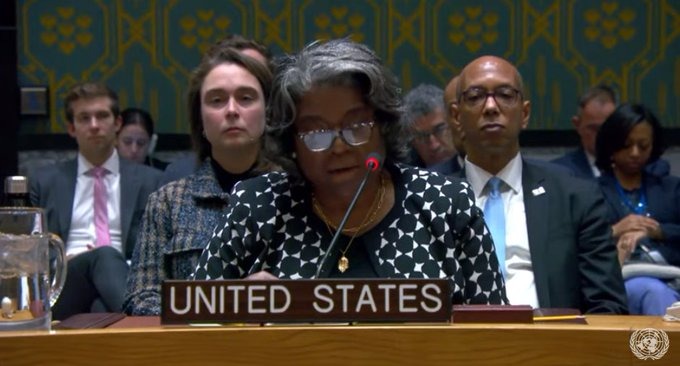
Por tercera vez, Estados Unidos vetó una resolución del UN Security Council presentada por Argelia que pondría fin a la guerra en Gaza, en la que se pedía “un alto el fuego inmediato”.
Con 13 votos a favor, una abstención de Reino Unido y el voto en contra de Estados Unidos, la resolución no fue favorable al tener EE. UU. derecho de veto por su condición de miembro permanente (junto a Rusia, China, Francia y Reino Unido).
Linda Thomas-Greenfield, embajadora estadounidense, justificó su voto subrayando que “pone en peligro las delicadas negociaciones” en curso, por lo que proceder hoy al voto era “irresponsable”.
Linda Thomas-Greenfield, embajadora estadounidense, justificó su voto subrayando que “pone en peligro las delicadas negociaciones” en curso, por lo que proceder hoy al voto era “irresponsable”. Foto: Noticias ONU
En su oportunidad, el representante de Israel, Gilad Erdan, señaló que “Israel también busca un alto el fuego. Pero solo hay una fórmula que aceptaremos: todos nuestros rehenes tienen que ser liberados y Hamás tiene que rendirse”.
Mientras que el embajador de Palestina, Riyad Mansour, aseguró que “la llamada a un alto el fuego en Gaza debería haberse acordado hace mucho tiempo”
“¿Qué umbral debe cruzarse para que este Consejo finalmente exija un alto el fuego?”, cuestionó.
El borrador de la resolución llamaba a un alto al fuego humanitario inmediato, así como la liberación inmediata e incondicional de todos los rehenes, además de acceso humanitario sin restricciones.
Los países que votaron a favor de la resolución fueron: China, Francia, Rusia, Argelia, Ecuador, Guyana, Japón, Malta, Mozambique, Republica de Corea, Sierra Leona, Eslovenia y Suiza.
Estados Unidos propuso una resolución alternativa que llama a un alto al fuego temporal y que se opone a una ofensiva terrestre de Israel en Rafah, basada en que todos los rehenes sean liberados.
Esta resolución junto con Egipto y Catar, busca una pausa de seis semanas en los combates, “y creemos que esta resolución (argelina) podría impactar negativamente en esas negociaciones (…) y podría alargar los combates entre Hamás e Israel”, dijo la embajadora de Estados Unidos Linda Thomas-Greenfield.
“Creemos que la resolución sobre la mesa tendría un impacto negativo en las negociaciones. Demandar un alto el fuego inmediato, sin exigir a Hamás que libere a los rehenes no traerá una paz duradera”, detalló.
Desde que comenzó la guerra en Gaza, Estados Unidos ha vetado tres resoluciones en pro del fin al fuego en la Franja: la primera de ellas en Brasil el 18 de octubre, donde pidió a Israel “pausas humanitarias” en Gaza; la segunda el 8 de diciembre, a una resolución presentada por Emiratos Árabes donde se demandaba alto el fuego inmediato.
El resultado de la votación de hoy “demuestra que en el tema de un alto el fuego en Gaza, queda claro que no es que el Consejo de Seguridad no presenta un consenso aplastante (en su favor), sino que el veto de Estados Unidos es el que anula ese consenso”, lamentó el embajador chino, Zhang Jun.
A study published by the Benioff Initiative on Housing and Homelessness at the University of California, San Francisco concludes that a 95% does not leave their home due to high rent costs, so they prefer to stay and endure the abuse.
Victims of domestic violence face homelessness, leaving hundreds of women at risk for fear of becoming homeless. A new study released last month by the Benioff Initiative on Housing and Homelessness at the University of California, San Francisco, finds that at least 17 percent of homeless people left their homes because of intimate partner violence.
Victims endure years of violence for fear of not having a place to sleep every night. Due to a lack of financial resources, many people end up living on the streets, putting their lives at risk and turning to drug use as an easy way out.
95 percent say they do not leave their homes due to high rent costs, so they prefer to stay and endure the abuse. Given these figures, it is clear that housing support is a key element for more women to decide to leave this life that puts them at constant risk.
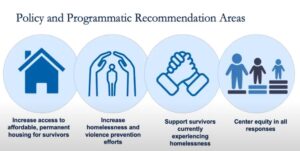
Anita Hargrave explained that support is provided in four main areas: increasing access to permanent and affordable housing for victims, increasing prevention of violence and homelessness, support in areas of need, and equity in the response center.
Jennifer White-Reid, Senior Vice President of Domestic Violence Residential and Legal Programs at URI (Urban Resource Institute), explained that each night, they provide base housing to 3,000 people and annually to more than 40,000 people who are facing eviction or domestic violence, in addition to providing them with support for their economic problems.
"Domestic violence is a leading cause of homelessness, with 40 percent of children and women in the homeless system being there because of domestic violence.”, he commented Jennifer White-Reid.
She said the rise in domestic violence continues to disproportionately impact women of color.
He also noted that by reducing domestic violence, the number of homeless people will decrease.
White-Reid said the impact of domestic violence trauma must be analyzed in order to provide the necessary help, while highlighting that another important point to consider is economic abuse, which 98 percent of victims are involved in, and is a key reason why they stay or return to abusive relationships.
She also commented that sometimes the abuser forces the victim to withdraw money or buy things on credit, as a way of taking advantage of the situation, leaving the victim without the possibility of using credit.
Finally, she said that efforts are being made to invest in education, in appropriate programs that encourage people to save lives in the face of the alarming increase in homicides by victims of domestic violence, and to build a more united society that defends people who suffer violence.
Desiree Martinez, Executive Director of WE ARE NOT INVISIBLE, was homeless for five years and lived in her car for a long time, she also lived in shelters, garages and other temporary facilities, where she was exposed to risky situations that made her meet more people like her, showing her the value of raising her voice at all times.
"Today different doors have opened to speak and be heard, I have been able to have a permanent home, with a voucher for affordable housing, but, anyway, it makes me nervous that the rent keeps increasing but the voucher does not, soon I will not be able to use it, but I am hopeful that there will be different changes that will be carried out.”, Desiree added.
Experts agreed that homelessness leaves victims of domestic violence vulnerable and at risk of life, as a single blow or lack of respect is not enough; authorities act until the victim is at total risk.
Therefore, continuing to seek ways to guarantee access to housing and new opportunities to generate income will be key to reducing cases of domestic violence.
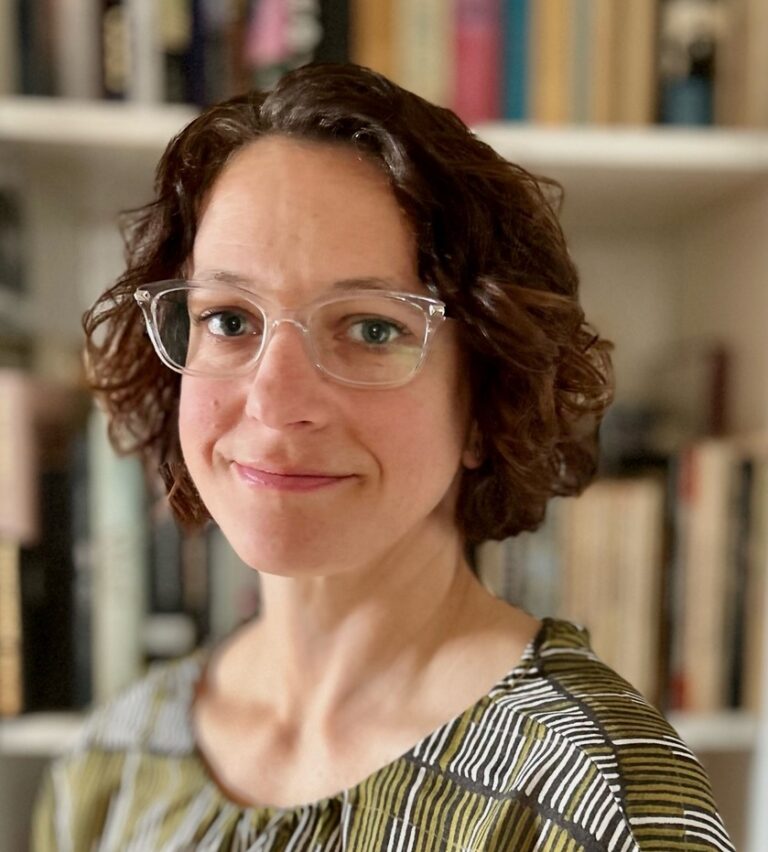
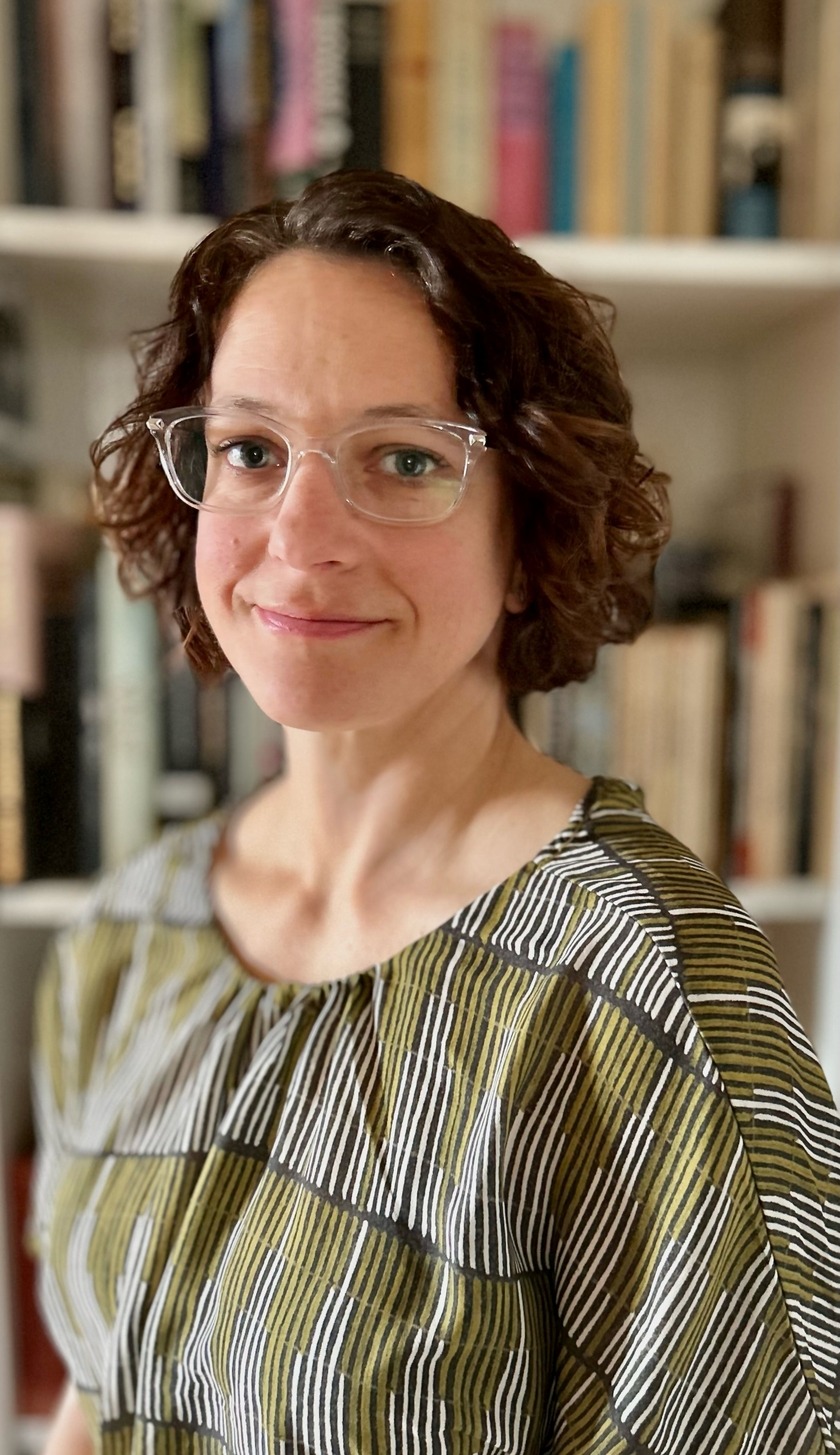
Aimee Shapiro, raised amid New York City’s wealth of museums and cultural events, comes to the county from the Anderson Collection, Stanford University’s free museum of modern and contemporary American art, where she served as director of programming and engagement, working with artists, performers, students, and the local community.
Shapiro, raised amid New York City’s wealth of museums and cultural events, comes to the county from the Anderson Collection, Stanford University’s free museum of modern and contemporary American art, where she served as director of programming and engagement, working with artists, performers, students and the local community.
She now brings her energy and enthusiasm for the creative arts to the county, where she will play a central role in shaping the San Mateo County Arts Commission's strategic plan.
“San Mateo County is home to a diverse range of communities, backgrounds and cultures with amazing events, exhibits, workshops, performances and cultural programming,” Shapiro said. “Arts and culture should be accessible to everyone in San Mateo County, and by creating a strong arts network in our area, we can create even stronger connections with each other.”
While the county sponsors several exhibition spaces, there is no main museum or cultural exhibit hall in San Mateo County. Shapiro’s mission is to foster and advocate for local arts and cultural groups while addressing equity gaps in education and access to the arts.
According to the city, Shapiro will support the work of the 10-member Arts Commission, which serves as an advisory body to the Board of Supervisors and provides funding to local arts organizations and special events with an emphasis on underserved communities.
“What is clear is that Aimee has a true passion for uplifting all communities by championing arts and cultural displays,” said County Executive Mike Callagy. “She has a wealth of experience working with schools, nonprofits, local governments and, most of all, artists. We look forward to her bringing her talents to San Mateo County.”
Shapiro grew up in New York City and developed a passion for art and a personal interest in drawing. He received a Bachelor of Arts degree from Oberlin College in Ohio and a Master of Fine Arts degree from Maryland Institute College of Art in Baltimore.
She worked in the arts in Baltimore, New York, San Francisco, and East Lansing, Michigan, before joining Stanford's Anderson Collection in 2014.
At Anderson, he helped bring the work of a diverse range of artists to the public.
One of the main priorities of her new job will be to help forge relationships between artistic and cultural groups.
“My first goal is to listen,” Shapiro said. “I look forward to meeting with constituents across the county and learning what arts and culture means to their community and how they would like the Office of Arts and Culture to support that. The diversity of our county means there is a great diversity in need, awareness and accessibility.”
El Concejo Municipal de la ciudad de East Palo Alto presentará una proclamación que conmemora febrero de 2024 como el Mes de la Historia Afroamericana en su próxima reunión del Concejo, con la cual busca rendir tributo a la rica herencia, resiliencia y las contribuciones de los afroamericanos a la historia del país.
The Municipal Council of the city of East Palo Alto presentará una proclamación que conmemora febrero de 2024 como el Mes de la Historia Afroamericana en su próxima reunión del Concejo, con la cual busca rendir tributo a la rica herencia, resiliencia y las contribuciones de los afroamericanos a la historia del país.
Las raíces de esta celebración se remontan al doctor Carter G. Woodson, un pionero que superó obstáculos increíbles para convertirse en la fuerza impulsora detrás del reconocimiento del Mes de la Historia Afroamericana.
Ante ello, la ciudad alentó a todos sus residentes a reflexionar sobre las fechas importantes de la Historia Afroamericana durante febrero, como la aprobación de la 15.ª Enmienda, la fundación de la NAACP y momentos históricos en el movimiento de derechos civiles.
“Dediquémonos colectivamente a fomentar una comunidad donde los derechos y las contribuciones de los afroamericanos, las personas de color, los pueblos indígenas y otros grupos sean recordados, respetados y reconocidos”, subrayó la ciudad en un comunicado.
Además, en reconocimiento a este mes histórico, East Palo Alto se une a otras ciudades de todo el país para celebrar con diversos eventos el Mes de la Historia Afroamericana, reconocer el pasado y trabajar por un futuro de igualdad y justicia
En honor al mes de la Historia Afroamericana y Negra, Sign Gypsies organiza viajes para la comunidad de adultos mayores (60+) al Museo Domini Hoskins en Redwood City y al Museo de la Diáspora Africana de San Francisco (MoAD). Se proporcionará transporte. Para inscribirse es necesario enviar un correo a parishill@gmail.com or call 650 933 3388.
Dónde: Museo pop-up Domini Hoskins
Cuándo: Jueves, 22 de febrero de 12:00 a16:00 horas.
Cómo: Se proporciona transporte desde East Palo Alto Senior Center (560 Bell Street East Palo Alto, CA 94303)
En este evento se podrá ver la cápsula del tiempo de la Historia Negra a través de la lente de los artefactos y los medios de comunicación recogidos y comisariada por el colectivo Hoskins.
Además, el jueves, 29 de febrero, de 10:00 a 16:00 horas, los adultos mayores podrán viajar al distrito de la Misión de San Francisco y celebrar la cultura negra para iniciar conversaciones estimulantes e inspirar el aprendizaje a través de una perspectiva global de la diáspora africana.
Dónde: Museo de la Diáspora Africana de San Francisco (MoAD)
Cómo: Se proporciona transporte desde Ravenswood Plaza frente al PGA
Leaders have said San Mateo County is facing revenue losses, noting that the situation could threaten vital safety net services, So, with no resolution in sight midway through fiscal year 2023-24, County Executive Mike Callagy recommended that the Board of Supervisors hold a special study session on a looming issue that could also impact future spending plans.
For months, the leaders of the the San Mateo County Board of Supervisors have expressed concern about the potential loss of a key source of revenue, saying the situation could threaten vital safety net services, so with no resolution in sight midway through the 2023-24 fiscal year, County Executive Mike Callagy recommended the Board of Supervisors hold a special study session on a looming issue that could also impact future spending plans.
“We are short $69 million,” Callagy said during the Board of Supervisors’ regular meeting scheduled for next Tuesday. “This is something we are working on with our (state) legislators. That would be a huge blow to this county, and it only grows every year.”
The potential shortfall is fueled by possible cuts in what are known as vehicle licensing fees in lieu, or VLF, a form of property tax on motor vehicle ownership.
Under a long-standing agreement, cities and counties receive additional property taxes from the state to replace revenue that was cut under a two-decade-old budget deal.
The latest state budget proposal released by the governor's office in January does not include full funding for VLF. This could also pose a threat to the budgets of local cities that also receive that type of revenue.
“This will impact public safety and the direct services that cities and the county provide to our most needy population if it’s not funded by the state,” Callagy said. “And we certainly believe that the state owes us that.”
San Mateo County local governments could face a loss of more than $114 million before the fiscal year ends on June 30, 2024.
Supervisors expressed concern for the area's most vulnerable residents.
“Our continued focus must be on expanding opportunities for all, and that starts with ensuring we have a robust array of programs and services to meet the needs of individuals and families,” said Warren Slocum, Chairman of the Board of Supervisors.
“Our residents want to make ends meet, put food on the table, pay for college, save for retirement. It’s our job as elected officials,” Slocum added, “to work with our partners across the state to ensure we can continue to fund vital services that help all of our residents achieve their goals.”
A special study session is expected to be scheduled shortly.
News of the projected VLF deficit comes amid a number of growing financial concerns.
At the February 14 Board meeting, Callagy and Chief Financial Officer Robert Manchia presented the Fiscal Year 2023-24 Mid-Year Budget Update, a snapshot of the economic and demographic trends driving both the need for services and the revenue available to pay for them.
With the end of the COVID-19 public health emergency, the county has shifted “its focus from pandemic response and recovery to long-term strategic planning,” the report said.
The document also describes “contrasting trajectories” for key economic indicators. It says unemployment overall remains low, while the cost of goods and services is rising for everyone, and median household income is moving in different directions for certain demographic groups.
However, median household income has declined for Black or African American households (10.2 percent from 2021 to 2022). There are significant disparities between the median household incomes of Native Hawaiians and Pacific Islanders and certain other demographic groups (41.8 percent of Asian household incomes, for example).
Of note, the rising cost of living (3.4 percent increase in consumer prices from December 2022 to December 2023) and obstacles to finding affordable housing pose challenges for many.
A search for a one-bedroom apartment shows current rents of more than $2,800 in both Redwood City and San Mateo. So an income of about $100,000 a year is needed to afford such an apartment, according to a commonly used “30 percent rule,” which says people should spend no more than 30 percent of their gross income on rent.
The report states that “demographic trends indicate an aging population on relatively fixed incomes struggling to keep pace with rising costs. If this trend continues, there may be increased demand for County services to address these evolving needs.”
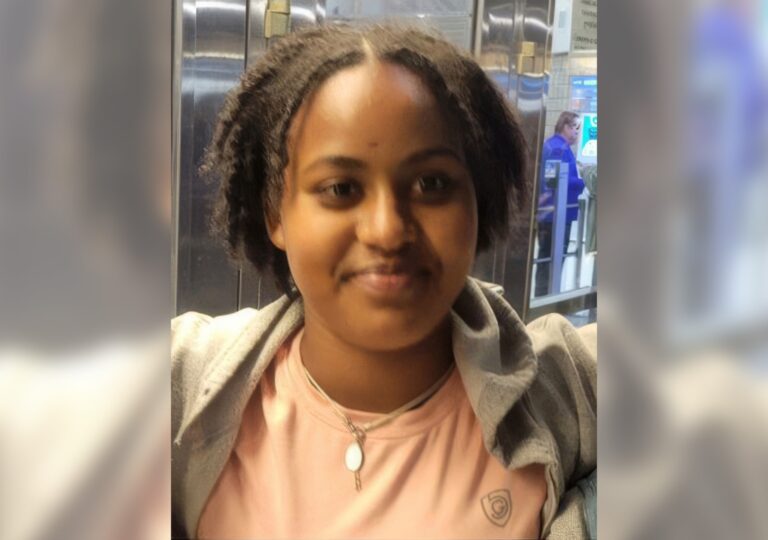
El Departamento de Policía de San Francisco está pidiendo ayuda para localizar a Mizan Dadres-Oman, de 16 años, de 5 pies y 3 pulgadas de alto, que pesa 170 libras, con cabello negro y ojos marrones. Omán fue vista por última vez el 15 de febrero de 2024, alrededor de las 8 pm. Llevaba una sudadera con capucha negra, una camisa color salmón y pantalones deportivos granate. (Departamento de Policía de San Francisco a través de Bay City News).
El Departamento de Policía de San Francisco está pidiendo la ayuda del público para localizar a una joven de 16 años.
Mizan Dadres-Oman fue vista por última vez por una persona de la Biblioteca de Chinatown, alrededor de las 20:00 horas del jueves, dijo la policía de San Francisco este viernes por la noche.
Dadres-Oman es afrodescendiente, mide 5 pies y 3 pulgadas de alto, pesa 170 libras, tiene cabello negro y ojos marrones, dijo la policía en una descripción actualizada publicada en las redes sociales.
Un comunicado de prensa anterior la describió como de 5 pies y 6 pulgadas de alto, pesando 130 libras y vista por última vez alrededor de las 16:30 horas del miércoles en el vecindario Miraloma Park, en el área de Foerster Street y Teresita Boulevard.
Se le considera “en riesgo” porque tiene un trastorno del procesamiento auditivo central y tiene la lógica y el razonamiento de una niña de 10 a 12 años, dijo la policía.
Fue descrita con una sudadera con capucha negra, una camisa color salmón y pantalones deportivos granate.
Se emitió una alerta de ébano en los condados de San Francisco, Alameda y Contra Costa.
Cualquier persona que vea Dadres-Omán debe llamar al 911.
Of Mexican descent, the woman murdered during a Kansas City celebration. Photo: screenshot of the video broadcast on X
Mexican Foreign Minister Alicia Bárcena expressed her deepest condolences to the family and friends of Elizabeth “Lisa” López-Galván, the woman of Mexican descent who lost her life in the shooting during the Kansas City Chiefs victory parade.
The head of the Mexican Ministry of Foreign Affairs confirmed and detailed that, so far, “there are 21 people injured […] They have not given us the names of those who are in the hospital, but we are very attentive at the Mexican consulate in Kansas, to care for the family and support them in everything they require.”
López Galván was a beloved radio host and the daughter of a Mexican-born mariachi. In addition to her death, one of her sons and her nephews were wounded by bullets.
The celebration of the Kansas City Chiefs' victory after lifting the NFL's Vince Lombardi award was a must for López Galván, who was a fan of the team, so she went to Union Station with the idea of having fun, however, she was murdered in what the police classified as a fight.
Kansas City police confirmed the shooting was a dispute between several people, including two juveniles. They did not release names although the suspects are in custody.
“Preliminary results of the investigation have shown that there was no connection to terrorism or domestic violent extremism. This appeared to be a dispute between several individuals that resulted in gunfire,” Kansas City Police Chief Stacey Graves said at a press conference.
Likewise, he confirmed that during the night of this Wednesday it was learned that there were 23 victims of the shooting, one of them, Elizabeth López Galván, 43 years old, “we are still learning about her, but we know that she is very loved by many. To her friends and family: we are with you,” he stressed.
In light of the events, he said that work is being done "tirelessly" to clarify the murder.
Graves said the 22 victims ranged in age from 8 to 47. He said at least half of the victims were under 16 years old.
“As we mentioned yesterday, we have detained individuals, two of whom are minors. We are working to determine the involvement of others. And it should be noted that we have recovered several firearms,” he added.
President Joseph Biden seized the opportunity after the shooting at the Kansas City Chiefs parade to again call for a ban on “assault weapons.”
“Today’s events should shock, awe and embarrass us into action,” Biden said.
“Make your voice heard in Congress so we can finally act to ban assault weapons, limit high-capacity magazines, strengthen background checks, and keep guns out of the hands of those who have no business owning or handling them,” he added.
“You’re Korean, right? I mean, you don’t look Chinese. That’s a compliment, by the way,” my classmate said with a chuckle, nudging her friend. I had recently transferred to a new, mostly white high school. Photo: Manuel Ortiz P360
“You’re Korean, right? I mean, you don’t look very Chinese. That’s a compliment, by the way,” my classmate said with a chuckle, nudging her friend. I had recently transferred to a new, mostly white high school.
I soon realized that this was not going to be an easy transition.
I remember the intense sidelong glances as the children around me turned their heads and looked down at the jade pendant my grandmother gave me for good luck.
This was shortly after schools reopened following the pandemic shutdown, and terms like “kung flu” were still floating around school hallways. It seemed to me that even here in the Bay Area, where Asians make up a large percentage of the population, being Chinese — or even just looking Chinese — was like having a target on your back.
Growing up in Millbrae, a small, Asian-majority suburb just south of San Francisco, I never felt out of place. There were a few occasions when a classmate would insist that “this is America” and that I should speak English, but those experiences were few and far between.
It was when my family moved to the South and I enrolled in a new, predominantly white high school that I began to understand for the first time that, in order to fit in among my new peers, I would have to “Americanize” my identity.
The challenges began in the cafeteria. I would hear my classmates comment on my lunch box, which often contained homemade dumplings and stir-fried noodles. The ritual of each day’s lunch was a reminder that I was different, like an outsider wearing a distinctive cultural badge.
I felt self-conscious and eventually asked my mom to make peanut butter and jelly sandwiches. The sugary, fruity snack eventually became my new normal.
Constantly negotiating my identity was a manifestation of my struggle to fit in and be accepted. I realized I was trying to cover up the parts of my culture that might seem “too different.” My native language became a clandestine code that I whispered quietly to avoid further alienation.
I hid my ancestry for fear that its vivid hues would contrast with the dull tone of my surroundings. And I wasn't alone. A study last year found that 1 in 5 Asians tries to hide parts of his identity to adapt to it.
For me, that struggle became a mental war that I fought silently, grappling – like most teenagers – with the desire to fit in while also trying to hold on to my cultural roots.
My mother was born in Hangzhou, China, and immigrated to California to attend college. And even though my brother and I were born in San Francisco, we spoke primarily Mandarin at home. As I grew older, I began to understand what my mother gave up by coming to America: her friends, her family, her culture. And now, here I was, trying to hide that culture from the other students around me at school.
I felt ashamed. But I still tried to fit in. I felt like a chameleon, always changing to fit the expectations of everyone around me, whether at home or at school.
I'm in high school now and when I talk to my international friends from China here, they share similar stories, about how other students address them because of their backgrounds or their accent, something they can't understand, or just hide in a lunch box. Instead of celebrating the richness of culture and experience they bring to the student body, they focus on those very traits.
Bullying is on the rise in the U.S.: 20 percent of students in kindergarten through 12th grade say they have been bullied at least once. Identity is often a contributing factor, with students singled out for nationality, ethnicity or gender.
In a diverse community like the Bay Area, it is crucial for schools to promote understanding and appreciation of different cultures, fostering an environment where everyone feels accepted and valued regardless of their accent or cultural background.
My experience reminds me that there is still work to be done in the fight against racism. It takes a group effort to eliminate prejudices, confront preconceived ideas and create an atmosphere where each person can flourish in their true selves.
But it also taught me to see my differences as a unique strength and not a weakness. By challenging dominant narratives, I found allies who supported me and ended the taboo surrounding the experiences of people who feel excluded.
By working together, we have created a school community that embraces diversity and fosters a more welcoming atmosphere for all. Rather than being a victim of prejudice, I am an example of the strength that comes from embracing one's individuality.
Jeannine Chiang is a high school student. She wrote this story for a special series examining the intersection of bullying and race in California led by EMS in partnership with California Ethnic Media, part of EMS's Stop the Hate initiative, made possible by funding from the California State Library in partnership with the California State Library Commission on Asian and Pacific Islander American Affairs. The views expressed on this website and other materials produced by EMS do not necessarily reflect the official policies of CSL, CAPIAA, or the California government.
This publication was supported in whole or part by funding provided by the State of California, administered by the CaliFornia State Library.
The dead in Gaza have The number of protesters has surpassed 28,000, and hundreds of organizations have declared their opposition to the support that the United States is giving to Israel to continue the war and deaths in Gaza. Therefore, the YUCA organization in East Palo Alto has joined the demands that call for an absolution and a ceasefire in Gaza.
In this regard, Manuel Ortiz conducted an interview with Ofelia Bello, who belongs to the organization YUCA(Youth United for Community Action), on the mobile unit of Península 360 Press, broadcast during the program Península 360 Radio in collaboration with Marcos Gutiérrez of «Hecho en California».
Ofelia Bello of YUCA (Youth United for Community Action), an organization that has joined in calling for a ceasefire in Gaza, where more than 28,000 people have died, spoke about the importance of joining the movement and demanding that the United States stop financially supporting the war in Gaza.
Ofelia Bello, director of YUCA in East Palo Alto (Youth United for Community Action), an organization that has joined in calling for a ceasefire in Gaza, demands that the United States stop financially supporting the war in Gaza.
It all started with a small group of young people of color who were active in their communities and concerned about the problems in their environment. They formed YUCA. They then launched FIRE Fellowship, a program for young people of color that includes paid internships in community organizations working for environmental and social change in the Bay Area.
YUCA works for leadership development, community organizing and coalition building, This August marks the 30th anniversary of the organization, where thousands of young people have made a difference in the world and are currently working on housing justice in East Palo Alto, as well as environmental justice.
“We cannot escape what is happening in Gaza, because there is a Palestinian community in Redwood City, and we have learned that in Silicon Valley it is important because of the technology that is being used in Palestine, but also on the border with Mexico, for example, with the companies that generate technology to monitor“, he commented Ofelia Bello.
She says that the situation in Gaza directly affects communities, from the images circulating on social media showing how children, women and men, doctors and members of the press are suffering and being attacked and abused.
“That is an impact on people's mental health, especially young people, and that is something that is constantly being seen.“, he added Ofelia Bello.
On the night of Monday, February 12, there was a demonstration at the University of Stanford, Ofelia had the opportunity to be present, “they were there because, supposedly, the president of the university was going to meet with his administration to decide what they were going to do about support in Gaza.”
The aim is to involve the community in the issue, since it affects everyone directly or indirectly, so having the understanding of young people is essential, showing them that their voice has great value and that they are part of the country's delicate decisions.
For Ofelia Bello, Stanford students have been raising their voices very loudly and demanding that the authorities pay attention to what is happening, questioning the connections, but also asking this university to withdraw its investments from the way it is supporting Israel.
"For us, the struggles we have here for housing justice, environmental justice, are connected to Gaza, if we see that our country continues to invest in wars, that is something totally opposite," Bello stressed.
Finally, he explained that there are many people who do not want to speak or express their voice, because they are afraid of receiving words or acts of aggression, that is why many hesitate to speak or really show themselves against the genocide in Gaza, but it must be reported that it is not a single voice, because organizations and media, as well as the population in general, are against the war and demand an end to these regrettable acts.






















 This publication was supported in whole or part by funding provided by the State of California, administered by the