


Thursday, June 18, 2026
Home Blog Page 156

Peru, pending problem: Racism

0

Listen to this note:


“…[Racism] is most often unconscious, it is born from a hidden self that is blind to reason, it is absorbed with mother's milk and begins to take shape from the first cries and babbles of the Peruvian.”
‒ Mario Vargas Llosa, Peruvian Nobel Prize winner.

This time I prefer to approach this topic in a different way, narrating a real episode that occurred on one of my trips to Peru. 

Racism, because it is such a vast and complex issue and at the same time so deeply rooted in our culture and “being Peruvian”, has been normalized and is part of our collective “unconsciousness”. Ending racism is a challenge that should start with assuming our condition (as racists).

melting pot 

“Listen boss, it’s not like the United States here, there is no racism here, we are a melting pot of races; look, here there are cholos (native/Spanish mestizo), Indians, Chinese, blacks and whites living in total harmony,” the taxi driver who picked me up from the airport on my first trip to Peru after a long eighteen years told me out of the blue. 

He expressed it to me like that, abruptly and defensively, without us even having addressed the subject, as if he had repressed those phrases for a long time and finally thought it was the best time to get rid of them. I preferred to change the subject, I was well aware that this was one of the greatest forms of denialism and, what's more, it was a source of pride almost on the same level as ceviche and pisco. 

But those forceful statements from the taxi driver continued to echo in my head throughout the weekend in which an old friend rich man, heir to some - apparently important - mines, invited me to spend the weekend at his house, which was on one of the most exclusive beaches south of Lima. It was a splendid house, with large windows and a magnificent view of the Pacific Ocean, perfectly decorated with authentic funeral shrouds from the pre-Inca era, with geometric figures and ochre colours that embellish the walls of its rooms instead of being on display in the National Museum. 

There my friend and I arrived in a very elegant Mercedes Benz and of course, we were also accompanied by the driver who drove soberly dressed in a dark suit and a perfectly ironed white shirt; and I think that if they didn't make him wear white gloves and a hat it was because, surely, they didn't want to cross the line of bad taste (huachafería, as the people of Lima would say). 

To get there we had to cross some sandbanks where the remains of a pre-Incan city and garbage dumps once coexisted and which were now crammed with precarious housing that a high wall of bricks and cement separated from the "well-off" part of Lima society that, trying to escape from the peripheral districts, had built their "Beverly Hills-type" mansions there. 

I watched everything through the car window while my friend turned up the volume on his playlist and tried his best to sing along at the top of his voice to “One of these nights” by the Eagles. 

At home, the wife was waiting for us, wearing a linen tunic – probably designer – that covered a fuchsia and tiny bikini. There were also their three children, aged eight, six and three, and I would be lying if I said they were all girls or boys, but that is not relevant to this case. What I do remember is that each of the children (girls?) had a nanny who took special care of each one. 

The three nannies were dressed entirely in white, including their shoes and socks, and looked like they had taken their clothes from one of those classic horror movies with killer nurses; each one scrupulously took care of the child assigned to her, meticulously following the schedule of each child's activities. 

Apparently, when we arrived it was time to go to the sea and, always dressed in their white uniforms, you could see them going down the steps that led to the beach shore and then you could see them trying not to get their white shoes wet (that included their white socks), building sand castles and at the same time covering the kids' entire bodies with excessive amounts of sunscreen, but always with a stern, almost anxious expression. 

This was being watched askance by the host couple and I as we sipped an aromatic Pisco Sour, abandoned on the armchairs of the large terrace decorated with giant glass bottles with pirate galleons inside. At that moment, surely motivated by the effects of the Pisco Sour, I said hesitantly: “poor girls, it’s so hot in those uniforms, they’ll surely take a dip”; the couple, with extreme naturalness, almost suspicious, looked at me out of the corner of their eyes and surely understanding that my question came from my condition as a practically progressive-almost subversive “foreigner”, they clarified: “they and all the service personnel can use the beach after six in the afternoon”, it’s because they themselves wouldn’t feel comfortable, right? Besides, it’s a rule of the board of owners and nobody wants to break rules, right? 

The next morning, I got up early and, taking advantage of the fact that the couple was jogging along the seashore, I went in to make myself a coffee in the kitchen, a space in the house apparently off-limits to anyone who wasn't part of the service staff. 

The nannies, the cook and the driver were sitting around a small table having breakfast and chatting animatedly, but when they saw me come in they immediately fell silent, made a gesture to stand up - something I emphatically stopped - and none of them, except the cook, were wearing their uniforms. While I was filling my cup with coffee I tried to start a simple conversation and all I managed to do was turn them into silent rocks, mute stones, like those giant stones with which Machu Picchu was built, witness to the greatness of an empire that was subjected to blood and fire. 

I saw them there, distrustful and fearful, very similar and at the same time different from the faces in the “portrait huacos” where the pre-Hispanic natives used to capture, on ceramic utensils, the faces of their clan. Right there I could feel the resignation of a people who had been robbed of their former splendor and who today felt like foreigners in their own land. 

I left a note for my friend justifying my surprise farewell and asked Paco, the driver -until that moment anonymous-, to take me to the Pan-American Highway so I could take a minibus back to Lima.  

All along the long way back, now from the windows of a rickety bus, I saw the same sandbanks I had passed the day before, sandbanks from which emerged individuals with languid copper-colored faces, people with faces that expressed nothing but submissive exhaustion, human beings trying only to survive one more day, brothers laden with bundles and carrying their babies on their backs, Peruvians stunned by their own setbacks, for whom the matter of the melting pot had no meaning.

More from the author: Peru, pending problem: Education
Providing health care to immigrants on California’s “last frontier”

Farmworkers in a remote corner of Northern California say they have never heard of the state's efforts to expand health insurance to undocumented residents.

Providing health care to immigrants on California’s “last frontier”
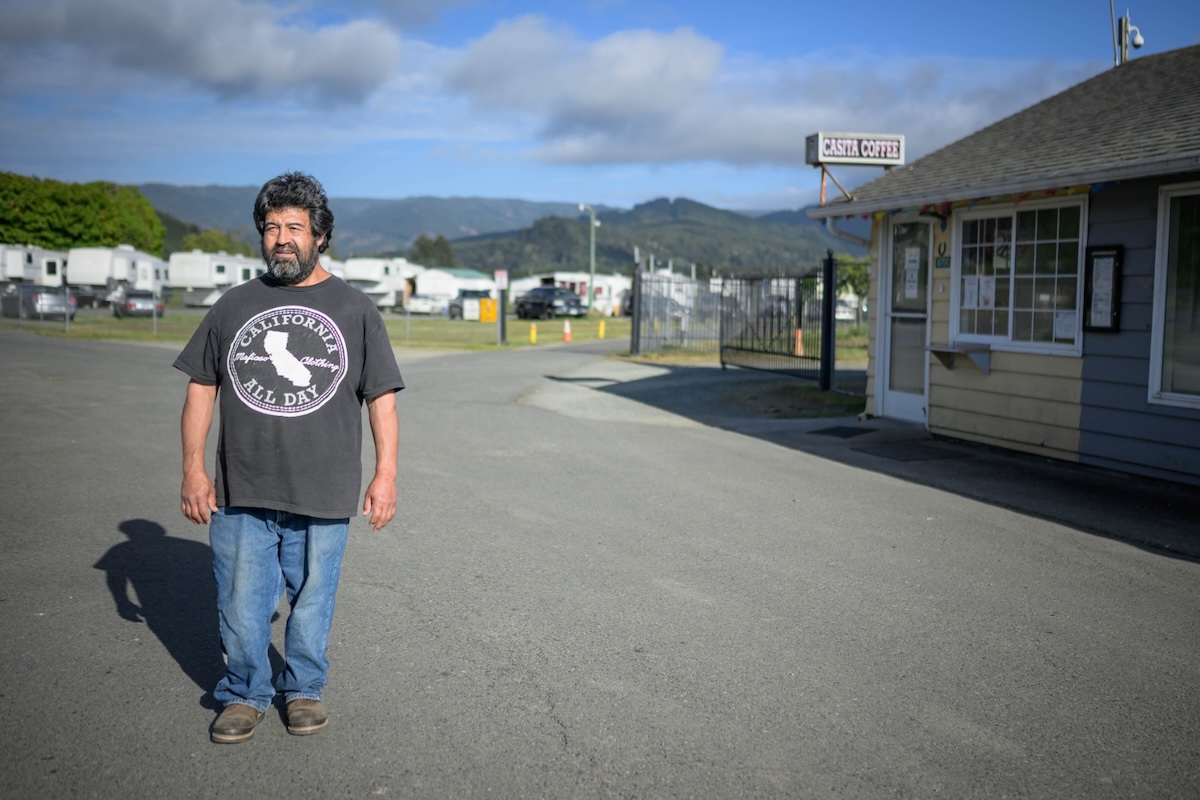
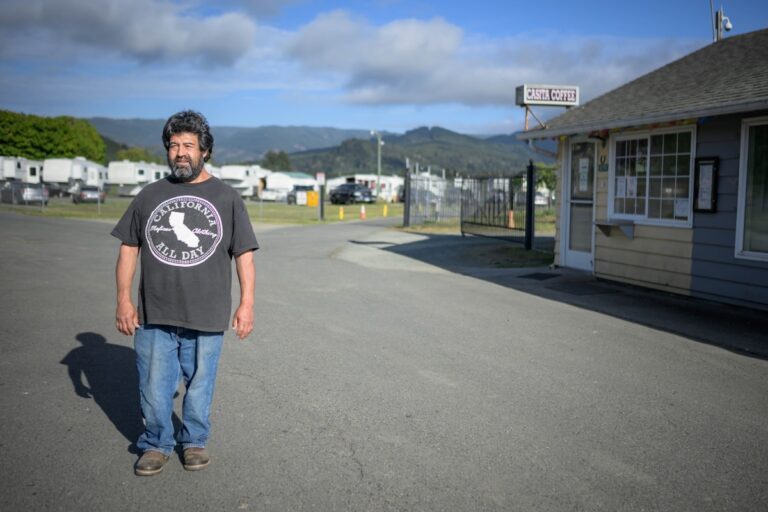
Above: Alvaro Urrea Olivares at the entrance to the mobile home park where he and about 50 migrant farmworkers live in Smith River, Del Norte County. (Credit: Manuel Ortiz)

SMITH RIVER, California – Álvaro Urrea Olivares has a soft, pleasant voice. At 45, his weathered hands reveal decades of work in the lily fields that drive the local economy in this small community in the far north of California.

Smith River is not just rural, residents say, it's remote, rural, California's last frontier, and it's here that the state's plan to expand access to health care to all residents is being tested.

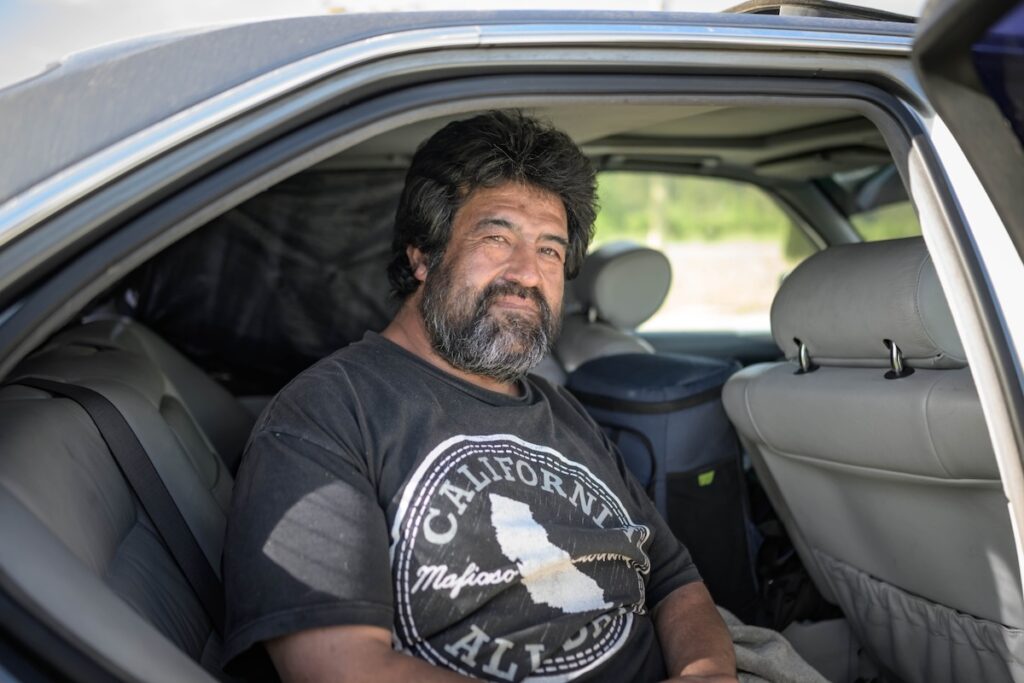
“I don’t have a house. Other people help me here. They help me find work; they give me food and I sleep in my car. It’s not as bad as those who sleep outdoors,” explains Urrea, nicknamed Caballo, pointing to an abandoned BMW.

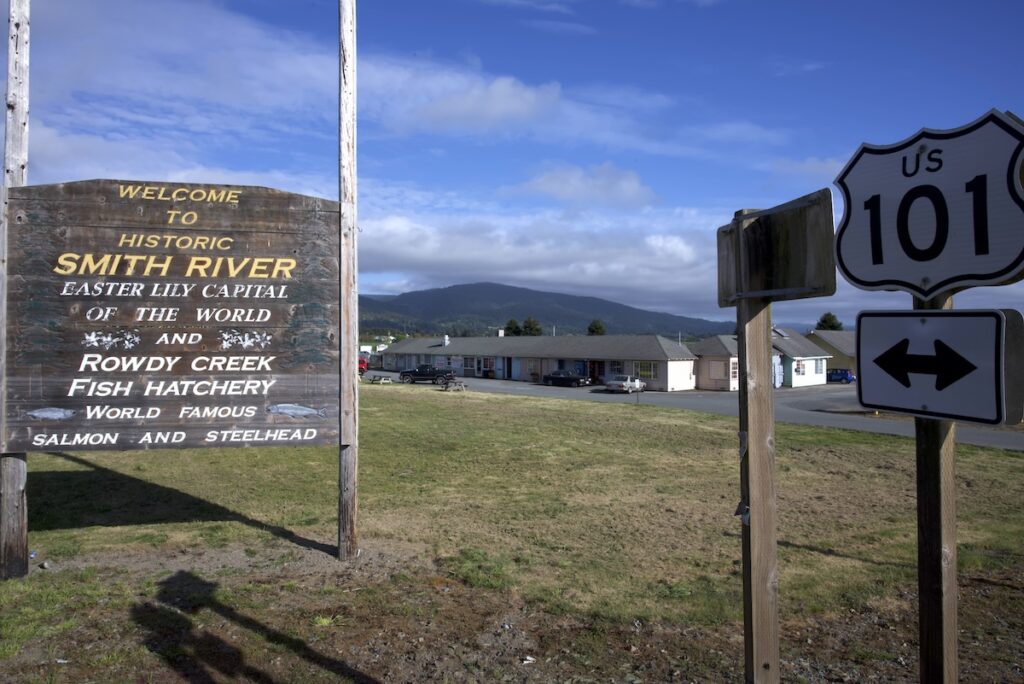
Packed with blankets and personal belongings, the car is parked amid a row of trailers housing about 50 farmworkers and their families. The vast majority are from Veracruz, Jalisco or, in Urrea’s case, Guanajuato. At the park entrance is a yellow sign that reads: “Welcome to Smith River. Easter Lily Capital of the World.”

A sign welcomes visitors to this small mobile home park located on Smith River in rural Del Norte County. The park is home to migrant farmworkers and their families, many of whom work in the Easter lily fields surrounding the area. (Credit: Peter Schurmann)

In years past, migrants — many of them undocumented — would come and go with the lily harvest, returning to Mexico in the fall and then returning to Smith River in the spring to plant. But as border restrictions tightened, many remained in what has become a permanent community. Between planting and harvesting, residents turn to day jobs to survive. 

“It’s expensive here,” Urrea continues in Spanish. “When people don’t have work, they can’t pay the rent. I’ve been sleeping in this car for three years.”

Manuel Ortiz reports on the lack of information about Medi-Cal eligibility available to farmworkers in Smith River, Del Norte County, for the radio show Por la Libre. (Spanish only. Click here.) Click here to read an English transcript).

Starting January 1, California made Medi-Cal, the state’s version of Medicaid, available to all residents regardless of immigration status. At the same time, it has also dramatically expanded Medi-Cal services to include help with things like nutrition, mental health and housing support, among other needs. 

But news of the expansion has yet to reach farmworkers here, many of whom are uninsured and would potentially qualify.

“Don’t get sick here”

“I got pretty sick a few years ago. They wouldn’t cover my medications,” Urrea says, referring to the clinic she went to for treatment in Crescent City, 15 miles south. “Nowadays I don’t have much work and I don’t have money to pay. So I buy pills at the store when I get sick.” 

Pills in the store. It's a phrase you hear from other trailer park residents when asked about their health. 

“I don’t know how to get insurance,” says Tino (who did not want to give his last name). Tino, who is in his 30s, has lived here in one of the trailers for two years. “I got sick three months ago and I just took some pills.” He adds: “We are Latinos, immigrants… It’s not easy for us to get insurance.”

Álvaro Urrea Olivares in the car where he has been sleeping for three years. “It is expensive here. When people don’t have work, they can’t pay the rent,” he says. (Credit: Manuel Ortiz)

Smith River is located in the northwestern corner of Del Norte County, a sparsely populated corner of Northern California sandwiched between Humboldt County to the south, the Oregon border to the north, vast forests to the east, and the Pacific to the west. Latinos here make up only 20 percent of the overall population (which is mostly white, with a significant Native American presence), though they make up the vast majority of the region’s agricultural workforce. 

And as in many communities here, there is (at least among the farmworkers interviewed for this article) an instinctive distrust of government. Don’t depend on the state. If you get sick, it’s up to you. Or, as one resident commented, “You better not get sick here.”

Spreading the word

Kathleen Moreno directs outreach and enrollment for Open Door Community Health Center, which operates 12 clinics in Del Norte and neighboring Humboldt counties.

“There are people who have not had access to medical care since they have been here,” she says, “and so some of their health conditions are terrifying and out of control.”

As a federally qualified health center (FQHC), Open Door is one of nearly three dozen organizations in 48 of California’s 58 counties that are part of the Navigators Health Enrollment Project, launched by the California Department of Health Care Services (DHCS) to help bring information about Medi-Cal eligibility to local communities. The initiative will run through mid-2026. 

Doing so in places like Del Norte, where distances are long and resources are few, is not without its challenges.

The car Urrea sleeps in was provided by a resident of the trailer park, home to about 50 farmworkers and their families, many of them uninsured and unaware of California's efforts to extend health care to all residents regardless of immigration status. (Credit: Manuel Ortiz)

“There is no easy channel of communication up here,” said Moreno, who lives in Crescent City. There are no local Spanish-language radio stations, no newspapers, and Internet access is limited in some areas, he said. “It’s been like this since I’ve lived here for 18 years.”

Open Door relies on informational posts on platforms like Facebook, presentations at local health fairs and community events, and community health workers, also known as Latino Health Coordinators, of which two cover Del Norte and three for all of Humboldt.

Moreno oversees their work. “Their success has been largely based on trust and word-of-mouth referrals… once a family realizes they can trust our coordinators, they tell their family.”

But going directly to the farms has been a challenge, Moreno says. “Obviously, we can’t stop work and the farm owners weren’t thrilled about having people on the farms. So, we posted in the break rooms and brought a healthy snack so everyone could come in and chat. But lunch breaks are short — half an hour — and then it’s back to work.”

Open Door also scanned patient records from 2022 and 2023 to see who had previously accessed care but was uninsured. These individuals were enrolled in emergency Medi-Cal and are now eligible for full-scope Medi-Cal under the current expansion, though many may not be aware of this fact, Moreno acknowledges.  

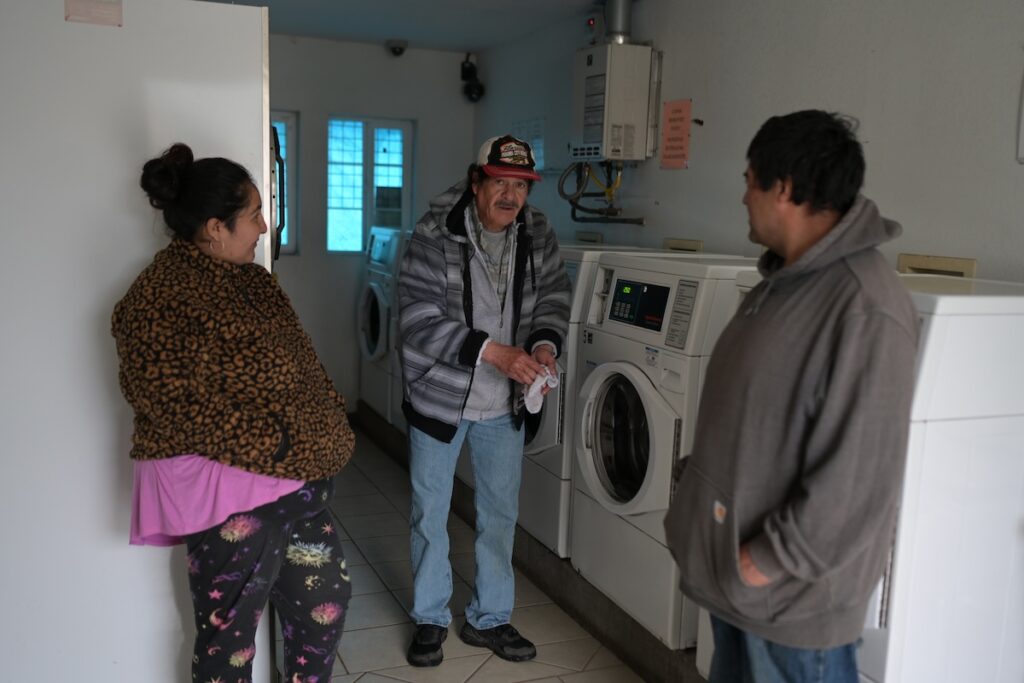
Residents gather at the local laundry, where Urrea goes to escape the cold. People here say the laundry is one of the only communal gathering places for the farmworkers who live here. (Credit: Manuel Ortiz)

Another key barrier is the lack of public transportation. The closest clinic to Smith River is in Crescent City. For serious medical needs, patients must travel to Redding, a four-hour drive south, or San Francisco, a six-hour drive.

There’s also a shortage of providers. “It’s really hard to find providers who want to live and work in Crescent City. Sometimes we find a great provider and they stay. Most of the time, they leave,” Moreno says, noting that there’s only one ophthalmologist in Crescent City who sees Medi-Cal patients, and his waiting list is at capacity.

The policy increases mistrust as undocumented residents have to weigh their health care needs against fears of stirring up anti-immigrant sentiment and jeopardizing their path to citizenship or legal residency by accessing public benefits, which under the previous administration could be grounds for deportation. 

“That’s a real concern for people,” Moreno says. “We heard from one person who said, ‘If my information gets out and I get deported, at least I’ll have access to health care.’”

“You have to take care of yourself”

Urrea has lived in Smith River since he first arrived from Mexico more than 30 years ago. (Credit: Manuel Ortiz)

Back in Smith River, trailer park residents were sometimes unaware and uncertain about the current Medi-Cal expansion. 

“I had never heard of Medi-Cal,” says Alberto Hernandez, a native of Chiapas who has lived here for the past 11 months. When asked what he does when he gets sick, he shrugs. “I don’t know… it’s very expensive here. Maybe go back to Mexico.”

Anancio Hernandez works as a local chef. “A month or two ago I had some pain. But I kept working, even though I was sick,” he says. “I don’t have insurance, so I didn’t go to the hospital.” Asked if he would sign up for Medi-Cal if given the chance, he nodded. “I’ll go look into it to see if this opportunity exists.” 

For his part, Urrea shares that his mother, who also lives in Del Norte, was recently hospitalized after suffering a stroke. She lost sight in her left eye, he says. Like him, she does not have insurance. 

And while his affection for the community and the region is clear (he's eager to show visitors the local beaches, where he says he sometimes goes to clear his head), he is clear-eyed about the challenges.

“When you're dying, you have to take care of yourself. That's the bad thing about it.”


Additional information by Manuel Ortiz.

This is the second in a series looking at Medi-Cal expansion in rural Northern California. You can read the first part here here. This project is a collaboration between EMS and Peninsula 360 Press and was funded by the California Health Equity Impact Fund 2024 from the USC Annenberg Health Center.

You may be interested in: Almost $6 million are approved for housing for agricultural workers in San Mateo

Voting requires communication to understand

Listen to that note:


It is always easier to have an opinion when you understand what is going on. A new standard of communication from elected officials in the the San Mateo County Board of Supervisors is helping precisely with that.

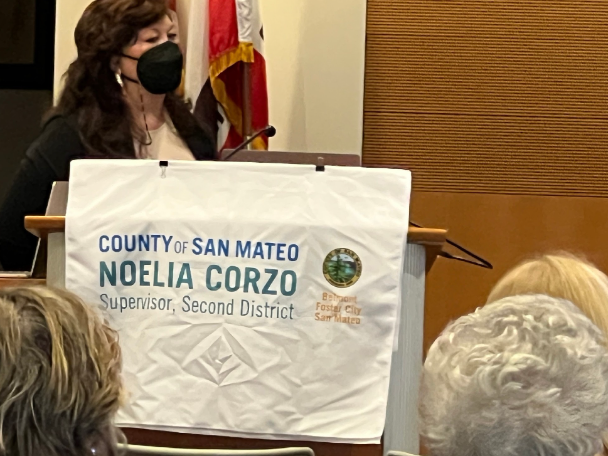
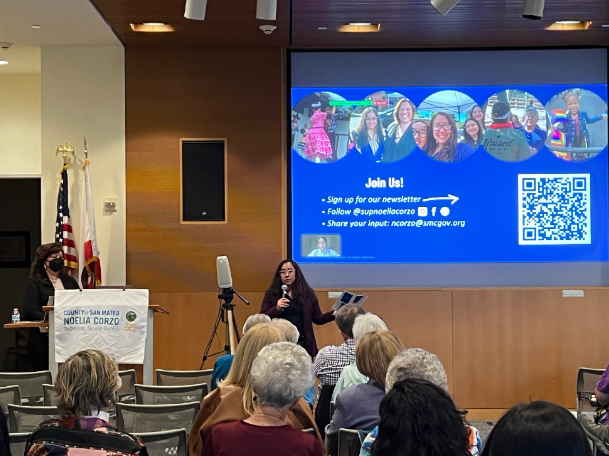
On the evening of April 30, San Mateo County District 2 Supervisor Noelia Corzo held a community dinner at the San Mateo Public Library to update constituents on policy priorities.

Voting requires communication to understand
On the evening of April 30, San Mateo County District 2 Supervisor Noelia Corzo held a community dinner at the San Mateo Public Library to update constituents on policy priorities.

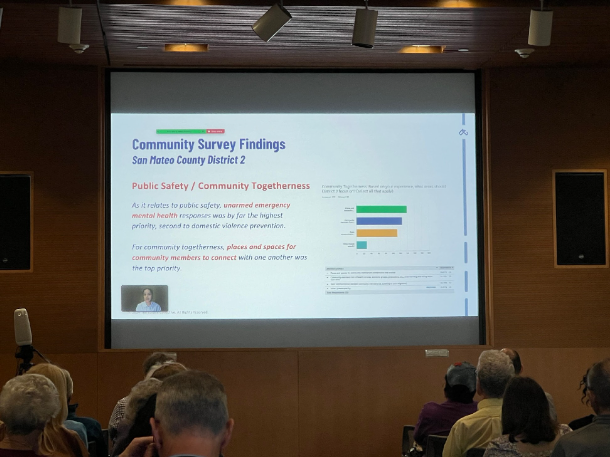
Supervisor Corzo's office gathered feedback from residents over the past ten months and how they have built a strategic plan to guide their district's policy moving forward.

Supervisor Corzo’s team used a community-centered approach to canvass the community’s most important issues. Residents stated that their top priorities were affordable housing and child care, safety and emergency services, and mental well-being.

In response, Supervisor Corzo spoke of a commitment to affordable housing, community safety and well-being, equity, justice and representation for all.

Voting requires communication to understand
Supervisor Corzo’s team used a community-centered approach to canvass the community’s most important issues. Residents stated that their top priorities were affordable housing and child care, safety and emergency services, and mental well-being.

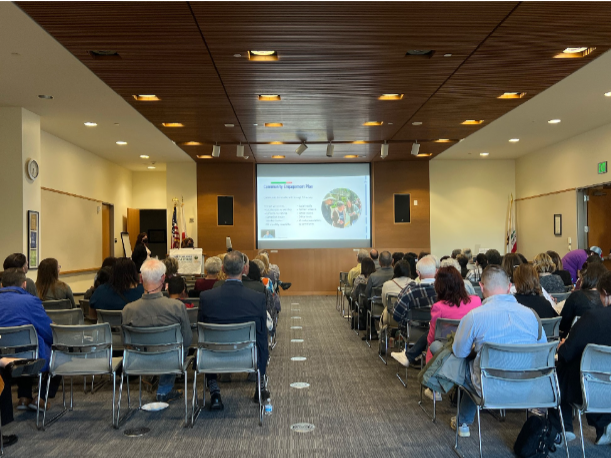
Listening intently were community members, from county officials to council members and residents. Over a spread of Cuban food, listeners had the opportunity to ask questions about the policy approach.

Democracy is more than just electing a person and expecting them to solve all our problems. It is about community representation. This requires that the community understand social issues.

Politics is confusing. It's hard to vote for people you don't know and laws you don't understand.

This problem is solved with open communication. It provides a basis for the community to be heard. Establishing an active dialogue between officials and the public facilitates understanding of what is happening.

Voting requires communication to understand
Politics is confusing. It's difficult to vote for people you don't know and laws you don't understand. This problem is solved by open communication. It provides a basis for the community to be heard. Establishing an active dialogue between officials and the public makes it easier to understand what's going on.

As a result of the presentation, it is much easier to understand what Supervisor Corzo supports.

Corzo provided a welcoming environment of community engagement. By speaking to the community in this way, he establishes accountability and transparency of representation.

You may not agree with the politics. But there's no denying that community issues are easier to understand now.

It is the process of listening and understanding that makes representative democracy possible. When people are better informed, we all benefit.

More from the author: Music education needs more than money

Sony and the drama of Helldivers 2

Listen to this note:

A principios de este año el estudio Arrowhead nos sorprendió con la secuela a un juego de nicho llamado “Helldivers” y su éxito estrepitoso se convirtió en noticia en todos los rincones del internet. Miles y miles de jugadores encontraron en este título un respiro de aire fresco. 

Inspirado por la película de culto “Starship Troopers”, “Helldivers” es un juego de disparos en tercera persona para cuatro jugadores en el cual, el escuadrón es enviado a eliminar alienígenas y completar misiones estratégicas, todo en caótico frenesí de balas y explosiones.

[embedyt] https://www.youtube.com/watch?v=oD3pxbG9YYI[/embedyt]


El veredicto fue unánime, este juego era lo mejor que le había pasado a la industria de los videojuegos desde hace un tiempo y Sony, quién es el publisher de tan aclamado juego, había tomado una buena decisión al ponerlo al alcance de los jugadores de computadora en Steam. 

Por si no ha quedado claro, la parte más importante del juego es combatir al lado de otros cadetes espaciales contra los alienígenas que amenazan la súper tierra, para los usuarios en computadora, esto fue posible desde el principio únicamente con su cuenta de Steam, hasta que Sony decidió que los jugadores también necesitaban crear una cuenta de Playstation para jugar en su computadora a partir de una fecha límite. 

Sony and the drama of Helldivers 2
Imagen publicada en el subreddit de r/Helldivers por el usuario lshatapak en protesta de los más de cien países afectados por las restricciones de Sony.

No estoy seguro qué fué lo que pasó, me parece que fué la manera de comunicarlo, pintándolo como algo obligatorio, la pasión por el juego mismo o el hartazgo de tener que divulgar tu información personal cada vez que quieras jugar algo, pero la comunidad simplemente se reveló. 

Las quejas en Reddit y en distintos foros se hicieron unánimes con la noticia de que no es posible crear una cuenta de Playstation en más de cien países; esto sorprendió a los jugadores que pronto perderían acceso al juego que compraron y que habían disfrutado sin problemas hasta ahora. 

Lo más increíble de esta historia, es que los jugadores de Helldivers se unieron para hacer escuchar su voz con reseñas negativas en la página del juego en Steam y pronto acumularon más de 220 mil reseñas negativas que atrajeron inmediatamente la atención de Sony, quienes no tuvieron más remedio que atender las demandas de la comunidad publicando un comunicado en el que decían que de ahora en adelante, la cuenta de Playstation no sería necesaria para jugar el juego y que están aprendiendo lo que la comunidad en otras plataformas espera de los juegos de la compañía. 

Sony and the drama of Helldivers 2
Image posted on the r/Helldivers subreddit by user Ace_Larrakin as propaganda calling on other players to take action against Sony's decisions.

A pesar de que esta era una clara victoria para los consumidores, hasta la fecha, el juego sigue sin poder comprarse en más de cien países, mientras que los consumidores que ya gastaron su dinero en el juego lo pueden seguir jugando, es incierto si esto cambiará en el futuro. 

Poco tiempo después, Sony anunció que otro de sus títulos planeados para lanzarse en PC, Ghost of Sushima, requeriría forzosamente una cuenta de Playstation para jugar en línea en PC. Steam, por otra parte, empezó a ofrecer reembolsos a los consumidores de las regiones que habían preordenado el juego y ahora se verían afectados por las restricciones impuestas por Sony. 

Esta es una historia agridulce, por un lado, la victoria obtenida por la comunidad de Helldivers es tangible y debe celebrarse, por otro, evidencia la vulnerabilidad de los consumidores ante las decisiones unilaterales e inamovibles de las compañías.

Esté justificado Sony a llevar a cabo estas restricciones, nunca debieron vender el juego en regiones en las que sabían no tenían cobertura de las cuentas de Playstation. Si no pueden ofrecer el producto completo a los consumidores, no deberían tomar su dinero.

You may be interested in: Total war: The battle they couldn't win

Housing complex for agricultural workers approved in Half Moon Bay

Housing complex for agricultural workers approved in Half Moon Bay
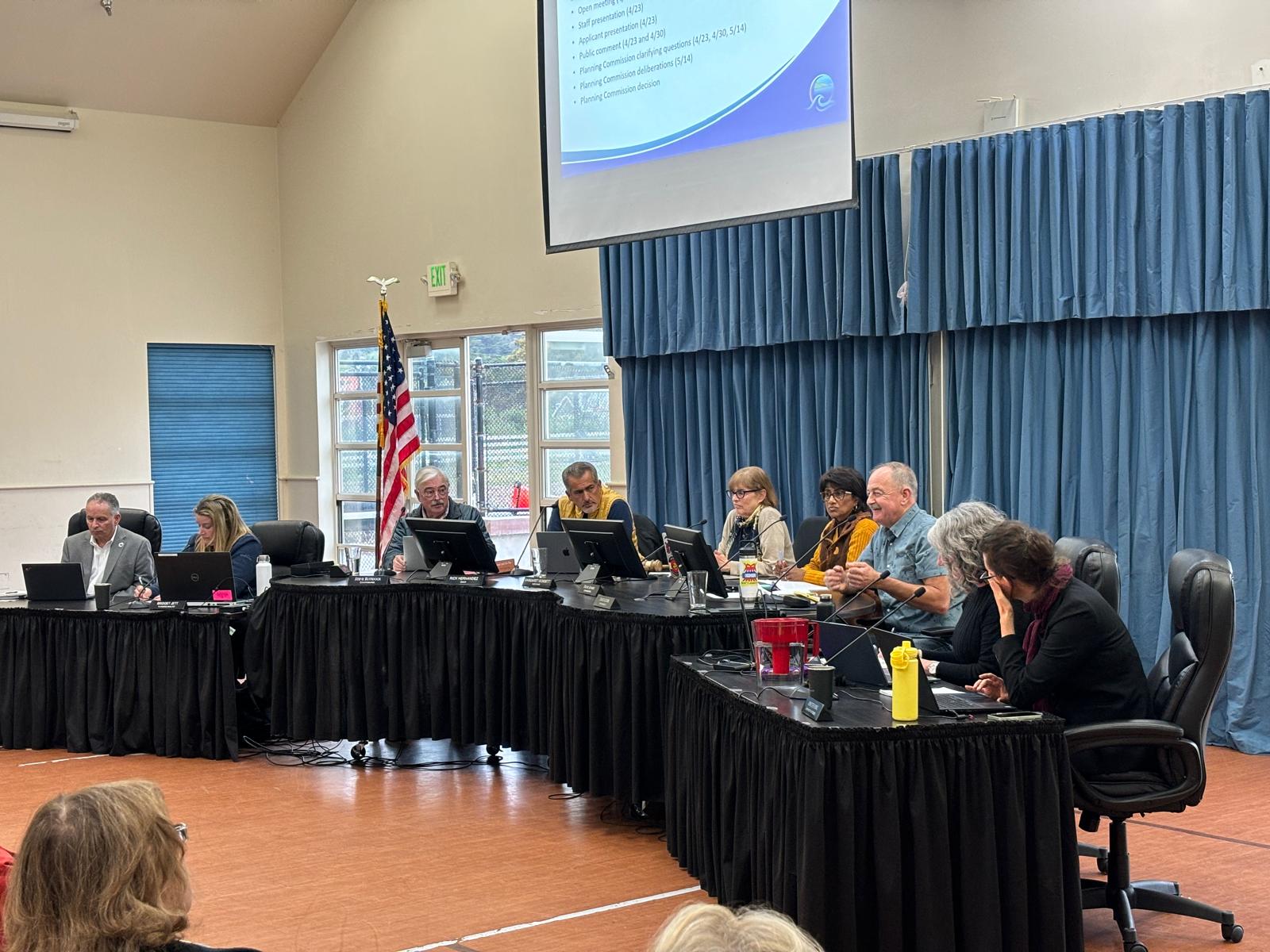
The Half Moon Bay City Planning Commission approved early Wednesday the project to build a housing complex for agricultural workers in Half Moon Bay. Photo: Raul Ayrala P360P

Listen to this note:


By Raúl Ayrala. Peninsula 360 Press.

The Half Moon Bay City Planning Commission approved a project to build a housing development for senior and retired farmworkers early Wednesday morning.

The initiative, approved in general, was sent to the local Council with various recommendations and conditions.

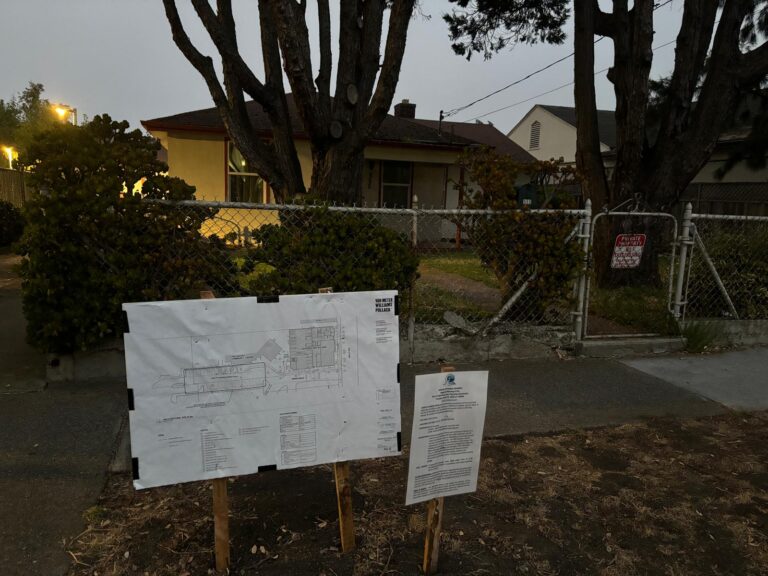
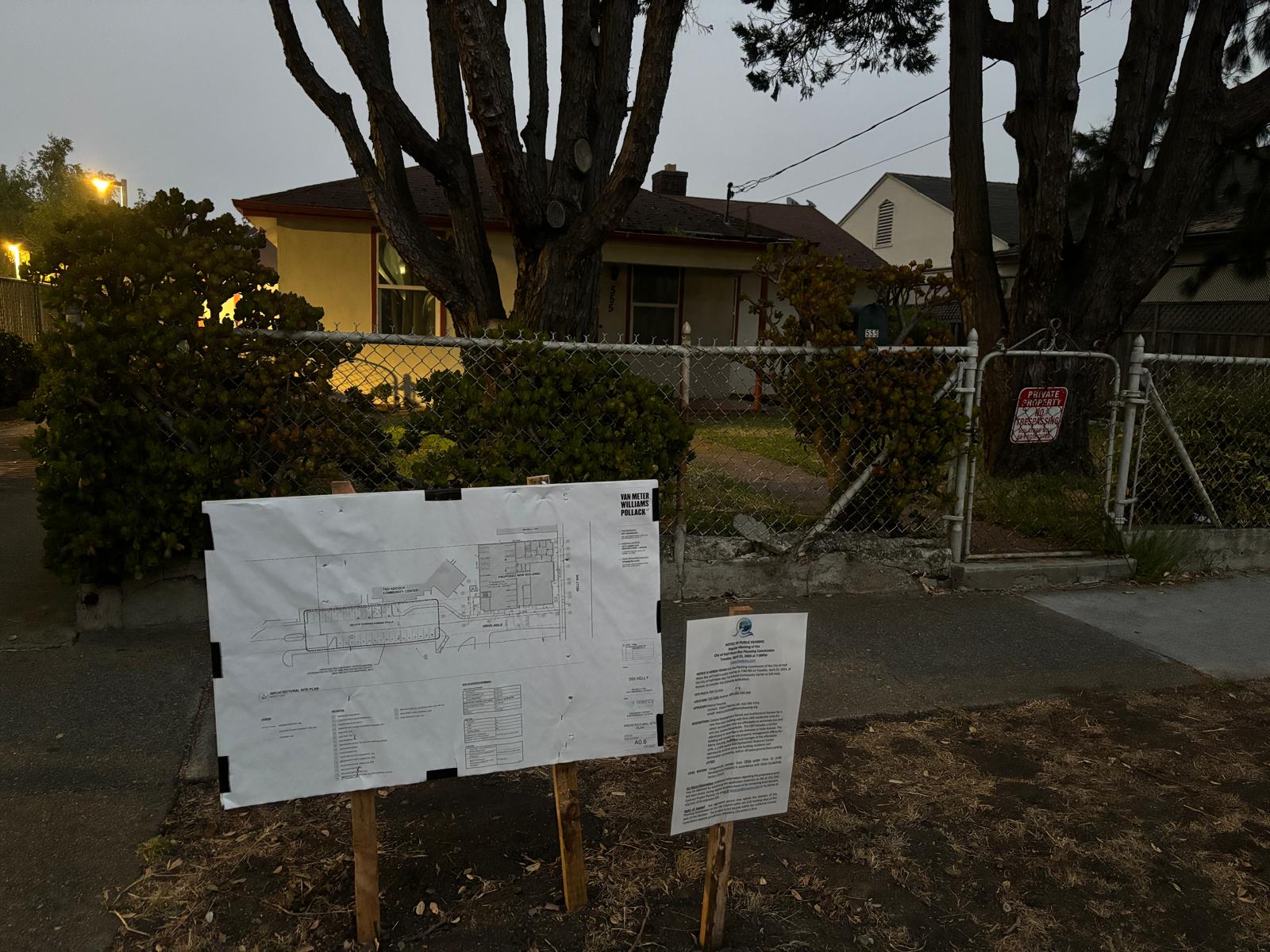
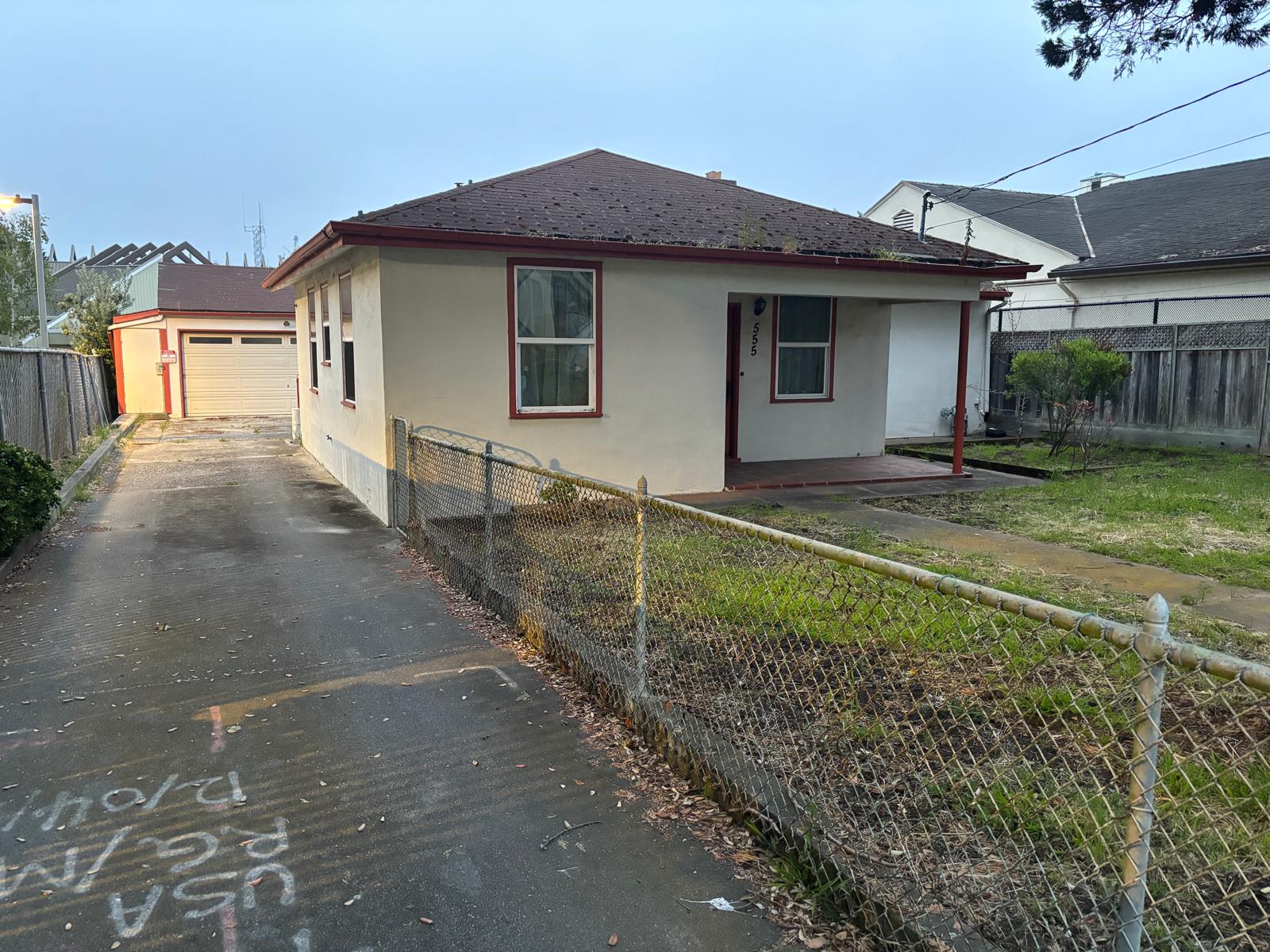
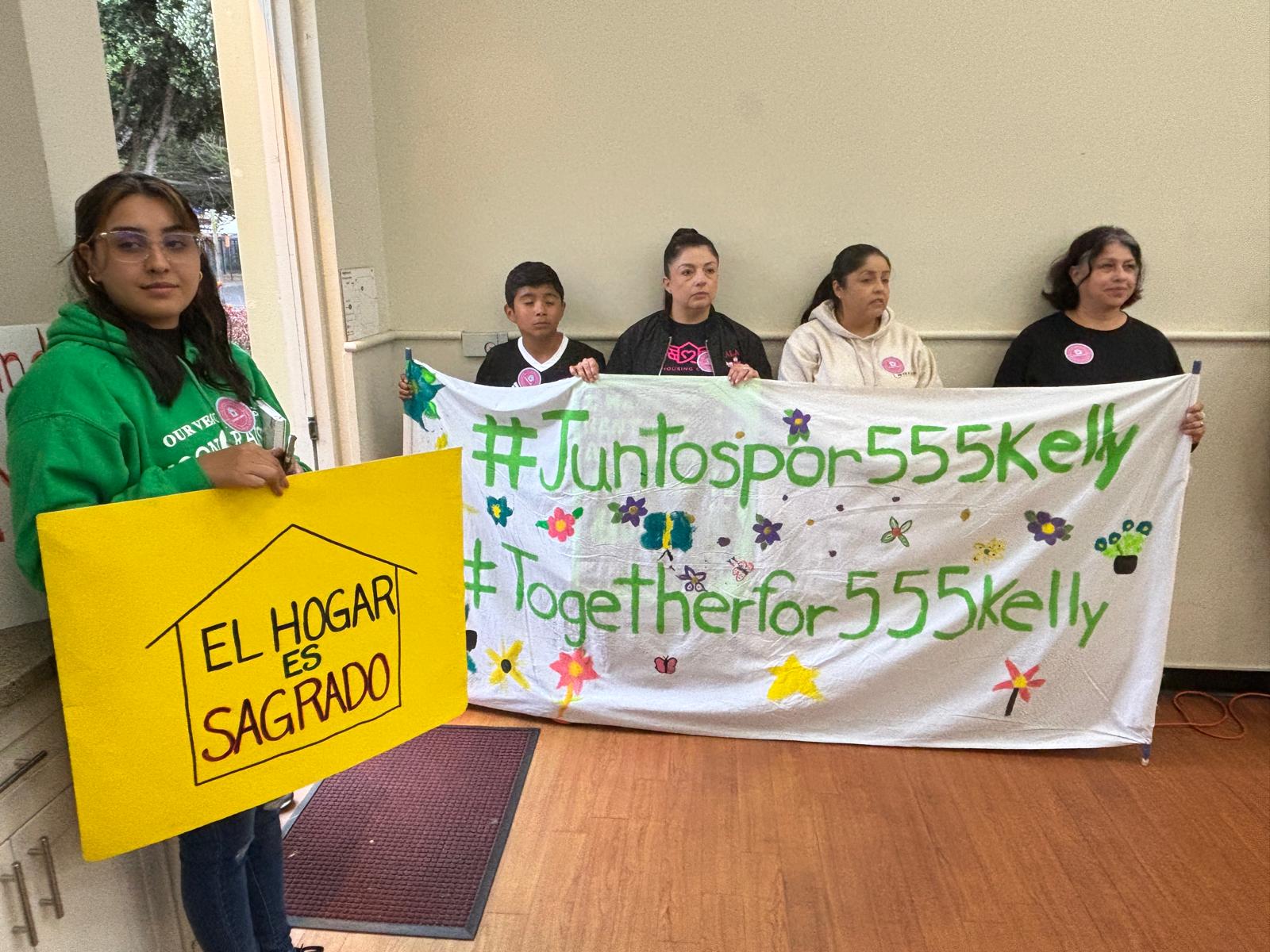
In a session that lasted more than five hours, the five members of the commission raised a number of questions about Mercy Housing, which is proposing, along with ALAS, to build the apartment building at 555 Kelly Street, on a lot adjacent to the local Catholic church (Our Lady of the Pillar).

Housing complex for agricultural workers approved in Half Moon Bay
In a session that lasted more than five hours, the five members of the commission raised a number of questions about Mercy Housing, which is proposing, along with ALAS, the construction of the apartment building at 555 Kelly Street, on a lot adjacent to the local Catholic church (Our Lady of Pilar). Photo: Raúl Ayrala P360P

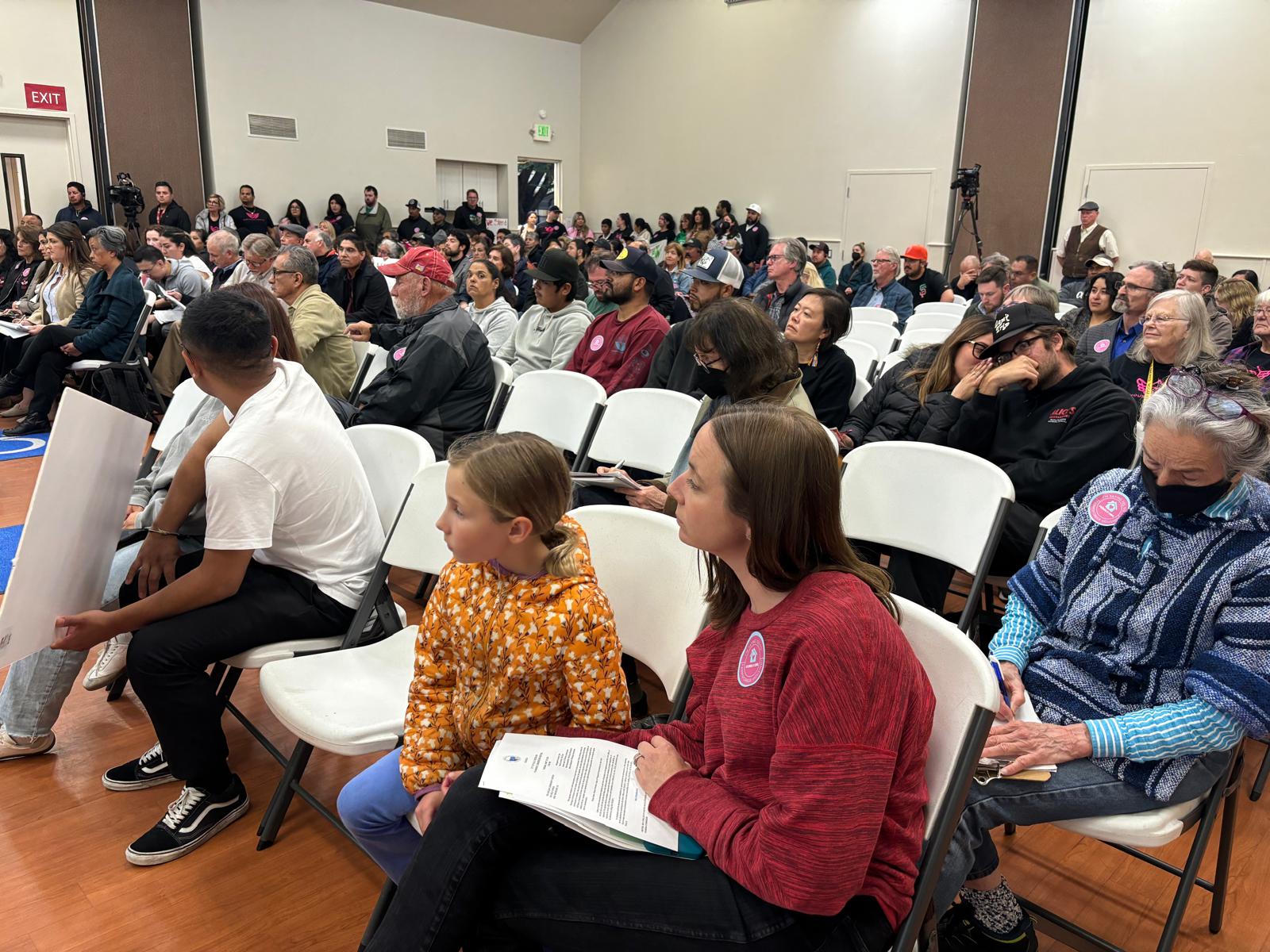
In front of about 150 people who attended the meeting, and who gradually dwindled as the hours passed, the Planning Commission asked that those in charge of carrying out this project take into account “the impact of a building of this size and characteristics on the physiognomy of a small town like Half Moon Bay,” as well as on traffic and parking availability – despite the fact that a large parking lot is planned for the site.

Housing complex for agricultural workers approved in Half Moon Bay
In front of about 150 people who attended the meeting, the Planning Committee asked that those in charge of carrying out this project take into account “the impact of a building of this size and characteristics on the physiognomy of a small town like Half Moon Bay.” Photo: Raúl Ayrala P360P

Among the questions raised by the commission is the size of the project, which was originally going to be four stories and later became five. Also, the forty units to be built were initially studios or rooms, while the last draft presented included one- and two-bedroom apartments.

Housing complex for agricultural workers approved in Half Moon Bay
Among the questions raised by the commission is the magnitude of the project, which was originally going to be four stories and later became five. Also, the forty units to be built were initially studios or rooms, while the last sketch presented included one- and two-bedroom apartments. Photo: Raúl Ayrala P360P

Another recommendation was to eliminate an included resident resource center in order to reduce the height of the building, which would be — under current plans — 9 feet taller than other buildings in the city.

Planners also questioned the construction of an industrial kitchen on the site, and asked that the city be consulted before a mural is painted on one of the walls “to ensure it complies with current regulations.”

The initiative, approved in general, was sent to the local Council with various recommendations and conditions. Photo: Raúl Ayrala P360P

You may be interested in: California vs Half Moon Bay: Joaquin Jimenez responds to Gavin Newsom’s “attack”

Transcript and translation of an interview by Manuel Ortiz from Peninsula 360 Press in Smith River, Del Norte County, California


[Manuel] We have talked on other occasions about the public health service Medi-Cal, which offers free or low-cost health coverage to eligible people who live in California. As of January 1, 2024, Medi-Cal had a historic expansion of its services, which now include, among many others, dental care, vision care and mental health, also, starting this year, undocumented people can also be eligible for Medi-Cal and the program is not considered a public charge, so it does not affect the process of fixing their immigration status. However, despite the benefits this Medi-Cal expansion offers, many people still don't know it exists.

[Manuel]Do you have any medical insurance or medical service?

[Tino] No

[Manuel]What do you do when you get sick?

[Tino] I Just look for some remedy. 

[Manuel] So you medicate yourself?

[Tino] Yes.

[Manuel]Why don't you have health insurance?

[Tino] Because we are Latinos, right? And well, we are immigrants and health insurance is not so easy to get for us.

[Manuel]Have you heard about Medi-cal?

[Tino] No, not really.

[Manuel]Don't you know anything about Medi-cal?

[Tino] No, I don't know

[Manuel]This is Tino, a young agricultural worker originally from Veracruz with whom we spoke in Smith River, where we are currently with our rolling community radio. Smith River is a remote community incorporated into the rural county called Del Norte in northeastern California, just 15 minutes from Oregon. To get here from San Francisco, we drove 369 miles north. Approximately seven hours.

[Manuel] Part of the road, especially in Del Norte, is surrounded by giant sequoia forests. Without a doubt, these forests are among the most beautiful in the world and on one side we are accompanied by the Pacific coast. On the road you can see extensive green fields where Easter lilies are grown.

[David] They call it the Lili capital of the world here, they plant it here.

[David] Approximately it starts in April, March-April. Planting is a process that lasts six months and then, in August or September, they grow it and export it all over the world.

[Manuel]It's the world capital here

[David] The world capital of Lili, Yes.


[Manuel]And they tell me that right now in March, in about two weeks, the field will begin to be cleaned.

[David] Yes, they start working to plow, to cultivate, to sow it, to harvest it in August-September.

[Manuel] The workers, the hands that grow these flowers are Mexican.

[David] 100% Latinos.

[Manuel] And from what parts exactly?

[David] Mainly from Jalisco, but also from Michoacán, from Veracruz, there are people from the State of Mexico.

[Manuel] David Brambilia spoke, a 55-year-old migrant, originally from Jalisco, Mexico, who has been living in Smith River for 30 years. The landscape here is majestic, but migrant communities often live isolated, invisible and often without basic information about their rights and the essential health services to which they could have access.

[Manuel] Yesterday, Friday afternoon, when these workers finished their workday, I talked with some of them outside a little store next to the Lolitas taqueria. Here, they gather to do their shopping, especially on pay days like this. Most of the people who shared their words and time with me, like Tino, told me that they didn't have any health insurance nor did they know anything about Medical.

[Manuel] This is the case of Alberto Hernández, an agricultural worker originally from Chiapas, Mexico.

[Manuel] Do you have any medical services or health insurance?

[Alberto] No, no, I don't have health insurance.

[Manuel] What happens if you get sick?

[Alberto] Well, I don't know. I do not know if I go like this, if they charge a lot. I don't know. Or I go to Mexico. I don't know. One of those two.

[Manuel] Have you heard of Medical?

[Alberto] Mmm. No, no, no, I haven't heard that.

[Manuel] Amancio Hernández Hernández is a chef born in Veracruz, Mexico. He also does not have health insurance nor does he know anything about medical. When he gets sick he self-medicates.

[Manuel] Hey Amancio. Do you have any medical services? Any insurance?

[Amancio] No, I don't have one.

[Manuel] What do you do when you get sick?

[Amancio] You just buy pills in stores.

[Manuel] you self-medicate yourself.

[Amancio] Yes.

[Manuel] When was the last time you got sick? Or that you were a doctor?

[Amancio]About a month or two ago. I had fever and flu.

[Manuel] Amancio continued working sick because he had no other choice. He believed that because he did not have social security in the United States he had no right to medical services.

[Amancio] There I was just working like that, working sick because I don't have insurance. What they ask here is for insurance, to go to the hospital and all that.

[Manuel] Don't you have social security? It's that what you are saying.

[Amancio] I don't have one.

[Manuel]Hey. And have you heard of Medical?

[Amancio] Yes. The other day I went there in Crescent City, but no. According to them, the program don't benefit immigrants.

[Manuel] Amancio has heard about Medical, but someone told him that migrants do not have the right to this public health service, which is false. Medical, we already said, is not only for people born in California. Migrants, including those who are undocumented, do have rights.

[Manuel] Yadira, a young mother of a two-year-old boy and a one-month-old baby who I spoke with in Crescent City, a town south of Smith River, in the same Del Norte county has Medi-Cal, but she is not aware of the enormous expansion this service has had.

[Yadira] Yes, yes I have.

[Manuel] Did you know anything about this year's Medi-Cal expansion?

[Yadira]No, no.

[Manuel] Has no one told you that starting this year there are new services in Medi-Cal?

[Yadira] No, they haven't told me

[Manuel] As you heard it. Part of the Latino community in this remote area of California does not have the necessary information to fully exercise their right to health services in California. This work is part of ongoing research I'm doing with my colleague Peter Schurmann on health services in Latin American communities living in rural Northern California, so it will continue.

Latina women use their vote as a tool for change

Latina women use their vote as a tool for change
Latinas use their vote as a tool for change. More women are voting every day. Latina, Asian American and Pacific Islander (AAPI) and African American voters represent an important part of the community.

Listen to this note:


Latinas use their vote as a tool for change, according to a survey that showed that they are, in particular, the most committed to electoral processes in the United States, which is why it is necessary to create political dialogues that reflect the experiences and priorities of these voters.

And women are voting more and more every day; Latina, Asian American and Pacific Islander (AAPI) and African American voters represent an important part of the community, but they do not feel represented or heard by political representatives, according to the results of a new survey released on May 9 by Intersections of Our Lives (Intersections of our lives).

During a briefing organized by Ethnic Media Services, a panel of experts discussed the survey findings and explored priority issues for female voters, noting that 53 percent of AAPI women, 57 percent of African American women, and 60 percent of Latina women are highly motivated to participate in the November 5 election. 

Sung Yeon Choimorrow, executive director of the National Asian Pacific American Women’s Forum, spoke about the importance of collaborations between organizations, thanking In Our Voice and the Latina Institute for Reproductive Justice for addressing issues of health, social justice, gender equity and reproductive health, which are among the most present concerns for women.

The survey sample included 850 Latina registered voters and 850 Asian American and Pacific Islander (AAPI) voters.

Choimorrow emphasized the importance of including diverse communities, highlighting the alliance's commitment to representing the experiences of women of color.

Rising costs are a top concern for women, with affordable health care, fair housing, abortion care, fair job creation, and closing the wage gap being top of mind for AAPI, Black, and Latina women.

Lupe Rodriguez, executive director of the National Latinas Institute for Reproductive Justice, highlighted the significant influence of women of color voters in the upcoming elections, emphasizing the importance of understanding the attitudes and motivations that drive women of color to the polls.

Celinda Lake, president of Lake Research Partners, explained that women of color have empowered the country over the past year, with 57 percent of Latinas, 55 percent of AAPI women, and 49 percent of African American women motivated to participate in the upcoming elections, feeling that their participation is important in determining the future of the country. 

Roshni Nedungadi, research director and founding partner of HIT Strategies, explained that she worries about the most vulnerable communities, young voters, LGBTQ+ voters, mostly marginalized communities; in these sectors, the rising costs are what really worries them, 35 percent of Latina women, 33 percent of AAPI women and 29 percent of African-American women say that rising costs were one of their most important problems.

Another key issue was housing and the wage gap, with 92 percent of Black women, 89 percent of AAPI women, and 88 percent of Latina women prioritizing the creation of well-paying jobs over the need for more affordable housing. 

Regina Davis Moss, president and CEO of In Our Own Voice: National Black Women's Reproductive Justice Agenda, reiterated that the issues of greatest concern are reproductive justice, housing, employment and educational opportunities for women of all ages. 

She said that 9 out of 10 women of color have said that voting is very important, so it is necessary for this sector of the population to be truly heard and represented.


You may be interested in: Alzheimer's worries and occupies California women

AT&T's decision to end landline service is praised

They praise the decision to reject AT&T's proposal to end landline telephone service
Funcionarios del condado de San Mateo elogiaron la decisión emitida por un juez de CPUC para rechazar la propuesta de AT&T de poner fin a servicio de telefonía fija.

Listen to this note:


Funcionarios del condado de San Mateo elogiaron la decisión propuesta emitida el viernes por un juez de derecho administrativo de la Comisión de Servicios Públicos de California (CPUC) para rechazar una propuesta de AT&T que, según ese juez, podría amenazar a los residentes vulnerables durante incendios forestales y otras emergencias.

“Me complace que el Juez de Derecho Administrativo de la Comisión de Servicios Públicos de California haya rechazado la peligrosa solicitud de AT&T para ser relevado de su obligación de brindar servicio telefónico de red básica a cualquier cliente que lo solicite porque no existe otra compañía dispuesta a brindar ese servicio a todos”, señaló el supervisor del condado de San Mateo, Ray Mueller, quien ha liderado los esfuerzos del condado para luchar contra la oferta de AT&T.

Mueller dijo que se continuará abogando por la capacidad de todos los residentes del condado de San Mateo de elegir el servicio de línea fija para que puedan comunicarse cuando el servicio celular no esté disponible, no sea confiable o no funcione, especialmente en casos de emergencia.

De igual manera, dijo tener fe y esperanza de que la Comisión de Servicios Públicos de California vea el tema de la misma manera y adopte la decisión propuesta por su juez.

“Agradecemos al equipo profesional de nuestro condado, a las delegaciones legislativas federales y estatales por su apoyo en este asunto, y especialmente a la congresista Anna Eshoo, quien ha trabajado con mi oficina y otros condados en múltiples frentes para abordar este problema”, subrayó.

Eshoo aplaudió la decisión de la Comisión de Servicios Públicos de California de denegar la solicitud de AT&T California de dejar de cumplir con sus obligaciones como proveedor de último recurso. 

“Muchos de mis electores viven en áreas remotas y de difícil acceso, donde el servicio celular y el acceso a Internet son irregulares, poco confiables y, en algunos casos, completamente indisponibles. Muchos otros son adultos mayores y jubilados que viven con ingresos fijos. Dependen de su servicio de telefonía fija para todas sus comunicaciones. Mantener el estatus de proveedor de último recurso garantiza que todos los californianos tengan acceso a comunicaciones confiables y asequibles sin importar dónde vivan. Esta decisión es una victoria para ellos”, puntualizó.

En marzo, los supervisores del condado de San Mateo votaron 5-0 para oponerse a la solicitud de AT&T de retirarse como “operador de último recurso”, lo que le exige proporcionar acceso al servicio telefónico básico a cualquier persona en su territorio de servicio que lo solicite. 

En ese momento, Mueller viajó a Indio (condado de Riverside) para hablar ante la CPUC y su juez de Derecho Administrativo en oposición a la solicitud de AT&T.

Si AT&T es relevado de sus obligaciones de operador de último recurso, los residentes podrían perder el acceso gratuito al 911 y al servicio de retransmisión telefónica (para personas con problemas del habla o de audición), según la resolución aprobada por los supervisores. 

La solicitud de AT&T de cancelar el servicio de telefonía fija cubre casi todo el condado de San Mateo, según un mapa publicado en el sitio web de la CPUC.

En una decisión propuesta emitida el viernes, un juez de derecho administrativo de la CPUC pareció estar de acuerdo y sugirió considerar que “AT&T no cumplió con los requisitos para el retiro (del operador de último recurso). Específicamente, no demostró la disponibilidad de proveedores de reemplazo dispuestos y capaces de servir”, según un resumen de la decisión propuesta.

La CPUC considerará si acepta la decisión propuesta por el juez de derecho administrativo en su reunión del 20 de junio de 2024.

Cabe señalar que el público puede seguir commenting on the topic.

La CPUC recibió más de 5 mil comentarios públicos y celebró foros públicos virtuales en todo el estado, que atrajeron a más de 5 mil 800 asistentes.

You may be interested in: Preocupa solicitud de AT&T para eliminar el servicio de líneas fijas en condado de San Mateo

Music education needs more than money

Listen to this note: 

It’s no secret that local public school music education programs have been in need of money for years—most programs do. But now, our arts and music programs have a cash infusion thanks to voters passing California Proposition 28 in 2022, which requires the state to begin a new ongoing program to support arts education in California K-12 public schools. 

However, once the money reaches the school district, it is up to each district to decide how it is spent.

Take for example one local school district. Belmont-Redwood Shores School District's (BRSSD) allocates $450,000 for arts and music programs, and 80 percent of that money must be spent on salaries to hire new teachers. Yet even this infusion of money does not guarantee a fix for the inequity that already exists between schools.

In the Belmont-Redwood Shores School District (BRSSD), students at Nesbit and Sandpiper middle schools only have music education during one 45-minute weekly session.

That's a stark contrast to the robust music program at the district's largest middle school, Ralston Middle School, where students receive quality instruction four days a week in addition to multiple concert and field trip opportunities.

However, even with access to Prop 28 money and impassioned speeches from community members at last month's board meeting advocating for equity, no Prop 28 funds were allocated to programs at smaller middle schools, where some of the district's most diverse student populations have inadequate access to grade-appropriate music instruction.

Students should not have to endure a lower quality of education from the school they attend, especially when the means to provide those opportunities are accessible. It is the responsibility of the superintendent and the school district to provide students with equal access to opportunities to study music.

Voters approved Proposition 28 with good intentions, thinking that all students would benefit. However, music and arts education needs more than just money.

We need to pay attention to providing equity in education, ensuring that all students and all populations have access to the same high quality of instruction. 

Prop 28 is a good start, but it is now also up to local school boards and communities to pay close attention to how this money is spent and to hold district administrators accountable for serving each and every student equally.

More from the author: Proposition 1: Why your vote matters

Proposition 1: Why your vote matters

In the case of Proposition 1, the state government will now have $6 billion to fund housing for veterans and homeless people, so whether the vote in question is on funding for mental health resources or another issue, your vote and your voice will still matter.

Listen to this note:

March 5, 2024 was the date when California voters came close to tying the decision on whether to approve a measure involving the spending of six billion dollars. In reality, it took a couple of days, as the votes were close enough that it took almost a week after the election to determine whether the measure would pass or not.

One of the key propositions on the March ballot was California Proposition 1, the Mental Health Services Program and Bond Measure. It asked voters whether to take money from county budgets and put that money toward mental health and homeless support.

After careful recounting, California Proposition 1 was approved by voters. 

According to official election results compiled by the California Secretary of State, more than seven million people voted in the election.

Despite millions of votes, it was only a slim margin of 26,000 that separated yes from no in approving the proposition.

Under majority rules, a close election can mean that millions get their way while millions don't. That may not sit well with many, but it's far better than the alternative. 

Democracy can hurt sometimes. But it gives us a voice and a choice.

At the end of the election day, it is each individual vote put together that determines the results.

Under Proposition 1, the state government will now have $6 billion to fund housing for veterans and homeless people.

Whether the vote in question is about funding for mental health resources or another issue, your vote and your voice will still matter.


You may be interested in: Ballot Proposition 1 What is it? What does it mean?