Alista ropa cómoda y muy buen ánimo para acudir en compañía de familia y amigos este 26 y 27 de agosto al Festival de Arte de Palo Alto, el cual celebra este 2023 su 40 aniversario, por lo que los festejos serán imperdibles para residentes del Área de la Bahía y de toda California.
El festival, que celebra su 40 aniversario, se lleva a cabo de 10:00 a 18:00 horas en la arbolada University Avenue en el hermoso centro de Palo Alto. La admisión es gratuita.
Este evento comunitario de alta calidad es organizado por la Cámara de Comercio de Palo Alto con el apoyo de la ciudad, y cada año atrae a gente de todas las edades de la costa oeste.
La columna vertebral del festival y la clave de su éxito son los 250 artistas y artesanos cuyos puestos de exhibición están ubicados uno detrás del otro a lo largo de University Avenue. Estos expositores son la razón por la cual este festival atrae a un porcentaje tan alto de artistas y artesanos cuyo trabajo verá sólo en unos pocos espectáculos selectos en la costa oeste, señalaron organizadores del evento.
Los asistentes al festival tendrán dos días completos para sumergirse en un arte visual y escénico excepcional a lo largo del festival de nueve bloques. Tasso Street volverá a proporcionar el «lienzo» para la popular Exposición Italiana de Pintura Callejera, donde se crearán «pinturas» de tiza al pastel de 100 pies cuadrados y más grandes realizadas por artistas de tiza de todo el estado sobre el asfalto durante los dos días que dura el festival.
Una gran parte de la experiencia del fin de semana es la amplia variedad de entretenimiento musical, con actuaciones continuas en dos escenarios, conciertos en las esquinas y el piano «Play Me» de Chopin & Candelabros, abierto a todos.
En el evento participan artistas creadores de obras de cerámica, digitales, textiles, vidrio, joyas, cuero, metales, medios mixtos, mosaico, pintura, fotografía, grabado, escultura y madera, entre otros.
Los cobeneficiarios de este año de la recaudación de fondos de la Italian Street Painting Expo son Palo Alto Youth Community Service y Ada’s Cafe.
La participación local es alta en este evento. El Palo Alto Art Center y Oshman Family JCC son los organizadores y beneficiarios del área de arte y manualidades «prácticas» para niños.
En el evento se podrán consumir bebidas alcohólicas, y el Kiwanis Club de Palo Alto estará nuevamente sirviéndolas para el disfrute de todos.
Debes también preparar tu cartera pues podrás adquirir diversos artículos en todo el evento, sin embargo, recuerda que la ciudad de Palo Alto tiene una prohibición sobre el uso de bolsas de plástico y papel para transportar la mercancía comprada, por lo que es recomendable llevar tus propias bolsas de mano para transportar fácilmente todo lo que adquieras.
Para aquellos que conducen hasta el festival, hay estacionamiento gratuito a una o dos cuadras del lugar del festival, con estacionamiento para personas con discapacidad. Sin embargo, se anima a los asistentes al festival a utilizar el transporte público o andar en bicicleta.
Among the suggestions that the festival makes is to try not to bring your pet, because with so many people and noise they can get upset and get violent or stressed.
La comida y la bebida no es problema, el festival cuenta con varios puestos de alimentos, desde pequeños antojos hasta comida gourmet, excelentes vinos y cervezas artesanales.
Due to poor air quality in the Bay Area, the Air Quality Management District has extended its warning until Sunday due to several wildfires in northern and southern California and Oregon.
The agency noted that smoke from these numerous fires is expected to affect the entire Bay Area until Sunday, August 27, causing air quality to reach a low-moderate level.
He also said that skies filled with smoke and fog may be seen and the smell of smoke may be perceived.
He noted that “pollutant levels are NOT expected to exceed the 24-hour national health standard and there is no Spare the Air alert in effect.”
The Air District said it will closely monitor air quality across the region for impacts from smoke from these fires.
However, he recommended that if smoke is smelling, it is important for Bay Area residents to protect their health by avoiding exposure. If possible, stay indoors with windows and doors closed until smoke levels subside, if temperatures permit.
He also said it is recommended that people affected by smoke set their air conditioning units and car ventilation systems to recirculate to prevent outside air from moving into the interior.
Smoke can irritate the eyes and airways, causing coughing, a sore throat and sinus irritation, he said.
Elevated airborne particles can trigger wheezing in people with asthma, emphysema or COPD. Older people, children and people with respiratory illnesses are particularly susceptible to elevated levels of air pollution and should take extra precautions to avoid exposure.
Con la finalidad de garantizar una amplia participación, el the San Mateo County Board of Supervisors ha extendido la fecha límite para completar una encuesta sobre las necesidades clave de la comunidad hasta el lunes 28 de agosto.
La encuesta «busca comprender qué necesitan los residentes del condado de San Mateo para ellos mismos, sus familias y sus comunidades para prosperar».
A través de un comunicado, el condado señaló que los resultados ayudarán a influir en cómo se asignarán los dólares de los impuestos locales de la Medida K en cuatro áreas clave: Vivienda y personas sin hogar, preparación para emergencias, niños y familias y salud mental.
La encuesta es confidencial, se puede completar en aproximadamente 10 minutos y está disponible en español, chino, tagalo e inglés.
The survey closes at 11:59 p.m. on Monday, August 28.
Y es que, najo la dirección de la Junta de Supervisores, el condado está recopilando información a través de la encuesta y una serie de sesiones de escucha comunitaria.
Tras la conclusión de las sesiones de escucha y el cierre de la encuesta, el personal analizará los resultados y presentará la información a la Junta de Supervisores y al público este otoño.
Supervisors are then expected to consider a spending plan that seeks to address community needs using funds from Measure K. Measure K is a voter-approved half-cent sales tax that provides local funding for local needs .
Tres miembros de la Comisión de Discapacidad de Berkeley han presentado una demanda contra la ciudad de Berkeley, alegando discriminación con respecto a las reglas para asistir a las reuniones de la comisión.
Rena Fischer, Helen Walsh y Kathi Pugh presentaron una demanda el martes en un tribunal federal por acusaciones de que la ciudad no les otorgará adaptaciones para asistir a las reuniones de la comisión, según Disability Rights Advocates, un centro legal sin fines de lucro que defiende a las personas con discapacidades y que representa a las tres.
Los tres dicen que sus discapacidades les obligan a asistir a reuniones de forma remota. Si lo hacen, la ciudad les exige que abran sus hogares a cualquiera que quiera asistir a una reunión de la comisión, amenazando la seguridad y la salud de los miembros. Las direcciones de los tres se difunden públicamente.
«Ridícula», «invasiva» e «ilegal» es lo que la abogada Jinny Kim de Disability Rights Advocates llamó la postura de Berkeley sobre el tema.
La ciudad está imponiendo los requisitos a los miembros de la comisión que asisten de forma remota debido a la ley estatal, según la denuncia. La nueva ley, que entró en vigor este año, surgió del Proyecto de Ley 2449 de la Asamblea.
Esa ley no exige que las direcciones de los miembros de la comisión sean públicas, dijo Kim.
La asambleísta Blanca Rubio, demócrata por Baldwin Park, fue la autora de la AB 2449. No quiso comentar el jueves sobre la demanda.
Fischer, Walsh y Pugh forman parte de una comisión de nueve miembros. Hay cuatro plazas vacantes.
Dos de los tres que presentaron la demanda deben asistir a las reuniones de la comisión desde la cama. El tercero está inmunocomprometido.
Al permitir que el público entre a su casa, estará sujeta a la misma amenaza que busca evitar, según la denuncia.
«Abrir las casas de los miembros de la Comisión al público también puede ser peligroso para el público, ya que las casas privadas pueden no ser seguras o accesibles para los miembros del público con discapacidades de la misma manera que lo es un lugar público de reunión en la ciudad», dice la denuncia.
Fischer, Walsh y Pugh buscan obligar a la ciudad a permitirles asistir a reuniones de forma remota, según sea necesario.
Los tres también buscan evitar que la ciudad haga pública la dirección de sus casas y los obligue a abrir sus casas como espacios públicos de reunión para las reuniones de la comisión, entre otras soluciones.
«Es una triste ironía que la ciudad de Berkeley, donde comenzó el movimiento por la plena participación y la independencia, esté poniendo obstáculos en el camino de las personas con discapacidades», dijo Pugh en un comunicado.
«La posición ridícula e insostenible de la ciudad nos niega el derecho a una participación plena en el gobierno de la ciudad», afirmó. «A la ciudad de Berkeley se le pidió repetidamente que cambiara su posición. Desafortunadamente, nos vemos obligados a presentar una demanda para garantizar nuestros derechos».
San Francisco has taken exactly the opposite stance, at least on paper, Kim said.
«Si un miembro de un organismo normativo tiene una discapacidad según la ley federal ‒la Ley de Estadounidenses con Discapacidades‒, y su discapacidad limita o impide su asistencia en persona a las reuniones, por ejemplo, si su discapacidad lo limita a su residencia, entonces la ciudad debe hacer ajustes razonables para permitir que el miembro participe en las reuniones de forma remota», decía un memorando de enero de la Oficina del Fiscal de la ciudad de San Francisco.
Fischer, Walsh y Pugh podrían ser expulsados de la comisión, afirmó Kim.
Un portavoz de la ciudad de Berkeley no respondió a media tarde del jueves a una solicitud de comentarios sobre la demanda.
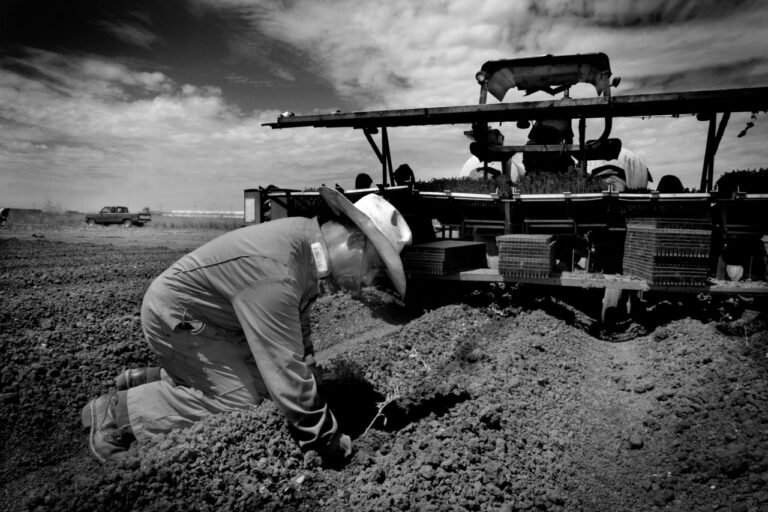
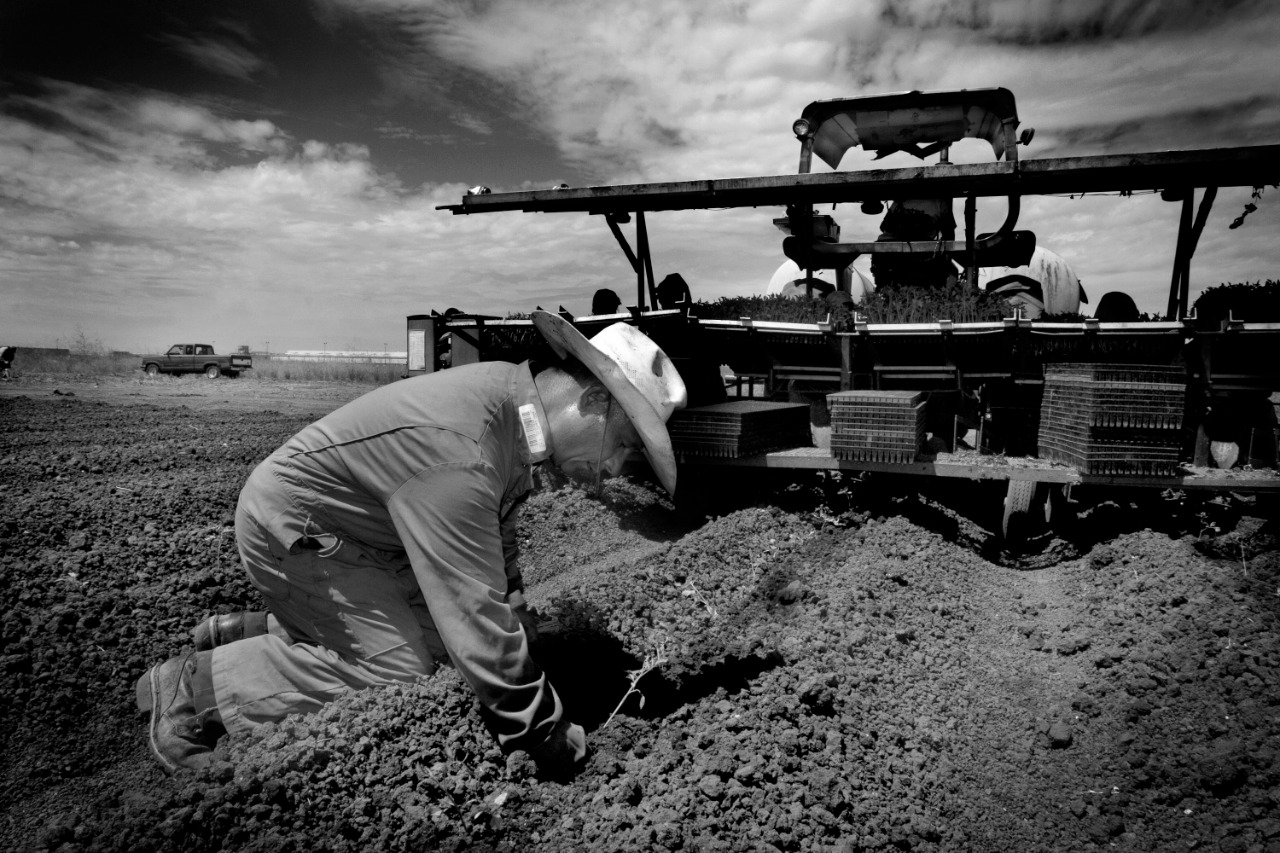
Los trabajadores agrícolas de Fresno utilizan una variedad de estrategias para gestionar los riesgos del calor extremo, que puede haber influido en la muerte de un trabajador agrícola a principios de este mes.
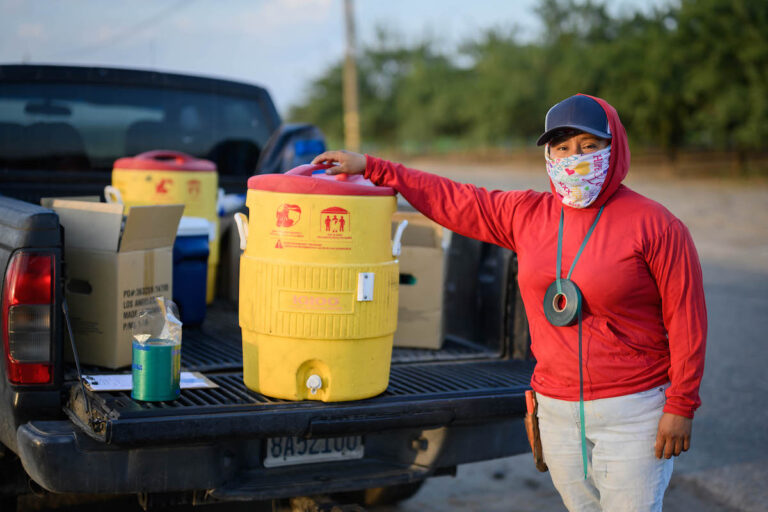
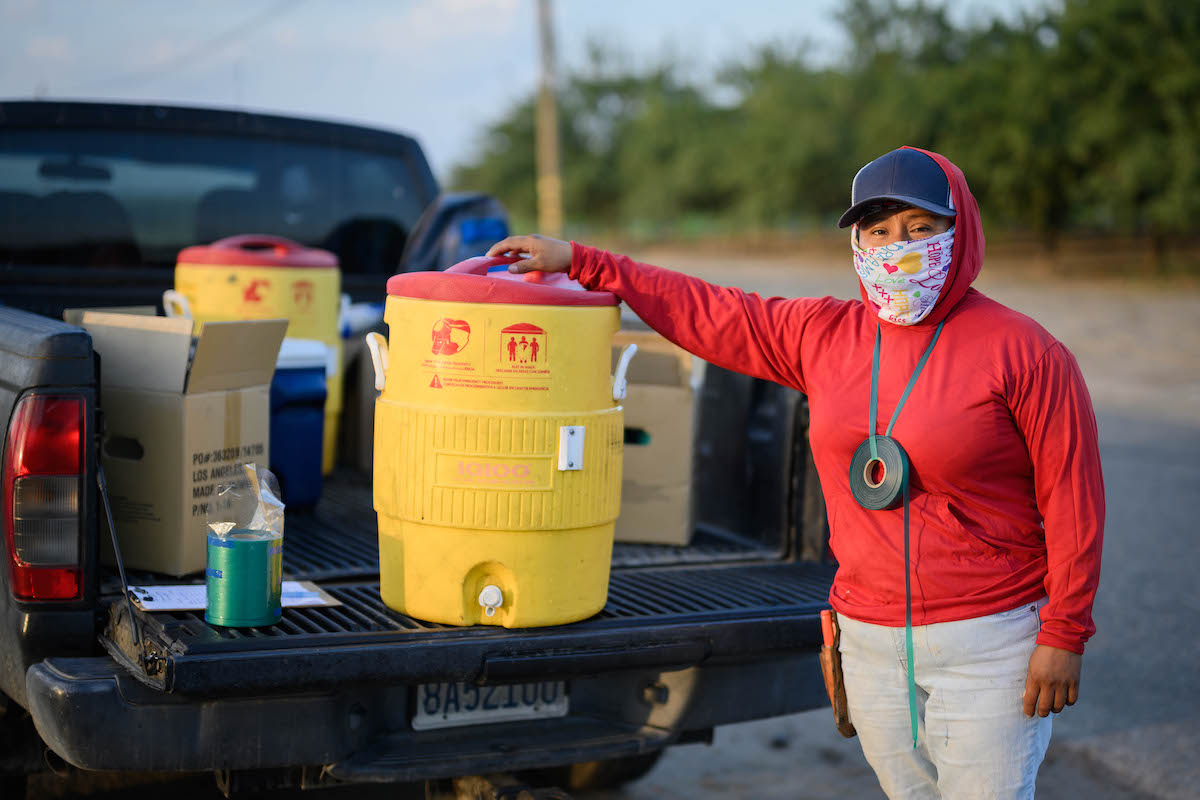
Arriba: Leonila Alvarado ha trabajado en los campos de Fresno durante más de dos décadas y dice que es fundamental que el trabajo se detenga cuando las temperaturas suben demasiado. «El calor puede matar», dice. (Crédito del autor)
«Aquí el clima ha cambiado dramáticamente. El calor es más intenso y eso nos pone en mayor riesgo», dice Martín Melchor, un trabajador agrícola que ha trabajado los mismos campos cultivando uvas, almendras y duraznos en Fresno, California, durante los últimos 34 años. «Tenemos que tomar precauciones rigurosas para protegernos».
Originario del estado de Jalisco, México, Melchor es el «mayordomo» ‒gerente‒ de un equipo de trabajadores agrícolas aquí. «Parte de mi trabajo», dice, «es controlar las temperaturas con regularidad. Cuando sabemos que va a hacer calor, intentamos empezar a trabajar más temprano».
Y ha hecho calor. Fresno no es conocido por su clima templado, con temperaturas ‒especialmente en los meses de verano‒ que a menudo se acercan o superan los tres dígitos. Pero con los impactos del cambio climático el calor se está volviendo más intenso y los últimos 10 años han sido los más calurosos registrados, según el Servicio Meteorológico Nacional.
Risks of extreme heat
Los riesgos del calor extremo para los trabajadores agrícolas en Fresno –ubicado en el Valle Central de California, donde se cultivan gran parte de las frutas y verduras del país– quedaron al descubierto a principios de este mes después de la muerte de Elidio Hernández, quien murió trabajando en temperaturas que excedieron los 100F.
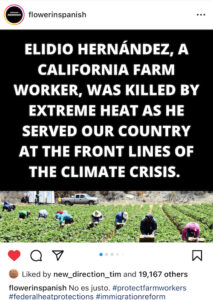
Poco después de que se anunciara su muerte, una cuenta de Instagram popular por defender los derechos de los trabajadores agrícolas en el estado publicó un comunicado declarando que Hernández murió como resultado del «calor extremo mientras servía a este país en la primera línea de la crisis climática».
Un informe forense determinó que Hernández murió de una enfermedad cardiovascular, y señaló que no había evidencia que demostrara que el calor extremo haya jugado un papel en su muerte.
Sin embargo, los Centros para el Control y la Prevención de Enfermedades advierten que la exposición al calor extremo puede comprometer la salud de las personas con problemas cardiovasculares. Según un report, «la variabilidad de la temperatura (grandes cambios en la temperatura promedio de una región determinada durante un período de tiempo particular) también puede influir en la morbilidad cardiovascular».
La muerte de Hernández ha provocado llamados del Sindicato Unido de Trabajadores Agrícolas y del senador estadounidense Alex Padilla para mejorar la protección de los trabajadores agrícolas a medida que las temperaturas continúan aumentando.
Melchor dice que trabajar con temperaturas superiores a los 90°F es «insoportable… es muy peligroso, y aquí recomendamos dejar de trabajar porque los síntomas (de insolación) pueden aparecer inmediatamente».
Staying hydrated, staying vigilant
Leonila Alvarado ha trabajado en los campos de Fresno durante más de dos décadas. Originaria de Oaxaca, México, al igual que Melchor, dirige un equipo de trabajadores agrícolas y dice que es fundamental que el trabajo se detenga cuando las temperaturas alcancen los tres dígitos porque «el calor puede matar».
A las 6:15 am, al costado de la carretera frente a un rancho en Fresno, Alvarado está cargando voluminosos bidones de agua en su camioneta. El agua es para los campesinos a su cargo, explica, señalando que como gerente su responsabilidad más importante es velar por la salud de sus compañeros, asegurándose de que estén informados sobre los riesgos del calor intenso, y que se mantengan hidratados y «Sigue todas las recomendaciones para evitar problemas graves».
¿Y cuáles son esas recomendaciones?
«Todos los lunes tenemos reuniones con colegas y normalmente el tema principal es la precaución contra el calor», dice Alvarado. «Recomendamos que los trabajadores beban agua cada 15 minutos. Mucha gente dice que no tiene sed, pero eso no importa. Hay que mojarse los labios con uno o dos sorbos. Esperar hasta tener mucha sed antes de beber puede provocar deshidratación antes de que te des cuenta».
Martín Melchor (izquierda) campesino originario de Jalisco, México. «Parte de mi trabajo es monitorear constantemente la temperatura». Foto: Manuel Ortiz
Hay trabajadores, dice Alvarado, que por el calor beben grandes cantidades de bebidas energéticas o azucaradas. «Es importante recordar a los trabajadores que la opción más saludable es beber agua, sin azúcar».
En cuanto a la ropa, los trabajadores tienen que protegerse de los pesticidas y agentes químicos que predominan en muchas granjas industriales, «pero hay que usar la ropa más liviana que se pueda», enfatiza Alvarado.
La jornada laboral de Alvarado normalmente comienza alrededor de las 6 a.m. y termina alrededor de las 2:30 p.m. Ella dice que cuando saben que va a hacer calor, los trabajadores intentan terminar los trabajos más difíciles, como palear, lo antes posible.
Un problema que encuentra tiene que ver con los trabajadores que beben alcohol durante el fin de semana y llegan al trabajo el lunes con resaca. «Esto es muy peligroso, porque ya están deshidratados. Me doy cuenta enseguida y les digo que no me molesta, que me digan la verdad y prefiero que se queden en casa a descansar para que no se enfermen aquí».
Qué estar atento
¿Cuáles son las señales de que un trabajador podría no sentirse bien?
«Esto le pasó hace poco a una señora que se sentía mal por el calor. Los síntomas son sudoración, enrojecimiento de la piel, escalofríos en el cuerpo; sienten náuseas, a veces hay vómitos», explica Alvarado, pareciendo más un experto médico que un peón.
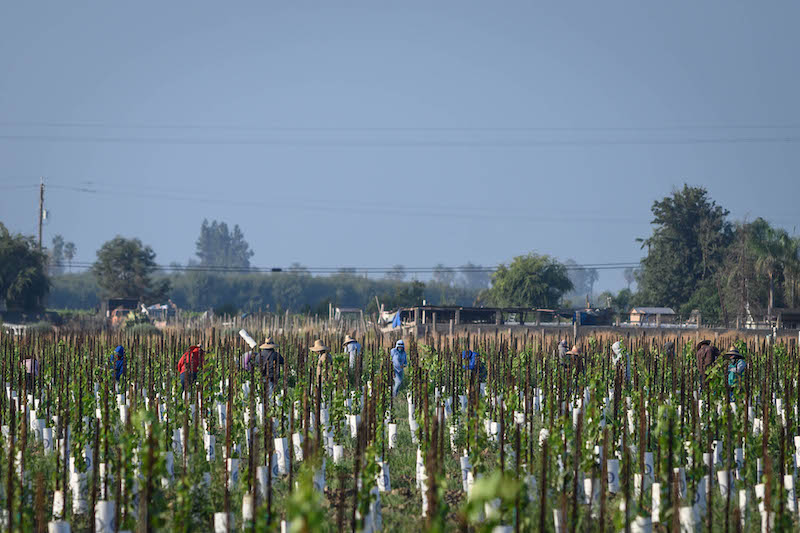
Trabajadores agrícolas en un campo en Fresno, California. Alvarado dice que debido a las altas temperaturas, ella recomienda que, aunque no tengan sed, «la gente tome un poco de agua cada 15 minutos». Foto: Manuel Ortiz
Ella dice que la vigilancia y la decisión son claves cuando un trabajador muestra signos de insolación.
«Lo primero es quitarle algo de ropa y luego poner a la persona en un lugar lo más fresco posible. Disponemos de una tienda de campaña para protegernos del sol. Pero también podemos llevar a la persona a un coche con aire acondicionado. Es importante estar atento. Si la persona no mejora pronto, hay que llamar al 911».
Alvarado, una de las pocas mujeres directivas en el área, reconoce la dificultad del trabajo. «Intentamos desempeñarnos bien en el trabajo que nos piden», afirma, «es difícil pero no hay otra manera».
Esta historia fue producida como parte de una colaboración con la Oficina de Asociaciones Comunitarias y Comunicación Estratégica ‒ Office of Community Partnerships and Strategic Communication‒ para su campaña de concienciación pública y divulgación Heat Ready CA. Visite Heat Ready CA for more information.
Los científicos de la Stanford University desarrollaron un nuevo tipo de pintura térmica que puede mantener las casas y edificios frescos durante el verano y cálidos en invierno, lo cual reduce significativamente el uso de energía y los costos asociados, así como las emisiones de gases de efecto invernadero.
De acuerdo con investigadores de Stanford, los costos de calefacción y de aire acondicionado representan alrededor del 13 por ciento del uso mundial de energía y alrededor del 11 por ciento de las emisiones de gases de efecto invernadero.
Las nuevas pinturas redujeron la energía utilizada para calentar una casa en aproximadamente 36 por ciento, en experimentos con ambientes fríos artificiales, según un estudio publicado hoy en Proceedings of the National Academy of Sciences, mientras que la energía necesaria para enfriar un hogar se redujo en casi 21 por ciento en condiciones de calor artificial.
En simulaciones de un típico edificio de apartamentos de media altura en diferentes zonas climáticas de los Estados Unidos, con pintura nueva en las paredes y techos exteriores, el uso total de energía para calefacción, ventilación y aire acondicionado disminuyó 7.4 por ciento en el transcurso de un año.
«Se prevé que la energía y las emisiones procedentes de la calefacción sigan disminuyendo debido a las mejoras en la eficiencia energética, pero el uso del aire acondicionado está aumentando, especialmente en las economías en desarrollo en un mundo en calentamiento», dijo el autor principal del estudio, Yi Cui, profesor de ciencia e ingeniería de materiales y de ciencia de fotones en el Laboratorio Nacional del Acelerador SLAC.
«Tanto para la calefacción como para el aire acondicionado debemos reducir la energía y las emisiones a nivel mundial para cumplir nuestros objetivos de cero emisiones», señaló Cui, quien dirige el Instituto Precourt para la Energía y el Acelerador de Sostenibilidad, ambos dentro de la Escuela de Sostenibilidad Doerr de Stanford.
«Cada vez se presta más atención a cómo reducir el intercambio de calor entre los espacios de vida y de trabajo de las personas y su entorno, y se demandan nuevos materiales para mejorar el aislamiento, como películas de baja emisividad para ventanas», apuntó el investigador.
Los creadores destacaron que, actualmente, las pinturas de baja emisividad suelen tener un color plateado o gris metalizado, cuya estética limita su uso; sin embargo, las pinturas recién creadas tienen dos capas aplicadas por separado: una inferior reflectante de infrarrojos con escamas de aluminio, y una superior transparente a infrarrojos con nanopartículas inorgánicas, con una amplia gama de colores.
It should be noted that the infrared spectrum of sunlight causes 49 percent of the planet's natural heating when absorbed by surfaces, so to keep heat away, paint can be applied to exterior walls and ceilings.
Para mantener el calor en el interior, las pinturas se aplican a las paredes interiores donde, nuevamente, la capa inferior refleja las ondas infrarrojas que transfieren energía a través del espacio y son invisibles para el ojo humano.
Además de casas y edificios, las pinturas se pueden aplicar para mejorar la eficiencia energética en otros lugares, por ejemplo, para cubrir camiones y vagones de tren utilizados para el transporte refrigerado, en los que los costos de refrigeración pueden representar hasta la mitad del presupuesto de transporte.
«Ambas capas se pueden rociar sobre una variedad de superficies de diversas formas y materiales, proporcionando una barrera térmica adicional en muchas situaciones diferentes», concluyó Yucan Peng , coautora principal del estudio, quien completó su doctorado en ciencia de materiales en Stanford en 2020 y ahora es investigadora postdoctoral en el Laboratorio Geballe de Materiales Avanzados de Stanford.
A medida que los crímenes de odio aumentan en todo el país, California ha anunciado un aumento de más de 91 millones de dólares, para apoyar a las víctimas y ayudar a combatir odio y la discriminación, dicho aumento se une a la primera gran campaña multilingüe de concientización y educación a nivel estatal «CA vs Hate» que también buscar recordar a los educadores la importancia de inclusión en la educación.
Y es que, mientras diversas comunidades en todo el país continúan siendo blanco de cada vez más actos de odio, incluidas comunidades de color, grupos religiosos y comunidades LGBTQ+, el gobernador Gavin Newsom anunció recursos, fondos y orientación adicionales para empoderar y proteger a los californianos.
Luego de incidentes recientes de alto perfil, incluido el horrible asesinato del dueño de una tienda en el sur de California, las nuevas inversiones y recursos del estado buscan luchar aún más contra el odio aprovechando los sólidos esfuerzos de California para empoderar a comunidades diversas y abordar la discriminación.
Las nuevas acciones anunciadas hoy incluyen 91.4 millones de dólares a 173 organizaciones locales en todo el estado para apoyar a las víctimas, proporcionar recursos y facilitar medidas de prevención contra el odio.
Asimismo, la primera campaña mediática a nivel estatal titulada «CA vs Odio» con anuncios impresos, de radio y digitales que se publicará en inglés, español, chino, vietnamita, tagalo, coreano, tongano, mixteco y hmong. La campaña se centrará en comunidades tradicionalmente de difícil acceso.
De igual manera, incluye una carta a todos los líderes de las escuelas públicas de California destacando las responsabilidades legales de garantizar que los planes de estudios de estudios étnicos –– que dan a los estudiantes la oportunidad de «verse» a sí mismos en el tejido de nuestro estado– sean apropiados y no reflejen ni promuevan prejuicios, intolerancia o discriminación.
«Un ataque a cualquiera de nuestras comunidades es un ataque a todo lo que representamos como californianos», señaló Newsom.
«A medida que la retórica alimentada por el odio impulsa crecientes actos de intolerancia y violencia, California está tomando medidas para proteger a quienes son atacados simplemente por ser quienes son. Estamos reforzando nuestro apoyo a las víctimas y a los programas contra el odio y abordando la ignorancia y la intolerancia a través de la educación para evitar que el odio se arraigue en nuestras comunidades», agregó.
Estos anuncios se producen en medio de una creciente oleada de crímenes de odio. El fin de semana pasado, la dueña de una tienda en el sur de California fue asesinada a tiros porque una bandera del orgullo arcoíris colgaba afuera de su tienda de ropa.
De acuerdo con el gobierno, desde el lanzamiento de la línea directa «CA vs Odio», ha habido 180 informes de actos de odio en todo California.
This publication was supported in whole or part by funding provided by the State of California, ayou administeredred by the CaliFornia State Library.
Este jueves, la ciudad de San Mateo será la sede de la que es una serie de sesiones organizadas por el condado donde se busca escuchar a los residentes en cuatro áreas clave para el condado de San Mateo.
La sesión será de 18:00 a 19:30 horas en el Salón de Usos Múltiples de la Escuela Primaria College Park, ubicada en el 715 de Indian Ave., en San Mateo.
Esta es una oportunidad para que los residentes ayuden a influir en cómo se asignarán los dólares de los impuestos locales de la Medida K en cuatro áreas clave: Vivienda y personas sin hogar, preparación para emergencias, niños y familias, y salud mental.
Y es que, el condado está llevando a cabo una serie de sesiones de escucha para escuchar directamente a los residentes. Sin embargo, aquellos que no puedan asistir, a poll en línea está disponible en inglés, español, chino simplificado y tagalo hasta el viernes 25 de agosto.
La primera sesión tuvo lugar el pasado 22 de agosto en North Fair Oaks, mientras que la segunda en el sur de San Francisco el miércoles 23 de agosto.
Sumada a la de hoy, mañana se realizará la última en Daly City, de 13:30 a 15:00 horas en Doelger Center, Westlake Park, 101 Merced Blvd., con información en tagalo, español, cantonés, mandarín e inglés.
Tras la conclusión de las sesiones de escucha y el cierre de la encuesta, el personal analizará los resultados y presentará la información a la Junta de Supervisores y al público este otoño.
Luego de ello, se espera que los supervisores consideren un plan de gastos este otoño utilizando fondos de la Medida K.
Measure K is a voter-approved half-cent sales tax that provides local funds for local needs.
San Mateo police arrested two men early Wednesday in connection with a robbery in San Mateo and other crimes.
Un vecino llamó al 911 poco después de la 1:00 horas para informar que vio a alguien robando en un estacionamiento en su complejo de apartamentos en la cuadra 100 de West 28th Avenue, según la policía de San Mateo.
El sospechoso supuestamente amenazó con matar al vecino antes de alejarse del complejo en bicicleta, dijo la policía.
Los oficiales respondieron y encontraron al sospechoso, un hombre de San Francisco de 31 años, a unas cuadras de distancia. Presuntamente llevaba consigo los objetos robados.
De acuerdo con el informe, el sospechoso estaba con otro hombre, un residente de San Francisco de 37 años, que supuestamente tenía metanfetaminas.
La pareja fue ingresada en la cárcel del condado de San Mateo bajo sospecha de múltiples delitos.
In order to protect outdoor workers, the Senator Alex Padilla Last week, he visited the city of Delano, in the Valley, to promote the Law for the Prevention of Fatalities and Heat-Related Illnesses of Asunción Valdivia, seeking to help those who, among other tasks, put food on our tables.
The bill requires the Department of Labor to promulgate an occupational safety or health standard on the prevention of exposure to excessive heat, which includes exposure to outdoor or indoor heat at levels that exceed the body's ability to maintain normal bodily functions and may cause heat-related injuries, illnesses, or fatalities.
Additionally, the bill establishes requirements related to training and education to prevent and respond to heat illness and whistleblower protection.
The push comes after July 2023 was recorded as the hottest on record in the country, putting 170 million Americans under extreme heat alerts.
"Every day that we fail to act is another day that someone risks their life in their efforts to provide for their family," said Senator Padilla.
During his visit to The Forty Acres in Delano, the Democrat said that “this is not just a workers’ rights issue, it affects the moral heart of our nation and yes, we need to do more.”
The legislation is named after Asunción Valdivia, who in 2004 fell unconscious after picking grapes for ten hours straight in 40-degree heat. Instead of calling an ambulance, her boss told Mr. Valdivia's son to take his father home.
On the way home, he began foaming at the mouth and died of heatstroke. Due to the lack of heat safety precautions and emergency plans, a son had to witness an avoidable death at the age of 53.
Mr. Valdivia’s death was entirely preventable, but his story is not unique. Teresa Romero, president of the United Farm Workers Foundation, who accompanied Senator Padilla on his tour, recalled that on August 8, Elidio Hernandez, 59, died of heat stress while working near Fresno.
"He told his supervisor that he didn't feel well. His supervisor told him to keep working when he collapsed, no one called 911. He died in the field," Teresa Romero said.
Padilla acknowledged that California already has strict laws, but said they need to exist across the country.
The federal official reminded people who work in extreme heat conditions that they have rights, and that they can file complaints with Cal/OSHA by calling 833-579-0927.
It is worth noting that, if Asunción Valdivia's Heat-Related Fatalities and Illnesses Prevention Bill is accepted, it would order the Occupational Health and Safety Administration to enact a rule requiring employers to implement certain measures to protect workers from heat stress and related illnesses or injuries.
Heat stress refers to the heat load experienced by a person due to sources of heat or heat retention ‒ including metabolic heat, environmental factors, and personal protective clothing or equipment ‒ or the presence of heat in a work environment.
Additionally, if an employer is unable to reduce heat stress exposure below hazardous levels through engineering controls—e.g., heat shields and insulation—or personal protective equipment—heat-reflective clothing—the employer must implement a program that mitigates such exposure through access to appropriate hydration and cooling spaces, acclimatization policies, and periodic paid breaks.
Additionally, the bill would establish requirements related to judicial review, implementation, enforcement, record keeping, and whistleblower protection related to the rule.
The bill also requires the Department of Labor to include questions about heat-related illnesses and injuries in the National Agricultural Worker Survey — an employment-based, random sample survey of U.S. agricultural workers that collects demographic, employment, and health information.