

Friday, April 3, 2026
Home Blog Page 208

Alabama sets the standard for voting rights for all communities in the US.

Experts and analysts called the US Supreme Court ruling a triumph, ruling that Alabama's new congressional redistricting map violates Section 2 of the Voting Rights Act and dilutes the votes of black residents of the state, making Alabama a benchmark in voting rights for all communities in the country. 

Section 2 of the Voting Rights Act prohibits voting practices that result in a denial or restriction of the right to vote on the basis of race.

During a press conference organized by Ethnic Media ServicesThe federal action was hailed as excellent news by voting rights advocates, as it was a major step forward for the electoral rights of the most vulnerable communities.  

On June 8, the Supreme Court ruled in favor of the case Allen v. Milligan, which is related to the redistricting under the Voting Rights Act of 1965 (VRA), and in which the plaintiffs demanded the annulment of Alabama's redistricting maps for discriminating against African-American voters, asking that Section 2 be considered in favor of a new, more equitable distribution. 

The plaintiffs said the state's new apportionment packed many African-American voters into a single district in a part of central Alabama known as the "Black Belt," while simultaneously dispersing other African-American voters throughout the rest of the area in separate districts. —Read more about the topic—

In response, Thomas A. Saenz, president and general counsel of the Mexican American Legal Defense and Educational Fund, explained that Section 2 is the primary operational provision for enforcing voting rights in the country.

"Section 2 is the main section on voting rights, which is why it has historically been used to challenge redistribution, but also to challenge electoral systems in general," he said.

He explained that this section also serves to challenge some of the barriers to accessing the ballot, such as the requirement for voter identification or restrictions on the ability to vote.

«The decision was unexpected, it's a victory. The ability of African-Americans to challenge the district maps that have been used across the country is a tremendous unexpected victory, because the danger was that the conservative majority was going to change a law that has been in effect for a long time.", Saenz pointed out.

Without a doubt, obtaining this result is very favorable, but it also speaks of what should continue to be done, not only to celebrate this case won, but to continue working on the rights of voters that guarantee greater citizen representation. 

For Evan Milligan, the lead plaintiff in the Allen v. Milligan case and executive director of Alabama Forward, making his case and winning this favorable outcome represents an achievement for his family, his community, and everyone fighting for greater representation in their country. 

Although Evan Milligan was surprised by the Supreme Court's decision, he celebrated it enthusiastically, proving that change is possible and that fighting for these issues is necessary to benefit the entire African-descendant community. However, his fight does not stop.

«First, there is a long-term view about Alabama organizations and the voter rights building movement and how we can work in a more comprehensive way, continuing to advance the issue, but also with our national and international partners.", he explained.

In the case of Jacqueline de León, a lawyer for the Native American Rights Fund, the achievement for Alabama is also an achievement for Latinos, as it allows for progress in voting rights for all and equally.

«We are relieved after what has happened. There has been a lot of fighting to defend Section Two and of course as many have said, in Alabama this was a basic factual application of the law, and the law clearly stated a violation of the law. To find anything to the contrary would have been a radical move that I don't think anyone should be expecting.", he emphasized.

De León spoke of indigenous communities that do not have clear representation and explained that it has been possible to observe that the votes of indigenous communities also wish to be diluted. For example, in different instances of racial discrimination in native communities such as South Dakota, North Dakota, and New Mexico, among some cases that already exist. 

Stuart Naifeh, director of the NAACP Legal Defense & Educational Fund, Inc.'s Redistricting Project, also spoke on the topic, explaining the importance of Section 2 for the rights of voters in the country, by allowing districts to be divided in a representative manner when casting their vote.

«We are happy with the result, but I find it sad that we are so happy to want to preserve the status quo, this also includes the decision 10 years ago of other voting rights acts", he stressed.

Stuart Naifeh was excited about the outcome and said it was a victory to be able to preserve Section 2, a case that has an impact beyond Alabama and shows all communities that changes can be made so that their vote is truly valued.

Finally, the experts agreed that what happened in Alabama is a great victory, and that it is a great step towards continuing to defend voting rights. However, they pointed out that it is not entirely a joy, since it should be a right available to all communities.


You may be interested in: Experts discuss fair redistricting in Alabama

Man arrested for assault with a deadly weapon in San Mateo County

Agents arrest a man in San Mateo County on June 16 after he attacked a person, hitting them over the head with a pickaxe.

And it is that, last Friday, June 16, 2023 at 10:59 pm, agents of the Office of the San Mateo County Sheriff They were dispatched to Holly Street at the Highway 101 overpass on a report of a victim who had been attacked and struck in the head with a pickaxe. 

Upon arrival, officers made contact with the victim who had non-life-threatening injuries and was treated by firefighters and paramedics on scene. 

The suspect, known to the victim, was identified as Matthew Garcia, a passerby in the area.

Garcia was reported to have fled the area on foot after the attack. Officers conducted an extensive search and located the attacker hiding in the 500 block of Skyway Road.

When located, Garcia was found to be in possession of narcotics and drug paraphernalia, authorities said in a statement.

Garcia was placed under arrest on charges of assault with a deadly weapon, probation violation, possession of drug paraphernalia and possession of controlled substances, and booked into the San Mateo County Jail without incident.

The San Mateo County Sheriff's Office is asking anyone with information regarding this incident to call their offices at 1-800-547-2700.

You may be interested in: San Mateo Names Alex Khojikian as New City Manager

Weekly roundup of local news for June 10-16, 2023 in the Bay Area


Weekly roundup of local news for June 10-16, 2023 in the Bay Area
Photo: Manuel Ortiz P360P

These are the local news from June 10 to 16 that you must know to be up to date and discuss them with dad tomorrow. Excellent weekend.

Many are already preparing a barbecue, a grill, or simply looking forward to this Sunday, as millions across the country celebrate Father's Day, a celebration that was first proposed by Sonora Smart Dodd of Spokane, Washington, in 1909 and is currently celebrated in the United States annually on the third Sunday in June.

The first celebration was at the Spokane YMCA on June 19, 1910, when Sonora Smart proposed to the Central Methodist Episcopal Church in 1909 that like Mother's Day, fathers should have a similar holiday to honor them, and although she proposed her father's birthday - June 5 - the pastors of the Spokane Ministerial Alliance did not have enough time to prepare their sermons, and the celebration was postponed to the third Sunday in June.

Sonora's father, William Jackson Smart, was a Civil War veteran and a single father raising six children. 

The holiday was not very popular at first, but Smart Dood gained support in the 1930s from merchants who realized they could profit from the holiday. By 1972, President Richard Nixon signed into law the third Sunday in June as a permanent national holiday.

‒ 0 ‒

Southbound lanes of Interstate 280 in San Mateo County near Sneath Lane were closed for several hours early Saturday following a fatal traffic accident. 

A black Honda Accord rolled over on the right shoulder of the interstate, according to the California Highway Patrol (CHP). One person was pronounced dead at the scene. The cause of the collision is under investigation.

‒ 0 ‒

A motorcyclist was killed in Redwood City on Sunday afternoon, June 11, when he collided with two other motorcycles on northbound Highway 35.

A CHP spokesman said the deceased motorcyclist was traveling more than 100 miles per hour with limited visibility due to fog.

The other two motorcyclists were unharmed. The driver who caused the accident was not travelling with the other victims.

‒ 0 ‒

The Board of Supervisors on Tuesday will consider awarding a construction contract that would transform the 58-acre Tunitas Creek Beach into San Mateo County's new regional coastal park.

The project was long planned for a scenic stretch of sandy beach framed by cliffs visible from Highway 1.

Turning Tunitas Creek into the new coastal park involves creating trails and scenic overlooks, as well as adding picnic tables. Also in the plans are improved parking and the construction of public restrooms, ranger facilities, and interpretive displays and signage.

The county received three bids for the project, with the lowest being $11,593,710. The project would be paid for with funds from the county's Capital Projects Fund, San Mateo County Measure K funds and a Proposition 68 grant from the California Department of Parks and Recreation. 

‒ 0 ‒

With a career spanning 22 years in San Mateo County, Captain Mark Myers has been named the new City of San Carlos Police Chief, who will bring his wealth of experience and deep understanding of the needs of the community to the attention of the residents of the town.

Captain Myers has been an integral part of the San Carlos Police Bureau since its inception in 2010, when the city selected the Sheriff's Office for police services.

From patrol and corrections, to field training officer and member of the Crime Suppression Unit and SWAT, Captain Myers has consistently demonstrated exceptional skills and professionalism in every endeavor, the San Mateo County Sheriff's Office said.

‒ 0 ‒

The Redwood City Library Youth Center has unveiled a new mural by artist Misha, a Woodside High School student who won a contest to decorate one of the space's walls.

Those interested in seeing the mural can go to the Teen Center located on the second floor of the Redwood City Library located at 1044 Middlefield Rd, Monday through Thursday from 1:00 p.m. to 9:00 p.m., and Saturdays from 1:00 p.m. to 5:00 p.m.

‒ 0 ‒

Amidst a lion dance, drums and a dinner celebrating the Heroes of API Caucus in San Mateo County, the organization's vice president and also Redwood City Mayor Jeff Gee, called to not only stop hate against the Asian and Pacific Islander (API) community, but to push it back across the area.

In that regard, Gee invited the community to join together against acts of hate to make San Mateo County a better and safer place to live.

On June 9, the San Mateo County API Caucus held its first Caucus Heroes Awards Dinner, where the lucky winners of the Ashland Award were recognized.  

‒ 0 ‒

The city of San Francisco will once again host the World Cup Village, this time for women, an event that will feature four matches from the competition and offer a variety of activities for the entire family.

The nonprofit Street Soccer USA, in partnership with the City of San Francisco, is leading the production of a public screening of four 2023 FIFA Women's World Cup matches at iconic downtown locations.

‒ 0 ‒

In its first six weeks of operation, the California Highway Patrol (CHP) seized enough fentanyl in San Francisco—more than 4.2 kilos—in the Tenderloin and immediate surrounding area of San Francisco to potentially kill 2.1 million people, nearly triple the city's entire population.

Authorities also seized more than 957 grams of methamphetamine, 319 grams of cocaine and 31 grams of heroin, in addition to making 92 felony and misdemeanor arrests, including charges related to fentanyl possession, illegal possession of firearms, driving under the influence and domestic violence.

This was announced on Thursday by California Governor Gavin Newsom, who pointed out that, according to the Drug Enforcement Administration, a lethal dose of fentanyl is 2 mg.

‒ 0 ‒

San Mateo County Sheriff Christina Corpus recently signed the 30x30 pledge, a national movement that promotes women’s participation in law enforcement, thereby fostering equity in law enforcement.

Currently, women make up only 12% of sworn officers and 3% of police leadership in the US.  

The goal of the 30x30 initiative is to increase the representation of women in police recruit classes to 30 percent by 2030, and to ensure that police policies and culture intentionally support the success of qualified female officers throughout their careers.

‒ 0 ‒

According to the 33rd annual beach report by the nonprofit environmental organization Heal the Bay, five of the most polluted beaches in California are in San Mateo County. But it also has the best.

The study, released Wednesday, found that California beaches have been hit by 50 percent more rainfall than in the past 10 years during the recent winter months, along with an alarming 45 million gallons of sewage discharged, negatively affecting water quality along coastal waterways.

Thus, Playa Linda Mar ranked third in the worst beaches in the state, followed by Marlin Park in fourth place, Erckenbrack Park in fifth, Pillar Point Harbor in seventh, and Gull Park in tenth place.

‒ 0 ‒

You may be interested in: Up to 30% of the remittances that arrive in Mexico are from women, who emigrate more and more

San Mateo Names Alex Khojikian as New City Manager

San Mateo Names Alex Khojikian as New City Manager

By Bay City News.

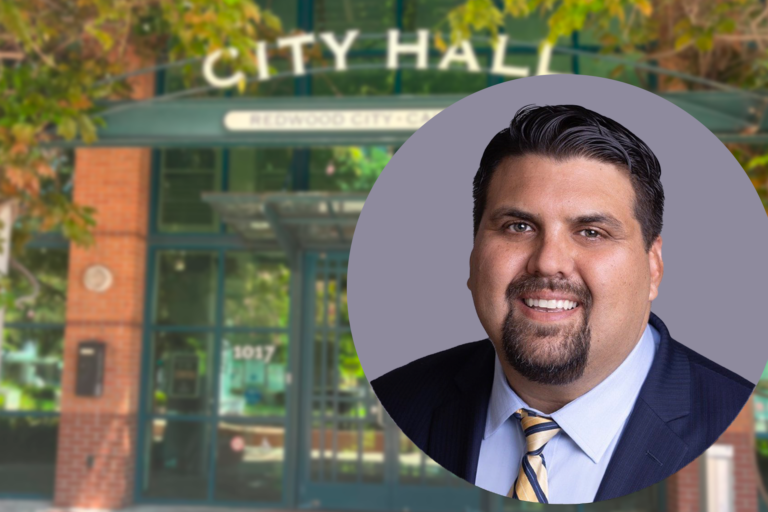
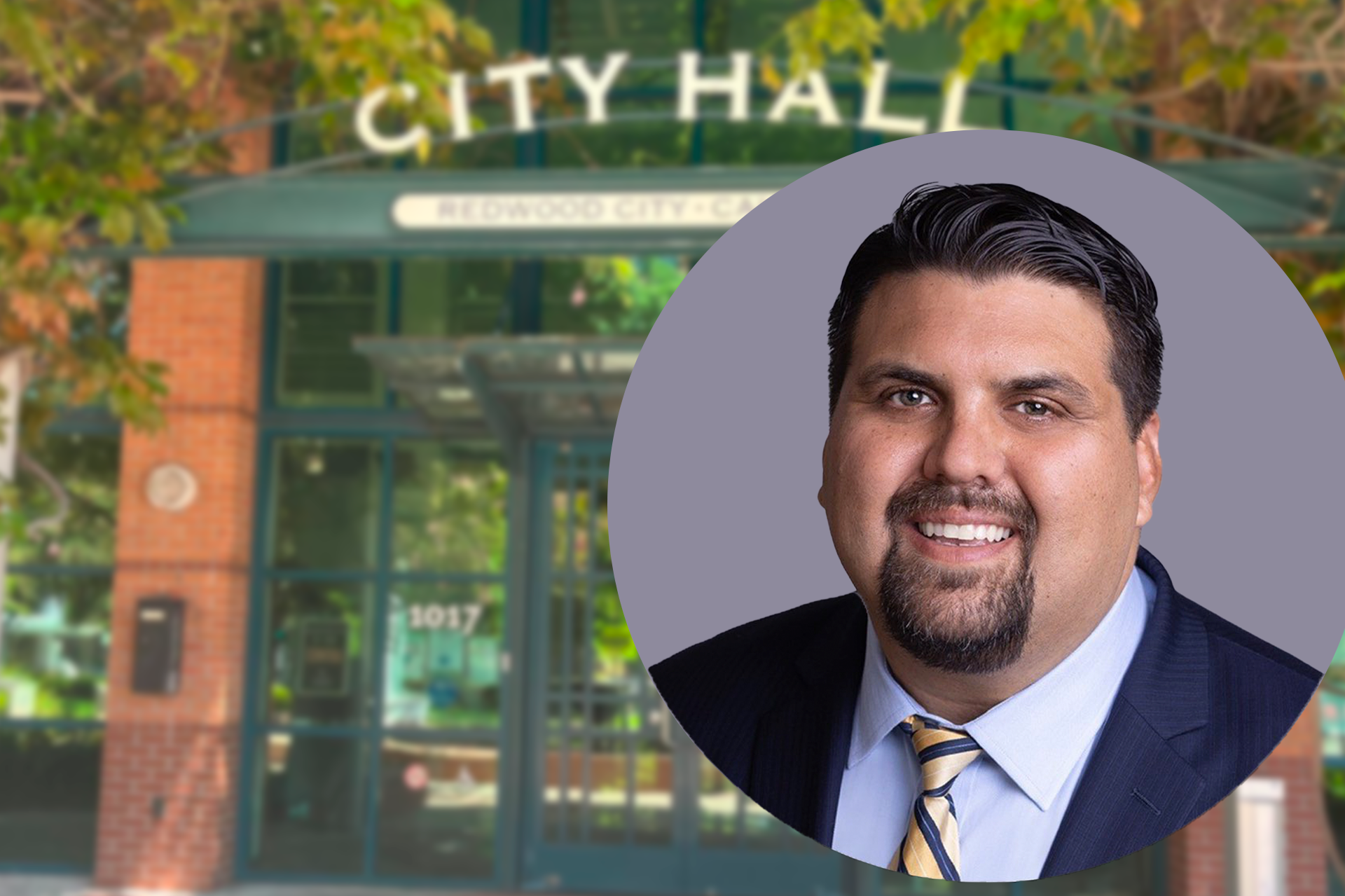
The San Mateo City Council has appointed Alex Khojikian to serve as city manager, according to an announcement issued this week by city officials.

Khojikian, who currently serves as deputy city manager in Redwood City, was selected after a nationwide search and will begin his new role on August 21.

Khojikian said in the announcement that he is excited to get started.

“San Mateo is a vibrant and inclusive city with diverse neighborhoods and business districts, and my goal is to support people of all backgrounds so that everyone in the community can thrive. I look forward to the work ahead and know that collaboration and engagement with residents, businesses, regional partners, community organizations, and stakeholders is key to achieving community priorities.”

San Mateo Mayor Amourence Lee praised Khojikian for his “passion for community engagement” and said he would be a suitable replacement for outgoing City Manager Drew Corbett.

“His dedicated leadership guided our city through the pandemic and it is thanks to his tireless efforts that our city is on solid footing,” Lee said of Corbett in the announcement.

Corbett will retire June 30 and Community Development Director Christina Horrisberger will serve as interim city manager until Khojikian takes over.

You may be interested in: Captain Mark Myers Named as New Police Chief of the City of San Carlos

Bay Area cities could get $1 trillion to boost equity

By Keith Burbank. Bay City News.

Bay Area could get $1 trillion to boost equity, largely discretionary from the American Bailout Act, were not yet committed to Bay Area projects in December, according to the Area Equity Atlas de la Bahía, a tool for tracking racial and economic equity in the region.

The unobligated funds provide city and county leaders with the opportunity to make the region a more equitable place to live over the next three and a half years.

The COVID-19 pandemic has shone a light on and exacerbated long-standing inequalities in African American and Hispanic communities, among others. With the money, leaders could develop projects to promote equity.

The American Rescue Plan Act (ARPA) passed by Congress in 2021 provided money to help Americans weather the COVID-19 pandemic, including $350 billion for state and local governments through the State and Local Coronavirus Fiscal Recovery Funds (SLFRF).

The Bay Area's $1 billion in unobligated ARPA funds is a small portion of the SLFRF that states, cities and counties must commit to projects by the end of next year and spend by the end of 2026 or lose the money anyway.

Fifty percent of ARPA dollars were dispersed in 2021 and the remainder in 2022.

“The pandemic decimated Black and Brown families, further entrenching racial and economic inequality,” said Jennifer Tran, director of PolicyLink, which produces the Bay Area Equity Atlas with the San Francisco Foundation and USC’s Dornsife Equity Research Institute.

“Bay Area governments must make targeted, permanent investments with the remaining $1 billion in SLFRF funds that move communities toward a more equitable and sustainable future—one that ensures the health and well-being of the region and all its communities for generations to come,” Tran said.

Two-thirds of the roughly $3 billion in Bay Area SLFRF had already been committed by the region's cities and counties in December.

State and local fiscal recovery funds are just one part of the $1.9 trillion federal ARPA package that follows the dispersal of Coronavirus Aid, Relief, and Economic Security (CARES) Act funds that went to states and large cities in 2020.

The U.S. Department of the Treasury’s Bay Area Equity Atlas compiled data on unobligated and unspent SLFRF for nine counties and 34 of the Bay Area’s 101 cities.

“ARPA funding has been critical to keeping Bay Area communities and the economy afloat during the pandemic,” said Berkeley Mayor Jesse Arreguin, who is president of the Association of Bay Area Governments, a regional planning agency.

Arreguin wants to see the remaining funds spent on transit operations and emergency rental assistance.

ARPA provided $30.5 billion for transit and that funding is separate from SLFRF. Ninety-three percent of ARPA's transit money has been obligated and 67 percent has been spent.

“Regional transit systems were relying on vital funding that will disappear and the eviction cliff requires more funding to help landlords and tenants cover rental debt,” Arreguin said. “These are ongoing lingering impacts of the COVID emergency.”

San Jose Mayor Matt Mahan said his city has used ARPA funds to “keep people housed, address food insecurity and provide other essential services to our most vulnerable neighbors.”

San Jose officials in May spent or obligated all of the roughly $45 million in SLFRF remaining out of the $212 million they had received in total.

San Jose officials feared they might have to return some of the uncommitted or unspent money after Congress approved a deal to suspend the debt limit.

Cities and counties can spend the money in four broad categories: 1) replacing lost revenue, 2) public health and economic relief, 3) paying premiums for essential workers, and 4) investing in water, sewer and broadband infrastructure.

Under U.S. Treasury rules, San Jose could use the $212 million to offset lost revenue to pay for services.

San Jose Budget Director Jim Shannon and Finance Director Rick Bruneau said in a May 24 memo to Mahan and the City Council that the city lost more than $212 million in revenue because of the pandemic. The memo said nearly $88 million will go toward police patrol costs.

Oakland allocated all of its money to replace general fund revenues. San Francisco received about $624 million in SLFRF and spent it all on revenue replacement across all city departments.

In Santa Clara County, which received about $374 million, 53 percent of its SLFRF was not allocated in December. Thirty percent of Alameda County's roughly $325 million was unobligated at the end of last year.

You may be interested in: No more magical realism: Latin American Narrative uses Imagination and Fantasy to explain its world

Firearm seized from man in mental crisis in Redwood City

City police seized a firearm Wednesday from a man in a mental crisis in Redwood City.

By Bay City News

City police seized a firearm Wednesday from a man in a mental crisis in Redwood City.

On Wednesday at 5:35 p.m., Redwood City Police Department officers responded to a residence after two 911 hang-up calls were reported.

Police said a check of previous calls to the residence revealed that a 30-year-old man with a history of mental illness lives there.

Responding officers met with the resident's brother and confirmed the man was experiencing a crisis, was armed with a handgun and had made criminal threats to harm his brother, police said.

Officers on the scene attempted to create a relaxed atmosphere and a short time later, the man emerged from the residence with a loaded handgun in his pocket, police said.

Officers were able to convince the man to surrender peacefully and hand over the firearm.

The man was taken to a hospital for a psychiatric evaluation and the case is under review for criminal threats.

Police said the residence was searched for additional firearms, but none were found, and a Gun Violence Restraining Order was obtained.

You may be interested in: Captain Mark Myers Named as New Police Chief of the City of San Carlos

Two arrested in Redwood City for theft of construction equipment valued at $50,000

Two arrested for robbery in Redwood City of construction equipment valued at $50,000

By Bay City News

Two men have been arrested in connection with the theft of construction equipment and copper wire worth approximately $50,000 in Redwood City, the San Mateo County Sheriff's Office said Friday.

The robbery, which apparently occurred over the weekend, was discovered around 7:30 a.m. Monday in the 700 block of Industrial Road in San Carlos, the sheriff's department said.

Aproximadamente una hora después, un oficial de policía informó haber encontrado la propiedad robada a unas cuatro millas de distancia, en 2nd Avenue y Rolison Road en Redwood City, y arrestó a José Cauich, de 48 años, dijo el departamento del alguacil.

El martes, los detectives entregaron una orden de allanamiento en la cuadra 900 de Haven Avenue en Redwood City y arrestaron a Anjel Jiménez, de 52 años, según el informe.

Cauich y Jiménez fueron acusados ​​de robo comercial, posesión de propiedad robada y conspiración para cometer un delito grave, agregaron las autoridades.

Cualquier persona con información sobre este delito o robos comerciales asociados debe comunicarse con el Detective D. Brandt (650) 363-4064 o dbrandt@smcgov.org. Se pueden dejar sugerencias anónimas al (800) 547-2700.

You may be interested in: San Mateo County to Seek More Participation of Women in Law Enforcement

Mexican among those wounded in shooting in San Francisco's Mission district

The Consulate General of Mexico in San Francisco, California, informó  que, sobre el tiroteo en distrito Mission ocurrido el pasado viernes 9 de junio en la Calle 24, y a partir del seguimiento con autoridades locales como parte de los protocolos de protección consular, se ha identificado a una persona mexicana dentro de las ocho personas heridas. 

A través de un comunicado, las autoridades mexicanas informaron que personal consular ya se encuentra en comunicación con la persona afectada, así como con sus familiares, para brindarle la asistencia correspondiente y apoyo legal ante lo ocurrido.

The Consulate also stressed that, in order to verify the proper application of justice, it will continue to monitor the case and will request the relevant authorities to investigate the events that occurred.

Finalmente, el Consulado General de México en San Francisco lamentó los hechos ocurridos y reiteró su compromiso con la protección y defensa de los derechos e intereses de las personas mexicanas en el exterior.

Y es que, el pasado 9 de junio, al menos nueve personas recibieron disparos en lo que la policía cree que fue un «incidente dirigido y aislado» en el barrio de Mission District de San Francisco.

El tiroteo se produjo mientras se celebraba «una especie de fiesta en el barrio», aseguró en conferencia de prensa Eve Laokwansathitaya, agente del Departamento de Policía de San Francisco. 

De acuerdo con el diario The San Francisco Chronicle, los disparos ocurrieron poco después de las 21:00 horas durante una fiesta organizada por una tienda de ropa cerca de la intersección de la Calle 24 y la avenida Treat.

Las víctimas fueron ocho hombres y una mujer con edades entre los 20 y los 34 años, precisó el Hospital General Zuckerberg San Francisco, a donde fueron llevadas. 

You may be interested in: San Mateo County to Seek More Participation of Women in Law Enforcement

Five of the most polluted beaches in California are from San Mateo County

Five of the most polluted beaches in California are from San Mateo County
Imagen cortesía de la organización Heal the Bay

Según el 33º informe anual sobre playas de la organización medioambiental sin fines de lucro Heal the Bay, cinco de las playas más contaminadas en California se encuentran en el condado de San Mateo. Sin embargo, también cuanta con la mejor.

The study, released Wednesday, found that California beaches have been hit by 50 percent more rainfall than in the past 10 years during the recent winter months, along with an alarming 45 million gallons of sewage discharged, negatively affecting water quality along coastal waterways.

Thus, Playa Linda Mar ranked third in the worst beaches in the state, followed by Marlin Park in fourth place, Erckenbrack Park in fifth, Pillar Point Harbor in seventh, and Gull Park in tenth place.

Aunque la calidad general sigue siendo muy buena en tiempo seco, la playa estatal de Bean Hollow, en el condado de San Mateo, y el faro de Point Loma, en el condado de San Diego, fueron las dos únicas playas incluidas en la Lista de Honor 2022-2023 ‒frente a las 50 de 2021‒, debido a la gran cantidad de precipitaciones.

Cabe destacar que Heal the Bay’s Beach Bummer List clasifica las playas más contaminadas de California en función de los niveles de bacterias nocivas en el océano. La lista Beach Bummer 2022-2023 incluye playas en los condados de Los Ángeles, San Mateo, San Diego y Orange, así como en el área de Tijuana en México.

Este año, el Muelle de Santa Mónica y Playa Blanca en Tijuana empataron en el primer lugar de las peores playas, ya que ambos se enfrentaron a importantes problemas de calidad del agua. La ciudad de Santa Mónica está abordando activamente los problemas de calidad del agua en el muelle, y sospechan que la materia fecal de las aves es un factor importante que contribuye a la mala calidad del agua, sin embargo, el jurado todavía está deliberando, destacó la organización.

Playa Blanca, junto con la cercana desembocadura del río Tijuana, clasificada como la sexta playa más contaminada, la cual se ve afectada por la escorrentía contaminada por aguas residuales de la zona de Tijuana, que carece de infraestructuras de alcantarillado suficientes en determinadas regiones. 

La playa de Mother’s Beach, en Marina del Rey, un perenne fastidio debido a su escasa circulación ha entrado en la lista en el número 8 este año. Y en el condado de Orange, Poche Beach en Dana Point recibía aguas de escorrentía de un colector de aguas pluviales situado directamente en la playa, lo que contribuía a la mala calidad del agua.

La buena noticia es que 95 por ciento de las playas de California evaluadas por Heal the Bay recibieron una calificación de A o B durante el verano de 2022, lo que está a la par de la media. Aun así, los científicos de Heal the Bay siguen profundamente preocupados por la calidad del agua de los océanos. 

Las aguas contaminadas suponen un importante riesgo para la salud de millones de personas en California, pues las que entran en contacto con agua con un grado C o inferior corren un mayor riesgo de contraer enfermedades como infecciones estomacales, de oído, de las vías respiratorias superiores y erupciones cutáneas. 

Las playas y los ríos suelen tener una mala calidad del agua después de un episodio de lluvias. Menos lluvia significa normalmente que una menor cantidad de contaminantes, incluidas las bacterias, las cuales son arrastrados a través de los desagües pluviales y los ríos hacia el océano. 

Los vertidos de aguas residuales suponen un mayor riesgo para la salud y provocan el cierre inmediato de las playas, que deben atenderse hasta que los funcionarios públicos despejen la zona.

«A medida que el cambio climático siga provocando latigazos meteorológicos, nuestros problemas de agua pasarán de la escasez a la contaminación. Este año, las precipitaciones récord han tenido importantes repercusiones en la calidad del agua en toda la costa de California», afirmó Tracy Quinn, presidenta y directora General de Heal the Bay. 

«Ahora más que nunca, debemos dar prioridad a los proyectos de múltiples beneficios para gestionar las aguas pluviales como una solución tanto para la calidad del agua como para el suministro, todo ello garantizando al mismo tiempo que el público se mantenga informado de los riesgos para la salud pública», subrayó.

Durante más de 30 años, Heal the Bay ha asignado calificaciones anuales de «A a F» a 700 playas desde el estado de Washington hasta Tijuana, México, incluidas 500 playas de California en el informe 2022-2023, basándose en los niveles de contaminación bacteriana fecal en el océano medidos por las agencias de salud del condado. 

Five of the most polluted beaches in California are from San Mateo County
Imagen cortesía de la organización Heal the Bay

You may be interested in: California allocates about $200 million to protect people from extreme heat

San Mateo County to Seek More Participation of Women in Law Enforcement

San Mateo County to Seek More Participation of Women in Law Enforcement
Photo: San Mateo County Sheriff's Office Instagram.

San Mateo County Sheriff, Christina Corpus, firmó recientemente el compromiso con la iniciativa 30×30, un movimiento nacional que promueve la participación de las mujeres en las fuerzas del orden, fomentando así la equidad en las fuerzas de orden público.

«Nunca es demasiado pronto para inspirar a la próxima generación de mujeres líderes. La representación es importante: contar con modelos femeninos capacita a la próxima generación de mujeres jóvenes para alcanzar sus objetivos en el ámbito policial, y para saber que pueden triunfar y prosperar en una carrera policial», aseguró en sus redes sociales la sheriff Corpus.

Currently, women make up only 12% of sworn officers and 3% of police leadership in the US.  

El objetivo de la iniciativa 30×30 es aumentar la representación de mujeres en las clases de reclutas policiales al 30 por ciento para 2030, y garantizar que las políticas y la cultura policiales apoyen intencionalmente el éxito de mujeres oficiales calificadas a lo largo de sus carreras.

Y es que, de acuerdo con la organización, la subrepresentación de las mujeres en la policía socava la seguridad pública. 

La investigación, dijo, muestra que las mujeres oficiales usan menos fuerza y ​​menos fuerza excesiva; se nombran en menos quejas y juicios; son percibidos por las comunidades como más honestas y compasivas; se obtienen mejores resultados para las víctimas de delitos, especialmente en casos de agresión sexual; y hacen menos arrestos discrecionales.

La Iniciativa 30×30 es una coalición de líderes policiales, investigadores y organizaciones profesionales que se han unido para promover la representación y las experiencias de las mujeres en las agencias policiales de Estados Unidos.

Cabe destacar que las agencias que firman el Compromiso 30×30 han acordado tomar medidas para aumentar la representación de las mujeres en todos los rangos de las fuerzas del orden; y garantizar que las políticas y los procedimientos estén libres de todo sesgo.

Además, se comprometen a promover la contratación, retención y promoción equitativas de mujeres oficiales; y asegurarse de que su cultura sea inclusiva, respetuosa y de apoyo a las mujeres en todos los rangos y roles de las fuerzas del orden.

De acuerdo la Iniciativa 30×30, las mujeres afrodescendientes y de color, en particular, enfrentan experiencias agravantes de prejuicios y discriminación en la aplicación de la ley debido a su raza o etnia, además de su género. 

Mientras que los oficiales transgénero y de género no conforme se enfrentan a la discriminación en función de su identidad y presentación de género. Otras identidades también dan forma a la experiencia de una mujer oficial en la aplicación de la ley: una madre o cuidadora puede requerir un horario modificado para las tareas de cuidado, o una oficial embarazada puede requerir ciertas adaptaciones físicas.

En ese sentido, apuntó, es fundamental que las agencias participantes se centren en aumentar la representación de todas las mujeres, teniendo en cuenta las diversas experiencias de las mujeres de todos los orígenes y experiencias de vida para promover mejor la creación de un lugar de trabajo diverso e inclusivo para todos.

You may be interested in: Captain Mark Myers Named as New Police Chief of the City of San Carlos