


Sunday, June 14, 2026
Home Blog Page 208

FDA approves emergency use of updated vaccines against COVID-19 due to increase in cases

FDA approves emergency use of updated vaccines against COVID-19 due to increase in cases
Photo: P360P

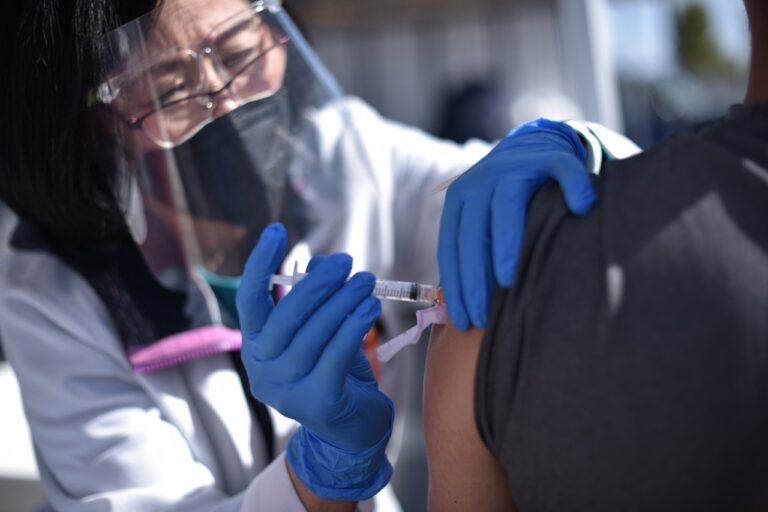
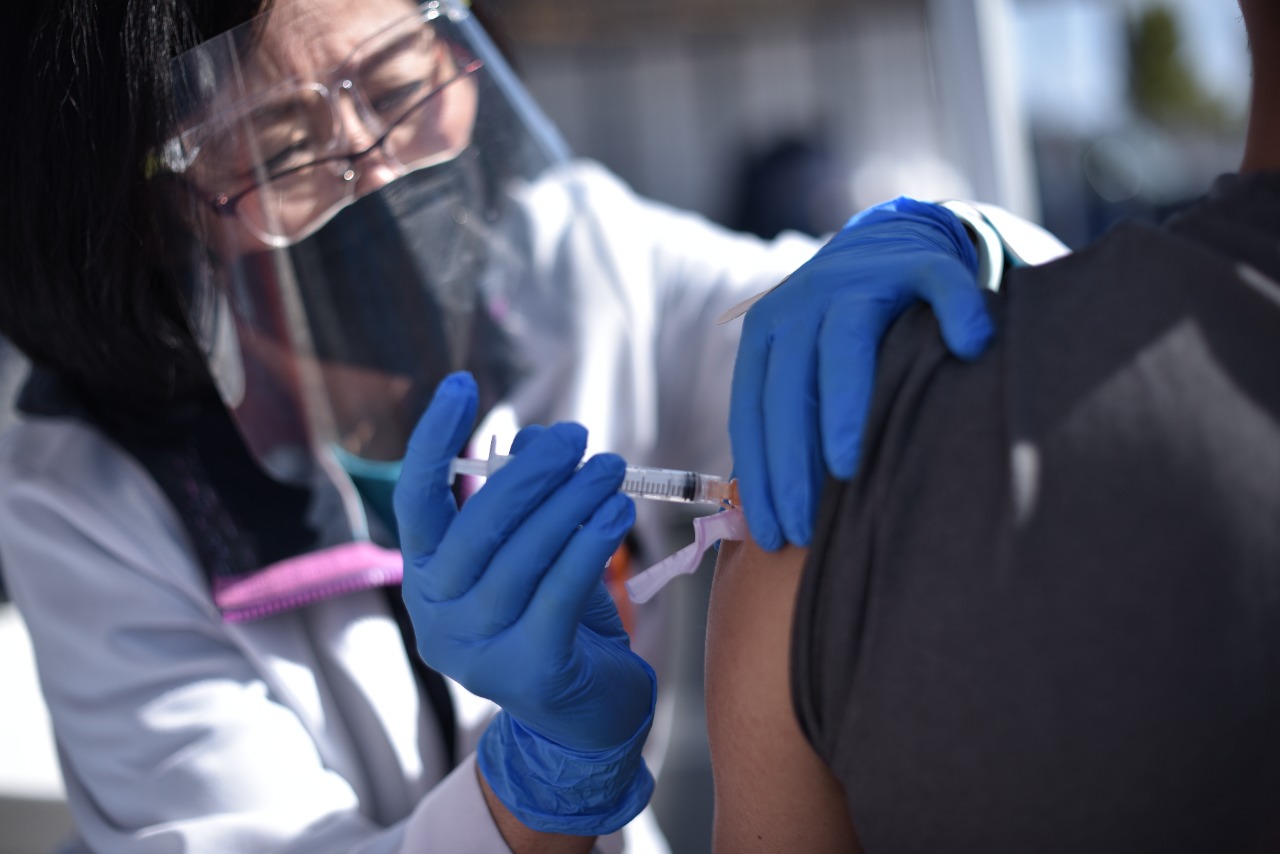
The U.S. Food and Drug Administration The FDA has taken steps to approve and authorize for emergency use updated COVID-19 vaccines formulated to more closely target currently circulating variants and provide better protection against severe disease outcomes, including hospitalization and death. 

The agency's action on Monday relates to the updated 2023-2024 mRNA vaccines manufactured by ModernaTX and Pfizer.

Based on the totality of the evidence and input from FDA's expert advisors, these vaccines have been updated to include a monovalent (single) component that corresponds to the Omicron XBB.1.5 variant.

Eligibility

Individuals aged 5 years and older, regardless of prior vaccination, are eligible to receive a single dose of an updated mRNA COVID-19 vaccine at least 2 months after the last dose of any COVID-19 vaccine.

In turn, people aged 6 months to 4 years who have been previously vaccinated against COVID-19 are eligible to receive one or two doses of an updated mRNA vaccine. 

Of note, unvaccinated individuals 6 months through 4 years of age are eligible to receive three doses of the updated, authorized Pfizer-BioNTech COVID-19 Vaccine or two doses of the updated, authorized Moderna COVID-19 Vaccine.

The FDA said in a statement that it is confident in the safety and effectiveness of these updated vaccines, as the agency's risk-benefit assessment shows that the benefits of these vaccines for people 6 months of age and older outweigh their risks.

People who receive an updated mRNA COVID-19 vaccine may experience side effects similar to those reported by people who previously received mRNA COVID-19 vaccines, as described in the respective prescribing information or fact sheets.

The updated vaccines are expected to provide good protection against COVID-19 against currently circulating variants. Barring the emergence of a significantly more virulent variant, the FDA anticipates that COVID-19 vaccines may need to have their composition updated annually, as is done with the seasonal influenza vaccine. 

The U.S. Centers for Disease Control and Prevention’s Advisory Committee on Immunization Practices will meet Tuesday to discuss clinical recommendations on who should receive an updated vaccine, as well as additional considerations for specific populations, such as immunocompromised people and older adults. 

Manufacturers have publicly announced that updated vaccines will be ready this fall, and the FDA anticipates they will be available in the near future.

“Vaccination remains critical for public health and continued protection against the serious consequences of COVID-19, including hospitalization and death,” said Peter Marks, director of the FDA’s Center for Biologics Evaluation and Research. 

“The public can be assured that these updated vaccines have met the agency’s rigorous scientific standards for safety, efficacy and manufacturing quality. We strongly encourage those who are eligible to consider getting vaccinated,” she added.

Each of the updated mRNA vaccines is approved for people 12 years of age and older and is authorized for emergency use for people 6 months to 11 years of age, while, The bivalent Moderna and Pfizer-BioNTech COVID-19 vaccines are no longer authorized for use in the United States.

The updated mRNA vaccines are manufactured using a similar process as the previous formulations. In recent studies, the degree of neutralization observed by the updated vaccines against currently circulating viral variants that cause COVID-19, including EG.5 and BA.2.86, appears to be of a similar magnitude to the degree of neutralization observed with previous versions of the vaccines against the corresponding previous variants against which they had been developed to provide protection. 

This suggests that vaccines are a good match for protection against currently circulating COVID-19 variants.

You may be interested in: Given the increase in COVID-19, they call to review the expiration of home tests


San Mateo County seeks to share hope to prevent suicide

San Mateo County seeks to share hope to prevent suicide

A través de la campaña “Compartamos esperanza juntos”, el condado de San Mateo busca que todos los residentes conozcan y reconozcan las señales de advertencia para prevenir el suicidio.

La campaña incluye una serie de eventos que tienen como objetivo generar conversaciones sobre la importancia de la salud mental, al tiempo que anima a las personas a compartir historias personales, así como información sobre dónde acudir en busca de apoyo.

Se espera que la Junta de Supervisores proclame el martes 12 de septiembre como el Mes de la Prevención del Suicidio.

“Cuando yo tenía 16 años, mi hermano de 22 perdió la vida por depresión y suicidio”, dijo la supervisora ​​Noelia Corzo, quien patrocina la proclamación. “Espero que al compartir mi experiencia y proclamar septiembre el Mes de la Prevención del Suicidio, le recuerde a nuestra comunidad que no estamos solos, que hay ayuda disponible y que aprender sobre la prevención del suicidio puede literalmente salvar vidas”.

Cabe destacar que, para ayudar a crear conciencia, se están llevando a cabo en todo el condado de San Mateo una serie de capacitaciones “Sea sensible, sea valiente para la prevención del suicidio”. Este entrenamiento, de carácter gratuito y con duración de dos horas, enseña a “los miembros de la comunidad a actuar como ojos y oídos ante la angustia suicida y a conectar a las personas para que puedan ayudar”. 

“Todos podemos ayudar a prevenir el suicidio”, señaló Jei Africa, director de Servicios de Recuperación y Salud Conductual. 

En ese sentido, agregó que “las investigaciones muestran que reconocer y preguntar sobre el suicidio de manera solidaria y afectuosa puede reducir el riesgo de suicidio. Esta es la razón por la que nos centramos en los esfuerzos para educar a la comunidad sobre las señales de advertencia del suicidio, pero más importante aún, en cómo conectar a las personas con los recursos adecuados”.

County Health has provided a list of events and trainings adicionales que se llevarán a cabo durante todo el mes.

Si usted o alguien que conoce está luchando o en crisis, las autoridades lo invitan a comunicarse con estas líneas directas de CRISIS las 24 horas, los 7 días de la semana:

Llame al 650-579-0350 o al 988; envíe un mensaje de texto con la palabra “Bay” al 741-741 o al 988; Visita SanMateoCrisis.org, 988 es ahora el código de marcación de tres dígitos que dirige a las personas que llaman a 988 Suicide & Crisis Lifeline. En caso de emergencia, llame al 9-1-1 o vaya a la sala de emergencias más cercana.

You may be interested in: Community Preparedness Month returns to Santa Clara County

Community Preparedness Month returns to Santa Clara County

Community Preparedness Month returns to Santa Clara County

With the increasing frequency of natural disasters like wildfires and severe weather events, coupled with the constant awareness of the potential for the next big earthquake, the need to be prepared has never been more critical, which is why Community Preparedness Month is back in Santa Clara County.

This event will help prepare community members with essential skills and resources for when emergencies and disasters occur.

So, during this month, the Office of Emergency Management (OEM) not only commemorates the 23rd anniversary of 9/11, but is also actively working with the community to instill a sense of responsibility in personal preparedness. 

A key focus of this year’s commemoration revolves around empowering older adults to be resilient in the face of disasters, with a special focus on communities that bear a disproportionate burden during various emergencies.

In light of this, county officials have encouraged all community members to attend the second annual Emergency Preparedness Fair. Attendees will have direct access to partner organizations that provide emergency resources and services during major disasters and will learn more about emergency preparedness.

This emergency preparedness fair will be held on Saturday, September 23 from 9:00 a.m. to 1:00 p.m. at Santa Clara County Animal Services, located at 12425 Monterey Rd. in San Martin.

This year's fair will feature partner agencies including the American Red Cross, Silicon Valley Independent Living Center, Community Health Partnerships, Santa Clara County Animal Services, Santa Clara County Health System, Department of Family and Children's Services and the San Martin Homeowners Alliance. 

It is important to note that personal preparation for various natural disasters is extremely important. The county has therefore suggested a series of four steps to respond to these eventualities.

Step 1: Register on AlertSCC

Residents can register at www.AlertSCC.org, the official emergency alert and warning system for Santa Clara County, where community members can receive local alerts directly to mobile devices, landlines, or email.  

Step 2: make a plan

Plan and map several evacuation routes in multiple directions. Identify safe meeting places along these routes and mark emergency resources and services available along the way on a paper map. Involve the family in discussions about communication strategies during an emergency. Establish a contact person outside the area who can serve as a central point of information. 

Also, plan how to inform each other of safety statuses if you are separated. Prioritize documenting your home and property before a disaster strikes. Take photos and create a detailed record of all belongings. This inventory will be invaluable for insurance claims and recovery efforts after an incident.

Step 3: Create an Emergency Supply Kit

Prepare for any emergency by putting together a go bag and stay kit. This emergency supplies kit is a must for quick evacuations. Include personal items, nonperishable food, water, batteries, flashlights, phone chargers, prescription medications, important documents, and a paper contact list. 

Make sure to stock it with essential supplies that will last for 7 days.

Step 4: Help others

Ensuring the safety of others starts with your own preparation. Hold a neighborhood emergency planning meeting to discuss topics such as evacuation routes and safe meeting points. 

Likewise, identify and create a comprehensive contact list of allied services and resources to share within your community. In times of crisis, your personal safety takes priority. Always check your surroundings and make sure you are out of harm's way. If it is safe to do so, reach out to others or call 9-1-1.

You may be interested in: Santa Clara Officials Approve Housing Near University

Short-term housing development for homeless people in San José could fail

Short-term housing development for homeless people in San José could fail

By Jana Kadah. San Jose Spotlight.

A controversial plan to house homeless people in San Jose on vacant VTA land up north could fail as officials consider other options.

La Junta Directiva de VTA, compuesta por 12 funcionarios de todo el condado de Santa Clara, votó 10-1-1 el jueves por la noche para recuperar un borrador de acuerdo para que San José construya 200 viviendas con ayuda estatal en el patio de Cerone VTA en la parte norte de la ciudad. Ella también considerará analizar otras tres ubicaciones como sitios de construcción alternativos. La alcaldesa de Gilroy, Marie Blankley, se opuso y el supervisor del condado, Otto Lee, estuvo ausente.

La junta de VTA apoyará la construcción de todas las casas en Cerone o las distribuirá entre varios sitios. Se decidirá el próximo mes.

La supervisora ​​del condado de Santa Clara, Cindy Chávez, apoya la búsqueda de otras opciones porque los trabajadores de transporte representados por el sindicato expresaron preocupaciones de seguridad sobre las personas sin hogar que viven cerca de donde trabajan.

Chávez sugirió dejar a Cerone en espera y buscar viviendas en otros sitios de VTA. La mayoría de los miembros de la junta directiva que apoyaron el plan de vivienda la superaron en número.

“La urgencia aquí es muy alta y creo que hay complicaciones con Cerone que son reales y significativas y tienen implicaciones”, señaló Chávez. “Dicho esto, si hay otros sitios disponibles, se deben evaluar todos los sitios”.

San José recibirá 200 pequeñas casas del estado sin costo alguno para albergar temporalmente a residentes sin hogar, siempre que encuentren un lugar para ellas antes de fin de año.

Las tensiones fueron altas durante la discusión de tres horas cuando los miembros de la junta cuestionaron retrasar el acuerdo del sitio de Cerone, que arrendaría cinco acres de tierra a San José por cinco años, a favor de considerar los otros sitios, que incluyen Cottle de VTA, Estaciones Hostetter y Berryessa Norte.

“La razón por la que no hemos logrado avances más rápidos para acabar con la falta de vivienda, que es la preocupación número uno, es que con demasiada frecuencia encontramos razones para decir que no”, dijo Mahan. “No existe un sitio perfecto (y) si seguimos buscando el sitio perfecto, mantendremos el statu quo”.

Mahan dijo que Cerone es lo suficientemente grande como para albergar las 200 casas pequeñas. Chávez, junto con el personal de VTA, quiere distribuir las casas en varios sitios debido a las preocupaciones de los trabajadores del jardín de Cerone, pero eso le costaría más a la ciudad.

Además de las preocupaciones por la seguridad, los funcionarios de la VTA y los líderes sindicales desconfían de construir en Cerone porque eso podría retrasar los planes futuros de la agencia de tránsito de electrificar su flota de autobuses, ya que el espacio necesario sería ocupado por viviendas.

Arrendar terrenos de VTA para vivienda, temporal o permanente, no es novedoso. La estación de tren ligero Santa Teresa VTA tiene un lugar de estacionamiento seguro y hay mil 600 sitios de vivienda provisional en proyecto.

El vicealcalde de Sunnyvale, Omar Din, que trabaja para la vicealcaldesa de San José, Rosemary Kamei, lideró los esfuerzos para llegar a un acuerdo, enfatizando que el sitio de Cerone no puede quedar fuera de la mesa mientras se consideran otros sitios.

“Tenemos que tener en cuenta todas las preocupaciones de los trabajadores para garantizar la seguridad, pero al final del día lo que más me importa ahora es si podemos albergar a 200 personas, que no les impidamos alojarlas”, destacó Din.

El público estaba dividido sobre la idea. Los aliados laborales y de vivienda suelen estar alineados, pero los representantes sindicales y las organizaciones sin fines de lucro de vivienda estuvieron cara a cara.

Los trabajadores de VTA todavía se están recuperando de un tiroteo masivo en 2021 que dejó 10 empleados muertos, pero algunos dicen que la falta de apoyo al plan de vivienda es política. Chávez, por ejemplo, históricamente ha apoyado la vivienda para personas sin hogar e instó a los residentes a darles la bienvenida a sus vecindarios.

Utilizar terrenos de la VTA para construir el parque de viviendas provisional de San José es una prioridad para Mahan, quien busca la reelección en 2024 y lo pone en desacuerdo con Chávez, su oponente a la alcaldía en 2022, quien puede desafiarlo nuevamente.


You may be interested in: Santa Clara County considers how to spend nearly $50K of opioid settlement

Hispanic Heritage Month commemorated with exhibition celebrating the art and culture of the Americas

Machu Picchu Gallery of the Americas commemorates Hispanic Heritage Month with an exhibition celebrating the art and culture of the Americas

The Machu Picchu Gallery of the Americas in San José is commemorating this Hispanic Heritage Month through an exhibition that celebrates the art and culture of the Americas, with the aim of bringing the rich heritage of the continent to locals and foreigners.

The groundbreaking art exhibition, “Rediscovering Our Ancestral Civilizations to the Present Explosion,” has been curated by Machu Picchu Gallery founder Olga Enciso Smith and will open next Friday, September 15 at Citadel Art Studio Gallery, located at 199 Martha Street, in San Jose, California.

The exhibition invites visitors to rekindle the legacy of great civilizations of the Americas through talented local visual artists, including: Emmanuel Cervantes, Eddie Ramírez, Willie Beat, Michael Rogan, Sean Magic Gil and many more. 

To enrich the experience of the opening ceremony, there will be exhibits of indigenous works by the Huichol ethnic group from Mexico; ceramics and textiles from the Shipibos from the Peruvian jungle; Mayan weavings from Guatemala; the presentation of Bolivian and Argentine singers; and bilingual poetry.

Join this special exhibition and embark on a journey through time, weaving the tapestry of our magnificent history, heritage and creativity. 

“A&COTA/EXHIBITION OF ART AND CULTURE OF THE AMERICAS 2023, “Rediscovering our ancestral civilizations until the explosion of the present,” is an invitation to celebrate our collective past, our present and to forge together a bright and inspiring future for a better world for all and for our future generations,” the organizers said in a statement.

In 1942, the history of humanity changed forever when Christopher Columbus set foot on the shores of the American continent. 

The arrival of the Europeans to the American continent in the 16th century was a crucial moment that marked the meeting of three majestic civilizations that left an indelible mark on the world: the revered Incas who reigned over most of South America, the impressive Mayans who flourished in Central America and the illustrious Aztecs, reigning in what is now Mexico. 

Through this exhibit, I beheld the awe-inspiring wonder of Inca walls, masterpieces of precision that defy the ages with tons of weight skillfully balanced on granite without the need for cement. 

Also, witness the indelible ingenuity of the Mayans, who unlocked the riddle of “0,” a numerical revelation that would shape the very foundations of modern mathematics. 

"In these ancient cultures one can find a source of unlimited inspiration, a testimony to the Human Spirit's endless search for knowledge and its relentless quest for architectural splendor and immeasurable creativity."

Although admission to the opening is free, the organizers have requested confirmation of attendance via Venmo: @MachuPicchuGallery. 

You may be interested in: Young cultural ambassadors from San Mateo County will bring art and poetry to the community

Santa Clara County considers how to spend nearly $50K of opioid settlement

Santa Clara County considers how to spend nearly $50K of opioid settlement

By Katy St. Clair. Bay City News.

Santa Clara County supervisors on Tuesday will discuss how to spend the nearly $50 million in opioid settlement cash the county will receive to combat the fentanyl and opioid crisis. 

Leading the charge is Supervisor Cindy Chavez, who said she established the county’s first fentanyl task force two years ago after a 12-year-old boy died from fentanyl poisoning. Chavez said so far the county has $48 million to spend on the problem.  

Santa Clara County will receive a portion of a multimillion-dollar national opioid settlement against drug manufacturers, distributors and retailers for their role in creating a state and national crisis.

According to the county, it expects to receive money from seven deals, though only two have been finalized: one with opioid maker Janssen and one with distributors Cardinal, McKesson and AmerisourceBergen. Deals are pending with Allergan Finance, CVS, Teva Pharmaceuticals USA, Walgreens Co. and Walmart, and the county estimates they will be finalized “in the coming months.”  

“Based on information currently available, it is estimated that the county could receive up to $45 million from the Janssen and distributor settlements over 18 years,” the county said in a report to the Board of Supervisors.  

Last week, San Francisco announced a $267 million deal with Allergan, Teva and Walgreens.

Santa Clara County is looking at four “areas” in which to spend the money: prevention, harm reduction, treatment services and recovery. This would include developing a “more robust” public awareness campaign about the dangers of opioids like fentanyl, especially targeting youth and other vulnerable populations.

The county also wants to increase access to naloxone, which reverses overdoses, and fentanyl strips, which detect the drug so users know what they are ingesting. The county also wants to increase services for youth and young adults.  

Chavez said San Jose has been designated a “fentanyl hub” by authorities.  

The Santa Clara County Board of Supervisors meets Tuesday at 9:30 a.m. at the County Government Center, 70 West Hedding St., San Jose.  


You may be interested in: Parts of Santa Clara County under quarantine for oriental fly invasion

Santa Clara County Sheriff approves tasers for deputies

Santa Clara County Sheriff approves tasers for deputies

By Ben Irwin. San Jose Spotlight.

Santa Clara County sheriff's deputies approve Tasers from controversial supplier after decades-long hiatus.

Sheriff Robert Jonsen plans to present options for arming deputies on the street and in county jails with Tasers to the Santa Clara County Board of Supervisors. Jail guards have been stripped of Tasers for decades following the 1989 death of Jeffery Leonti, who died after being restrained and Tasered while in custody, the Mercury News reported.

Maelin Aquino, a community organizer with the Asian Law Alliance, and other advocates for justice and public safety accountability oppose arming officers with Tasers. She said the use of Tasers does not take into account pre-existing health conditions or comorbidities.

“Maybe an inmate has a pacemaker in place… that could cause the pacemaker to short out, which could lead to death or serious injury,” Aquino told San José Spotlight.

Jonsen said the sheriff’s office plans to adopt the recommendation of an August report commissioned by the county’s Bureau of Corrections and Law Enforcement that looked at jail guards using tear gas to remove inmates from their cells. The report suggested banning the use of chemical agents on people with documented medical conditions involving respiratory problems. Jonsen said he would like to implement a similar policy for the use of Tasers against inmates.

“We will make sure that that is part of the equation,” Jonsen said.

The presentation, originally scheduled for the board of supervisors' Sept. 12 meeting, has been tentatively postponed until Oct. 17, Jonsen said, to finalize policies for the use of Tasers on people in custody, including in county jails. 

Jonsen told San José Spotlight he did not have a cost estimate to share, but will provide county supervisors with several options, including equipping sheriff's deputies both in the field and in jails with Tasers.

He also said he previously felt the value of Tasers was “questionable” because of their limited effectiveness. But he said the new model he plans to deploy is more accurate and can be used up to 45 feet away, compared with older models limited to a range of 15 to 25 feet.

Most importantly, Jonsen said, pulling out the Taser would automatically activate the officer's body camera.

“It has built-in accountability,” Jonsen explained to San José Spotlight. “I think it’s a very important piece because we’ll now be able to track its effectiveness through video. Even the reduction when it’s not being used, it will still be captured on video.”

That’s because the county’s Taser supplier would be Axon, which already supplies body cameras to the sheriff’s office, Jonsen said. Reuters reported that the $15 billion corporation whose goal is to “save lives” fostered a toxic culture in which employees are shocked and tattooed with Tasers or company branding to show their loyalty.

“We’re looking at the device, not hiring for the culture,” Jonsen said. “We’ve built very strong accountability into our organization.”


You may be interested in: Given the increase in COVID-19, they call to review the expiration of home tests

Given the increase in COVID-19, they call to review the expiration of home tests

Given the increase in COVID-19, they call to review the expiration of home tests

With kids heading back to school and end-of-summer travel at near-record levels, involving lots of close contact, you may be wondering if it's time to pack a COVID-19 surge test kit, if you or a loved one has a fever, sore throat, or other symptoms.

If you do, be sure to check the expiration date. Many test kits distributed for free by the U.S. government or that continue to be available from other public agencies may be expired or nearing their expiration date.

The good news is that the Food and Drug Administration (FDA) has extended the expiration dates of several test kits from certain manufacturers.

“An extended expiration date means that the manufacturer has provided data showing that the shelf life is longer than was known when the test was first licensed,” according to the FDA.

The agency lists authorized home tests with information on whether the expiration date has been extended for certain manufacturers.

This includes information on expiration dates (as well as additional details, such as how to administer each test) for three dozen manufacturers.

The FDA has said that COVID-19 test manufacturers conduct studies to show how long after manufacturing they perform as accurately as the day they were made. The shelf life is the length of time the test should perform as expected and is measured from the date the test is manufactured. The expiration date is set at the end of the shelf life and is the date until which the test is expected to perform as accurately as when it was manufactured.

Testing to determine this time period is called stability testing because it confirms the period of time over which performance is expected to remain stable. 

There are different types of stability testing. The most accurate is real-time stability testing, where the manufacturer stores the tests for the proposed shelf life period (plus some extra time to ensure the expiration date can be trusted) and then assesses their ability to perform accurately. For example, for a proposed shelf life of 12 months, the manufacturer would assess performance after storing the test for 13 months.

In some cases, accelerated testing provides a faster way to estimate the stability of a test's performance over time by storing the test for a shorter time at a higher temperature and then evaluating its ability to perform accurately. 

However, since accelerated testing only estimates the stability of the test, it does not provide as much confidence as real-time data, especially over longer periods of time. 

Based on experience with stability testing and testing, accelerated testing generally provides sufficient confidence to label tests with a shelf life of up to six months.

Because it takes time for test manufacturers to conduct stability testing, the FDA typically authorizes at-home COVID-19 tests with a shelf life of about four to six months from the day the test was manufactured, based on initial study results, and may be expanded later as additional data is collected. 

You can check the Expiration Date column of the List of authorized over-the-counter COVID-19 home diagnostic tests to see if the expiration date of your over-the-counter at-home COVID-19 test has been extended and how to find a new expiration date.


You may be interested in: Specialists foresee an increase in the crisis of lack of teachers in the following years in the US.

Shruti Dhapodkar accepts challenge to lead San Mateo County Emergency Management Department

Shruti Dhapodkar
Photo: X San Mateo County

County Executive Mike Callagy has named Dr. Shruti Dhapodkar as the new director of the San Mateo County Department of Emergency Management, which is responsible for coordinating emergency planning, response and recovery for the entire county.

While the appointment is subject to confirmation by the Board of Supervisors in a vote at its Sept. 12 meeting, Dhapodkar will play a key role in addressing challenges arising from earthquakes, wildfires, tsunamis, pandemics, climate change and other threats and crises, both natural and man-made.

Shruti Dhapodkar, who was born in India and moved with her family to Illinois, will become the first woman to lead the county's emergency management agency.

“We have faced many different types of crises in a short period of time in San Mateo County and I know Shruti is extremely prepared to take the department to new heights,” Callagy said. “With her leadership, I am confident we will be prepared to respond to the needs of our residents before, during and after any crisis.”

Dhapodkar (pronounced “Dha POD Car”), served as emergency manager for the San Mateo County Health Department since 2017, and was brought into the fold at the onset of the COVID-19 pandemic.

As COVID-19 case numbers grew in the spring of 2020, Dhapodkar provided information and insight to policymakers and served as a liaison to the Bay Area Association of Health Officials, then helped launch and coordinate mass vaccination and testing sites with a focus on reaching the most at-risk communities.

“During those early days of the pandemic and throughout that crisis, I was impressed with Shruti’s work ethic, her decision-making, and her ability to accomplish what seemed impossible,” Callagy said. 

In that regard, he added that Dhapodkar played a key role in establishing a drive-thru model vaccination center and used his creative emergency response skills to help keep the San Mateo County community safe and vaccinated.

Shruti Dhapodkar trained as a surgeon, however she was drawn to the complex challenges of disaster planning and emergency management.

“These past few years have been unprecedented in the number, variety and complexity of challenges we have faced as a county,” Dhapodkar said. “What these challenges have shown us is that it is more important than ever that we collaborate and coordinate with a wide variety of community groups and partners to prepare for whatever comes next.”

With an annual budget of $5.3 million and 10 employees, the Department of Emergency Management supports the 20 cities within San Mateo County during large-scale disasters and emergencies. 

The department also serves as a lever through which local agencies can request assistance from the state and federal governments.

“I am always the one who finds calm in the chaos,” Dhapodkar said.

Dhapodkar is expected to assume his new role on Monday, October 2. He will succeed Don Mattei, who is retiring after a career of more than 40 years in public safety.

You may be interested in: Newsom signs executive order to improve access to high-paying careers

Parts of Santa Clara County under quarantine for oriental fly invasion

Parts of Santa Clara County under quarantine for oriental fly invasion
Photo: Food and Agriculture Organization of the United Nations

By Gabe Agcaoili. Bay City News.

Parts of Santa Clara County have been placed under quarantine after invasive oriental fruit flies were detected in cities including Santa Clara and Sunnyvale, county officials said.

California’s agriculture secretary has quarantined a 112-square-mile portion of the county, which includes all of Santa Clara and parts of Cupertino, Milpitas, San Jose and Sunnyvale. The quarantine went into effect Sept. 1 and will likely last until June 1, 2024, according to county officials.

The California Department of Food and Agriculture will treat the area near where the pests were trapped and will likely continue to do so through early March 2024, county officials said.

Residents of quarantined areas are advised not to remove homegrown fruits and vegetables from their properties to prevent the spread of invasive flies.

“However, these fruits and vegetables may be consumed or processed (for example, juiced, frozen, cooked, or ground in the garbage disposal) on the property where they were grown. Affected residents may also dispose of homegrown fruits and vegetables by double-bagging and sealing them and placing them in their regular trash containers, not in containers designated for organic material and food scraps,” county officials said.

The Oriental fruit fly infests more than 230 types of fruits and vegetables, including avocados, apples, citrus and stone fruits, tomatoes and peppers, county officials said.

Invasive flies pose a significant threat to California's agricultural industry, according to the CDFA, which noted that state crops threatened by the species in 2020 were worth $19.3 billion.

You may be interested in: West Nile virus-positive mosquitoes found in parts of San Jose and Milpitas