



Thursday, June 25, 2026
Home Blog Page 321

California universities commit to help centers for students with basic needs

student help centers

Por Betty Márquez Rosales. EdSource.

A medida que los estudiantes de colegios comunitarios regresen a sus campus, muchos encontrarán un nuevo recurso con el que contar: centros de ayuda para estudiantes donde pueden buscar apoyo para satisfacer sus necesidades básicas.

Conocidos como centros de necesidades básicas, los recursos que se ofrecen difieren de un campus a otro, pero la mayoría tiende a ayudar a los estudiantes que experimentan inseguridad alimentaria y de vivienda. Otros también ofrecen otro tipo de apoyo, como pagar un seguro de automóvil, encontrar atención médica de bajo costo, pagar Internet y solicitar beneficios públicos.

Los centros son el resultado de una nueva política que entró en vigencia el 1 de julio y requiere que cada campus contrate un coordinador de necesidades básicas para comenzar a establecer un centro físico. Algunos campus han ofrecido durante mucho tiempo apoyo alimentario y de vivienda y ahora se sumarán a los recursos ofrecidos a los estudiantes.

Los centros son cruciales porque las necesidades de los estudiantes son constantes, dijeron funcionarios, señalando las experiencias de los campus universitarios que han tenido centros de necesidades básicas durante algunos años.

En la Universidad Estatal de California y la Universidad de California, cada campus ha tenido un centro de necesidades básicas durante algún tiempo. Ambos sistemas reciben financiamiento estatal recurrente para apoyar los centros: 15 millones de dólares para la CSU y 18.5 millones de dólares para la UC.

En la Universidad de California, Irvine, por ejemplo, donde un grupo de estudiantes de posgrado abrió por primera vez una despensa de alimentos temporal en 2011, los estudiantes se están comunicando con el centro de necesidades básicas para recibir apoyo de vivienda antes de que comience el nuevo año escolar a finales de este mes.

«Esta es probablemente nuestra mayor crisis en este momento», dijo Christy Molino, trabajadora social de realojamiento rápido en UCI Basic Needs.

Para el campus del condado de Orange, Molino es el único punto de contacto para los estudiantes que necesitan encontrar vivienda lo más rápido posible. Ella es parte de un equipo más grande en el campus de 37 mil estudiantes que son el grupo de referencia para abordar las necesidades básicas de los estudiantes, incluidas consultas de bienestar financiero, apoyo para solicitar el programa de beneficios de alimentos del estado y ofrecer subvenciones de emergencia para estudiantes que experimentan un problema médico, crisis de salud mental, vivienda o alimentos.

Cuando los profesores y el personal se acercan a los estudiantes que necesitan ayuda, saben exactamente a dónde derivarlos. De hecho, Molino estima que la mitad de los estudiantes que atiende son referencias directas de la facultad y el personal.

«Una universidad es como una ciudad… Hay tantos departamentos, hay tanta gente, y tener que navegar por los recursos es un gran desafío», subrayó Molino, quien ha estado en el puesto durante casi dos años.

Molino y el resto del equipo de necesidades básicas en el campus de Irvine tienen la tarea de garantizar que los estudiantes estén lo más preparados posible y listos para aprender en su primer día de clases en septiembre y salvaguardar la continuidad en el cumplimiento de las necesidades básicas hasta que los estudiantes se gradúen.

«No importa cuán grandiosa pueda ser la experiencia en el aula, o cuán grandiosos sean los materiales de instrucción o los instructores, si los estudiantes tienen necesidades fundamentales que no pueden satisfacerse, no pueden completarse ni persistir en nuestras instituciones», refirió Rebecca Ruan O’Shaughnessy, vicecanciller de servicios educativos y apoyo en la Oficina del Canciller del Colegio Comunitario de California.

Muchos coordinadores de necesidades básicas, particularmente en los campus donde los centros son más nuevos, utilizan las orientaciones para estudiantes durante el verano para informar a los estudiantes nuevos y continuos sobre los servicios disponibles para ellos.

En el Área de la Bahía de San Francisco, Emily Diehl es la coordinadora de necesidades básicas de Comet Wellness en Contra Costa Community College, un campus de 10 mil estudiantes. 

El centro ofrece una variedad de servicios que incluyen una despensa de alimentos, ayuda para acceder a beneficios públicos, acceso gratuito a terapeutas de salud mental ‒tanto virtualmente como en persona‒, productos menstruales gratuitos en los baños del campus y desayuno gratuito.

Esta semana, se presentó en múltiples orientaciones para que estudiantes de diversos orígenes se conectaran directamente con ellos para que sepan exactamente a quién acudir en busca de apoyo. El año escolar pasado, su primer año en el trabajo, realizó presentaciones internas para la facultad y el personal para instarles a recomendar estudiantes.

«Ha sido un recurso muy necesario, tener un espacio dedicado», detalló Diehl. «Es genial que haya un solo punto de contacto, pero también hay limitaciones porque tratar de satisfacer a todos los estudiantes con muchas necesidades diferentes se convierte en una posición muy importante».

El apoyo administrativo y técnico para coordinadores como Diehl proviene de un equipo de la Oficina del Rector del Colegio Comunitario de California. Este verano, la oficina lanzó un conjunto de herramientas para que las universidades lo utilicen como guía de referencia a medida que establecen y hacen crecer los centros en su campus.

Además, el sistema de colegios comunitarios de 115 colegios en campus ha recibido una asignación única de 100 millones de dólares y una asignación anual de 40 millones para apoyar a coordinadores como Diehl y ayudarlos a desarrollar sus equipos.

«Ambas asignaciones se basaron en una fórmula de financiamiento estatal que incluía una cantidad base para cada campus para garantizar que hubiera equidad», explicó Colleen Ganley, especialista del programa de servicios educativos y apoyo en la Oficina del Rector del Colegio Comunitario de California. 

Cada campus también recibió fondos adicionales en función de la cantidad de estudiantes de bajos ingresos que recibieron la beca Pell. Los fondos restantes se distribuyeron a los campus en función de la población estudiantil total y la cantidad de estudiantes de bajos ingresos, agregó.

«Idealmente, a través del único punto de contacto, los estudiantes pueden acceder a estos servicios sin tener que ir de una oficina a otra y demostrar una y otra vez que realmente necesitan el servicio… Esa es una carga psicológica enorme que tiene un estudiante al hombro», destacó Ruan O’Shaughnessy.

El impulso para establecer centros de necesidades básicas se deriva de un proyecto de ley de California aprobado en 2016. AB 801 requería que todos los colegios comunitarios de California establecieran un único punto de contacto para apoyar a los estudiantes con ciertas necesidades básicas y alentó a los campus de CSU y UC a hacer lo mismo.

Ese único punto de contacto, cada uno conocido como enlace, tendría que ser empleado en la oficina de ayuda financiera del campus para que puedan ayudar a los jóvenes de crianza temporal actuales y anteriores, estudiantes sin hogar y jóvenes sin hogar no acompañados, a solicitar ayuda financiera para que sus necesidades básicas las necesidades podrían ser satisfechas.

«Comenzó a llamar la atención sobre el problema de la falta de vivienda de los estudiantes universitarios que, en ese momento, era un problema que realmente pasaba desapercibido y no se estaba haciendo mucho al respecto», señaló Debbie Raucher, directora de educación de John Burton Advocates for Youth, una organización sin fines de lucro que ayuda a los jóvenes sin hogar y de crianza temporal de California. «Realmente fue el primer intento de intentar crear algún tipo de sistema de apoyo para los estudiantes sin hogar».

Al completar la Solicitud Gratuita de Ayuda Federal para Estudiantes, también conocida como FAFSA, los estudiantes que no tienen hogar y no están bajo el cuidado directo de un adulto deben tomar medidas adicionales para ser identificados como estudiantes independientes. Antes de AB 801, rara vez había una persona designada que pudiera guiar a los estudiantes a través del proceso o informarles que podrían calificar para asistencia financiera adicional.

«AB 801 fue increíblemente útil porque instituyó el puesto y también destacó la necesidad», subrayó Rashida Crutchfield, profesora asociada de la Escuela de Trabajo Social y directora del Centro para la Educación Superior Equitativa, ambos en CSU Long Beach. «Los estudiantes han estado lidiando con este problema mucho más tiempo de lo que entendemos que eran o lo comprendieron como un problema».

En el mismo campus donde Crutchfield lidera la investigación sobre el impacto de los centros de necesidades básicas, Danielle Muñoz es directora del programa de necesidades básicas, que brinda recursos como vivienda de emergencia a corto plazo, vales de hotel, subvenciones para reparaciones inesperadas de automóviles, además para apoyar con la aplicación para el programa de beneficios de alimentos del estado.

Muñoz creó el centro de necesidades básicas en Sacramento State, donde trabajó durante unos siete años antes de mudarse a Long Beach. Independientemente de dónde se encuentren los estudiantes, los estudiantes necesitan apoyo porque la vivienda y los gastos de manutención siguen siendo un gran desafío, dijo.

«Cuando brindamos servicios de necesidades básicas, promovemos la salud mental de los estudiantes, brindamos equidad a las personas que tienen recursos limitados y brindamos un sentido de pertenencia e inclusión cultural», apuntó Muñoz. «Este es el núcleo del trabajo de retención aquí mismo».

Read the original article by clicking click here.

You may be interested in: California launches college savings program for students and newborns

Redwood City Mandarin students demonstrate their language skills on a national level

Redwood City School District Mandarin
Imagen del video presentado por Emma Chui, alumna de inmersión al mandarín de RCSD

Los alumnos de inmersión en mandarín del Distrito Escolar de Redwood City ‒RCSD, por sus siglas en inglés‒ demostraron sus conocimientos de dicho idioma asiático con fluidez y seguridad en la ronda final del Concurso Puente Chino de Estados Unidos. 

Los estudiantes galardonados aplicaron lo que han estudiado en el Programa de Inmersión en mandarín de RCSD al participar en el concurso nacional organizado por el Consulado Chino de San Francisco este mes de junio, exhibiendo su talento lingüístico y cultural.

Representing Orion Alternative School and the RCSD, three students were nominated by the judges for demonstrating exceptional ability.

El tercer puesto a nivel nacional fue logrado por Saoirse Rafferty de segundo grado, quien escribió la canción «Proteger la Tierra» en mandarín, y que además la canta en dicho idioma.

Emma Chui de cuarto grado y Tessa Lin de segundo grado lograron mención de honor por sus habilidades de interpretación, canto y baile de canciones en mandarín.

El Concurso Puente Chino es el nivel más alto del concurso de mandarín organizado por el Consulado Chino para los estudiantes no nativos de Estados Unidos, y ha sido referido como «la Olimpiada de los estudiantes de la lengua china».

Cabe destacar que sólo 12 estudiantes participan en la ronda final del concurso, que muestra las habilidades lingüísticas de los estudiantes en mandarín.

El Concurso Puente Chino incluye un discurso, una sesión de preguntas y respuestas con los jueces y una actuación de talento. Los alumnos de Orion presentaron vídeos de canto y baile en los que destacaban sus conocimientos de lengua y cultura mandarinas.

Los concursos Chinese Bridge para secundaria, bachillerato y nivel universitario se celebran desde hace 20 años, mientras que el concurso a nivel de primaria está en su segundo año para menores de 14 años que no son hablantes nativos de idioma.

El programa de inmersión en mandarín de RCSD para los grados K-8 reúne a estudiantes y familias que hablan mandarín e inglés para darles la oportunidad de un futuro prometedor de ser bilingües, bialfabetizados y enriquecidos académicamente.

El programa K-5 se encuentra en Escuela Alternativa Orion y se alimenta en Escuela Intermedia Kennedy para la rama 6-8, precisó el RCSD en un comunicado.

Mandarin is the most widely spoken language in the world, with over a billion speakers, so learning Mandarin as a child provides the tools to better navigate the world of the future.

«Darles una educación con un tercer idioma como el mandarín es el mayor regalo para mis hijos», nos cuenta Omalis Villanueva, originaria de Veracruz y madre de 3 hijos inscritos en el programa.

¿Qué es el Orion Alternative Mandarin Immersion el programa para aprender mandarín?

El programa de inmersión al mandarín de la escuela Orion de Redwood City ha ganado distintas competencias. Se centra en el dominio del inglés y el mandarín desde el jardín de infancia hasta el 5º grado en la Escuela Alternativa Orion, que se encuentra en el 555 Ave Del Ora, Redwood City, CA 94062- y del 6º al 8º grado en la Escuela Media Kennedy.

¿Cómo me inscribo?

Register at your neighborhood school 

Solicitar la Escuela de Elección y pedir la inmersión en mandarín 

You can register on the district's website at rscdk8.net. O bien, concertar una cita para inscribirse con el personal de la oficina del distrito llamando al 650.482.2200 (pulse 0) o enviando un correo electrónico a studentreg@rcsdk8.net.

You may be interested in: Learning Mandarin, a valuable tool for the future

"Those of us who have to raise our voices and stay united are the ones who are affected": Maricela Ramos

Maricela Ramos
Listen to Constanza Mazzotti's voice note

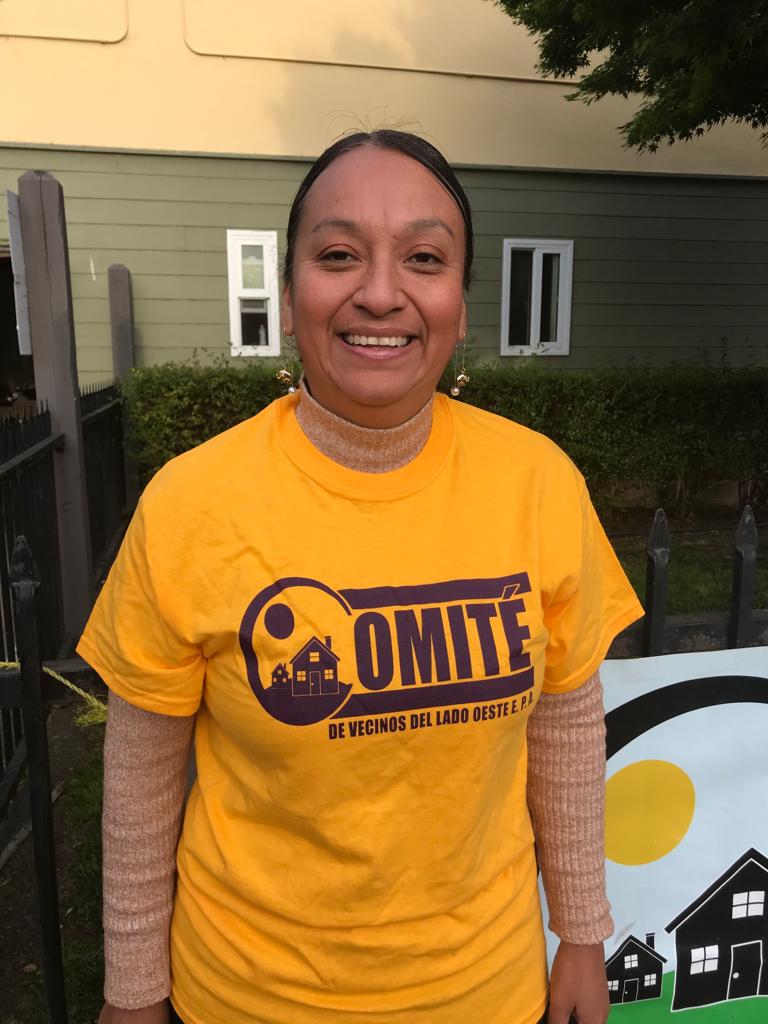
Maricela likes to be called Mari, but commonly and for official events, she introduces herself with her full name: Maricela Ramos and, as if it were part of her introduction, she adds: those who have to raise their voices and remain united are us, those affected.

Originally from Puebla, Mexico, but living in East Palo Alto, California, for more than fifteen years she has dedicated her life to defending housing that protects Latino migrants from the injustices that this sector of the population faces in the United States.

Her interest in housing advocacy, she tells Peninsula 360 Press, began from a personal experience when, upon her arrival in the United States, she herself was a victim of one of the ills that most of her countrymen suffer from: the lack of documentation translated into Spanish.

For a sector that often does not speak English, this results in not only the loss of valuable information about government aid projects but also being the target of injustice.

That is why, today, Maricela, through volunteer aid projects such as donation funds, food distribution, legal advice in Spanish, as well as translation and writing of documents, through the East Palo Alto Neighborhood Committee and Latinos United for a New America ‒LUNA‒, is calling for the Latino sector to support each other and remain united.

In this section of Bay Area Portraits you can find more details about the assistance programs through which Maricela fights to help Latinos like her to have housing security and to continue in the fight.

It is worth mentioning that on August 27th, one of the neighborhood meetings will be held at 9:30 a.m., for which prior registration is required. To contact the organizers, you can send a WhatsApp to the following telephone numbers in the San Mateo area: 650 630 03 69 either 408 876 2603

For more details about Maricela Ramos and the registration of the neighborhood council visit the interview on the Instagram account of @peninsula360press.

You may be interested in: Necessary to fight for the rights of women, our daughters and granddaughters: Connie Guerrero

Weekly schedule of events in the Bay Area

Bay Area Events
Photo: Christian Herrera P360P

Este fin de semana nadie se puede quedar en casa, hay eventos en el Área de la Bahía de sobra para pasarlo en pareja, en familia, con amigos o en solitario. Estas son las propuestas que te trae Península 360 Press para pasar el fin.

‒ 0 ‒

Shakespeare in the Park cumple 40 años, y este sábado y domingo en punto de las 4:00 de la tarde, presentarán la deliciosa comedia romántica, Mucho ruido y pocas nueces.

El encuentro será en el Red Morton Park, del lado de Valota Road, en el 1455 de Madison Ave, en Redwood City y habrá presentaciones desde hoy y hasta el 28 de agosto los fines de semana. El evento es totalmente gratuito.

La diversión no para para chicos y grandes y este domingo tendrá lugar el Concierto de Música Mágica y Movimiento- Camacu. Los asistentes podrán disfrutar de una mezcla ecléctica de música que va desde pop estadounidense y R&B hasta música en portugués brasileño, catalán, francés, hawaiano y español.

Únanse al concierto con la banda de la familia Wong-VanHaren este domingo, 14 de agosto de 4:00-5:30 de la tarde en el Magical Bridge Playground de Redwood City ubicado en el 939 de Valota Road, en Red Morton Park. El evento también es gratuito.

Este domingo también se llevará a cabo el Festival de North Fair Oaks, un evento que busca celebrar la identidad de una ciudad resiliente y lista para mirar a un futuro brillante. El evento tendrá lugar en el 2500 de Middlefield Rd en Redwood City de 10 de la mañana 3 de la tarde, y habrá actividades para chicos y grandes, además de que los asistentes podrán conocer a las organizaciones que trabajan en el área y a instituciones como la Oficina del Alguacil, acercarse a conocer sus servicios y a los agentes que trabajan en ella, no se lo pueden perder.

Además, a partir de este sábado y hasta el 25 de septiembre, todos están invitados a disfrutar del arte de Valerie Mendoza en el quiosco de arte en Courthouse Square del centro de Redwood City, donde a través de instalaciones inmersivas que usan fotografías, video, audio, objetos, narrativa personal y varias formas de información, buscará adentrar a los presentes en su obra The Destination Café donde aborda el tema de la vivienda asequible.

Hours are every Thursday and Sunday, 12:00 noon to 2:00 p.m. at 2208 Broadway.

If, on the other hand, you want to lower someone's stars this weekend, you can do it now. 

Esto será posible gracias a la lluvia de estrellas de las Perseidas que podrá ser vista en la Península.

Un evento astronómico que comenzó el 17 de julio y que continuará hasta el 24 de agosto y que este fin de semana se encuentra en el mejor de los puntos para ser visible.

¿Cómo y en dónde ver? Muy fácil, ya que no es necesario contar con un telescopio, basta con tan sólo tener un cielo lo suficiente mente obscuro y dirigir la mirada hacia dirección noreste y esperar entre 30 y 45 minutos justo después del anochecer para comenzar a ver el espectáculo celeste; abrigarse bien y listo. 

Y es que la lluvia de estrellas de las Perseidas, menciona-el astrónomo del Observatorio Lick- Jon Rees, son una de las lluvias de estrellas más impresionantes y activas ya que puede producir hasta 100 meteoros por hora. Nunca antes el buscar un sitio apartado había sido el mejor pretexto para pasar este fin de semana ya sea en pareja, en familia o en solitario. 

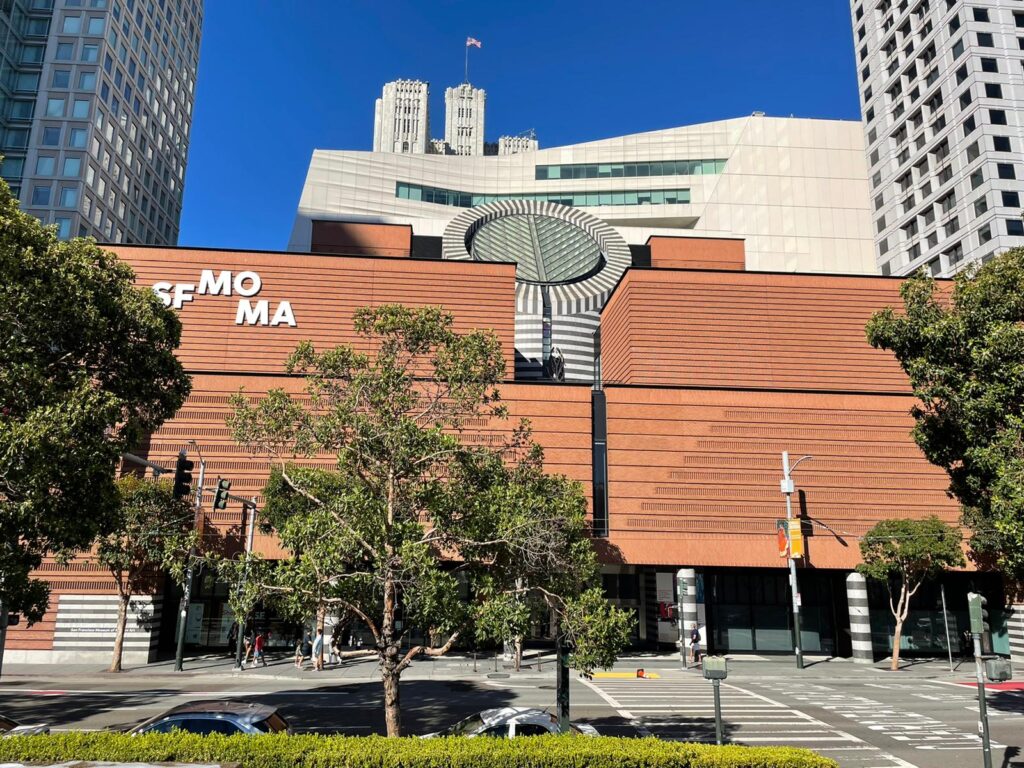
Si lo tuyo son eventos en espacios cerrados y además te gusta la fotografía, te recomendamos la más reciente exposición titulada «Sightlines» de la colección del Museum of Modern Art ‒MOMA, por sus siglas en inglés‒ de San Francisco.

Dicha exposición es una reinstalación de la colección de fotografía del museo que abarca distintos autores y miradas como lo son los fotógrafos documentalistas Louis Carlos Bernal, Dorothea Lange y Pirkle Jones.

Esta exposición estará abierta desde el 6 de agosto hasta el 7 de mayo del siguiente año y se encuentra en la sala 3. Cabe mencionar que la entrada viene incluida en el ticket de la admisión general.

Pero si más bien lo tuyo lo tuyo es escuchar un buen programa de radio, te invitamos a que sintonices en punto de las 3:00 de la tarde «Península 360 Radio» a través de Radio KIQI 1010 AM del Área de la Bahía. 30 minutos donde podrás disfrutar de noticias, recomendaciones literarias, columnas y muchos más eventos culturales que acontecerán en el Área de la Bahía.

You may be interested in: Local news summary for August 6-12, 2022

Local news summary for August 6-12, 2022

local news from august 6 to august 12, 2022
Photo: Manuel Ortiz. Peninsula 360 Press
Listen to Constanza Mazzotti's voice note

The news doesn't stop and this week these are some of the local news from August 6-12 that you need to know to stay up to date.

‒ 0 ‒

A new report from the Bay Area Equity Atlas shows that several neighborhoods remain highly segregated by race and wealth.

The report is based on an analysis of U.S. Census data down to the census tracking level that compares population figures by race and income. Five of the Bay Area’s 1,572 census tracts are identified in the report as “highly segregated” areas for low-income Latino households.

These neighborhoods were in Marin, Alameda, Contra Costa and San Mateo counties.

‒ 0 ‒

Saturday was the day of the annual, and very popular, penguin march in the San Francisco Zoo.

The March of the Penguins is one of the zoo's most popular events. This morning, five adorable Magellanic penguin chicks — two females and three males who were born between mid-April and May — performed their graduation walk, or waddle, in front of hundreds of excited zoo visitors before taking their first ceremonial dip in their new home on Penguin Island.

‒ 0 ‒

The Berkeley Fire Department is advising residents in the Berkeley Hills neighborhood to have a plan ready to evacuate and stay elsewhere in case the department designates “extreme fire weather,” which is more severe than a red flag warning.

‒ 0 ‒

In partnership with California Attorney General Rob Bonta, the California Borrowers’ Rights Campaign on Monday launched the “California Student Debt Challenge,” a statewide informational campaign on student loan forgiveness.  

About 1 million Californians in public service are eligible for loan forgiveness, but only 10,000 have received it since 2007, according to state data. Local leaders want to make sure as many residents as possible get the relief they're entitled to.

‒ 0 ‒

California is launching an unprecedented review of San Francisco's housing approval process, aiming to analyze and remove obstacles to the construction of new residential developments.

The state Department of Housing and Community Development said Tuesday it would focus on San Francisco in its first “review of housing policies and practices.”

The process is intended to look at why the city has the longest timelines in the state for housing projects. It also fields the majority of complaints to the state’s Housing Accountability Unit, which was created last year to combat California’s housing shortage by working with cities to ensure they comply with state laws when permitting new spaces.

‒ 0 ‒

Stanford University police are investigating after a woman reported she was raped in a campus bathroom on Tuesday.

The Stanford Department of Public Safety sent out an alert about the sexual assault report Tuesday afternoon.

‒ 0 ‒

Redwood City Mayor Giselle Hale announced on social media that she will not seek re-election to a new seat on the City Council. While she said it has been an honor to serve residents, she hopes there will be more "mom nights" for her family.

"Dear Redwood City. It is with mixed feelings and after much deliberation that I am announcing that I will not be seeking re-election to the Redwood City Council," Hale said in a letter posted on social media.

She noted that her family chose Redwood City to put down roots because of its diversity, inclusion and multigenerational nature, and in that sense, she noted that her family is a priority.

‒ 0 ‒

You may be interested in: Newsom nominates Latina to be California Supreme Court justice

The art of Orgasm, a pleasure for everyone

0
Listen to Pamela Cruz's voice note

"Orgasm is the great word-eater. It only allows moaning, howling, inhuman expression, but not words," said French sexologist and researcher Valérie Tasso.

Just like my first kiss or the first time I saw the sea, I remember perfectly when and with whom the first sexual orgasm in my life was, the one that made me roll my eyes and caused my body to writhe as if possessed by some demon of pleasure. 

There was definitely a before and after in my sexual life thanks to that orgasm, or as some call it: "little death." I knew that everything would change from that moment on and I was looking forward to the next encounter with that boyfriend who practiced sexual tantra and yoga. He taught me to breathe, to let go and let the pleasure run through every fiber of my body, without stopping it. 

After several sessions I realized that I could have not only one, but several orgasms. I even realized that it was not necessary to have penetration to achieve one. Today, at 39 years old, I live and celebrate the Orgasm with pleasure, with a capital O.

Last Monday, August 8th, International Female Orgasm Day was celebrated. What a wonderful date, it is a fact that definitely deserves a day, what am I saying a day, a year of celebrations. Because it is precisely with it that a woman experiences absolute pleasure in its entirety, where she merges with everything: the universe is small in her eyes at that moment.

Hoping that everyone celebrated that day in depth, I also wonder how many women fake an orgasm to please their partner, out of boredom or pressure; in addition to all those who have never felt one, or others who are denied pleasure for religious and dogmatic reasons.

According to the sexologist Beatriz Literat, almost 60 percent of women fake orgasms so as "not to disappoint their partner," while 24 percent have never had one or have difficulty achieving one.

She also points out that "the female orgasm is often a challenge and a conflict. In addition to the women who fake it and those who do not climax, there is a high percentage who confess that the pre-orgasmic sensation is so unbearable that they decide to stop the love game."

The sexologist at the Halitus Medical Institute in Buenos Aires, Argentina, explains that these figures do not speak of a woman's inability to find within herself the physiological reflection of her own sexual response, but rather are a consequence of maintaining the belief that self-exploration is inappropriate and that women have to discover their sexuality with their partner.

And, he points out, about 70 percent of women can reach orgasm alone, while 57 percent can reach orgasm in heterosexual intercourse.

But after all this, what is orgasm?

According to the renowned doctor and sexologist Sandrine Atallahorgasm is a pleasurable result of sexual encounters. 

Etymologically, the word orgasm comes from the Greek orgaô, which means "to bubble with sap and ardor."

But physically, orgasm translates into between 3 and 15 involuntary contractions in the external third of the vagina, accompanied by strong contractions that start in the lower part of the uterus - fundus - towards the cervix and contractions of the internal and external sphincters from the anus.

From a psychological point of view, Atallah adds, orgasm corresponds to the peak of sexual pleasure followed by a very pleasurable relaxation; however, whether vaginal, clitoral, clitoral-vulvar or uterine-adnexal... there is only one orgasm, and it emanates from the brain. 

And although pleasure is most often a brain response to physical stimuli, laboratory studies have shown that "an orgasm is an orgasm" and that they are all equal, regardless of how they are achieved, and have no correlation with mental health or emotional maturity. 

And what do they say about orgasm?

«Yes, I remember two very well: I had one with a guy while he was giving me oral sex… ugh. I had the other one while I was high on marijuana – they were the most intense – and no, I don't think it's the man's job. It's an inside job, for the first one I needed to concentrate, but the one where I was high just flowed and I enjoyed it, it lasted longer than normal and I think it happened because I was relaxed,» said Gisela, 27 years old.

«In my opinion, orgasm is that little death that you have and in which, at the same time, you are reborn. At least that is what has happened to me, so intense and so subtle… It leaves you trembling and perhaps wanting another or others. The orgasm is for both parties and it is difficult to obtain, but it is reached in one way or another. In sexual matters, the most important thing is the preamble, without it your imagination does not fly. The communication of the person in question is very important, if there is no communication, it is only pretending and it is the one who follows,» Elena, 40 years old, told me.

When I was in high school, a “sexologist” came to give a talk at my school. The auditorium was packed. By then, I had already had my first sexual relations with my partner at the time, a very respectful and loving guy. And the truth is that they were very satisfying sexual relations. Let’s say that I already knew what an orgasm was, well. And my boyfriend made me come several times in a single session. But this “sexologist” went on to tell us, among other things, that the idea that women could have multiple orgasms was false, as was the idea that our orgasms lasted so long… that we had no idea and it was not physically possible,” Anna Lee Mraz, 36, told me.

She remembers perfectly that, leaving that conference, she became blocked. “When I left there, I became blocked. I became blocked, DAMN IT, and I couldn’t have orgasms for a long time. Afterwards, I went to another sexologist, the mother of a friend of mine, and she kind of tried to help me. But I think I didn’t open up to her because… well, she was my neighbor, right? It was a very long process to get my orgasms back. In the end, I managed it, but I was impressed for a long time by how powerful the words and convictions of people in positions of power are. So much so that they can change your mind, to the point of convincing you of something that you rationally don’t believe in.”

Demystifying orgasm

There are several myths surrounding orgasm that need to be debunked. Here are some of the most common ones:

Myth: People with vulvas should be able to orgasm through penetration alone.

In reality, most people with vulvas do not achieve orgasm from penetration alone. 2015 study in the Journal of Sex & Marital Therapy. asked 1,055 women aged 18 to 94 about their experiences with genital contact, sexual pleasure and orgasm. Only 18.4 percent of participants reported that they could achieve orgasm through intercourse alone. 

In contrast, 3.6 percent of respondents said they needed clitoral stimulation to achieve orgasm. Finally, 36 percent indicated that clitoral stimulation may not be necessary to achieve orgasm, but it does enhance the orgasmic sensation.

Myth: Sexual partners should experience orgasm at the same time.

Despite what popular culture might have us believe, sexual partners often reach orgasm at different times. There's no reason to worry if you and your sexual partner don't reach orgasm at the same time. In fact, this situation can allow couples to take turns focusing completely on each other's sexual pleasure, which can be more pleasurable for everyone involved.

Myth: Good sex always ends in orgasm.

Sex can be satisfying and enjoyable even when it doesn't end in climax. Aspects of sex such as pleasurable foreplay, good communication, giving and receiving pleasure, and enhancing connection with your partner all contribute to a satisfying sexual experience. 

Additionally, a good number of people experience anorgasmia, or the inability to reach orgasm. This doesn't mean they can't enjoy sex. Ironically, putting too much pressure on yourself to reach an orgasm can create anxiety around a sexual experience and actually decrease your chances of having one. 

So while orgasms can be part of great sex, it's a good idea to remember that sex can still be great without one.

Myth: Fantasizing to achieve orgasm is abnormal and perverse.

Whatever the scenario imagined, fantasy does not reveal perversity or infidelity, it is just another means, a springboard to facilitate "disconnection" and letting go. It thus allows the level of mental arousal to be raised to reach the peak necessary for orgasm. 

Fantasy is an enrichment of eroticism that allows us to eroticize, through imagination, the ultimate erogenous zone, which is the brain. Fantasy is a caress of the spirit, says Atallah.

Numbers around orgasm:

• 70 percent of women need to fantasize to be aroused, while 40 percent need to fantasize to orgasm.

• Around three-quarters of women achieve orgasm through the clitoris and 20 percent enjoy it through “simple” penetration. 

• While men perceive that 85 percent of the women they had sex with achieved orgasm, only 15 percent of women 64 percent actually did.

• Women take 40 to 80 percent longer to reach orgasm than men.

- Nearly 60 percent of women usually reach orgasm during masturbation, while only 29 percent do so during sexual intercourse with another person. Another study claims that during masturbation, the probability of reaching orgasm can reach 95 percent. 

• The women receiving oral sex are more likely to achieve orgasm.

• 20 percent of women are able to reach orgasm just by kissing or having oral sex with their partner, and a lucky 10 percent achieve it exercising.

Clitoris, the Holy Grail of Orgasm?

The clitoris is much larger than that little button hidden under its veil. In fact, it is formed by the meeting of 2 erectile bodies located mostly on either side of the entrance to the vagina, under the labia. Thus, penetration stimulates not only the anterior wall of the vagina, but also the clitoris… 

So this complex and unique organ seems to be the filter of all sensory stimuli - vaginal, clitoral, vulvar, cutaneous... - that are transmitted to the "driver", which is none other than the brain. 

However, Sandrine Atallah reports that “it is only when the conscious and unconscious parts of the brain are in harmony that the “order” is sent to the vagina to produce an orgasm by contraction… From this we deduce that any woman, throughout her life, can access different varieties and different experiences of orgasm, depending on her relationship with her own body, the image that her partner gives back to her, the place of sexuality in her life, her ability to “inhabit” her vagina and to “communicate” with it.”

"With the right interlocutor, being 25 or 75 years old doesn't change anything, and the maturity that is so often invoked doesn't come into play either," Atallah explains.

For women, unlike men, having sex and experiencing pleasure does not necessarily mean enjoying every moment, since not all the favorable conditions are always given to "let yourself go" with ecstasy, but this, fortunately, does not prevent you from enjoying a pleasant moment to share, relax and enjoy.

We must not forget that pleasure, a psychophysiological phenomenon, is a learning process and is not innate. And in the case of total anorgasmia, a work of self-discovery must be undertaken, alone, with a partner or in therapy.

In short, orgasm belongs to those who work for it, and it's okay if you don't reach it. The point is to enjoy it and have sessions of pleasure that comfort you and fill you with invigorating energy. Let's get to work.

Orgasm, a pleasure for everyone. Pamela Cruz's opinion

Pamela Cruz. Editor-in-Chief of Peninsula 360 Press. A communications expert by profession, but a journalist and writer by conviction, with more than 10 years of experience in the media. Specialized in medical and scientific journalism by Harvard and winner of the International Visitors Leadership Program scholarship from the U.S. government.
Twittter: @Pamesmiamiga

You may be interested in: Sexual relations during menstrual period? Why say yes!

Newsom nominates Latina to be California Supreme Court justice

Latina for California Supreme Court Justice

By Nigel Duara. CalMatters.

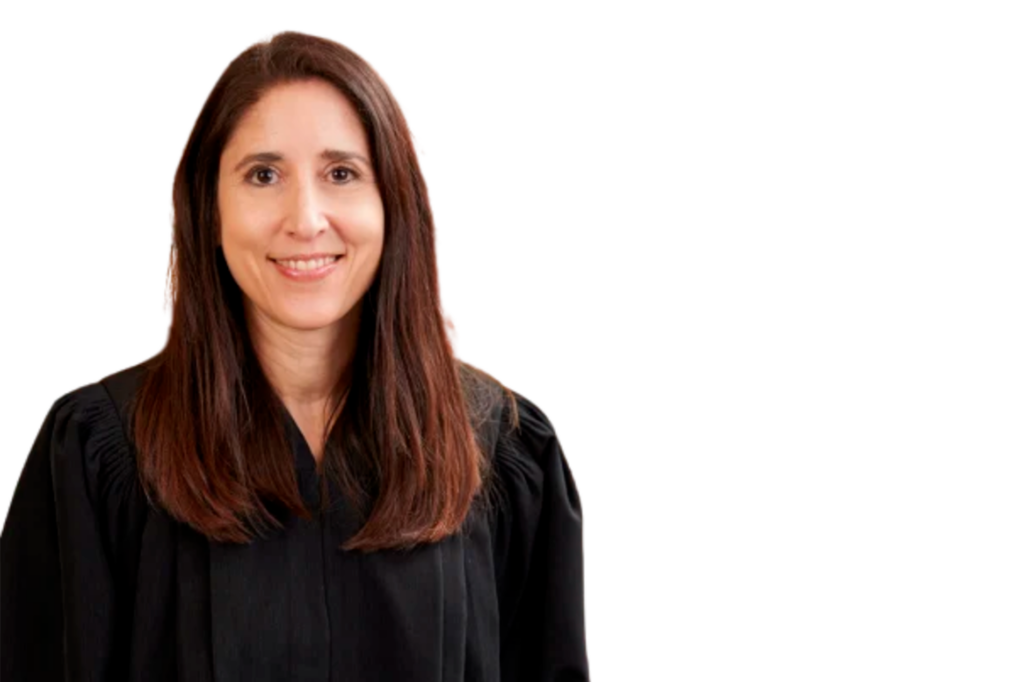
En un estado que no tiene muchas latinas sentadas en el estrado judicial o discutiendo casos ante él, Patricia Guerrero haría historia como presidenta del tribunal supremo de California.

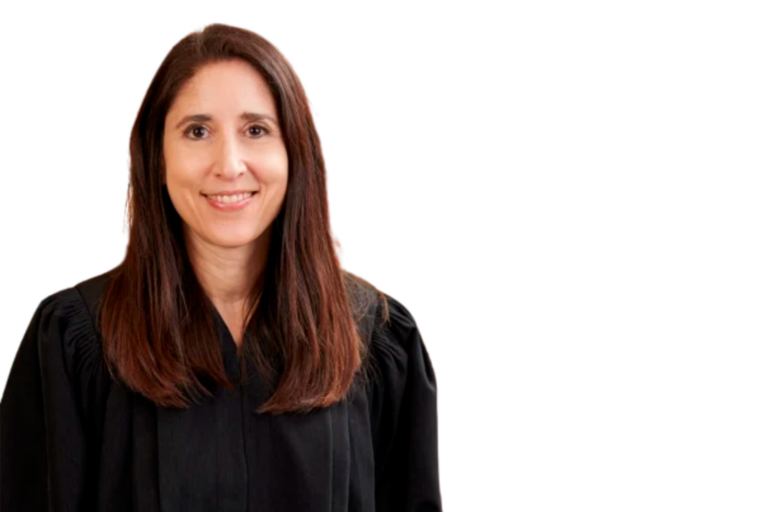
El gobernador Gavin Newsom nominó el miércoles a Guerrero, de 50 años, como presidente del Tribunal Supremo de California. Guerrero, que ya era la primera latina del tribunal superior después de su juramento en marzo, también sería la primera presidenta del tribunal latina.

Guerrero, exabogada en la práctica privada, también fue fiscal federal antes de convertirse en jueza en el Tribunal Superior del Condado de San Diego y, en 2017, se convirtió en jueza de apelaciones en el Tribunal de Apelaciones del Cuarto Distrito de California. Creció en el Valle Imperial, sus padres eran inmigrantes de México y se graduaron de la Facultad de Derecho de Stanford.

Newsom la llamó «una jurista muy respetada con un intelecto formidable y un dominio de la ley». Una colega en su audiencia de confirmación del Cuarto Distrito en 2017 recordó cómo terminó un escrito en camino a dar a luz a su hijo y coordinó la presentación del escrito horas después.

Juan Esparza Loera, editor del periódico en español Vida en el Valle de Fresno, dijo que estaba sorprendido por la nominación de Guerrero a presidente del Tribunal Supremo tan pronto después de que ella prestó juramento. Pero está feliz de poder escribir sobre otra «primera vez en la historia».

«Llevo aquí 32 años y me sorprende que, incluso en el año 2022, sigo escribiendo sobre primicias para los latinos», dijo Loera. «Seré feliz cuando empiece a escribir sobre segundos y tercios».

Los números en 2022 siguen siendo sombríos para los latinos en general en el poder judicial de California. Más del 62 por ciento de todos los jueces de los tribunales de primera instancia son blancos, al igual que más del 70 por ciento de los jueces de los tribunales de apelación.

Los latinos, por el contrario, representan solo el 12 por ciento de los jueces de los tribunales de primera instancia y el 7 por ciento de los jueces de los tribunales de apelación, aunque constituyen el 39 por ciento del estado.

No es un problema nuevo. Una serie de CalMatters del año pasado encontró una subrepresentación significativa en muchos tribunales de condado, y en cuatro condados de California sin jueces de tribunales superiores latinos, a pesar de que la población de los condados era mayoritariamente latina.

La raza por sí sola, por supuesto, no dicta cómo alguien fallará en los casos. Los resultados de los estudios que intentan descifrar el vínculo entre la raza o el origen étnico y la conducta judicial han sido mixtos.

Un estudio de Yale encontró que tener jueces afrodescendientes hizo que los jueces blancos se adhirieran más a la equidad de sentencia tanto para los acusados ​​afrodescendientes como para los blancos. Los investigadores de la Facultad de Derecho de Cornell descubrieron que los jueces, como todos los demás, tienen prejuicios implícitos que pueden afectar sus fallos.

Y en un estudio comparativo de 2012 de jueces blancos y jueces de color, un profesor de derecho de la Universidad de Northwestern encontró que los jueces blancos eran particularmente más propensos a desestimar los casos que involucraban a demandantes de color que aquellos que involucraban a demandantes blancos.

Pero la forma en que los jueces individuales fallan en casos específicos importa menos que la percepción de la justicia, señaló Helen Torres, directora ejecutiva de Hispanas Organizados por la Igualdad Política.

Un estudio de 2016 en Texas sobre las actitudes de los latinos hacia la justicia después del nombramiento de Sonia Sotomayor para la Corte Suprema de los EE. UU. encontró que los latinos estaban más conscientes y aprobaban más la corte después de su nombramiento.

«Tenían más confianza en el poder judicial», subrayó Torres. «Genera confianza en el sistema que te representa».

Al tratar de leer las hojas de té sobre el próximo presidente del Tribunal Supremo, los handicappers miran la historia de elevar a los jueces en ejercicio versus elegir a alguien completamente nuevo.

Newsom aparentemente dividió la diferencia, nominando a un juez en funciones que acaba de ser elevado a la Corte Suprema en marzo.

David A. Carrillo, director ejecutivo del Centro de Constitución de California de Berkeley Law, refirió en un correo electrónico que la diversificación de la corte se convirtió por primera vez en una prioridad bajo el exgobernador Jerry Brown en la década de 1970.

«Hacerlo es crucial tanto para la percepción como para la realidad de que quienes administran justicia reflejan la diversidad del estado», escribió Carrillo. «El juez en mi caso no tiene que parecerse a mí, pero no debería ser cierto que no haya jueces que se parezcan a mí».

Guerrero acumuló el apoyo público inmediato del presidente del Comité Judicial del Senado estatal, Tom Umberg, y del presidente de la Asamblea, Anthony Rendon.

Guerrero asumiría un trabajo tanto judicial como administrativo, dijo Natasha Minsker, asesora de políticas de Smart Justice California, que aboga por políticas que espera disminuyan la dependencia del encarcelamiento. Sería efectivamente la jefa de la tercera rama del gobierno, y sus decisiones tendrían consecuencias de largo alcance.

Minsker señaló a Tani Cantil-Sakauye, la presidenta del Tribunal Supremo en funciones, quien el mes pasado anunció su plan de retirarse en enero. Cantil-Sakauye fue responsable de las órdenes judiciales que cerraron las salas de audiencias durante el inicio de la pandemia e instituyeron una fianza de cero dólares para algunos delitos menores.

«Tenía una conciencia particular de lo difícil que es el sistema legal para las personas sin recursos», precisó Minsker. «Los ricos tienen abogados elegantes y obtienen justicia. Cantil-Sakauye trató de hacer algo para abordar eso».

Loera, la editora de Vida en el Valle, recordó que uno de los primeros jueces latinos en el Valle Central, Armando Rodríguez, regresó de la Segunda Guerra Mundial y obtuvo una licenciatura en derecho, pero descubrió que nadie en Fresno le alquilaría un espacio de oficina. Tuvo que buscar a más de 20 millas de distancia, en Madera.

«Cuando algún segmento de la comunidad siente que está siendo ignorado, no tiene confianza en el sistema», precisó Loera. «Tal vez los tribunales estén fallando correctamente el 99 por ciento de las veces, pero es esa percepción la que afecta la forma en que las personas ven el sistema».

Sentirse parte del sistema requiere que el sistema se parezca a usted, explicó Torres.

«No queremos quedarnos con lo primero, de nada», expresó Torres. «Muchas de nuestras mujeres son las primeras de: la primera en un consejo municipal, la primera en una junta reguladora, la primera presidenta del Tribunal Supremo».

«Queremos celebrar estas novedades, pero asegurarnos de que no sean las últimas».

Newsom también nominó a la jueza de la Corte Superior del Condado de Alameda, Kelli Evans, para ser jueza asociada en la Corte Suprema, para llenar la vacante esperada creada por el ascenso de Guerrero a presidente del Tribunal Supremo.

Evans, de 53 años, de Oakland, fue criada por su abuela en una vivienda pública y luego asistió a Stanford y se graduó de la Facultad de Derecho de UC Davis. Exabogada de derechos civiles y abogada de la división civil del Departamento de Justicia de EE. UU., también fue asistente especial del fiscal general en el Departamento de Justicia de California de 2017 a 2019.

Luego se convirtió en la subsecretaria principal de asuntos legales de Newsom. Entre sus influencias allí, según la oficina del gobernador: ayudar a dar forma a la moratoria de Newsom sobre la pena capital.

Minsker, de Smart Justice California, calificó la nominación de Evans como «un gran problema».

«Ella podría ser la única futura jueza de la Corte Suprema que tiene experiencia directa trabajando en casos de uso de la fuerza policial», dijo Minsker. «Necesitamos una Corte Suprema de California para contrarrestar lo que está sucediendo en la Corte Suprema de los Estados Unidos, si realmente queremos proteger nuestros derechos».

Ambos candidatos deben ser confirmados por la Comisión de Designaciones Judiciales, y se les pedirá a los votantes de California en noviembre que confirmen a Guerrero por un período de 12 años.

Podrán encontrar la nota original dando click here.

You may be interested in: SF prosecutor files motion against company for allegedly defrauding migrants

SF prosecutor files motion against company for allegedly defrauding migrants

SF Prosecutor files motion against company
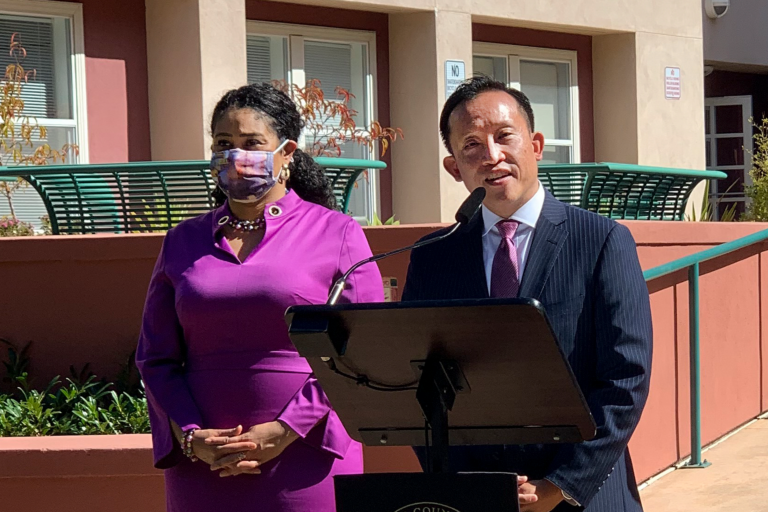
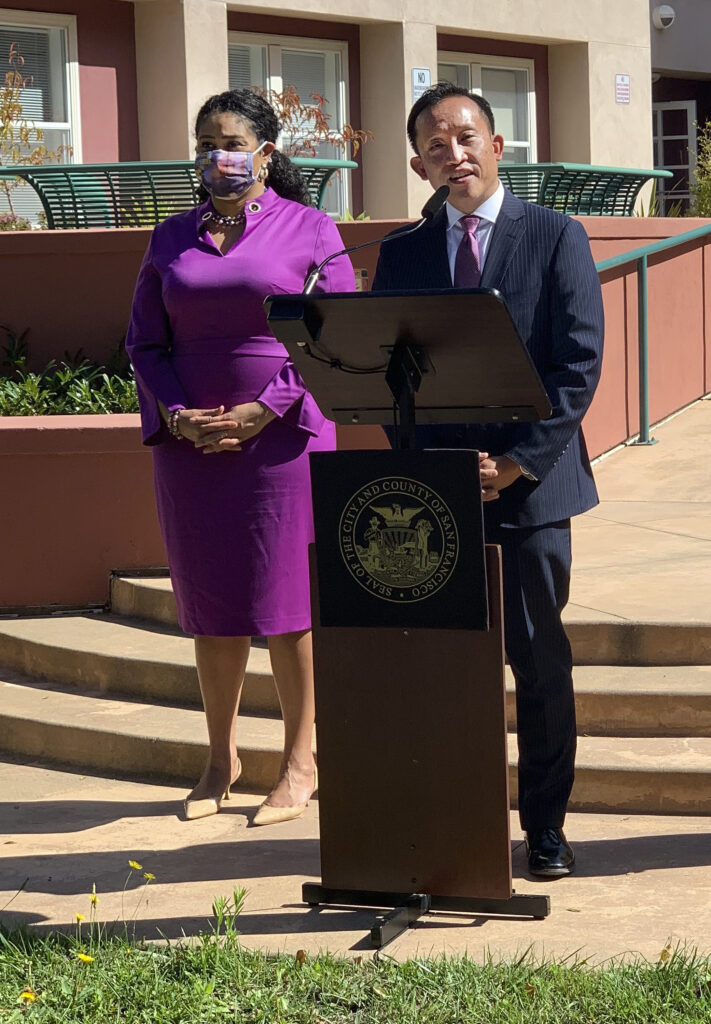
(LR) San Francisco Mayor London Breed and California Assembly member David Chiu during the announcement of Chiu's appointment to city attorney on Wednesday September 29, 2021 in San Francisco, Calif. (Daniel Montes/Bay City News)

By Bay City News

San Francisco City Attorney David Chiu announced Thursday that legal action is being taken against an “immigration consulting business” for allegedly charging immigrants for fraudulent legal services they were not permitted to provide.

The motion to enforce an injunction was filed Monday and would prohibit Leonard Lacayo and Lacayo & Associates from providing immigration services.

Lacayo is accused of falsely representing himself as an attorney and defrauding immigrants into “paying for bogus legal services and putting many at risk of losing their legal rights,” the city attorney’s office said.

Lacayo & Associates has been operating in San Francisco since 1986. Lacayo is reportedly a notary public, but is not licensed to practice law or registered as an immigration consultant.

In 2017, the city attorney’s office filed an injunction prohibiting Lacayo & Associates from providing immigration-related services and ordering Lacayo to pay restitution and civil penalties.

"Leo Lacayo has demonstrated that he has no respect for the law or for the immigrant communities he purports to serve. For years, he has profited from vulnerable immigrants by taking their money and putting them at risk," Chiu said. 

“Despite being barred from providing immigration services, Lacayo has conveniently pretended that our injunction against him does not exist. We are seeking to put an end to this illegal conduct and protect immigrant communities from this scammer,” he added.

Chiu accused Lacayo of providing services he was not qualified to provide and at times failing to provide service to clients. The city attorney also said the businessman has “tricked” hundreds of immigrants into paying him to handle their immigration matters.

Lacayo denies any of the accusations and adds that he only works as a notary and with tax preparation. He said that a lawyer in the same building does work with immigrants.

Following the court order, the firm continued to operate, and U.S. Citizenship and Immigration Services reported that more than 400 immigration applications and petitions were filed at the firm’s address after Lacayo & Associates was banned from providing immigration-related services.

"These uninterrupted activities show a blatant disregard for the rule of law," Chiu's office said.

The motion filed Monday seeks to enforce and extend the injunction for five years. 

The legal action also hopes to ensure that Lacayo's most recent clients have access to their immigration documents and are informed that their cases are not being handled by licensed attorneys. 

Chiu is also seeking fines, fees and access to the company's transaction records.

Lacayo called the motion a “witch hunt” motivated by “political reasons.” He said he will continue to operate his tax preparation business as he has since the court order.

"My office is open," Lacayo explained. "It has never been closed."

The investigation was assisted by the San Francisco Bar's Center for Justice and Diversity, the State Bar of California's Office of Chief Trial Counsel and the San Francisco Bay Area Lawyers' Committee for Civil Rights, Chiu's office said.

You may be interested in: California prosecutor urges public workers to apply for student debt forgiveness

Former Twitter manager sentenced for spying for Saudi Arabia

Ahmad Abouammo, former Twitter manager, convicted for spying for Saudi Arabia

By Bay City News 

A federal jury on Wednesday convicted a former Twitter manager of selling private user information to the Kingdom of Saudi Arabia.

Ahmad Abouammo, Twitter’s former media partnerships manager for the Middle East/North Africa region, was found guilty of multiple crimes, including acting as a foreign agent of Saudi Arabia without notifying the Attorney General, money laundering, conspiracy, and falsifying records.

The verdict against the 44-year-old former Walnut Creek resident follows a two-week trial, according to an announcement Wednesday from the office of U.S. Attorney Stephanie M. Hinds of the Northern District of California.

Evidence at trial showed that Abouammo accepted bribes in exchange for accessing, monitoring and transmitting Twitter users' private information to officials of the Kingdom of Saudi Arabia and the Saudi royal family, according to the announcement.

Hinds said the Justice Department does not tolerate misuse of personal information or attempts by foreign governments to recruit secret and malicious agents into American technology companies.

"In this case, the government demonstrated, and the jury found, that Abouammo violated a sacred duty to keep Twitter customers' personal information private and sold customers' private information to a foreign government," he said.

“Abouammo’s decision to accept bribes in exchange for providing a foreign government with protected client information could have incalculable damaging consequences.”

Prosecutors said the recipient of the private information is known for targeting people seen as opponents.

“Abouammo secretly acted as an agent of a foreign government seeking dissenting voices,” said Assistant Attorney General Matthew G. Olsen of the Justice Department’s National Security Division. “This verdict shows that the Department of Justice will not tolerate any act of transnational repression and will hold accountable those who help hostile regimes extend their reach to our shores.”

The department's announcement said that according to evidence presented at trial, Abouammo began receiving bribes from a Saudi Arabian official as early as December 2014, including one in 2015 for $100,000 deposited into a bank account in his father's name in Lebanon.

In October 2018, FBI agents interviewed Abouammo at his residence about his involvement in the scheme with officials of the Kingdom of Saudi Arabia. 

Evidence at trial showed that Abouammo provided false information to FBI investigators and falsified an invoice for one of the payments he received from the foreign official.

Abouammo was arrested on November 5, 2019, but did not leave his job at Twitter until May 2021. Shortly afterward, he received another $100,000 in his bank account in Lebanon.

Abouammo faces a maximum sentence of 10 years in prison for the charge of acting as an agent of a foreign government and 20 years in prison for each of the other charges. Additionally, each charge carries a fine of up to $250,000 and additional periods of supervised release after the prison term.

Assistant U.S. Attorneys Colin Sampson and Eric Cheng of the Northern District of California and Trial Attorney Christine Bonomo of the National Security Division’s Counterintelligence and Export Control Section are prosecuting the case with assistance from Beth Margen and Alycee Lane. The indictment is the result of an FBI investigation.

You may be interested in: Twitter, the price of the digital giant in world politics

Salman Rushdie, a long struggle for freedom of expression

0

Since 1989, when Ayatollah Rullolah Khomeini put a price on his head for the publication of the novel The Satanic Verses, the story of Indian-British writer Salman Rushdie has been a story of tireless struggle for freedom of expression.

The controversial book fictionalized the life of the Prophet Muhammad and an interpretation of the Koran that the Iranian regime considered blasphemous, so it issued a fatwa calling for his assassination, with a reward for whoever carried it out.

Rushdie spent nearly 10 years in hiding, living under the pseudonym Joseph Anton. In fact, the novel that bears that title deals with that dark period. He went into exile in the United States in 2000, but even in this country he remained under protection and surveillance until, little by little, he began to relax security measures. He even traveled to Mexico in 2014 to participate in the Hay Festival Xalapa that year, and in 2018 for a discussion organized by the Autonomous University of Nuevo León, in Monterrey.

About that presentation at the Hay Festival Xalapa 2014, I wrote

«He wears an impeccably cut suit, silver like the hair left at his temples and in his goatee. He walks calmly. Sir Salman Rushdie now walks around without bodyguards everywhere. Gone are the days when Ayatollah Khomeini put a price on his head for having written The Satanic Verses, although the fatwa did not die with the leader who imposed it.

But he has chosen to live without fear. Perhaps the only thing left from those days is a persistent tic that makes his nose twitch constantly, causing a peculiar movement of his upper lip as well. Or perhaps he was born with this.

On that occasion, Rushdie spoke about his relationship with Latin American literature, from Carlos Fuentes to García Márquez and Juan Rulfo, of course:

«Thanks to his love of good food, Salman Rushdie met Carlos Fuentes in Tequila, at a luncheon that the Guadalajara International Book Fair entertained its special guests with a couple of decades ago. And it was Fuentes, whom he describes as a great friend, who once put him on the phone with the author of One Hundred Years of Solitude. “I had an extraordinary conversation with García Márquez because he really didn’t like to speak English, although he understood more than he gave himself credit for, and my Spanish is terrible but I understand a little. So we had a little French in common. So we conversed in three languages, but in my memory there were no language problems, we just talked. It was a conversation of about 25 minutes.”

An avid reader of Italo Calvino, Milan Kundera, Gunter Grass and Gabo, Rushdie confesses that the first time he read Pedro Páramo he did not find it exceptional. He blames this disappointment on the first English translation of Juan Rulfo’s work. “But 20 or 25 years later there was another, much better translation. I read it again and was impressed. In Pedro Páramo you can see the beginnings of Macondo. You can see that it is not such a long journey from Comala to Macondo.”

It seems a cruel joke of fate that this morning, when Rushdie went to the Chautauqua Institution, an educational institution in New York State, to take part in a conversation on the subject of the United States as a safe haven for exiled writers and other artists under threat of persecution, he was the victim of a cowardly attack.

Rushdie was repeatedly stabbed (once in the neck) while being introduced by Henry Reese, co-founder of the nonprofit City of Asylum, which is a residency program for exiled writers. 

As I write this, Salman Rushdie is undergoing surgery. The former president of PEN USA, an organization that provides asylum to writers and journalists who are victims of political and/or religious persecution, is now fighting for his life.

From Peninsula 360 Press, this space for freedom of expression, we wish you a full and speedy recovery.

Opinion: Salman Rushdie, a long struggle for freedom of expression

Irma Gallo She is a reporter and writer. In addition to Península 360 Press, she has collaborated with Letras Libres, the University of Mexico Magazine, Lee Más Gandhi Magazine, Gatopardo, Este País Magazine, Sin Embargo, El Universal, and Newsweek in Spanish. Her most recent book is When the Sky Turns Orange. Being a Woman in Mexico (UANL/VF Agencia Literaria, 2020). Twitter: @irmagallo IG: @irmaevangelinagallo.

You may be interested in: Journalist Ernesto Méndez, director of "Tu Voz" media outlet, murdered in Mexico