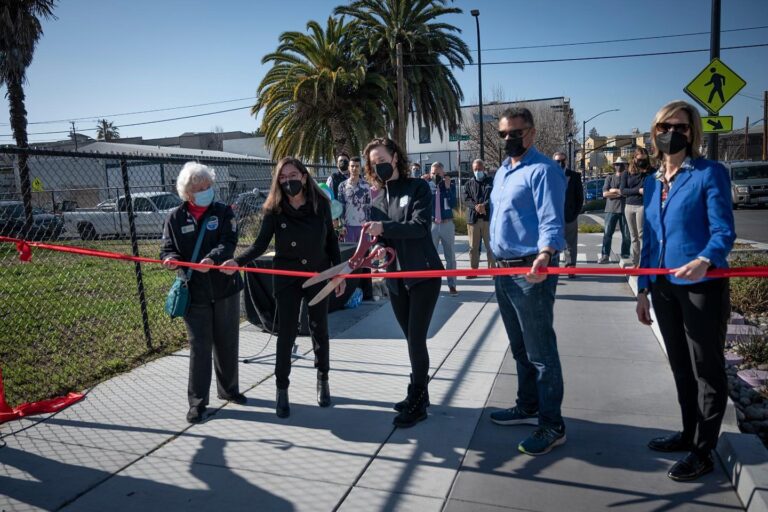
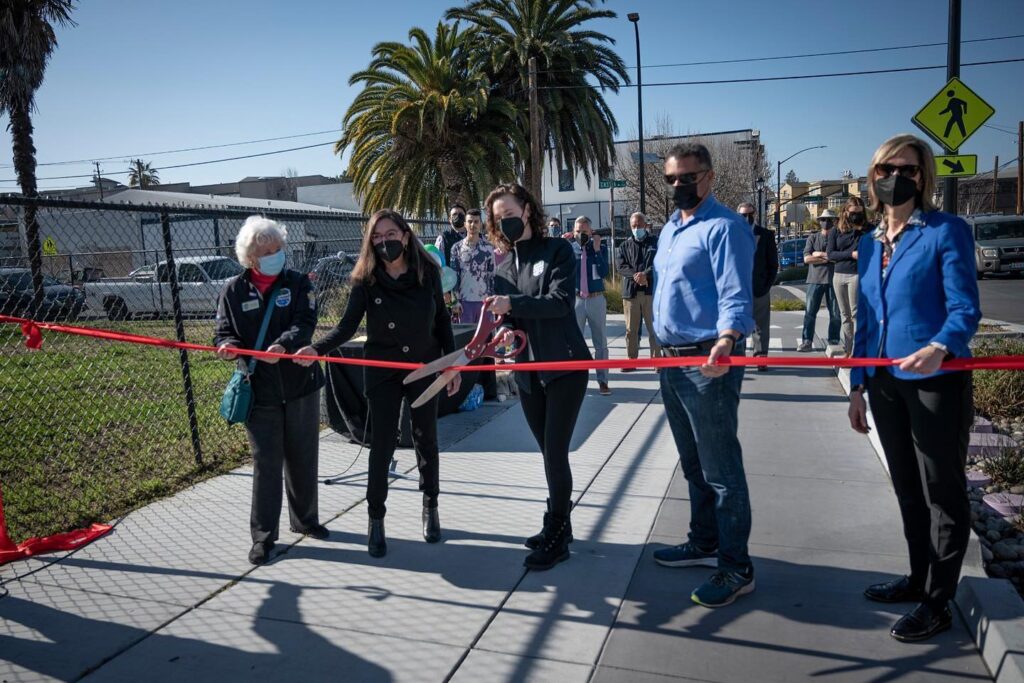
San Francisco residents celebrated the return of the Muni 21-Hayes bus to Golden Gate Park, especially those living in the Western Addition, Hayes Valley and Tenderloin neighborhoods, while parkgoers took their first ride on adaptive bicycles on John F. Kennedy Drive.
Saturday's celebration was announced by the San Francisco Recreation and Park District (SFRPD) and the San Francisco Municipal Transportation Agency (SFMTA).
Advocates for transit riders, seniors, and people with disabilities boarded the 21-Hayes bus at Alamo Square for a community ride with representatives from SFRPD and SFMTA and Supervisor Dean Preston, who supported the reinstatement of the line, which had been suspended since March 2020.
The slightly modified new route runs every 20 minutes from Grove and Hyde streets near Civic Center Station and the main library to St. Mary's Hospital, just across the street from the east end of Golden Gate Park, including the car-free JFK Drive. It is one of three mainline routes back in service, which also includes the 6-Haight-Parnassus and 2-Sutter lines.
“After a long wait, I am happy to welcome these neighborhood bus lines back,” said Mayor London Breed.
“As our city continues to recover from the impacts brought on by the pandemic, we must ensure that it is easier for all residents to access all that San Francisco has to offer, especially our public spaces. Restoring Muni to pre-pandemic levels and providing equitable alternative modes of transportation will help us deliver on our promise to create a more accessible San Francisco.”
For his part, Supervisor Preston detailed that “public transportation is fundamental to our city. I am delighted to celebrate the return of these essential bus lines, including my daily commute: the 21 Hayes.”
“This has been a difficult time for transit riders, operators, and all the workers who keep transit running. I greatly appreciate the remarkable coalition of advocates who successfully pushed for the return of these lines, and I look forward to continuing to champion efforts to restore and expand transit in our city,” she added.
On Saturday, at Golden Gate Park, community members hopped on the park’s free shuttle to watch a demonstration of the Bay Area Recreation and Outreach Program’s Adaptive Cycling Program, which was launched.
The free program matches people with disabilities with adaptive bicycles by reservation. BORP Cycling Center houses one of the largest collections of adaptive bicycles in the world, including handcycles, recumbents, side-by-side tandems and other models. The program serves children, youth and adults with physical and visual disabilities, as well as their family members and friends.
“Golden Gate Park belongs to everyone, and we are delivering on our promise to improve access to its treasures,” said Phil Ginsburg, general manager of the San Francisco Recreation and Park District.
“The Adaptive Cycling Program means that park visitors, regardless of disability, can reap the benefits of nature while enjoying an exciting workout at car-free JFK,” she said.
“We are listening to the community and know there is strong support for both a robust transit system and improved access to the parks,” said Jeffrey Tumlin, SFMTA’s director of transportation. “We are pleased to support healthy transportation options for all San Franciscans traveling to and around Golden Gate Park, especially those with limited mobility options.”
The Adaptive Cycling Program will run from 1:00 p.m. to 4:00 p.m. by appointment from April through October. Locations will alternate between Music Concourse in Golden Gate Park next to the new accessible shell lot and Great Highway at Judah Street.
To reserve a bicycle, interested parties may contact BORP Cycling Center at (510) 848-2930 or cycling@borp.org.
The two hardest years of COVID-19 lockdown put many things on hold, but never the creativity of the children who, through painting, expressed their hopes for a better post-pandemic world.
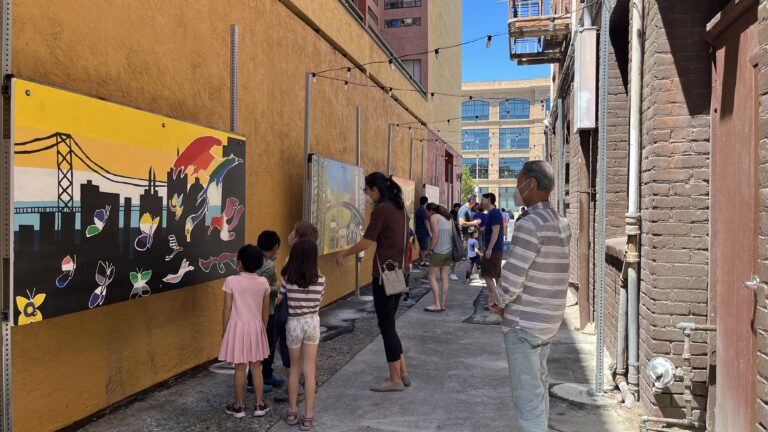
Children's teams Casa Circulo Cultural and other local organizations and schools, accompanied by their parents, displayed their colorful and expressive murals in an alley in downtown Redwood City, located behind the parking lot of the Sequoia Hotel.
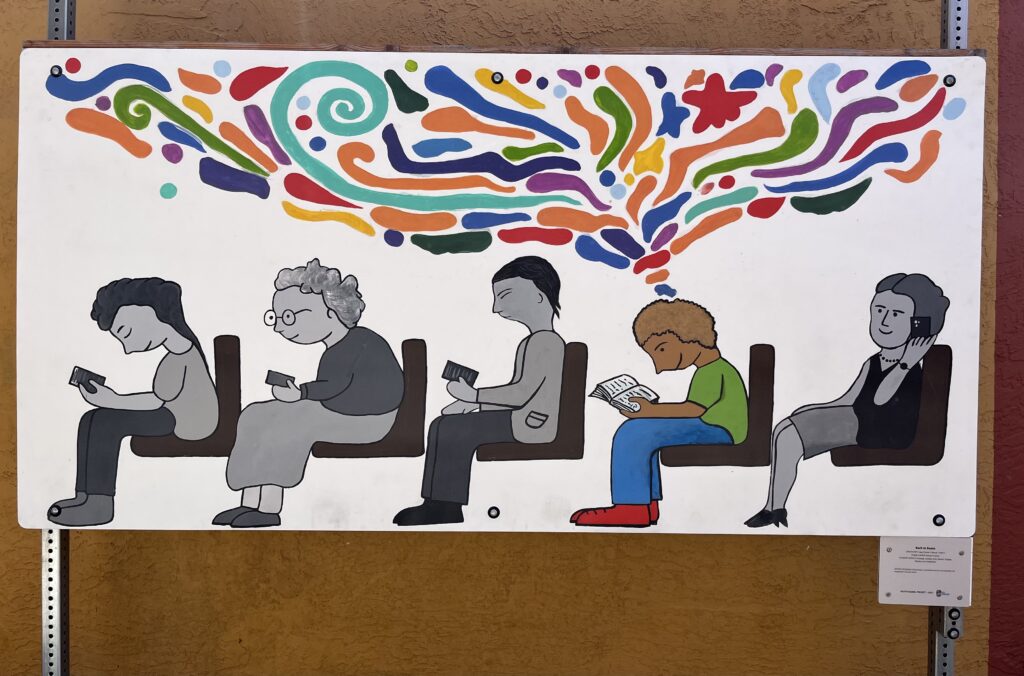
Mural “We Are All One” made by students of Casa Círculo Cultural Photo: Irma Gallo P360P«Back to Books» mural made by students of Casa Círculo Cultural Photo: Irma Gallo P360P
“This year it was a little more difficult to get them to sign up because of the pandemic, but 13 teams did and submitted their sketches, which were reviewed by a committee. The judges decided to include all teams with three smaller murals at 816 Main Street,” said Redwood City Vice Mayor Diana Reddy during the Youth Mural Alley Project opening event.
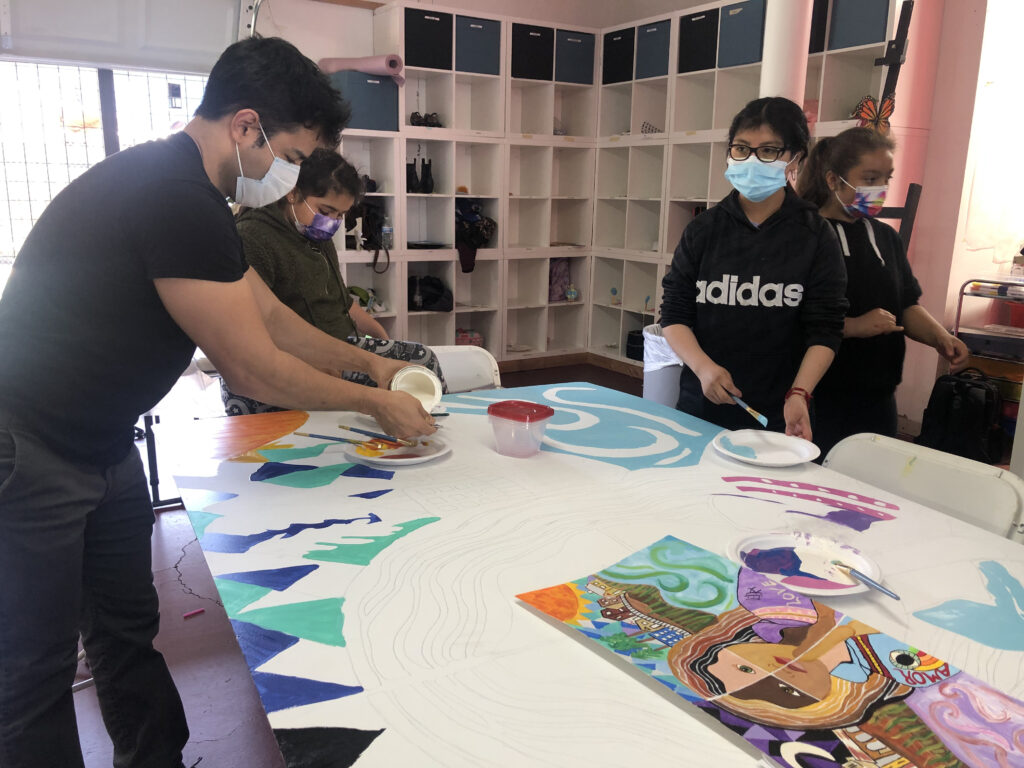
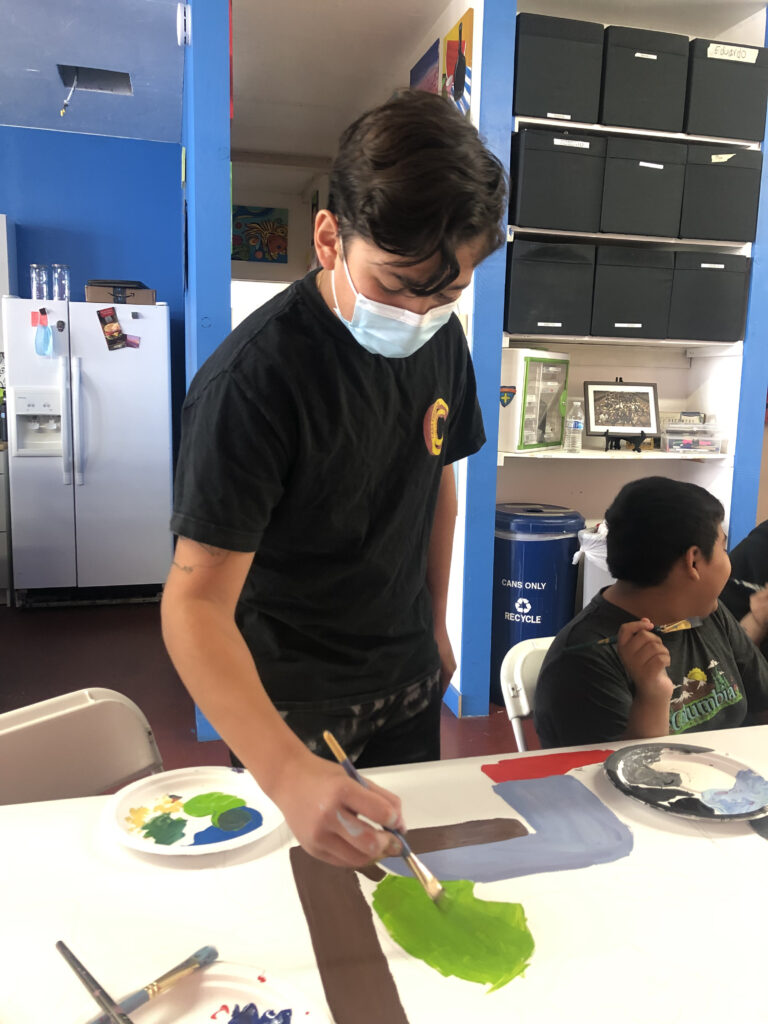
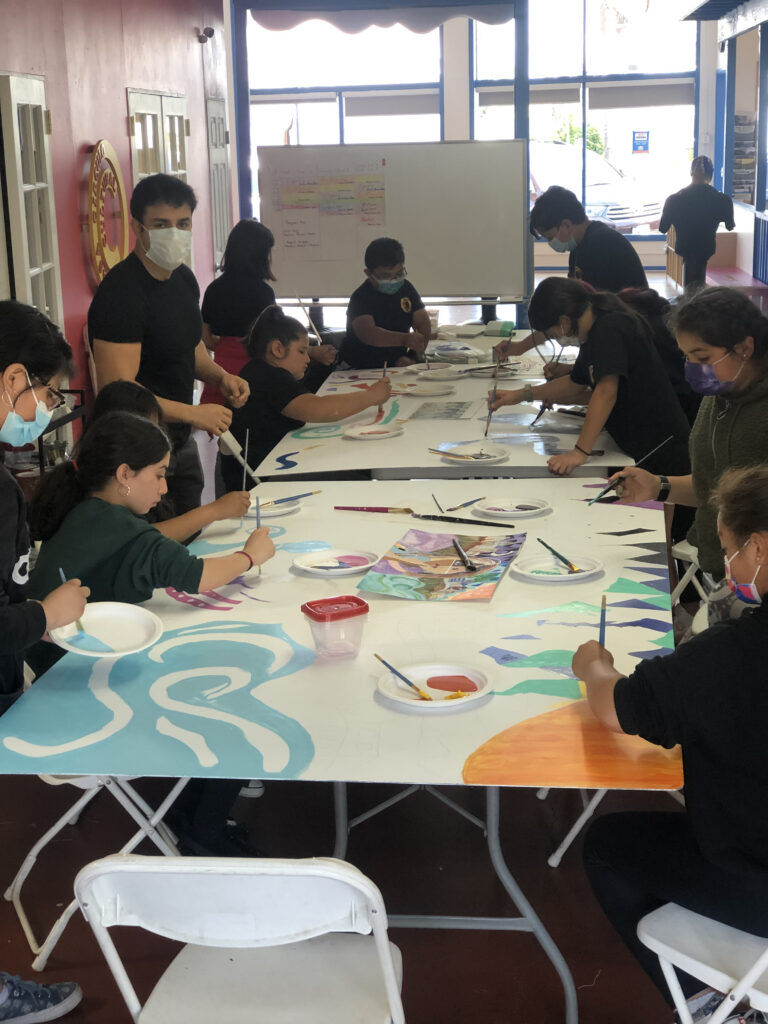
“The leaders of each team then attended a second workshop where they learned how to transfer the sketch drawings to a 4 x 8 canvas, as well as tips on how to paint the mural. We provided them with all the materials and delivered the plywood to their location,” he continued.
Photo: Casa Círculo Cultural
To conclude her speech, the Deputy Mayor greeted and thanked the child artists for their work, their families for accompanying them, and the Redwood City Arts Commission for the grant that made this project possible.
In an interview with Peninsula 360 Press, Chris Beth, director of the Recreation and Community Services Department of Redwood City Parks, said that art is a good form of expression for children and adolescents.
“And on this particular project they’re working as a team,” he continued. “These are collaborative murals done by young people who came together through their schools or organizations and created something really beautiful in this alley that was really neglected.”
Photo: Casa Círculo Cultural
Susie Peyton, a member of the city's Art Commission, said the goal was to "create a place where there was only art made by young people." They reached out to more than 80 different schools and organizations and got 13 organizations and schools to participate with their murals.
Peyton also said she is convinced that no matter where they come from or what language they speak, if children and young people are given the opportunity to create art they will excel academically and in other areas of their lives.
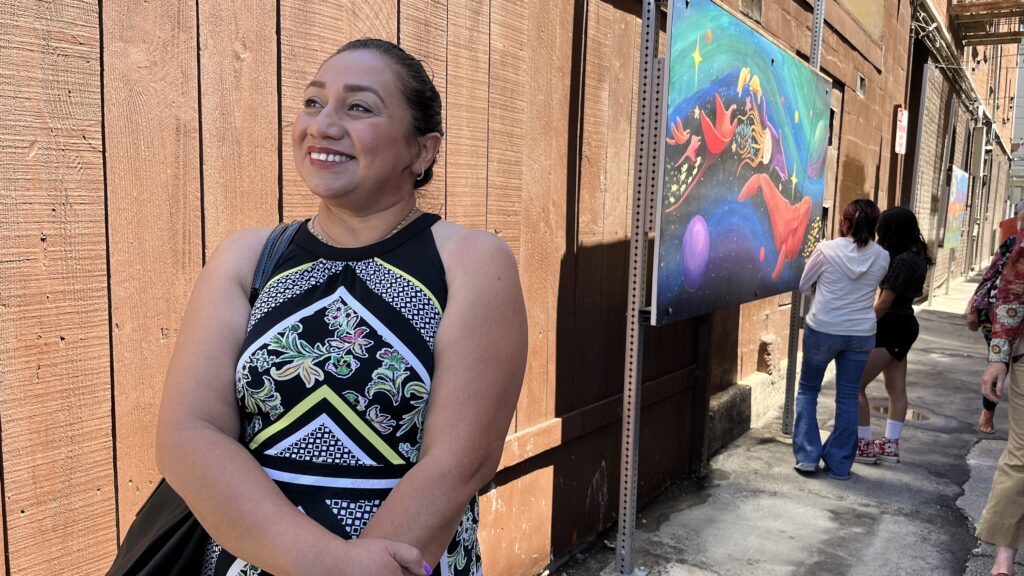
Wendy Segovia, program coordinator at Casa Círculo Cultural, said that the children at this cultural center made two murals: "one was for the little ones, about the importance of reading books and not being so focused on technology, and the second was about inclusion, so that the older ones could express that they agree that we are all equal."
Wendy Segovia, program coordinator at Casa Círculo Cultural Photo: Irma Gallo P360P
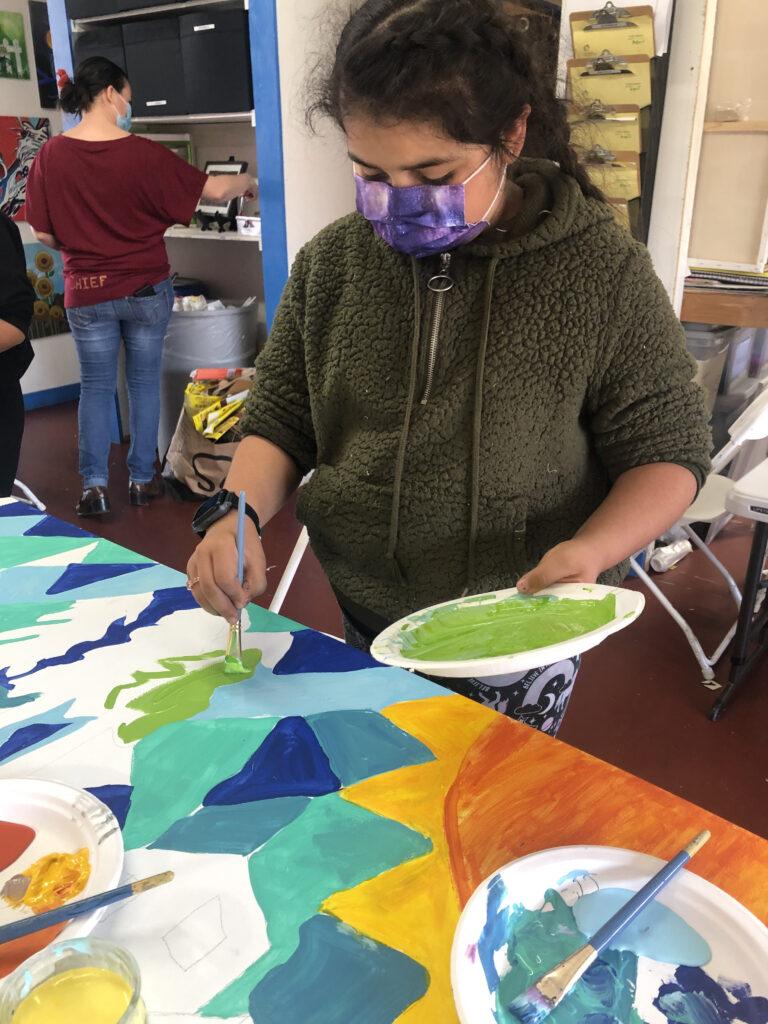
She also said that the process of creating the works of art took place during daily painting classes under the supervision of teachers Roberto Cruz and Ramón Franco, who guided the children and adolescents to finish their projects in the best way possible.
Juliana García, a student at Casa Círculo since she was very young and who participated in the mural for inclusion, said that this cultural center taught her a lot about her culture "and helped me a lot to express myself as the person I am today."
Naomi Segovia, also a student at Casa Círculo Cultural, said that “it taught me some things about here in the United States and other things about my country – Mexico – that I didn’t know, and it helped me talk to other people and overcome my fear of being in front of people.”
Photo: Casa Círculo Cultural
“I just spoke with a child who is very proud of what he did. These opportunities are often not available at school. These cultural events are very important for all of our youth, so they have a place where they can express themselves,” said former Redwood City Mayor Alicia Aguirre in an interview with P360P.
These works of art, in which children express their hope for an inclusive and equal world, where interest in culture overcomes addiction to social media, can be visited free of charge at 816 Main Street, in the alley of the Sequoia Hotel parking lot, in downtown Redwood City.
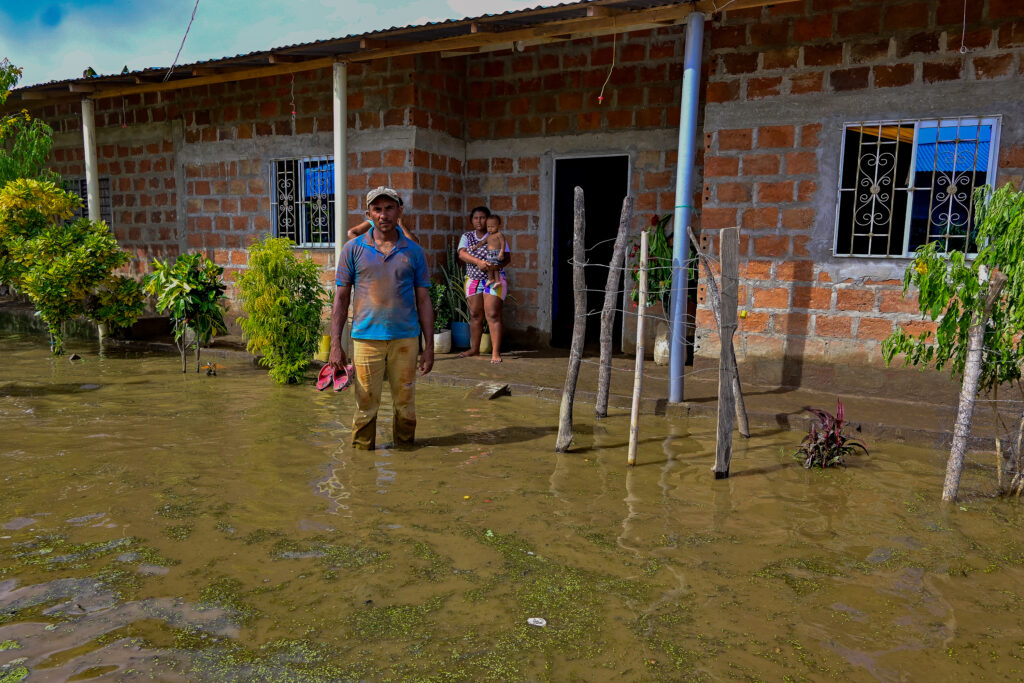
Tacamocho is a district of the municipality of Córdoba Tetón, belonging to the Montes de María subregion, on the banks of the Magdalena River in the Colombian Caribbean. In addition to being a territory severely hit by illegal armed structures and drug trafficking, it is now facing the consequences of climate change, which has forced entire towns to flee to save their lives and the few belongings they have.
Thus, the peoples along the Magdalena River have been displaced and terrorized by illegal armed groups and drug traffickers, coupled with the impoverishment, abandonment and systematic racialization by the state and regional governments, as well as the plundering by multinationals who see in this territory an opportunity to develop large agro-industrial and mining projects, through which large areas of wetlands are drained for the development of large projects, leaving local residents landless.
It should be noted that the Afro-peasant and fishing communities that live on the banks of the Magdalena River are productive territories with a strong livestock vocation, diversified food production and fishing potential that feed the different cities of the Colombian Caribbean and a large part of the national territory.
Regardless of the different situations of rights violations, the inhabitants of this territory have developed systems of resistance and collaborative work to deal with the floods that, since 2014, have become more frequent and have its inhabitants on high alert.
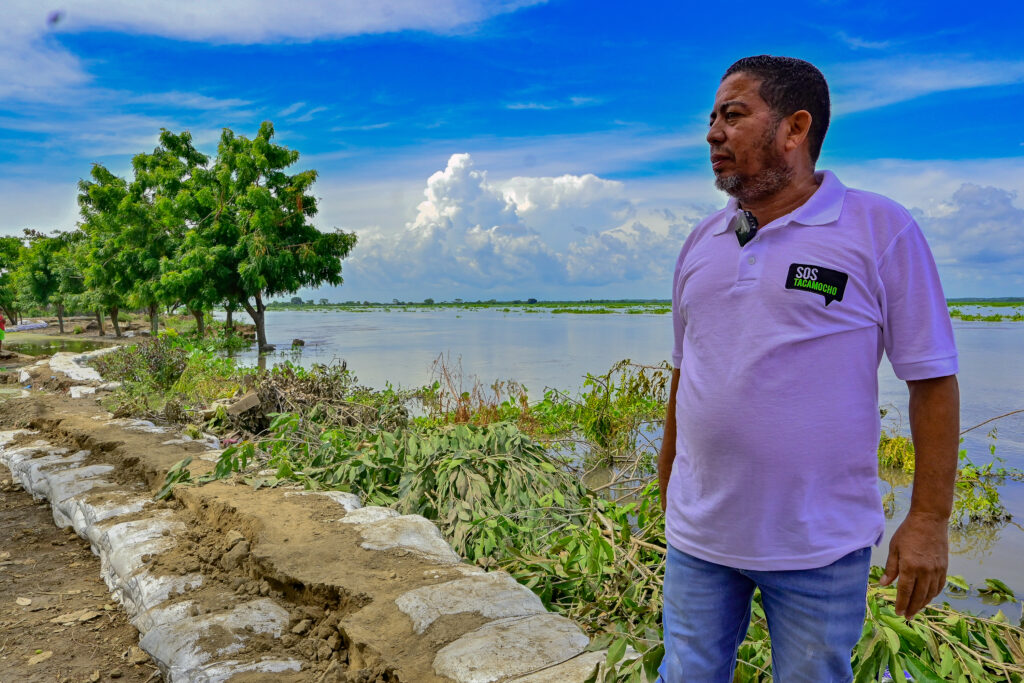
"SOS Tacamocho" is a volunteer group made up of people from the community who, through collaborative work and continuous community monitoring of the river level, prepare for possible floods and erosion that occur in different parts of the community of Tacamocho, while raising their voices to the relevant authorities.
Alex Sierra. Community leader and teacher belonging to the SOS Tacamocho group
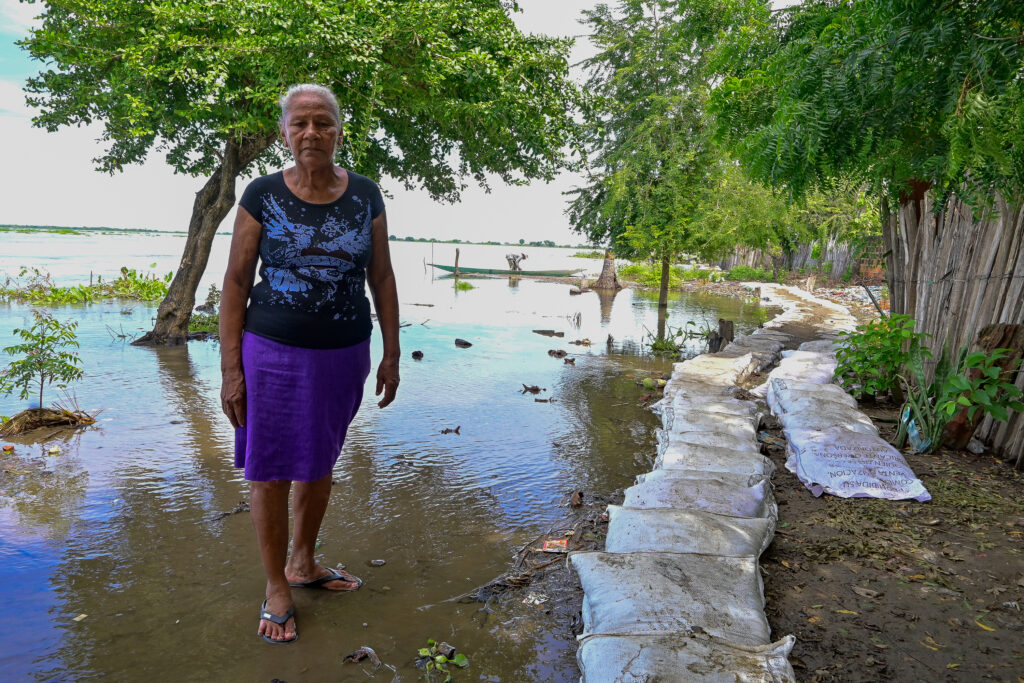
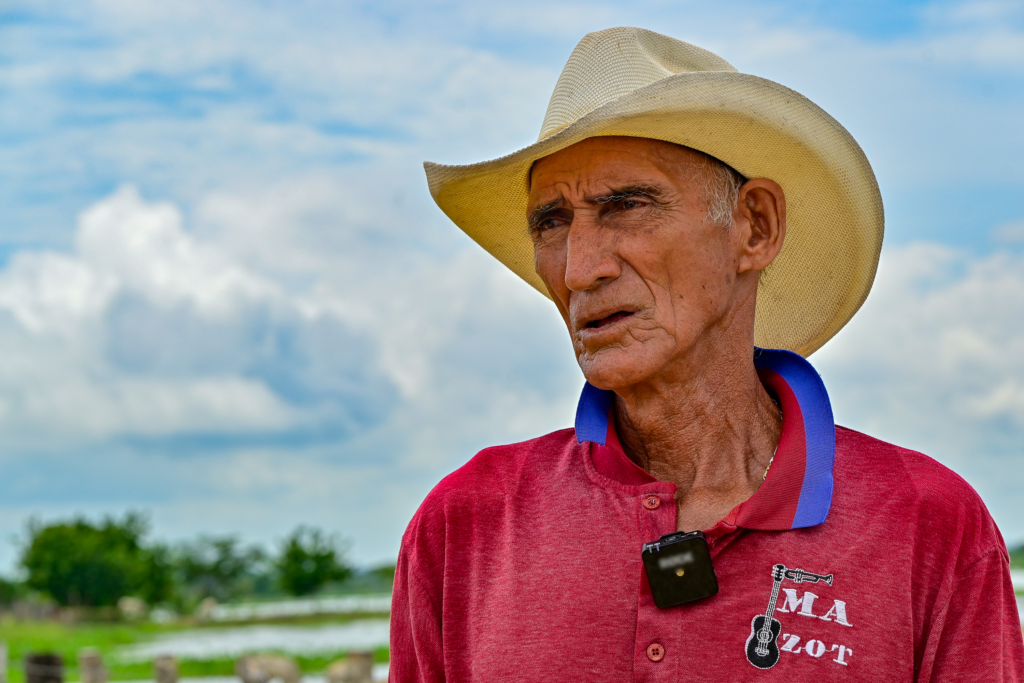
Marys Acosta has lived her entire life in the community of Tacamocho. She lost her home three years ago due to the first wave of winter and the erosion of the river. She and other affected people make up the SOS Tacamocho community.
"This erosion started three years ago, but it had been there before. It has taken away three main streets in the town and also my house. We have relocated with our own resources. We have not had any help from the government, from anyone. But now the situation has worsened," he said.
Erosion and flooding, he says, have put the families of Tacamocho at imminent risk, since the municipal government and national authorities do not have the land available to relocate the entire community.
«We have the dilemma that if we stay here, we run the risk of erosion, and if we leave we will have to stay outdoors, in parks or in schools. Because we have nowhere to go, nowhere to settle. What we want is for the national government to pay attention to us, to remember Tacamocho, that it is not just for collecting votes.»
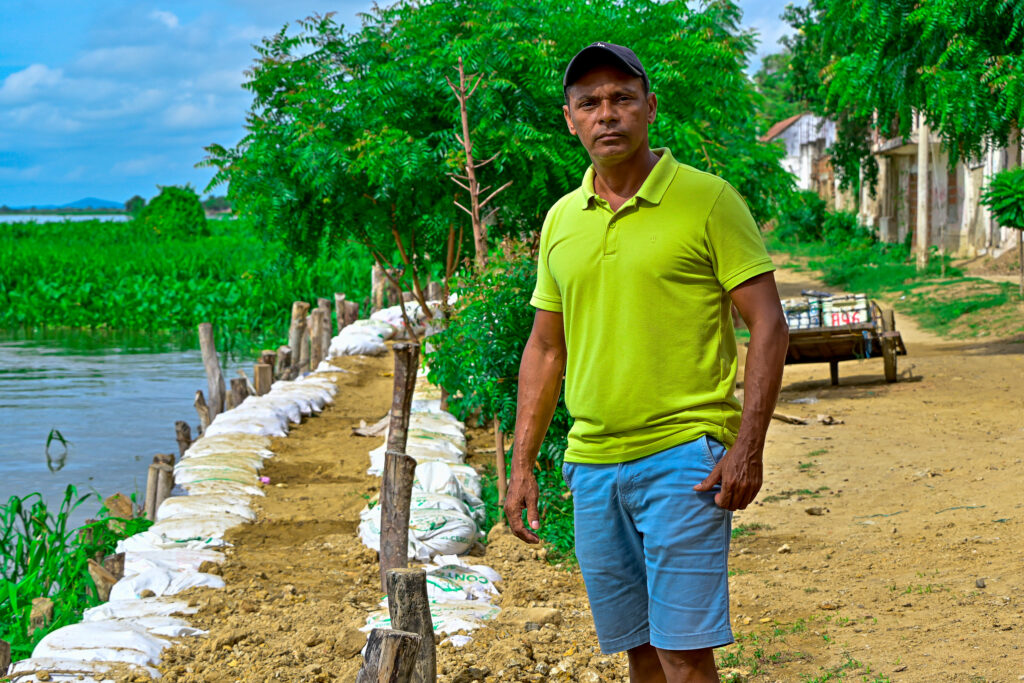
Together with several members of the SOS Tacamocho collective, we walked along part of the banks of the Magdalena River, while its turbulent waters were held back by small dams made of pieces of wood and sacks filled with earth, which have been built in recent days by the inhabitants of the community.
Marys Acosta. Mother and head of household, affected by flooding and erosion on the banks of the Magdalena River.
Erosion. Chronicle of a catastrophe foretold.
The Magdalena River bathes with its turbulent waters and its complex swamps vast plains that make the Caribbean Coast a productive and unrivaled area for its fauna and flora, which are integrated into large swampy areas, mangroves and mountains that extend throughout the region making it a great economic attraction for locals and foreigners.
Large-scale livestock farming projects have been established on the lands closest to the riverbank, and in recent years large farms have been developed for breeding buffalo, destroying the local vegetation. On the other hand, large extensions of monoculture timber plantations can be observed, separating the mountains from the swamps and the latter from the river, directly affecting the biological flow of the waters.
Zambrano, Bolívar, is a town that has seen its economic development on the waters of the Magdalena River, which as it passes through the municipality irrigates its lands for the production of subsistence crops ‒traditional food crops such as corn, rice, etc.‒, and small- and large-scale livestock farming.
In past decades, these same waters made it a strategic point for regional and national trade. But today, the river's waters are one of its greatest fears, due to the floods and erosion that destroy houses every year as it passes through the town.
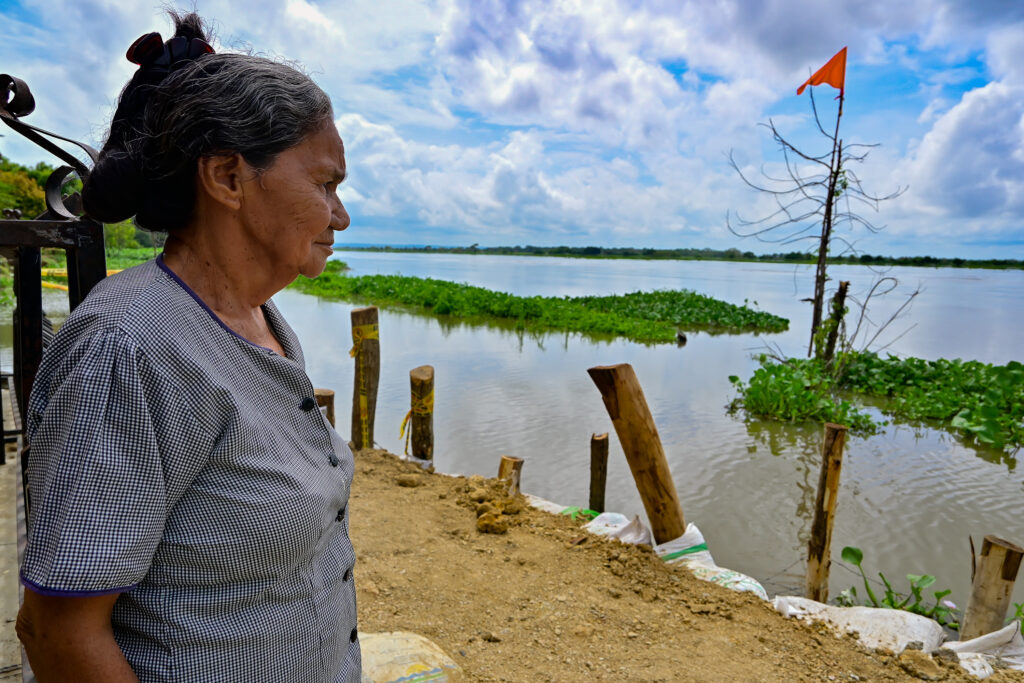
Pabla Martínez Rodríguez, a resident of the municipality of Zambrano, has lost her peace of mind in recent years when she sees the river waters forcefully entering her house, which she is about to lose.
"I have been living on the Magdalena River for 20 years and today we are suffering from the flooding that the river has brought in recent days."
"We haven't received any visitors, much less any help from anyone, not even the government, nothing. We are alone. My house has been falling down since December, when the flooding started. If the flooding continues, we will have to go somewhere else."
Pabla Martínez Rodríguez, resident of the municipality of Zambrano, affected by the erosion of the Magdalena River.
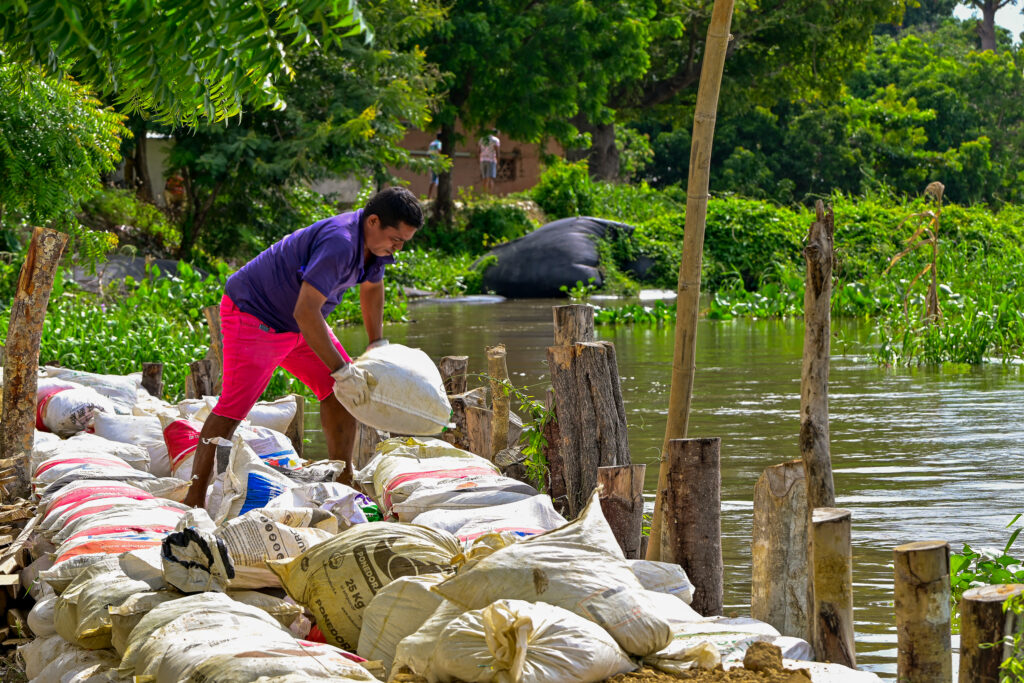
In La Albarrada, one of the historic streets of the community of Zambrano that borders the riverbank, several meters of sacks, bags and plastic sacks filled with earth can be seen stacked and secured with pieces of wood. They are part of the artisanal construction of the dam that separates the water from the houses and with it they seek to avoid the massive displacement of approximately 11 thousand people who live in the urban area of the municipality.
Residents of the area participate in the artisanal construction of the retaining wall to protect their homes from erosion.
"This started on June 24 due to heavy rains and since then we have organized ourselves to deal with the erosion that occurs in the street and other areas that are at risk due to the inclemency of climate change and high concentrations of rainwater. The town is suffering from seeing the gradual growth of the river."
These situations, Fabian Leiva Ospino explained to us, make the risk imminent for the population of the urban area of the municipality as well as for the peasant families, located in the surroundings of the town, who have begun to arrive displaced from their plots by the current flooding, causing an increase in the price of products in the family basket.
Fabian Leiva Ospino, a community leader, who volunteers in the Save Zambrano group, created during the emergency.
Fabian Leiva Ospino, a community leader, who volunteers in the Save Zambrano group, created during the emergency.
Most food crops have been lost due to the rising waters and the total flooding of fertile land, said Julio Humberto Ahumada, a farmer who has lost all his crops and belongings to the floods.
"Families who depend on growing cassava, beans and other products are suffering because of the flood. We have been left without work, without land and without a home because everything is full of water and we don't know when it will end," he said.
«Winter has just begun and we are already adrift and without solutions. The few cattle that our families own have to be taken out and brought to the shores by the village carts, running the risk of them getting lost. The other families that depend on fishing do not fish as before, since the waters are spread out everywhere and the fish hide in the bushes, making fishing more difficult.»
Julio Humberto Ahumada, an Afro-peasant from the community of Zambrano, affected by the loss of his crops due to flooding and erosion on the banks of the Magdalena River
Relocation on paper
In 2017, a resident of the community of Tacamocho filed a class action on his own behalf against the municipality of Córdoba Tetón, the department of Bolívar, the Regional Autonomous Corporation of the Río Grande de la Magdalena ‒CORMAGDALENA‒ and the National General Risk and Disaster Unit ‒UNGRD‒ with file number 13001-23-33-000-2015-00052-02.
The same ruling would later be in their favor in the second instance, issued by the Council of State in 2019, in which the municipality of Córdoba Tetón, the department of Bolívar, CORMAGDALENA and UNGRD were urged to adopt the necessary measures and relocate the population living in the district of Tacamocho to a safe place, where they would not be threatened by coastal erosion, flooding or flooding caused by the Magdalena River.
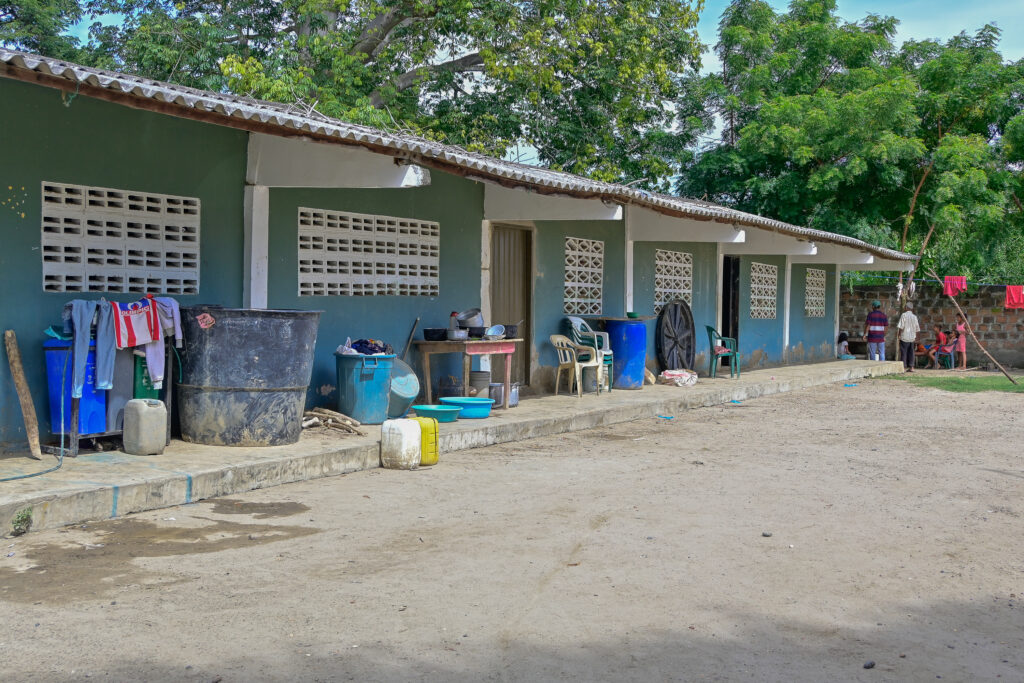
Tacamocho School, used as a temporary shelter by several families affected by erosion and flooding.
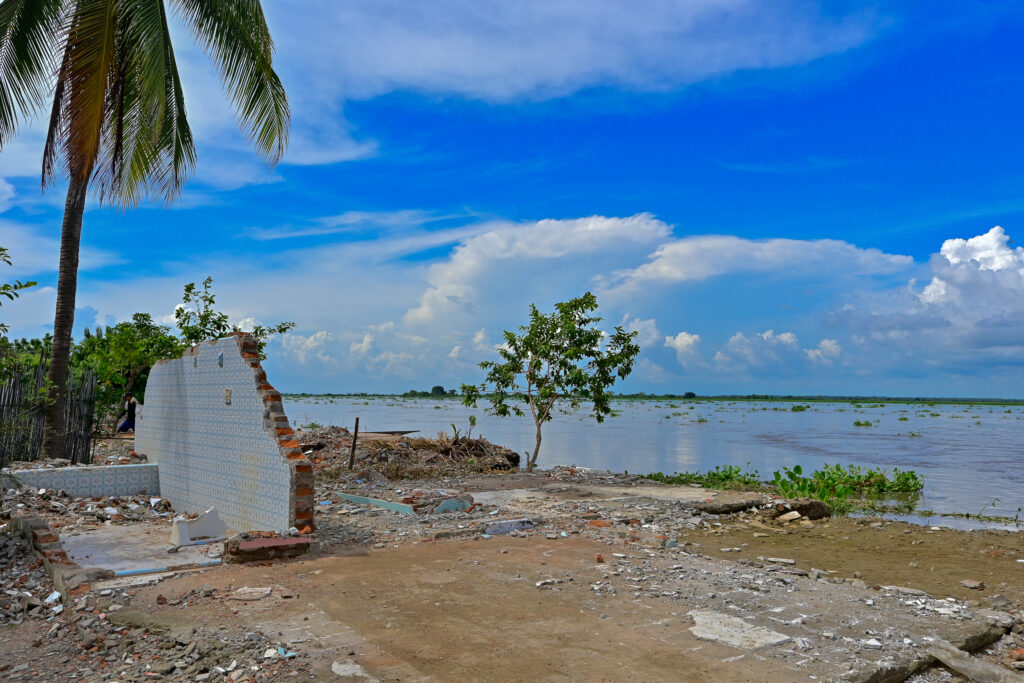
Manuel Gamarra, a community leader and member of SOS Tacamocho, told us about the failure to comply with the Popular Action, while showing us the houses destroyed and abandoned due to the erosion caused by the river.
«We are experiencing one of the most serious situations in our town. The river is at its highest risk level since 2014, when the first houses in the community began to disappear due to erosion. People began to move and that is where our fear began, because the river runs headlong into the population and begins to compromise not only private property, but also human lives. We have had two losses here that have hurt us greatly.»
«We are currently threatened by erosion and flooding from the river. We have been building small artisanal dams in the community with the help of the mayor's office to contain the water. But we all know that this will not solve the problem.»
Ruins of a house on one of the main streets of the community of Tacamocho, which have sunk to the bottom of the river due to soil erosion.
According to the SOS Tacamocho group, since the erosion and flooding began, approximately 366 families have been displaced. This is a town with more than three thousand inhabitants, Gamarra tells us, looking towards the river.
«We are currently seeking to enforce the ruling that Tacamocho must be relocated. We want the mayor's office to have that land available, to allocate the resources to be able to take the first step, because we know that without that there will be no relocation.»
The community of Tacamocho is repeatedly calling on the national and departmental governments and all the entities responsible for their relocation as they watch their houses collapse without being able to do anything.
The river could enter the village at any moment and sweep away their homes, or there could simply be massive erosion of the community and its surroundings. Fearing this could happen, several families are moving anywhere, without guarantees and without institutional support.
Luis Cequeda and his family. Victims of erosion and strong flooding in front of their home
During our tour of the streets of Tacamocho, residents said that people are moving to unsafe places or even to places where pigs were once raised, without having minimum decent housing conditions.
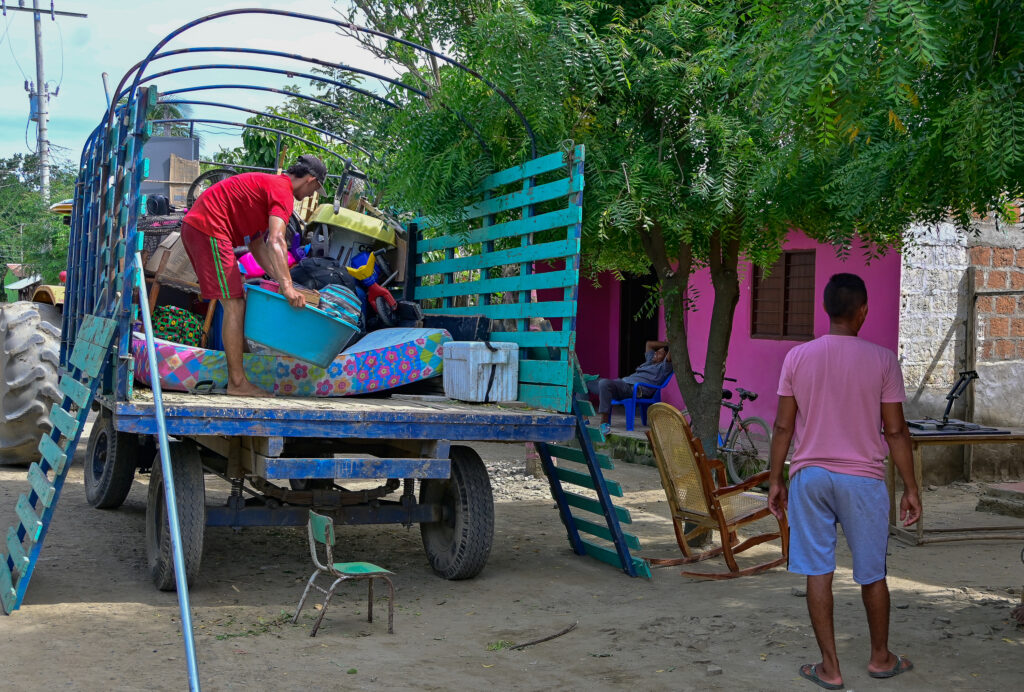
The mayor's office has provided a tractor for all those who want to leave, and when the move is made effective they are given 400 thousand pesos to pay rent and groceries worth 80 thousand pesos per family, monthly.
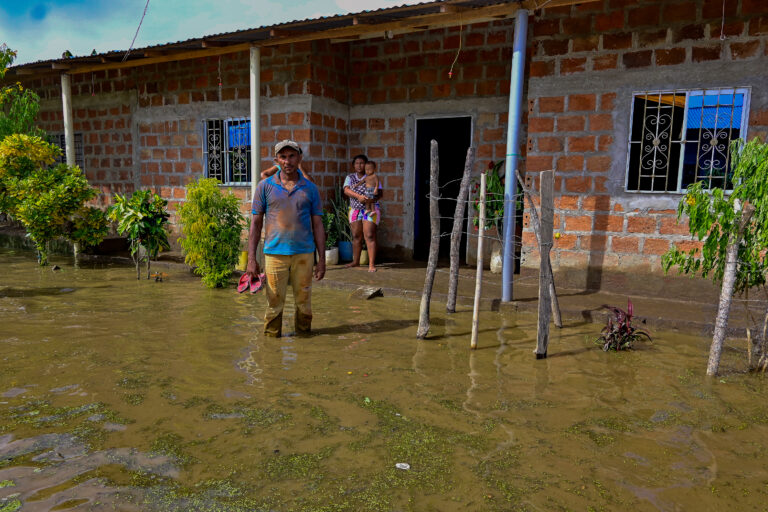
"We have had water in our homes for more than 15 days. The only hope is that the river waters will recede, but what we see is that the water is rising and we are here without any place to go with our children. We are alone."
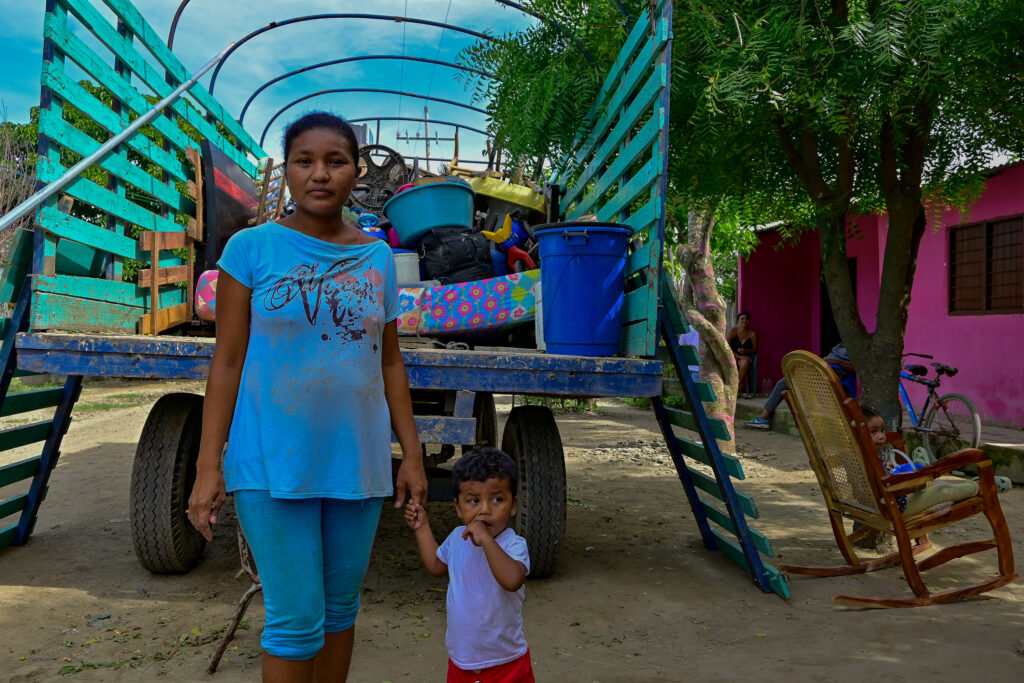
A family moves to Tacamocho due to erosion and flooding.Idulis Arrieta, displaced from the community of Tacamocho due to erosion and heavy flooding in recent days.
Idulis Arrieta, displaced from the community of Tacamocho due to erosion and heavy flooding in recent days.
In the municipalities of Córdoba Tetón and Zambrano, works included in the Territorial Differential Approach Development Plans ‒PDET‒ have been implemented for several months, as well as in the entire Montes de María subregion, which are a planning and management instrument of the National Government through the Territorial Renewal Agency ‒ART‒, to implement as a priority and with greater speed the sectoral plans and programs, within the framework of the Rural Reform achieved in point one of the peace agreement signed by the Colombian State and the extinct FARC-EP guerrillas in 2016.
Several community leaders affected by erosion and flooding are wondering what work is being done to address climate change in this area of national importance, which has been hit by violence and, for some time now, by flooding.
Here's what you need to know about local news from July 4-9 to stay up to date.
The seventh month of 2022 has begun amidst several important events at the national level, such as the murder of at least 8 people and more than 30 injured in a shooting at a July 4 parade in Highland Park, Illinois, among other shootings; and the signing of an Executive Order by President Joseph Biden to protect access to reproductive health services.
‒ 0 ‒
One person was rescued from the water at Pier 28 on Monday, according to the San Francisco Fire Department. The incident was first reported to the fire department at 5:06 p.m., and the person was taken to the hospital where he was listed in stable condition.
‒ 0 ‒
A 14-year-old girl was struck by a bullet while watching fireworks in San Francisco’s Bayview district on Monday night, July 4, according to local police. The shooting was reported shortly before 10 p.m. in the area of Underwood Avenue and Ingalls Street.
The girl was taken to a hospital after being hit by the bullet and is expected to survive.
‒ 0 ‒
Wilmer Amador, 19, of East Palo Alto, was arrested about 5:30 a.m. Tuesday in connection with the killing of 33-year-old East Palo Alto resident Abner Najeraxol, who was stabbed to death in the 400 block of East O'Keefe Street, police said.
Officers responded at 11:35 p.m. to a report of a stabbing and found the victim wounded. Despite first aid, Najeraxol died at the scene, authorities said.
‒ 0 ‒
Most San Mateo County libraries returned to seven-day-a-week service last December following reopening plans approved by the library system's board of directors. Portola Valley Library will join other county libraries with expanded hours beginning Tuesday.
The library will be open from Monday to Thursday from 10:00 a.m. to 8:00 p.m., and from Friday to Sunday from 10:00 a.m. to 5:00 p.m.
‒ 0 ‒
Several San Francisco police officers were injured after responding to a large crowd and fire in the city's Mission District on Tuesday morning.
Officers responded shortly after 12:30 p.m. to the crowd in the area of 24th and Harrison streets, ordering the crowd to disperse, deciding it was a risk to public safety and property.
The crowd then threw glass bottles and detonated explosive devices in the direction of the officers. Twelve of them reported experiencing ringing in their ears and two also suffered minor burns from the remains of the explosive devices.
The San Francisco Fire Department put out the fire after police officers finally cleared the area.
‒ 0 ‒
A shooting in San Francisco's Civic Center area left a 56-year-old woman wounded early Wednesday in the first block of McAllister Street off Market Street. The woman was outside when someone shot her and then fled, according to local police, who said the victim was taken to a hospital for treatment of injuries that were not considered life-threatening.
‒ 0 ‒
A San Francisco Zoo penguin named Captain EO, admired for having the personality of a sophisticated older gentleman, died Wednesday, zoo officials said.
He was approximately 40 years old. No cause of death was given. Captain EO was the last of the founding members of the zoo's Magellanic colony and was one of the oldest penguins in human care. He lived 10 to 20 years beyond his normal life expectancy.
‒ 0 ‒
The Mayor of San Francisco, London Breed, on Thursday named former Deputy District Attorney Brooke Jenkins to replace District Attorney Chesa Boudin, who was ousted in an election last month.
‒ 0 ‒
A man and a woman were found dead in a suspected murder-suicide at a home in South San Francisco Thursday night.
Officers received a request shortly before 8 p.m. to conduct a welfare check at a home on Chestnut Avenue and arrived to find the two people dead in the residence, police said.
Investigators said the murder-suicide occurred after a possible domestic dispute, but they did not provide further details. No one else appears to be involved and the names of the two people who died have not been released.
Photo: Twitter Russell JeungListen to Constanza Mazzotti's voice note
«No pretendas apagar con fuego un incendio, ni remediar con agua una inundación», ‒Confucio.
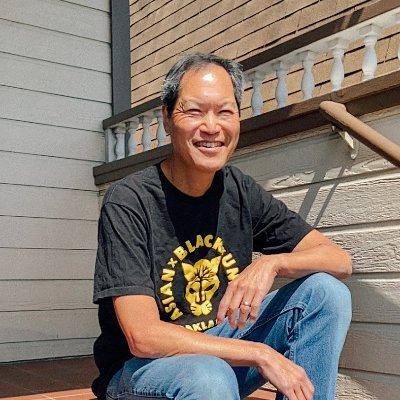
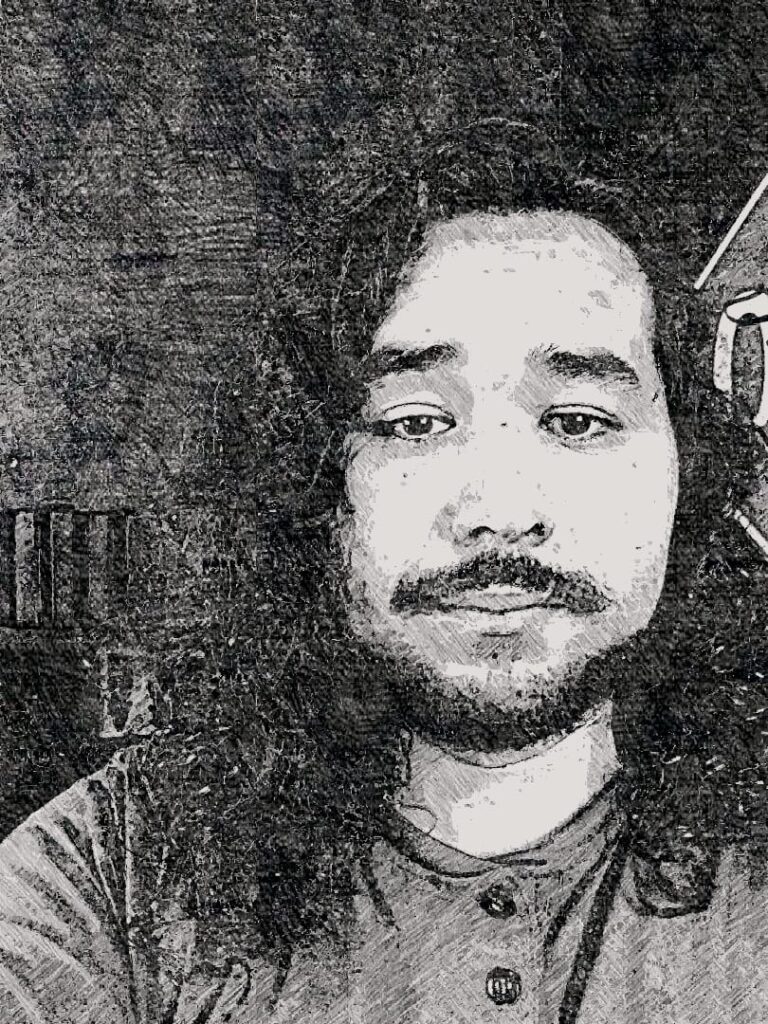
El sociólogo asiático americano de la Universidad de San Francisco, Russell Jeung, un profesor dedicado a cambiar la vida de la comunidad asiática en EE. UU. asumió la enseñanza de Confucio y no sólo la aplicó con un pequeño grupo de jóvenes en el área de la Bahía, sino a una sociedad entera.
Se dice que los profesores cambian la vida de las personas pero ¿Cómo impartir una clase de política a un grupo de jóvenes exaltados después de un partido de futbol?
Parecería que ante una denuncia de violencia, la reacción normal sería responder de la misma forma, pero Russel Jeung observó que las necesidades de los más vulnerados, además de denunciar, es el de desahogarse, al igual que un profesor haría con un grupo de alumnos que, después de un partido, pretende que sus discípulos respondan a preguntas teóricas. ¿Qué hacer? Tomar un respiro.
Russel Jeung one of the founders of Stop AAPI Hate dedicada a acabar con el odio contra todos aquellos de origen asiático y de las islas del Pacífico en la Unión Americana (AAPI).
In this space there is a space to write, in different languages, those testimonies full of experiences and emotions where the complainants can explain in detail their feelings.
Jeung lleva además la filosofía de Confucio a su propia carrera y vida pues, más allá de sobrellevar los testimonios de odio que viven las personas de su comunidad, utiliza la sociología no sólo como «forma de ver el mundo, sino que le proporcionó modelos para el cambio social».
«Sabíamos por la historia que a los asiáticos se les culpa de las enfermedades. Luego la gente los ataca con violencia racista y con políticas racistas», dijo Russell en una interview for the University of Southern California.
El académico y activista es corredor y ha hecho de las respiraciones, al igual que lo haría un profesor con ética frente a una clase de jóvenes emocionados, un método de rutina que incluye lo que él llama «oraciones de respiración», «inhalar y exhalar», pues menciona que «correr es una de las formas en las que logra descomprimir su trabajo».
Jeung es autor de «En casa en el exilio: Encontrando a Jesús entre mis antepasados y vecinos refugiados», en el que relata la historia de las seis generaciones de su familia en California, y la manera en la que vivieron su vida racializada contra los asiáticos en Estados Unidos; y también de
«Mover los pies: El activismo estudiantil y el surgimiento de los estudios asiático-americanos».
Se licenció en biología humana y obtuvo un máster en educación en la Universidad de Stanford, posteriormente, tras trabajar en China y en la alcaldía de San Francisco, obtuvo su doctorado en sociología por la Universidad de California, Berkeley.
Por si fuera poco, Russel Jeung coprodujo con Valerie Soe el documental «The Oak Park Story» (2010), sobre una demanda histórica en materia de vivienda en la que estuvieron implicados sus compañeros inquilinos camboyanos y latinos.
Stop AAPI Hate
La organización que codirige, fue fundada en enero de 2020 a raiz del impacto de la pandemia por COVID-19, esta que gestiona denuncias y da seguimiento de incidentes de odio y discriminación contra la comunidad AAPI.
Stop AAPI Hate es liderado por Manjusha P. Kulkarni, Cynthia Choi, y Russell Jeung, además de estar conformada por tres organizaciones sin fines de lucro.
En su primera semana, el equipo de Stop AAPI Hate recibió cientos de mensajes de odio en donde se describen acciones en contra de la comunidad asiática por el estigma que trajo la enfermedad COVID-19 a dicho grupo social.
A la fecha, la organización ha recibido cerca de 11 mil denuncias, entre las que destacan el acoso verbal, violencia física e incidentes de odio contra mujeres.
Si bien a primera instancia el mecanismo con el que trabaja la organización a manera de denuncia y seguimiento de casos parecería que dista mucho en la frase del filósofo y educador chino, Russell Jeung se percató que una de las grandes funciones que cumple Stop AAPI Hate que es el de escuchar el desahogo de la comunidad asiática que vive las vejaciones a su integridad tanto física como sicológica y emocional y ahí es en donde radica la respuesta al dicho de Confucio.
El grupo adopta un enfoque de investigación científica para recopilar datos de incidentes de violencia, odio, acoso, discriminación, rechazo y acoso infantil y así, analizarlos y proporcionarlos al público en general mediante testimonios.
Todo ello desde la página web de la organización en donde los usuarios pueden explayarse en primera persona y en varios idiomas para describir de manera detallada y extensa no solamente el incidente sino también su sentir.
El alcance de Stop AAPI Hate no es solamente el de la denuncia sino el de generar estudios sobre el comportamiento de los discursos de odio entre la sociedad asiática en Estados Unidos.
Dichos estudios han tenido un impacto no solamente de denuncia sino además a nivel gubernamental, haciendo que el gobernador de California, Gavin Newsom, y la Fiscalía General del Estado respondieran a la creciente amenaza de discriminación.
Así, el 23 de febrero de 2021 la legislatura de California a través del asambleísta Phil Ting, presidente de la Comisión de Presupuestos, promulgó la ley AB 85, que incluye 14 millones de dólares que apoya a la organización y el análisis y la investigación de Stop AAPI Hate con la finalidad de tener una idea más clara de los problemas que atraviesa dicha comunidad.
Cabe resaltar que Stop APPI Hate inició como un mecanismo de denuncia para la comunidad asiática norteamericana, pero en la actualidad se dedica también a terminar con todas las formas de racismo estructural contra las comunidades afrodescendientes, latinos, nativos e indígenas.
The magazine Time incluyó a Manjusha Kulkarni, Cynthia Choi y Russell Jeung entre las 100 personas más influyentes de 2021.
Every Friday during the summer, Redwood City hosts the Music On the Square festival in the city's main square. This July 8th it was the turn of SF PeopleThe event, which was held at the esplanade of the San Mateo County Museum of History, brought out the cumbia rhythm to those who gathered there.
With a fusion of reggae, salsa, hip-hop, reggaeton and, of course, cumbia, the Bay Area-born group immediately set the mood. Despite temperatures reaching 80 degrees Fahrenheit — or perhaps because of it — the passion with which they performed their music inspired people to dance without fear of embarrassment.
Not only Latinos or people of Hispanic origin, but many of those who identify as white—because in the United States everything has to do with race—danced the cumbia and salsa of La Gente SF as if the music could make them forget that since July 1st in California the price of gasoline is more than six dollars a gallon, which has caused an increase in the prices of all products.
Musical group «La Gente SF» Photo: Irma Gallo P360P
Fridays at Music On The Square are a party: groups of friends, couples and entire families —including pets— arrived at 3 pm with their chairs, tables, coolers and tablecloths to set up their picnic and enjoy the concert with all kinds of food: from guacamole and tacos to pizza, and of course, a good selection of cheeses, seeds and fruits.
Although glass bottles are banned, alcoholic beverages such as beer and wine are allowed. And although local vendors offer wine in plastic cups, many managed to sneak in a nice Pinot Noir or Chardonnay, because, of course, it would be sacrilege not to accompany good music with some of the delicious wines produced in California.
The concert ended at 8pm. Although almost all the restaurants and shops near the square were already closed, no one seemed to care; La Gente SF's cumbia had achieved a miracle: it made everyone dance as if nothing else mattered in the world.
*Calls for a vote to guarantee reproductive rights as a federal law
The Chairman Joseph Biden firmó este viernes una Orden Ejecutiva para defender los derechos reproductivos de mujeres en EE. UU., lo cual incluye el aborto y la anticoncepción, así como la protección de su privacidad y acceso a información al respecto.
«La prohibición nacional del aborto no sucederá mientras sea presidente, la vetaré», señaló el mandatario estadounidense en una conferencia de prensa realizada desde La Casa Blanca este viernes por la mañana.
Y es que, hace dos semanas, el Tribunal Supremo de EE. UU. emitió una decisión que anulaba el caso Roe contra Wade y eliminaba el derecho constitucional de la mujer a elegir, lo que arrebató expresamente al pueblo estadounidense un derecho que había reconocido durante casi 50 años: el derecho de la mujer a tomar sus propias decisiones en materia de salud reproductiva, sin interferencias del gobierno.
La Orden Ejecutiva se basa en las medidas que la administración de Biden ya ha tomado para defender los derechos reproductivos:
Salvaguardar el acceso a los servicios de salud reproductiva, incluidos el aborto y la anticoncepción;
Proteger la privacidad de los pacientes y su acceso a información precisa;
Promover la seguridad de los pacientes, los proveedores y las clínicas; y
Coordinar la aplicación de los esfuerzos federales para proteger los derechos reproductivos y el acceso a la atención sanitaria.
Asimismo, el Presidente ha ordenado al Secretario de Salud y Servicios Humanos ‒HHS, por sus siglas en inglés‒ que tome las medidas y le presente un informe en un plazo de 30 días sobre los esfuerzos realizados para proteger el acceso al aborto con medicamentos, garantizar la atención médica de urgencia y proteger el acceso a la anticoncepción, poner en marcha esfuerzos de divulgación y educación pública y convocar a abogados voluntarios.
Además, esta orden ejecutiva pide a la Comisión Federal de Comercio ‒FTC, por sus siglas en inglés‒ que tome medidas contra los corredores de datos que venden información privada a grupos extremistas o a cualquiera.
Y pidió, en especial, proteger la información sanitaria privada en los estados con leyes extremas.
Voting for the right to choose
Si bien el presidente reconoció las limitaciones que enfrenta su oficina ante el fallo de la Suprema Corte, precisó que, basándose en el razonamiento del Tribunal de que no hay derecho constitucional a elegir, «la única manera de cumplir y restaurar ese derecho para las mujeres en este país es votando, ejerciendo el poder en las urnas».
Explicó que se necesitan dos senadores adicionales a favor del aborto y una Cámara a favor del aborto para codificar Roe como ley federal. «Tu voto puede hacer que eso sea una realidad».
«El Tribunal ha dejado claro que no protegerá los derechos de las mujeres. Punto. Después de haber tomado la decisión basándose en la lectura de un documento congelado en el tiempo en la década de 1860, cuando las mujeres ni siquiera tenían derecho a votar, el Tribunal ahora prácticamente reta a las mujeres de Estados Unidos a ir a las urnas y restaurar los mismos derechos que acaban de quitar», precisó en su discurso.
Sin embargo, destacó que «las mujeres no carecen de poder electoral o político. El porcentaje de mujeres que se registran para votar y emiten un voto es consistentemente más alto que el de los hombres que lo hacen».
«Las mujeres de Estados Unidos pueden determinar el resultado de este asunto», dijo. «Tengo la esperanza y la firme creencia de que las mujeres, de hecho, acudirán en un número récord para reclamar los derechos que les ha arrebatado el Tribunal».
En ese sentido, precisó que las votaciones serán la vía más rápida disponible para que los derechos reproductivos de las mujeres se vuelva ley federal.
«La forma más rápida de restaurar Roe v Wade es aprobar una ley nacional que la codifique, misma que firmaré inmediatamente después de su aprobación en mi escritorio».
«No podemos esperar. Los gobernadores republicanos extremos, las legislaturas estatales republicanas extremas y los extremistas republicanos en el Congreso en general, todos ellos no sólo han luchado para quitarnos el derecho, nuestros derechos, sino que ahora están decididos a llegar tan lejos como puedan».
Agregó que la decisión de la Suprema Corte ha alentado a los gobernadores republicanos más extremistas para imponer algunas de las leyes más duras y restrictivas que se han visto en este país en mucho tiempo, las cuales no sólo ponen en riesgo la vida de las mujeres.
«Lo que estamos presenciando es un gigantesco paso atrás en gran parte de nuestro país. Las prohibiciones ya están en vigor en 13 estados. Es probable que otros doce estados prohíban la elección en las próximas semanas», subrayó.
Biden subrayó que, en varios de estos estados, las leyes son tan extremas que han planteado la amenaza de sanciones penales para los médicos y los proveedores de atención sanitaria. «Son tan extremas que muchas no permiten excepciones, ni siquiera en caso de violación o incesto».
«Si quieren cambiar las circunstancias de las mujeres e incluso de las niñas en este país, vayan a votar. Cuando decenas de millones de mujeres voten este año, no estarán solas. Millones y millones de hombres emprenderán la lucha junto a ellas para restablecer el derecho a elegir y el derecho más amplio a la privacidad en esta nación, que ellos negaron que existiera».
«Por Dios, hay elecciones en noviembre. Voten, voten, voten, voten», precisó.
«La elección a la que nos enfrentamos como nación es entre la corriente principal y la extrema, entre avanzar o retroceder, entre permitir que los políticos entren en las partes más personales de nuestras vidas y proteger el derecho a la privacidad».
«Se trata de una elección. Este es un momento de restaurar los derechos que nos han quitado y el momento de proteger a nuestra nación de una agenda extremista que es antitética a todo lo que creemos como estadounidenses».
Autoridades han llamado a los residentes del condado de San Mateo a participar en el 18º Día de Preparación para Desastres el próximo 30 de julio, con la finalidad de conocer y aprender sobre la respuesta oportuna ante emergencias.
El evento gratuito y familiar que tendrá lugar de 10:00 a 14:00 horas en el Centro de Eventos del Condado de San Mateo, brindará la oportunidad de explorar vehículos de respuesta a emergencias, conocer robots de escuadrones antibombas y asistir a clases de primeros auxilios y RCP.
Además, los participantes podrán aprender sobre recursos comunitarios y más.
El evento es organizado por la Supervisora del Condado de San Mateo, Carole Groom, con el apoyo del Departamento de Manejo de Emergencias.
Durante el evento, los asistentes elegibles también podrán participar en la campaña de donación de sangre que pondrá a disposición el Centro de Sangre Stanford, para la cual es necesario hacer una cita. Los interesados pueden consultar la disponibilidad de horario y hacer su registro dando click here.
Entre los recursos que los visitantes podrán visitar, estarán mesas de diversas organizaciones donde se podrá obtener más información sobre lo que necesita para prepararse, qué recursos locales están disponibles en caso de un desastre y conocer a los socorristas locales, desde voluntarios hasta profesionales.
Para aquellos que necesitan adquirir equipo de prevención, habrá mesas de vendedores que facilitarán la compra de sistemas de filtración de agua, suministros de primeros auxilios, paquetes de supervivencia e incluso generadores.
A su vez, se ofrecerán soluciones solares, extintores de incendios y posiblemente tiendas de campaña.
Si usted es una organización que desea una mesa de recursos o es un minorista que desea espacio en el evento, contacte con Susie Castoria a través de su correo: SCastoria@smcgov.org.
El evento es para todas las edades, contará con estacionamiento y perros calientes gratuitos. Los suministros de emergencia también estarán disponibles para los asistentes.
Las primeras aceras nuevas ya están abiertas en una importante Middlefield Road redevelopment a través de North Fair Oaks.
Las aceras abiertas y la instalación de nuevos postes de alumbrado público marcan un hito en un proyecto para crear una calle más segura y llevar a los vecinos y visitantes a disfrutar de esta área comercial.
«Con las nuevas aceras abiertas, esta es la primera oportunidad para que todos tengan una idea de cómo se verá el proyecto terminado», dijo el supervisor del condado de San Mateo, Warren Slocum, cuyo Distrito 4 incluye North Fair Oaks. «Ahora hemos cruzado del concepto a la realidad».
Middlefield Road es una de las principales arterias de la península y comienza en el centro de Redwood City en su extremo norte. Pasa por el área no incorporada de North Fair Oaks en su camino a través de Atherton y Menlo Park y hacia el condado de Santa Clara.
La reconstrucción a través de North Fair Oaks está dirigida por el Departamento de Obras Públicas del Condado de San Mateo. El proyecto de 25 millones de dólares contempla la reconfiguración de Middlefield entre las avenidas Pacific y Fifth de cuatro a tres carriles: uno de circulación en cada dirección y uno central para girar a la izquierda.
El trabajo adicional incluye líneas para bicicletas, aceras más anchas, estacionamiento en paralelo, elementos de la calle recomendados por el Consejo Comunitario de North Fair Oaks, como bancos, árboles y jardinería, farolas, recipientes de basura, arte callejero y espacios públicos.
Además, habrá integración de tecnología «inteligente» en características como alumbrado público conectado, señalización digital, monitoreo de tráfico y análisis de peatones
«Se verá hermoso», dijo María Bucio, una empleada de mucho tiempo en Mueblería Uruapan en Middlefield Road.
Bucio dijo que la tienda de muebles, con artículos que van desde mesas auxiliares hasta comedores finos, colchones y más, enfrenta una intensa presión de los minoristas en línea y de descuento. Compiten con horarios flexibles y servicio al cliente, dijo, y ahora el recientemente rediseñado Middlefield Road creará un ambiente más acogedor para los compradores y alentará a las empresas a invertir en nuevas señales y otras mejoras.
Las empresas permanecen abiertas durante el horario laboral, mientras que, para mantener seguros a los compradores y trabajadores, las áreas peatonales están bien marcadas y separadas por barreras de la construcción activa.
Se prevé que la mayor parte del trabajo esté terminado para diciembre de 2022. Los postes de servicios públicos conjuntos se retirarán después de que todas las empresas de servicios como Pacific Gas and Electric ‒PG&E‒, Comcast, AT&T, Verizon y Open 5G, hayan reubicado sus cables aéreos, e instalado y energizado sus líneas subterráneas.
Se anticipa que esta fase se completará luego del proyecto de construcción.
Los fondos para el proyecto provienen del impuesto sobre las ventas de medio centavo de la Medida K del Condado ‒12.5 millones de dólares‒, las empresas de servicios públicos ‒8.3 millones de dólares y otras fuentes.
Since the U.S. Supreme Court overturned Roe v. Wade, women across the Union have begun to wonder whether they should delete apps that track their periods.
Fearing that state governments may use the information downloaded from these apps, women are making calls on social media to stop using these apps, or even to use them randomly to feed false information into the databases of these programs.
The short answer to the core question is yes. If you are in a state where abortion is illegal and you plan or contemplate having one in an emergency, it is best to delete any records that could be used against you.
The long answer is: these apps are the least of your problems.
Our life online
The scary truth is that we have been feeding the Big Data monster for years. Our lives, memories, photos, thoughts, sleep patterns, movements, etc. are already online. It's not just a problem with the apps we feed information about our periods - everything we type and consume on our devices can be used against us.
Online shopping is also a concern. From pregnancy tests to health items, these digital records can be used to pursue suspicion of a crime.
We must also mention messaging applications and various social networks.
The companies themselves have assured users that they are working to protect their customers' information, but let's not beat around the bush, these companies are required to share your information if the government requests it.
Unfortunately, if the government asks Google or a social network for information relevant to the investigation of a crime, they have to give in.
For Anna Lee Mraz, CEO of this media outlet, “The app is a powerful technological tool that – I deduce from its operation – uses algorithms and probability to determine cycles or the possibility of pregnancy in menstruating people. I used it to get pregnant. With the information about your symptoms that you yourself provide to the app, it determines your hormonal cycles. I find it grotesque that it is used to persecute people seeking abortion.”
Discretion and awareness
It is unfortunate that women's reproductive rights are being set back in the US. This decision will have repercussions at every level of the social, legal, political and reproductive life of women across the country. It also forces us to rethink our relationship with apps that collect and request sensitive information about our lives.
And it is not only affecting women, as humans without a uterus we must also be aware of what we share, talk about and publish, because it can be used as evidence. We have the obligation to be discreet in decisions about the health of those around us and to be aware of our role in case one of our loved ones is in danger.
Hans Leguizamo.Audio and video coordinator for Peninsula 360 Press. Sociologist and researcher specializing in electronic entertainment, video games and consumer rights.