

Thursday, June 18, 2026
Home Blog Page 157

Alzheimer's worries and occupies California women

Alzheimer's worries and occupies California women
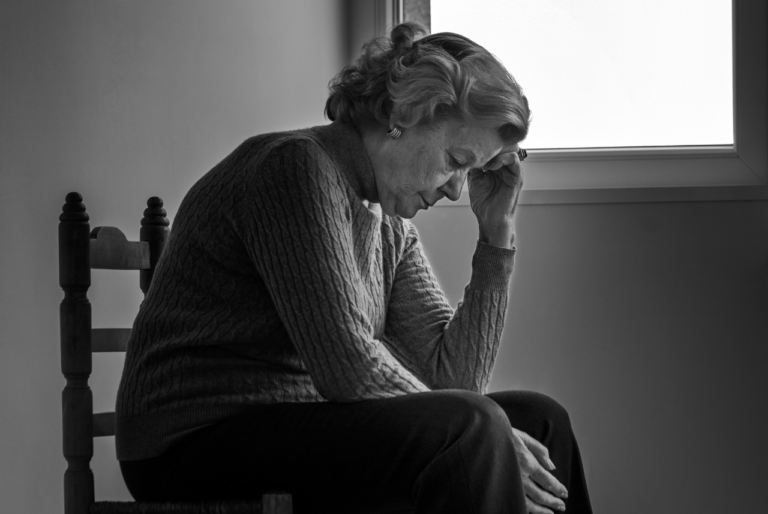
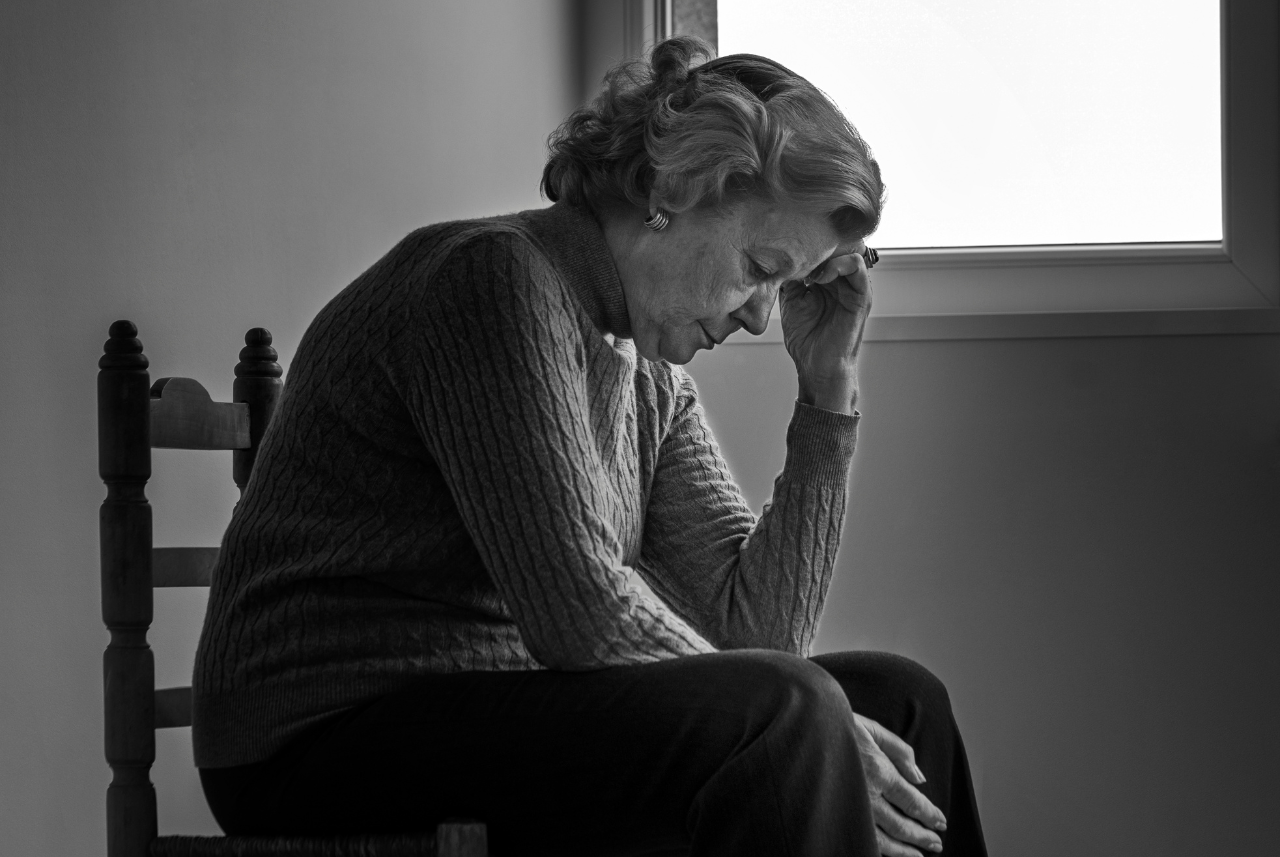
Alzheimer's is a concern for women in California, as the population is aging and has a large number of adults over 65, more than any other state.

Listen to this note:


Alzheimer's is a concern for women in California, as the population is aging and has a large number of adults over 65, more than any other state. 

The disease affects women in particular, accounting for nearly two-thirds of those diagnosed and more than 60 percent of caregivers, with 11 million women in the United States suffering from Alzheimer's or caring for someone who suffers from it.

Women with Alzheimer's, on the one hand, risk social isolation due to misdiagnosis and stigmatization, while those who care for those with the condition risk adverse consequences to their personal, professional and mental health due to unpaid and informal caregiving responsibilities. 

More than a third of dementia caregivers in the United States are daughters, while 19 percent of female Alzheimer's caregivers have had to leave their jobs due to the demands of the job, experts said during a briefing held by Ethnic Media Services.

Dr. Wynnelena C. Canio, medical director of Kaiser Permanente San Rafael's nursing home intensive care unit and a member of the Sonoma County Senior Advocacy Services board of directors, said she has had to care for her grandmother and thousands of others living with dementia — a challenge for many but a joy for her as she helps seniors.

In 2019, Governor Gavin Newsom announced the creation of an innovative task force responsible for putting forward recommendations on how California can prevent and prepare for the rise in Alzheimer’s and other diseases.

Canio said it is difficult for families to see how their loved one begins to mix up stories, forget things and then not be able to do activities alone and for a while need help with their basic needs, because no one expects this to happen to their family members, “no one is totally ready.”

In numbers, she added, California is the state with the most people with dementia, creating an urgency to prepare to respond to the medical needs of everyone. It also has the largest population aged 65 and older, highlighting the urgency to raise awareness and preparedness to face Alzheimer's.

The resources provided are intended to provide more people with easy access to basic information, generate understanding of the risk factors relevant to women, reduce the negative impacts of stigma, and work towards the goal of helping women and families improve their brain health, she explained.

Similarly, Dr. Wynnelena C. Canio said that nearly 2 out of 3 Americans with Alzheimer's are women and more than 60 percent of Alzheimer's and dementia caregivers are women.

She added that when it comes to Alzheimer's disease, women and communities of color are at significantly higher risk, according to the Alzheimer's Disease Facts and Figures Association 2024.

"It is important to recognize that we all have a role in the fight against Alzheimer's, with your help we can reduce, educate and empower all Californians to recognize the signs of the disease for themselves to look for ways to reduce and improve brain health before or after a diagnosis.”, Canio concluded.

For Dr. Mirella Díaz-Santos, assistant professor of neurology at UCLA and director of the Healthy Aging Equity Lab for Latinos-Hispanics, women should not feel guilty for having a higher risk of developing dementia since there are multiple factors.

She said that many people see Alzheimer's as an enigma, since when talking about dementia, genetics, biology, environment, race and origin must be considered.

"Research says there are some genes associated with women that increase longevity; this brain pathology is more in the brains of women. We must also think about all the chronic stressors we endure on a daily basis that disappear throughout our lives.”, added Dr. Diaz-Santos.

Anni Chung, president and CEO of Self Help for the Elderly, said she has been CEO of Self Help since 1983, so she has been working and supporting people in a variety of ways for over 40 years, meeting and listening to different cases. 

In this regard, she recalled that it is essential to change the narrative and understanding of dementia and, in this research work, they broadened their horizons with more medical institutions in the Far East, such as Hong Kong, Taiwan and China, to have a broader panorama in favor of the community. 

Self Help organizes bi-weekly support groups for family members caring for each patient, and sometimes organizes outings, intensive care courses or classes, and more. 

Mereani Ikanivere, founder of Prestige Care, said Alzheimer's is a topic of concern for caregivers. She is a registered nurse in California and has been working on her senior care projects for 20 years with the goal of promoting the best care for these valuable members of the community.

She explained that many people have been dedicated to caring, but they need professional training and certification; today, the critical situation of health care has allowed the involvement of a strong advocacy group of Pacific Islanders who will support approximately 90 percent of people in need in California. 

She added that 65 percent of her caregivers care for patients with Alzheimer's, showing that in the last four years there has been a continuous increase in the number of Californians aged 65 or older with this condition, which translates to 750 thousand people.

You may be interested in: Together we can challenge the stigma of Alzheimer's

Youth against genocide

Listen to this note:


Lo que empezó como una reacción en los campus de universidades de elite de los Estados Unidos y Europa frente a las atrocidades en Palestina, sigue extendiéndose por todo el mundo profundizando las fracturas al interior de las cúpulas académicas y políticas, y poniendo en tela de juicio el silencio, las medio verdades y las mentiras en torno a lo que acontece en el llamado Medio Oriente y que repercute en muchos lugares.

La magnitud de la reacción universitaria ha tomado por sorpresa a las grandes cadenas que controlan el tráfico noticioso y la opinión pública ha sido sacudida por la brutalidad de la represión policíaca en contra de estudiantes, profesores y trabajadores encarcelados y agredidos por el mero hecho de manifestarse en contra de la entrega de dinero y armamento a un Estado sordo ante el repudio planetario, y que se niega a reconocer el derecho del pueblo palestino a existir y tener su propio Estado, como ha sido mandatado por la Asamblea General de la Organización de Naciones Unidas

Como en los años sesenta y setenta, cuando la movilización en contra del genocidio del pueblo vietnamita tocó el corazón de muchos jóvenes, ahora miles de universitarios se movilizan para detener el exterminio en la franja de Gaza, reclaman un cese de las hostilidades y retomar el camino de la coexistencia pacífica que data de tiempos antiguos, como dice Silvana Rabinovich, académica de la Universidad Nacional Autónoma de México,  permitió que los pueblos árabes, judíos y cristianos y de muchas otras culturas y religiones, florecieran juntos en una vasta región del mundo que va del Mediterráneo hasta los confines de India y Eurasia.  El sionismo es antijudío y el antisemitismo es una fabricación europea que distorsionó esa realidad, afirma la profesora Rabinovich. 

More from the author: Definition time

California vs Half Moon Bay: Joaquin Jimenez responds to Gavin Newsom’s “attack”

California vs Half Moon Bay
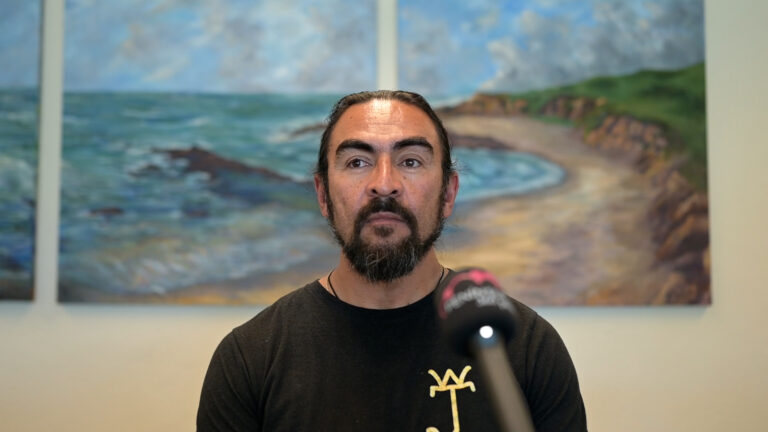
California vs Half Moon Bay: Joaquín Jiménez alcalde de Half Moon Bay respondió a lo que señaló como ataques del gobernador de California Gavin Newsom, en contra de él y los funcionarios de esta ciudad, en el tema del proyecto de vivienda para trabajadores agrícolas. Foto: P360P

Listen to this note:


On May 9, Gavin Newsom reprochó a la ciudad de Half Moon Bay, particularmente a la Comisión de Planificación, el retraso de un proyecto inmobiliario que consiste en la construcción de viviendas para trabajadores agrícolas; ante este reproche, Joaquín Jiménez, alcalde de Half Moon Bay, respondió a lo que señaló como ataques del gobernador de California, en contra de él y los funcionarios de esta ciudad. 

Jiménez, quien es mexicano de nacimiento e hijo de campesinos, además de tener una larga trayectoria de trabajo comunitario en Half Moon Bay, respondió a lo dicho por Newsom, el cual declaró en un comunicado que “las autoridades locales están paralizando un plan de 40 unidades para personas mayores de edad de bajos ingresos”.

El proyecto al que se refiere consiste en la construcción de 40 viviendas para trabajadores agrícolas mayores en un predio ubicado en el 555 de la avenida Kelly, a un costado de la Iglesia de Nuestra Señora del Pilar. 

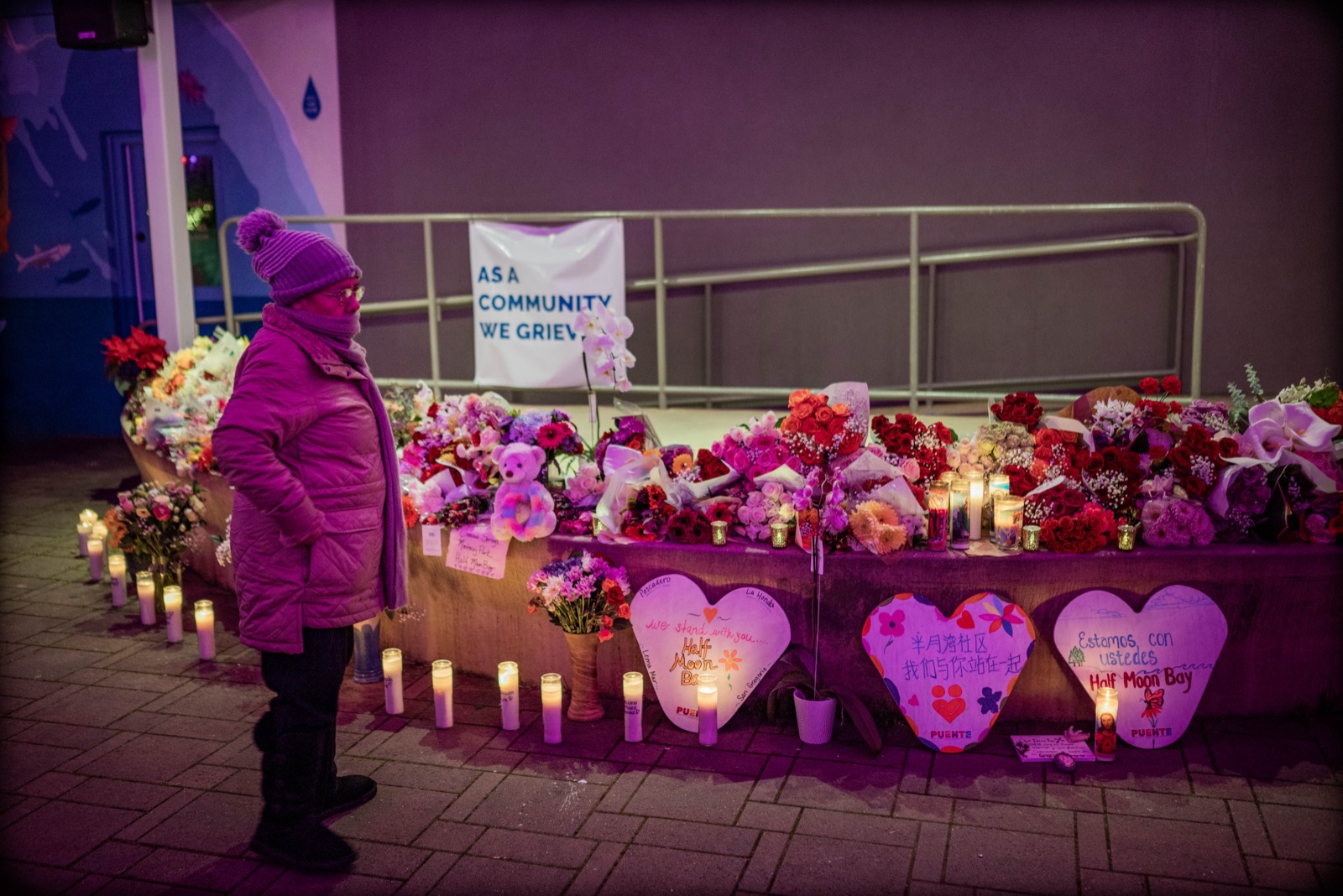
El gobernador de California destacó que el retraso de la Comisión se produce tras el tiroteo mortal del 23 de enero del año pasado, donde siete trabajadores agrícolas de Half Moon Bay perdieron la vida a causa de un tiroteo masivo, que puso de manifiesto “las terribles condiciones de vida de los trabajadores agrícolas de la zona”.

En entrevista para Península 360 Press, Jiménez lamentó los ataques y amenazas del gobernador Newsom quien, asegura, desconoce el proceso de este caso. 

“Este es un ataque porque es una amenaza, diciendo que si la comisión de Half Moon Bay no aprueba el desarrollo de este nuevo edificio para la vivienda para campesinos, los voy a demandar y él sin saber el proceso que estamos siguiendo, habló antes de tiempo, él pudo haber esperado al día 14 de mayo”, aseguró Jiménez.

De acuerdo con Newsom, “en lugar de hacer lo correcto y aprobar unas viviendas muy necesarias para los trabajadores que nos alimentan, un complejo de 40 unidades para personas mayores con bajos ingresos está siendo paralizado por los funcionarios locales”. 

Este retraso, dijo Newsom, “es atroz y pone en peligro el bienestar de los californianos”.

Ante ello, Jiménez explicó que la Comisión de Planificación de Half Moon Bay, no está deliberadamente retrasando el proyecto de las 40 viviendas, por el contrario, siempre se ha preocupado por los trabajadores agrícolas.

“Se ha hablado de que la ciudad está en contra de la condición de vivienda para campesinos y eso no es cierto, para nada. Hemos estado trabajando mucho para poder tener esas oportunidades de construir; sabemos que lo necesitamos para la comunidad en general, así que no se nos puede acusar a la ciudad de que no nos importan los latinos”, subrayó.

La Comisión de Planificación, aseguró Jiménez, no ha tomado una decisión aún, solo está haciendo su trabajo, y por tanto, sigue el debido proceso, el cual, debería ser conocido por el gobernador Newsom. 

“La comisión en realidad no ha tomado una decisión. La comisión no ha presentado la decisión. Lo que ha hecho es escuchar a la comunidad, es el proceso que se lleva a cabo”, enfatizó Jiménez. 

Como parte de este proceso, comentó el alcalde de Half Moon Bay, se han efectuado dos reuniones para escuchar la voz de la comunidad: la primera  tuvo lugar el 23 de abril y la segunda el 30 de abril. Sin embargo, será hasta el 14 de mayo cuando la Comisión tomará su decisión. 

En dichas reuniones, personas hablaron a favor y en contra del proyecto de construcción. Para sorpresa de Jiménez, entre quienes se oponen a este proyecto es la iglesia católica. 

“Es parte del proceso y se tiene que escuchar a los que están en contra, a las personas que han hablado de la comunidad y a los vecinos. Yo de verdad estoy sorprendido con la iglesia católica; mandó dos representantes a nuestra última junta de la ciudad para decir que estaban en contra del desarrollo de este edificio para los campesinos. Según ellos, es por el estacionamiento, porque las personas que vienen a la iglesia se estacionan en esa área, siendo que antes se ha trabajado con la iglesia, colaborando para construir”, expuso.

Jiménez refirió que en 2019, el sacerdote de Half Moon Bay de la iglesia Nuestra Señora del Pilar, José Corrales, estuvo de acuerdo con la construcción del proyecto de vivienda, pero en la última reunión mandó a dos personas para mostrar su postura en contra del proyecto.

Joaquín Jiménez consideró que Newsom no estaba al tanto de la situación y que probablemente no conoce el proceso que se está llevando a cabo. “Habló antes de tiempo, él pudo haber esperado a después del día 14 de mayo para salir con este comentario. Ahora, es menos del mes desde la primera reunión, así que ¿por qué no espero? Eso es un ataque y ahora el temor es que vaya a crear problemas en la comunidad”, puntualizó.

¿Qué pasaría si este 14 de mayo la Comisión de Planificación decide, ahora sí, oponerse al proyecto?

“Primero viene una apelación a nosotros los concejales. Eso nosotros lo vamos a decidir como concejales, si estamos de acuerdo con la Comisión de Operación de Half Moon Bay; si estamos de acuerdo y el proyecto no se hace, puede haber una demanda a nivel Estatal que viene del gobernador, pero claro que estaremos de acuerdo. Ahora tenemos que esperar, los fondos no se van a perder, están presentes; se ha tenido un temor de que si no se hace la decisión antes de julio se van a perder millones de dólares que serían dirigidos a ese proyecto, pero todo es parte del proceso y debemos saber esperar, depende de lo que diga la Comisión”, comentó Jiménez. 

Aseguró también que él mismo no ha expuesto su postura sobre el proyecto, porque así lo requiere el proceso. De hecho, dijo, si se hubiera manifestado al respecto, podría quedar invalidado para seguir participando en caso de presentar una apelación.

 “No se me permite, y lo que puede suceder si yo doy mi punto de vista, desde mi parte en este desarrollo, pueden pedirme que se me excluya, cuando en realidad va a importar el voto; porque si alguien escucha que Joaquín está en cierta posición y alguien lo sabe, el mero día de la reunión alguien puede pedirle al alcalde Joaquín Jiménez que se retire de la decisión porque ya hizo un comentario, y eso no quiero”, explicó Jiménez.

Además de este proyecto de las 40 unidades, mencionado por el gobernador de California, en Half Moon Bay hay otro proyecto de viviendas para trabajadores agrícolas impulsado por el mismo Jiménez con el apoyo del Condado de San Mateo, tras los tiroteos del año pasado. 

Dicho complejo, se ubica en el 880 de la calle Stone Pine, el cual tiene un presupuesto de 15 millones para construir 47 viviendas, las cuales se estima que estarán listas a principios del 2025.  

Península 360 Press buscó la postura de la Iglesia Católica, al solicitar un comentario al sacerdote José Corrales de la Iglesia de Nuestra Señora del Pilar; sin embargo, hasta el momento de la publicación de esta nota, no había respondido.


You may be interested in: Newsom urges Half Moon Bay to approve farmworker housing after mass shooting

Newsom urges Half Moon Bay to approve farmworker housing after mass shooting

Newsom urges Half Moon Bay to approve farmworker housing after mass shooting
Gov. Gavin Newsom has asked the Half Moon Bay Planning Commission to stop delaying approval of a 40-unit project to provide housing for older farmworkers.

Listen to this note:


The Governor Gavin Newsom has asked the Half Moon Bay Planning Commission to stop delaying approval of a 40-unit project to provide affordable housing for older farmworkers. 

In a public statement, the California governor stressed that the commission's delay comes after last year's deadly shooting, which highlighted the dire living conditions of farmworkers in the area.

“Last year, a deadly shooting brought to light the dire living conditions of farmworkers in Half Moon Bay. Instead of doing the right thing and approving much-needed housing for the workers who feed us, a 40-unit complex for low-income seniors is being halted by local officials,” Newsom said.

“This delay is egregious and jeopardizes the well-being of Californians,” he said, noting that the state’s Housing Accountability Unit is reviewing the city’s actions and will take all necessary steps to hold Half Moon Bay accountable if the project does not move forward as required by state law.

In 2023, following the Half Moon Bay shooting, Newsom met with survivors and witnessed firsthand the unacceptable living conditions of farmworkers in the area, so he allocated millions in funding and resources to ensure that those working in the agricultural industry receive state support. 

Newsom, meanwhile, has called for greater accountability and has put in place new approaches to address the state's need for more housing. 

The Half Moon Bay Planning Commission has the opportunity to move this important housing project forward next week at its upcoming meeting on Tuesday, May 14.

You may be interested in: Almost $6 million are approved for housing for agricultural workers in San Mateo

Bay Area Lawyers Recognize Local Organizations and Leaders

During 2024 Testimonial Dinner, Bay Area attorneys recognize local organizations and leaders
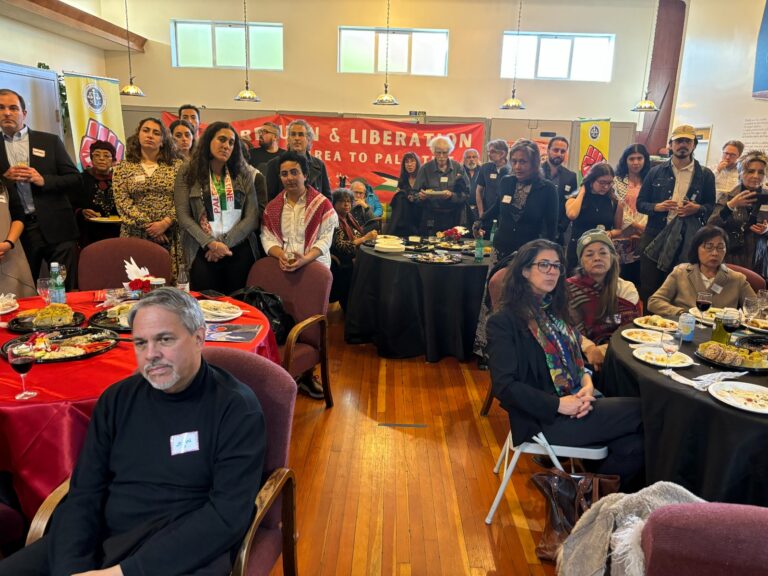
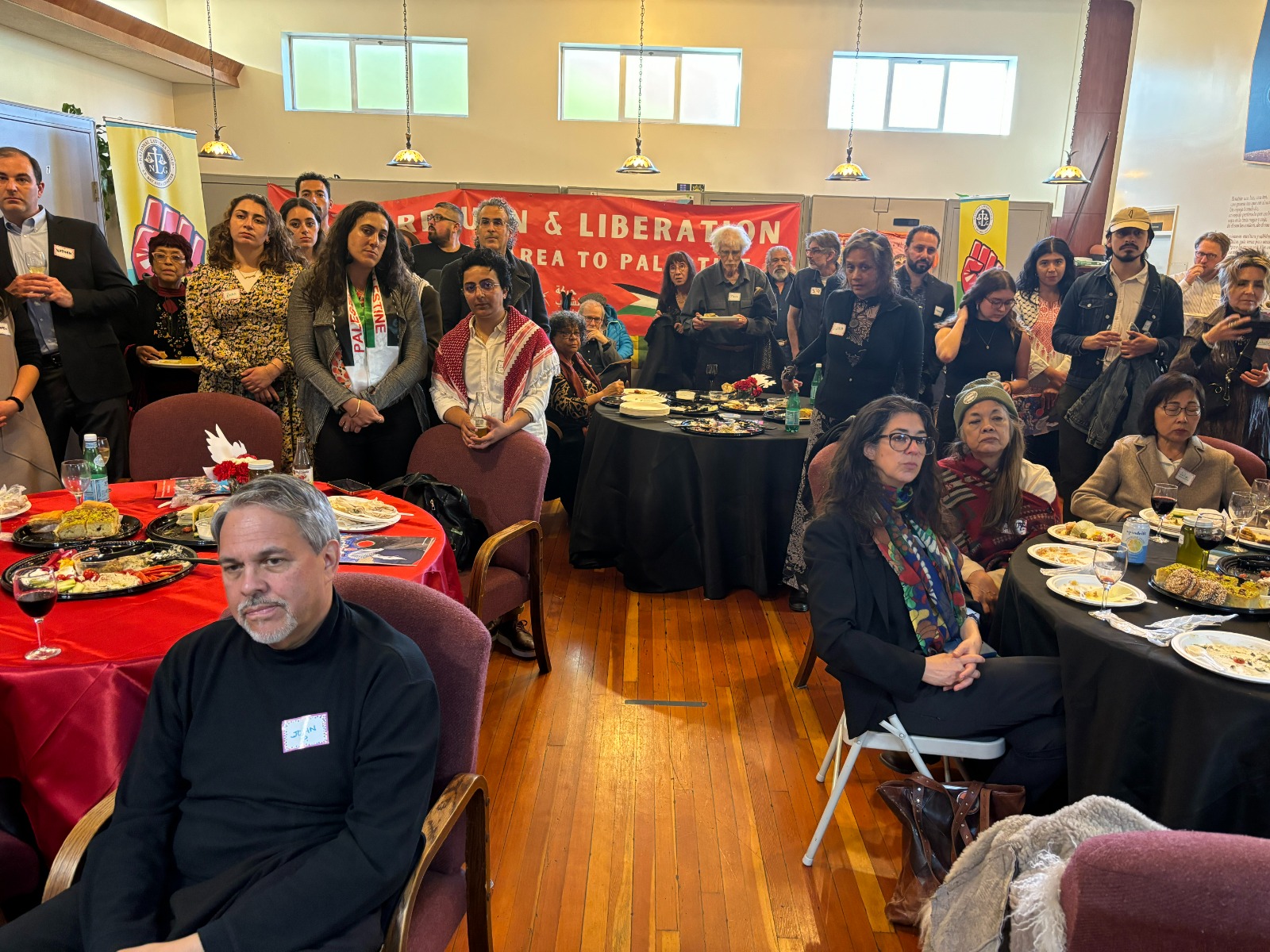
With student protests in our region, state, and across the country very much on the minds and hearts of organizers and attendees, the National Lawyers Guild (NLG) Bay Area 2024 Testimonial Dinner was held in San Francisco on Saturday, May 4.

Listen to this note:


By Raúl Ayrala. Peninsula 360 Press.

With student protests in our region, state, and across the country very much in the minds and hearts of organizers and attendees, the 2024 Student Testimonial Dinner was held in San Francisco on Saturday, May 4. Bay Area National Lawyers Guild (National Lawyers Guild or NLG). 

Following a welcome by NLG Executive Director Camilo Perez-Bustillo and while enjoying fine wine, delicious bites and Arabic desserts, three “Champions of Justice” were recognized: the Palestinian Youth Movement, the advocacy organization Palestine Legal and activist Judith “Mirk” Mirkinson.

The event was titled “In the Streets/In Our Hearts,” and the venue was the Instituto Familiar de la Raza in the Latino Mission neighborhood. After a welcome by Camilo Pérez-Bustillo, executive director of the NLG, and while enjoying fine wine, delicious bites and Arabic desserts, three “Champions of Justice” were recognized: the Palestinian Youth Movement, the advocacy organization Palestine Legal, and activist Judith “Mirk” Mirkinson. 

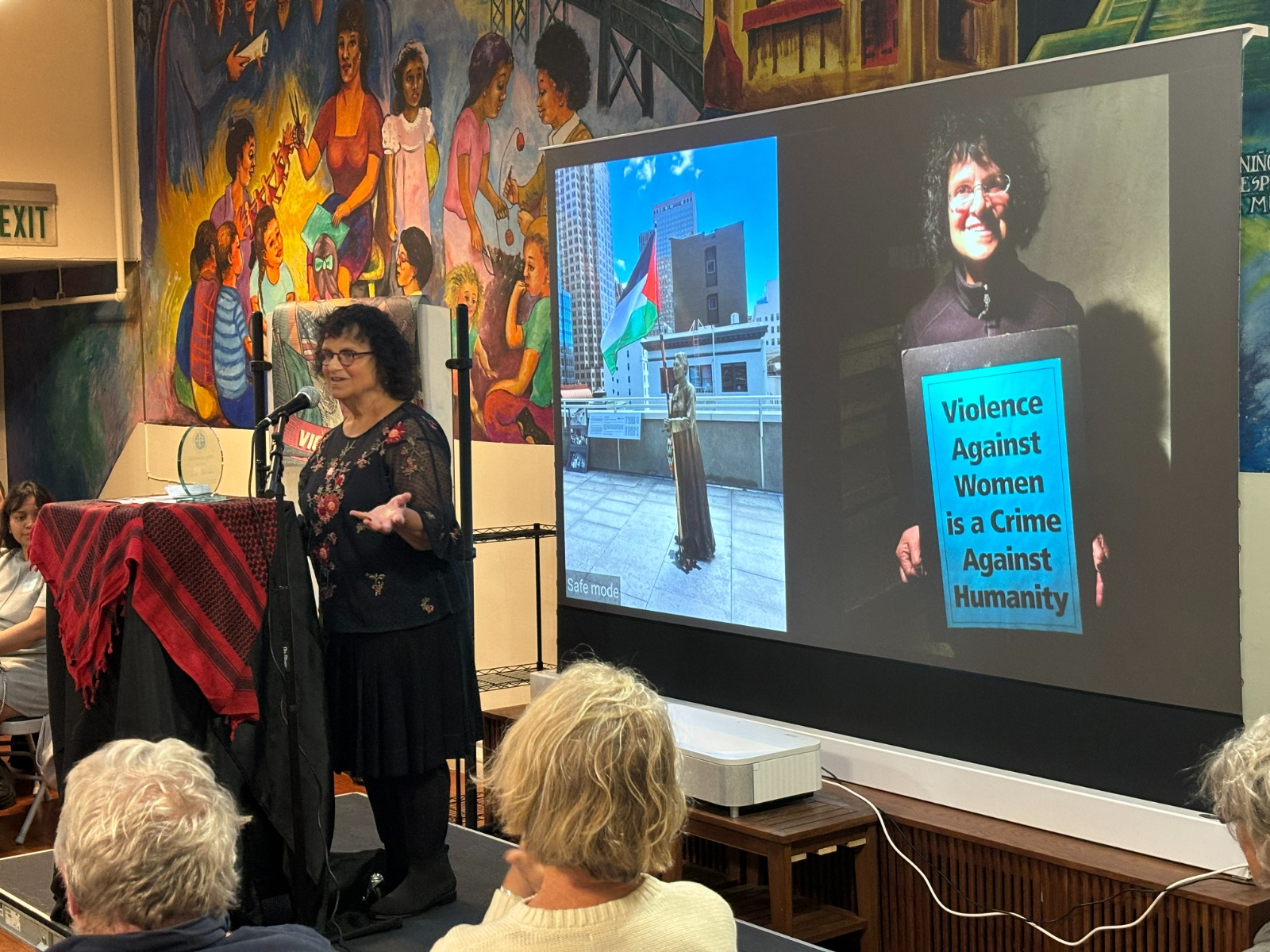
Judith Mirkinson, who served as president of the local Executive Board of the National Lawyers Guild, has been an activist and organizer for 50 years. Beginning with her participation in marches and demonstrations against the Vietnam War, she has been involved in internationalist causes, for example: defending women sexually enslaved by the Japanese military during World War II.

“Despite everything that is happening in the world, the advance of fascism, here we are. And I want to tell you that there is nothing better than being an activist,” said “Mirk” upon receiving his award from the NLG. 

Judith Mirkinson, who served as president of the local Executive Board of the National Lawyers Guild, has been an activist and organizer for 50 years. Beginning with her participation in marches and demonstrations against the Vietnam War, she has been involved in internationalist causes, for example: defending women sexually enslaved by the Japanese military during World War II. 

Mirk was instrumental in the construction of a memorial to the so-called “comfort women” in San Francisco’s Chinatown in 2015.

Last Saturday was a night of “celebration of the resilience of the movement against repression and fascism in the United States, against students and against the Palestinian people,” said Valeria Vera, one of the masters of ceremonies and a member of the NLG Executive Board.

Valeria Vera, one of the masters of ceremonies, belonging to the NLG Executive Board.

According to Vera, who is also studying law at UCSF, the protests by the university students are in response to “the genocide by Israel, which did not begin in October, but has been going on for decades.” 

Valeria stressed that Judith Mirkinson's words were inspiring and gave her courage. “The best way to resist is to exist; to show that we will not go away, and also to educate people who may be inadequately informed about what is happening” in the Middle East. 

Julia Muhsen, of Mexican and Palestinian descent, was in charge of presenting NLG's recognition to Palestine Legal. She explained that the award-winning organization of lawyers founded in 2012 has been defending and supporting the movement for the Liberation of Palestine for all these years.

Julia Muhsen, who is of Mexican and Palestinian descent and was in charge of presenting NLG's recognition to Palestine Legal, explained that the award-winning organization of lawyers founded in 2012 has been defending and supporting the movement for the Liberation of Palestine for all these years. 

Muhsen is a law student at Berkeley, volunteers for the NLG, and is about to graduate. His father was born in the West Bank and his mother in Monterrey, Nuevo León, Mexico. 

The third recognition went to the Palestinian Youth Movement, which defines itself as a transnational, independent, grassroots organization made up of young Palestinians in exile as a result of the Zionist colonization and occupation of Palestine. 

“Belonging to Palestine and our aspirations for justice and liberation motivate us to take an active role as a young generation in the national struggle to liberate our homeland and our people,” through popular mobilization, political education and participation with other movements. This is how the activist group is presented, detailed in the program of the NLG Testimonial Dinner, which is held annually and began honoring its “champions of justice” in 1979. 

You may be interested in: Call for strong action against attacker of Muslim woman at Arizona State University

Call for strong action against attacker of Muslim woman at Arizona State University

Call for strong action against attacker of Muslim woman at Arizona State University
CAIR Arizona Chapter Calls on Local Authorities to Arrest Muslim Woman's Attacker at Arizona State University during a pro-Israel protest near campus. Image: capture of the video shared on X @Stop Arab Hate

Listen to this note:


The Arizona chapter of the Council on American-Islamic Relations (CAIR) on Tuesday called on local authorities to arrest Arizona State University (ASU) professor Jonathan Yudelman after he allegedly harassed and assaulted a hijab-wearing Muslim woman while she was participating in a pro-Israel protest near the campus. 

The organization also called on the Arizona-based school to investigate the incident and take appropriate action, including dismissal.

According to witness accounts, the Muslim woman was allegedly subjected to derogatory comments and harassment by the ASU professor.

“CAIR-Arizona strongly condemns Professor Jonathan Yudelman’s alleged harassment of a Muslim-American woman near a pro-Israel demonstration. We call on Arizona State University to terminate his employment if these allegations are substantiated, and we call on authorities to investigate and file appropriate criminal charges,” CAIR said in a statement.


View this post on Instagram


A post shared by Peninsula 360 (@peninsula360press)

The statement also stressed that "unfortunately, the disgusting and dangerous behaviour captured on camera is not an isolated incident, but part of a broader pattern of Islamophobia and religious intolerance fuelled by pro-Israeli and pro-genocide extremists."

In this regard, he said that such behavior is not only discriminatory, but also violates the fundamental principles of academic integrity and respect for diversity that teachers must defend inside and outside the classroom.

“ASU must take swift and decisive action to address this issue. So must local authorities,” he said.

Finally, CAIR-AZ called on the ASU administration to conduct a thorough investigation into this incident, hold responsible parties accountable, and implement measures to prevent such occurrences in the future, saying it is imperative that educational institutions uphold the principles of diversity, inclusion, and respect for all members of their community.

This publication was supported in whole or part by funding provided by the State of California, administered by the CaliFornia State

You may be interested in: College professors should never lay hands on students: National Lawyers Guild

San Mateo County approves ordinance to promote racial and social equity in public services

racial equity in public services
La equidad racial en servicios públicos es esencial para el desarrollo de una comunidad con mejores oportunidades económicas y sociales, por eso el Condado de San Mateo votó de manera unánime para comprometer a los funcionarios y empleados del condado a impulsar las acciones en pro del bienestar de la población.

Listen to this note:


Con la finalidad de “promover la equidad creando las condiciones que permitan a todos los residentes del condado participar plenamente en las oportunidades económicas y sociales, y prosperar”, la Junta de Supervisores del Condado de San Mateo votó de manera unánime para comprometer a los funcionarios y empleados del condado a impulsar las acciones en pro del bienestar de la población.

Las nuevas medidas incluyen la creación de planes de acción de equidad racial y social y un enfoque renovado en el uso de datos para informar cómo, dónde y cuándo se prestan los servicios. 

Además, the ordinance, que tiene fuerza de ley, también exige una Oficina de Justicia Racial y Social para apoyar la implementación y la creación de una fuerza laboral que refleje la diversidad del condado.

“Si queremos ser una institución pública eficaz, debemos implementar políticas y prácticas que creen las condiciones donde todos tengan la oportunidad de alcanzar su máximo potencial”, apuntó Warren Slocum, presidente de la Junta de Supervisores y patrocinador de la ordenanza.

El funcionario subrayó que el condado de San Mateo abordará intencionalmente los problemas de desigualdad dentro de nuestra institución y promoverá una cultura de inclusión y pertenencia.

“El condado está dando ejemplo de buena gobernanza al codificar su compromiso con la equidad en la ley y definir el servicio público y la administración como algo que requiere una perspectiva de equidad”, refirió.

La ordenanza incluye acciones clave como la integración de valores patrimoniales en las descripciones de puestos de liderazgo departamental y liderazgo ejecutivo, la inclusión de declaraciones de impacto sobre el capital en los memorandos de la Junta de Supervisores, y promover una democracia inclusiva a través de estrategias como una representación diversa en las juntas y comisiones del condado y mayores esfuerzos de participación comunitaria.

“La clave de esta ordenanza es codificar el compromiso del condado de incorporar una perspectiva de equidad en las operaciones haciendo que la equidad sea fundamental para el servicio público y la responsabilidad pública”, explicó Shireen Malekafzali, directora de equidad del condado. 

En ese sentido, detalló que, en última instancia, este es uno de los numerosos elementos que permiten a la Junta, al personal y al público tener una comprensión más sólida de las implicaciones de equidad para los presupuestos, políticas, programas y más del Condado.

La ordenanza es necesaria para que el condado enfrente formas duraderas de discriminación racial. Y es que, en todo el país, agencias gubernamentales han desempeñado un papel doloroso y significativo en la creación y el mantenimiento de desigualdades raciales y sociales a través de políticas y prácticas explícitas e implícitas.

Un ejemplo de ello, dijo el condado en un comunicado, son los “convenios restrictivos”, lenguaje escrito en escrituras para evitar que una propiedad sea comprada o vendida a una persona no caucásica, prácticas que contribuyen a la brecha de riqueza actual. Actualmente, las desigualdades persisten.

De las 56 grandes áreas metropolitanas del país, el área de San Francisco-San Mateo-Oakland-Berkeley ocupa el primer lugar en prosperidad económica, pero el puesto 46 en inclusión racial en esa prosperidad, según el Metro Monitor 2023 de la Brookings Institution.

This publication was supported in whole or part by funding provided by the State of California, administered by the CaliFornia State

You may be interested in: More green areas are urgently needed in schools and public spaces in Los Angeles

Almost $6 million are approved for housing for agricultural workers in San Mateo

Housing for agricultural workers in San Mateo
Viviendas para trabajadores agrícolas en San Mateo son posibles con una campaña que recibió un impulso de casi $6 millones de dólares, se busca tener viviendas seguras y asequibles para los residentes.  Foto: Manuel Ortiz

Listen to this note:


Una campaña para construir viviendas seguras y asequibles para los trabajadores agrícolas costeros recibió este martes un impulso de casi $6 millones.

The supervisors of the the San Mateo County Board of Supervisors votaron 5-0 para asignar 5 millones 999 mil 360 dólares para la compra e instalación de 47 casas prefabricadas destinadas a trabajadores agrícolas y sus familias, incluidos 19 hogares para desplazados después del tiroteo masivo del 23 de enero de 2023. 

Housing for agricultural workers in San Mateo
Las viviendas para trabajadores agrícolas en San Mateo estarán ubicadas en cinco acres, aproximadamente a una milla del centro de Half Moon Bay, justo al sur de la autopista 1. Crédito: Condado de San Mateo.

“Toda familia merece un lugar seguro y saludable para vivir”, precisó el supervisor Ray Mueller, cuyo Distrito 3 abarca la mayor parte de las tierras agrícolas del condado.

“Debemos absolutamente crear oportunidades para que los trabajadores agrícolas vivan en el condado de San Mateo, así como invertir recursos en estabilizar la economía agrícola que proporciona empleos agrícolas”, destacó el funcionario.

Los supervisores adjudicaron el contrato de construcción a Bigfoot Homes, con sede en Santa Cruz. Las autoridades competentes siguen revisando los permisos necesarios para el proyecto, incluido un permiso de desarrollo costero y permisos de construcción, señaló el condado en un comunicado.

“Es un día brillante en el condado de San Mateo para ver cómo este proyecto avanza”, refirió Mueller en la reunión de la Junta de hoy. 

Un informe encargado por el condado en 2016 encontró la necesidad de “mejorar la calidad, la disponibilidad y la asequibilidad de la vivienda” para los trabajadores agrícolas, tema que apremió tras el tiroteo masivo que se cobró la vida de siete trabajadores agrícolas en dos granjas de Half Moon Bay.

Desde el tiroteo, la ciudad de Half Moon Bay identificó una parcela de propiedad municipal en 880 Stone Pine Road para viviendas para trabajadores agrícolas. El condado, junto con la ciudad y numerosos socios, está trabajando para crear un nuevo vecindario para los trabajadores agrícolas y sus familias.

Al menos 28 unidades se centrarán en la propiedad de hogares de trabajadores agrícolas con la ayuda del Programa de Subsidios de Vivienda para Trabajadores Agrícolas Joe Serna Jr. de California.

Las casas prefabricadas brindan la oportunidad de costos de construcción iniciales más bajos y una construcción más rápida con la ventaja adicional de brindar un camino hacia la propiedad de vivienda para personas y familias de ingresos extremadamente bajos.


You may be interested in: San Mateo County Commemorates Mental Health Month with Series of Free Events

Record number of assault weapons reached during anonymous buyback in San Mateo County


Record number of assault weapons reached during anonymous buyback in San Mateo County
During the anonymous buyback in San Mateo County, A record number of assault weapons were collected and all available funds were paid to participants.

Listen to this note:


Despite Saturday's rainy weather, the anonymous gun buyback San Mateo County It was a resounding success, collecting a record number of assault weapons and paying out all available funds to participants.

Authorities said in a statement that a total of 297 firearms were handed over, including a record number of 24 assault weapons, four ghost pistols and one machine gun. The collected firearms will be processed for destruction.

Residents were paid between $50 and $200 depending on the firearm, the San Mateo County Sheriff's Office said, adding that all available funds for the event were spent, an unprecedented occurrence since San Mateo County began hosting gun buybacks in 2018.

“Participation in Saturday’s anonymous gun buyback speaks to the importance of events like this that provide community members with an avenue to remove unwanted firearms from their homes, ultimately creating a safer San Mateo County,” said Sheriff Christina Corpus. 

He added that this action taken by residents "helps prevent tragic accidents involving unsafe firearms and is another step to ensure that these firearms do not end up in the wrong hands."

The Sheriff's Office and its partners plan to host another gun buyback in 2024 at a date to be determined. 

The four-hour event on Saturday in South San Francisco included the San Mateo County Sheriff's Office, San Mateo County, San Mateo County Citizens Gun Buyback, Colma Police Department, Daly City Police Department, San Bruno Police Department and South San Francisco Police Department.

You may be interested in: San Mateo County to hear from residents on law that would force people to undergo mental health treatment

More green areas are urgently needed in schools and public spaces in Los Angeles

 green areas in Los Angeles schools
Green areas in Los Angeles schools are necessary for the comprehensive development of children and youth. 18% of young people do not have easy access to a park, a playground or any other safe place for recreation, with the most vulnerable communities facing inequality due to a lack of green spaces.

Listen to this note:


The lack of shade in the city of Los Angeles has become a real problem for its residents, who suffer the ravages of rising temperatures every year, especially those who live in low-income areas. Experts are therefore urging the creation of more green areas, especially in schools and public spaces.

According to the most recent Los Angeles County Health Survey, 18 percent of youth do not have easy access to a park, playground or other safe place for recreation, with the most vulnerable communities facing inequality due to lack of green space.

Research has shown that greening schoolyards has a direct impact on children's safety, health and ability to learn, but most schools need more green space or shade, experts said during a briefing by Ethnic Media Services.

Marci Raney, program director for the Office of Wellness at Children's Hospital Los Angeles, former associate professor of kinesiology at Occidental College in Los Angeles and an exercise physiologist and playground safety inspector, said 30 percent tree canopy coverage is recommended to mitigate rising global temperatures.  

However, the California Schoolyard Canopy Equity Study released by Green School Yards America shows that 2.6 million students across the state interact daily in schoolyards, so having green spaces available is essential. 

He also explained that these environmental conditions have contributed to higher rates of asthma, chronic absenteeism, physical inactivity, heat exhaustion and cognitive challenges.

“It is important that schoolyards become a place to improve life. Removing asphalt and planting trees can effectively counteract aspects of climate change and the urban heat island effect; schoolyards alone have the power to improve the overall health and well-being of everyone,” Raney added.

Rocio Rivas, LAUSD District 2 School Board member and chair of the Los Angeles Unified School Board’s Green Schools and Climate Resilience Committee, explained that this is the first time the district has had a committee focused solely on making schools greener and making the school district more climate resilient.  

“It's a holistic effort to transform our schools and make them greener, we are healthier or the students are healthier, smarter, they feel safe, connected in the communities that surround these schools and it also has very profound effects,” Rivas said.

She also explained that a comprehensive plan is being developed to improve energy efficiency in schools, which includes replacing windows and updating systems and facilities. This will not only create a more comfortable learning environment, but will also reduce energy costs and free up resources for the curricular integration of critical needs.  

Christos Chrysiliou, director of eco-sustainability for the Los Angeles Unified School District, said that for him the most important thing is to take care of children, because they are the future, so combining both things is the real drive.

He also said that $500 million has been invested in playground projects, in what they call the Community-Based Seed Project. As well as that project, there are different types of projects that are currently being worked on, although there is much more to do and more funding is needed to continue the work.

“Now understanding the crisis, we wanted to make sure we have more accountability and take more action by developing an office that focuses on specific resolutions and looking at how we can be more energy efficient, be able to save our natural resources, clean our schools; we focused on those areas and have developed internal program initiatives and partnerships,” Chrysiliou added.

Tori Kjer is executive director of the Los Angeles Neighborhood Land Trust, a nonprofit formed to address hurricane risks and ensure everyone has equitable access to parks, open space, and greening everywhere.

She explained that in Los Angeles, they have prioritized work in low-income communities of color, planning, designing and building parks, but they also focused on green schoolyards and do advocacy to ensure policies and funding are in place to support this work. 

“We have been talking about green schools for 20 years, and I must say that there has been a lot of work since the Coalition started and the district is really showing itself to be an enthusiastic partner, which we deeply appreciate,” Kjer said.


You may be interested in: talk to flowers