


Friday, April 10, 2026
Home Blog Page 282

Amazon, "heart of the world" endangered by bolsonaristas in Brazil

*Otro mandato de Bolsonaro «sería devastador para el mundo»: Noam Chomsky

Por Karina Alvarado y Manuel Ortiz Escámez.
Peninsula 360 Press / Global Exchange.

El gobierno del presidente brasileño Jair Bolsonaro, coinciden expertos en medioambiente, líderes indígenas y activistas entrevistados por Península 360 Press, ha significado un enorme retroceso en los derechos ambientales y la conservación del Amazonas.

Por ende, los resultados de la primera vuelta en las elecciones en Brasil, el pasado 2 de octubre, implican un aumento de la tensión y el peligro en la Amazonía debido a que cinco de los siete estados del norte del país eligieron candidatos bolsonaristas.

La Amazonía tiene una extensión de más de 7 millones de kilómetros cuadrados, los cuales abarcan parte de Bolivia, Brasil, Colombia, Ecuador, Guyana, Perú, Surinam, la Guyana Francesa y Venezuela. En ella habitan más de 400 pueblos indígenas desde hace 15 mil años.

Brasil es el país con mayor extensión del Amazonas, con el 65 por ciento de este bosque tropical, considerado uno de los puntos de equilibrio climático más importantes de nuestro planeta.

Pese a ello, el gobierno de Jair Bolsonaro parecería haberle declarado la guerra al ecosistema mundial pues durante su gestión ha avanzado rápidamente la destrucción del Amazonas, se han desmantelado sistemas de monitoreo de actividades ecológicas ilegales, además de que, por la mala administración del presidente, se congeló el Amazon Fund que Brasil recibía de Alemania y Noruega para protegerla

Debido a esto, la Amazonía brasileña ha sumado en los meses de julio de los años 2020, 2021 y 2022 una pérdida de más de 4 mil 500 kilómetros de bosque.

Los cinco estados brasileños que perdieron más árboles son Pará, Amazonas, Mato Grosso, Rondonia y Acre que, paradójicamente, son aquellos en los que las tendencias bolsonaristas se han hecho presentes.

Tan solo en Rondonia, dos candidatos bolsonaristas se disputarán en la segunda vuelta, aún cuando fomentan la agroindustria y rechazan la legislación ambiental que afecta no solo a los bosques sino también a las comunidades nativas.

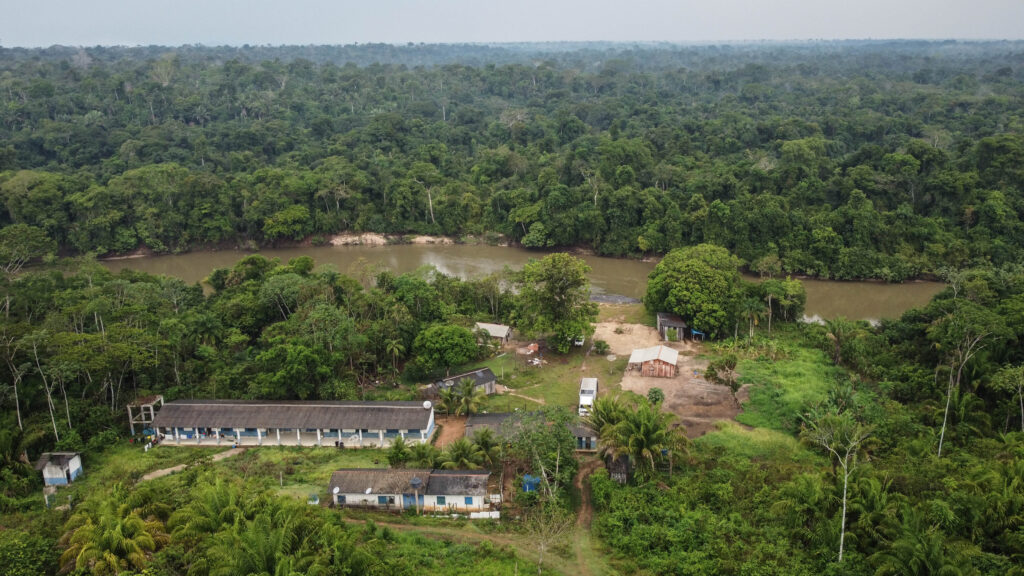
En ese mismo estado se encuentra el territorio de la comunidad Karipuna que comprende 153 mil hectáreas. Estas tierras se encuentran entre los ocho territorios indígenas más amenazados y deforestados ilegalmente en Brasil ‒44 por ciento más en 2021 en comparación con 2020‒.
Amazon
Aldea de la comunidad Karipuna en el sur del Amazonas, estado de Rondonia. Foto: Manuel Ortiz Escámez

«Nosotros los karipuna y todos los indígenas, decimos que queremos un Brasil mejor, no sólo para nosotros sino para toda la población», dijo André Karipuna, líder del pueblo Karipuna, en entrevista con Península 360 Press.

André denunció que durante el gobierno de Jair Bolsonaro los derechos de las comunidades indígenas se han visto fuertemente afectados.
Amazon
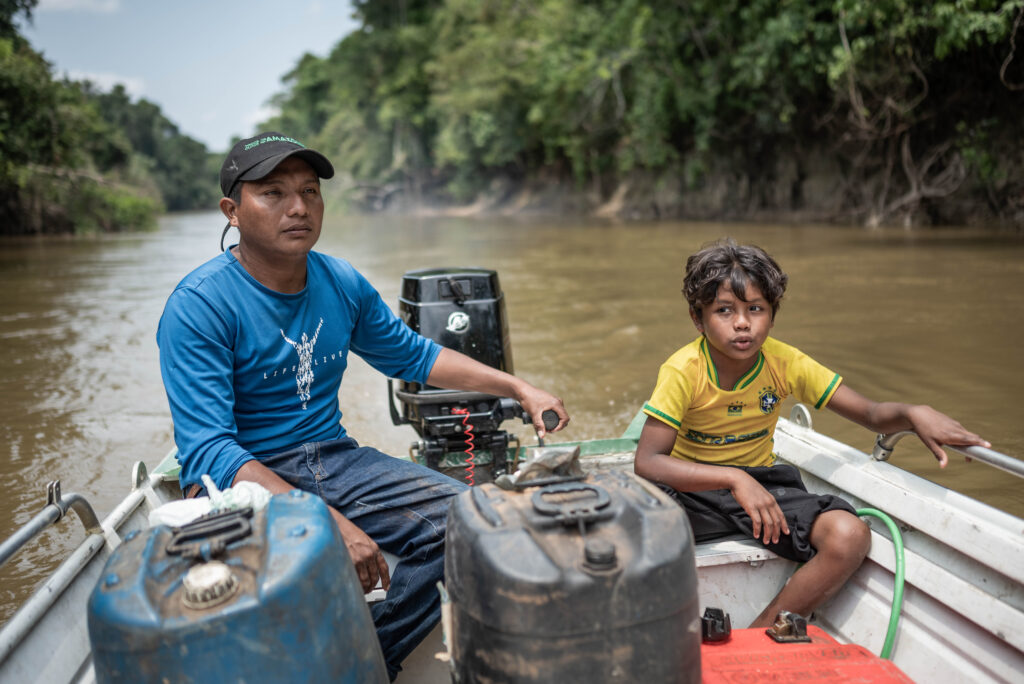
André Karipuna, líder de la comunidad Karipuna, y su hijo Icaro Karipuna, de 8 años, recorren su territorio a través del río Jacipará, el cual conecta con el río Amazonas. Foto: Manuel Ortiz Escámez

«Es algo muy preocupante, Bolsonaro hizo algo en contra de nuestros derechos como pueblos indígenas, y como funcionario de gobierno y presidente, debería haber mostrado una faceta muy a favor de los pueblos indígenas, pero esto realmente no sucedió, por lo que nos sentimos muy perjudicados», puntualizó.

Es debido a esto, que el pueblo Karipuna ha tomado acciones legales en conjunto con GreenPeace Brasil y el Consejo Indigenista Misionero –CIMI, por sus siglas en portugués– contra el gobierno brasileño, el estado de Rondonia y la Fundación Nacional del Indio.

«El problema es que él, como presidente, quiere quitarnos nuestro derecho y nuestra tierra, que es nuestro bien legítimo», añadió André Karipuna.

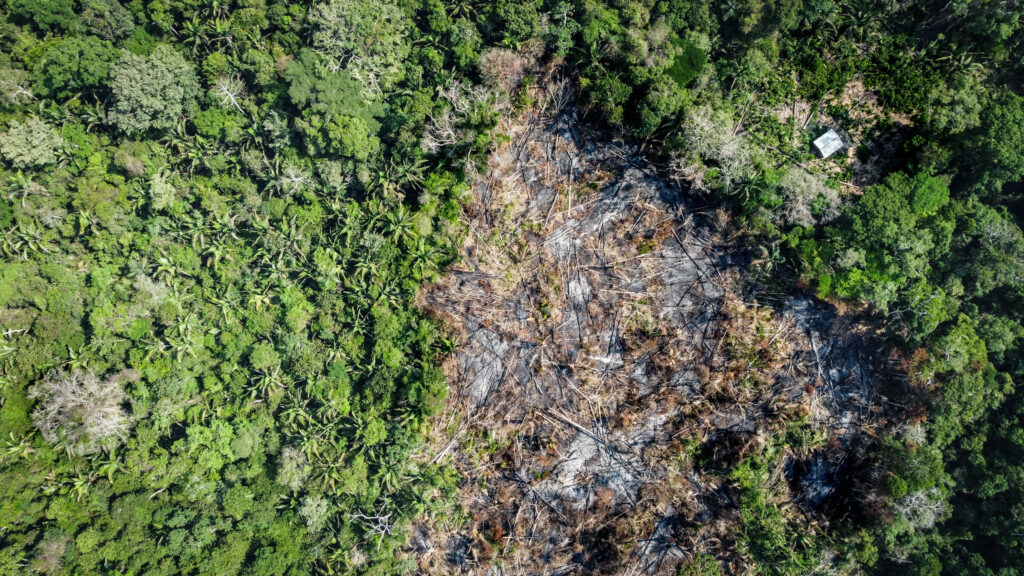
No solo los bosques se han visto afectados por las acciones y los discursos de Bolsonaro que restan importancia a la preservación de la Amazonía, aunado, como lo constató Península 360 Press en una visita al territorio Karipuna, las comunidades han sufrido amenazas y agresiones por parte grupos armados que invaden, deforestan y queman el territorio para posteriormente usarlo para el cultivo de alimento para ganado.
Amazon
Parte del territorio Karipuna que recientemente fue talado y quemado por invasores. Foto: Manuel Ortiz Escámez.

Laura Vicuña, coordinadora regional del CIMI en Rondonia, señaló a Península 360 Press que el pueblo Karipuna está luchando por preservar sus tierras y que buscan que el mundo sepa lo que está sucediendo en la Amazonía, pues el discurso de Jair Bolsonaro ha motivado a distintos grupos a invadir sus territorios.

«Lo que hace el gobierno de Bolsonaro es legitimar a estos grupos criminales que invaden los espacios protegidos que tenemos en la Amazonía y en Brasil», dijo.

«La Amazonía es el corazón del mundo», señaló Vicuña al tiempo que puntualizó que el gobierno de Bolsonario está contribuyendo a la destrucción de la Amazonía.

Otro caso en el que las fuerzas bolsonaristas se han hecho presentes a pesar del peligro que esto representa para la Amazonía, es Acre, estado en el que el gobernador Gladson Cameli obtuvo la reelección en la primera vuelta con el 56.75 por ciento de los votos. En este estado, Cameli ha propiciado la flexibilización de las normas ambientales, lo que ha dejado como consecuencia numerosos casos de incendios y de acaparamiento de tierras.
Amazon
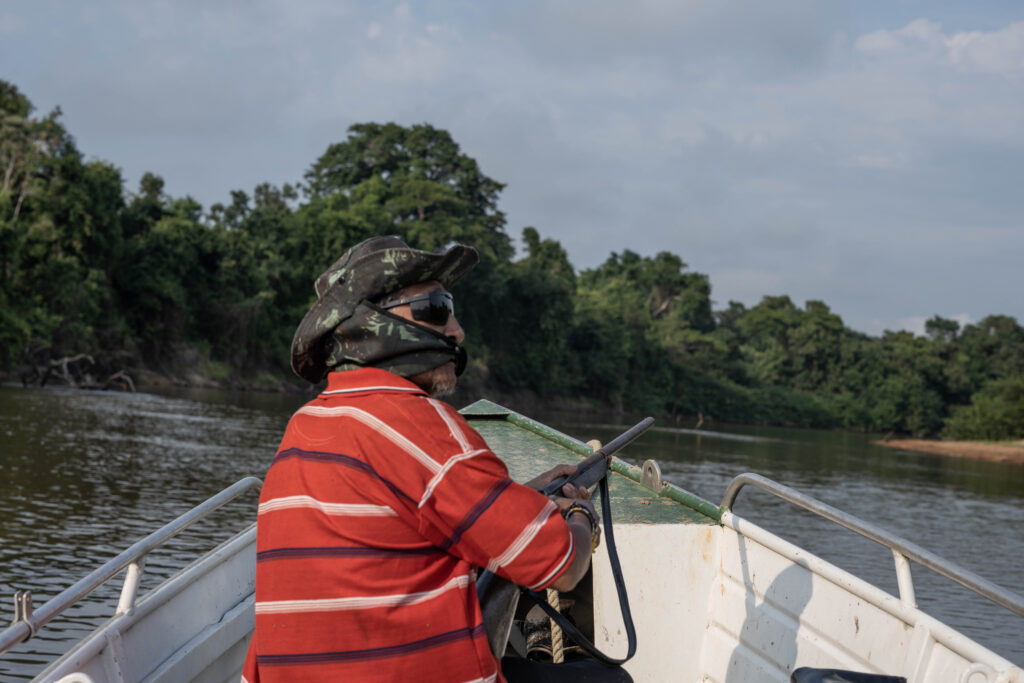
Aripâ Karipuna viaja por el río Jacipará, en territorio karipuna. Usa un viejo rifle como una manera de defenderse en caso un ataque de invasores, los cuales suelen usar armas de alto calibre y forman parte de grupos criminales que trafican con madera y venden tierra robada a agricultores y ganaderos industriales. Foto: Manuel Ortiz Escámez

Los resultados de la primera vuelta de las elecciones y con ello el triunfo de gobernadores bolsonaristas en territorio del Amazonas, prenden las alarmas medioambientales del planeta entero. Noam Chomsky, lingüista y uno de los intelectuales vivos de mayor renombre mundial, aseguró recientemente que en esta disputa electoral se juega el futuro de la Amazonía. «Otro mandato de Bolsonaro sería devastador para el mundo», dijo.

Además de los indígenas, una serie de organizaciones nacionales e internacionales, académicos y periodistas especializados cuidan de la Amazonía. Por ende, para estos sectores el resultado de la segunda vuelta en las elecciones es vital.

With information from Brazil de Fato and Michael Fox.

You may be interested in: Bolsonaro cuts budget for universities, science and technology in Brazil
Los Angeles City Council president resigns after making racist remarks

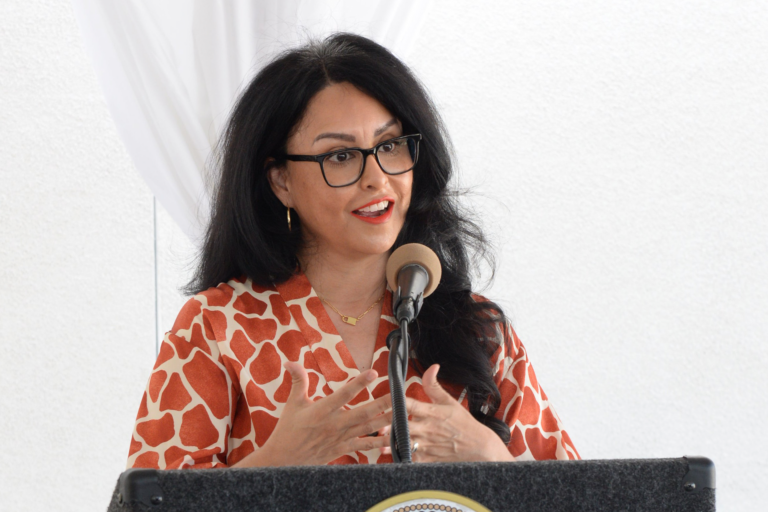
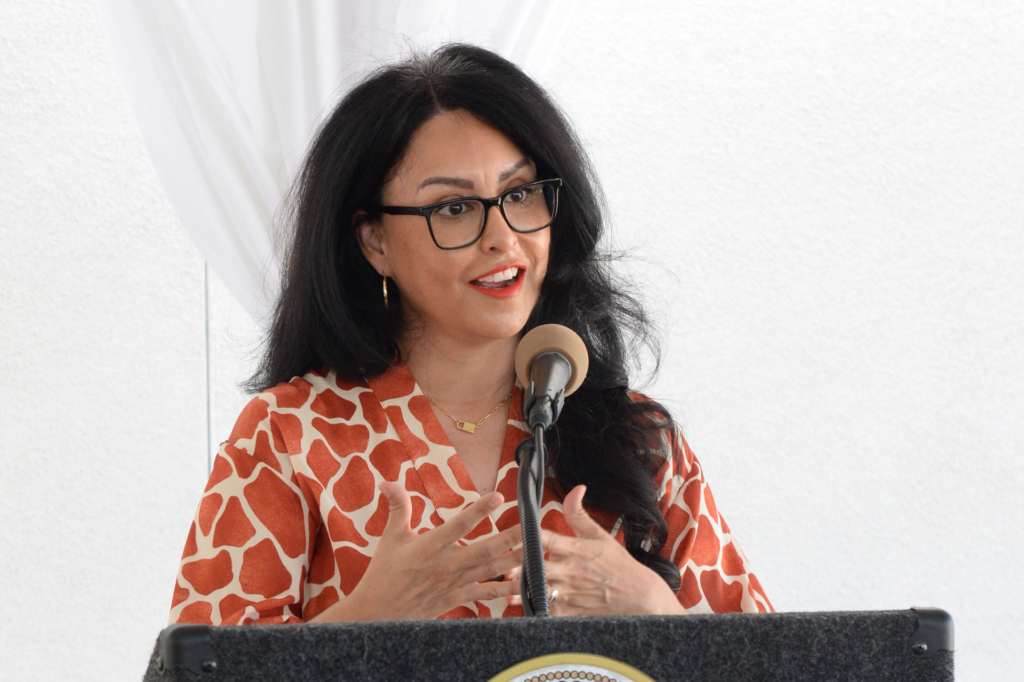
Nury Martinez
Photo: Twitter Nury Martinez

Following openly racist comments made by Los Angeles City Council President Nury Martinez last Sunday, the official decided to resign from her position amid strong media pressure.

The conversation remained private for nearly a year until the recording was leaked and revealed, in which Martinez is heard behind closed doors making racist comments, mocking some of his colleagues and their families, and even using crude terms to describe how the city should be politically constituted.

Ahead of the November 8 elections, the leak prompted three of his colleagues to call for his resignation, but candidates backed by Martínez have yet to take a position on what happened.

Among the disparaging remarks made by Martinez was one he said about the African-American son of Councilman Mike Bonin, of whom he said: “He looks like a monkey” – a little monkey – while comparing him to an accessory that his colleague wears “on the side.” “He wears it like this, during Black History month… He wears his little black boy, like on the side.”

According to the leaks, the comments were made during an October 2021 meeting with Councilmembers Gil Cedillo and Kevin de León, as well as Los Angeles County Federation of Labor President Ron Herrera.

Following the scandal, Herrera also announced his resignation on Monday for, he said, having participated in "intolerant and racist" behavior.

The conversations were disclosed by the Los Angeles Times on October 9, which stated that the dialogue was shared on the social network Reddit by a now-suspended user, however, it is not clear who recorded it.

The conversation centered on the maps proposed by the city's redistricting commission and disagreements with them, as well as the need to "ensure that majority-Latino districts do not lose economic assets" in the process, the paper said.

“Mike Bonin has never said shit about Latinos. He will never say shit about us,” De Leon, who is of Guatemalan descent, is heard saying in the audio. He calls Bonin, a white man, “the fourth black councilman.”

"Bonin thinks he's a... black guy," Martínez is heard to agree. And this is followed by the aforementioned comments about his son, to which Cedillo and De León add others.

Martinez adds that the councilman and his partner are raising their son “like a white child,” adding: “This kid needs a few beatings. Let me take him around the corner and I’ll bring him back.”

The council members also made disparaging remarks about the appearance of some residents of the Koreatown neighborhood, who come from the state of Oaxaca and belong to different indigenous communities in Mexico.

"I see a lot of short, dark-skinned people," "I don't know where these people come from, what village they came from, how they got here... So ugly," are some of the phrases heard in the recording.

Following the leaks, reactions from other political figures were not long in coming, such as Senator Alex Padilla ‒who studied with Martínez and has been his ally for a long time‒, mayoral candidates Karen Bass and Rick Caruso, council members and other authorities, as well as several organizations, calling for the resignation of Martínez and the others involved in the conversation.

"We are shocked, angry and absolutely disgusted that Nury Martinez attacked our son with horrific racist slurs and spoke about her desire to physically harm him. It is vile, abhorrent and completely disgraceful," Bonin and her husband, Sean Arian, said in a statement.

"There is no place for racist language and hateful, inflammatory rhetoric to coexist with the duties of public service," said the National Association of Latino Elected and Appointed Officials (Naleo) of the United States.

For his part, Martinez assumed responsibility and accepted the facts.

“I take responsibility for what I said and there are no excuses for those comments. I am truly sorry,” he said. “As someone who believes deeply in empowering communities of color, I recognize that my comments undermine that goal.”

The San Fernando Valley native, north of Los Angeles, to Mexican parents originally from Zacatecas, did not clarify whether, in addition to her resignation as Council president, she is also leaving her position as councilwoman.

For his part, Governor Gavin Newsom issued comments regarding the case, where he stated that words matter.

"Words matter, and racist language can do real harm. I'm encouraged that those involved in this have apologized and begun to take responsibility for their actions," Newsom said Monday.

"These comments have no place in our state, nor in our politics. We must all shape our behavior to live up to the best values we fight to protect every day," he added.

With information from the Los Angeles Times and BBC News

This publication was supported in whole or in part by funding provided by the State of California, administered by the California State Library.

You may be interested in: Palo Alto Police investigating attack on bicyclist as hate crime

Gavin Newsom Unveils Master Plan for Children's Mental Health

Mental health master plan
Photo: California Governor's Office

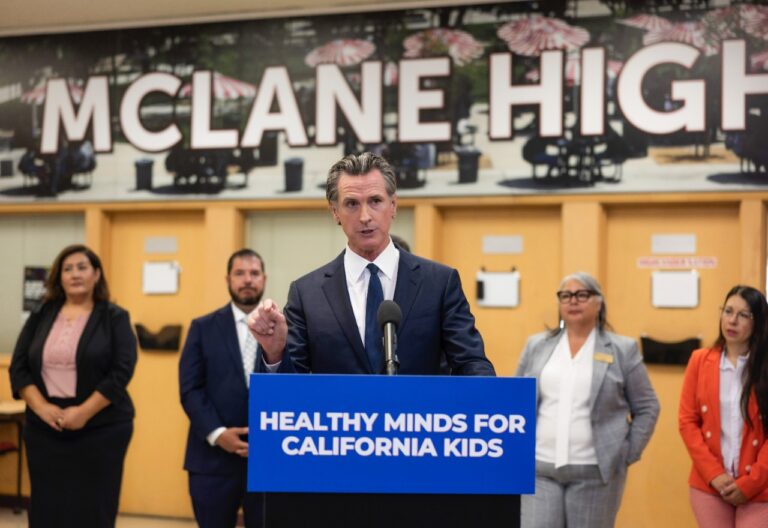
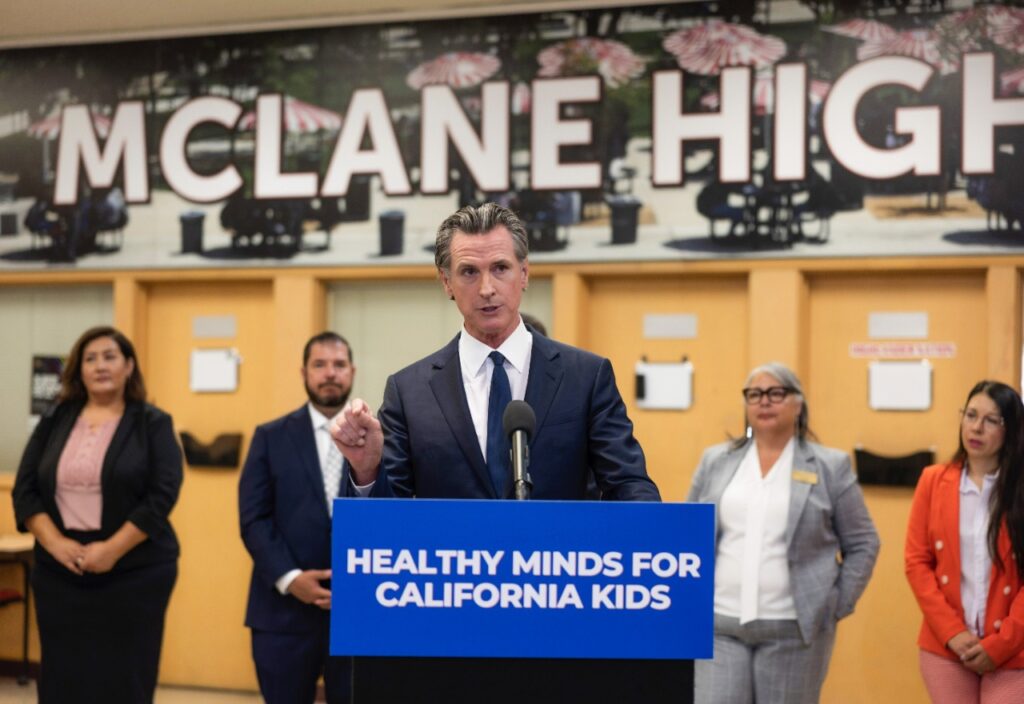
The Governor Gavin Newsom On Monday, the California Children's Mental Health Master Plan was unveiled, which seeks to ensure that all children, parents and communities in the state have greater access to mental health and substance abuse services.

Nationwide, children are reporting symptoms of depression and anxiety at a record rate and are considering or attempting suicide at historic levels. Here in California, about one-third of 7th and 9th graders and half of 11th graders experienced chronic sadness in the 2020-2021 school year, and an estimated 1 in 10 children between the ages of 12 and 17 experienced at least one episode of major depressive disorder in the past year.

Suicide rates for California youth ages 10 to 18 increased 20 percent from 2019 to 2020.

The plan, which was unveiled at McLane High School in Fresno, seeks to provide social-emotional support services for students with a dedicated social-emotional support staff comprised of psychologists, social workers and wellness specialists.

Over the past decade, Fresno Unified School District has increased mental health staffing from about 50 to more than 200 professionals. The Children’s Mental Health Master Plan provides funding to schools across the state to offer the same type of resources that McLane and Fresno Unified School District offer.

“Mental and behavioral health is one of the greatest challenges of our time. As other states cut resources to support children’s mental health, California is doubling down with the most significant overhaul of our mental health system in state history,” Newsom said.

“We are investing billions of dollars to ensure that all California children have better access to comprehensive mental health and substance abuse services. The Children’s Mental Health Master Plan is based on a very simple belief: all children deserve support for their mental health. That’s the California way: putting our children first,” she added.
The Governor also signed AB 2508, sponsored by Assemblywoman Sharon Quirk-Silva, to better define the role of school counselors and recognize the importance of access to mental health.

Over the past three years, California has launched a historic overhaul of the state’s mental health system, investing $4.7 billion to increase coverage options and public awareness so that all children and youth are routinely assessed, supported and cared for.

The funding creates new virtual platforms and establishes a new pipeline for the mental health workforce, adding 40,000 new mental health workers in the state.

“As a parent, there is nothing worse than watching your child suffer and feeling powerless to help. And that is the case for too many families across the country with children struggling with serious issues like depression and anxiety without access to the care they need,” said Jennifer Siebel Newsom.

You may be interested in: Newsom proclaims October 10 as Indigenous Peoples' Day

Newsom proclaims October 10 as Indigenous Peoples' Day

Indigenous Peoples' Day
Photo: Governor's Office of Tribal Affairs

For the fourth consecutive year, and marking three decades since the city of Berkeley hosted the first Indigenous Peoples Day celebration, Governor Gavin Newsom proclaimed October 10 as Indigenous Peoples Day in California.

“Today we honor and celebrate the perseverance, rich diversity, and contributions of all Indigenous peoples, from the first peoples here to those around the world who now call California home,” the governor said in the proclamation.

Newsom said that at a time when many seek to exploit differences, “California understands that our diversity has long been our greatest strength.” 

He also noted that the first peoples of this place descend from one of the largest and most diverse populations of indigenous peoples in the nation, who, despite all adversities, have persisted in the face of successive waves of newcomers, sometimes hostile, seeking to extract, displace and destroy, and sometimes hopeful, seeking a better future for their children. 

"Since then, California has welcomed indigenous peoples from all over, all of whom we now call fellow Californians," he stressed.

“Today we celebrate not only the survival, but also the tenacity of indigenous peoples to succeed despite deeply rooted historical, institutional and cultural barriers.”

Newsom noted that just this year, a Wailaki citizen of the Round Valley Indian Tribes became the first Native American woman in space, as indigenous Californians claim their right to manage coastal lands under a first-in-the-nation program in partnership with the state.

She also noted that offensive place names have also been removed across the state, the California condor has been reintroduced to Yurok lands, and Native lands and foods have been restored to indigenous peoples throughout California.

“As Indigenous peoples gather today on Alcatraz to commemorate the Native American rights movement’s occupation of the island, we stand in solidarity with and support Native and Indigenous-led movements toward balance, reciprocity, and respect, understanding that these changes will require a re-evaluation and renewal of our collective values,” he said.

He also explained that we live in times of massive change and existential threats, as climate, cultural and capital changes "demand that we welcome one another with an open heart and mind, stripping ourselves of the colonial thinking that allows us to dehumanize and degrade ourselves too often in the search for personal well-being."

Finally, Newsom stressed that California rejects the celebration of the conquest of the lands we now call the Americas, and instead called on Californians to reflect on and celebrate the resilience and tenacity of indigenous peoples everywhere.

You may be interested in: First generation of #CaliforniansForAll scholarship recipients sworn in

Calfire Launches Fire Prevention Week

Calfire Launches Fire Prevention Week
Photo: P360P

By Olivia Wynkoop. Bay City News.

CalFire kicked off its annual Fire Prevention Week on Sunday with a special emphasis on residents planning their way to safety in the event of a home fire.

Through October 15, CalFire is partnering with the National Fire Protection Association to remind community members of the importance of having an evacuation plan in mind in the event of a home fire.

Firefighters have drawn up a plan to get residents out of a home fire quickly. There are two critical factors: properly installed smoke detectors and advance planning.

Some suggested action items mentioned in this year's campaign: check smoke alarms once a month, rehearse a home fire escape plan twice a year, and install smoke alarms in every bedroom and on every level of the home.

“In some cases, you may have as little as two minutes or less to safely escape a home fire once the smoke alarm sounds,” CalFire wrote in a news release. “After all, you plan for vacations, holidays, and weekly meals — why wouldn’t you plan to save your life and the lives of those around you in the event of a home fire?”

A recent NFPA report found that home fire deaths in the U.S. last year hit a 14-year high, making the reminder to residents even more relevant, fire officials said.

"Too many lives are lost in home fires each year in California," state Fire Marshal Mike Richwine said in a statement.

Interested parties can find more information about Fire Prevention Week at www.fpw.org

You may be interested in: Investigation of air quality in San Mateo

Overdose deaths in San Francisco decline for first time in three years

San Francisco Department of Public Health report shows overdose deaths in San Francisco declined in 2021

By Thomas Hughes. Bay City News.

A report from the San Francisco Department of Public Health shows that overdose deaths in San Francisco decreased in 2021 for the first time in three years, according to a news release from the department.

The report released last week, titled “Substance Use Trends in San Francisco through 2021,” showed that 625 people died from overdoses involving opioids, cocaine or methamphetamine in the city.

That marked an 11 percent decrease from 2020 numbers. But overdose deaths in 2021 were still 41 percent above 2019 numbers. The health department said in a news release that last year's numbers remain at crisis level.

“The Substance Use Trends report compels us to do more across the city to alleviate the overdose crisis in San Francisco communities and save more lives,” said Dr. Grant Colfax, director of health.

“Our new overdose strategic plan builds on the progress that has been made and drives our public health response forward by defining our public health goals and strategies that will have the greatest impact. This also requires a ‘whole city’ approach to work together to support people who use drugs and reduce their risks in every way possible,” she added.

According to the report, 75 percent of all overdose deaths in 2021 were attributed to fentanyl, which is a powerful synthetic opioid.

The report also highlighted racial disparities in overdose deaths. Black San Franciscans faced overdose deaths at a rate five times higher than the city as a whole, according to the health department.

The city has developed a four-point strategic plan to try to reduce overdose deaths, which the report said were concentrated in the Tenderloin and South Market neighborhoods but also persisted throughout the city.

The plan involves deploying a street-based overdose response team and increasing the distribution of naloxone, an emergency medication that can help prevent overdoses. The city is also looking to open wellness centers in certain hard-hit neighborhoods, with the first one scheduled to open later this year, according to the health department.

City officials also made the drug buprenorphine available in more locations, which can help treat addiction, and are seeking to increase the number of beds available in shelters for residents with behavioral health issues.

You may be interested in: More than 2.5 million youth reported using e-cigarettes in 2022

Weekly summary from Saturday, October 1 to Friday, October 7, 2022

local news from october 1 to 7
Listen to Constanza Mazzotti's voice note

The first week of this tenth month of 2022 has passed, and it seems that things seem to be improving in terms of health and economy in the area, however, there is still much to do and improve in both areas. For now, these are the local news from October 1 to 7 that you should know to stay up to date.

‒ 0 ‒

The San Mateo Police Department (SMPD) and the San Mateo Police Officers Association (SMPOA) partnered with RadNet and Breastlink to offer free mammograms through Maddy, a mobile unit that provides the service. 

The Pink Patch Party, held at the Barnes & Noble lot at the Hillsdale Mall at 11 W. Hillsdale Blvd., San Mateo, on Sunday, October 2 from 11 a.m. to 3 p.m., featured a variety of health resource booths, music, food, and a police dunk tank, in addition to mammograms.

Beginning in August, the department began selling T-shirts, sweatshirts and hats through the website bonfire.com/store/smpd-pinkpatchproject, with the slogan, “Detect it. Treat it. Defeat it.” 

All items will be available for sale at the department's booth at the College of San Mateo Farmers Market on Saturdays, October 8, 15, 22, and 29 from 9 a.m. to 1 p.m.

‒ 0 ‒

An attack on a bicyclist Thursday afternoon in Palo Alto is being investigated as a hate crime after a victim riding a bicycle reported that a suspect in a vehicle called him racial slurs, spit on him, and then intentionally crashed into him. 

The victim suffered minor physical injuries, while the unknown suspect is at large, the Palo Alto Police Department said.

The incident occurred on September 29 at around 5:32 p.m. Authorities received a call reporting a hit-and-run that had just occurred on University Avenue at Webster Street to which officers responded immediately, as did personnel from the Palo Alto Fire Department.

The victim said the suspect was a white man in his thirties with blond hair and was wearing a construction vest, while his vehicle was a silver Toyota pickup truck.

‒ 0 ‒

With the aim of bringing health services closer to the migrant population of Mexican and Hispanic origin living in the United States, during the month of October, the Ministries of Health and Foreign Affairs, through the Institute for Mexicans Abroad (IME) and the Consular Network of Mexico, are holding the XXII Binational Health Week.

Thus, this Monday, October 3, the activities of the XXII Binational Health Week began at the Consulate General of Mexico in San Francisco. 

With the message “Binational Hope, Health without Borders,” actions are carried out during this day to detect diseases through the measurement of glucose levels, blood pressure, body mass index, human immunodeficiency virus (HIV) tests, eye exams and dental checkups, among others.

Likewise, healthy eating and physical activity are promoted; guidance and information are provided on joining social security, vaccinations and, if necessary, referral to health institutions in the locality where the compatriots are located.

‒ 0 ‒

Police in East Palo Alto have arrested the third of three suspects allegedly involved in a shooting in September, the department announced Tuesday.

On September 10, the officers of East Palo Alto They responded at 11:16 p.m. to the activation of the Shotspotter gunshot detection system at 1959 Manhattan Ave. The technology had detected at least 14 shots fired in the area, police said.

Officers learned that a black vehicle had stopped in the alley and two occupants, identified as Gabriel Garcia Delgadillo and Alexander Rodriguez, allegedly fired multiple rounds with handguns into a crowd of people gathered in a stairwell. No one was injured by the gunfire.

‒ 0 ‒

San Mateo County API Council Chair Wayne Lee called for a full investigation into the incident between Daly City Councilmembers Pamela DiGiovanni and Juslyn Manalo after the latter accused her colleague of attacking her and forcing her to go to the hospital before a council meeting.

Thus, on behalf of the San Mateo County API Caucus Board of Directors and the League of California Cities API Caucus, Lee expressed in a letter to Daly City Mayor Rod Daus-Magbual that these organizations are deeply concerned about media reports regarding the incident between Councilmembers Manalo and DiGiovanni at City Hall on Monday, September 26.

According to a video of the Daily City Council meeting on Monday, September 26, Councilwoman Manalo said she was attacked by her counterpart DiGiovanni, who hit her in the back with a door when she tried to leave a building.

Lee stressed that API community organizations expect a thorough investigation to be conducted and substantial action to be taken based on the outcome of the inquiry.

‒ 0 ‒

San Mateo County Health Officer Louise Rogers reported that 6 percent of the eligible population in the area has received the updated COVID-19 booster shot, which means only 43,429 people. 

He said this in a message issued on Tuesday, where he urged the entire eligible community to stay up to date with vaccination in order to remain protected against the Omicron variants currently circulating.

Rogers said that while many county residents are getting vaccinated, gaps in vaccine uptake remain for reasons beyond access, particularly in minority communities.

The number of patients hospitalized in San Mateo County with COVID-19 was 19 as of Oct. 3 and has fluctuated between 12 and 25 over the past few weeks; this is also improving from peak levels, although higher than the lows between April 4 and April 8.  

‒ 0 ‒

You may be interested in: East Palo Alto City Council to vote on housing measure

East Palo Alto City Council to vote on housing measure

Housing Measure L

The Municipal Council of East Palo Alto has placed Measure L on the November 8, 2022 ballot for voter consideration, which is intended to help fund general government uses and community priorities such as housing.

Measure L provides for programs that help pay rent for needy tenants; affordable and accessible housing programs; protect local tenants and landlords from displacement and homelessness.

Residential rents in the East Palo Alto area have increased substantially, transferring income from tenants to landlords, most of whom live outside of East Palo Alto.

Measure L would update the business tax approved by voters in 2016, increasing the business tax rate on certain residential rentals and expanding its applicability.

This tax does not apply to accessory or second-home units, rented rooms in dwellings, or low-income housing. In addition, the law provides an exemption for hardship of payment.

This tax cannot be charged to tenants.

The ballot that voters will receive for the midterm elections on November 8 will include a text in English and Spanish with the following information, to which voters can only answer with a yes or no:

«To fund general uses of government, such as affordable housing programs, providing rental assistance to tenants, and protecting local residents from eviction and homelessness, shall the City of East Palo Alto’s current business tax of 1.5% of gross receipts on property owners with five or more rental residential units, which cannot be passed through to tenants, be set at 2.5% of gross receipts for all rental residential units until repealed by the voters or reduced by the Council, raising approximately $1,480,000 annually?»

You may be interested in: East Palo Alto makes historic investment to improve water infrastructure

Santa Clara could face a massive exodus of physicians in the next 3 years

mass exodus of doctors

By Tran Nguyen. San Jose Spotlight. Bay City News.

Santa Clara County's health care system could face a mass exodus of doctors due to poor working conditions and lack of respect from management.

More than 200 of the county’s 288 employed physicians do not plan to stay at Santa Clara Valley Medical Care — VMC — nearly 69 percent of whom plan to leave the system in the next three years, according to a survey by Valley Physician Group. The group is a union representing more than 450 county-employed physicians.

Among those planning to leave, three in five physicians cited disrespect from county administration as the reason. More than 70 percent of physicians said they feel worse about their jobs compared to last year.

Doctors have been working without a contract for more than a year and the union has been in negotiations with the county for more than two years.

Dr. Steve Harris, president of Valley Physician Group, said the problems are a direct result of county leaders failing to listen to and address physicians' concerns. 

The county has already lost 65 primary care physicians in the past five years and has been unable to retain people from its residency program during the same period, he said.

“These numbers are shocking and should be a wake-up call for the county,” Harris told San Jose Spotlight. “This used to be a place where people came to spend their careers, and that’s not the case anymore.”

County officials, including Executive Jeff Smith, have repeatedly said the health care system is not in trouble, downplaying doctors' concerns as a tactic to win a favorable contract.

"We are in negotiations with the doctors' union at the moment and we have no comment on the union's attempts to draw attention to the negotiations in the press," Smith said, referring to the survey.

Santa Clara County Supervisor Cindy Chavez said she cannot comment on the ongoing negotiations. The other supervisors did not respond in time for publication.

The survey came after the union raised the alarm about years-long problems at VMC, where doctors said they are being asked to prioritise quantity over quality of care. Doctors said they are reaching a breaking point, with some of the region’s most vulnerable patients having to wait months for appointments, crucial tests and diagnoses.

Harris said the issue is not just about pay increases, and the union is considering a strike if Santa Clara County does not agree to a contract soon.

“It’s about working conditions and how they are so closely tied to patient care, but the county has no sense of urgency in addressing these issues,” Harris said.

County-employed physicians in several departments said they were driven to the brink of madness after years of seeing comments and concerns ignored and downplayed.

The problems at VMC, such as the ongoing worker shortage, are not unique, but doctors said they are frustrated with tone-deaf leadership. Health care workers said COVID-19 worsened the years-long problem, resulting in an average wait of between eight and 14 hours for emergency services, a backlog of hundreds of patients and months of waiting for basic, noninvasive screenings. 

Many health workers, including doctors, are doing the work of two or three people, they said.

More than 76 percent of physicians surveyed said VMC does not provide adequate care to patients and 90 percent said the county does not provide enough resources and workers to support them.

A doctor with about five years of experience at VMC said they are considering leaving, along with four other doctors in the same department. They said they have to spend their days off catching up on administrative tasks because of the heavy workload. San Jose Spotlight is not naming the doctors for fear of retaliation.

“I thought I had found my forever job – at VMC – but the more I think about it, I feel hopeless,” the doctor explained. “What’s crazy to me is the fact that we are one of the wealthiest counties in the United States, and this is how we choose to treat our patients.”

You may be interested in: Test predicts which patients with COVID-19 will get worse: Stanford Medicine

More than 2.5 million youth reported using e-cigarettes in 2022

electronic cigarettes

A study A report released Thursday by the U.S. Food and Drug Administration (FDA) and the Centers for Disease Control and Prevention (CDC) found that 2.55 million middle and high school students reported current (past 30 days) use of e-cigarettes.

The research found that nearly 85 percent of those youth used flavored e-cigarettes and more than half used disposable e-cigarettes, of which 14.5 percent reported that their usual brand was Puff Bar, followed by Vuse (12.5 percent), Hyde (5.5 percent) and SMOK (4.0 percent).

The findings, published in the Morbidity and Mortality Weekly Report, are based on data from the 2022 National Youth Tobacco Survey (NYTS), a cross-sectional, self-administered U.S. survey of students conducted from January 18 to May 31, 2022. 

"This study shows that our nation's youth continue to be attracted and hooked by an ever-expanding variety of e-cigarette brands that offer flavored nicotine," said Deirdre Lawrence Kittner, director of CDC's Office on Smoking and Health. 

“Our work is far from over. It is critical that we work together to prevent young people from starting to use any tobacco product, including e-cigarettes, and to help all young people who use them to quit,” she reiterated.

Other key findings from the e-cigarette research

In terms of frequency of use, the study found that among young people who currently used e-cigarettes, more than one in four (27.6 percent) used them daily and more than four in 10 (42.3 percent) used them on 20 or more days of the past 30 days.

Among youth who currently used e-cigarettes, the most commonly used type of device was disposable (55.3 percent), followed by pre-filled or refillable pods or cartridges (25.2 percent) and tanks or mod systems (6.7 percent). Additionally, 12.8 percent reported not knowing the type of device used.

Similarly, among youth who used e-cigarettes, 84.9 percent used flavored devices—that is, devices with flavors other than tobacco—including 85.5 percent of high school students and 81.5 percent of middle school students who reported using them. Overall, the most commonly used flavors were fruit (69.1 percent); candy, dessert, or other sweets (38.3 percent); mint (29.4 percent); and menthol (26.6 percent).

“Teen e-cigarette use in the U.S. remains at concerning levels and poses a serious public health risk to our nation’s youth,” said Brian King, director of the FDA’s Center for Tobacco Products. 

“Together with CDC, protecting our nation’s youth from the dangers of tobacco products, including e-cigarettes, remains a top priority for the FDA, and we are committed to combating this problem with the full breadth of our regulatory authorities,” he added.

Because of changes in methodology, the report explains, including differences in survey administration and data collection procedures in recent years due to the COVID-19 pandemic, the ability to compare 2022 estimates with previous ones is limited.

However, she says that youth use of tobacco products, including e-cigarettes, is not safe because they contain nicotine, which is highly addictive and can damage the developing adolescent brain. Nicotine use during adolescence may also increase the risk of future addiction to other drugs.

Since 2014, e-cigarettes have been the most commonly used tobacco product among American youth. So as the tobacco product landscape continues to change, sustained implementation of comprehensive tobacco prevention and control strategies at the national, state, and local levels, along with FDA regulations, is critical to preventing and reducing youth access to and use of e-cigarettes.

You may be interested in: Latinos and people of African descent, the least likely to have vasectomies in the U.S.