



Tuesday, June 23, 2026
Home Blog Page 336

Inequity in Silicon Valley persists for people of color

inequality in silicon valley

By Bay City Newsoriginally published in San José Spotlight.

Life expectancy is declining, the poor are getting poorer, and Silicon Valley's richest people are thriving.

The 2022 Silicon Valley Pain Index report highlights how Santa Clara County generated $340 billion in gross domestic product in 2021, a 4.4 percent increase from 2020, while nearly half of children in Silicon Valley live in households that can’t make ends meet on their income. 

Life expectancy for Black and Latino residents has also worsened, while the top 10 percent of earners in the region control three-quarters of the collective wealth, the study shows.

“Last time it was bad to horrible,” lead author and San Jose State University sociology professor Scott Myers-Lipton told San Jose Spotlight. “We’re still at terrible levels and in some cases getting worse, like life expectancy and wealth inequality.”

Black and Latino residents experienced declines in average annual income and life expectancy last year, while their white and Asian counterparts saw increases in average income and a much lower rate of declining life expectancy, according to the report released Monday.

The Silicon Valley Pain Index, which focuses on Santa Clara County and San Jose, is produced by the Human Rights Institute at San Jose State University. Some of the data used in the report also includes San Mateo County. 

The annual study focuses on racial discrimination and income inequality in the region. The report, first published in 2020 in response to the killing of George Floyd by Minneapolis police, was inspired by an index compiled on New Orleans in the aftermath of Hurricane Katrina.

The report aims to use data and reporting to reveal structured inequalities and urge elected officials to take action. The document highlights the prevalence of white supremacy and a widening wealth inequality gap in the South Bay in 2020. 

Last year's report, meanwhile, showed how disparities have worsened, with indicators such as hunger, homelessness and income inequality on the rise.

The latest study exposes a lack of progress in addressing growing wealth gaps and racial disparities, especially in the private sector, where 73 percent of tech companies have no Black people on executive teams. At Apple, there are no executives or senior managers who are African American, Pacific Islander or Native American, the report said.

“The data speaks for itself and says we have deep disparities that are getting worse, not better,” Russell Hancock, CEO of Joint Venture Silicon Valley and president of the Silicon Valley Institute for Regional Studies, told San Jose Spotlight. 

«Silicon Valley, for all its legendary dynamism, is also a place where prosperity is not widely shared.»

Black and Latino residents struggle

About 11.7 percent of African American residents and 11 percent of Latino residents live in poverty in Silicon Valley, compared to 5.3 percent of white residents. 

Among the Asian population, whose average annual income increased by $4,933 last year, Vietnamese residents are most likely to live in poverty at 12 percent. 

The average annual income of black residents in the region fell by $2,593 last year, the report shows. Latino residents also saw their wages cut by $404 on average. 

White residents had an average annual income increase of $3,046, and the population continues to earn the most with a median income of $146,690.

Meanwhile, Silicon Valley’s tech giants have thrived during the pandemic. Companies like Apple, Google, Facebook and Netflix have seen their profits soar by billions since 2020, with Apple reaching $3 trillion in valuation this year.

Walter Wilson, executive director of the Minority Business Consortium and a member of the NAACP state executive committee, said the study is not a surprise to many Black residents in Silicon Valley, who saw their life expectancy drop by 2.6 years, from 76.4 years in 2019 to 73.8 last year. Many experience racism and discrimination in the workplace and in their personal lives on a daily basis, Wilson said.

“You would think that in this era after the murder of George Floyd, a lot of American companies are leaning in and doing everything they can to address racism,” Wilson told San Jose Spotlight. “We don’t see that happening in high tech in a way that it’s happening in other industries across the country.”

Wilson points to public and private efforts to build an African American Cultural Center in San Jose as a good step in the right direction, but also noted that inaction and cultural shifts to protect and value Black residents will continue to hurt the population.

Trend on the wrong track

Latino residents, whose life expectancy dropped by 3.1 years, from 80.5 years in 2019 to 77.4 in 2021, were also more likely to be subjected to excessive force by the San Jose Police Department, the study shows. 

More than 1,520 Latino residents reported injuries caused by local police between 2017 and 2021, compared to 565 reports from white residents.

“Traditional policing doesn’t work,” Jose Valle, an organizer with Silicon Valley De-Bug, told San Jose Spotlight. “Why do we have a disproportionate number of people who are Mexican Chicanos and Mexican Americans getting hurt in this way by the police? That’s what surprises me.”

Valle advocates alternatives to policing, including community projects to help reduce violence and property crime.

The report also highlights the ongoing housing crisis, where residents need to earn $54 an hour to pay the average monthly rent for a two-bedroom apartment in San Jose, and the growing homelessness crisis, where more than 10,000 people in Santa Clara County are living or sleeping on the streets.

Last year's pain index inspired some action from elected officials, as state Sen. Dave Cortese recently introduced a bill that would guarantee income for homeless high school students.

“It is significant that we are seeing this,” Hancock said. “But we will have to wait and see where this takes us.”

You may be interested in: Large U.S. companies to pay travel expenses for employees needing an abortion


Katya Echazarreta, the engineer who has let girls know they can reach for the stars

Katya Echazarreta

By Pamela Cruz and Constanza Mazzotti

Aún recuerdo mis días de voluntariado en un pueblito de la sierra de Hidalgo, México. Uno de esos donde no llega electricidad a todas las viviendas, pues a lo largo del tiempo les han olvidado. Sin embargo, es dónde mis ojos se llenaron con más luz en toda mi vida. Esperaba con ansias cada noche, pues levantaba mi mano y sentía que era posible alcanzar las estrellas. 

Solía sacar un petate al patio y quedarme ahí por horas, a veces toda la noche, imaginando cómo sería estar allá, arriba, en el espacio, viendo desde ese lugar la tierra, sintiéndome pequeñita ante la inmensidad del universo, dándome cuenta que esta pelota a la que llamamos tierra es hermosa, pero nada ante el infinito espacio.

De niña soñaba con ser astronauta, pero, pensé, ¿es eso real? ¿Cuándo una mexicana podría alcanzar tal suerte? Es carrera para hombres, me dijo una vez un tío, mientras que un profesor se rio de mis sueños.

On June 4, 2022, Katya Echazarreta, a 26-year-old from Jalisco who has lived in Texas since she was 7, achieved the dream of millions of girls who do nothing but set their eyes on the stars. She became one of six tourists transported into space by Blue Origin's New Shepard spacecraft, proving that there is room in the universe for everyone who strives to reach it.

The trip, lasting just ten minutes, marked the fifth successful manned mission for Jeff Bezos' company, but the feat of a lifetime for Echazarreta.

Katya se convirtió no solo en la primera mujer mexicana en viajar al espacio, sino también en la estadounidense más joven en cruzar las fronteras de la tierra.

La joven ingeniera eléctrica es además divulgadora científica de la Administración Nacional de Aeronáutica y el Espacio, más conocida como NASA. Ha trabajado en 5 misiones de la agencia, incluida la llamada Europa Clipper.

Su objetivo, dice, es que su «viaje como mujer en STEM ‒acrónimo en inglés que sirve para designar las disciplinas académicas de ciencia, tecnología, ingeniería y matemáticas‒ ayude a otros a alcanzar sus objetivos. Estoy orgullosa de mis raíces mexicanas y quiero mostrarles a los demás que puedes tener una carrera exitosa sin sacrificar lo que te hace perfectamente único», señala en su blog www.katechazarreta.com.

La ingeniera fue una de los siete mil postulantes para formar parte «Espacio para la Humanidad», programa que busca democratizar el acceso al espacio.

Al viaje se sumaron los turistas espaciales Victor Correa Hespanha ‒segundo brasileño en ir al espacio‒, así como a los empresarios Hamish Harding, Jaison Robinson, Victor Vescovo y Evan Dick.

Mientras Katya tenía sus cinturones ajustados e iniciaba la cuenta regresiva para que la nave la llevara a dónde solo sus mejores sueños la habían llevado, en mi cabeza no podía dejar de escucharse de fondo «Space Oddity».

«Ground Control to Major Tom, Ground Control to Major Tom, take your protein pills and put your helmet on. Ground Control to Major Tom, commencing countdown, engines on, check ignition and may God’s love be with you. Ten, Nine, Eight, Seven, Six, Five, Four, Three, Two, One, Lift off», cantaba David Bowie en 1969.

NASA women look to the sky

Caminaba por el centro de mi ciudad natal sola y de madrugada en un paseo para quitarme el calor. Las luces amarillas sobre el concreto blanco iluminaban las calles dando una sensación de seguridad y por si fuera poca luz, había luna llena. 

Subí y bajé escaleras, tomé calles grandes y otras pequeñas y asomé la vista antes de seguir hasta mi casa. Ahí estaba, en medio de la plancha de cemento, un desconocido señor, concentrado,  viendo inmóvil por una pequeñisima mirilla de un telescopio, quien m invitó a ver a través del telescopio a esa enorme pelota en el cielo y yo, sin decir palabra, acepté con una amigable naturalidad para ver la luna de cerca.

El telescopio que montó ese desconocido señor en medio de una céntrica y vacía calle en la madrugada sirvió para recordarme las ganas que de niña tenía por los planetas. Un sueño alentado por mi abuelo cuando de chica me regaló y enseñó a usar mi propio telescopio. 

Las primeras veces que me acercaba a una mirilla a ver las estrellas me preguntaba por quién sería la persona que llegaría hasta allá. Fue en 1993 a la edad de nueve años, cuando una mujer ya estaba ahí.

Ellen Ochoa, la física y doctora en ingeniería de Stanford quien tuvo una carrera de 30 años en la NASA, realizó su primera misión espacial, la STS-56 desde el Kennedy Space Center, el 8 de abril de 1993 en el transbordador espacial Discovery durante un viaje de nueve días. 

En total, la astronauta, ha volado al espacio un total de cuatro veces acumulando mil horas de trabajo como líder a bordo de las naves.

Ochoa es la primera mujer de origen hispano nacida en Los Ángeles, California, en llegar al espacio, y tuvo una carrera que abriría los primeros espacios en la NASA para que las niñas y la gente de color pudieran dedicarse al estudio de la ciencia pues también se dedicó a participar en campañas que abrieran ese tipo de espacios.

Quizás Ochoa fue el parteaguas que ha hecho que muchas mujeres mexicanas que han soñado con el cielo y el espacio hayan podido llegar hasta allá.

Tal es el caso de la generación de mujeres mexicanas que han logrado ingresar a la NASA desempeñando su trabajo científico, no sólo en el espacio sino en tierra, y además en misiones al planeta Marte.

Margaret Zoila, originaria de Tecamachalco, Puebla, es actualmente doctora en ciencias ópticas de la Universidad de Arizona e ingeniera óptica en la NASA en el Centro de vuelo espacial Goddard de Maryland.

Su labor radica en trabajar en el telescopio Roman, nombre en honor a Nancy Grace Roman, quien fuera la primera mujer ejecutiva en la NASA o la «madre del Hubble». La doctora Margaret Zoila trabaja en dicho instrumento quel está diseñado para estudiar galaxias y ayudar a comprender la energía oscura y la materia oscura.

Dorothy Ruiz Martínez, originaria de San Luis Potosí, es ingeniera aeroespacial por la Universidad de Texas, trabaja en la NASA en la misión Control Houston controlando desde la tierra sistemas de comunicación enlazando las telecomunicaciones satelitales con la Estación Espacial Internacional.

Su carrera inició en 1998 cuando fue seleccionada por la agencia para realizar investigaciones para vehículos espaciales de alta velocidad con materiaes reusables, siendo nombrada como instructora de Astronautas para Transbordador. Ha trabajado en Moscú, Rusia, como Coordinadora de Enlace de actividades espaciales entre la NASA y la Agencia Espacial Rusa.  

Por otro lado, la Doctora Javiera Cervini Silva, química ambiental por la Universidad de Illinois y quien actualmente es Profesora e investigadora del Departamento de Procesos y Tecnología de la Universidad Autónoma Metropolitana, fue también investigadora en el Center for Integrative Planetary Science y subdirectora del Instituto de Astrobiología de la NASA (Programa BioMARS) en la Universidad de California en Berkeley (2003-2005).

El equipo de trabajo del cual la doctora Cervini formó parte, estudió la posibilidad de vida en Marte, la evolución de la hidrosfera, la superficie de la topografía en Marte y su relación con la historia de la distribución de agua y procesos atmosféricos.

Los logros de las mujeres por llegar al espacio no terminan ahí pues ahora, los caminos se dirigen hacia el planeta Marte. Carmen Félix, de 37 años, que en 2016 se convirtió en la primera astronauta análoga mexicana, ha participado en una simulación por parte de la NASA en el Mars Desert Reseasch Station en Utah.

Además, ha realizado labores como programas colaborativos entre entre México y la NASA, que ayuda a mexicanos a hacer pasantías y programas de verano. Por si fuera poco ha trabajado con el consejo asesor de la generación espacial de la ONU.

You may be interested in: NASA to have independent study of unidentified aerial phenomena

San Mateo beaches among the worst rated in California according to new report

beaches of san mateo

Erckenbrack Park, Marlin Park and Lakeshore Park, these San Mateo beaches were rated the worst by the nonprofit environmental organization's 30th Annual Beaches Report Heal the Bay in the summer of 2021.

Water quality studies consist of measuring bacterial contamination levels that indicate the amount of feces in the ocean as measured by county health agencies.

Tracy Quinn, President and CEO of Heal the Bay, remains alert to future results, as noted in the scientific community, “People who come into contact with fresh or salt water with a C rating or lower are at greater risk for illnesses such as gastroenteritis, ear infections, upper respiratory infections and skin rashes.”

He added, "A day at the beach or the river shouldn't make anyone sick."

The probability of contact with contaminated water increases during storms on beaches and rivers, making contact with humans harmful to health, he said.

In light of this, Heal the Bay scientists remain concerned about ocean water quality as polluted waters pose a significant health risk to millions of people in California. 

However, it is not all bad news, as some of the California beaches received perfect ratings in terms of cleanliness, such as the beaches of Los Angeles County, San Luis Obispo, San Diego and Santa Barbara.

Only 66 percent of California beaches earned good or excellent ratings during the rainy season, which was slightly above average but still “very concerning,” Heal the Bay’s executive director said.

“It is wonderful news that most of California’s beaches have good water quality for swimming. But there are areas with poor water quality that need to improve and update their infrastructure. We cannot forget that our marine ecosystems are still threatened by climate change, by other sources of pollution and we need solutions to address these problems as well,” he said.

And, he noted, people are expected to increasingly seek out ocean coasts and freshwater recreational areas to cool off from high temperatures, "so safe, clean and healthy water is needed now more than ever."

Heal the Bay’s Honor Roll includes 51 California beaches that earned perfect water quality ratings year-round—up from 35 beaches the year before.

The report also includes beaches in San Diego, San Mateo, Santa Barbara, Los Angeles, Humboldt and Santa Cruz counties on its 2021-2022 list, as well as a beach in Baja California, Mexico, for the first time.

Lists of worst and best beaches in California:

The California Worst Beaches list groups the most polluted beaches by levels of harmful bacteria in the ocean:

1. Playa Blanca (Baja California, Mexico) 

2. Erckenbrack Park (San Mateo County) 

3. Marlin Park (San Mateo County) 

4. Santa Monica Pier (Los Angeles County) 

5. Marina Del Rey Mother's Beach, at the lifeguard tower (Los Angeles County) 

6. Moonstone County Park (Humboldt County) 

7. Newport Bay, Vaughn Launch (Orange County) 

8. Lakeshore Park (San Mateo County) 

9. Marina del Rey Mother's Beach, between the lifeguard tower and the boat dock (Los Angeles County) 

10.Tijuana Slough, north of the mouth of the Tijuana River (San Diego County) 

You may be interested in: CAL FIRE reports being ready to tackle this summer's wildfires

"The health and lives of this nation's women are now at risk": Biden

this nation's women are at risk: Biden

After the U.S. Supreme Court this morning overturned the landmark Roe v. Wade ruling, ending nearly 50 years of constitutional abortion protections in the country, President Donald Trump said: Joseph Biden She said that "the health and lives of the women of this nation are at risk."

In a statement from the White House, the president said that this decision is the culmination of a deliberate effort over decades of balance, driven by an extremist ideology.

"It is the realization of an extreme ideology in a tragic error by the Supreme Court. In my view, the court has done what it has never done before, expressly taking away a constitutional right," he said.

"Today, the Supreme Court of the United States has expressly taken away from the American people a constitutional right that it had already recognized. They did not limit it. They simply took it away. They have never done that with a right so important to so many Americans, but they did it. And it is a sad day for the Court and for the country," he stressed.

Biden recalled that fifty years ago, Roe v. Wade was decided and has been the law of the land ever since. “This landmark case protected a woman’s right to choose, her right to make intensely personal decisions with her doctor, free from the interference of politics. It reaffirmed basic principles of equality: that women have the power to control their own destiny. And it reinforced the fundamental right to privacy: the right of each of us to choose how to live our lives.”

He argued that Roe v. Wade was the right decision as a matter of constitutional law, an application of the fundamental right to privacy and freedom in matters of family and personal autonomy.

Biden explained that three judges appointed by a president - Donald Trump - were at the heart of Friday's decision to upset the balance of justice and eliminate a fundamental right for women in this country.

"Make no mistake: This decision is the culmination of a deliberate, decades-long effort to upset the balance of our law. It is the realization of an extreme ideology and a tragic error by the Supreme Court, in my view."

She said the court's decision will have real and immediate consequences. State laws banning abortion are automatically taking effect today, endangering the health of millions of women, some without exception. 

“So extreme that women could be punished for protecting their health. So extreme that women and girls who are forced to give birth to their rapist’s child, that just boggles my mind. So extreme that doctors will be criminalized for fulfilling their duty of care.”

Too often, she noted in her morning speech, poor women are the hardest hit. “It’s cruel.”

In fact, the Court laid out as its foundation state laws criminalizing abortion dating back to the 1800s, “the Court literally taking the U.S. back 150 years.”

"It's a sad day for the country, in my opinion, but it doesn't mean the fight is over."

In that regard, she noted that the only way to ensure a woman's right to choose and the balance that exists is for Congress to reestablish the protections of Roe v. Wade as federal law.

“No executive action by the president can do that. And if Congress, as it appears, lacks the votes to do so now, voters must make their voices heard. This fall, we must elect more senators and representatives who will codify a woman’s right to choose into federal law once again, elect more state leaders to protect this right at the local level. We must restore the protections of Roe as the law of the land. We must elect officials who will do that.”

The president explained that the decision to reinstate and convert Roe v. Wade into federal law will be on the ballot this fall, putting personal liberties, the right to privacy, freedom and equality to a vote, "it's all on the ballot." 

"Until then, I will do everything in my power to protect women's rights in states that face the consequences of today's decision."

And, she noted, although the court's decision casts a dark shadow over a large swath of the country, many states in this country continue to recognize a woman's right to choose.

Therefore, if a woman lives in a state that restricts abortion, the Supreme Court's decision does not prevent her from traveling from her state to another that allows it, and it does not prevent a doctor in that state from treating her.

“As the Attorney General has made clear, women must remain free to safely travel to another state to seek the care they need. And my administration will defend that fundamental right.”

"If any state or local official, high or low, attempts to interfere with a woman's exercise of her basic right to travel, I will do everything in my power to fight back against this deeply un-American attack."

He said his administration would also protect women's access to FDA-approved medications, such as contraceptives, which are essential for preventive health care; and mifepristone, which the FDA approved 20 years ago to safely terminate premature pregnancies and is commonly used to treat miscarriages.

It is noteworthy that some states are saying they will try to ban or severely restrict access to these drugs. 

The American Medical Association and the American College of Obstetricians and Gynecologists stressed that such laws are not based on evidence and that limiting access to these drugs will increase maternal mortality in the United States.

“Today, I am directing the Department of Health and Human Services to take steps to ensure that these critical medications are available to the greatest extent possible and that politicians cannot interfere in the decisions that must be made between a woman and her doctor. And my administration will remain vigilant about the implications of this decision.”

Joseph Biden warned that the Supreme Court's decision "endangers everyone's right to privacy," including the right to make the best decisions for their health; the right to use contraception; and the right to marry the person they love. 

"This is an extreme and dangerous path that the Court is now taking us down."

Finally, the president called for protests regarding the decision to be peaceful and without intimidation. “Violence is never acceptable. Threats and intimidation are not discourse. We must oppose violence in any form, regardless of its justification.”

You may be interested in: Large U.S. companies to pay travel expenses for employees needing an abortion

Large U.S. companies to pay travel expenses for employees needing an abortion

travel expenses

Following the Supreme Court’s decision to overturn Roe v. Wade, major corporations including Disney, Amazon, Meta, Paramount, Starbucks, Tesla, Yelp, Airbnb, and Netflix have announced they will cover travel expenses related to abortion services for their employees, particularly in states where they operate that have declared bans on such health services.

The Walt Disney Company announced in a letter signed by Paul Richardson, head of Human Resources for the company, and the vice president of Benefits and Wellbeing, Pascale Thomas, that the company is committed to its employees, families and reproductive care.

"Please know that our company remains committed to removing barriers and providing comprehensive access to quality, affordable care for all of our employees, cast members and their families, including family planning and reproductive care, regardless of where they live," the document states.

The company also explains that it has processes in place to ensure that employees who cannot access care in one location have affordable coverage to receive similar levels of care elsewhere.

This travel benefit, he said, covers medical situations related to cancer treatments, transplants, treatment of rare diseases and family planning ‒ including decisions related to pregnancy.

Amazon, the country's second-largest private employer, told its staff on Monday it will pay up to $4,000 in travel expenses annually for non-life-threatening medical treatments, including abortions, according to a message seen by Reuters news agency.

Amazon’s new benefit, effective retroactively on Jan. 1, applies if an operation is unavailable within 100 miles (161 km) of an employee’s home and virtual care is not possible, and is open to U.S. employees or covered dependents enrolled in Premera or Aetna health plans, whether they work in a corporate office or warehouse.

Warner Brothers said it would cover travel expenses for abortions. “In light of the recent Supreme Court decision, we immediately expanded our health care benefit options to cover transportation expenses for employees and their covered family members who need to travel to access abortion and reproductive care,” a company spokesperson told The New York Times.

A Meta spokesperson told the same outlet that they intend to offer travel expense reimbursements, to the extent permitted by law, for employees who will need them to access reproductive and health services out of state. “We are in the process of evaluating the best way to do so given the legal complexities involved.”

Condé Nast, meanwhile, said it would cover travel and lodging for employees seeking abortions. "This is a devastating blow to reproductive rights that have been protected for nearly half a century," said Roger Lynch, the publisher's chief executive.

Zillow said it would reimburse employees up to $7,500 when major travel is required for medical procedures, including abortions. 

Patagonia reaffirmed its commitment to covering travel expenses for employees who have abortions: “Caring for employees goes beyond basic health insurance,” the company said on LinkedIn. “It means supporting employees’ decisions about whether or when to have a child.”

Lyft, which had previously said it would cover ride costs for abortions, said the Supreme Court's decision "will harm millions of women by taking away their access to safe, private reproductive health services."

It also said it was expanding its “legal advocacy commitment” to protect drivers who may be sued for taking people to clinics. “No driver should have to ask a passenger where they are going and why,” Lyft said.

Uber emphasized the company’s insurance coverage for “a range of reproductive health benefits, including pregnancy termination” and its commitment to covering travel expenses for employees accessing health care services. 

Like Lyft, it said it will continue to support drivers, reimbursing legal fees if any driver is sued under state law for providing transportation on the platform to a clinic.

With information from Reuters and The New York Times

You may be interested in: California, Oregon and Washington pledge to protect abortion access

A sad day for this country

a sad day for this country

Today we woke up to the news that the Supreme Court of the United States has repealed the federal constitutional right to abortion, which means that each state will determine whether women can freely decide about their bodies or not.

With the exception of Justices Stephen Breyer, Sonia Sotomayor and Elena Kagan, the other twelve members of the Supreme Court of the United States have decided that women must bear a child, even if they do not have the minimum economic and emotional conditions to raise it.

And if the above argument were not enough, why not think of the thousands of women who die every day in the world from having clandestine abortions? Perhaps some people will think that I am exaggerating, that the United States is not the whole world, that even within the country there are states where this fundamental right is still respected, but it is worrying that this will generate a wave of setbacks in other parts of the world.  

Women's right to make decisions about their own bodies is a public health issue that should not be legislated based on arguments of "conscience." It is an issue that has a significant impact on the physical, economic and emotional well-being not only of women, but of the entire community.

A month ago I wrote in this space about how literature has dealt with abortion, both in the genre of fiction and in autofiction, as in the case of Annie Ernaux. 

Last year, the Monterrey publishing house An-Alfa-Beta, in co-edition with the Autonomous University of Nuevo León, published the book The bodies we inhabit. Fiction and non-fiction about our right to decide, compiled and prologued by Olivia Teroba.

Dahlia de la Cerda, who founded the Morras Help Morras Collective to help women of all ages and social conditions to have an abortion, focuses on the situation in a marginal neighborhood of Aguascalientes where 12-year-old girls have abortions with or without permission, with or without help. In this Mexican state, abortion is punishable by law: “If the pregnant woman causes her abortion or consents to another person performing it, she will be sentenced to 6 months to 1 year in prison and a fine of 40 to 80 days, as long as she does not have a bad reputation, has managed to hide her pregnancy, and that it is the result of an illegal union.”

The exceptions to imposing a prison sentence are: if the abortion was spontaneous, if the pregnancy was the result of rape or when the woman is in serious danger of death.

Prison is another possibility facing women who make this decision. Except in states that defend freedom of choice, this is going to happen in this country, and it is very likely that those most punished will be, as always, the most marginalized: black women, Latinas, the poor. 

You may be interested in: Against the scandalous rollback of free choice

Portraits of resistance and life in the rural Caribbean region of Colombia

Text and photos by Manuel Ortiz Escámez, with information from Duván Caro
Footer – Peninsula 360 Press

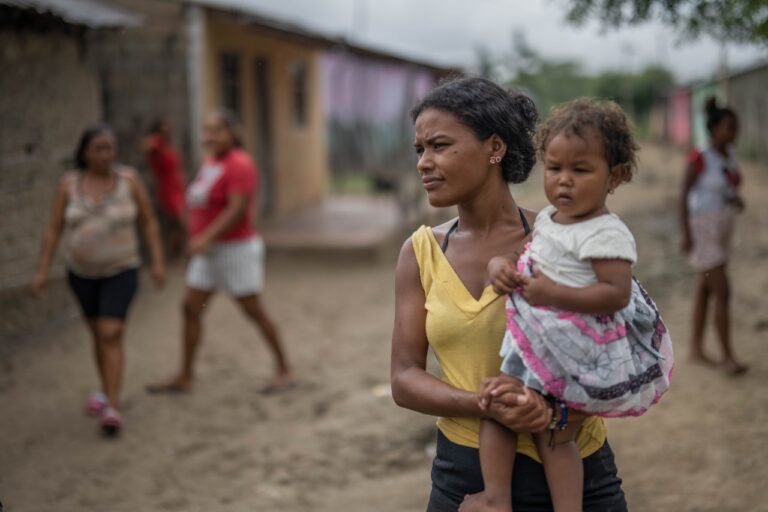
Mayelis Angarita Robles has been the target of three assassination attempts due to her work as a leader defending human rights and the territory in Montes de María, in the Colombian Caribbean.

The Montes de María subregion, which we toured for two days with Angarita (on June 18 and 19), is a mountainous corridor between the departments of Sucre and Bolívar, bordered to the east by the Magdalena River and to the west by the Gulf of Morrosquillo, in the Caribbean Sea. 

The area is a majestic habitat defended by community leaders who, despite death threats, attacks and enormous material limitations, work tirelessly to improve the difficult living conditions of the Afro-peasant and indigenous peoples of the area, who are a breeding ground for internationally recognized singers, top-level artisans and extraordinary musicians. 

However, rural Colombian Caribbean is also characterized by being a territory of displaced people, forgotten by the State, plundered by agro-industrial corporations and violated by armed groups linked to drug trafficking, extortion, human trafficking and contract killing. 

Although Angarita has been targeted by paramilitaries in this region, she and other leaders played an important role in citizen participation and monitoring of the historic elections of June 19, which gave victory to Gustavo Petro and Francia Márquez. 

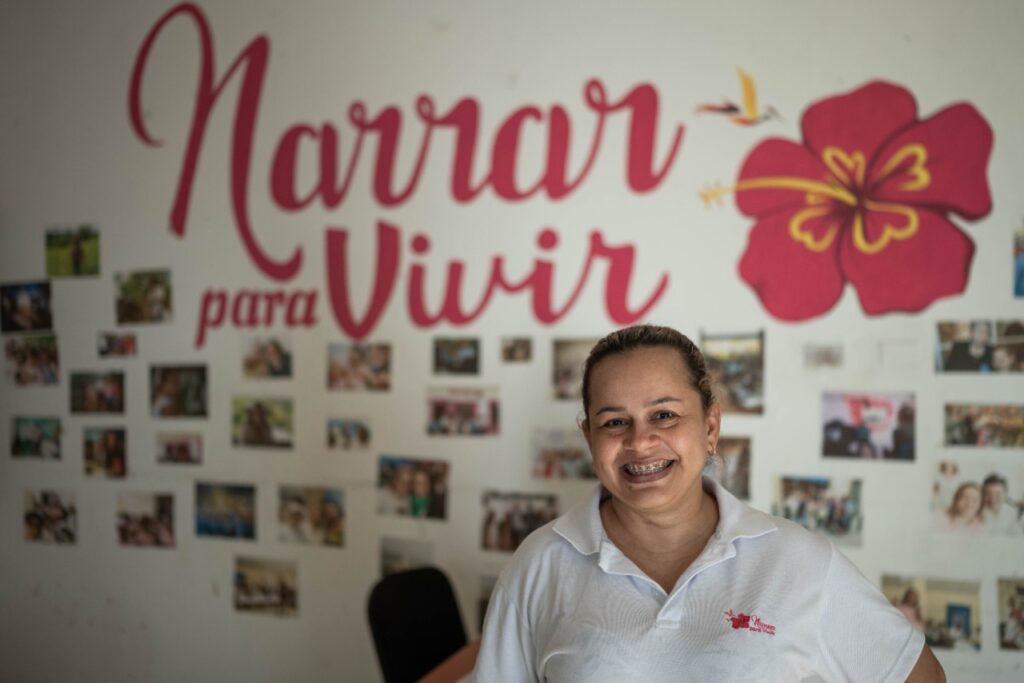
Angarita, who is the founder of Narrar para Vivir, a network of 800 female artisans who are victims of the armed conflict in Montes de María, says that they had to organize themselves very well in these elections, independently training “electoral witnesses because in the area there is almost always the issue of vote buying, precisely because of the issue of poverty. There are also many isolated areas and sometimes, every four years, people come to sell their votes for the opportunity to have something.”

Mayelis Angarita Robles, leader and defender of human rights and the territory in Montes de María.

Maestro Javier Sarabia Pedroza, director of the Son de Negro Dance of San Cayetano, in coordination with Angarita, is another of the leaders who watched over the vote through the “electoral witnesses.”  

“We are ensuring that the elections are carried out peacefully and without disruptions,” said Sarabia, who defined this electoral process as “the elections of hope for us as an Afro group. We are seeing policies that for a long time have not taken us into account, they have not thoroughly addressed what Afro groups need and deserve.” 

Maestro Javier Sarabia Pedroza, director of the Danza Son de Negro de San Cayetano.

Floods

The lands surrounding the small town of Nervití, located three hours from the municipal capital of El Guamo, are large, humid and muddy plains bathed by the Magdalena River, which allows the formation of sandbanks where the inhabitants grow modest corn crops, which they easily lose due to heavy rains.

The landscape is lush, dreamlike. There are scores of elegant white herons perched like sentinel angels on the beaches. Majestic eagles circle overhead, while the song of countless colorful birds mixes with the warm air, and children splash happily in the water while their father watches over them. 

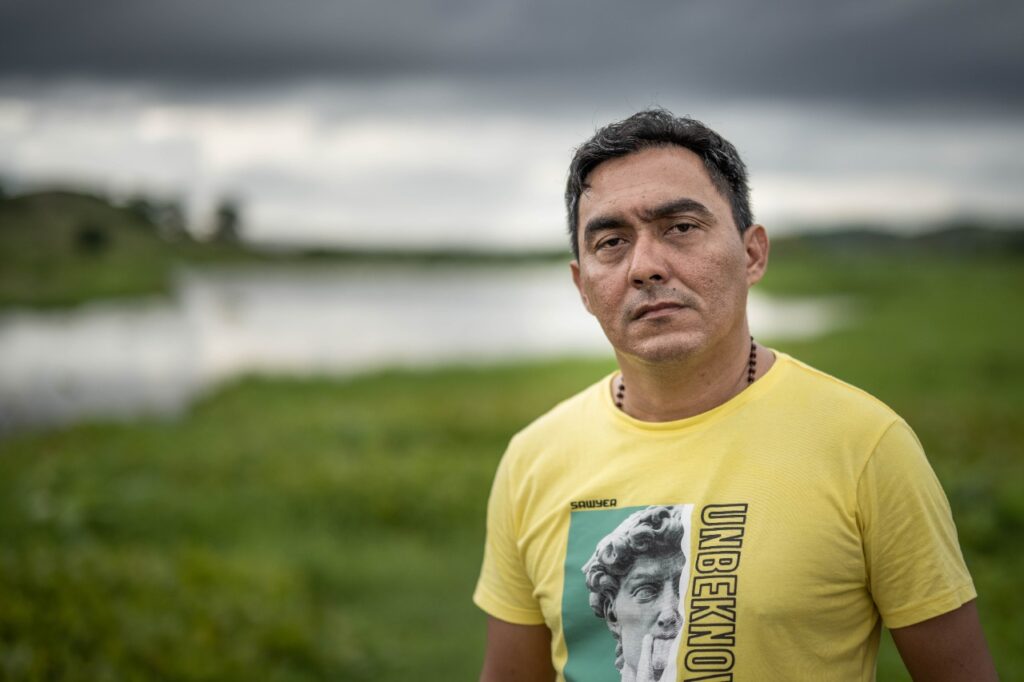
But the road from El Guamo to Nervití, like most in Montes de María, is a dirt road and is in very bad condition, and many stretches have been left under water due to the winter rains. These conditions, explained the leader of the area, Gabriel Carmona, leave many towns, like Nervití, completely isolated and cut off, and this makes it difficult for our residents, farmers, to vote.”

Gabriel Carmona, leader of the Nervití area in Montes de María.

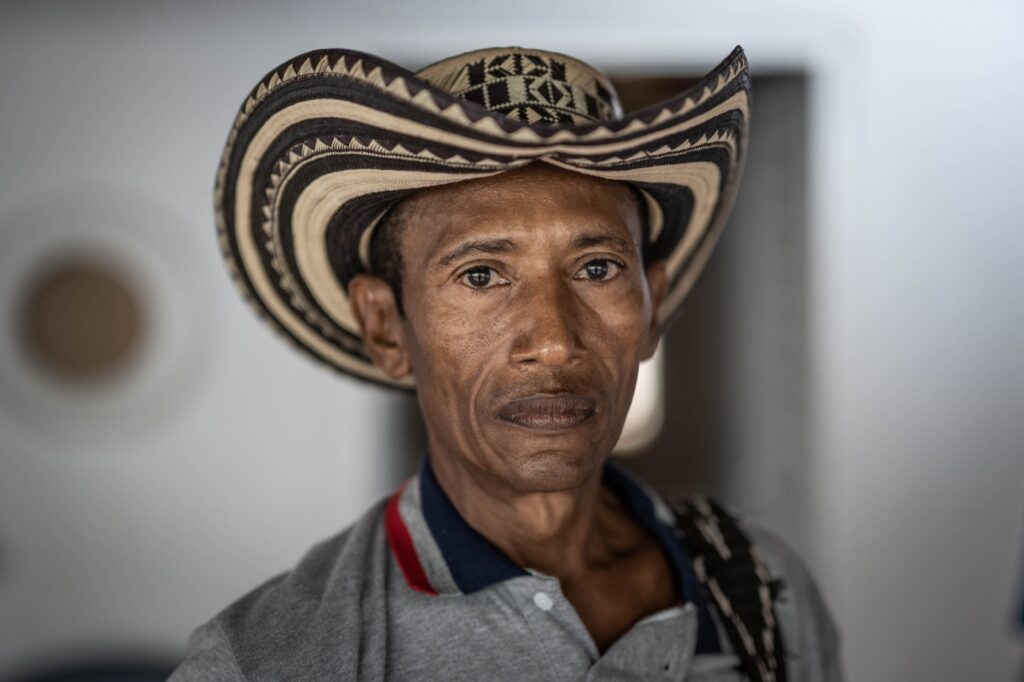
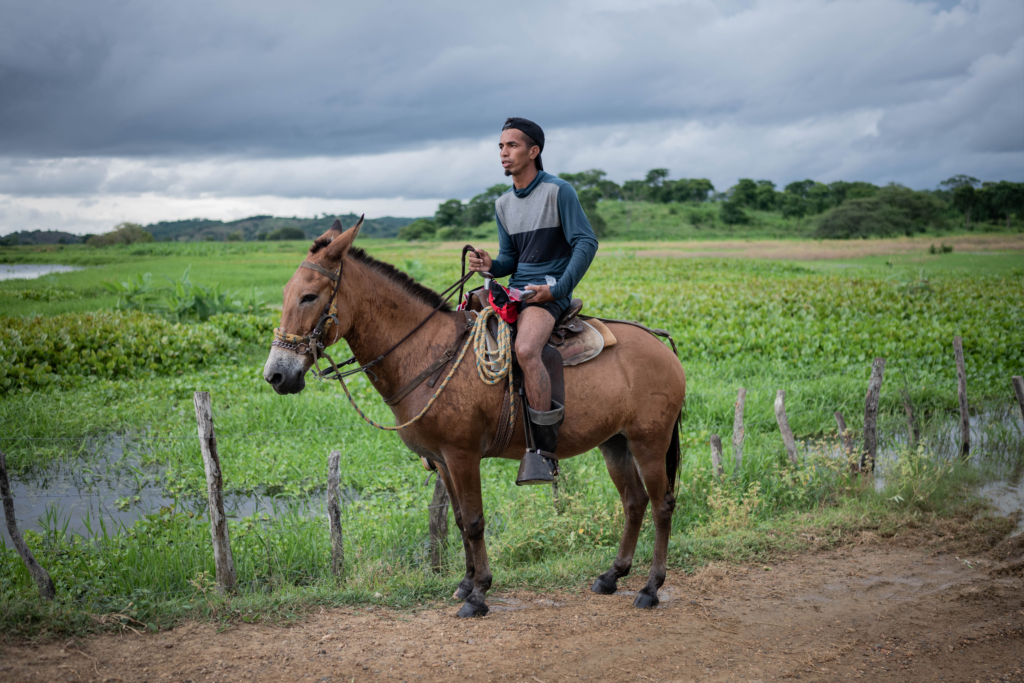
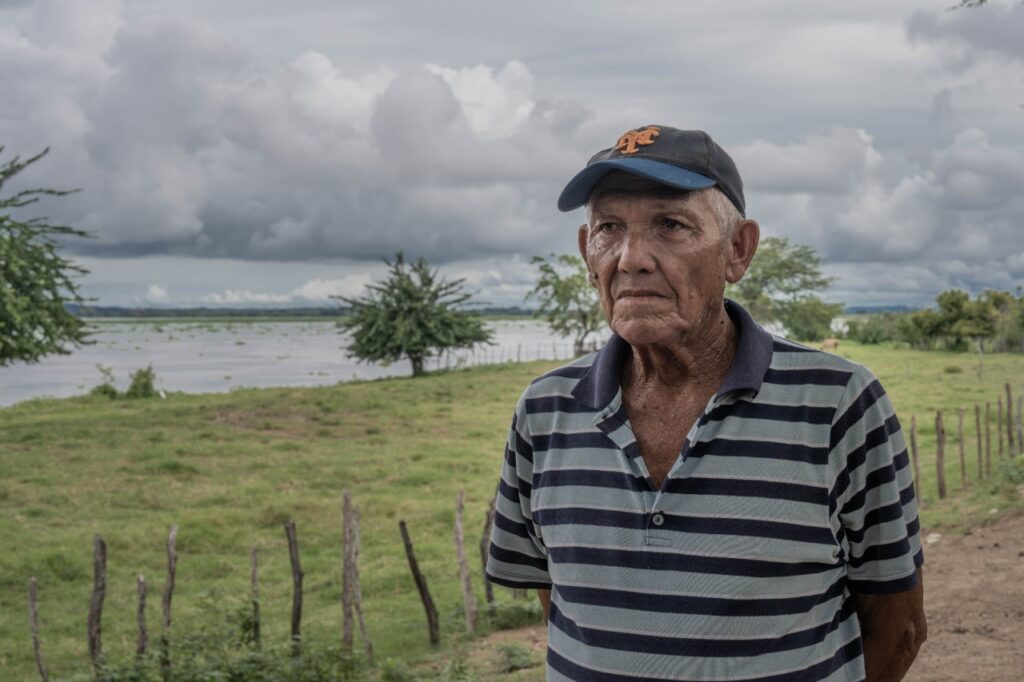
A farmer who travels by mule to vote, and who prefers to keep his name hidden, passes through a flooded road and the water reaches halfway up the animal's body. The man says that it takes two hours to go and two hours to return, but that it is worth it because "we want and need a change in Colombia, we want the new president to commit to us and support us, because as you can see, the roads are very bad, people who have motorcycles do not dare to go through here, that is why many people do not go out." 

In Nervití there is a clinic that is no longer in use because there are no doctors. The town is currently experiencing a flood that began four months ago due to the overflow of one of the swamps. Residents have observed a radical change in the behaviour of the river for approximately five years, which could be a result of climate change. 

In addition to the severe flooding that damages homes and roads, this radical climate change has led to a shortage of fish, which is extremely serious for a town that bases its livelihood on fishing. 

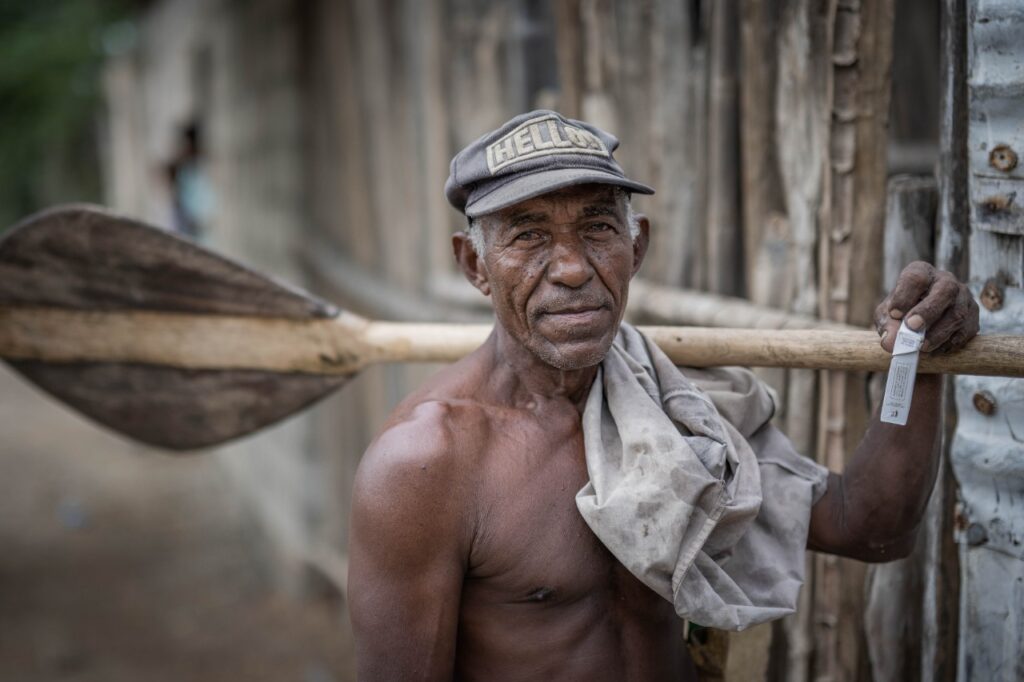
“We live off fishing here, but now fishing is not working because the river is swollen,” said Martín Antonio de la Rosa Chamorro, a fisherman leader from Nervití, who does not rule out that these problems may be related to climate change “because the sun is burning much more now than before.”

Julio César Moreno, a fisherman from Nervití, a fishing community affected by the shortage of fish in the Magdalena River
Martin Antonio de la Rosa Chamorro, leader of the fishermen of Nervití

Without fish, explains de la Rosa, the poverty that was already a characteristic of the area has worsened. “About ten families have had to leave this year… sometimes we have nothing to eat.” 

What do you expect from the new government in Colombia? 

“Let the new president look at these towns, they have abandoned us, the streets are useless, the town is all damaged by the floods.” 

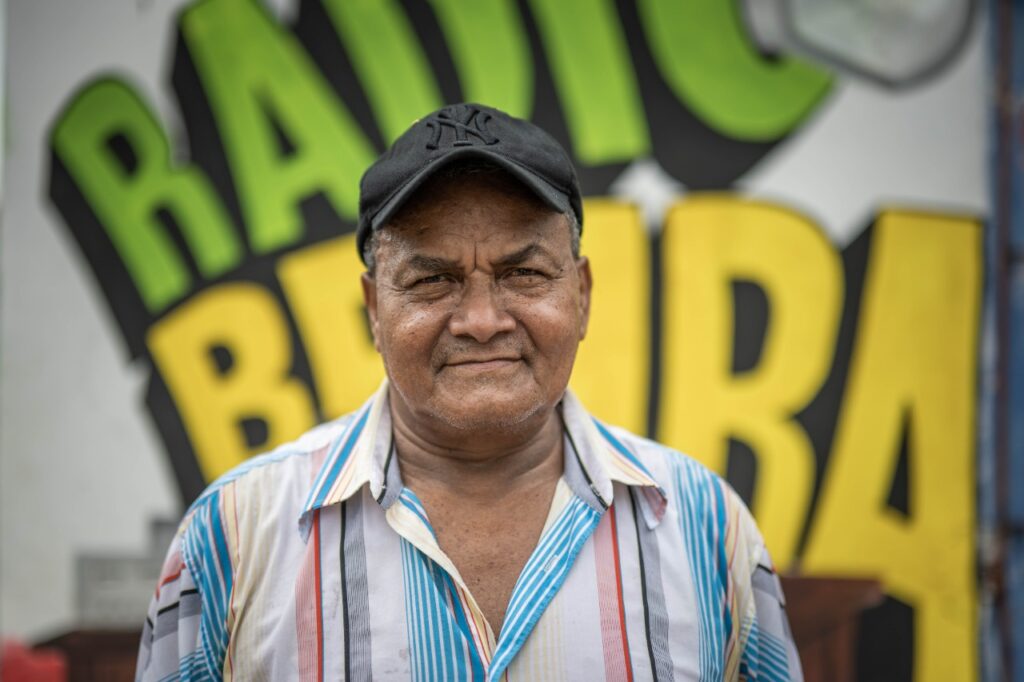
In many towns in Montes de María there is no internet or cell phone signal. Nor do the media reach them. That is why the inhabitants of the town of Robles, Bolívar, created Radio Bemba, which consists of a speaker placed on top of a pole at the house of Omar Ramón Villegas de León. 

“Attention Robles, pay close attention. Good morning! This is Omar speaking to you from this lovely community radio station in Robles, Radio Bemba, which belongs to you. Please be advised that where Mr. Antonio has fresh pork… and where Mr. Manuel Segura buys his basic basket…”

In addition to providing information on domestic issues ranging from food sales to organizing to deal with the ravages of flooding, Radio Bemba served to “raise awareness in the community about the importance of voting” in the presidential elections, Mr. Villegas said proudly. 

“I am not a radio professional, I simply saw the need for communication that we have in the town and decided to install my speakers and microphones, and that is how Radio Bemba was born. But we are very limited, we would like to be able to install more speakers or even an antenna to make other types of transmissions, which also reach other towns,” Villegas hopes out loud. 

Omar Ramon Villegas de Leon

Violence and paramilitarism

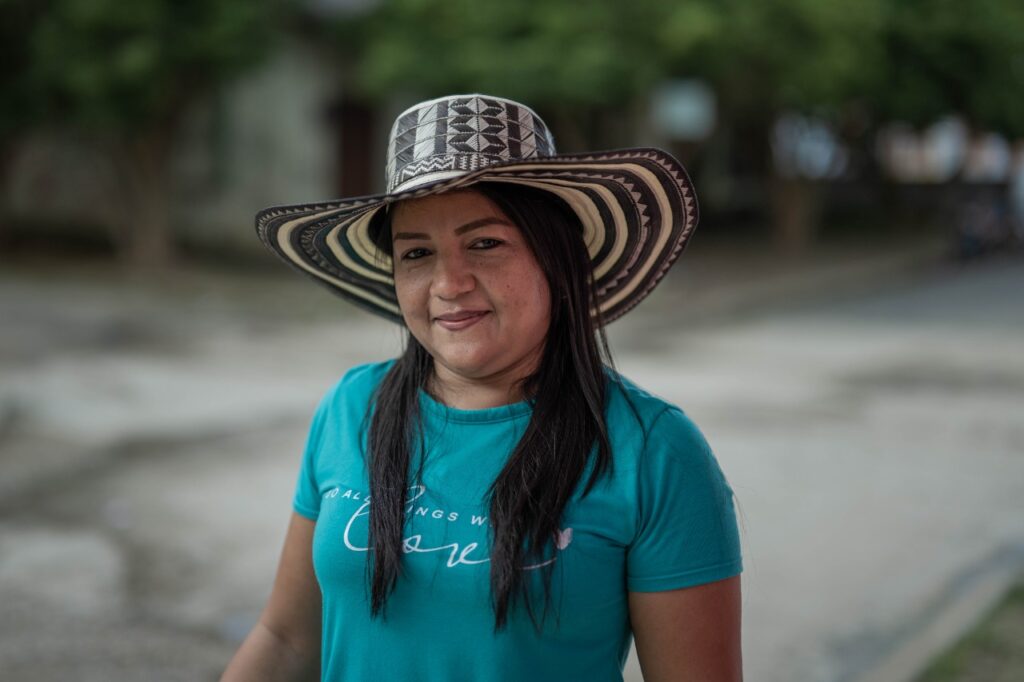
The craftswomen who are part of Narrating for Living They weave hammocks, backpacks, hats and other typical items that they sell to obtain some income. However, reported Surlay Sequea, legal representative of this organization, armed groups in the area have recently approached them to extort them.

Surlay Sequea, legal representative of Narrating for a Living

In addition to flooding and material poverty, there is what could be the main problem in Montes de María: the historical violence in the region, which has been exacerbated by the recent formation and strengthening of groups outside the law, such as the Autodefensas Gaitanistas de Colombia (AGC) and the presence of the Sinaloa cartel (from Mexico), which maintain political and social control of the area. 

“In Montes de María we are experiencing a very difficult situation of violence. We have been experiencing many threats. I have been displaced since last month. I left my house for an event and I could not return because they threatened me and ordered me not to be in my municipality,” said Sequea. 

Paramilitary actions against the population intensified with the armed strike declared last May, which forced the residents of 11 departments and 135 municipalities in Montes de María to remain in confinement for four days. Those who did not comply with the strike, especially small merchants, were executed. 

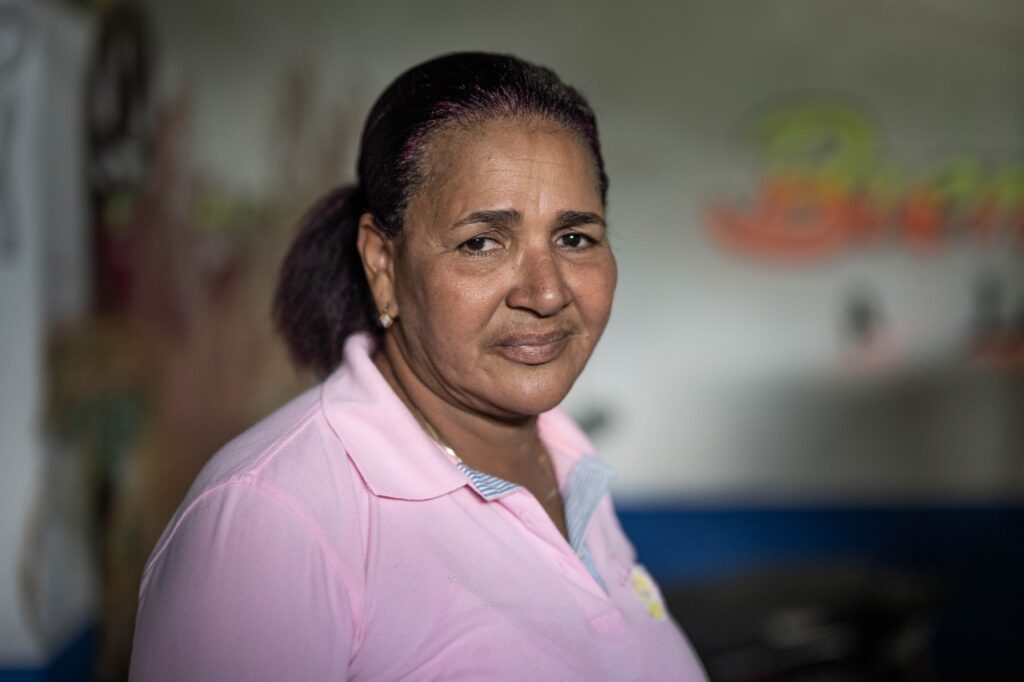
In the municipality of María la Baja, human rights leader Elsi Quintana commented, “People are scared because in the afternoon and at night we are seeing strange cars, strange people driving around on motorcycles, we don’t know who they are. It is difficult to live with so much fear.”

Elsi Quintana, leader and defender of human rights in the municipality of María la Baja

“They started calling us on May 17 to extort us and the amount has been increasing every day. They say that we have projects and manage productive initiatives, and that is why we have to give them a vaccine [a quota]. This prevents us from continuing to work as we did, we are afraid,” Sequea admits.

“Montes de María has a history of 157 massacres and more than 4,172 homicides. You can imagine what it means for us to work for democracy today in a context where Monte de María is seen nationally and internationally as a territory of reconciliation and peace. And yes, we are. There are very tough people here. I think we are too tough to continue here in a territory when the price of working for peace is your life,” said Angarita, who, as a result of her attacks, now moves around the territory escorted by two armed men as part of a protection program for threatened leaders in Colombia. 

At the entrance to several villages in Montes de María there are graffiti by the AGC with the name of the leader in the area. The presence of these groups, according to several testimonies for this journalistic work, triggered femicides, executions, forced disappearances and is causing a new wave of displacement. 

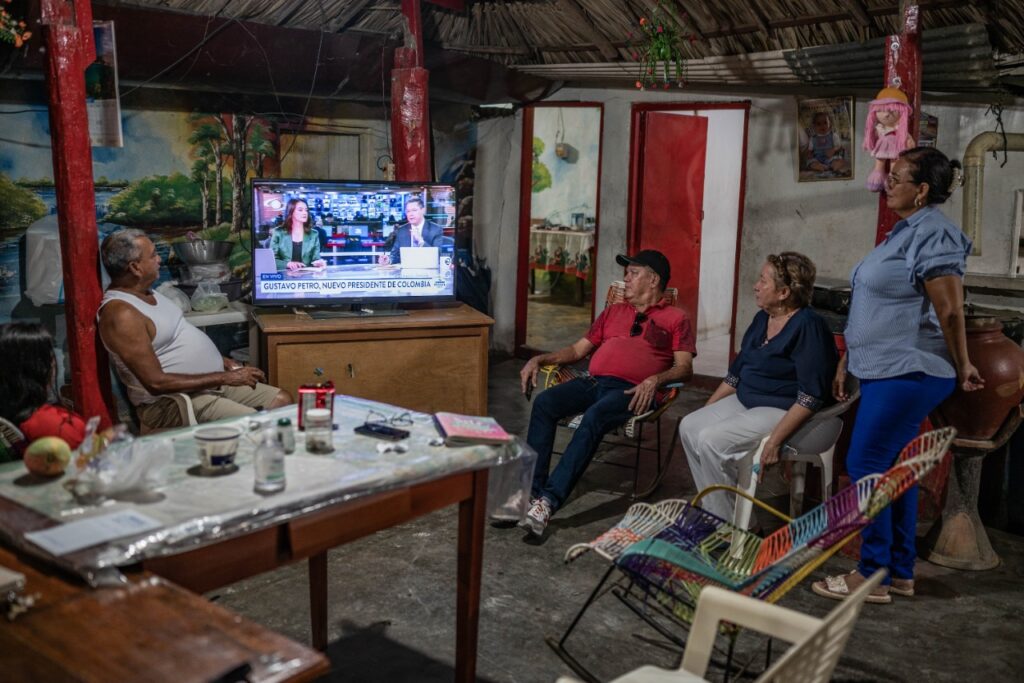
Days before the second round of the presidential elections, fishermen and farmers in some towns were ordered “not to go out to work or vote.” Despite everything, thousands in the region went to the polls, giving the left victory for the first time in the history of Colombia. With this news, broadcast on television, a family that voted for the Coalición Pacto Histórico in the urban area of the municipality of San Juan Nepomuceno closed the day. 

A family looks at the results of the presidential elections that gave victory to the Historic Pact Coalition.

This work was carried out with the support of Global Exchange, in collaboration with Peninsula 360 Press.

You may be interested in: Peace and social justice, Petro's pillars for his next government as head of Colombia

California, Oregon and Washington pledge to protect abortion access

California, Oregon and Washington pledge to protect abortion access

In the wake of the U.S. Supreme Court's decision to overturn Roe v. Wade, the states of California, Oregon and Washington have stated that they will continue to be a safe haven for all people seeking access to abortion and other reproductive health services.

The governors of those three states issued a Multi-State Commitment on Friday to defend access to reproductive health care, including abortion and contraception, and to protect patients and physicians from efforts by other states to export their abortion bans.

The action is part of the governors' pledge in response to the U.S. Supreme Court's unprecedented decision to strip away a constitutional right that has existed for half a century, leaving abortion regulation to the states. 

The sweeping decision means that for patients in more than half the country, home to 33.6 million women, abortion care is illegal or inaccessible.

In a message from video, the governors detail that the West Coast will continue to be a place where reproductive health care will be accessible and protected.

"The Supreme Court has made it clear: They want to strip women of their freedom and allow Republican states to replace it with mandatory birth control because the right to choose an abortion is not 'deeply rooted in history,'" Newsom said.

She added that the group is seeking to turn back the clock to a time when women did not have the right to make decisions about their own bodies, "when women had to seek care in the shadows and at great risk, when women were not treated as equal citizens under the law."

In that regard, he noted that the Supreme Court's decision is another devastating step toward eliminating the rights and freedoms for which Americans have fought on the battlefields, in the courts and in the capitols. 

"This is not the America we know, and this is not the California way," Newsom said.

She added that California has joined Oregon and Washington in defending women and protecting access to reproductive health care. “We will not stand by and allow patients seeking reproductive care in our states or the physicians who provide that care to be intimidated with criminal prosecution. We refuse to go back and will fight like hell to protect our rights and our values.”

For her part, Governor Kate Brown noted that “abortion is health care, and no matter who you are or where you come from, Oregon does not turn away anyone seeking care. Let me be clear: you cannot ban abortion, you can only ban safe abortion, and this shameful decision by the Supreme Court will undoubtedly put many people’s lives at risk, in addition to stripping away a constitutional right that disproportionately affects women and has been established by law for most of our lives.”

She clarified that for all Americans who today feel scared, angry and disappointed, “for all those who need an abortion and don’t know where they can access safe reproductive health care, know that you are not alone and the fight is not over.”

Washington Governor Jay Inslee said the law would remain unchanged in the state he leads, "but the threat to patient access and privacy has never been more dangerous."

Even in Washington state, she said, Republicans have introduced about 40 bills in the past six years to roll back abortion rights and access to reproductive care.

“The right to choose should not depend on which party has the majority, but that is where we find ourselves. More than half of the country’s population now lacks safe access to a medical procedure that only a patient and their doctor can and should perform for themselves,” he explained.

Instead, she stressed, law enforcement, vigilantes and judicial systems can force patients to bear the burden of forced pregnancy and childbirth. 

"Washington State remains steadfast in our commitment to protecting the ability and right of every patient who comes to our state seeking abortion services, and we will fight like crazy to restore that right to patients across the country," she said.

In recent years, each state has taken steps to expand access to reproductive health care in preparation for such a decision:

Governor Newsom has proposed a $125 million reproductive health package to expand women's access and help prepare for the influx of women seeking reproductive health care from out of state. 

Thus, the California Legislature introduced a constitutional amendment to enshrine the right to abortion in the state constitution, while Newsom recently signed legislation eliminating co-pays for abortion care services and signed into law a legislative package to further strengthen access and protect patients and providers, with additional proposals already under consideration with the Legislature.

Oregon led the nation in passing the most comprehensive reproductive health legislation at the time. Governor Brown signed into law the Oregon Reproductive Health Equity Act in 2017, the first bill of its kind that expanded access to reproductive health services for all Oregonians and codified the right to abortion into state law. 

Building on that work, Oregon invested $15 million in community-based organizations to expand abortion access statewide and provide immediate support to patients, health care providers, and community advocates, with a focus on rural communities, communities of color, and low-income communities. 

In 2018, Governor Inslee signed the Reproductive Parity Act, which requires all health plans that include maternity care services to also cover abortion and contraception. In 2021, he signed the Pregnancy Protection Act, which allows physicians practicing in Catholic-run hospitals to bypass religious-ethical directives and perform a medically necessary abortion when a woman’s life is in danger. 

Earlier this year, Inslee signed the Affirm Washington Abortion Access Act, which guarantees the ability of Washington abortion providers to serve anyone who comes seeking an abortion. 

Washington law also protects patients and clinic staff from harassment outside their health care facilities.

You may be interested in: "Deadly serious": Nancy Pelosi on Roe v. Wade overturn in Supreme Court

"Deadly serious": Nancy Pelosi on Roe v. Wade overturn in Supreme Court

Nancy Pelosi

After the Supreme Court on Friday, June 24, repealed the Roe vs. Wade ruling in favor of abortion rights in the United States, and the decision of the court's conservative judges was upheld by a vote of six to three, the fight for women's rights begins again, alongside thousands of demonstrations across the country.

In response to this, the Speaker of the House of Representatives, Nancy Pelosi, said that the Supreme Court's decision is "mortally serious."

"Today, the Republican-controlled Supreme Court has achieved the Republican Party's dark and extreme goal of taking away women's right to make their own reproductive health decisions. Because of Donald Trump, Mitch McConnell, the Republican Party and their supermajority on the Supreme Court, American women today have less freedom than their mothers did," the Democrat said.

He explained that with Roe out of the way, radical Republicans will continue their crusade to criminalize health care freedom. 

"In Congress, Republicans are plotting a nationwide abortion ban. In the states, Republicans want to arrest doctors for providing reproductive care and women for terminating a pregnancy. Republican Party extremists are even threatening to criminalize contraception, as well as in vitro fertilization and post-miscarriage care," she stressed.

In this regard, she recalled that a woman's fundamental health decisions are her own, in consultation with her doctor and her loved ones, "not to be dictated by far-right politicians." 

"While Republicans seek to punish and control women, Democrats will continue to fight fiercely to enshrine Roe v. Wade into law," she said.

"This cruel ruling is outrageous and heartbreaking. But make no mistake: the rights of women and all Americans are on the ballot this November," she said.

It is worth noting that Missouri was the first state to ban abortion just minutes after the ruling.

The case «Roe vs. Wade»

The fight for women's reproductive rights and their right to make decisions about their own bodies began in a historic way in American law with a name that will now gain even more strength: Norma McCorvey, a waitress from Dallas who in the 1970s sued Henry Wade, the district attorney for Texas, in a historic process to claim her right to have an abortion.

In 1973, Texas law stated that abortion was prohibited, but 22-year-old Norma McCorvey, now known as Jane Roe, a pseudonym used in the laws to protect the plaintiff, who did not want to be pregnant due to financial problems, turned upside down the laws that prohibited it not only in that state but also made it a constitutional right throughout the United States. 

Hence the lawsuit that served to constitutionally legalize abortion in the United States acquired its name, "Roe vs. Wade."

Although in 1973 abortion was already approved in some states of the United States, such as California and New York, in addition to four other states, it was limited in another 16 states, such as Texas, the place where Jane Roe lived. 

It was in 1968 when Ronald Reagan, then Republican governor of California, signed the "Therapeutic Abortion Act" while in 1970 in New York City, the right to abortion was signed without the need for women to give any kind of explanation to the authorities as long as it was carried out within the first two trimesters of pregnancy.

By July 1, 1970, the first abortion clinic was reportedly opened in New York City.

In January 1973 the federal judges in the Northern District of Texas finally ruled seven votes to two in favor of the plaintiff.

You may be interested in: U.S. Supreme Court overturns landmark Roe v. Wade case eliminating protections for safe abortions

U.S. Supreme Court overturns landmark Roe v. Wade case eliminating protections for safe abortions

U.S. Supreme Court overturns landmark Roe v. Wade case eliminating protections for safe abortions

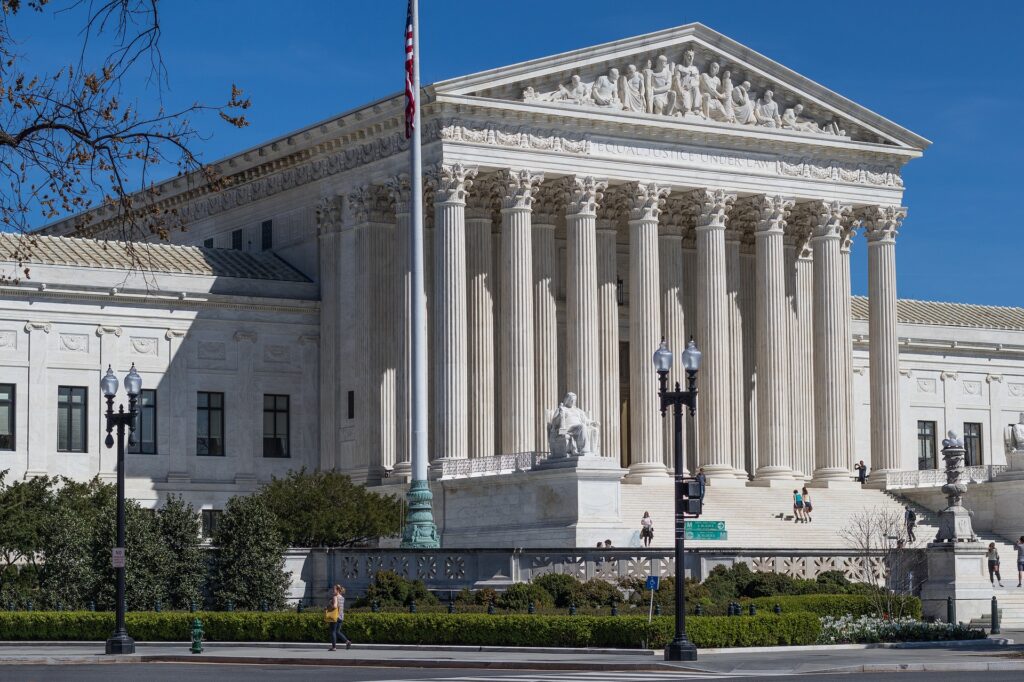
The U.S. Supreme Court overturns the landmark Roe v. Wade case, ending nearly 50 years of constitutional abortion protections and leaving millions of women in the country unprotected in their reproductive choices.

The court, by a 6-3 vote, upheld a Mississippi law banning most abortions after 15 weeks, joining dozens of states across the country that had previously pledged to pass similar laws following the ruling.

In response to the Supreme Court decision resulting in the loss of the constitutional right to abortion, San Francisco Mayor, London N. Breed, announced the first steps being taken to prepare for local impacts and to ensure that San Francisco continues to present itself as a place that proudly protects and supports a woman’s right to choose.

With input from leading abortion rights organizations, the San Francisco Department of the Status of Women (DOSW) has identified the next steps San Francisco will take to prepare for any influx of out-of-state travelers and minimize the damage from the ruling.  

“This decision is devastating for women and for our country. San Francisco will continue to proudly protect women’s health and the fundamental right to choose. This is a dark day, but we will continue to fight and will not give up,” Mayor Breed tweeted following the announcement.

In a press release, DOSW said it has begun to initiate a Bay Area coordinating table of providers, advocacy organizations and local government agencies to better understand the services available across the region and what may be needed, as well as to prepare for any state-level interventions that may come.

Additionally, she said, she has begun measuring local capacity for abortion care services to understand what services are available to women in San Francisco and what impacts they may have as a result of this decision.

DOSW is distributing $250,000 in emergency grants to local organizations for immediate capacity building and wraparound service support so that women can continue to receive the care and support they need as demand for services potentially increases.

“San Francisco has proudly served for generations as a place that respects fundamental civil rights, including a woman’s right to choose. The ramifications of this Supreme Court ruling on public health, poverty, and so many downstream consequences remain to be seen, but right now, women are scared about what this means for themselves, for their daughters, for all of us,” Breed said.

“San Francisco cannot fix national policy, but we can ensure that the residents of this city are safe from anyone who would criminalize health care, and we are working with the entire Bay Area to prepare for any impact of this decision,” he added.

Kimberly Ellis, director of DOSW, said the measure would lead to failed clandestine abortions and, consequently, the deaths of women.

“There will be botched home and clandestine abortions, and women will die unnecessarily. We have a moral obligation to do everything we can to protect the lives of living, breathing mothers, daughters, sisters, partners and wives. No person should have to choose between giving birth and dying, but that is exactly our new reality,” she said.

According to a poll conducted by NBC News, 63 percent of Americans said in May that they did not believe Roe v. Wade should be overturned, compared with 30 percent of people who wanted the abortion rights ruling overturned.

Additionally, a combined 60 percent of Americans nationwide said abortion should be legal always (37 percent) or legal most of the time (23 percent).

By party, 84 percent of Democrats and 63 percent of independents want abortion to be legal, compared to just 33 percent of Republicans.

MoveOn has partnered with Planned Parenthood Federation of America, Women's March, UltraViolet, American Civil Liberties Union (ACLU), NARAL Pro-Choice America, SEIU, the Liberate Abortion coalition of reproductive justice organizations and leaders, and partners across the country to organize "We Will Not Go Back" actions across the country to speak out against the Supreme Court's decision.

There will be several marches in the Bay Area. So far, marches are expected to take place in San Francisco and Napa on Friday.

  • Protest at the Phillip Burton Federal Building at 450 Golden Gate Ave. – 5pm
  • Pro-Choice Rally at Powell & Market – 5pm
  • Old Courthouse Brown Third / Napa – Time/Date TBD – Currently being organized.

While a protest is planned for tomorrow, Saturday, at San José City Hall at 10:00 a.m., however, the details are still subject to change.

You may be interested in: Lawmakers seek constitutional amendment to guarantee abortion rights in California