The competition organized by POY Latam -Pictures of the Year, Latin America- is the most prestigious competition for visual creators in Latin America. POY Latam is an organization directed by Pablo Corral Vega, Loup Langton and Kim Grinfeder.
The photographs and photo essays could be submitted in a period from 30 November to 2 January, a longer period to adapt the competition to the new normality. In addition, this year, Gael Almeida, Daniel Rodrigues, Gisela Volá, Magdalena Herrera, Mallory Benedict, and Karla Gachet served as judges and, for three days - from January 14 to 17 - reviewed each image remotely - given the pandemic by COVID-19 - and discussed its history to be the best photograph of the year.
Lalo de Almeida
Lalo de Almeida, from Brazil, won first place for the "Ibero-American Photographer of the Year" Award. His photo essay shows the process of the fires in the Brazilian Pantanal, the largest wetland on Earth.
In Argentina, second place for the "Ibero-American Photographer of the Year" award went to German photographer Sarah Pabst. "It's a huge recognition of my work and I still can't believe it," she said in her Instagram account. "I learned a lot by listening to you these days and I want to thank you also for all the effort and hours you dedicated (...)", she added. His photographs show the coldest place on planet Earth: the Antarctic continent.
The COVID-19 pandemic, which officially began 300 days ago, has left 140,241 deaths in Mexico. For his photo essay on how the new SARS-CoV-2 coronavirus changed the daily life of Mexico, third place for the "Ibero-American Photographer of the Year" award goes to Mexican photographer Luis Antonio Rojas.
In Peru, Florence Goupil won an honorary mention in the same category. In one of her photographs, Goupil states: "How little can we offer the indigenous peoples of these ancient lands?
To learn more about the winners, you can visit the POY Latam website: http://poylatam.org/as well as his Instagram account, where you can see a broader picture of such an ambitious contest.
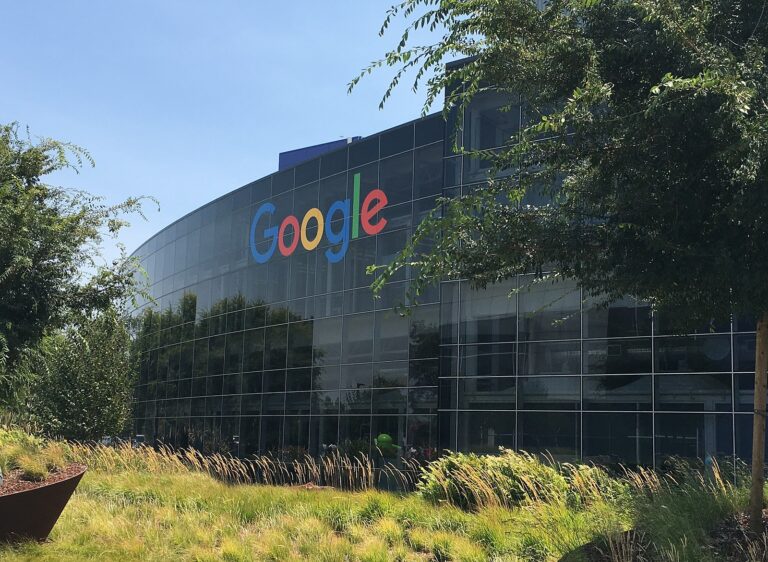
On Friday morning, a Google building was evicted after a suspicious package was discovered, which ultimately turned out to be harmless, the Mountain View Police Department reported on its Twitter account.
The property located in 2000 on Casey Avenue was evacuated "as a precaution" so that the package could be of an explosive nature. This would put at risk the people inside the building at that time.
The police requested help from the Santa Clara County Sheriff's Office bomb squad, who after reviewing the suspicious package, at 11:30 am determined that there was no danger, so the area was cleared.
"A preliminary investigation has revealed that the package is not dangerous. We will continue to hold the bomb squad accountable as a precaution," the Montain View police quoted in a tweet.
The former head of Mexico's National Defense Secretariat, General Salvador Cienfuegos Zepeda, was acquitted Thursday of the crimes that the U.S. Drug Enforcement Administration (DEA) charged him with for links to drug trafficking, which detained him at the airport in Los Angeles, California, on October 15, 2020.
In Mexico, the Attorney General's Office determined that it would not proceed criminally against General Cienfuegos, who would be charged by the New York court with collaborating with the Sinaloa cartel and who sentenced Joaquin Guzman Loera, "El Chapo".
This morning, Mexico's President Andres Manuel Lopez Obrador said at a press conference that although the Mexican prosecutor's office did not find elements to sentence him, according to U.S. records, a legal process will take place. And that the arbitrary fabrication of crimes will not be allowed.
Foreign Minister Marcelo Ebrard said that for the good relationship of both countries, they should trust the evidence presented by the U.S. authorities in charge of referring the former head of the headquarters to Mexico.
"On this stand I said that, for Mexico, it would be unthinkable, suicidal, to do nothingBut what the Attorney General's Office did was to summon Salvador Cienfuegos Zepeda to appear," the minister said.
Meanwhile, journalism in Mexico was convulsed by the exoneration of "El Padrino".
Dolia Estévez, a Mexican journalist, exposed:
@FGRMexico failed the anti-corruption test with the exoneration of Cienfuegos, Secretary of Defense for Pena, says @WOLA_org. It expresses concern about the alarm signal it sends out about the pursuit of other files such as those of the thousands of missing persons. https://t.co/8pjz39KiPW
Anabel Hernández, a woman journalist who is known in Mexico for her investigative journalism work on Mexican political figures related to drug trafficking, as well as crimes committed by the Mexican State, declared a few months ago that the Mexican Government, specifically President Andrés Manuel López Obrador, has been a victim in the outcome of Cienfuegos' exoneration.
On the other hand, Julio Astillero, a Mexican journalist, writer and lawyer pointed out what was said by Vice News reporter Keegan Hamilton, where he refers to the fact that the U.S. Department of Justice could change its mind if the Mexican government fails to proceed with the Cienfuegos case:
Attention: Reporter from @VICENews , @keegan_hamilton report: "The spokesman for the U.S. Department of Justice tells @VICENews this morning:
"The United States reserves the right to resume the prosecution of Cienfuegos if the Government of Mexico fails to do so. https://t.co/C98UVTHPcr
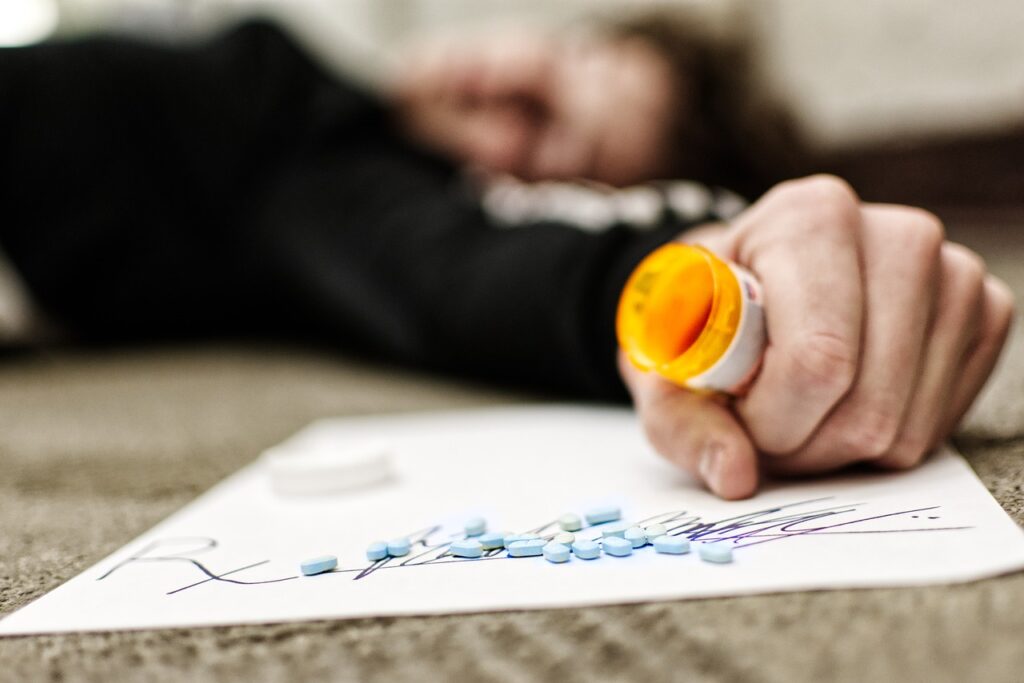
San Francisco reported a total of 699 deaths from accidental opioid overdoses during 2020, a record number, after a 63 percent increase from 2019, the county's Office of Forensic Medicine (OCME) reported.
The report, which runs from Jan. 1 to Dec. 31, 2020, and was released Thursday, says 82 percent of those who overdosed were men, while 18 percent were women.
In terms of race, the most affected was Caucasian, representing 48 percent of deaths, followed by people of African descent with 25 percent, Latinos, 16 percent, others, 5.0 percent, and Asians, 4.0 percent.
The report itself details that, according to the preliminary data, the ages with the highest number of incidents were 55 to 64 years old with 25 percent of total deaths; followed by 35 to 44 years old with 23 percent; 45 to 54 years old with 22 percent; 25 to 34 years old with 16 percent; 65 years old and over with 10 percent; and 15 to 24 years old with 4.0 percent.
The OCME highlights in the document that the drug that was responsible for the highest number of accidental overdoses was fentanyl, followed by methamphetamines, cocaine, heroin and medical opioids.
Experts believe the increase in overdoses may have been driven by the VID-19 epidemic, because while isolation helps stop the spread of the virus, for drug users it has increased the possibility of taking hard drugs that lead to death.
More than 20 percent of accidental overdose deaths in San Francisco were in the Tenderloin, followed by SOMA, Nob Hill and Inner Mission.
The U.S. Centers for Disease Control and Prevention (CDC) has not yet issued its report on the number of deaths in the country due to accidental opioid overdoses, but in 2019 it said that nearly 71,000 people died from such causes, much of which were due to fentanyl.
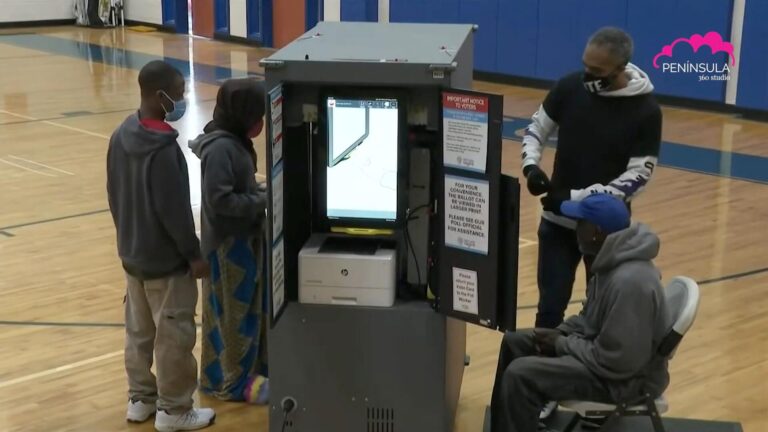
After the election results last November, which gave Democrat Joe Biden the victory as U.S. president, were positive for most voters, they may relax and stop participating actively in the country's politics, so "it will take something catastrophic for people to feel that they need to participate at the levels that they did in 2020.
This was pointed out by Myrna Perez, director of the Elections and Electoral Rights Program at the Brennan Center, who noted that because this election turned out the way some people wanted it to, people will no longer feel the urgency to participate.
"It doesn't take a historic, outrageous or off-limits leader to inspire people to get involved, but we need to have a stake in our country every day all the time," he said during the virtual session "How safe is your right to vote?"by Ethnic Media Services.
The expert said an election was achieved despite incredibly powerful forces that wanted to prevent black and African-American voters from participating, and in the midst of a SARS-CoV-2 pandemic.
"We dealt with it, we dealt with a once-in-a-century global pandemic. We did it in spite of that crisis and we did it in spite of politicians, at all levels of government, who tried, intentionally, to confuse, mislead and lie to the voters," he said.
This was accomplished, he said, because 35 states changed some of their policies, which facilitated the vote after the pandemic was declared by COVID-19.
This, he said, "only happened because Americans from all walks of life got involved," which meant that it took the potentially widespread disenfranchisement of people who usually are not, to enable them to actively participate in change.
However, people from the African American, Latino and Asian American communities have long seen their voting rights violated, "having to deal all the time with barriers, inaccessibility and lack of response.
He stressed that during this last electoral process it was learned that disinformation can be used as a form of intimidation, since there are people who even though they know what they are saying is wrong, they spread it anyway. -At the Brennan Center- "we had more reports of intimidation than in any other election".
While there were no coordinated or organized assaults by the "proud boys" - a racist pro-Trump group - to disrupt the voting, "there were many what I call "rando jerks" - random jerks - with guns and trucks who blocked access to the ballot, scared the voters or threatened them.
"The most important thing that we learned - in the past elections - is that cracks in our system, that impact on communities of color in every election and some other things that go wrong, can affect the community at large and therefore we are all better off when our systems have the preparedness, resilience and planning to withstand the challenges our country faces," whether it's a pandemic or foreign attackers.
"We, as a country, depend on our choices as possible ways to resolve political differences and transfer power. Our democracy works best when it includes all of us.
Myrna Perez
The political scientist from Yale stressed that "we need to make sure that every day we are defending a solid, participative and inclusive democracy", a task in which journalists can also participate because of their high capacity to reach all citizens.
For her part, Gabriela D. Lemus, president of the Progressive Congress, said that in 2020, Latino political power increased through education, mobilization and community activation, mainly in California, Arizona, Nevada, Colorado, Texas and Florida, as well as Michigan, Wisconsin and Georgia, places where the concentration of Latinos is strong but also emerging.
He recalled that the Latino community is the largest proportion of non-white voters in the country, with a record 32 million representing about 13 percent of all eligible voters.
He added that of the 8.6 million Latinos who had an early vote, 2.4 million registered for the first time, making it the second largest block of voters, so their participation was decisive in states like Arizona, Colorado, Nevada, Michigan, Pennsylvania and Wisconsin.
He also said that part of the reason Latinos are not going to vote is because they don't see people like them trying to run for office or because their problems as voters are not being addressed.
"The assumption is that Latino voters are primarily concerned about immigration, which is not necessarily true... it could be number four or five on the list after education, health and the economy.
Gabiela Lemus
Judith A. Browne Dianis, executive director of the Advancement Project, said this is a time when we must be reflective about race, not only because of the people who took over the U.S. capital or the Capitol, but because of all the racial baggage they carried with them.
"They came carrying Confederate flags with the idea that the Confederation would rise again, and what we saw on display in terms of the police response at that time underlines for us the unequal treatment of people," he said.
He said that the insurrection seen on January 6 at the Capitol "is about the rise of the Confederacy and the rise of white supremacy at a time when we have a rising majority, and therefore we should not view the riots as an isolated incident. They were part of a larger effort in the halls of state and federal government to undermine the will of the people.
Those actions, he explained, were motivated by the same anti-democratic sentiment that inspired lawmakers to challenge last November's election results, based on unfounded conspiracies, lies and misinformation about the election fraud perpetrated, specifically in communities of color.
Such attacks on the African-American community, he said, were made on cities where people of color came in record numbers, "from Milwaukee to Philadelphia, Detroit and Atlanta, which is where they wanted to focus their energies, because they wanted to continue the narrative of the criminality of people of color who were supposedly trying to steal an election.
"We know that the right to vote does not live explicitly in the Constitution, and what we hope is that we can get to a point where the Constitution recognizes it, so that when we file suit, the courts will treat it the same way they treat the First Amendment," he said.
Part of the equation, he said, is redistricting, "that's a concern that we'll see, I think definitely over time the growing majority will mean that state legislatures will look like us - a mixed bag of participants - will happen over time.
Currently, what worries Browne Dianis most is the continuous misinformation that exists on social networks, "they allow us to say what we want and act as if it were a fact. We already know what the truth is, what is false versus the truth. So how are we going to make sure that our people and my people of color in particular get to the truth?
Telegram Messenger - a private messaging service - takes a step forward and is closing "channels", public chat groups with a right-wing extremist faction where neo-nazism and belief in QAnon are encouraged. This mainly prevents the organisation of groups in the US against Joe Biden's presidential transition.
In addition, it was recently announced that WhatsApp Messenger - Facebook's competition with Telegram - added new terms and conditions where user information is compromised. This has forced many users to download Telegram Messenger as an alternative to WhatsApp for those who cannot use a more robust instant messaging protocol such as Apple's iMessage.
In the last few days, it was reported that Telegram Messenger had suddenly added 25 million new users.
Since last week, managers of the different social networks have responded against violence, with the exception of Parler -a social network similar to Twitter with no security filters- which was forced to close down due to its inefficient work in filtering hate messages.
It should be noted that most social networks have turned their backs on the current US president, the last one to suspend his official account was Snapchat.
In recent days, the United States has faced an intense debate in the run-up to the inauguration of President-elect Joe Biden, and there are fears that social networks will serve as a breeding ground for hate groups that promote discrimination and racism and thus increase the likelihood of armed and violent protest in the run-up to the January 20 transition of power.
Apple announced on Tuesday a set of major new projects as part of its Racial Justice and Equity Initiative (RJI), which will have a $100 million budget to help dismantle systemic barriers to opportunity and combat injustices faced by communities of color.
In a statement, Cupertino's giant pointed out that these comprehensive and forward-looking efforts include the Propel Center, a unique global learning and innovation center for Historically Black Colleges and Universities (HBCU).
In addition, an Apple Developer Academy to support technology and coding education for students in Detroit; and venture capital funding for entrepreneurs of color and African descent.
Together, Apple's REJI commitments aim to expand opportunities for communities of color across the country and help build the next generation of diverse leaders.
"We are all responsible for the urgent work of building a more just and equitable world, and these new projects send a clear signal of Apple's enduring commitment. We are launching REJI's latest initiatives with partners from a wide range of industries and backgrounds, from students to teachers, developers and entrepreneurs, and community organizers to advocates for justice, working together to empower communities that have endured the worst of racism and discrimination for far too long.
Tim Cook, Apple CEO
In June 2020, Apple announced REJI in the wake of "Black Lives Matter" protests around the world following the murders of Breonna Taylor, George Floyd and many others. The initiative builds on Apple's work to promote racial equality in education, the economy and the criminal justice system, and is led by Apple's Vice President of Environment, Policy and Social Initiatives, Lisa Jackson.
"Everyone deserves equal access to opportunity regardless of skin color or zip code."
Lisa Jackson, Apple's Vice President of Environment, Policy and Social Initiatives
Apple's $25 million contribution will enable the Propel Center to support HBCU students and faculty through a robust virtual platform, a physical campus in the historic Atlanta University Center, as well as on-campus activations at partner institutions.
The center of studies is designed to support the next generation of diverse leaders by providing innovative curricula, technology support, career opportunities and scholarship programs.
"For too long, communities of color have faced grave injustices and institutional barriers in their pursuit of the American dream, and we are proud to lend our voices and resources to building new engines of opportunity that empower, inspire and create meaningful change.
Lisa Jackson, Apple's Vice President of Environment, Policy and Social Initiatives
Importantly, the Propel Center will offer a wide range of educational careers, including artificial intelligence and machine learning, agricultural technologies, social justice, entertainment arts, application development, augmented reality, design and creative arts, and career coaching, among others.
Apple experts will help develop curricula and provide ongoing tutoring and learning support, as well as offer internship opportunities.
With only 7 days to go before the current U.S. president, Donald Trump, finishes his administration, he could become the first president to be removed from office and be denied the right to run again for a second term.
This Wednesday, House Democrats and some Republicans will vote to remove Donald Trump from office, just one week after a mob riot on Capitol Hill killed four people and is believed to have been encouraged by the president's own hateful and polarizing speech.
The speed with which the vote was called, as well as the fact that a group of Republicans joined the cause, makes clear the anger and disappointment felt by legislators after considering that Trump was inciting the troublemakers.
Thus, the House impeachment resolution accuses Trump of only one article, "incitement to insurrection".
So far, five Republicans have said they will vote to impeach the president, but House Minority Leader Kevin McCarthy and Steve Scalise oppose the impeachment process.
While impeachment is unlikely, Democrats have quickly rallied around the use of impeachment in the final days of Trump's presidency, which will serve as a response to misconduct.
Various media have pointed out that there are fears of possible riots next Wednesday, January 20, when finally, the president elect of the United States, Joe Biden, will be sworn in as the new president of the American union.
Nancy Pelosi has set aside Republican efforts to take different action, such as censorship, in response to Trump's role in the riots.
The House speaker appointed the impeachment managers Tuesday night, a team of nine Democrats that will be led by Rep. Jamie Raskin of Maryland.
The U.S. Supreme Court on Tuesday issued its first ruling on the issue of abortion, restoring a federal requirement for women seeking to terminate their pregnancies with medication to pick up the pill in person from their medical provider.
The ruling comes in the midst of a COVID-19 pandemic, which limits many women's access to medication.
According to The New York Times, Chief Justice John G. Roberts Jr. said the ruling was limited and subject to expert opinion.
"Here, as in contexts related to government responses to the pandemic ... my view is that courts owe significant deference to politically responsible entities with the background, competence and experience to assess public health," he said.
For her part, Judge Sonia Sotomayor said that "the laws of this country have long pointed to abortions for more expensive treatment than other medical procedures that carry similar or greater risks.
In this regard, he said that maintaining the requirements for obtaining the drug in person during the pandemic "not only treats abortion exceptionally, but also imposes an undue, irrational and unjustifiable burden on women seeking to exercise their right to choose," and suggested that the next administration should review the issue.
"One can only hope that the government will reconsider and show greater care and empathy for women who are seeking some degree of control over their health and reproductive lives in these troubling times," Sotomayor said.
Drug abortions are allowed in the first 10 weeks of pregnancy, where about 60 percent of such terminations in those weeks use two drugs instead of surgery.
Mifepristone is the first drug to be used; it blocks the effects of progesterone, a hormone without which the lining of the uterine walls begins to break down. The second drug is misoprostol, a tablet that induces contractions in the uterus to expel its contents.
Thus, women seeking to stop their pregnancy during the first 10 weeks must go in person to pick up the mifepristone and sign a form, even if they have already consulted their doctor remotely, while in the case of misoprostol it is not necessary to go in person, as it can even be requested at home.
The American Civil Liberties Union, which represents abortion clinics that defy Food and Drug Administration (FDA) rules, said no evidence has emerged during the pandemic that it is riskier for patients to receive the pills at home than in a clinic.
In December 2020, the same group argued before the Supreme Court that with the increase of the virus throughout the country, the reinstatement of the rules would "subject patients to serious and unnecessary health risks.
The American College of Obstetricians and Gynecologists joined the request for a waiver of the requirement, as they felt there was no good reason to require an office visit when the medication could be mailed.
On Monday night, January 11, citizens and small business owners asked the Redwood City Council to adopt a resolution allowing for the extension of the Outdoor Food and Commercial Activities Program, once San Mateo County moves out of the purple level by COVID-19, bringing it under the regional home-stay order.
The program, which could be concluded this month, seeks to ensure that economic activity in the area does not come to a standstill, and with it thousands of people are affected in their economy, because when businesses close, jobs are lost.
"Many businesses have requested that the city's outdoor business program be extended through 2021 or until the pandemic is over so they can evaluate whether investing in additional outdoor eating equipment makes financial sense," city staff said.
They added that, in general, the "parklet" program and the closing of streets has worked well and with a minimum of complaints from users and diners.
Thus, almost 40 restaurants and bars in the city centre have obtained licences to offer food outdoors, an activity that is normally carried out until 10 p.m., despite the fact that most businesses close before that time.
Redwood City has blocked some of the busiest roads in the downtown district from traffic for the "Eat, Sip and Be in RWC" program.
Among the blocked streets are a portion of Broadway, Theatre Way and Main Street. The Outdoor Meal Program was launched on June 26, 2020.